Just addedSticker CollageEmbossed FoilGraffiti Over PhotoFabric Over Photo
Hover a style, press space for a quick look
Retro & Vintage025 entries

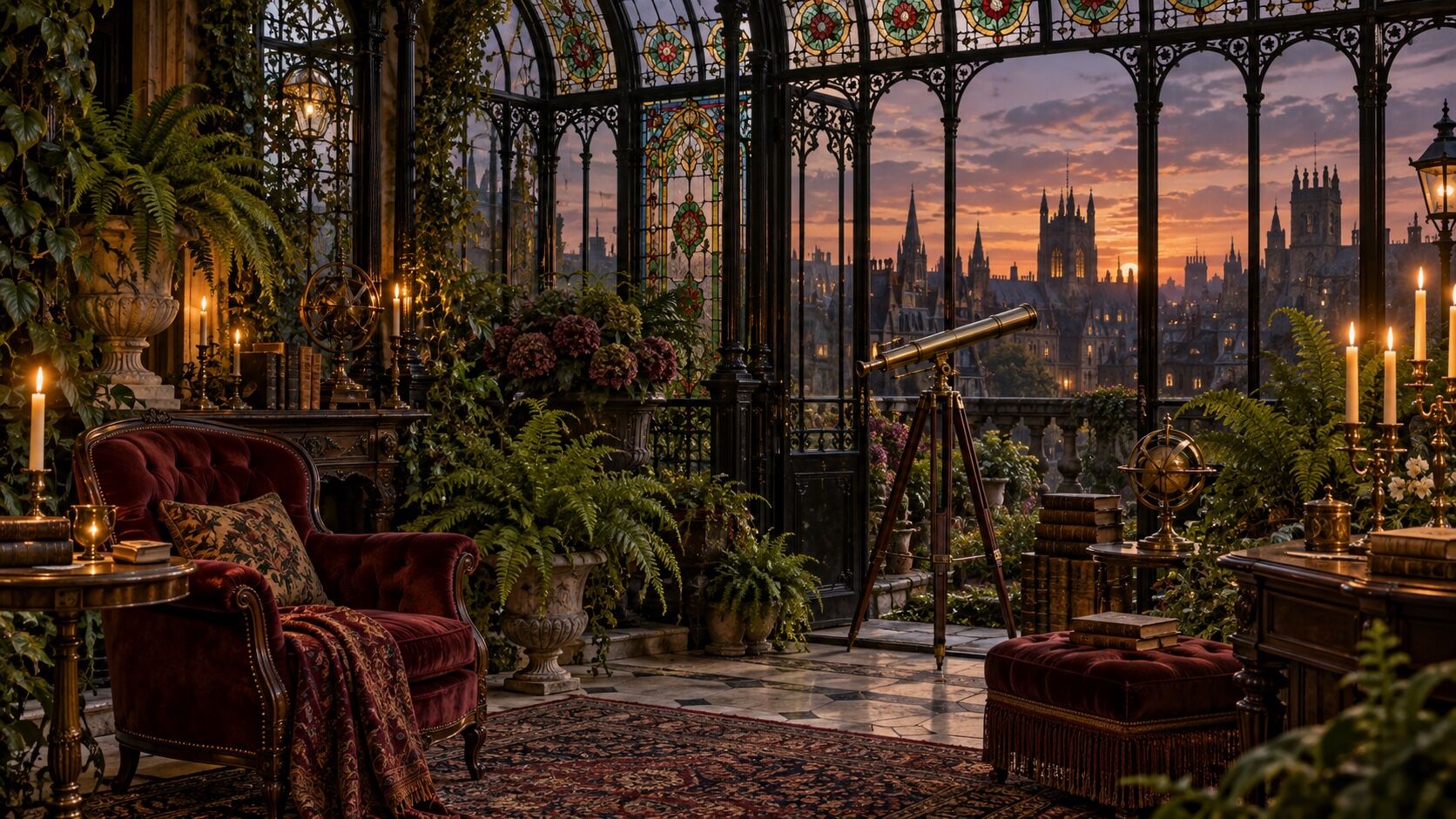
15 more in Retro & Vintage
Dark & Atmospheric017 entries
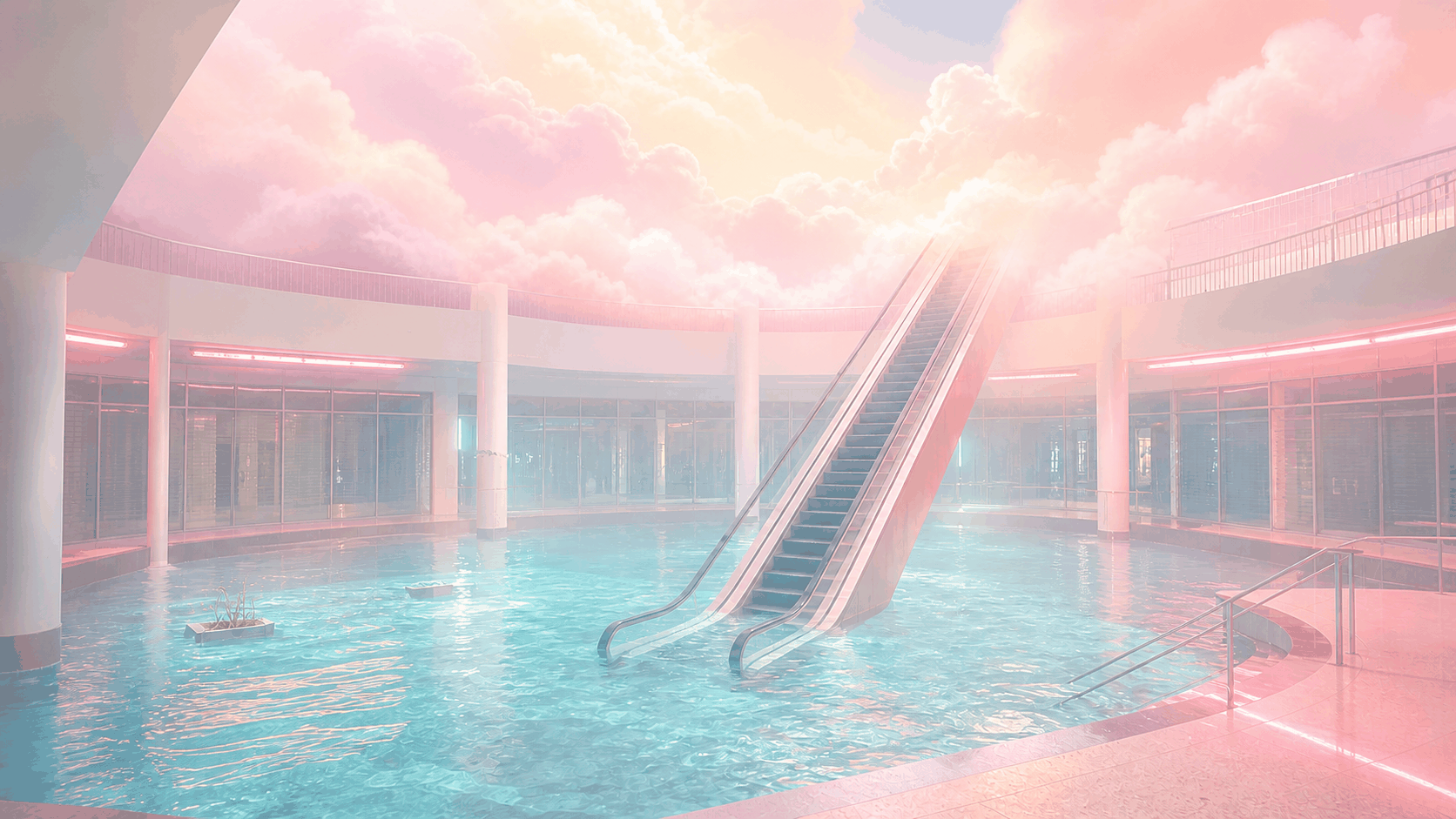
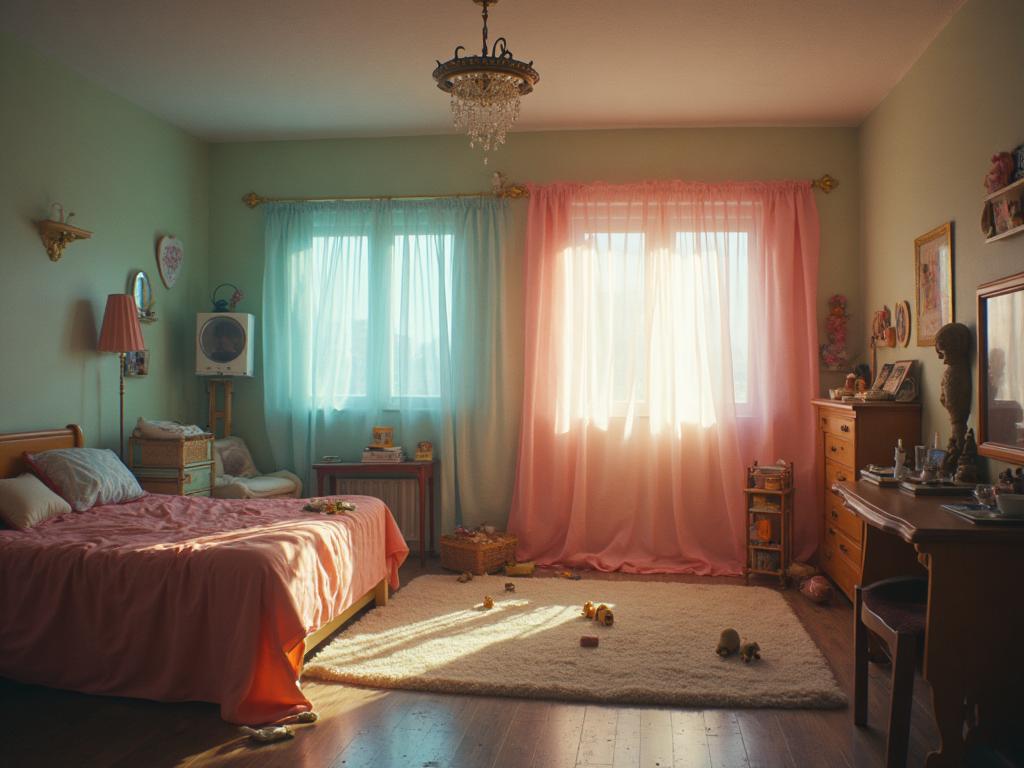
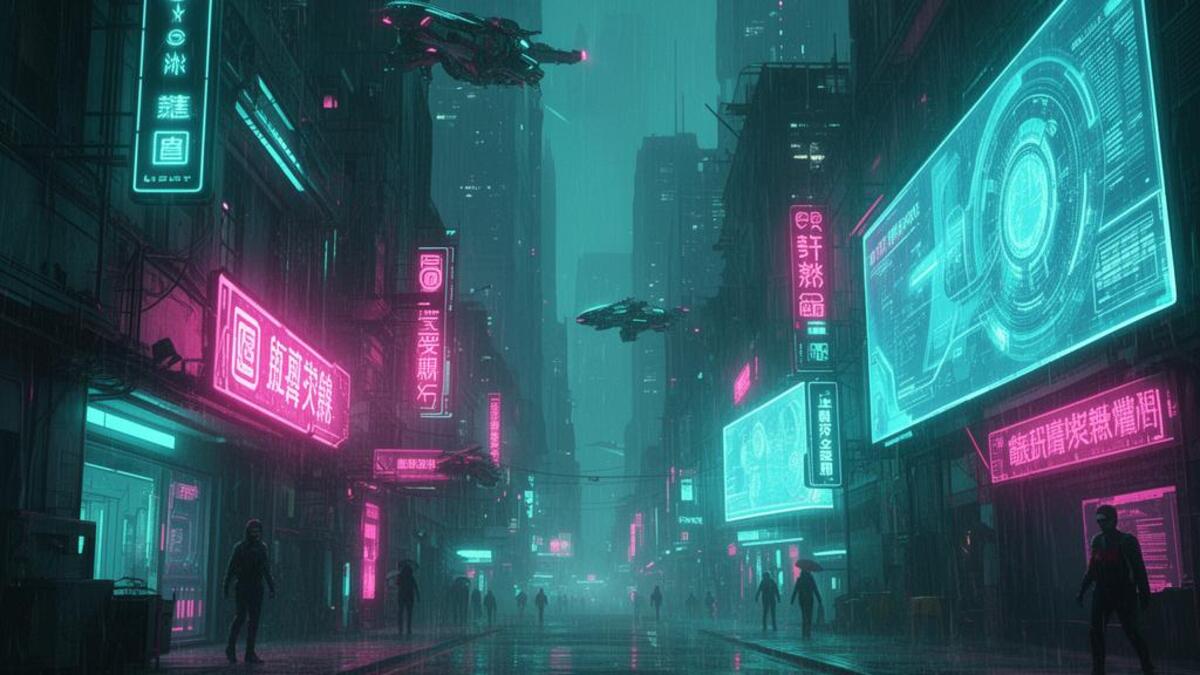
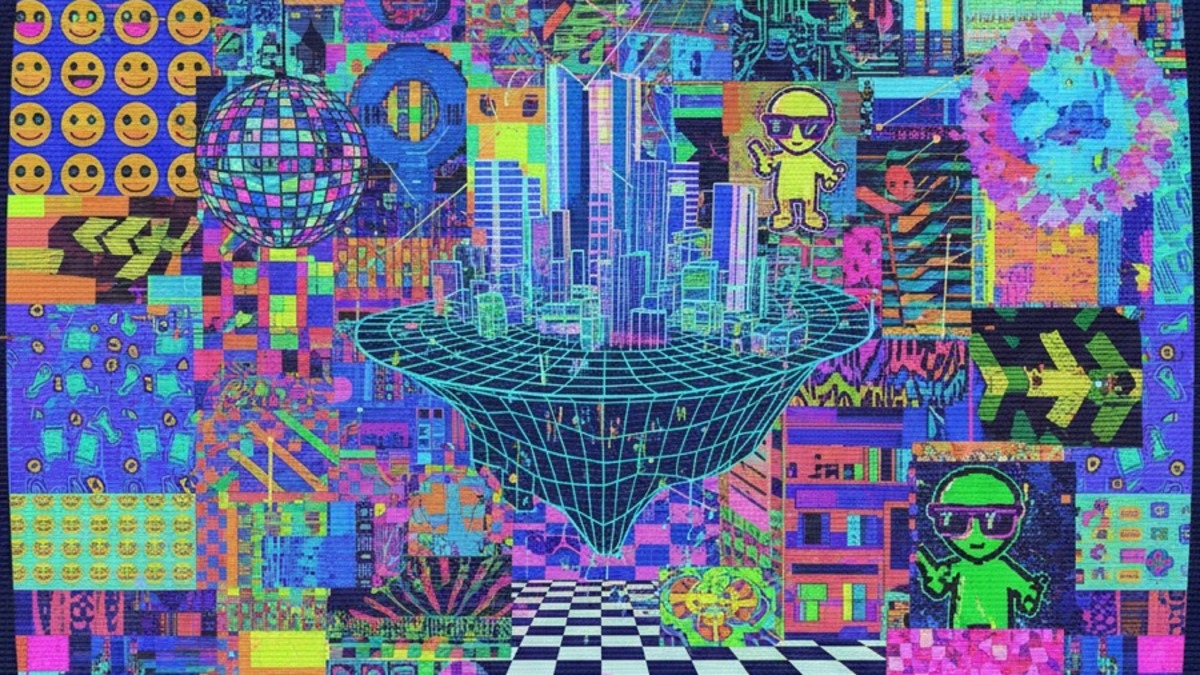
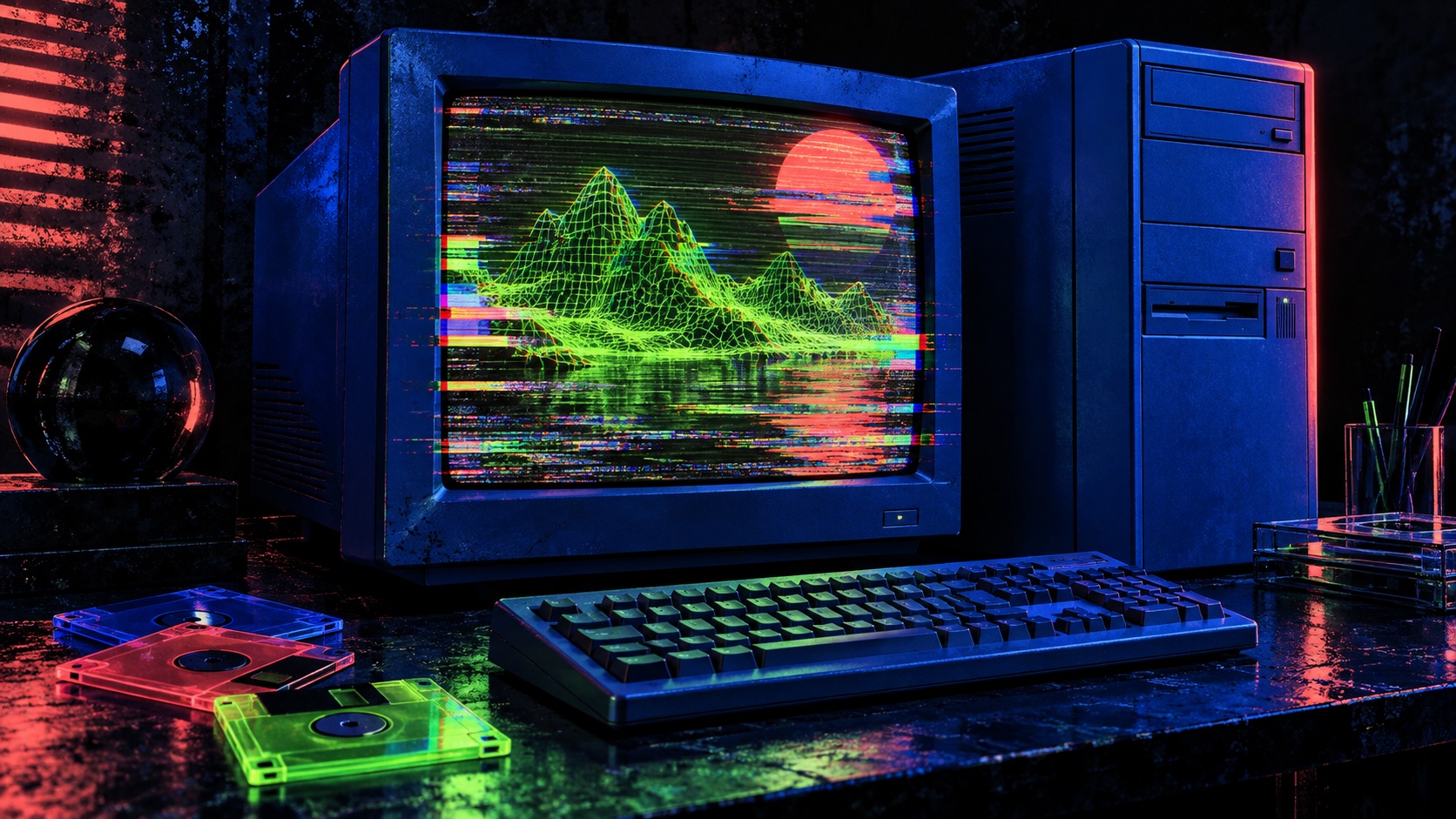
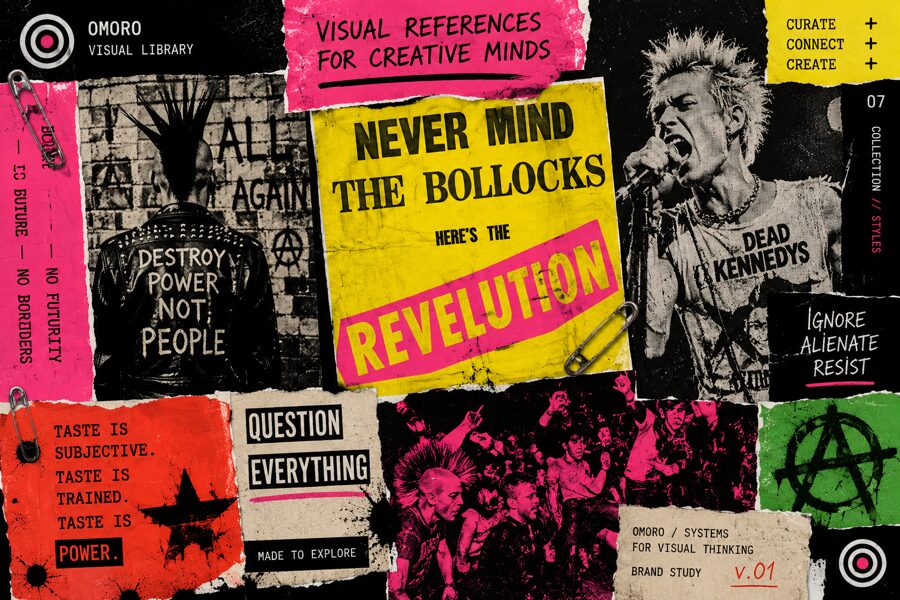
7 more in Dark & Atmospheric
Bold & Maximalist032 entries
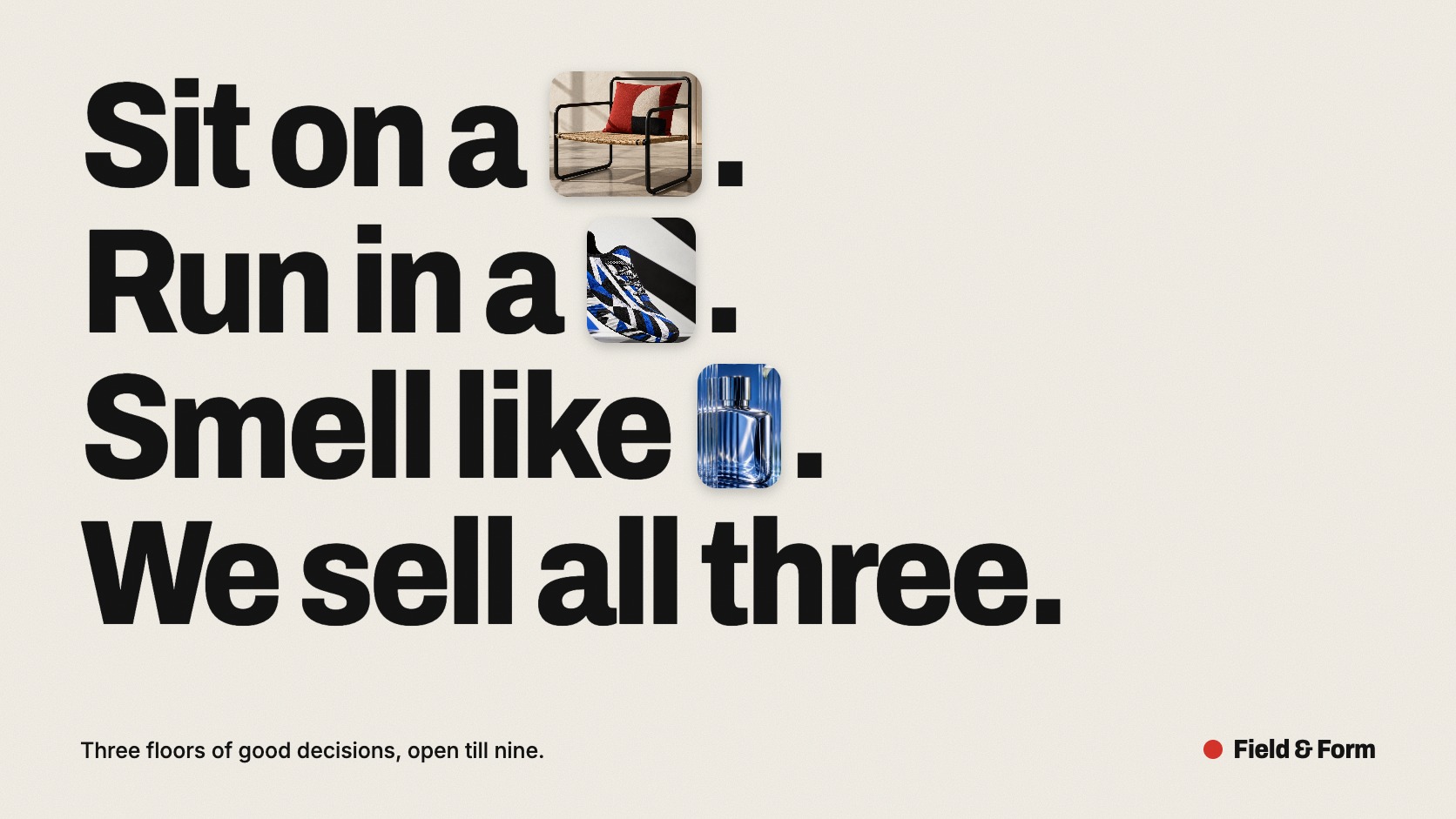
22 more in Bold & Maximalist
Art & Expression038 entries
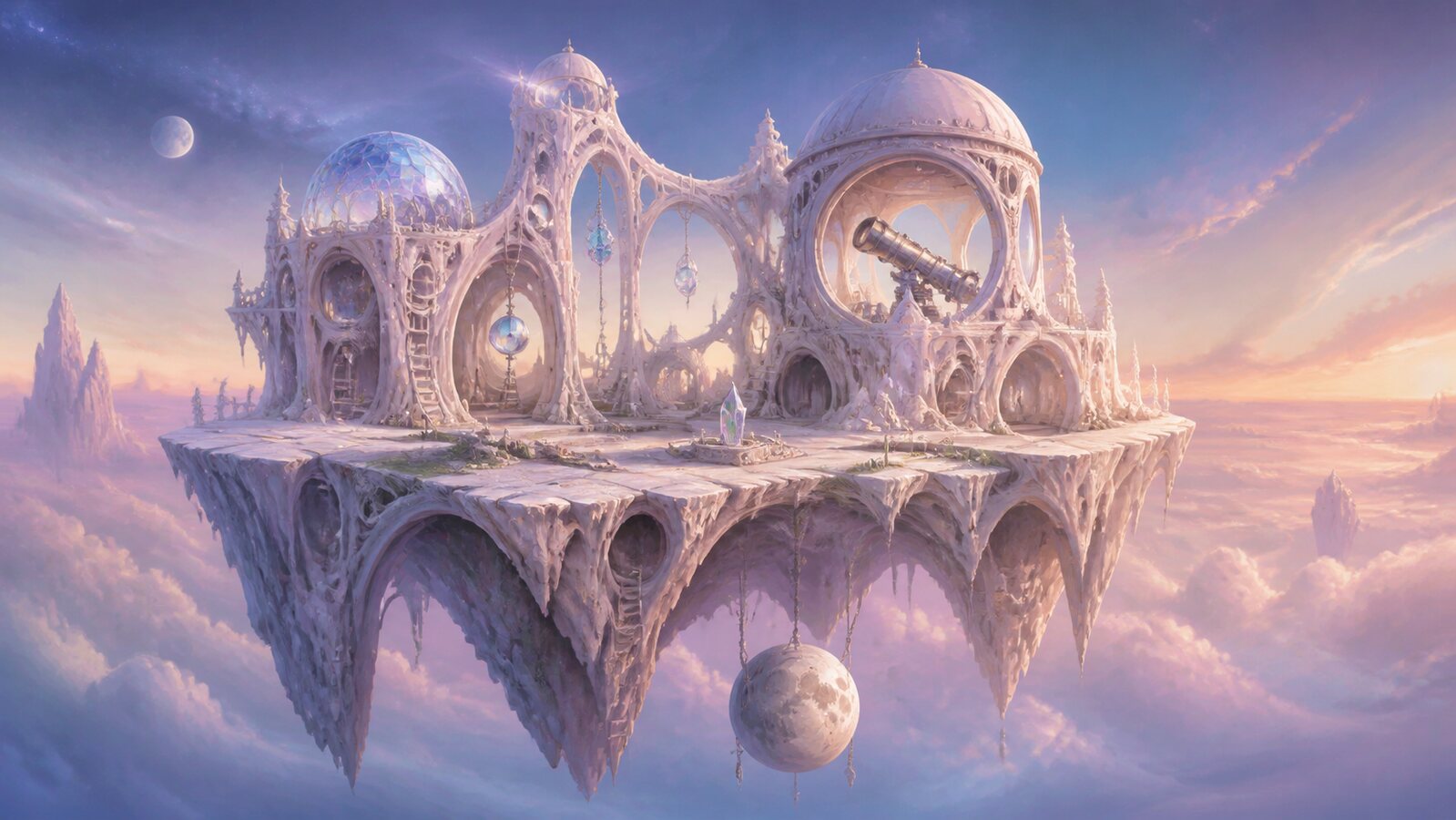
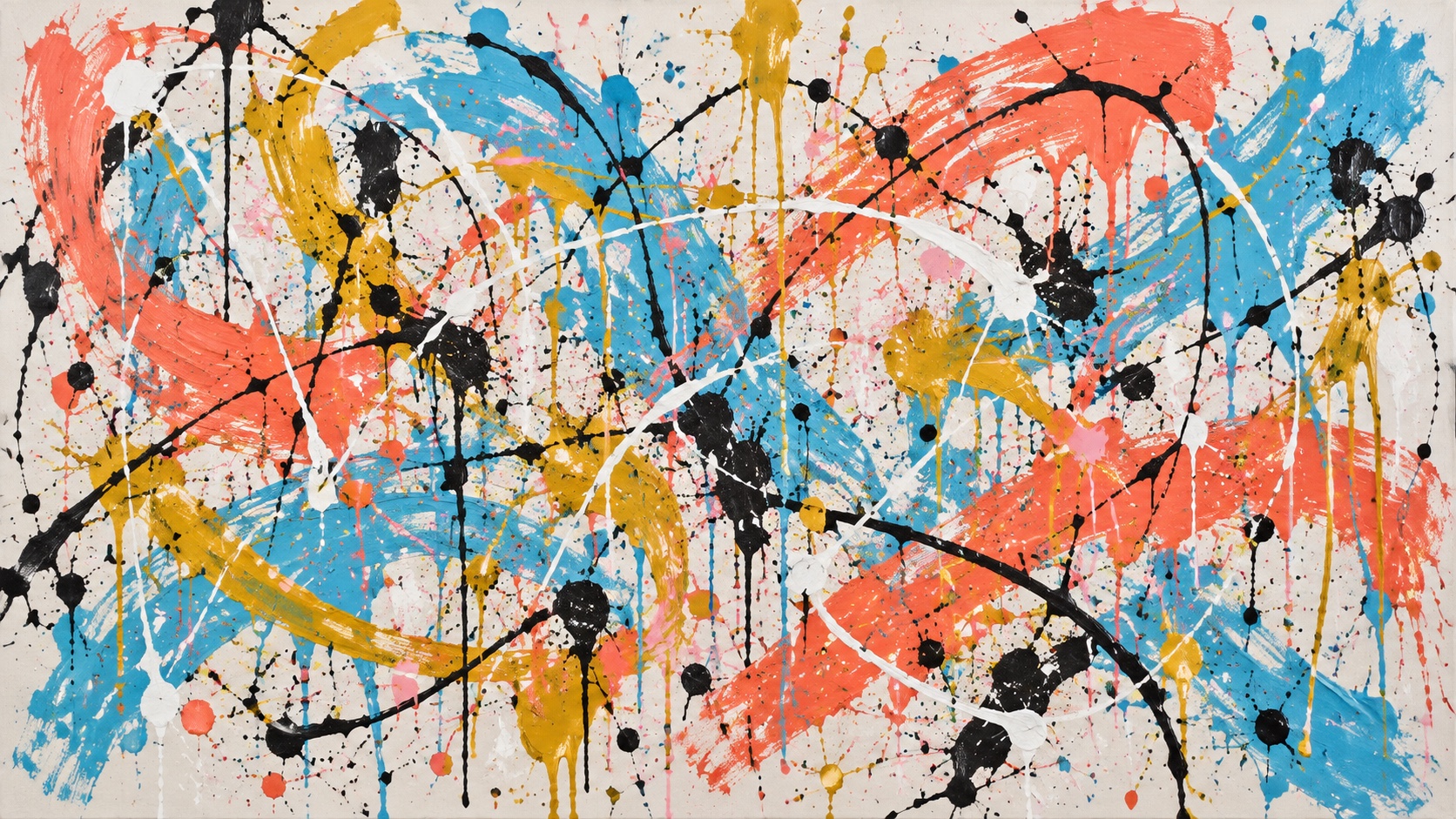
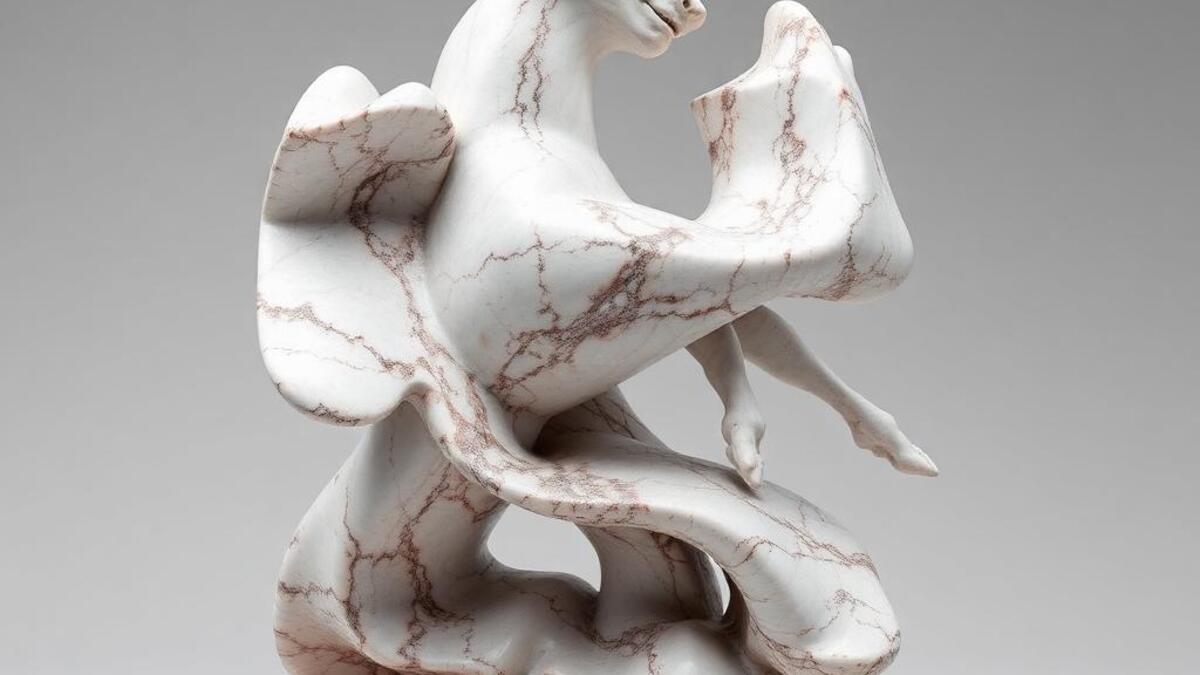
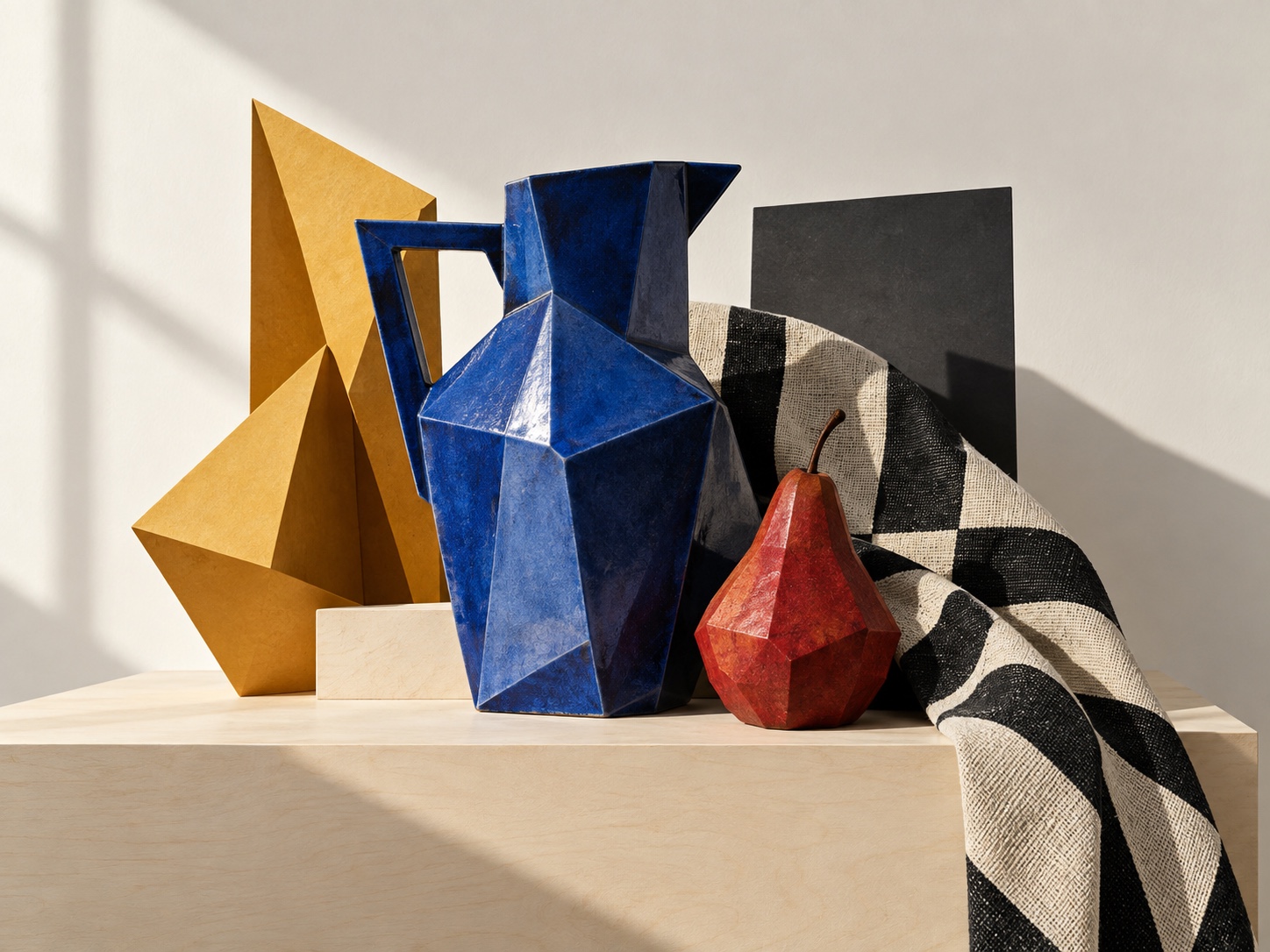
28 more in Art & Expression
Minimal & Precise023 entries
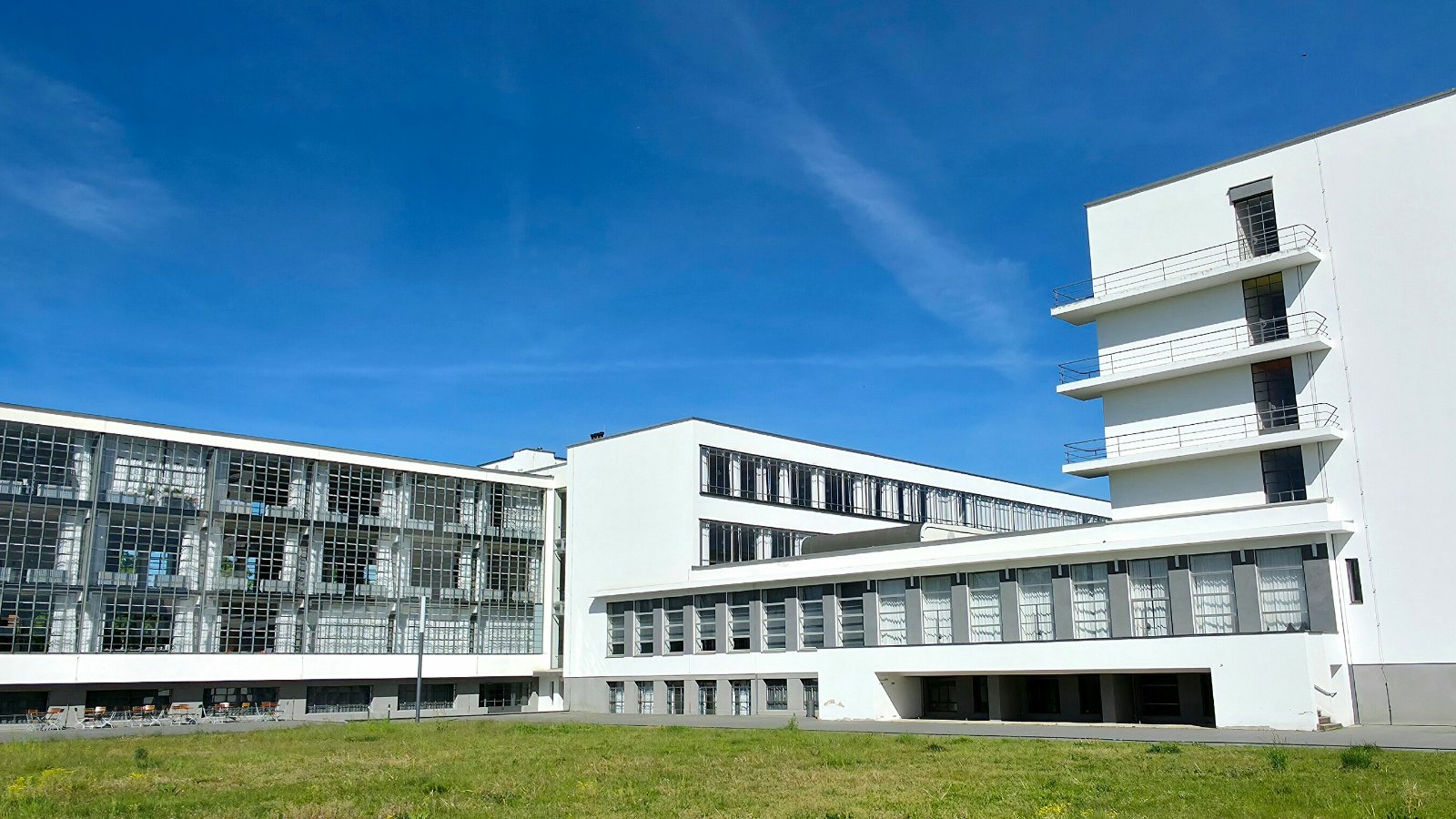
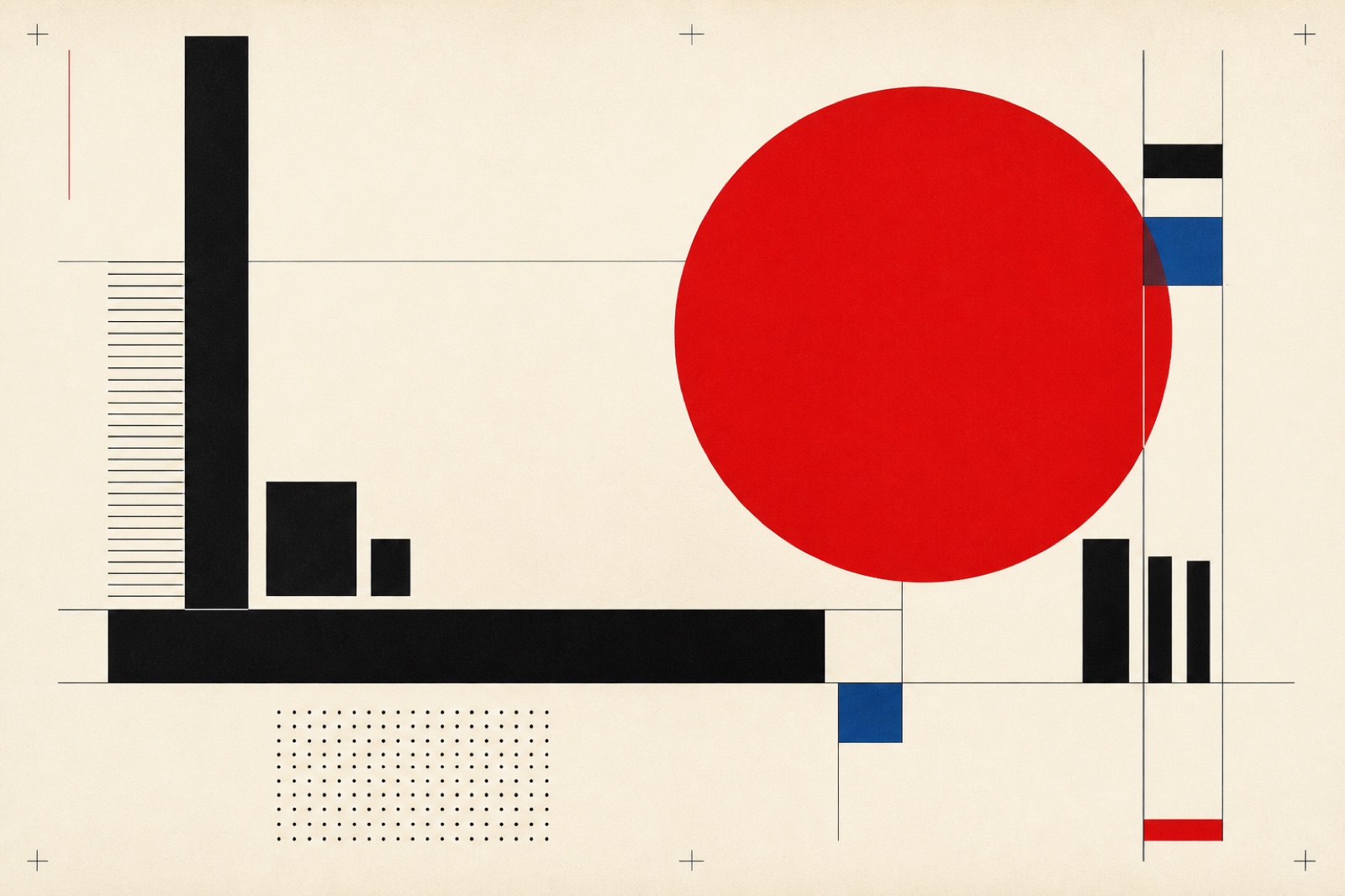
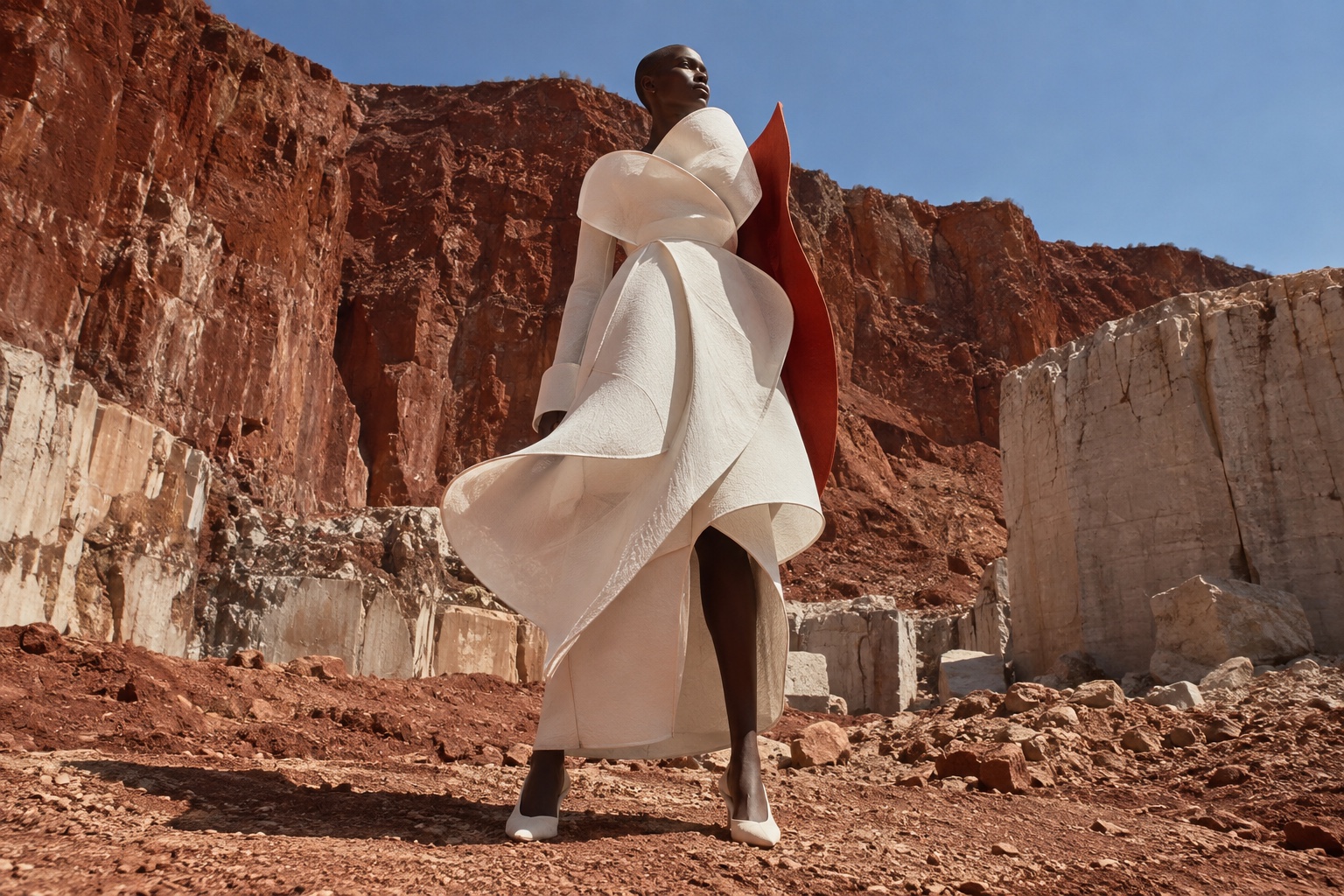
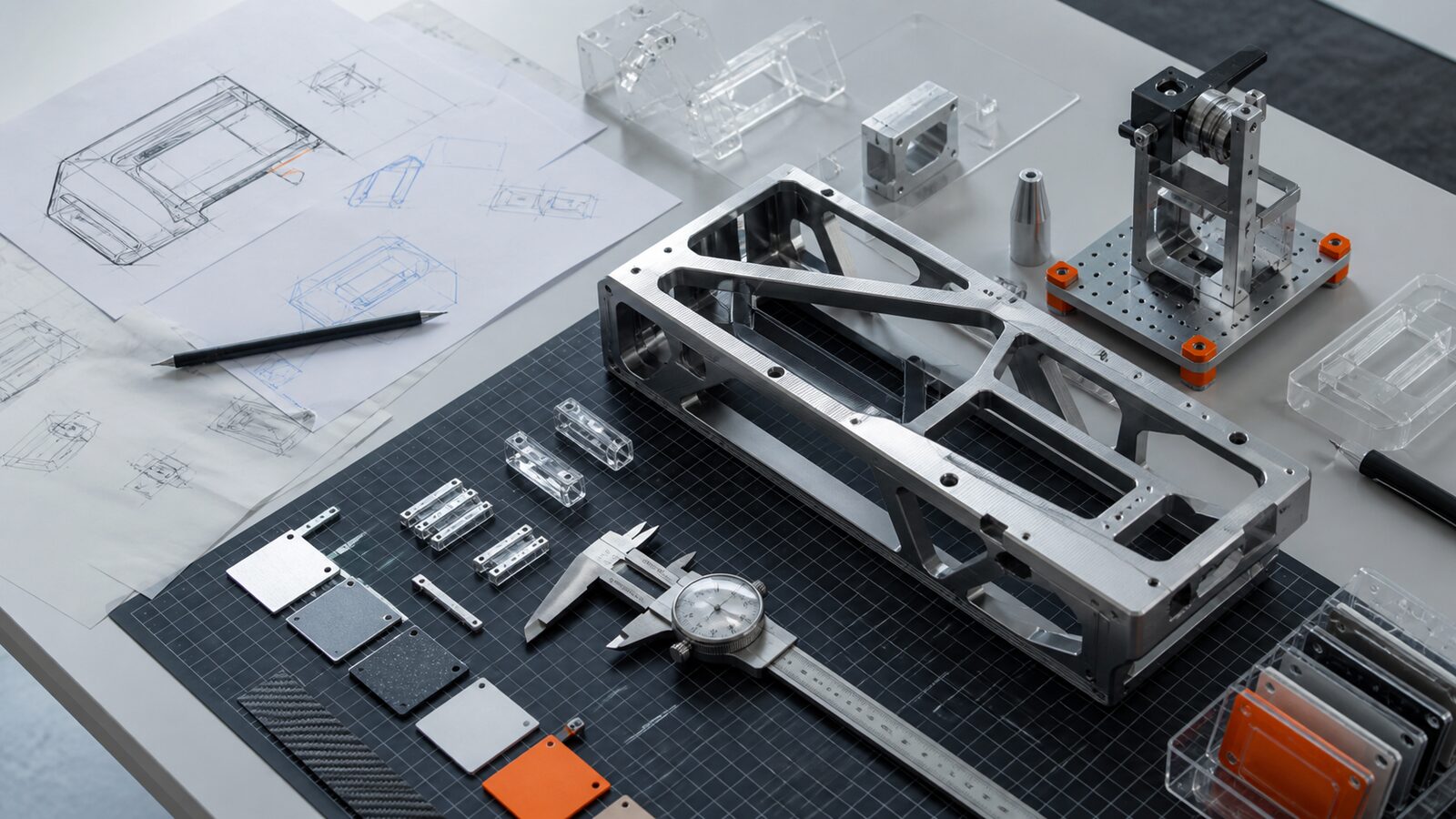
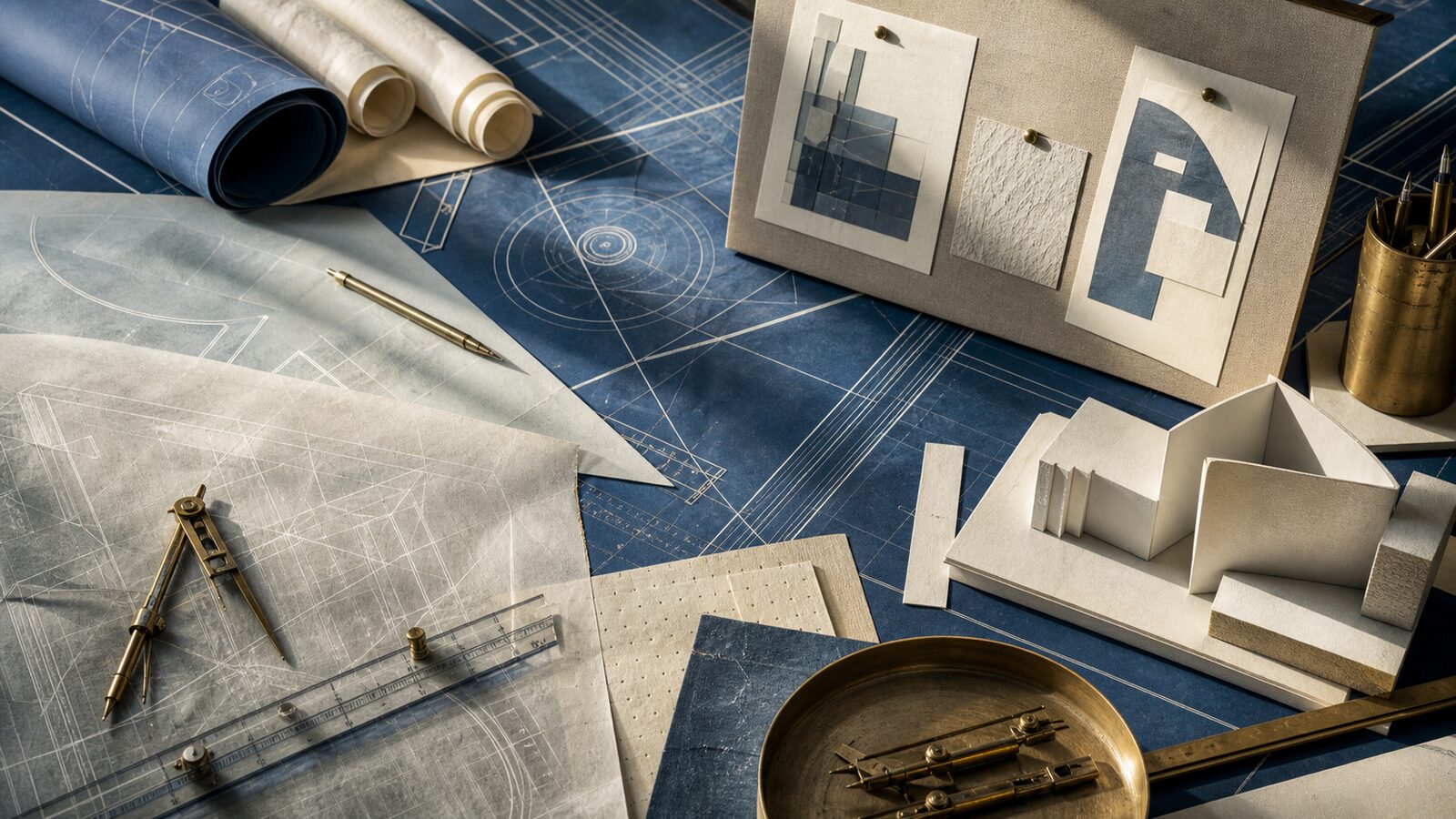

13 more in Minimal & Precise
Natural & Handmade019 entries




9 more in Natural & Handmade
Digital & Tech022 entries

12 more in Digital & Tech
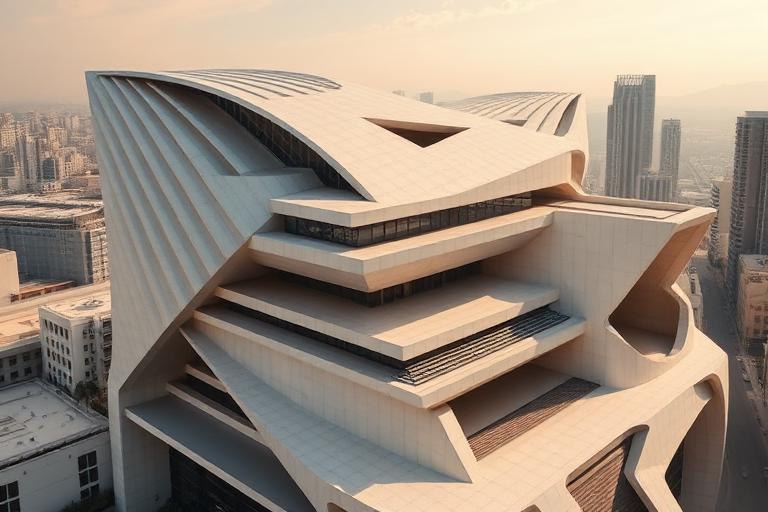
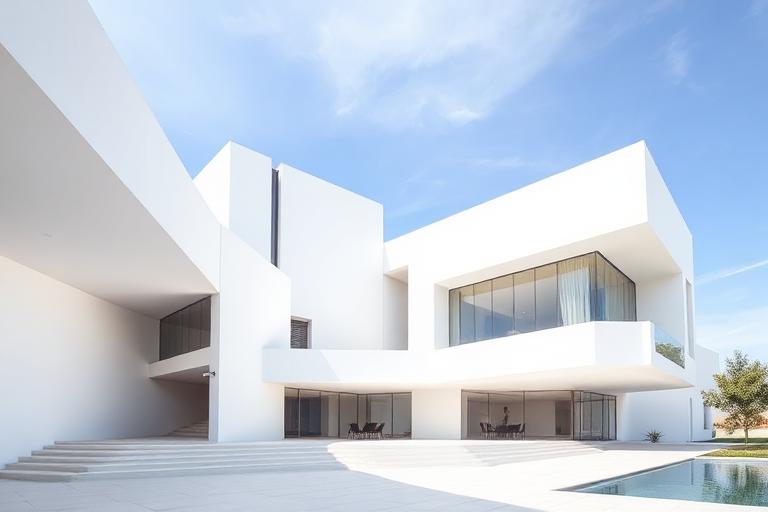
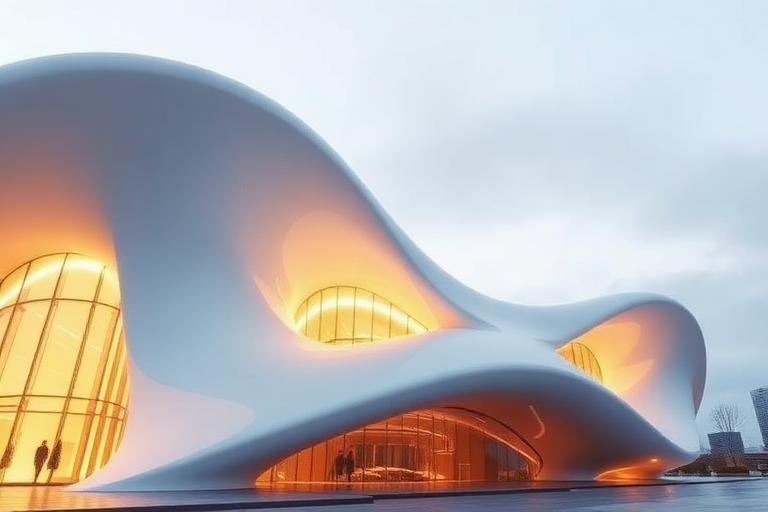
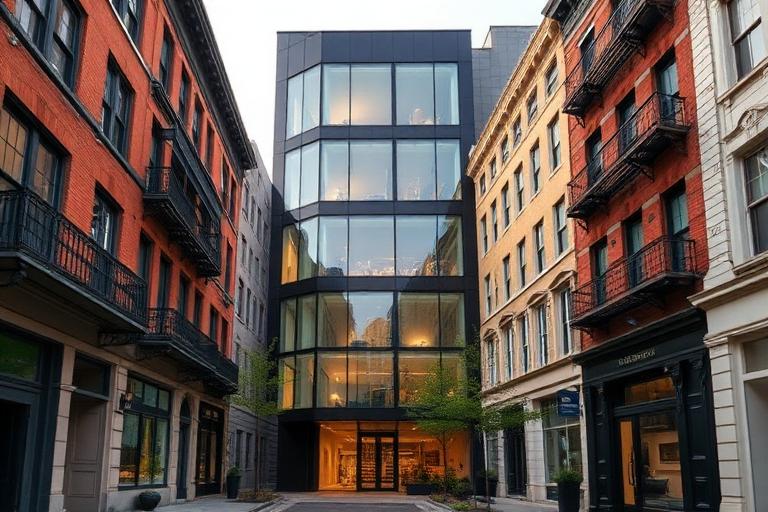
Architecture048 entries
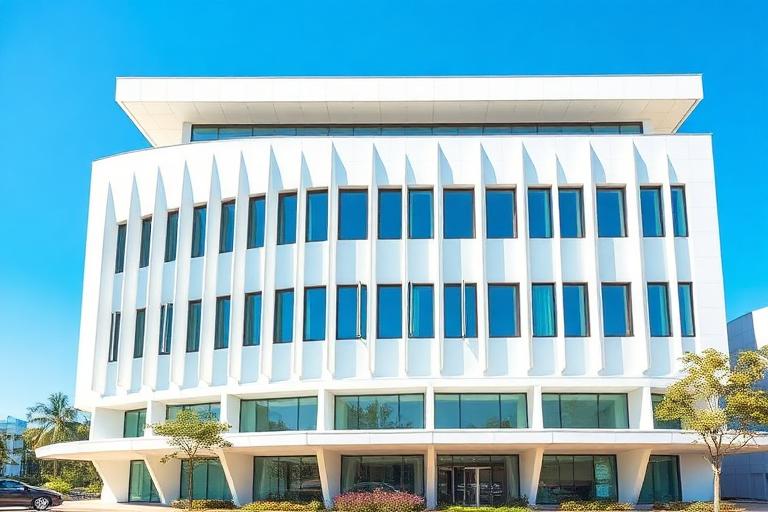
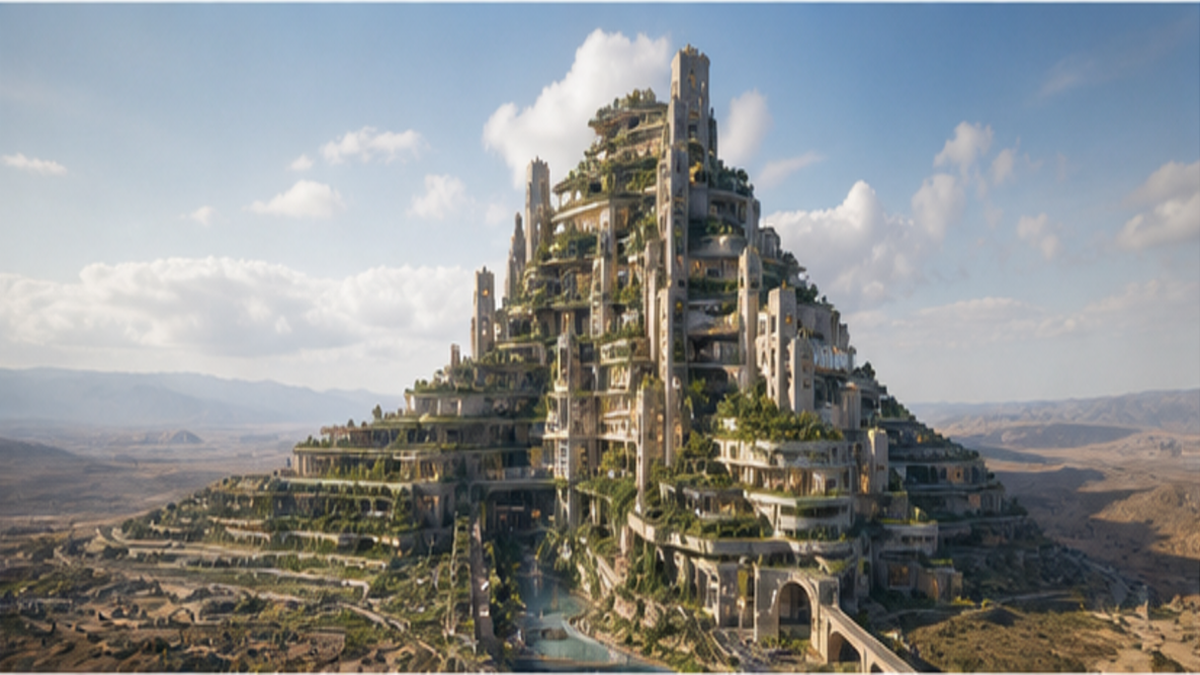
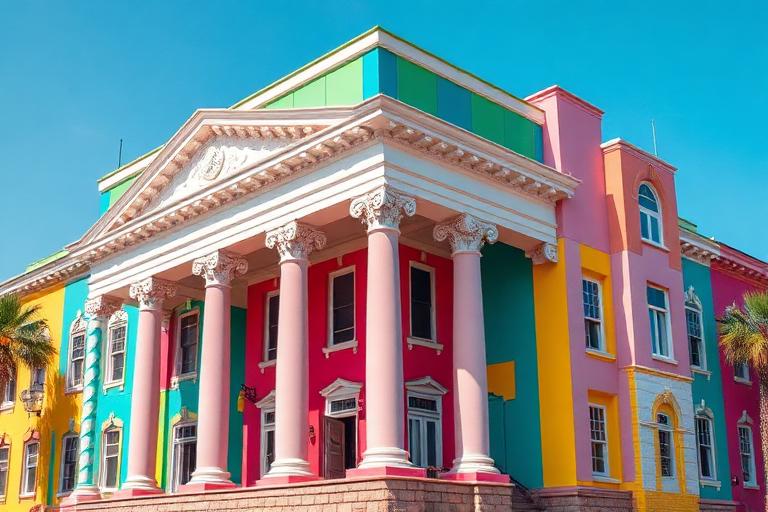
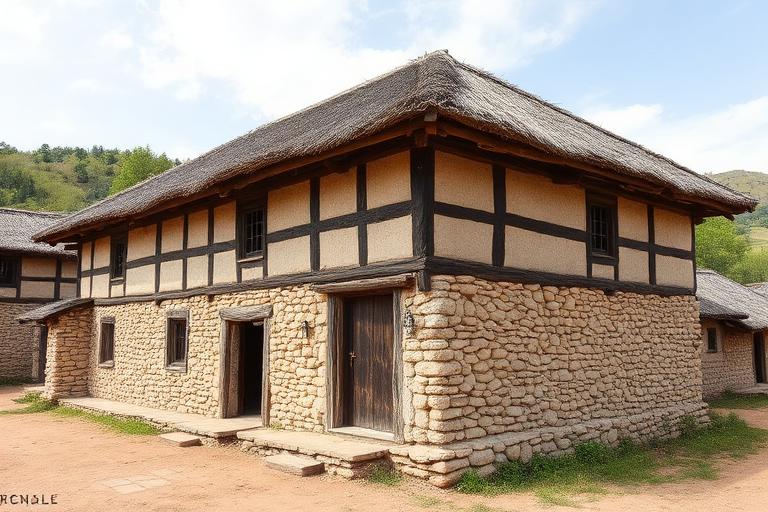
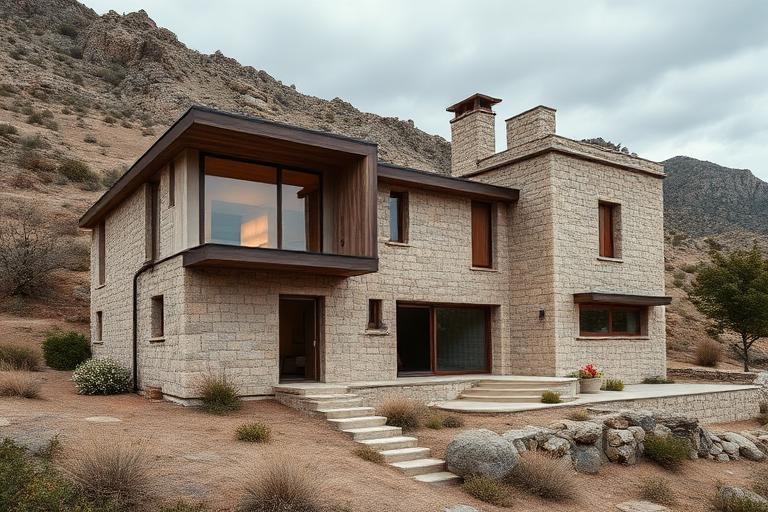
38 more in Architecture
Graphic design, illustration, photography, UI, fashion and architecture styles, each with its palette, typefaces, history and examples.
#
- 3D Vector Illustration: Dimensional scenes built from flat-shaded geometric volumes, arches, stairs, spheres and plinths, in saturated colour with two or three tones per surface and fine grain
- 80s Editorial: High-fashion power dressing with bold shoulders and saturated studio lighting
- 90s Editorial: David Carson's grunge typography, anti-grid layouts, and the era when design broke its own rules and called it art
A
- Abstract Expressionism: Bold, emotional non-representational art emphasizing spontaneity
- Acid: Rave culture graphics with warped faces, smiley icons, and toxic neon
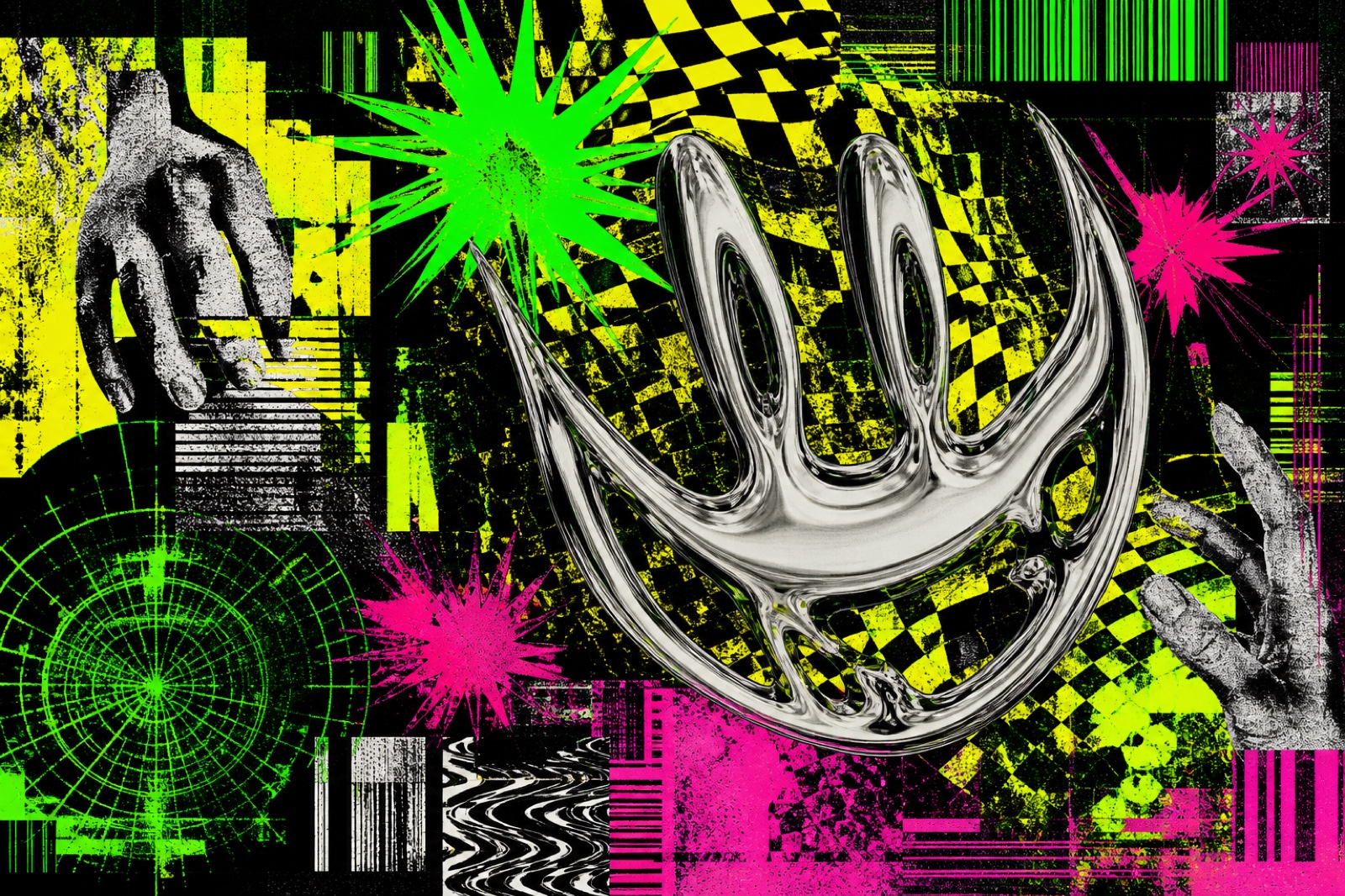
- Acid Y2K: Rave-flyer acid graphics crossed with Y2K futurism: liquid chrome type, acid green and ultraviolet on black, warped grids and jagged lettering
- Adaptive Reuse: The highest form of sustainability is using what already exists - Tate Modern read a decommissioned Bankside power station as a turbine hall gallery, the High Line saw an elevated freight rail as a park, and Lacaton & Vassal transformed Grand Parc housing without moving a single tenant.
- Afro Surrealism: The present rendered as the strange thing it is: collaged bodies, velvet and gold, the impossible staged in an ordinary room
- Afrofuturism: African diaspora culture fused with technology, sci-fi, and cosmic mythology
- Analog Photography: Film, contact sheets, darkroom labor, and material imperfection treated as part of the image—not an effect applied afterward
- Anthropomorphic: Animals and objects given human posture, clothes, jobs and feelings: a fox in a waistcoat, a teapot with opinions
- Architectural Expressionism: Buildings as psychic projection - Mendelsohn's Einstein Tower sculpted from concrete intuition, Gaudí's Sagrada Família growing from stone and faith, Poelzig's Grosses Schauspielhaus as a cave of stalactites: emotion precedes structure.
- Architectural Futurism: Antonio Sant'Elia's unbuilt Città Nuova - tiered megastructures, aerial walkways, power stations as monuments - the Italian Futurists declared war on the past and drew cities that glorified speed, industry, and dynamism.
- Architectural Minimalism: Every element justified, nothing added - Tadao Ando's concrete walls cut by a single shaft of light, John Pawson's Calvin Klein store that made emptiness a selling environment, Peter Zumthor's thermal baths at Vals.
- Architectural Modernism: The twentieth century's great rupture - Gropius, Le Corbusier, and Mies van der Rohe dismantled centuries of ornament to build the world from first principles: structure, light, function, and the flat roof as manifesto.
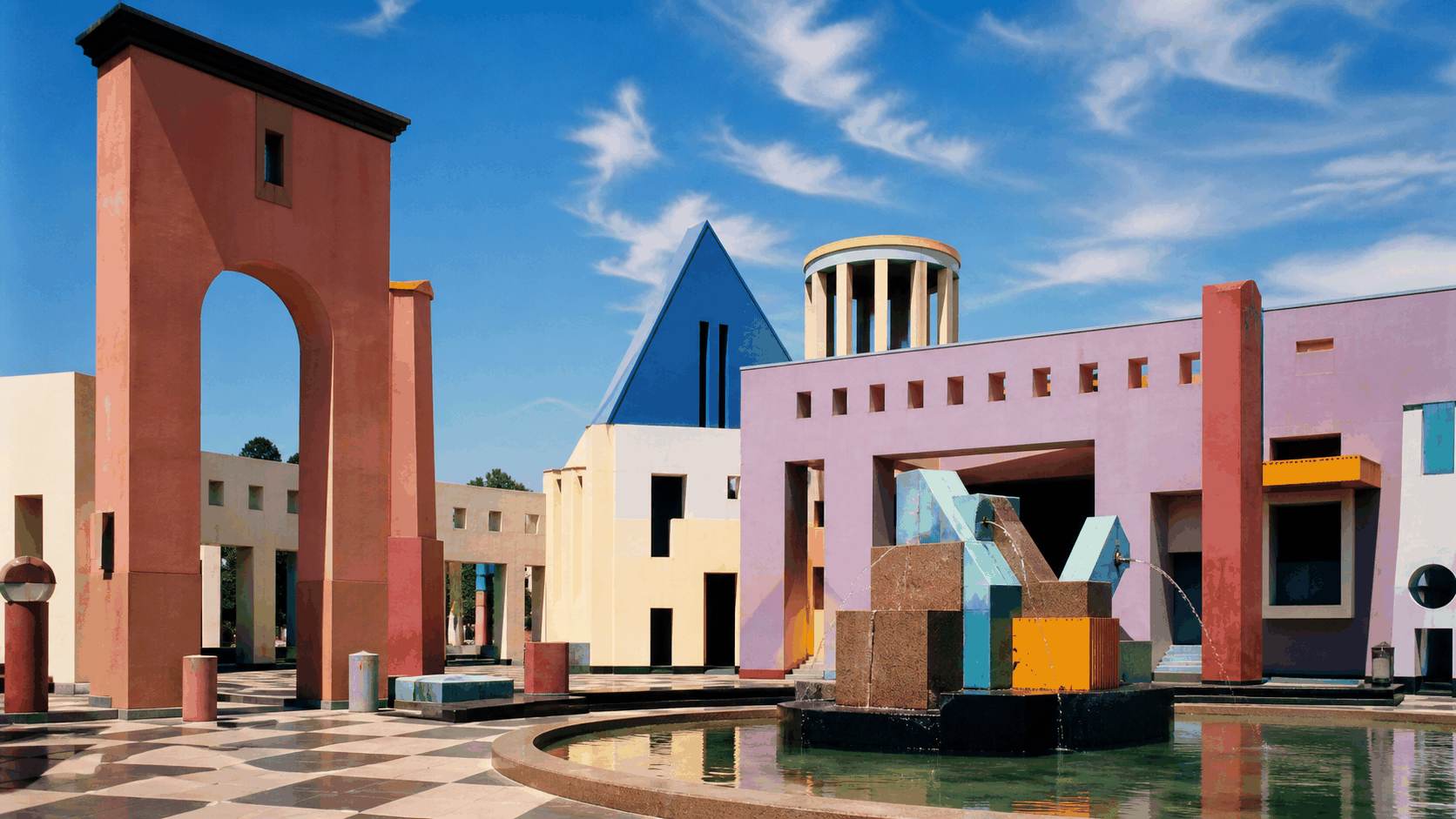
- Architectural Postmodernism: Irony, quotation, and ornament returned - Venturi told architects to learn from Las Vegas, Johnson put a Chippendale top on a skyscraper, and Graves painted Portland's city hall in peach and blue.
- Architecture: Built form as aesthetic argument - from Brutalist concrete towers to parametric facades, architecture is the largest canvas in visual culture
- Arcology: A city compressed into a living vertical ecosystem - housing, transit, farms, water, work, and civic life stacked into one climate-responsive organism.
- Art Deco: 1920s–30s geometric luxury with gold accents, sunburst motifs, and streamlined elegance
- Art Deco Architecture: Jazz-age optimism in stainless steel and gilded terracotta - the Chrysler Building's eagle gargoyles, Rockefeller Center's gilded Prometheus, and the setback zigzag tower that defined the American city between the wars.
- Art Nouveau: Nature set loose in iron and glass - Art Nouveau dissolved the straight line into whiplash curves, tendrils, and organic ornament, from Victor Horta's Brussels townhouses to Hector Guimard's Paris Métro entrances and Gaudí's molten Catalan facades.
- Arte Povera: Soil, rope, rags, wax and branches placed in the gallery with exact care: sculpture from poor materials, temporary by design
- Artisanal Textile: The textile as the subject: irregular weave, visible hand stitching, decided patchwork, hand-dyed variation and repair, in silhouettes plain enough to show it
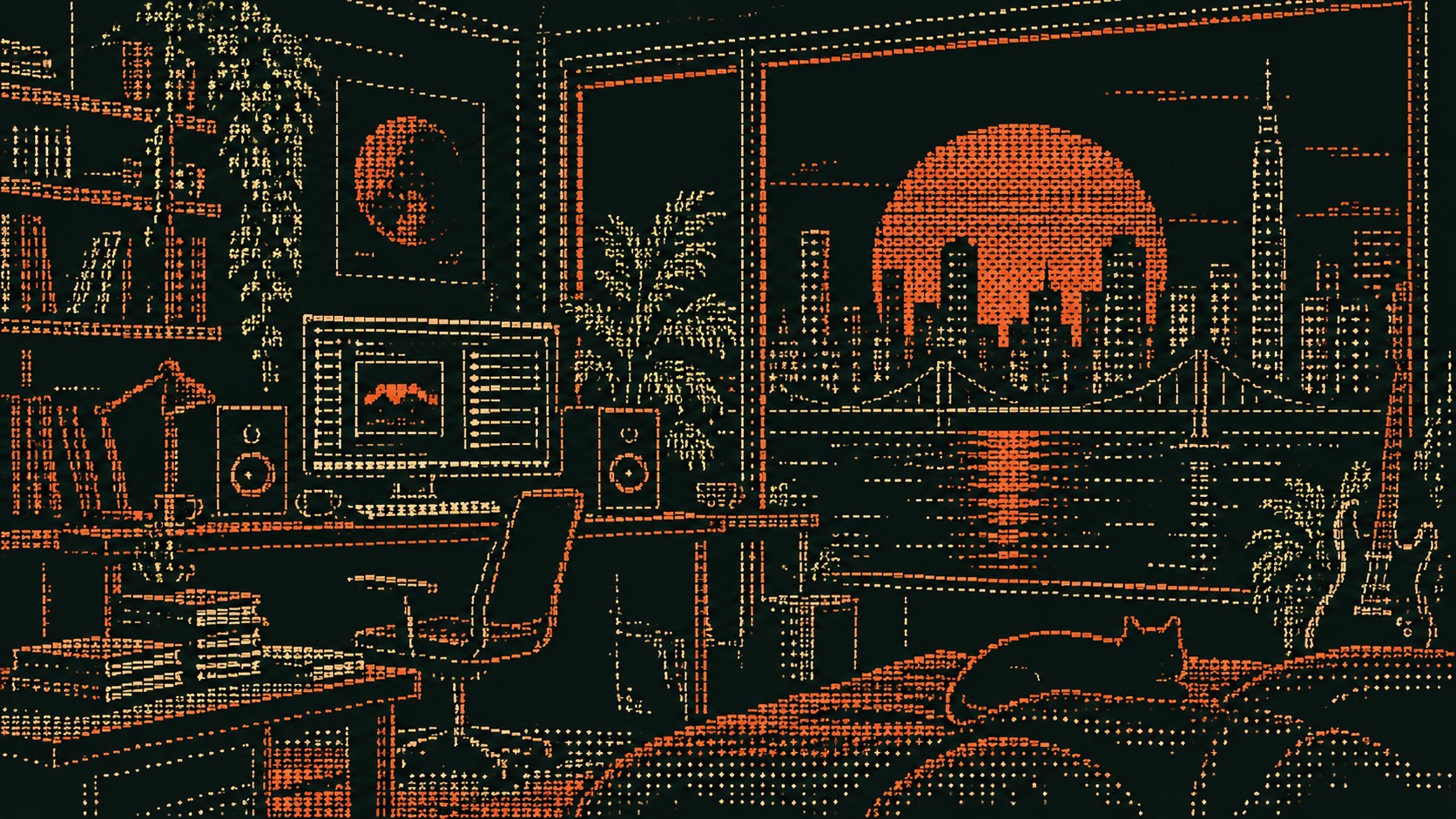
- ASCII Art: Pictures built from keyboard characters on a monospace grid, from Bell Labs in 1966 to terminal banners, BBS art and generative web
- Aurora: Luminous gradient fields that bleed through one another like polar light, with no hard edges and no visible source
B
- Baugasm: Bauhaus geometry turned up to euphoria: stacked circles, arches and bars filled with vivid gradients and grain
- Bauhaus: Functional minimalist design with geometric forms and primary colors
- Bauhaus Architecture: Gropius's school that lasted fourteen years and changed everything - where painting, weaving, typography, and building shared a single workshop belief that honest design could reform industrial society.
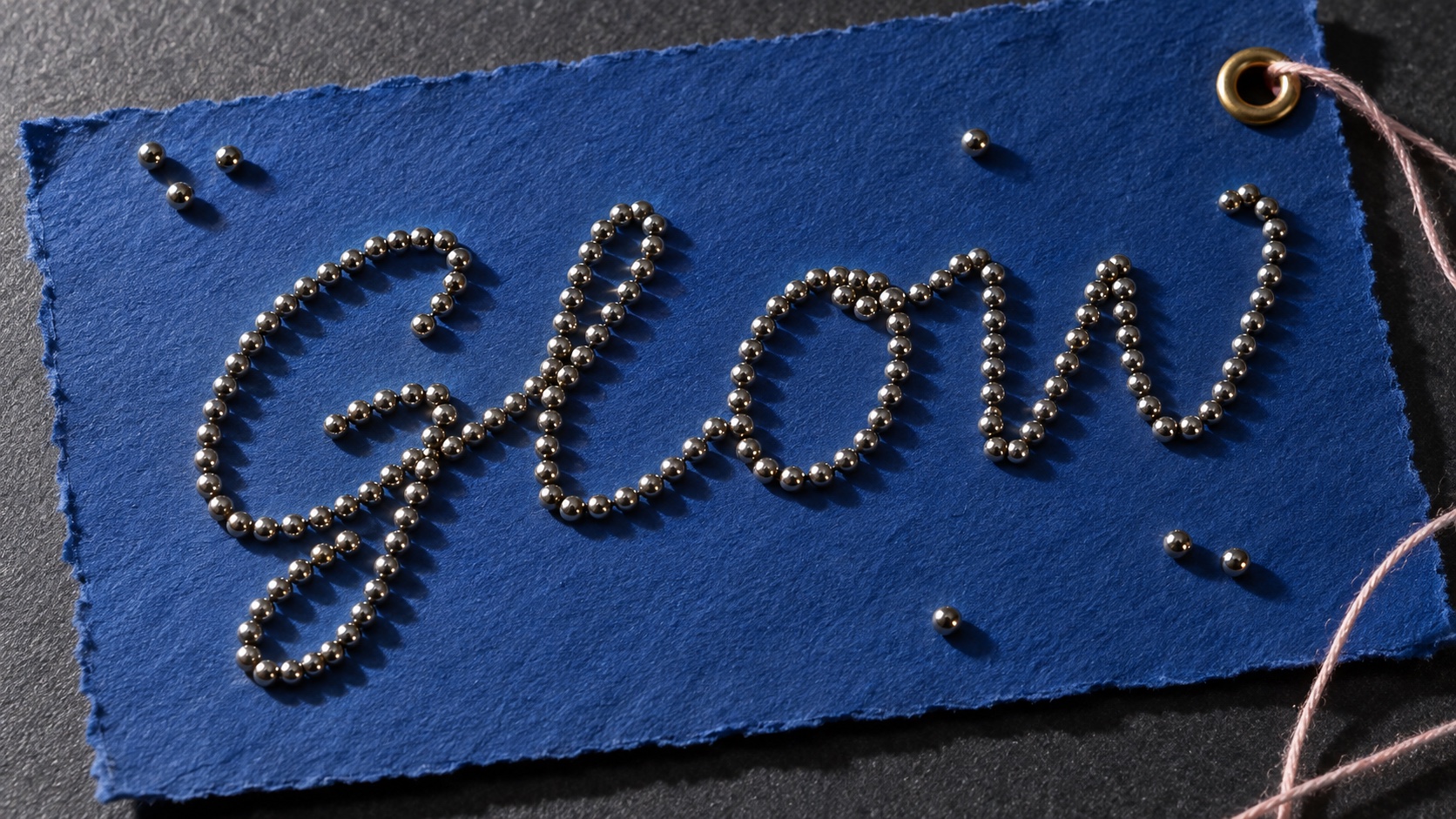
- Bead Lettering: Words spelled out one bead at a time: chrome micro-beads and pearls laid along a letterform on coloured card, raised enough to throw a shadow
- Bento UI: Grid-locked modular layouts with dense information architecture, rounded corners, and bright accent cards on dark backgrounds
- Biomorphic Modernism: Modernism that learned from cells and pebbles: bent plywood, the kidney table, the Womb chair, straight lines let go
- Biophilic Design: Architecture that reconnects people with nature - Biophilic design weaves living systems into every surface, with vertical gardens, water, daylight, and natural materials, treating greenery not as decoration but as the building's organising principle.
- Blobitecture: When software freed architects from the right angle - Greg Lynn's embryological housing experiments, FOA's Yokohama International Passenger Terminal as continuous landscape, and NOX's Son-O-House as pure computational biology.
- Blueprint: Technical drawings on blue with white lines showing plans and schematics
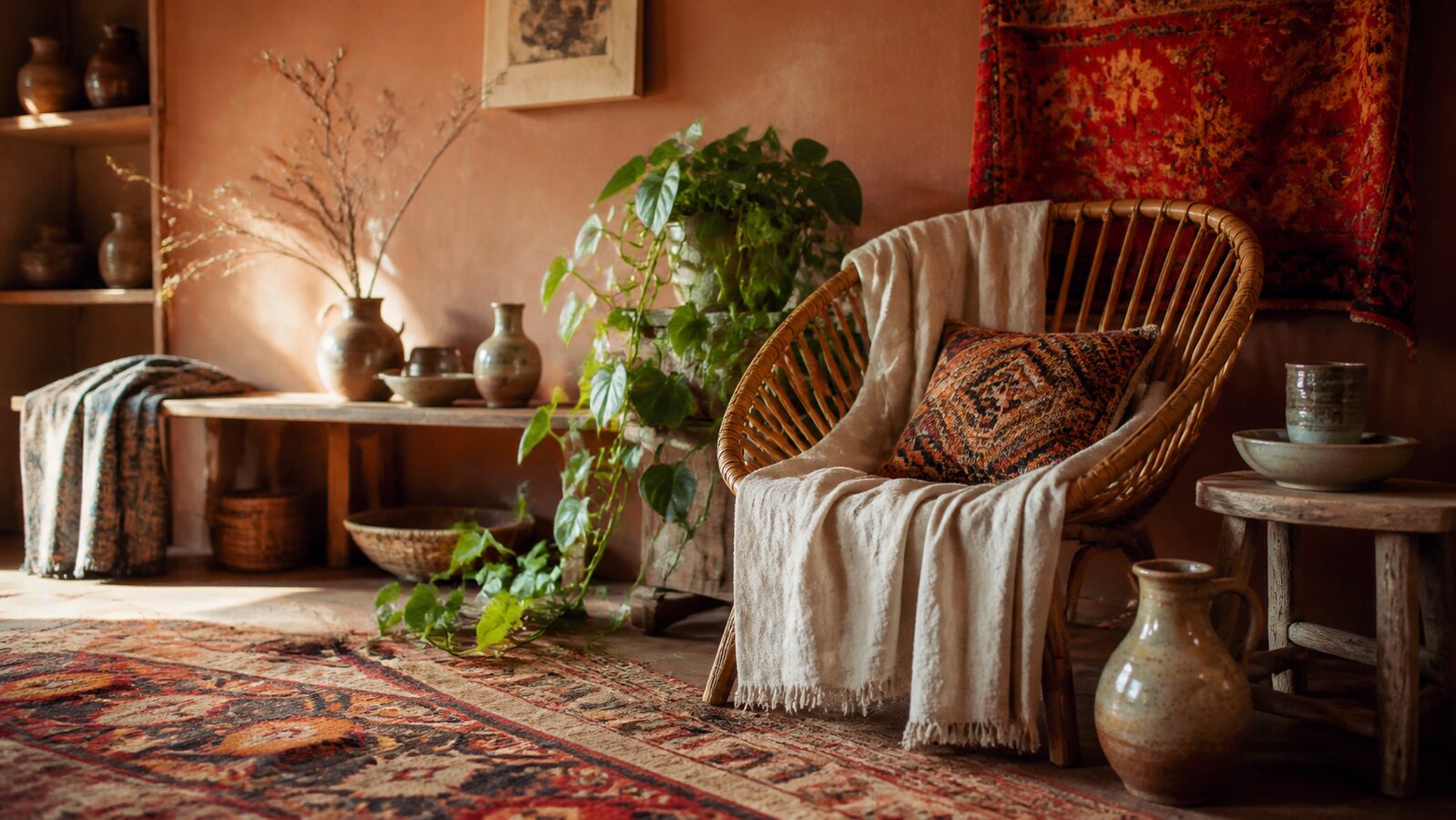
- Bohemian: Layered pattern, warm earth pigment and handmade texture, collected over time rather than designed in one pass
- Bowellism (High-Tech): Rogers and Piano's Centre Pompidou turned the building inside out - color-coded ducts on the facade, escalators in transparent tubes, structure expressed as spectacle - and created the most photographed cultural building in the world.
- Bronze Age: Ancient civilizations aesthetic with patina, metalwork, and archaeological textures
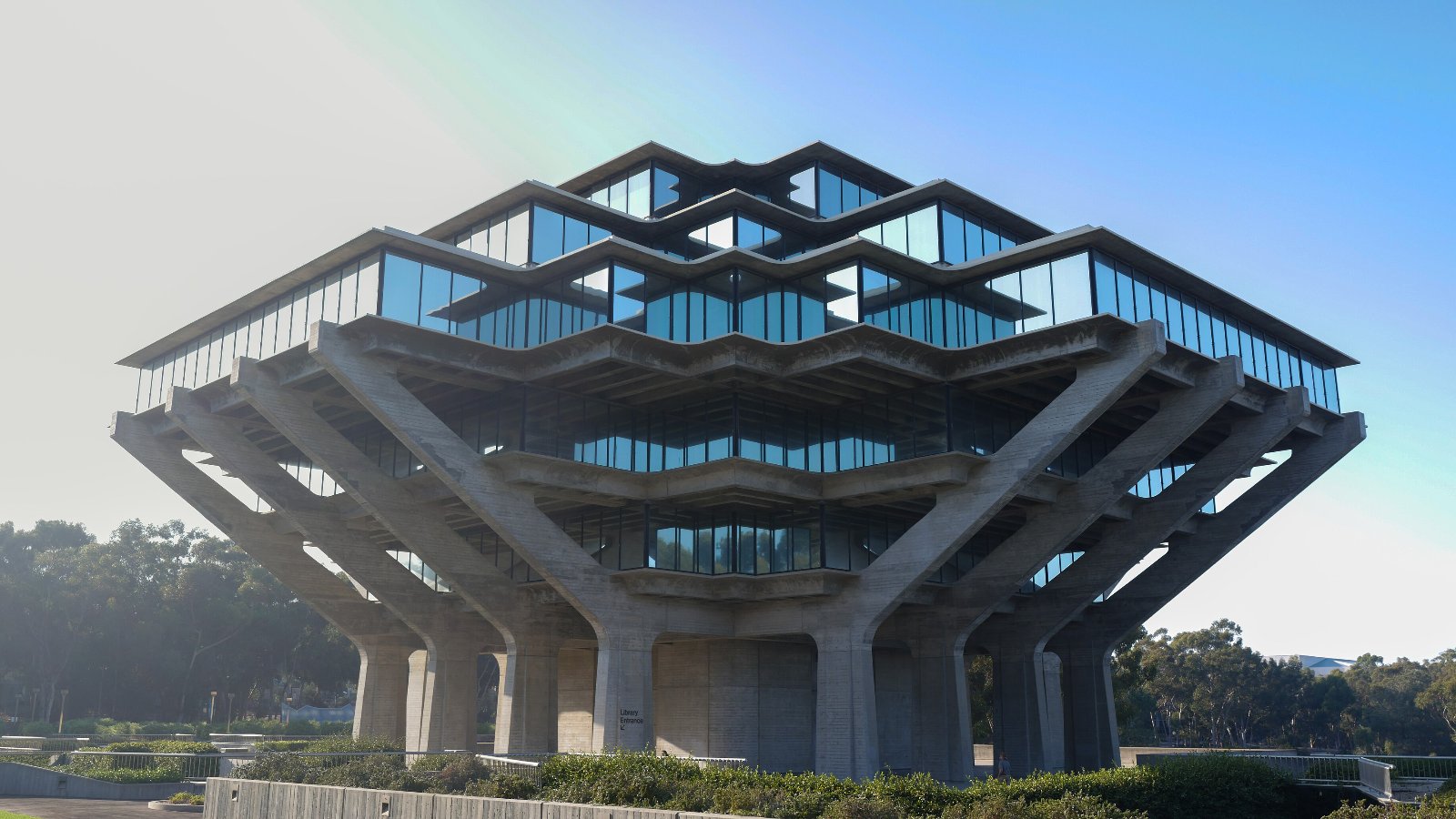
- Brutalism: Raw concrete, exposed structure, and monolithic weight - architectural honesty translated into visual design language, where the material is the message
- Brutalist Architecture: Raw concrete as conviction - Brutalism treated exposed béton brut as an honest material statement, from Paul Rudolph's corrugated towers to Moshe Safdie's Habitat 67 stacked modules and Marcel Breuer's Whitney Museum.
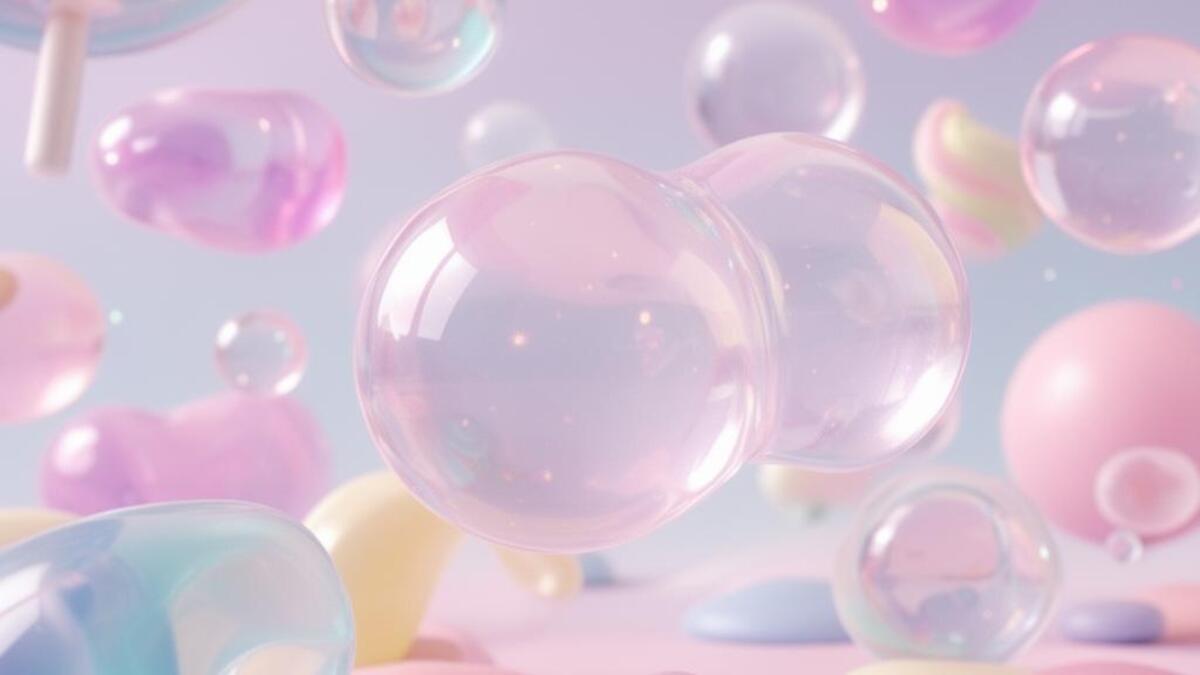
- Bubbleglam: Inflated, glossy surfaces with candy colors and soft maximalism
C
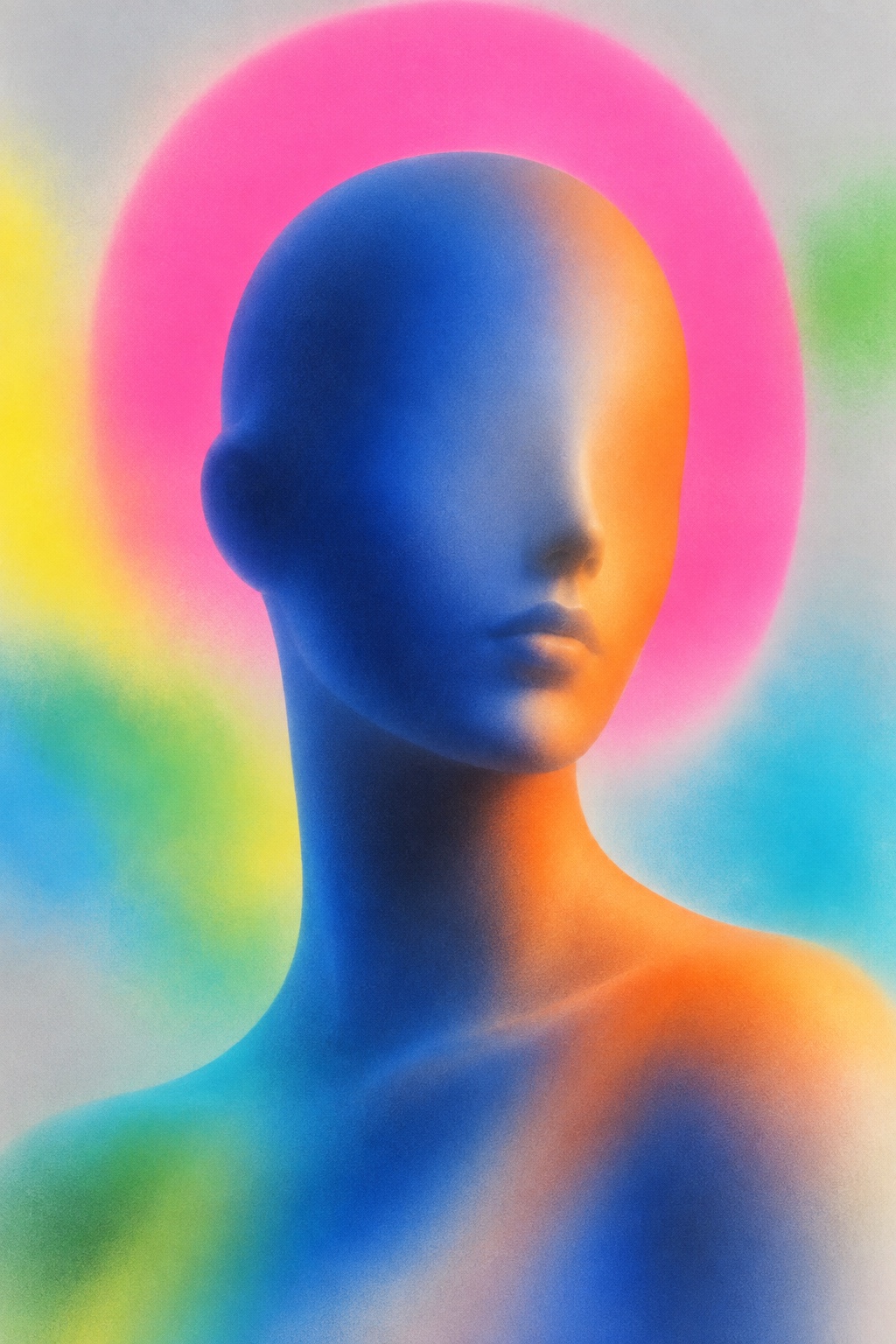
- Chromatic Airbrush: Subjects dissolved into velvety airbrush gradients, coloured haze and impossible studio light: cyan, hot pink, acid green and saffron, soft focus over high gloss, artificial on purpose
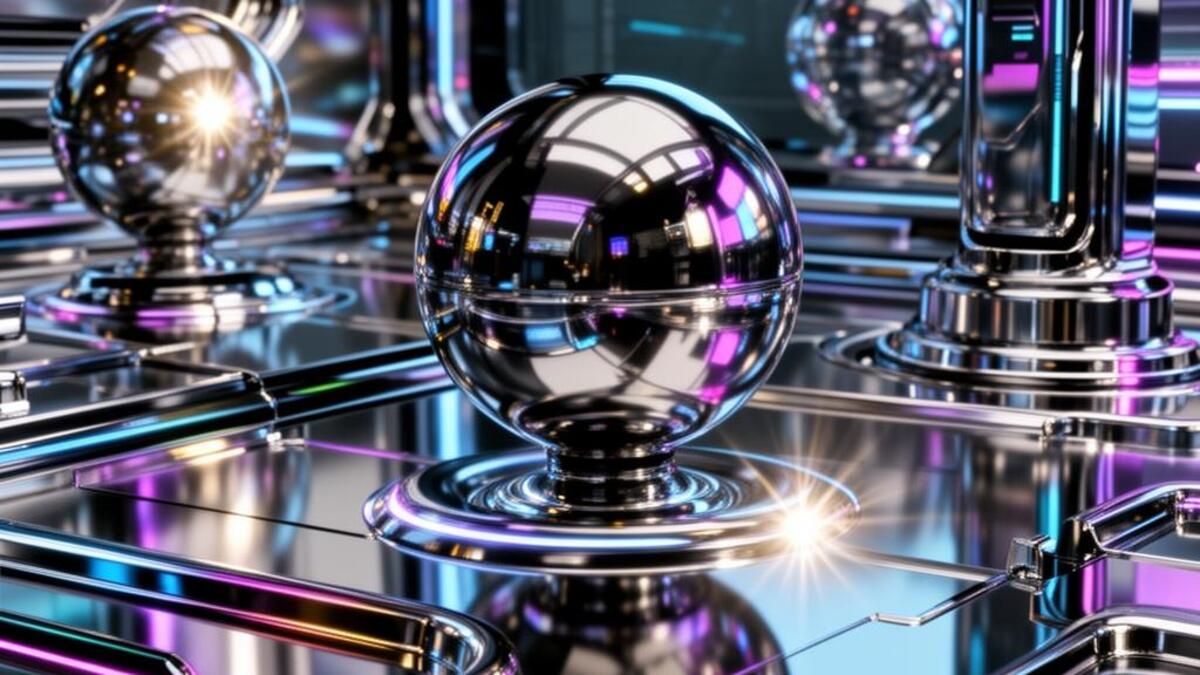
- Chromecore: Liquid metal surfaces, reflective everything, and industrial futurism
- Cinematography: Cinematic visual storytelling with dramatic lighting and framing
- Classical Architecture: The grammar of the Western built world - column orders, tripartite elevation, and the Parthenon's optical corrections have been the foundation of architectural education from Vitruvius through the Beaux-Arts.
- Clay Style: Soft extruded 3D forms with rounded edges and matte, unlit surfaces, as if pressed from modelling clay
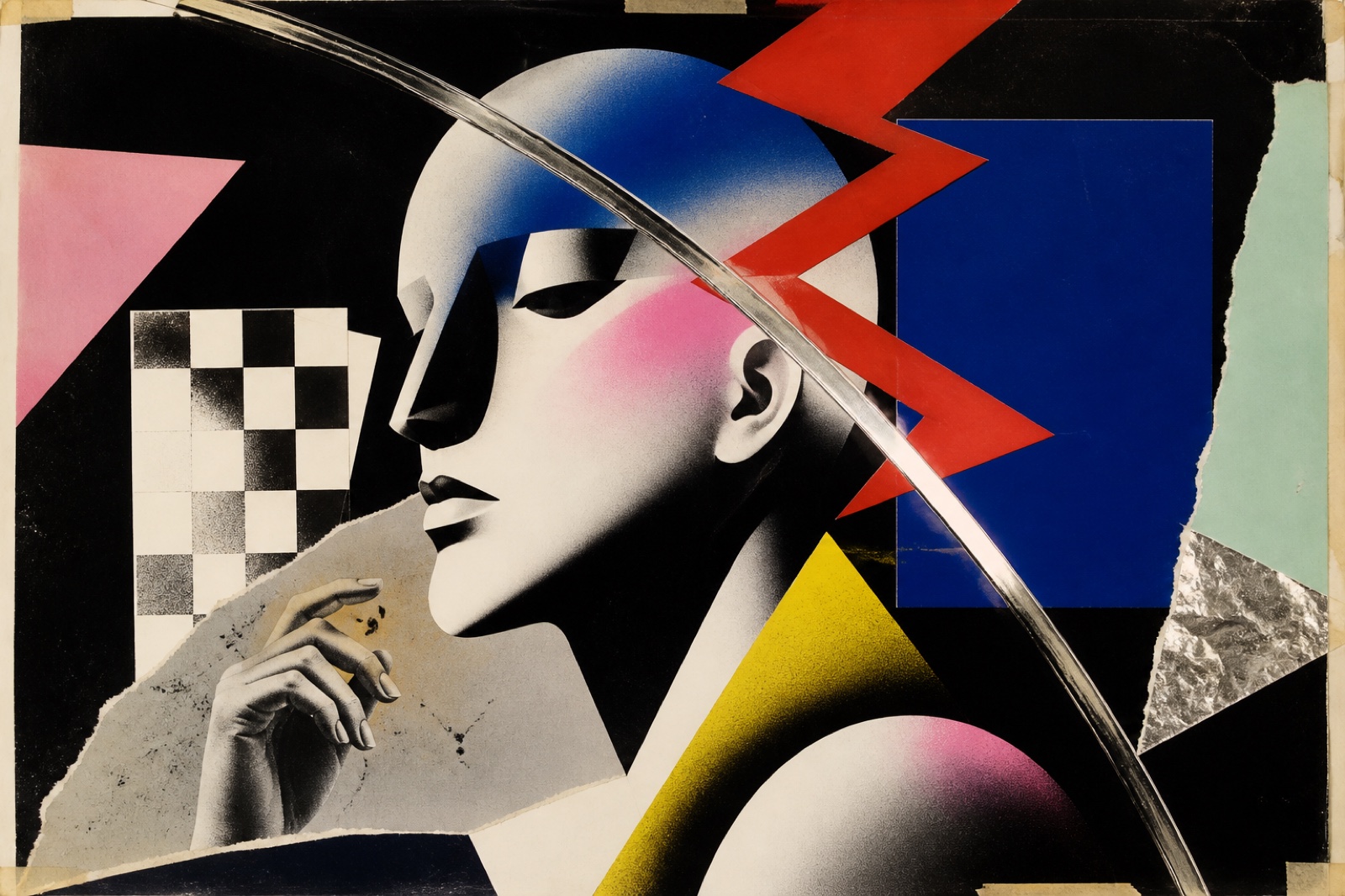
- Collage: Photomontage energy - cut-and-paste urgency from Dada, Constructivism, and punk zine culture combined into visceral visual communication
- Conceptual Art: Idea-driven art where concept takes precedence over aesthetics
- Conceptual Sketch: The drawing made before the thing exists: construction lines, blue pencil, marker and handwritten notes on tracing paper
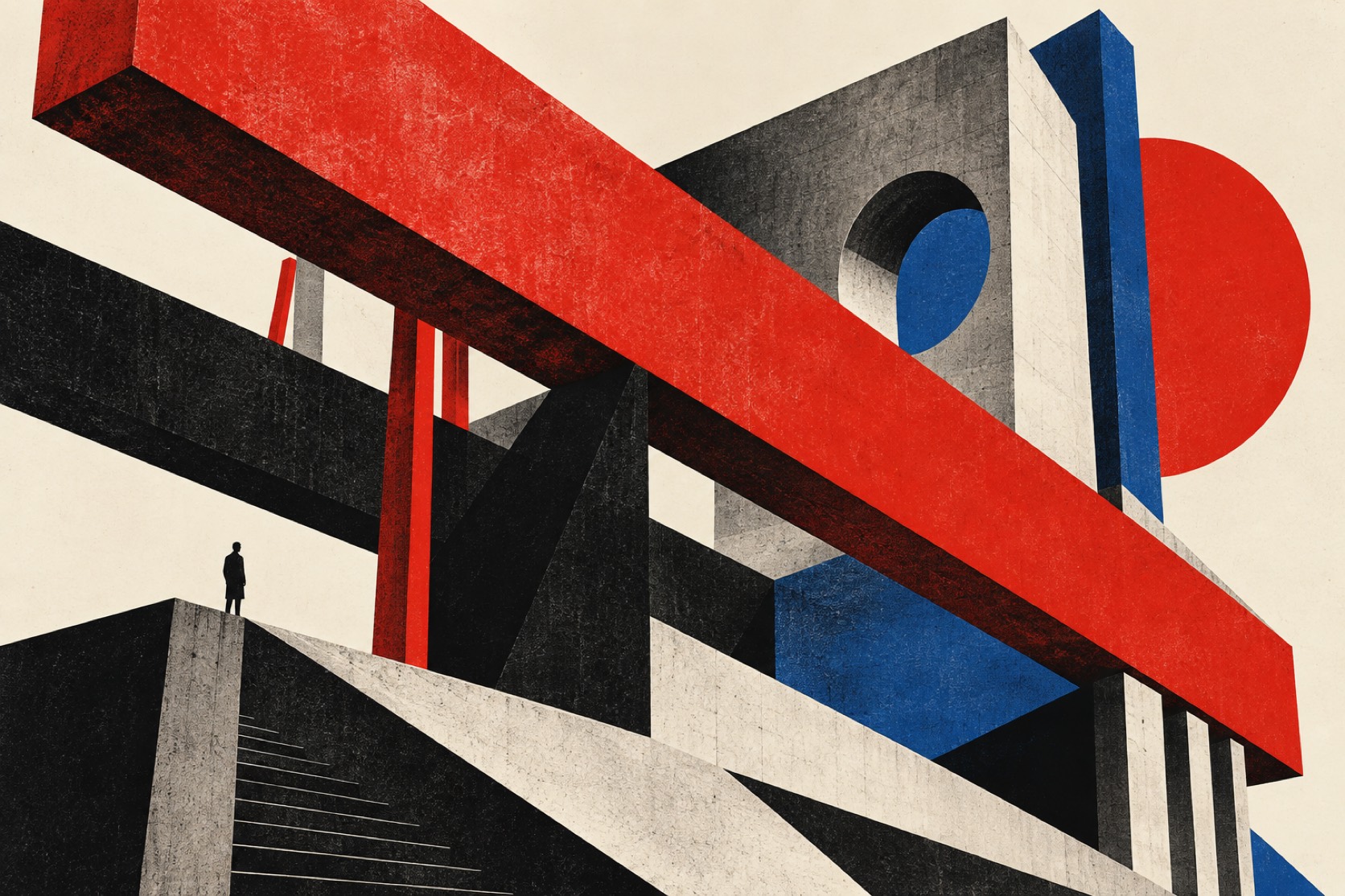
- Constructivism: Posters and books built like machines: diagonals, bars, circles and letterforms assembled in red, black and cream for maximum public reach
- Constructivist Architecture: The Soviet avant-garde weaponized architecture - Melnikov's rotating cylindrical house, Tatlin's spiraling tower to the Third International, Leonidov's crystalline social condensers: ideology made material and diagonal.
- Contemporary Architecture: No single doctrine - the live edge of global practice where Diébédo Francis Kéré builds with compressed earth and Kengo Kuma weaves timber lattices, both answering the same question: what should architecture do right now?
- Contextualism: Colin Rowe's figure-ground urbanism as discipline - the new building completes the city fabric rather than disrupting it, reading scale, material, and grain and responding with precision: Moneo in Mérida, Chipperfield in Berlin.
- Corporate Memphis: Flat illustration style with disproportionate figures, muted palettes, and tech-company ubiquity
- Cottagecore: Rural romanticism celebrating pastoral life, wildflowers, and handmade domesticity
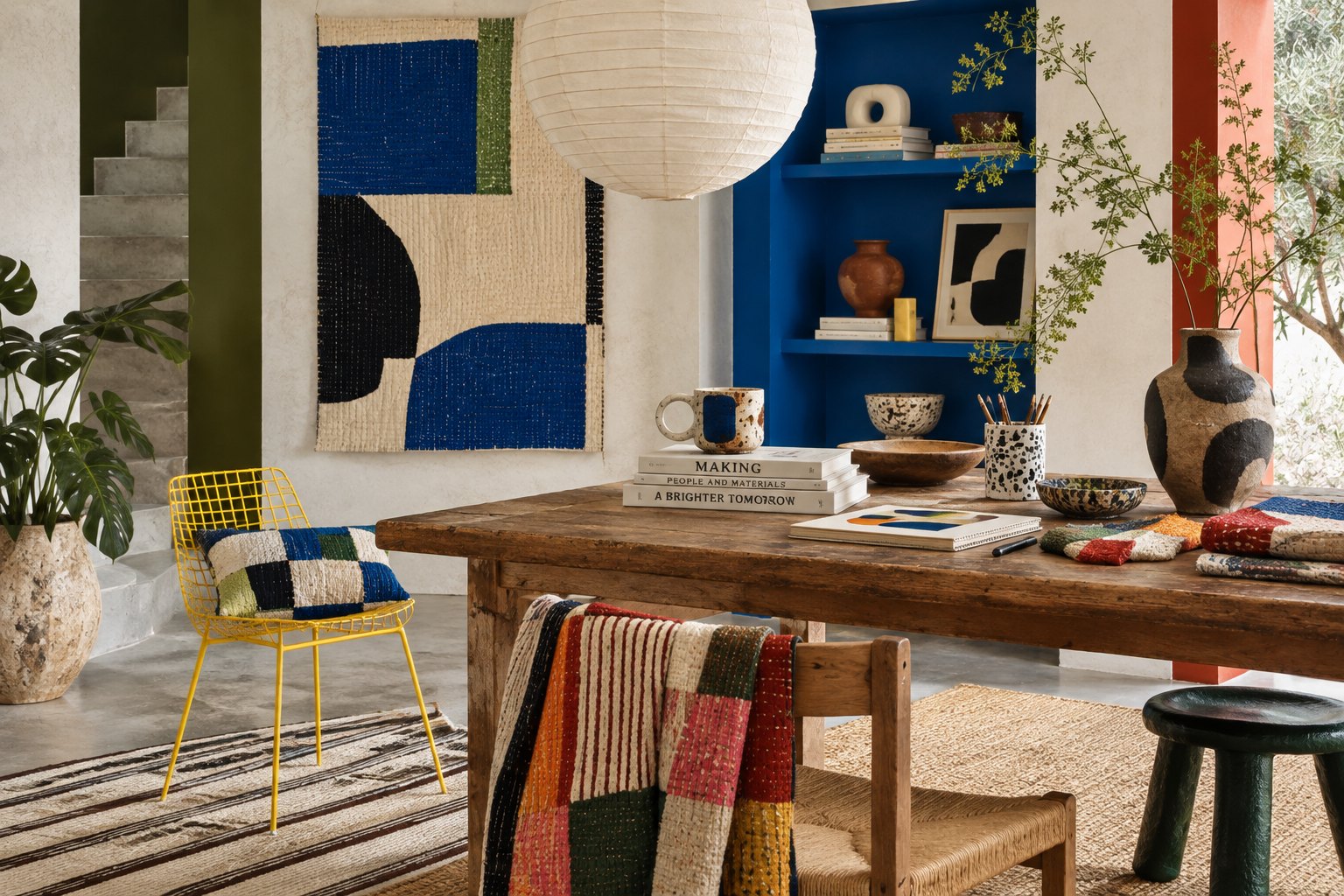
- Craft Modernism: Modern form made by hand: oiled wood, stoneware, paper lanterns and hand-stitched patchwork in cobalt, mustard, tomato red and olive, with the maker's marks left visible
- Critical Regionalism: Kenneth Frampton's theoretical weapon against placeless universalism - Álvaro Siza writing Portuguese light into every concrete wall, Glenn Murcutt threading corrugated iron through Australian bush, local material and climate elevated as resistance.
- Cubism: Fragmented forms showing multiple perspectives simultaneously
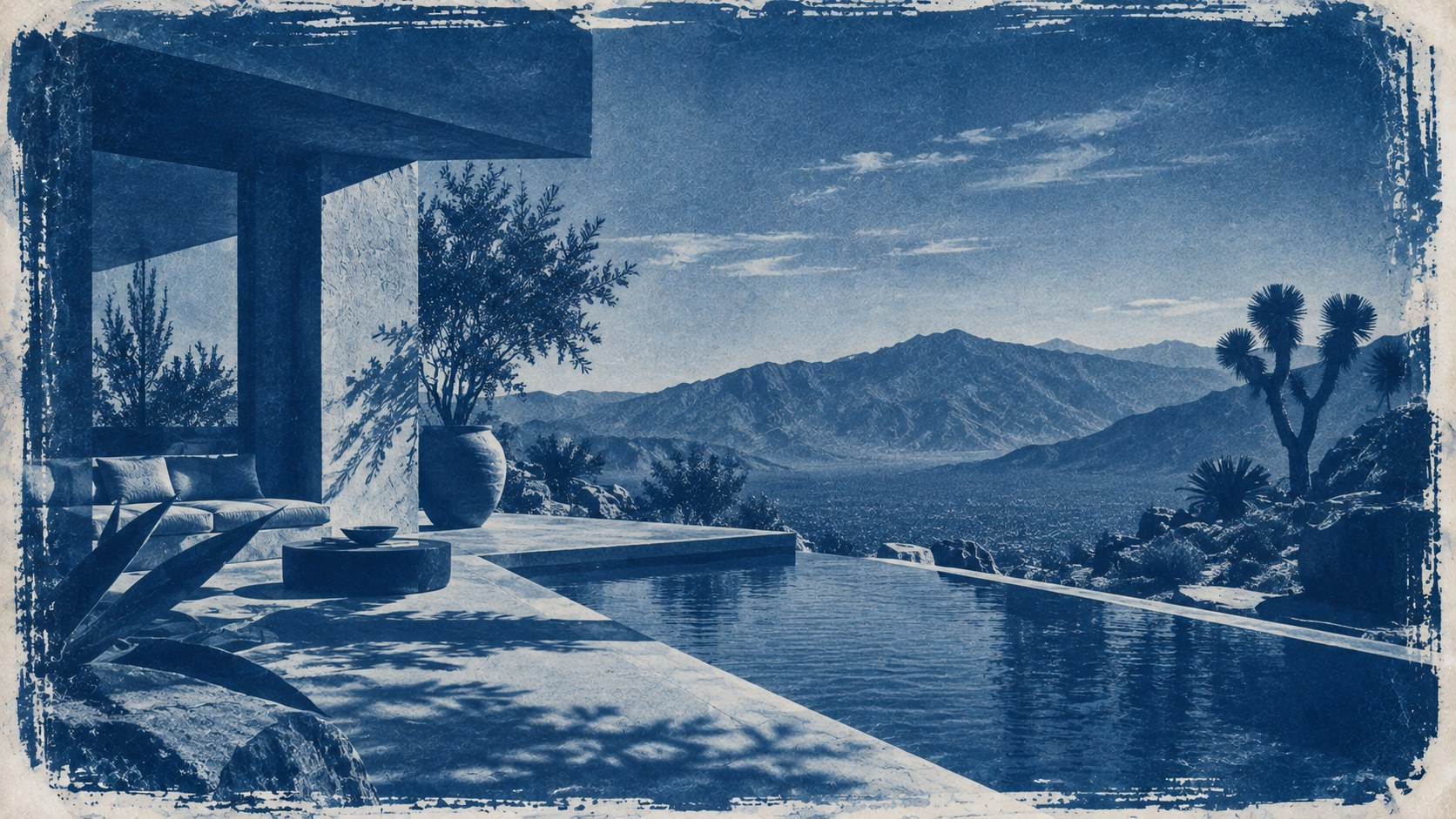
- Cyanotype Photography: Sun-printed iron chemistry: Prussian blue grounds, white silhouettes and brushed edges, from Anna Atkins's algae to contemporary botanical prints
- Cyber Minimalism: Stripped-down tech aesthetic with monospace type and terminal interfaces
- Cybercore: GeoCities maximalism and animated GIF chaos - early internet visual overload, MySpace era personalization, and browser-war-era web design as aesthetic nostalgia
- Cyberpop: Digital maximalism meets pop culture with saturated screens and interface elements
- Cyberpunk: High tech, low life: neon-drenched dystopia with rain-slick streets
D
- Dada: Found images cut apart and pasted back wrong on purpose: photomontage, ransom-note type and nonsense delivered with a straight face
- Dark Academia: Scholarly gothic aesthetic with old libraries, tweed, candlelight, and classical references
- Dazzle Camouflage: Clashing stripes and curves painted across a form to break its outline, the 1917 ship camouflage now used by sportswear, packaging and anything that wants to look fast
- De Stijl: Mondrian's paintings inhabited - Rietveld's Schröder House slid open its partitions to prove that primary-color planes could constitute space, and Theo van Doesburg declared that the right angle was the geometry of a new civilization.
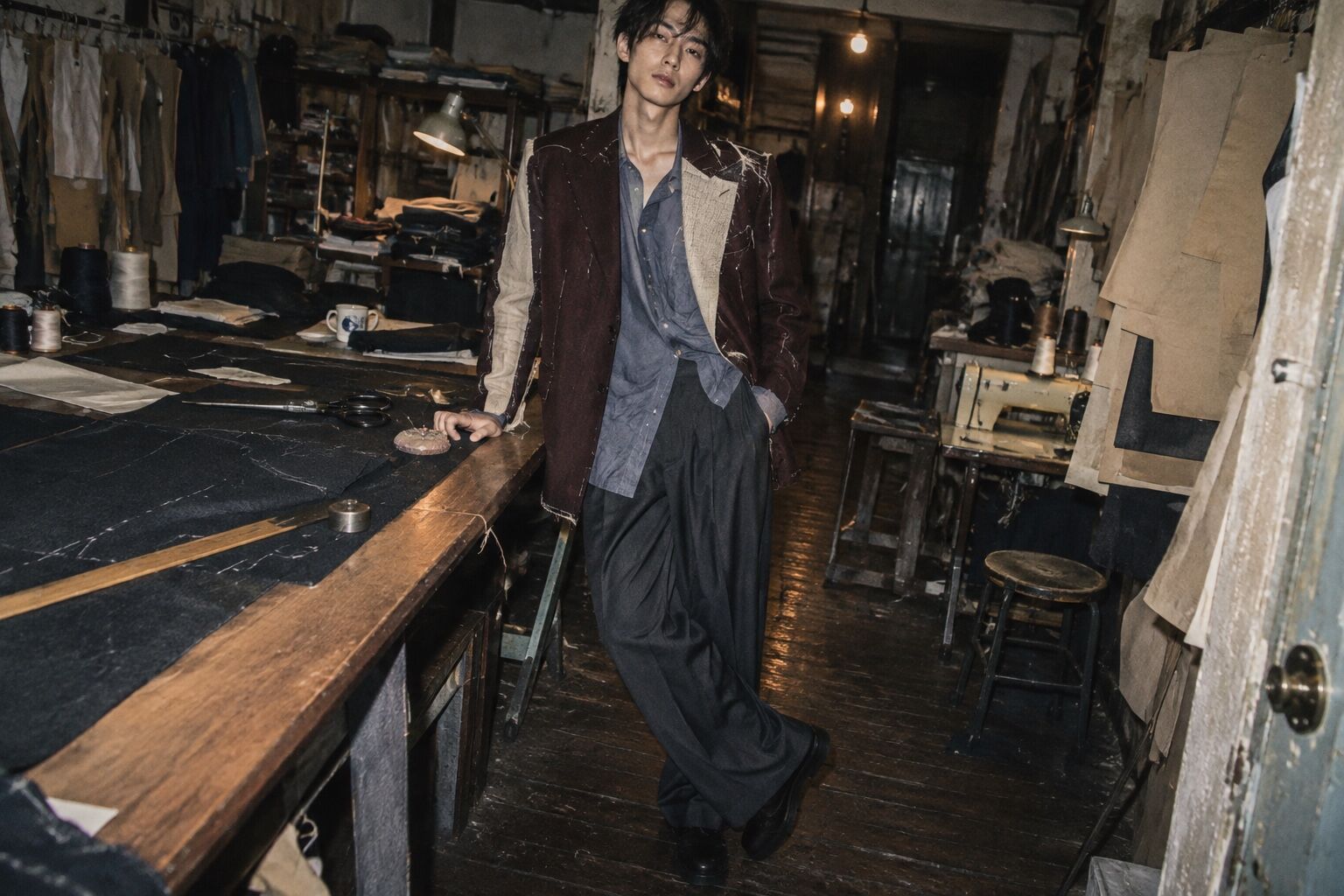
- Deconstructed Tailoring: The tailored jacket taken apart in plain sight: displaced lapels, moved closures, visible canvas and basting, hems left raw on purpose, all of it still wearable
- Deconstructivism: Fragmentation as architecture - Deconstructivism shattered the box into colliding planes, skewed angles, and controlled chaos, rejecting the right angle, from Gehry's titanium folds to Zaha Hadid's flying geometries and Libeskind's fractured voids.
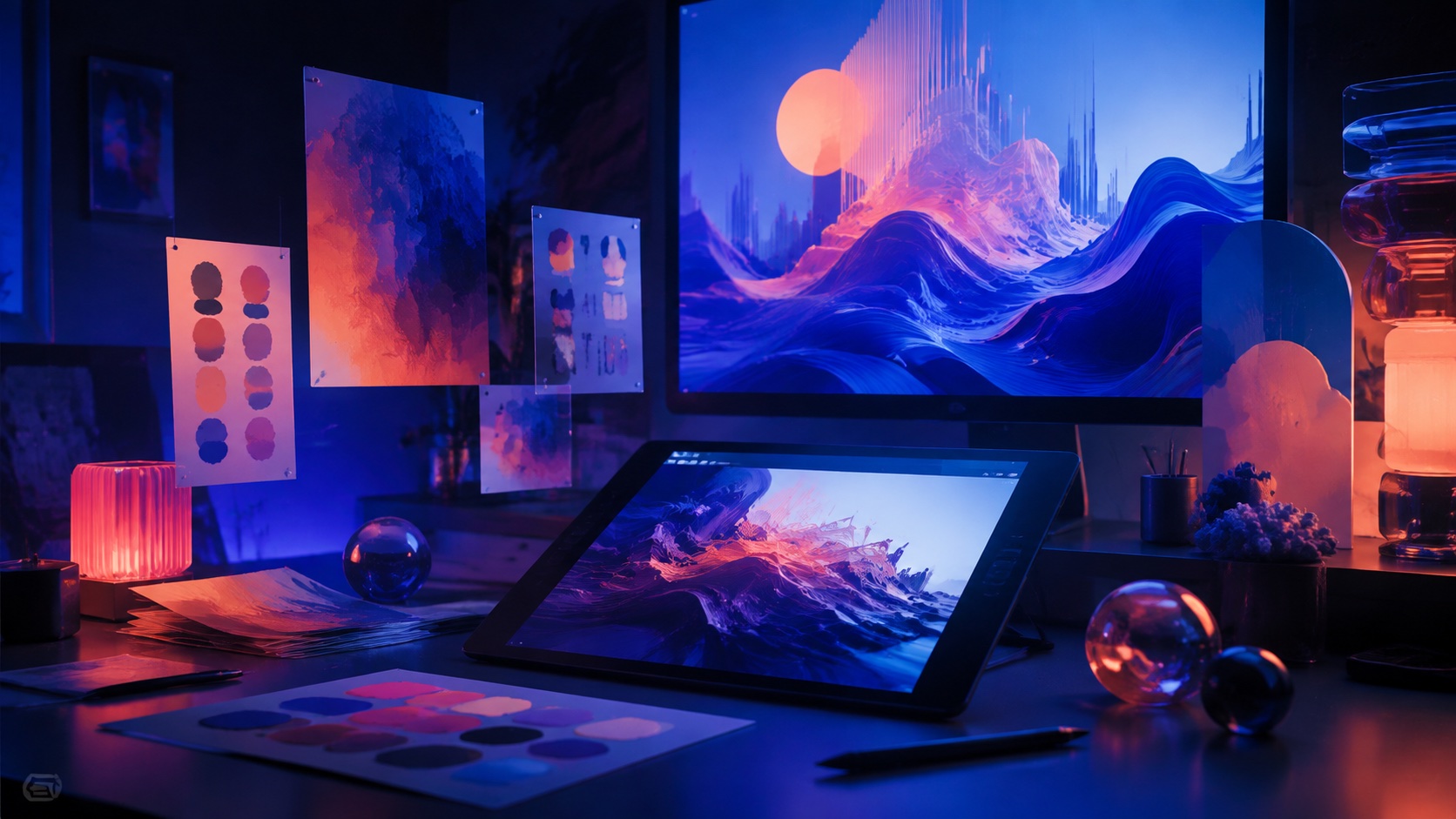
- Digital Art: Modern, tech-savvy artwork created with digital tools and software
- Direct Flash Editorial: Fashion and culture photography lit by a flash on the camera in a real place: a close wide lens, hard highlights, a cut shadow, colour at full volume and a pose that looks caught
- Distorted Portraits: Human faces stretched, warped, or manipulated for emotional effect
- Documentary Photography: Long-form photography rooted in real lives, accountable observation, and the context around a subject
- Drawing / Sketch: Line-based artwork, sketches, and hand-drawn mark-making
- Dreamcore: Surreal liminal nostalgia with uncanny spaces, soft focus, and childhood memory distortion
E
- Editorial Interface: Magazine-inspired digital design with serif headlines, columnar text blocks, generous whitespace, and a restrained palette that lets typography lead
- Editorial Photography: A photograph shaped by an idea: art direction, styling, location, and gesture working as one visual argument
- Embossed Foil: Words pressed into crumpled gold and silver leaf, read by their highlights rather than their colour: no ink, only light on a struck surface
- Ethereal: Light as a substance: haze, backlight, soft focus and sheer cloth until the subject seems made of air
F
- Fabric Over Photo: Real lace or tulle laid across a printed portrait and photographed again: the weave sharp on the paper, the face behind it soft and half gone
- Fashion Design: Clothing, accessories, and style that express identity and culture
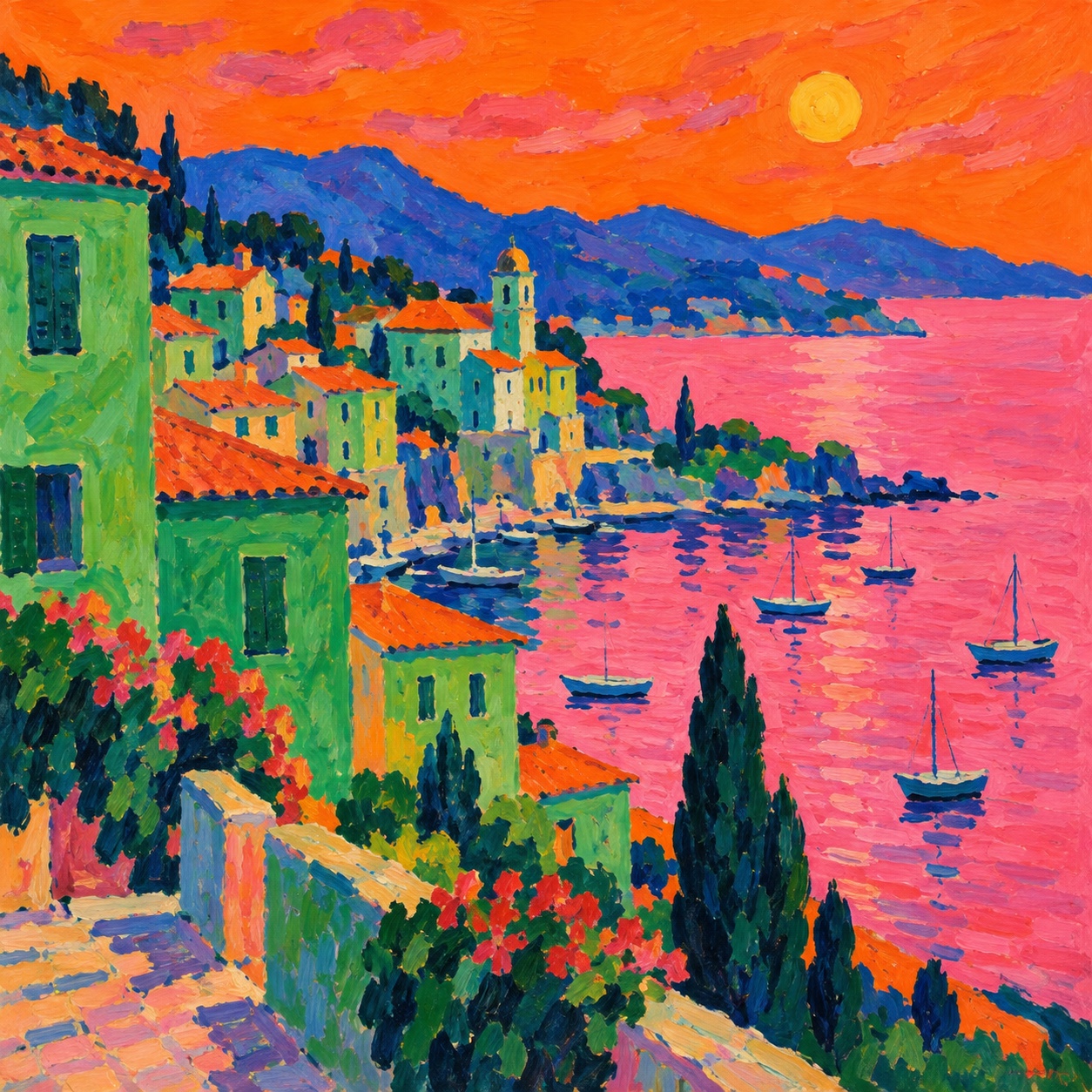
- Fauvism: Colour used wrongly on purpose: green faces, red seas and violet trees in fast, thick, unblended strokes, from the 1905 Salon d'Automne to an illustration language for brands that want joy
- Flat Design: Zero dimension, bold fills, and geometric clarity - the design language that stripped the digital world of its shadows and gradients
- Font Mixing: Intentional typeface clashing - multiple voices on one page, editorial collision as aesthetic principle, David Carson and Stefan Sagmeister as guiding spirits
- Frutiger Aero: 2004–2013 glossy nature-tech optimism with skeuomorphic glass, water, and green landscapes
- Future Funk: Disco-sampling optimism with anime aesthetics and city-pop color palettes
- Futurism: Speed painted as repeated form and force lines, machinery and the city in motion, with type that is set off like an engine
G
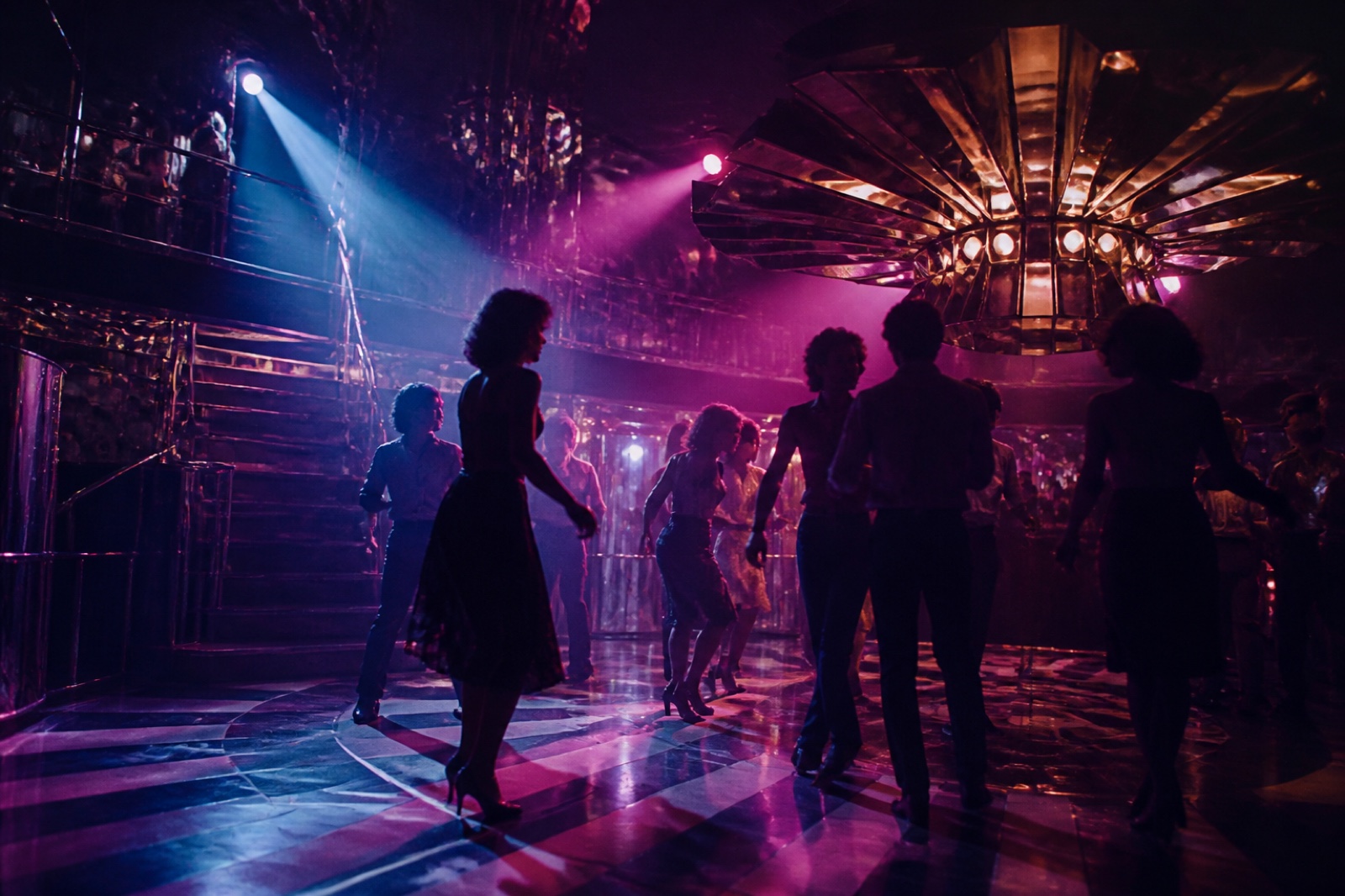
- Gen-X Soft Club: Late-night 90s club vibes with soft focus, purple haze, and understated cool
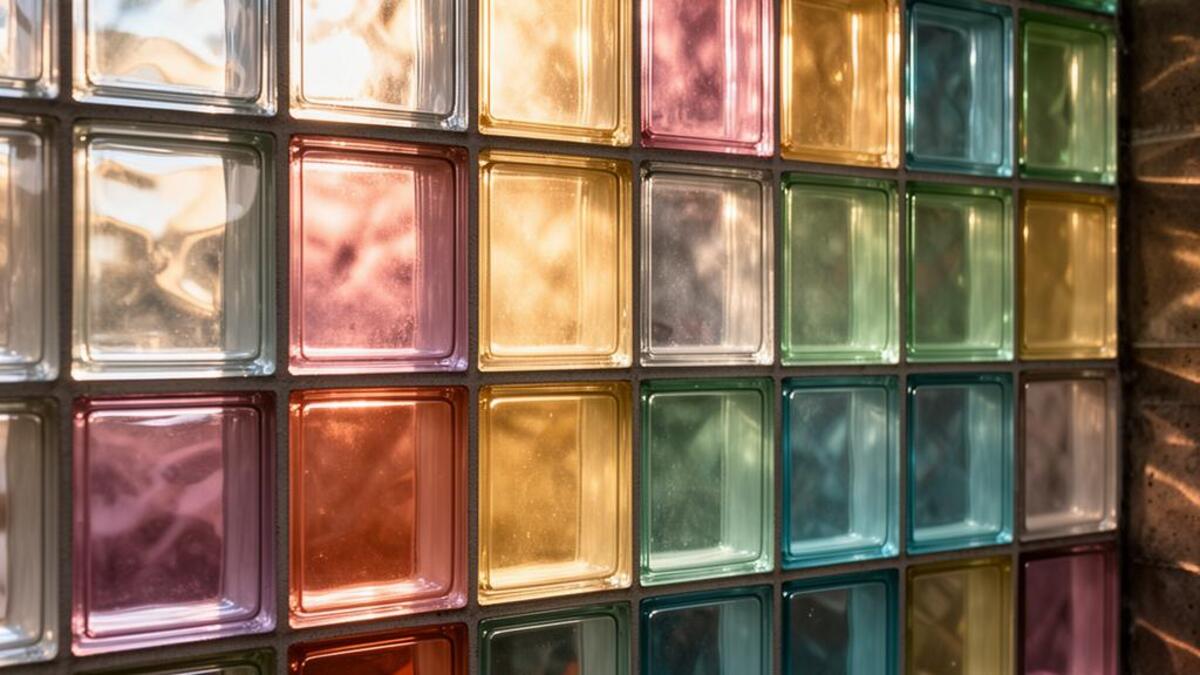
- Glass Block: 80s architectural glass with prismatic light and transparent building blocks
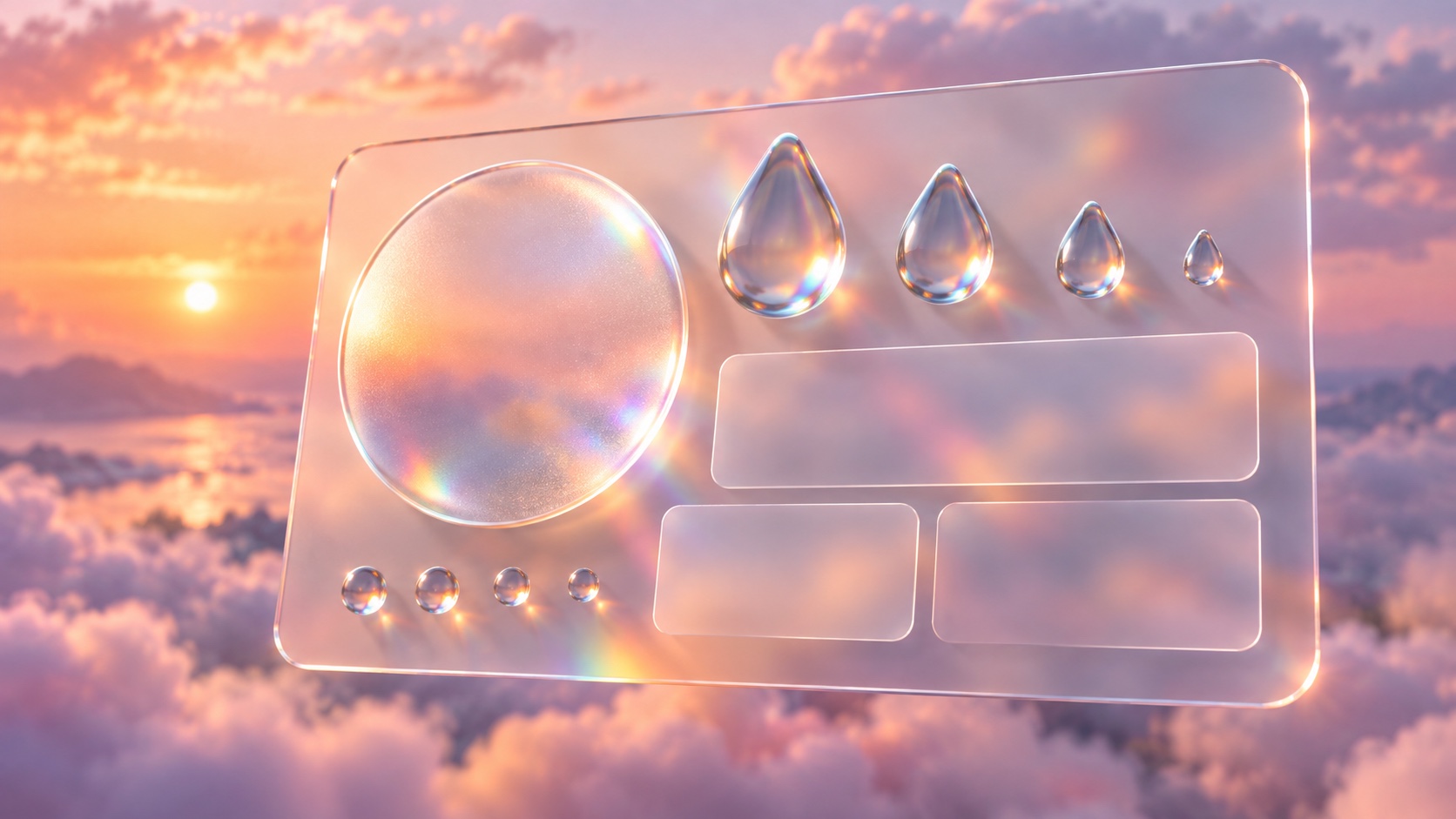
- Glassmorphism: Frosted glass surfaces with backdrop blur and floating transparency
- Glitch: Digital artifacts, data corruption, and intentional visual errors
- Googie: Space Age optimism in roadside form - Googie threw boomerang roofs, atomic starbursts, cantilevered canopies, and neon into the American car landscape, selling the future one coffee shop and gas station at a time.
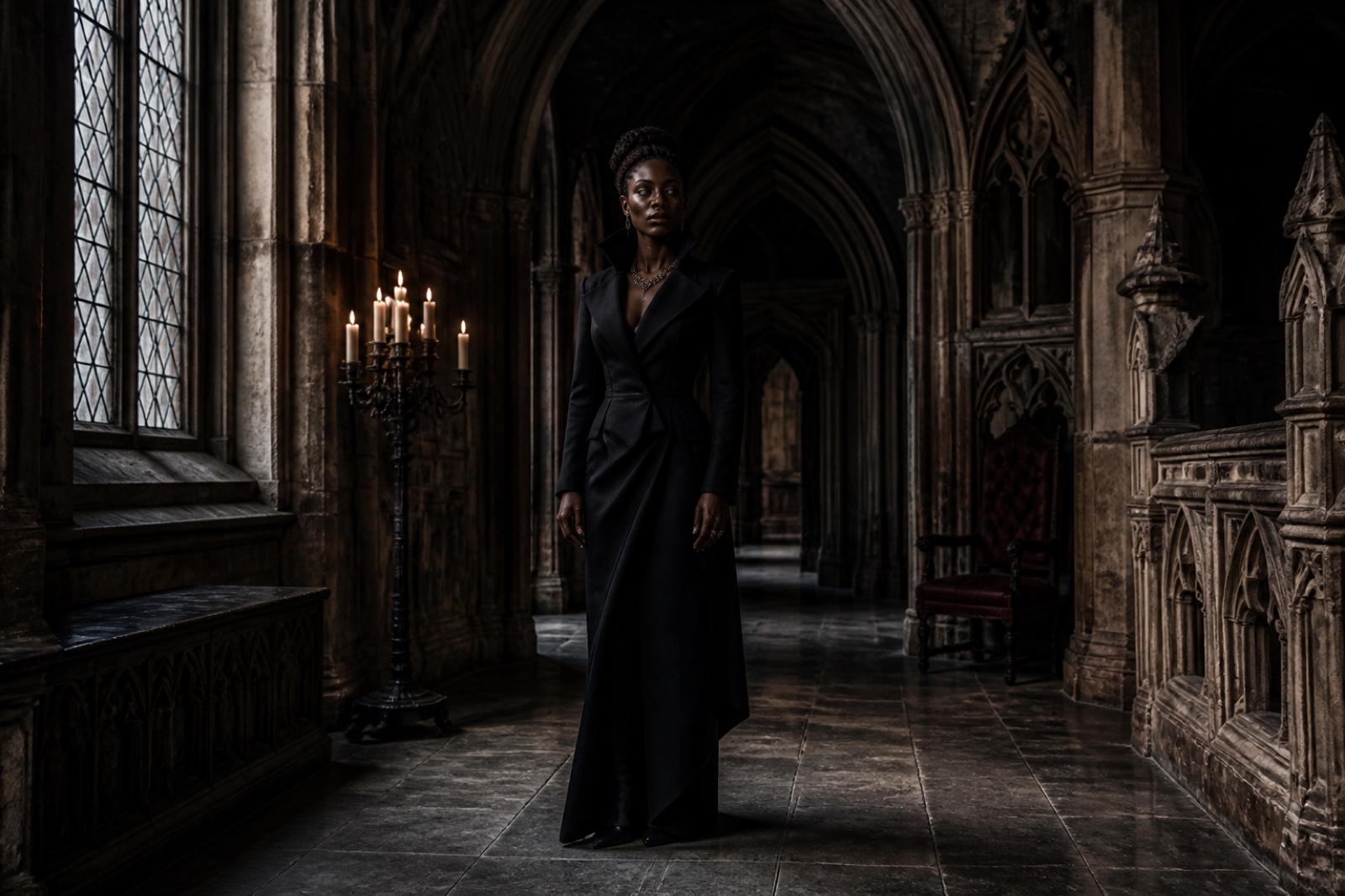
- Gothic: Dark romanticism with ornate details, dramatic shadows, and Victorian undertones
- Gothic Architecture: The medieval engineering miracle that made stone weightless - pointed arch, flying buttress, and ribbed vault working together to dissolve walls into stained glass at Chartres, and reaching its delirious chromatic limit at Sainte-Chapelle.
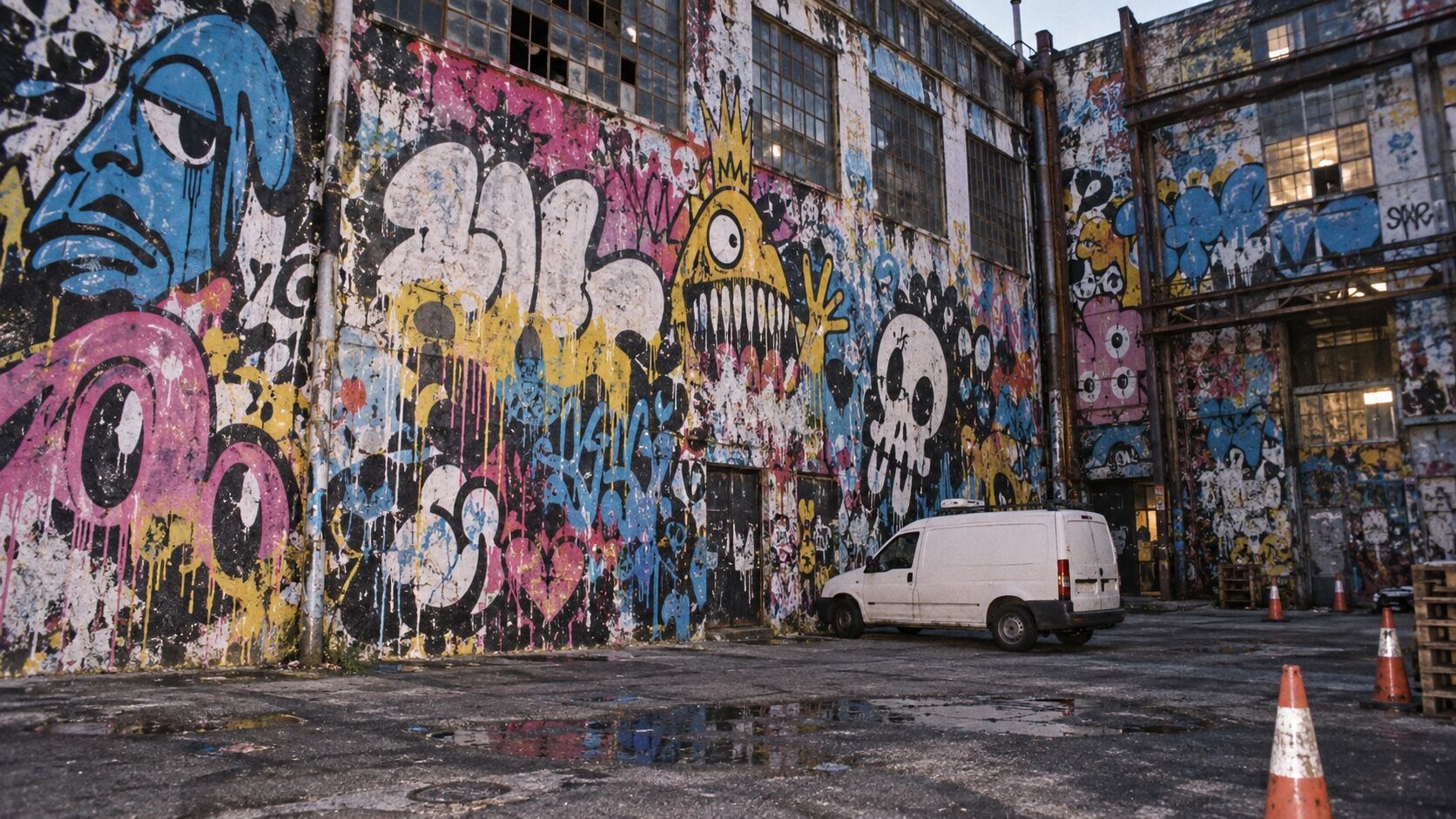
- Graffiti / Street Art: Urban street art with bold colors and powerful social commentary
- Graffiti Over Photo: A clean studio shot defaced with one hand-sprayed tag in a single loud colour, drips and all, with the photograph underneath left sharp
- Grainy Gradient Blur: Atmospheric gradients with film grain and soft depth-of-field effects
- Grunge: Thrifted layers, washed denim, flannel, worn boots, and the raw quiet of alternative music culture
H
- Halftone: Continuous tone broken into printed dots: newspaper screens, Ben-Day fields and CMYK rosettes, enlarged until the dot is the image
- Hand-drawn Doodles: Sketchbook spontaneity, ballpoint and marker energy - the warmth of the human hand made visible in every line and letter
- High-Tech Architecture: Structure and services made visible and celebrated - High-Tech turned buildings inside out, exposing steel trusses, ducts, and circulation in bright industrial colour, from the Pompidou Centre to Lloyd's of London and Foster's HSBC tower.
- Hollywood Regency: Glamour as an interior: lacquer, mirror, brass, velvet, black-and-white floors and oversized plasterwork, from studio-era Los Angeles and Dorothy Draper's hotels
- Hyperpop: Maximalist, glitchy, and loud, with chrome type, neon gradients, and a deliberate overload that treats restraint as the enemy
I
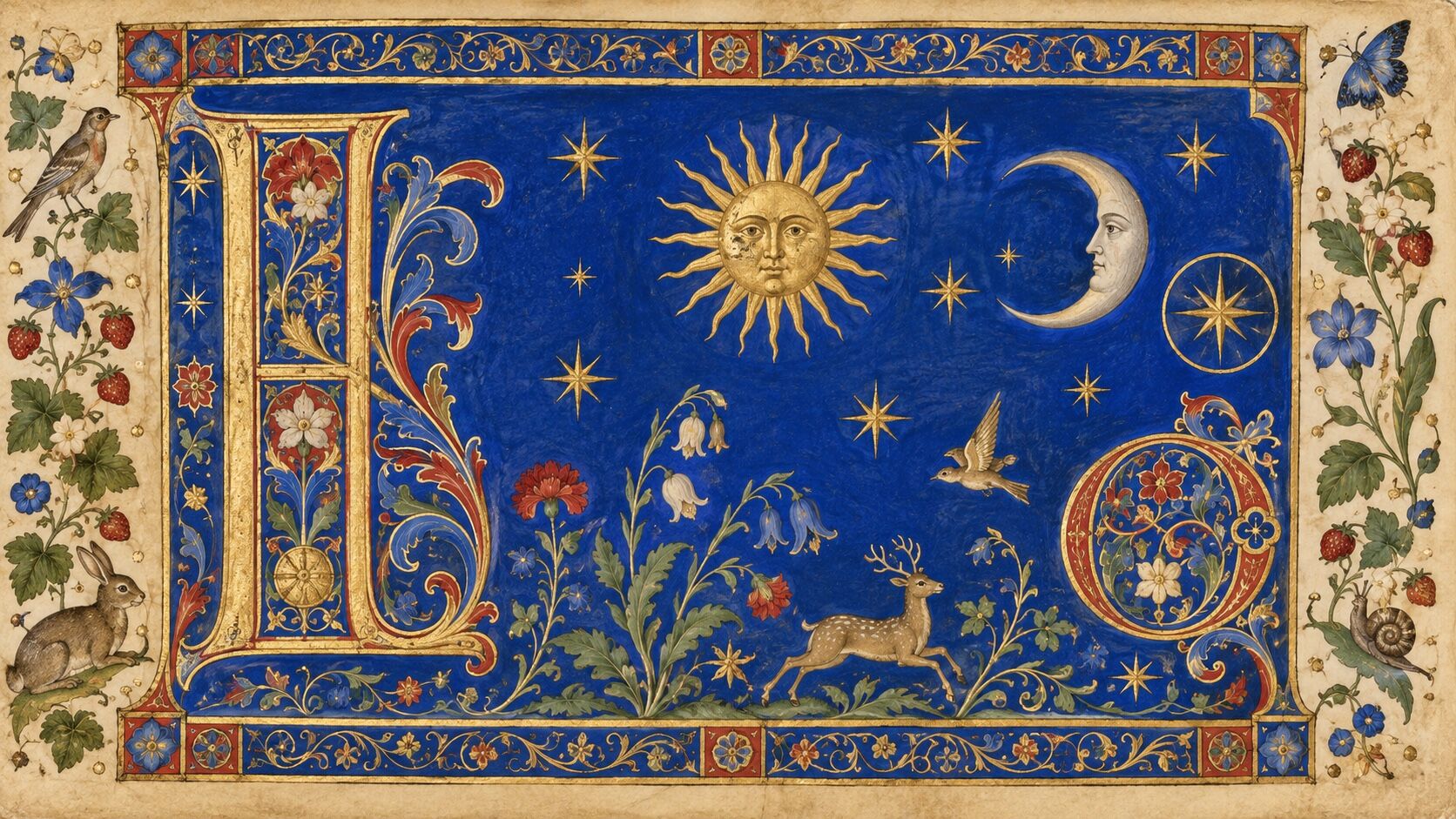
- Illuminated Manuscript: Gold leaf, dense borders, decorated initials and creatures in the margins: the medieval hand-made book, revived by William Morris and again now
- Illustration: Hand-drawn or painted images for editorial and commercial use
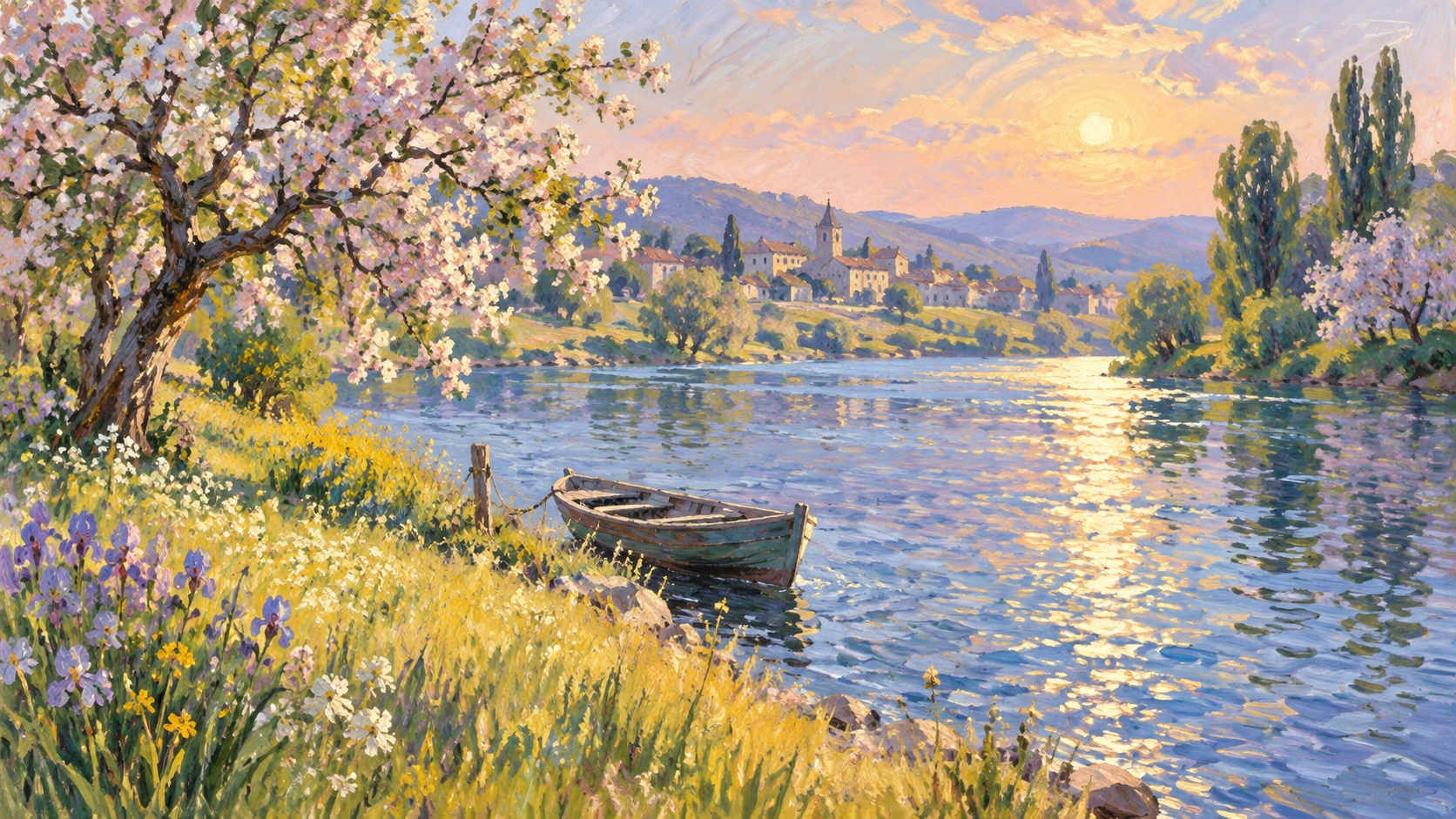
- Impressionism: Light-focused art capturing fleeting moments with visible brushstrokes
- Indie Groovy: Organic curves, warm earth tones, and vinyl record warmth - the visual language of independent makers, small-batch goods, and slow living
- Industrial Architecture: The aesthetic of productive space - Bethlehem Steel, Manchester cotton mills, Chicago meatpacking - exposed trusses, brick bearing walls, and polished concrete that carries the memory of what happened here before culture moved in.
- Infrared Photography: Real landscapes in false colour: foliage turned pink and coral, water and sky turned teal, with the optics, the weather and the grain left honest
- International Style: The glass tower as global default - after Johnson and Hitchcock's 1932 exhibition, Mies's steel skeleton and curtain wall became the template for every postwar corporate headquarters from New York to Tokyo to São Paulo.
- Italo Disco: European club glamour with airbrushed romance and chrome accents
J
- Japandi: Warm minimalism born from Japanese wabi-sabi and Scandinavian hygge. Natural materials, craftsmanship over decoration, quiet functionality that feels both serene and lived-in
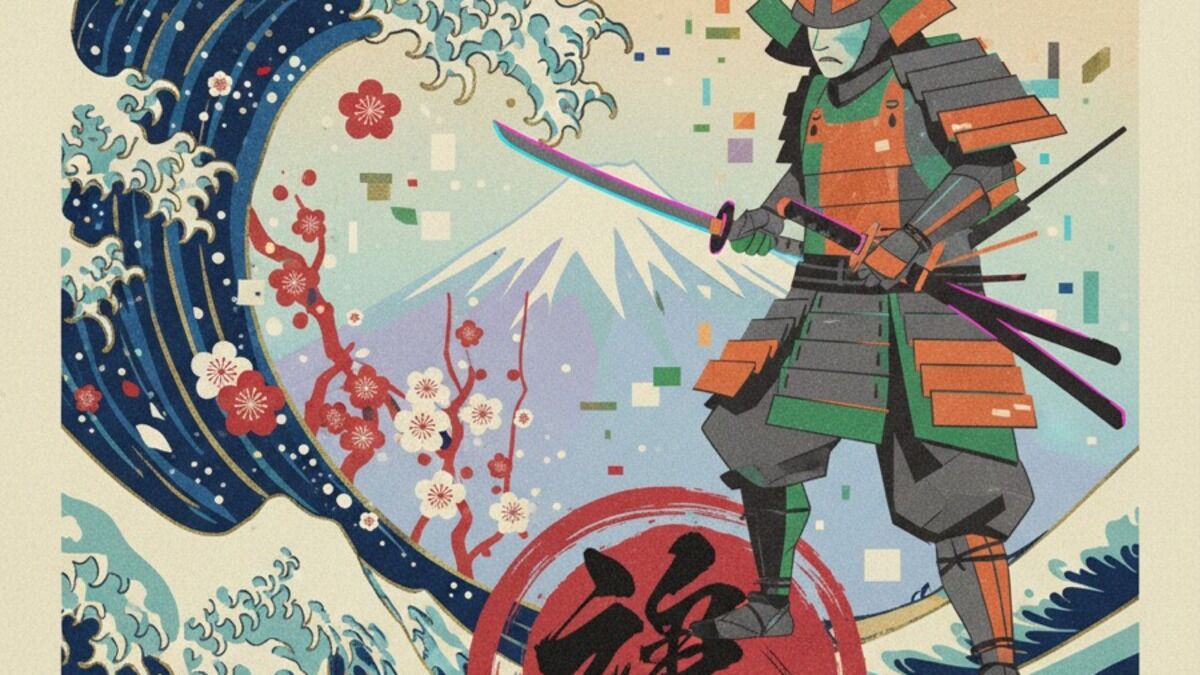
- Japanese Graphic: Bold asymmetric layouts, kanji-roman typography collisions, and a design tradition that treats white space as active force
- Japanese Minimalism: Ma - the charged void between elements - and wabi-sabi's embrace of impermanence and asymmetry: Ando's shadow-precise concrete, SANAA's dissolved glass boundaries, Kuma's natural material grids that absorb rather than impose.
K
- Kawaii: Japan's culture of cute as a design system: round forms, dot eyes, tiny mouths and pastel colour, with a face on everything
- Kidcore: Nostalgic childhood aesthetics with primary colors, toys, and playful innocence
- Kitsch: Deliberately excessive, sentimental, and mass-produced. Flamingos, gold frames, velvet, and airbrushed sunsets embraced without irony
L
- Liminal Space: Empty transitional places: impossible atria, abandoned pools, and backrooms that feel eerily familiar
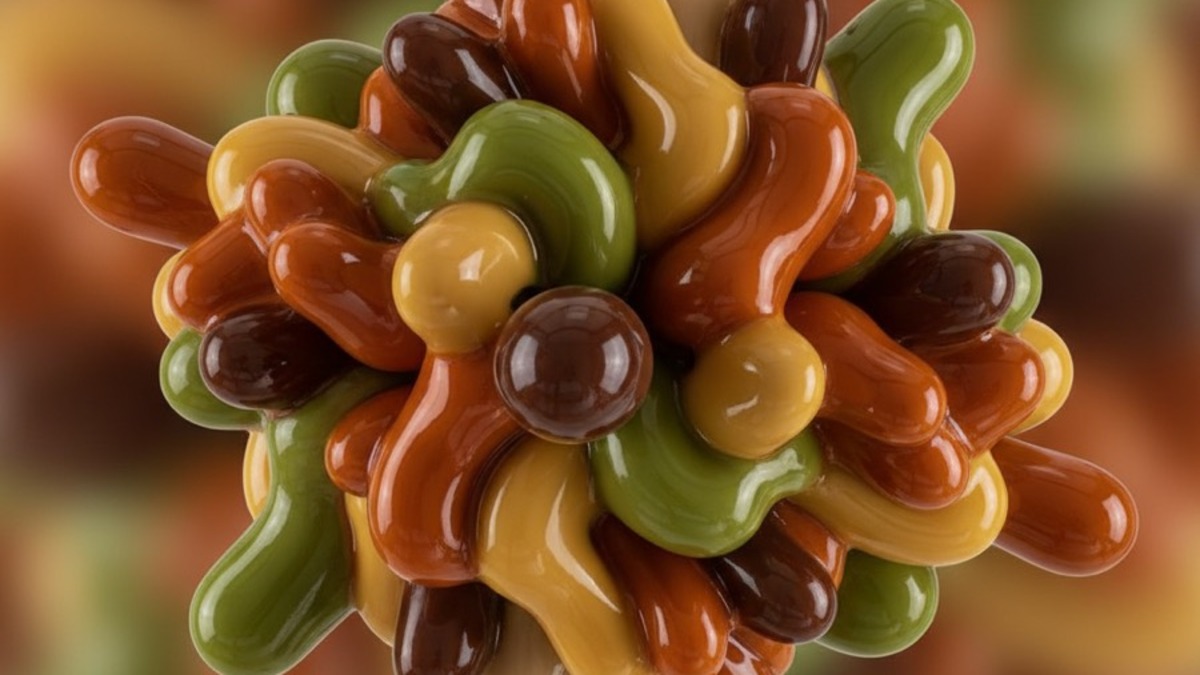
- Liquid Retro: Amoeba blob shapes, lava lamp fluidity, and 70s earth palettes - California psychedelia refined into graphic design language
- Luxury Minimal: Restrained opulence with negative space, whisper-quiet palettes, and premium materials
M
- Magical Realism: Everyday scenes with one quietly impossible element, where photography meets a gentle surrealism that never explains itself
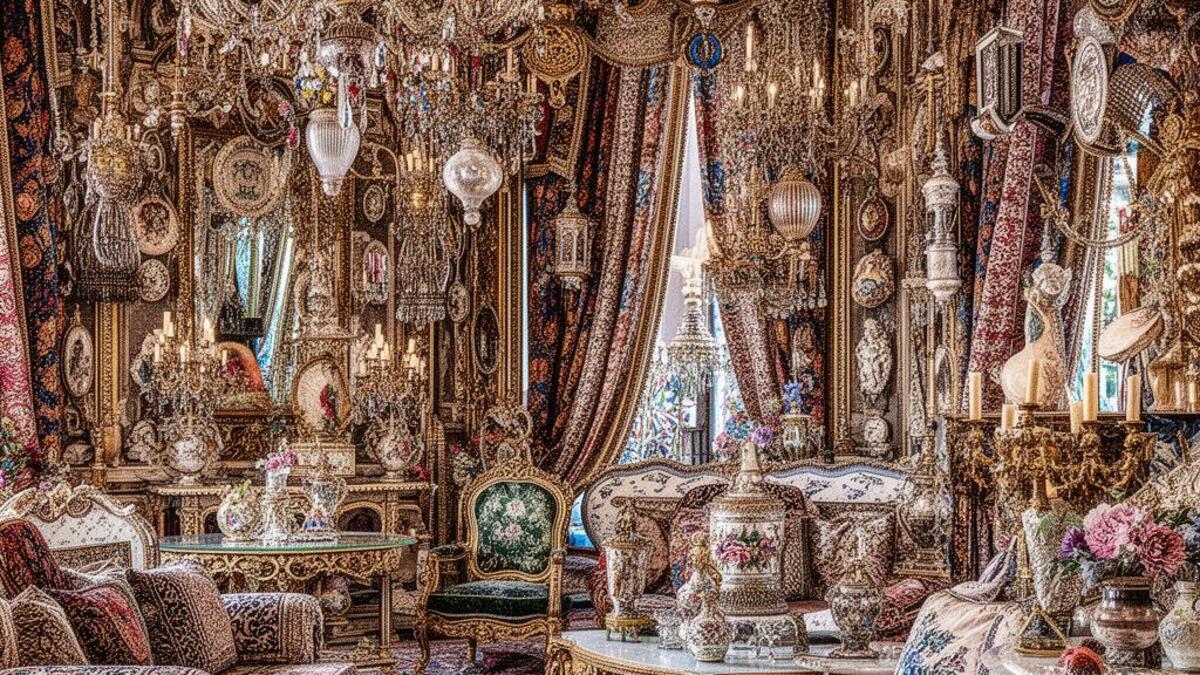
- Maximalism: More is more: layered patterns, saturated color, and decorative abundance
- Mediterranean Architecture: The sun-logic of three thousand years - Cycladic cubes on volcanic caldera, Moroccan riad courtyard cooling, and the Alhambra's geometric water gardens as the mathematical definition of paradise: thick walls, deep shadow, water at the center.
- Memphis: 80s Italian design movement with geometric patterns, terrazzo, and bold colors
- Metabolism: Buildings imagined as living organisms - Japan's Metabolists designed megastructures that could grow, adapt, and shed parts, with plug-in capsule units clipped onto service cores, a radical post-war vision of the city as biology.
- Metallic Typography: Chrome and gold letterforms with reflective surfaces - the foil-press luxury of heavy metal logos meeting high-end packaging craft
- Mid-Century Illustration: Postwar optimism translated into flat gouache shapes, atomic motifs, expressive linework and the tactile grain of ink on paper
- Mid-Century Modern: Postwar optimism made domestic - Case Study Houses for a California that believed design could improve every life: Eames plywood and fiberglass, Neutra's steel-frame houses opening to the canyon, and Saarinen's organic plastic furniture for the jet-age family.
- Mixed Media: Collage, assemblage, and hybrid works that combine multiple materials, techniques, and disciplines into unified compositions
- Monolithic Architecture: Mass as the only argument - Valerio Olgiati's Plantahof Auditorium carved from a single white volume, Aires Mateus's Portuguese houses closed to the road and open to the sky, Peter Zumthor's Bruder Klaus chapel lit by a single oculus.
- Motion Design: Design that uses time, rhythm, movement and transition as core visual materials: title sequences, idents, kinetic type, product films and loops
- Music: Visual design that captures the energy and identity of music
N
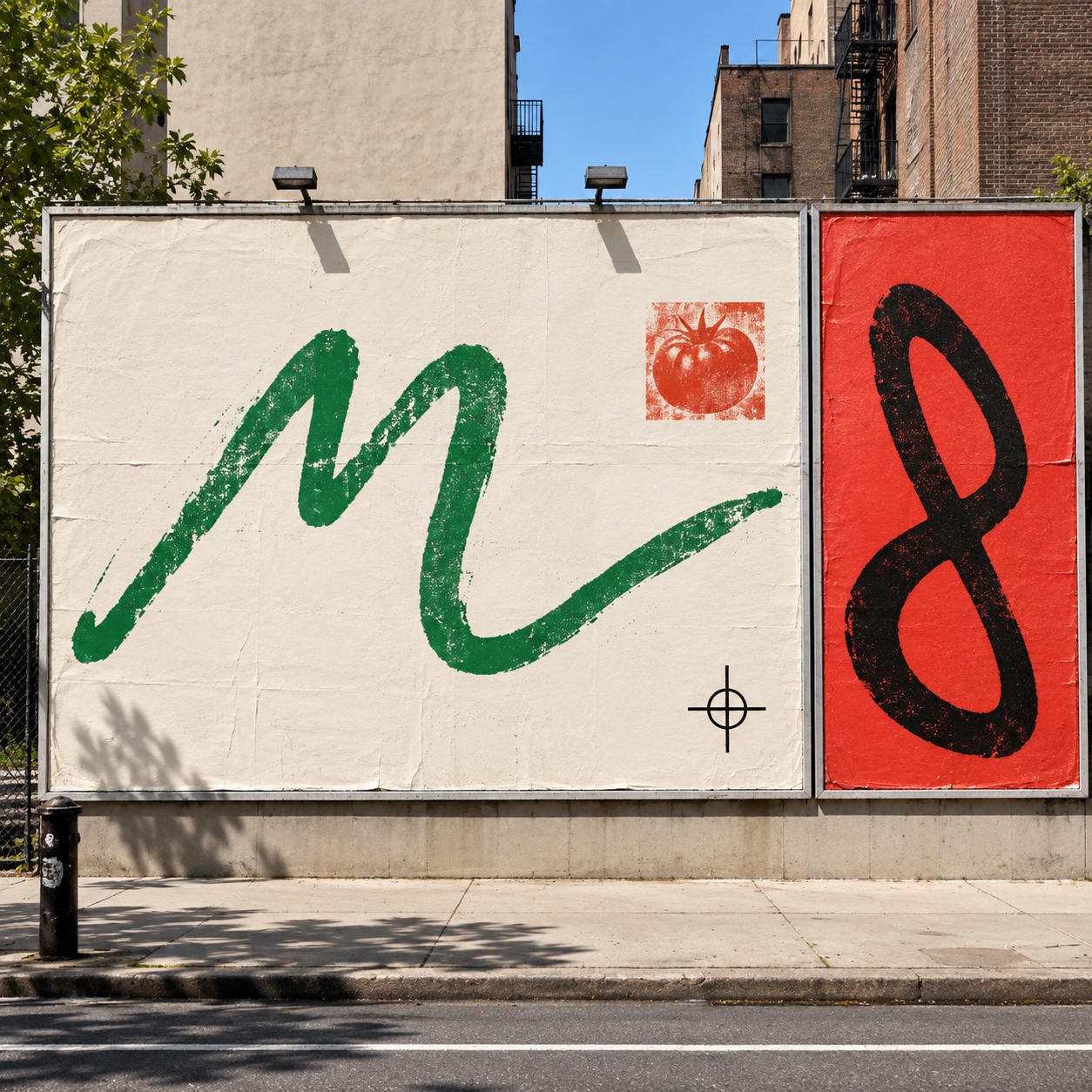
- Naïve Design: Graphic naïveté as a brand system: oversized abstract glyphs, loose handwritten marks, simple smiley, flower and fruit symbols, screenprint grain on cream uncoated paper, a six-colour palette and generous empty space
- Neo 3D: Inflatable digital objects, soft subsurface scattering, and the Blender-community aesthetic of perfectly imperfect synthetic sculpture
- Neo Swiss: Swiss grid logic rebuilt for screens and motion: oversized grotesks, visible grids, cut-out photography and one loud accent
- Neo-Futurism: Computation-enabled structural spectacle - Calatrava's bone-white cable-stayed bridges, Hadid's fluid ground planes, BIG's hedonistic pragmatism - buildings that perform the idea of the future for cities that can afford to commission it.
- Neo-Modernism: Modernism returned to - not as nostalgia but as unfinished business: David Chipperfield's immaculate civic precision, Annabelle Selldorf's cultural institutions, Johnston Marklee's material exactness, all recovering what postmodernism abandoned.
- Neoclassical: Greek-Roman revival brought to contemporary design - white marble, formal symmetry, engraved quality, and Enlightenment rationalism as aesthetic foundation
- Neoclassical Architecture: The Enlightenment's archaeological return to Greece and Rome - Schinkel's Altes Museum colonnade reading Prussian sky against Greek portico, Soane's Bank of England as a ruinous fantasy, Jefferson's UVA as a republic of reason built in brick and white column.
- Neubrutalism: Raw, bold interfaces with heavy borders, stark shadows, and unapologetic contrast
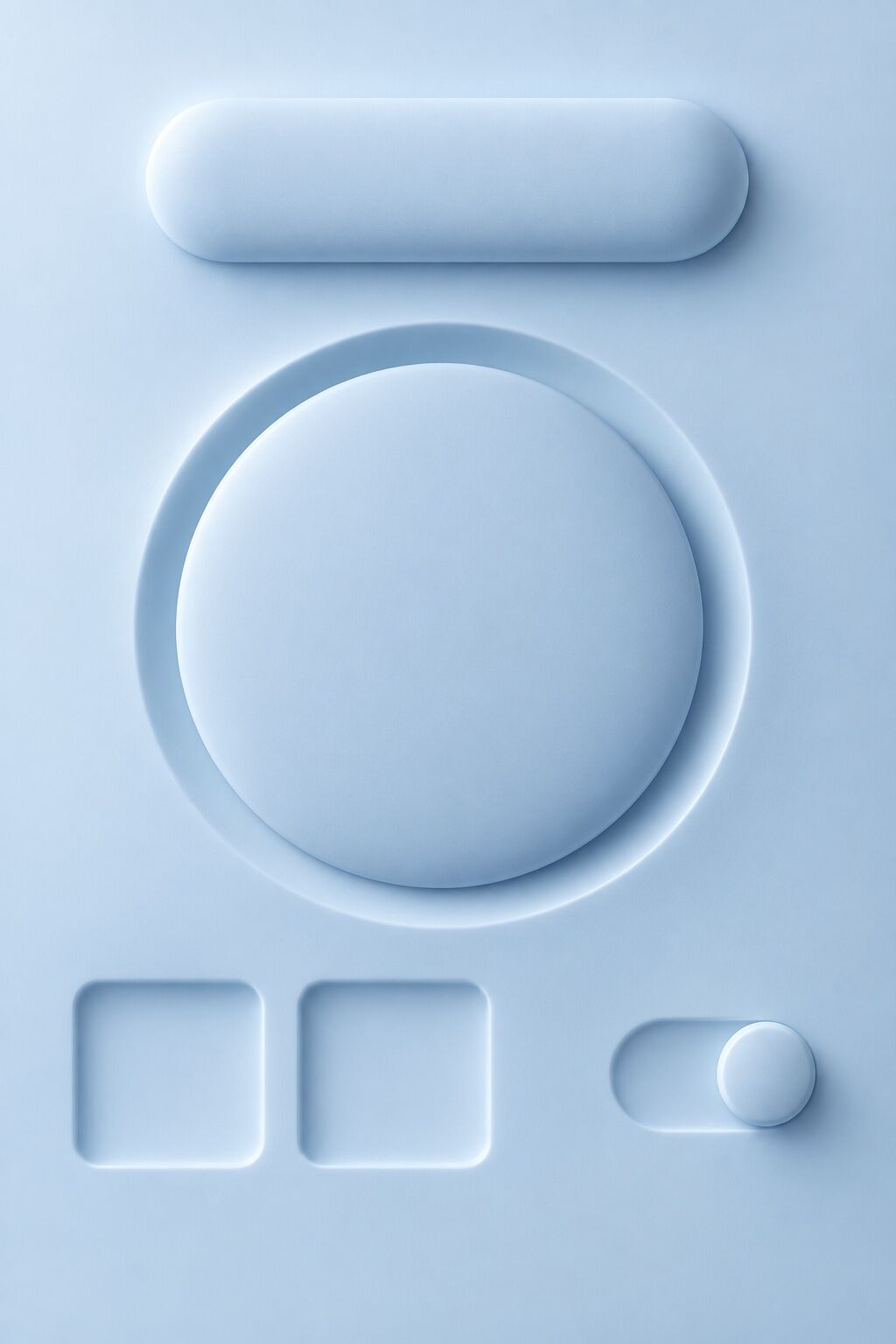
- Neumorphism: Soft extruded interfaces with subtle shadows creating tactile depth
- New Wave: Angular geometry, halftone patterns, and xerox aesthetics
- Normcore: Anti-fashion, aggressively ordinary: default settings, blank templates, and deliberate blandness
O
- Op Art: Black-and-white pattern engineered to move in the eye: warped grids, vibrating stripes and moire, with colour let in only to interrupt
- Organic Architecture: Wright's insistence that buildings must grow from their sites like trees from soil - Fallingwater cantilevered over Bear Run creek, the Guggenheim's inverted ziggurat spiral, and the principle that nature has never made a straight line.
P
- Painting: Traditional artistic expression using brushwork, color, and canvas
- Parametric Architecture: Form generated by algorithm - Parametricism uses computational rules and digital fabrication to produce fluid, continuously differentiated surfaces no hand could draw, where every panel and beam is a variable in a single mathematical system.
- Performing Arts: Theater, dance, and performance art captured in visual form
- Photography: Professional photographic images capturing real-world subjects and scenes
- Photorealism: Camera-level detail rebuilt by hand: reflections, chrome and ordinary daylight painted with the gesture taken out
- Pixel Art: Retro video game sprites and limited palettes - the 8-bit and 16-bit fidelity of NES and SNES as a fully realized aesthetic language
- Playful Platformer: Chunky rounded shapes, candy colour, floating blocks, gems and an original three-shape hero: the world of a platform game rendered like a toy set, built for delight
- Pointillism: Pictures built from thousands of dots of pure colour, left unmixed so the eye blends them at a distance
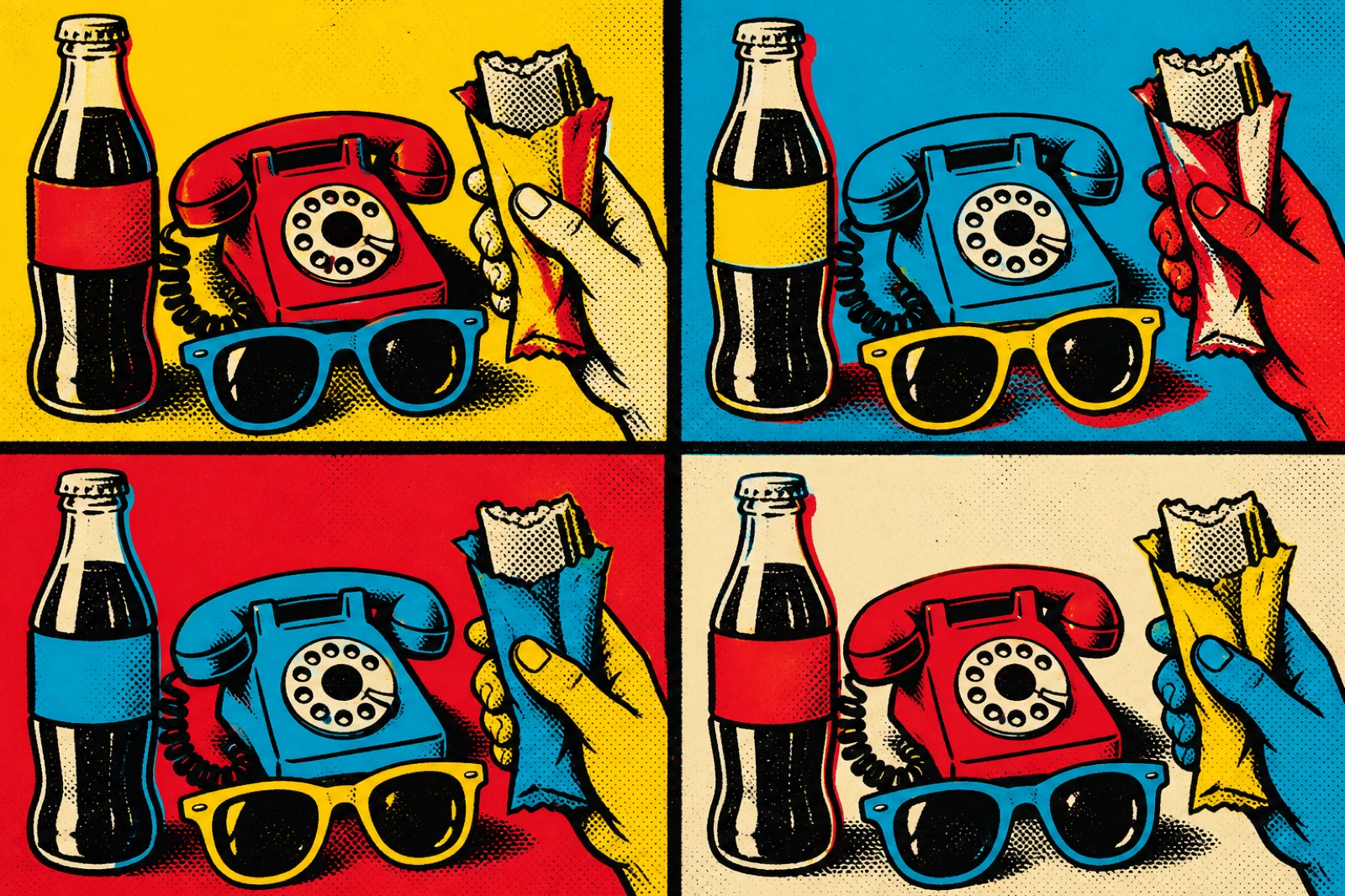
- Pop Art: Bold, colorful art celebrating popular culture and mass media
- Popping Colors: Maximum chromatic intensity and full-saturation palettes pushed to their limit - color as energy, color as argument
- Portrait Photography: The face and body as a collaboration between subject, photographer, light, and surrounding world
- Post-Internet: Image culture after the platforms: compression artefacts, screenshot logic, lo-fi 3D and retail display treated as material, with online and offline kept deliberately blurred
- Post-Modernism: Ironic references, historical pastiche, and playful ornamentation
- Pottery / Ceramics: Handcrafted ceramic art and functional pottery
- Prairie Style: Wright's declaration that American architecture should grow from American ground - horizontal rooflines echoing the Midwest prairie, natural materials, the fireplace as spiritual center, and the destruction of the Victorian box room-by-room.
- Precisionism: Industrial America drawn clean: factories, grain elevators and water towers reduced to flat planes, hard edges and long shadows, with no people and no smoke
- Printmaking: Art created through printing techniques like etching and screen printing
- PS1 / Dreamcast Low-Poly: Late-1990s 3D game imagery: low polygon counts, warping textures, fogged horizons, jagged silhouettes and CRT colour bleed in strange empty spaces
- Psychedelic: Mind-expanding visuals with kaleidoscopic patterns and consciousness exploration
- Pueblo Revival: New Mexico's synthesis of Ancestral Puebloan adobe mass and Spanish mission tradition - rounded parapets, projecting vigas, interior kiva fireplaces, and John Gaw Meem's University of New Mexico campus as the definitive regional modern.
- Pulp Cover: Painted covers made to sell in a second: a figure in danger or desire, a lurid sky, fat title type and a painter's hand in every fold, from the pulps and paperbacks of the 1930s to 1950s
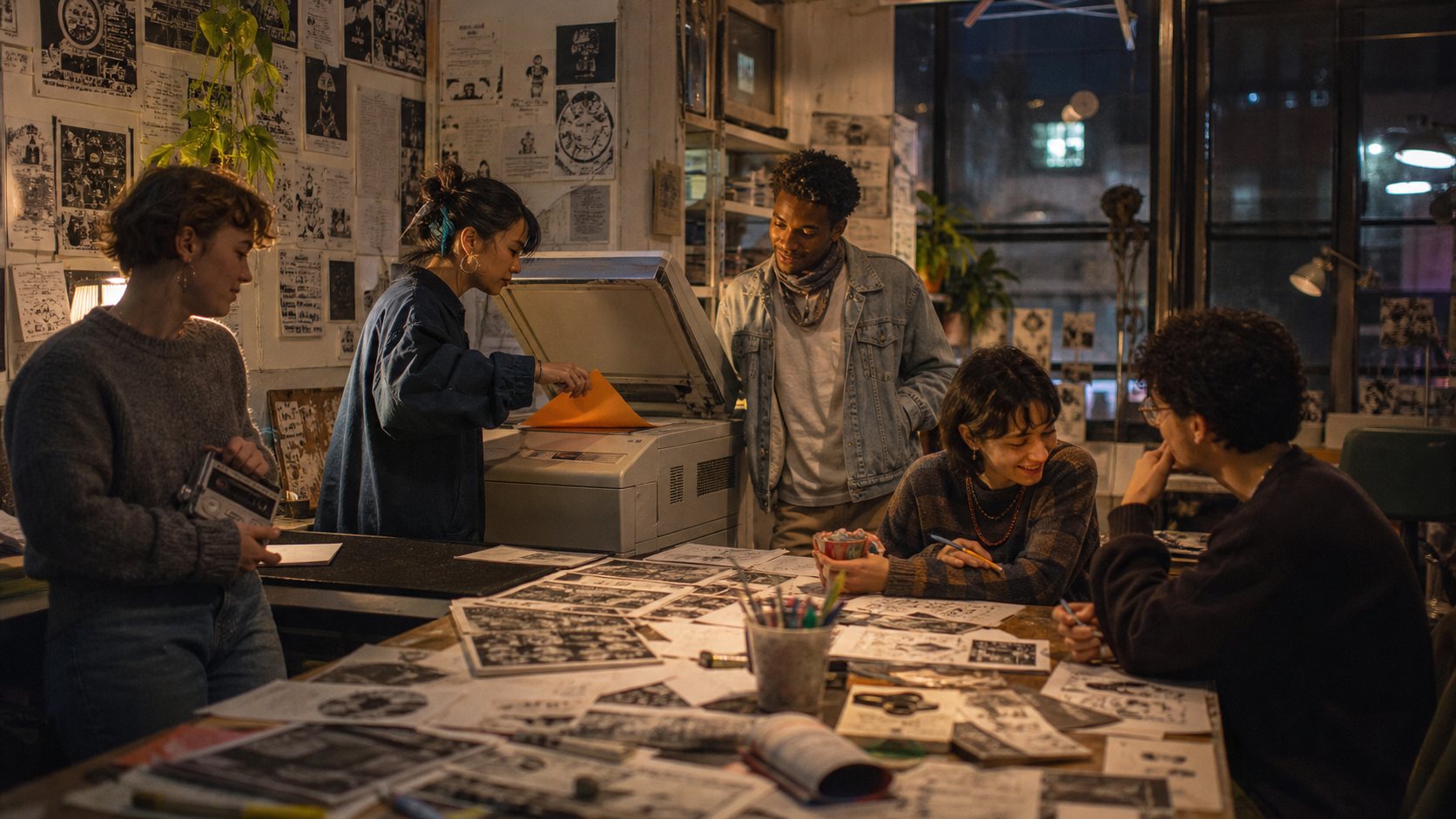
- Punk: DIY rebellion in customized clothing, xerox graphics, safety pins, and anti-establishment energy
- Punk Grunge: Fusion of punk attitude and grunge texture with maximum rawness
R
- Radical Italian Design: Florence and Milan, 1966 to 1980: design as argument, with the manifesto printed on the object and the object shaped like a joke
- Rave: Warehouse party culture: sound systems, strobe haze, and the spaces where the night happens
- Rebus: A sentence where pictures stand in for words: big plain headline type with an object dropped into the line where the noun should be
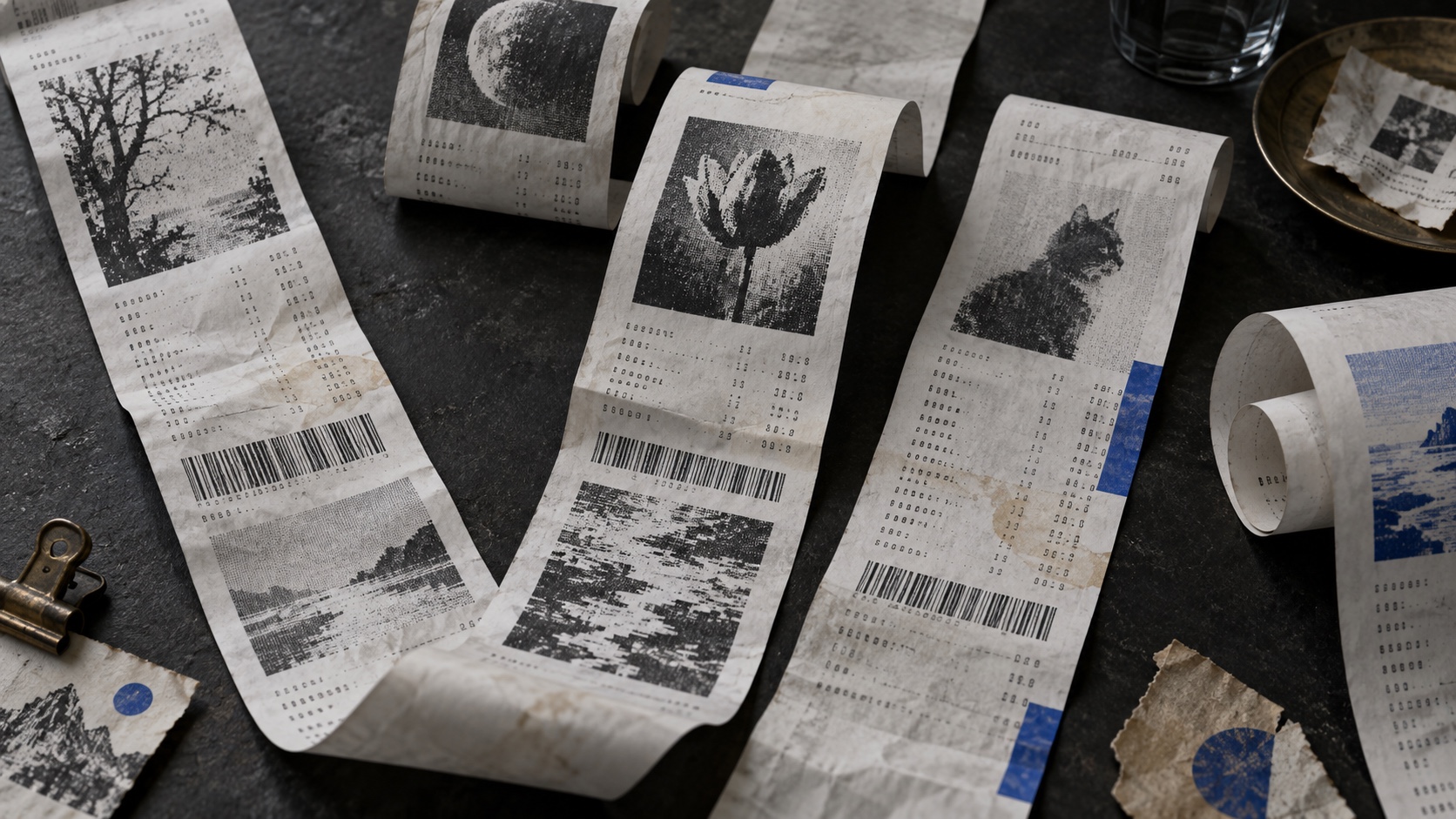
- Receipt Prints: Thermal receipts treated as keepsakes: narrow vertical strips, faded one-bit images, monospace transaction type, totals, timestamps and barcode marks, creased and slightly degraded
- Retrofuturism: Past eras' visions of the future: Jetsons-era optimism, atomic age, and space-age design
- Risograph: Soy-ink layered printing with charming misregistration, halftone grain, and limited spot colours that overlap into unexpected hues
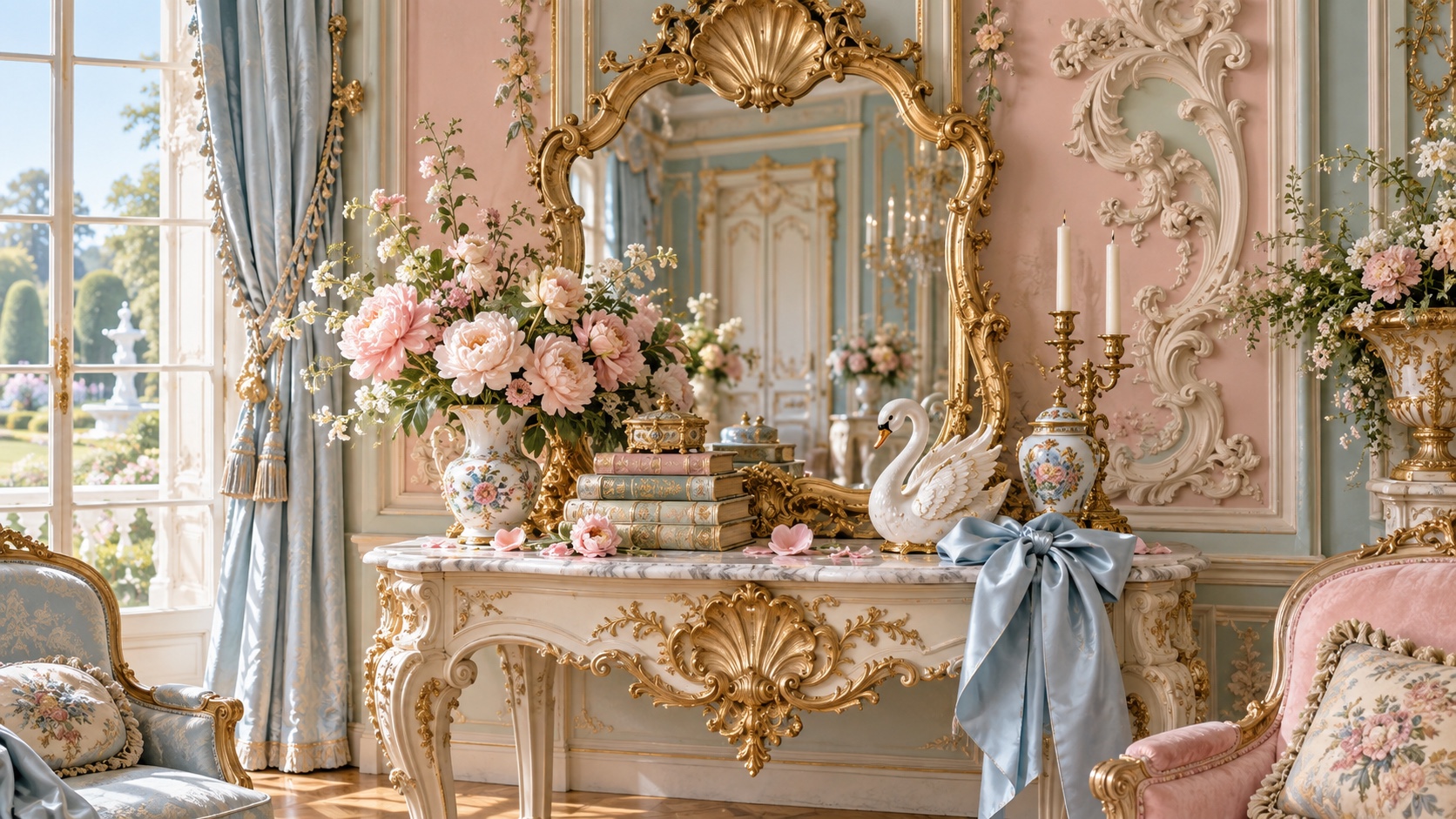
- Rococo: Shell-scroll ornament, pale gilt, powder pastels, mirrors and ribbons: the playful, sensuous style of the 1730s Paris salon, back through bows and coquette fashion
- Romantasy: Dark romantic fantasy meets editorial luxury - jewel tones, baroque filigree, pre-Raphaelite painterly light, and gothic architecture elevated to fashion editorial
- Rubber Hose: Fleischer Studios' boneless 1930s animation style - endless elastic limbs, jazz-age energy, and the joyful chaos of early American cartoons
S
- Scandinavian Architecture: Dark winters taught Scandinavian architects to worship light - Aalto's undulating birch forms catching every lumen, Utzon's Bagsværd Church roof curving to reflect diffuse Nordic sky, and the Swedish functionalist tradition that made austerity generous.
- Screen Printing: A stencil-through-mesh process defined by dense flat ink, layered color, halftones, and the productive tension of registration
- Scribbled Out: Clean images, found prints and layouts interrupted by aggressive marker edits: figures blanked out, crossings-out, censor bars, loops, underlines, arrows and blunt notes
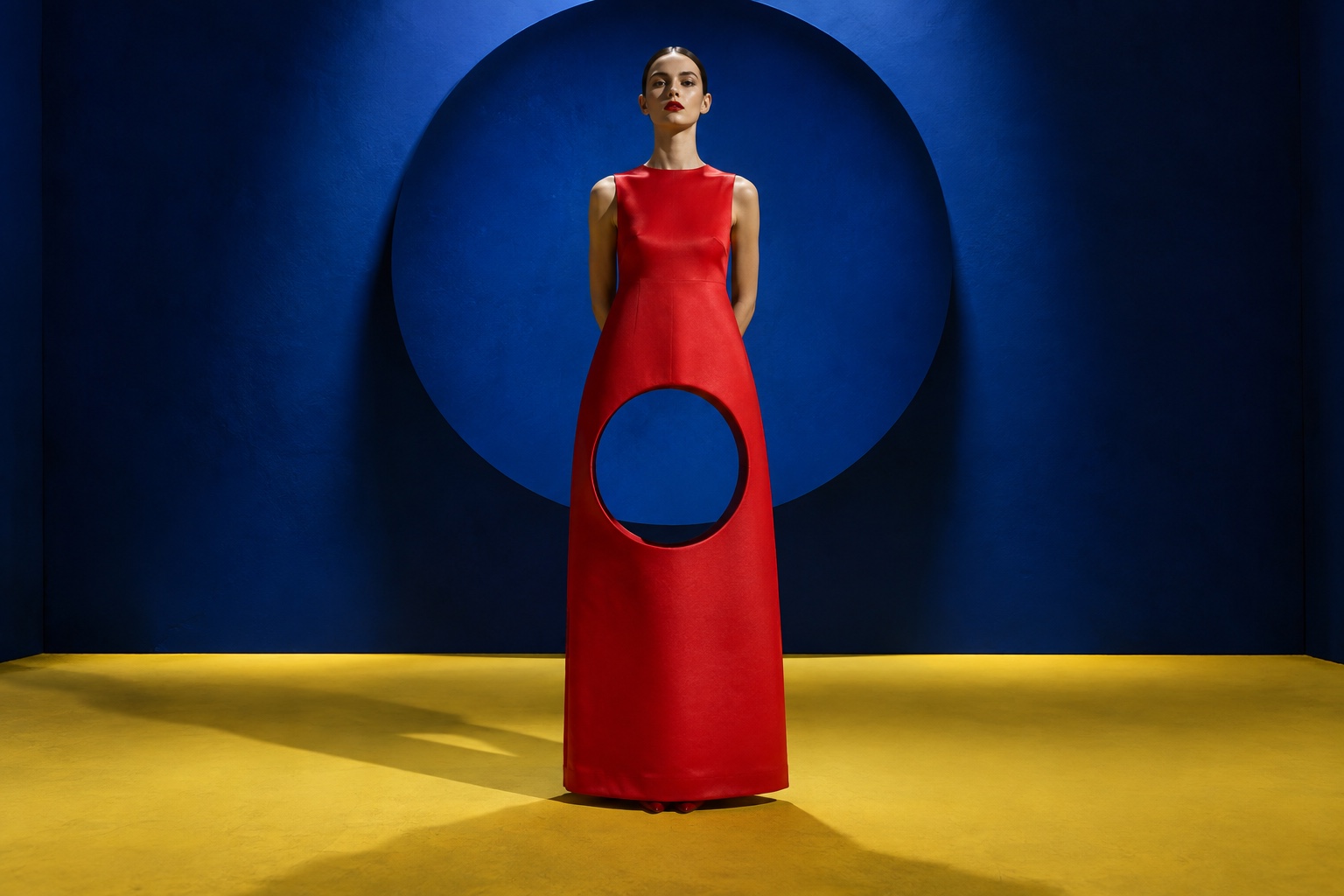
- Sculptural Couture: Garments built as volume: curved panels, architectural folds and controlled asymmetry that hold their shape away from the body
- Sculpture: Three-dimensional art exploring form, space, and materiality
- Shaker: Plain furniture and rooms made as an act of faith: peg rails, ladder-back chairs, oval boxes, whitewash and one line of colour, the American root of quiet craft
- Skeuomorphism: Digital interfaces mimicking real-world materials with rich textures
- Socialist Modernism: The Eastern Bloc's own Modernism - prefab Plattenbau housing estates, heroic mosaic friezes, the Buzludzha monument's brutalized saucer on a Bulgarian mountain peak - collective ideology at maximum material scale.
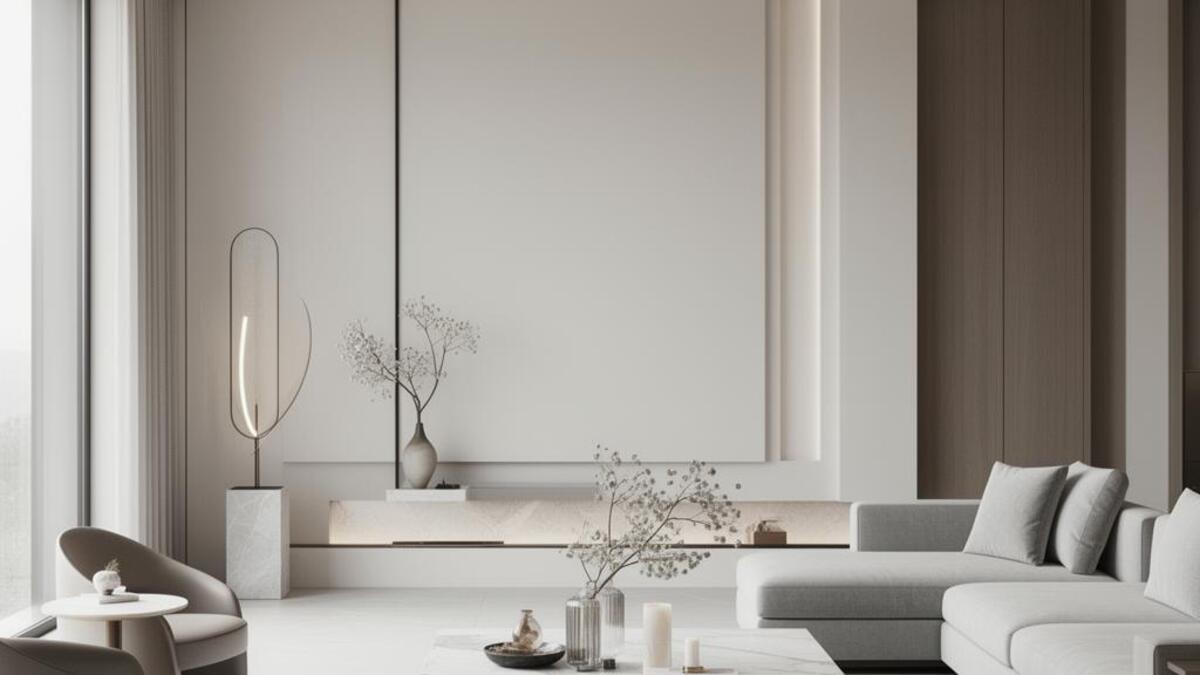
- Soft Minimalism: Minimalism without the cold - Norm Architects' tactile linen-and-limestone interiors, Vincent Van Duysen's Belgian warmth, the deliberate choice of rough-sawn oak over polished concrete when the room must breathe.
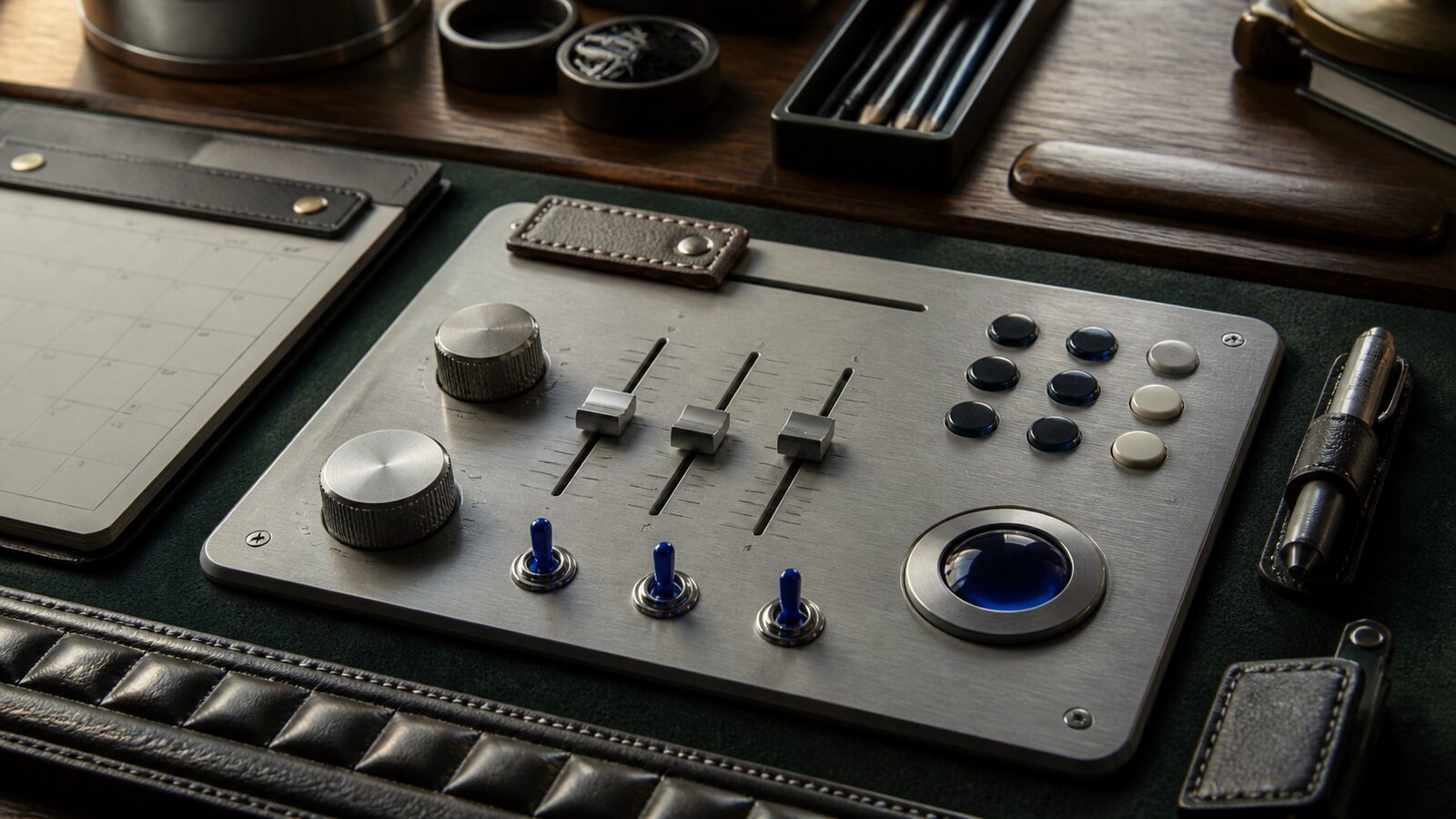
- Soft Utility: Warm functional design with rounded inputs, earth-toned palettes, paper textures, and an approachable softness that makes tools feel friendly
- Solarpunk: Optimistic eco-futurism blending lush greenery, renewable tech, and communal architecture
- Space Age Pop: The decade after Sputnik, furnished: moulded plastic, one-piece optimism, white and orange and silver, the future sold as a lifestyle
- Sports-Game UI: Player cards, scoreboards, stat systems and match-day overlays: a bold numerical hierarchy under stadium lights, cropped fast, for a premium fictional league
- Steampunk: Victorian-era machinery meets speculative fiction with brass and gears
- Sticker Collage: Snapshots, ticket stubs and foil star stickers taped down on coloured card, overlapping and crooked: a bedroom wall rather than a layout
- Streamline Moderne: Art Deco put through a wind tunnel - Streamline Moderne stripped the ornament and rounded every corner into aerodynamic speed, with horizontal banding, porthole windows, and gleaming chrome, from ocean liners to roadside diners.
- Street Photography: Unscripted public life caught at the instant gesture, light, and geometry lock together
- Streetwear: Surf, skate and hip-hop clothing that took over luxury: graphic tees, hoodies, sneakers, logos and limited drops
- Stripped Classicism: Classical proportion with ornament removed - the 1930s compromise between Modernism's abstraction and government's need for civic authority, producing Paul Philippe Cret's Federal Reserve buildings and the ambiguous gravitas of interwar state architecture.
- Structuralism: Aldo van Eyck's orphanage as a city of houses, Hertzberger's Centraal Beheer as a village of workplaces - Structuralism rejected anonymous functionalism to give every user an identifiable place within a legible collective order.
- Supergraphics: Stripes, arrows, circles and numerals painted bigger than the walls they are on, running over corners and floors so the graphic changes the room
- Surreal Dreamcore: Bright pastel interiors where aqua water, low clouds and impossible daylight calmly overtake familiar spaces
- Surrealism: Dream-like imagery with unexpected juxtapositions and symbolism
- Surrealist Fashion: One physically legible illusion per picture, built from real construction, with bodies, fabric and light kept photographic
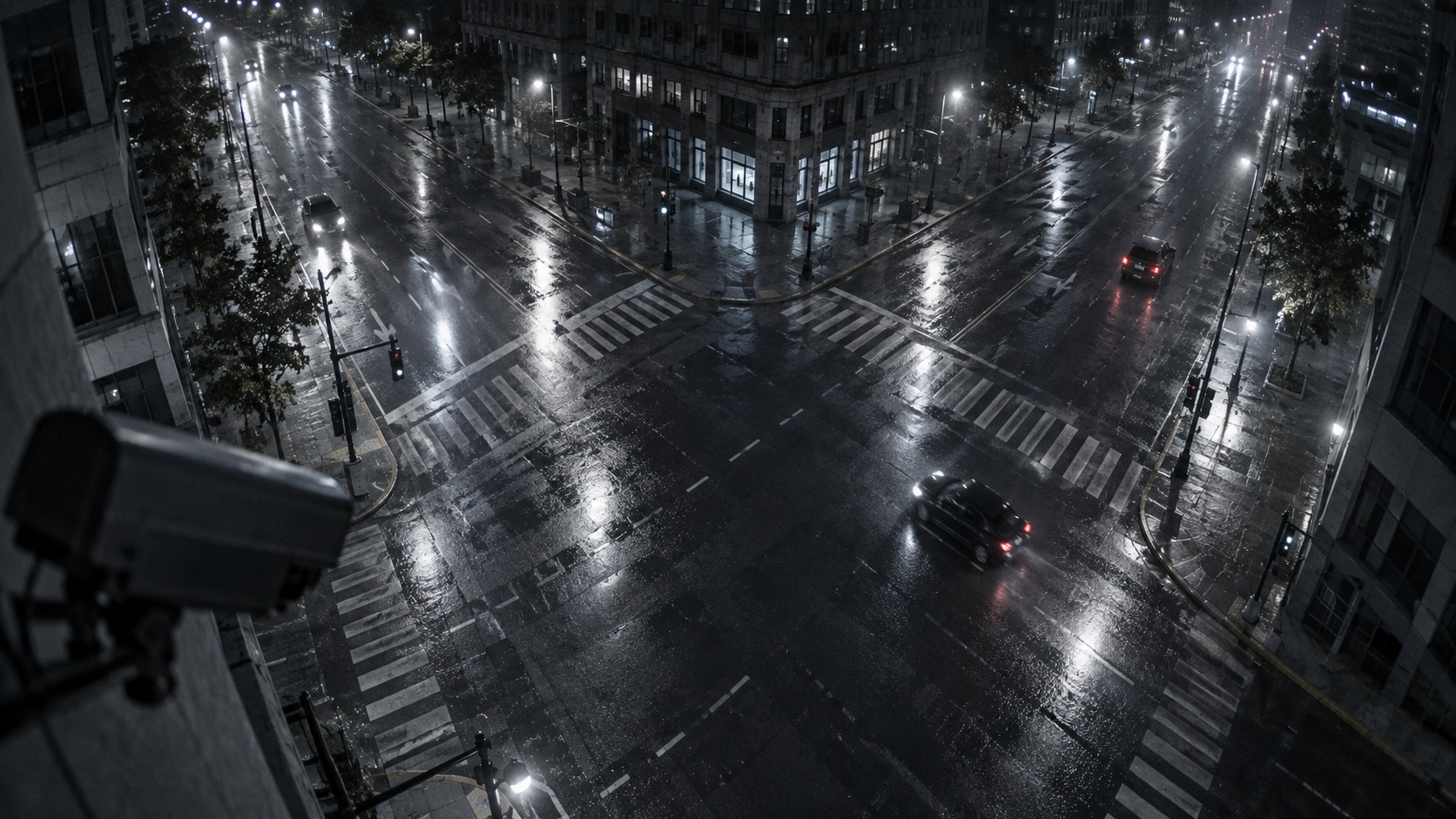
- Surveillance: CCTV aesthetics, data overlays, and voyeuristic documentation
- Sustainable Architecture: Architecture as ecological act - passive solar section, cross-ventilated plan, mass timber carbon lock, living roof hydrology, and the discipline of measuring every decision against planetary budget rather than aesthetic preference.
- Swiss / International: International typographic style with grids, sans-serif type, and objective clarity
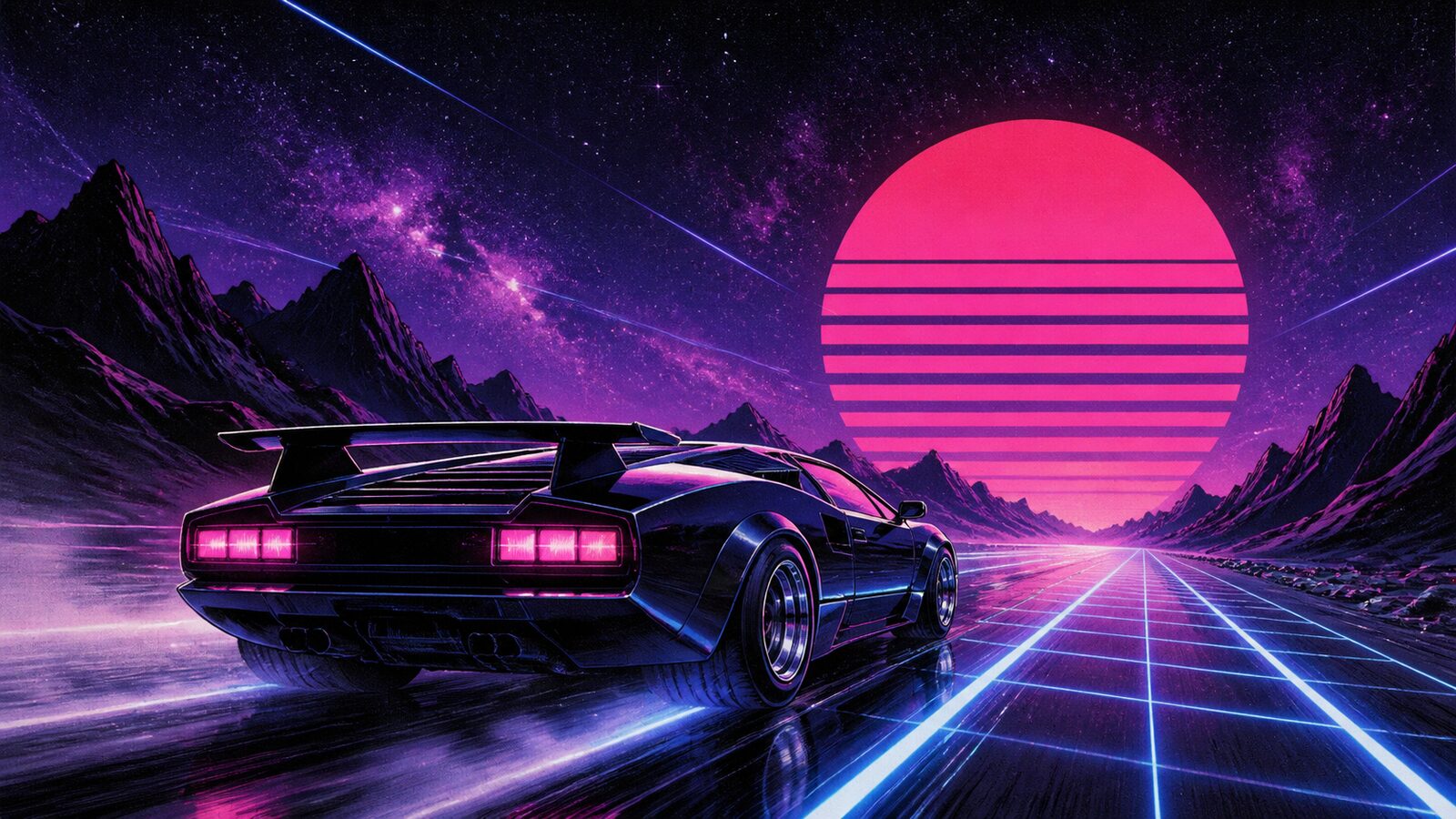
- Synthwave: Retro-futuristic 80s aesthetic with neon grids, sunset gradients, and chrome
T
- Tech Spec: Technical documentation aesthetics with diagrams, specifications, and schematics
- Technical Sportswear: Function shown in the garment: articulated joints, mapped ventilation, taped seams, purposeful closures and a shell that keeps real weather out
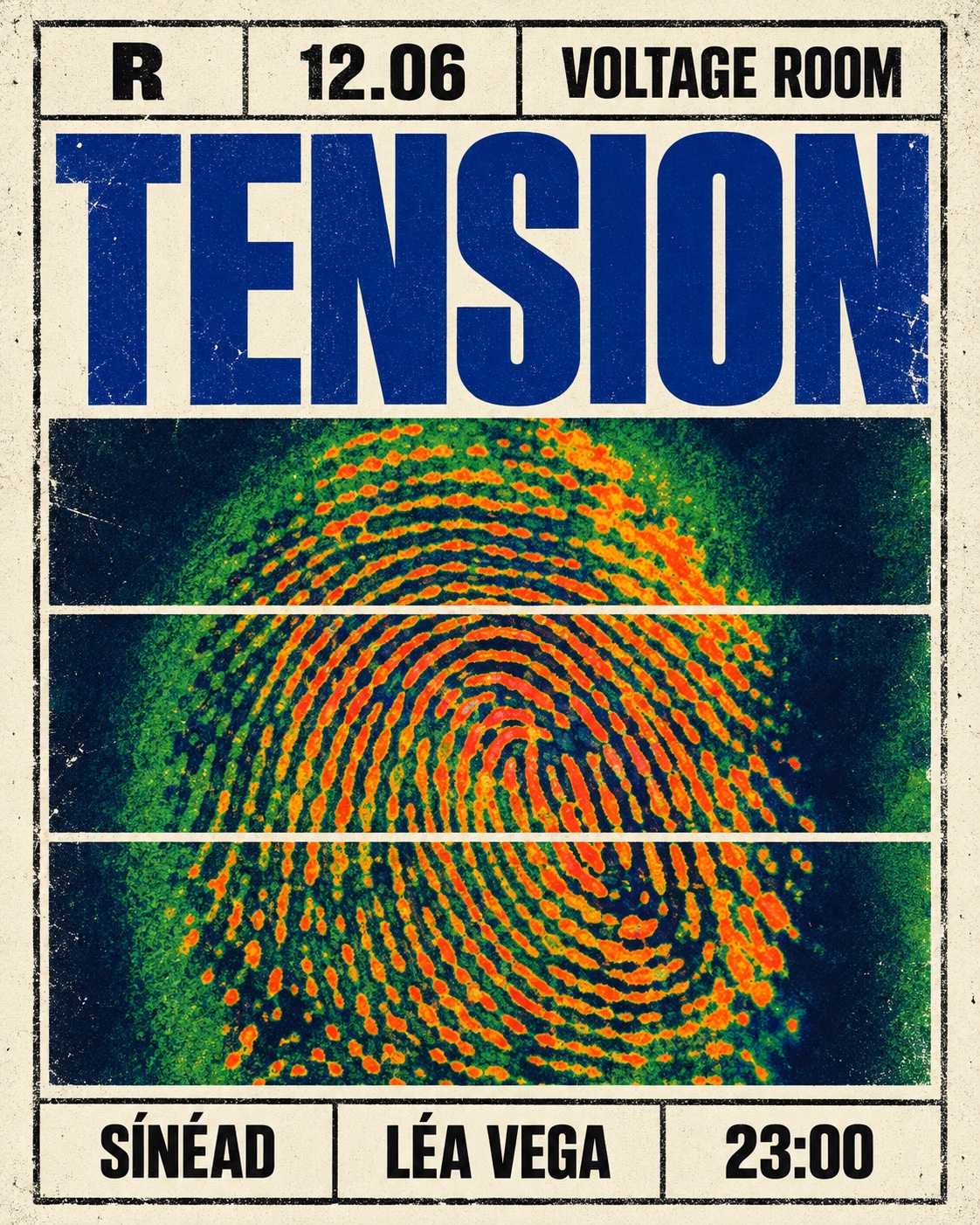
- Thermal Heat: False-colour thermal imagery, scanner grain, fingerprint interference and expressive type for underground music culture
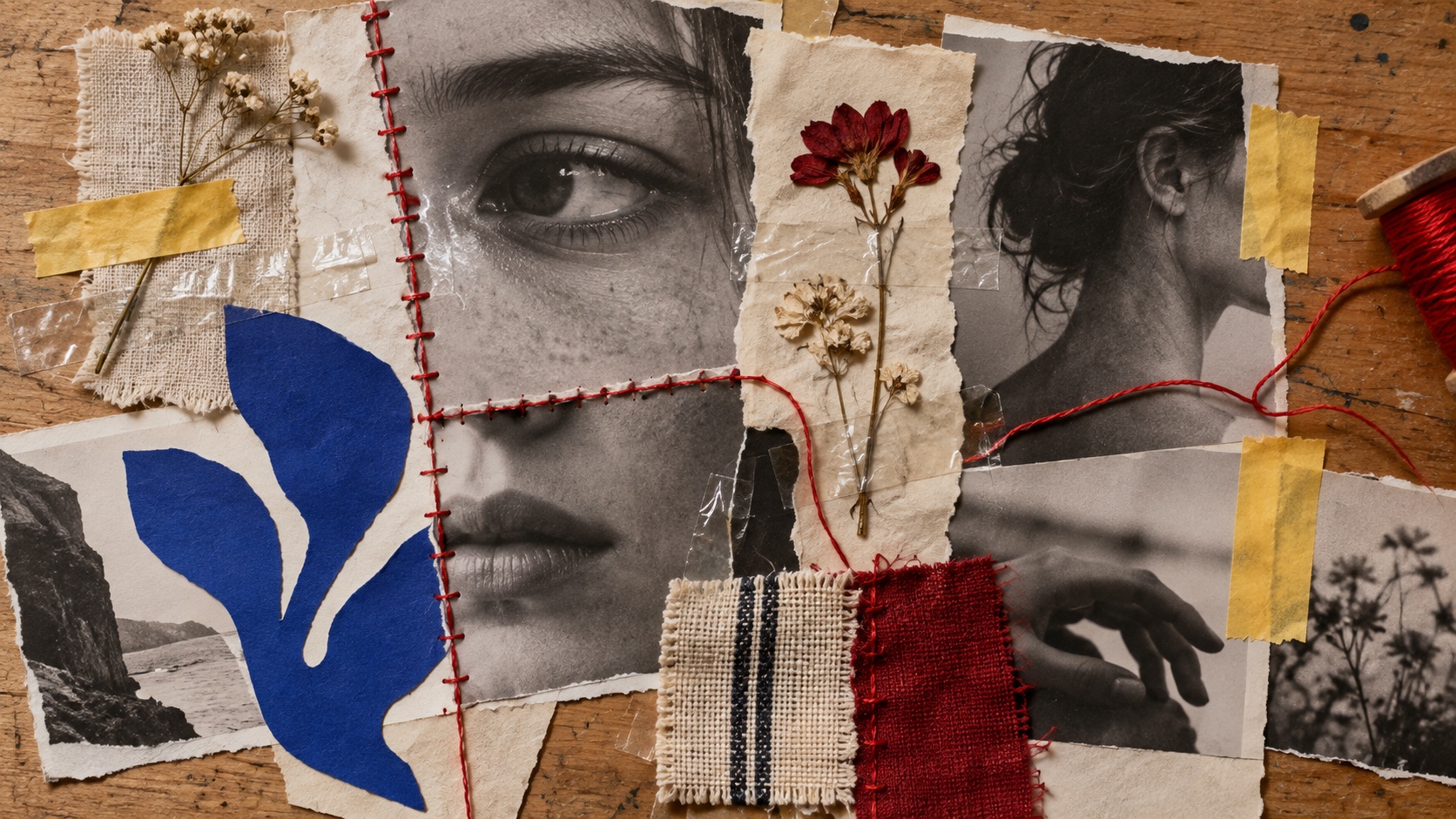
- Thread & Tape: Assembled imagery held together in plain sight: photograph fragments, coloured paper, stitched thread, transparent tape, pins and hand-made joins
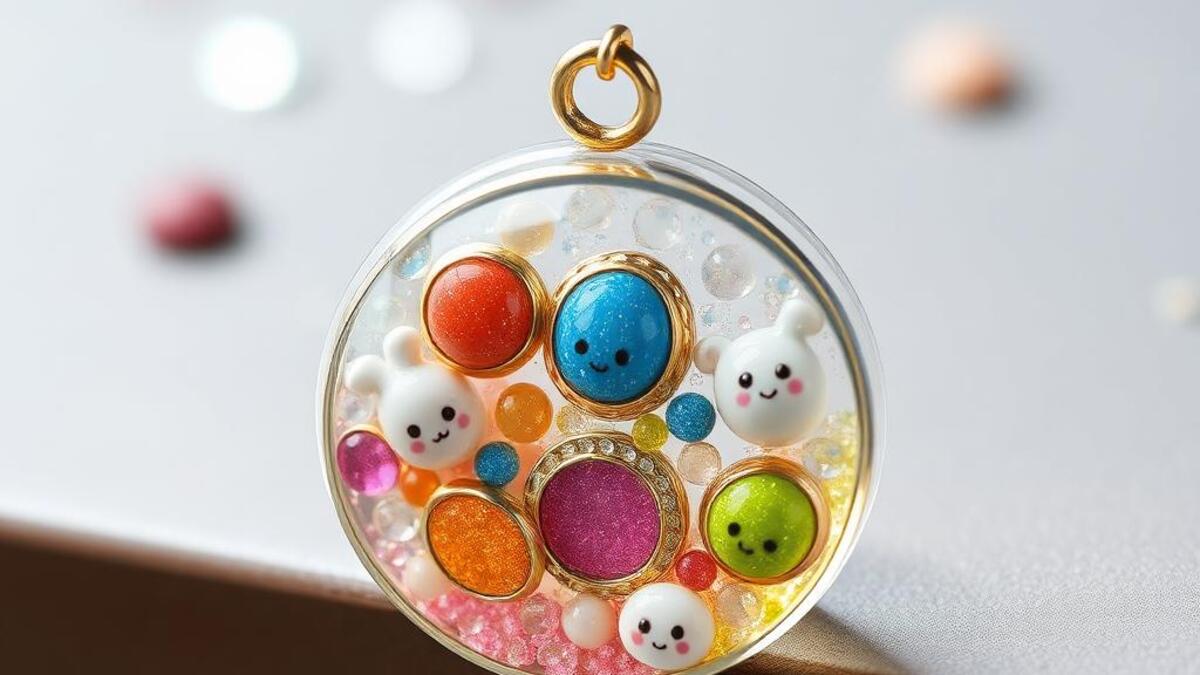
- Trinket Design: Charming small objects, collectibles, and decorative miniatures
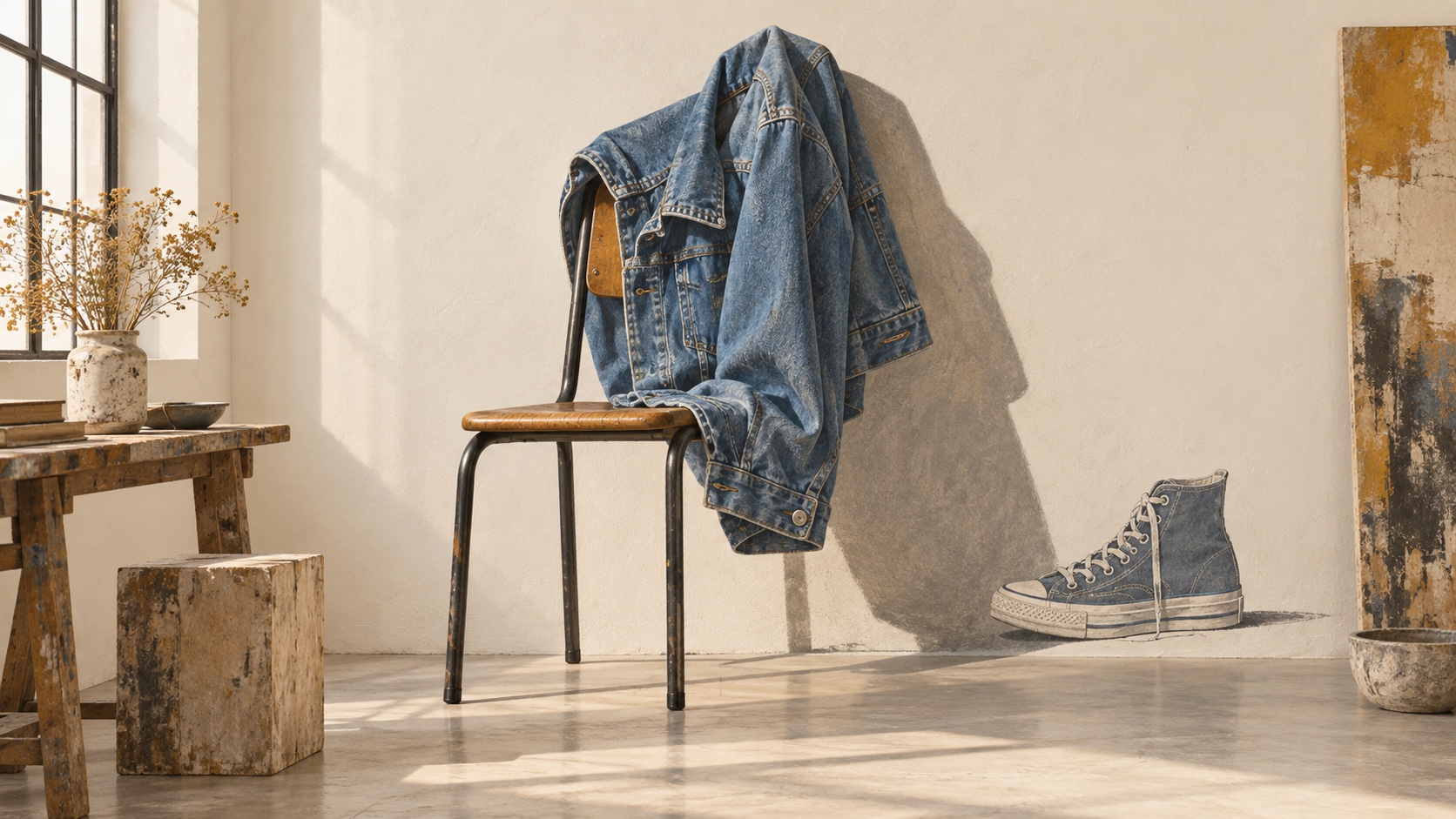
- Trompe-l'œil: The image that pretends to be the thing: painted bows, printed folds, fake doorways and false shadows, an illusion played straight and admitted with a wink
- Tropical Modernism: Modernism rewritten by monsoon - Geoffrey Bawa's Sri Lankan courtyard bungalows dissolving into garden, Correa's tube houses pulling breeze through section, Niemeyer's Brasília swooping under the cerrado sky: Modernism learned to sweat.
- Type Doodles: Hand-drawn typography mixed with playful illustrations and sketchy marks
V
- Vaporwave: Glitched nostalgia with Roman busts, pink gradients, and corporate surrealism
- Vector Minimalism: Clean geometric shapes, flat colors, and precisely balanced compositions
- Vernacular Architecture: Building without architects - the Cycladic whitewash village, the Malian mud mosque, the Norwegian stave church: forms that evolved over centuries in direct response to climate, material, and community without a single drafting table.
- Victorian: Dense nineteenth-century ornament: engraved detail, deep jewel colour and every surface earning its keep through decoration
- Vintage 80s: Miami Vice neons, chrome gradients, and airbrush glamour - the decade when excess was the point and every surface could shine
- Visual Art: General visual arts that don't fit specific categories
W
- Wabi-Sabi: Japanese beauty of imperfection: weathered surfaces, asymmetry, and organic decay
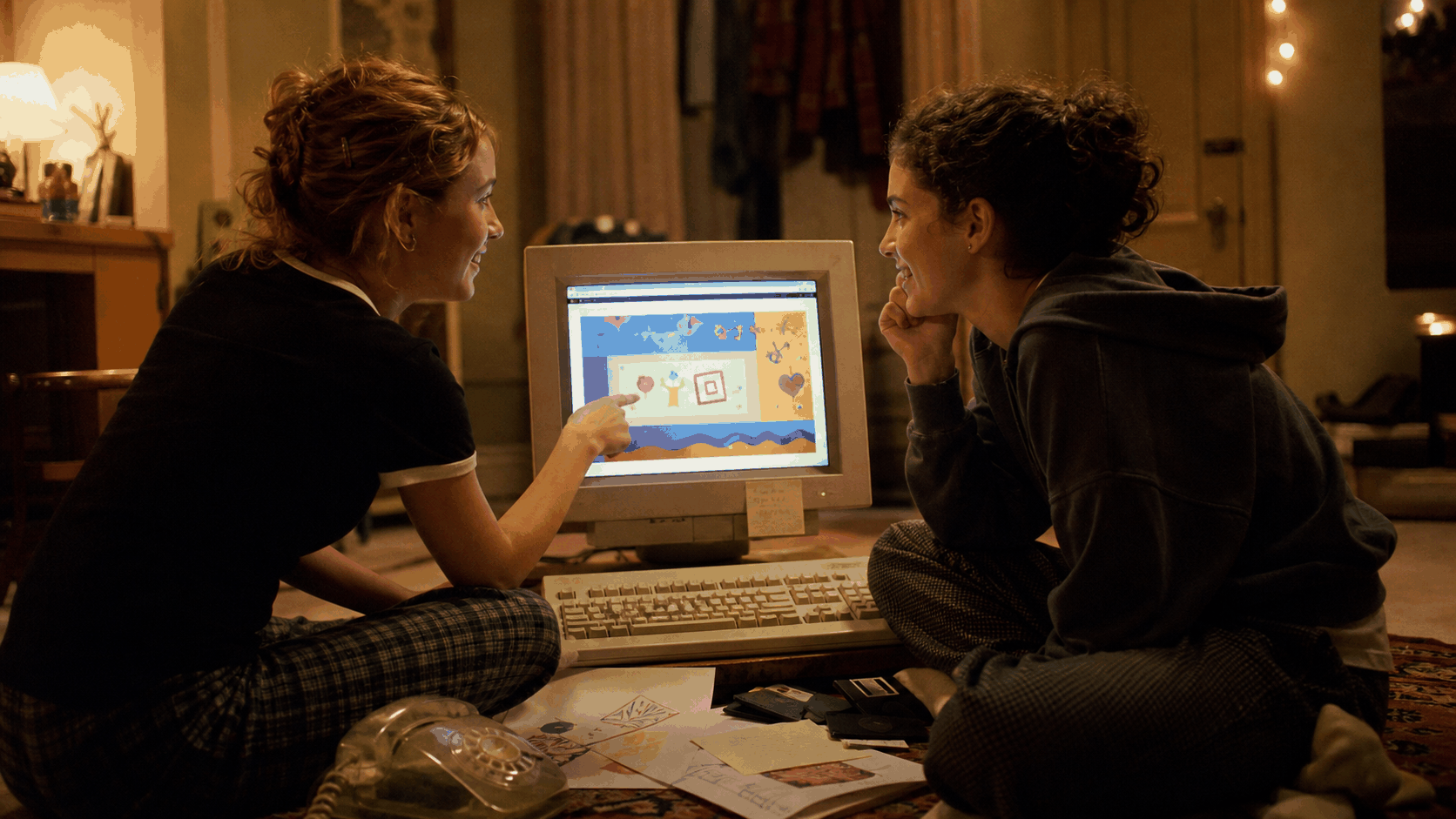
- Web 1.0: Early internet nostalgia with tiled backgrounds and GIF animations
- Web 2.0 Gloss: Shiny buttons, rounded corners, and gradient-heavy social web aesthetics
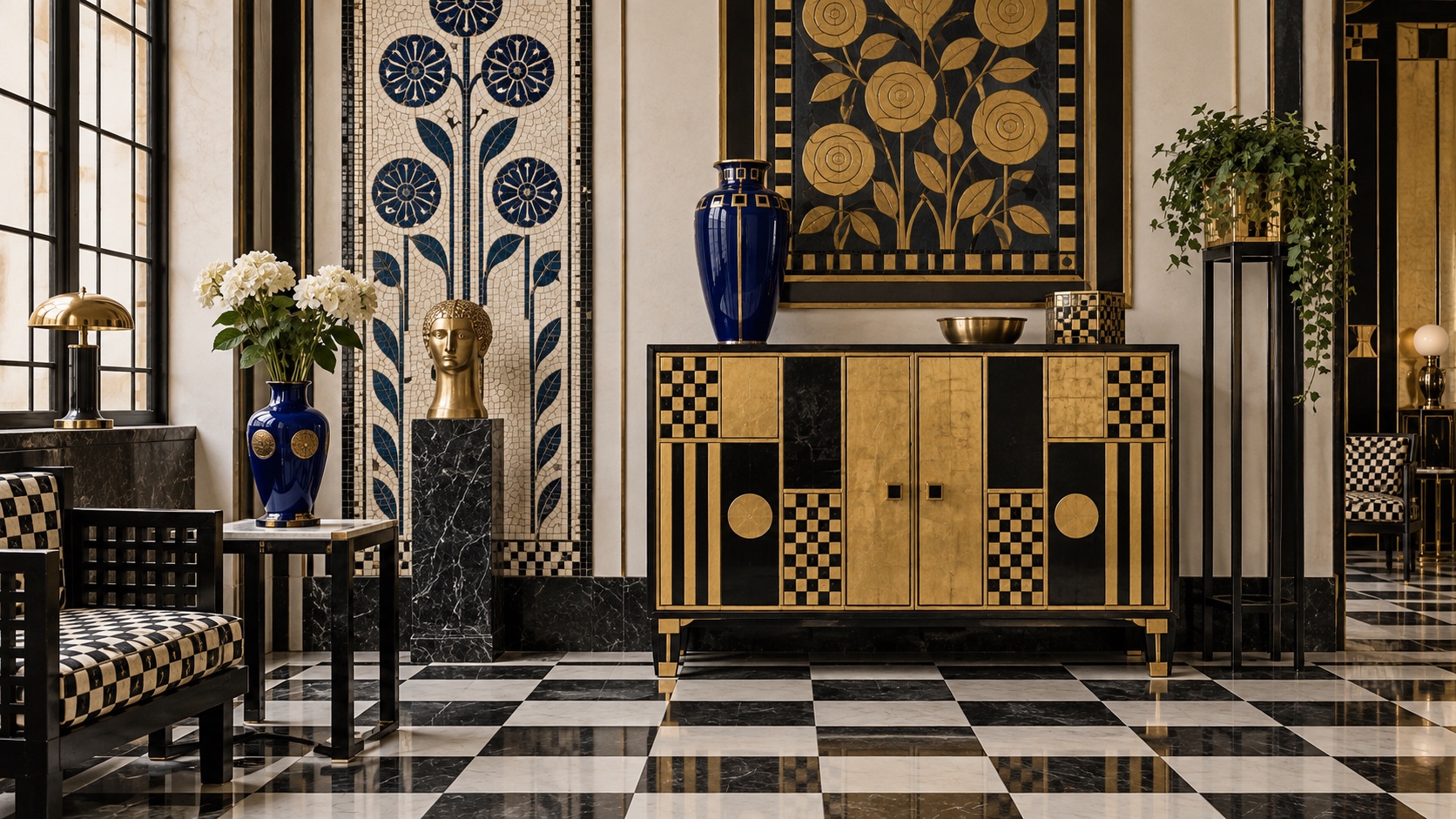
- Wiener Werkstätte: Vienna's geometric luxury craft: black-and-white checkerboards, grids of squares, gilded metalwork and stylised florals, from the building to the cutlery
- WPA Poster: Screen-printed public posters in three or four flat inks: parks, health, plays and zoos in simplified shapes and bold slab type
Y
- Y2K: Millennium optimism with inflatable textures, chrome, and cyber-organic forms