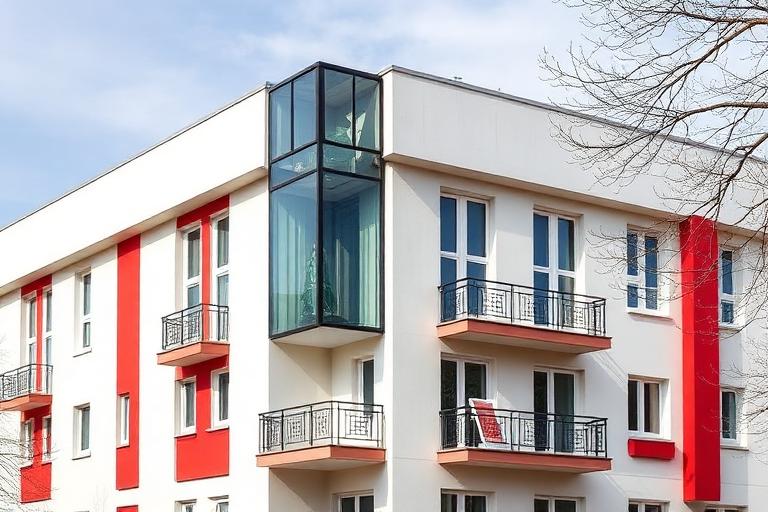
Architectural Modernism

The twentieth century's great rupture - Gropius, Le Corbusier, and Mies van der Rohe dismantled centuries of ornament to build the world from first principles: structure, light, function, and the flat roof as manifesto.

Compare Architectural Modernism with another style →See the Architectural Modernism typefaces →On the timeline · 1920s
Record020-AM
AestheticArchitectural Modernism
ClassStructured / Geometric
StatusINGESTING
Architectural Modernism aesthetic archive image
Archive plate · Architectural Modernism
01
The record

What it is, when it works, who it is for, and where it already exists.

How to use it

Record 020-AM - when it works, who it is for, what it looks like

FIELD 01

When to use it

  • Brand identity requiring clarity, authority, and timeless rationalism
  • Corporate identity systems for institutions that want rigor without coldness
  • Architectural firm portfolios anchored in functional and structural honesty
  • Publication design or editorial systems with grid-based discipline
FIELD 02

Perfect for

  • Architecture and design firms working in a rational Modernist lineage
  • Corporate and financial brands seeking authority and intelligence
  • Cultural institutions with a modernist campus or collection
  • Design schools and graduate programs in architecture and planning

In the wild, Architectural Modernism aesthetic real-world examples

Where this aesthetic shows up in the real world · ↗ opens the source site

Omoro Style GuideEvery aesthetic, every field on this page, in one PDF.
$8Get the guide →
02
The anatomy

Where Architectural Modernism came from, what makes it recognisable, and the fingerprint it leaves.

History, Architectural Modernism aesthetic history

1920s-1970s · Western Europe, particularly Germany, France, and the Netherlands

Architectural Modernism was not one movement but a convergence of convictions. In the 1920s, Le Corbusier in France, Mies van der Rohe and Walter Gropius at the Bauhaus in Germany, and J.J.P. Oud in the Netherlands all arrived at similar conclusions: buildings should be stripped of historical ornament, structure should be expressed honestly, and new materials (reinforced concrete, steel, glass) demanded new forms. Le Corbusier's Five Points of Architecture (1927) codified the program: pilotis, free plan, free facade, ribbon windows, and roof garden.

The movement spread globally after World War II, partly through emigration (Mies and Gropius fled to the United States) and partly through the sheer efficiency of the approach. The International Style exhibition at MoMA (1932) had already packaged Modernism for American consumption. Post-war reconstruction in Europe and rapid urbanization worldwide made Modernism the default: its modular systems, industrial materials, and rejection of craft-intensive ornament suited the scale and speed of building required.

By the 1960s, Modernism's universalism was under attack. Critics argued it produced alienating environments and erased local identity. Robert Venturi's 'Complexity and Contradiction in Architecture' (1966) and Jane Jacobs' 'The Death and Life of Great American Cities' (1961) challenged its certainties. Postmodernism offered an alternative, but Modernism never truly ended. It evolved into Late Modernism, Neo-Modernism, and remains the foundation of architectural education worldwide.

The century that decided buildings should think.

Omoro dossier · 020-AM

Visual markers, Architectural Modernism aesthetic visual markers

The visual DNA: what makes it recognisable

typography

See the fonts
  • Geometric sans-serifs: Futura, Bauhaus, Avant Garde
  • Asymmetric type layouts influenced by De Stijl and Constructivism
  • Lowercase as ideological choice (Herbert Bayer's universal alphabet)
  • Wide letter-spacing on uppercase for institutional gravity

grid

  • Free plan: non-load-bearing walls allow open floor layouts
  • Structural grid expressed on facade as regular column rhythm
  • Horizontal emphasis through ribbon windows and flat roofs
  • Proportion systems derived from Le Corbusier's Modulor or golden section

materials

  • White rendered surfaces: #F5F5F0, #EBEBEB, #E0E0DC
  • Exposed concrete and steel: #8A8682, #6B6B6B
  • Floor-to-ceiling glass: transparency as ideology
  • Primary color accents: Mondrian red, De Stijl blue and yellow

motifs

  • Pilotis lifting the building off the ground plane
  • Flat roofs with roof gardens or terraces
  • Cantilevers demonstrating structural innovation
  • Absence of applied ornament: the surface is the material

Aesthetic profile

8-channel console with the fingerprint on its display. Save the card, or share the page

Aesthetic Profile
Architectural Modernism
Modern Movement
1920–1975
Attribute console · 020-AM
leans structured, geometric, minimal
8 CH
FIG. 1
MinimalMaximalAnalogDigitalRestrainedExpressiveCoolWarmNostalgicFuturisticStructuredChaoticLightDarkGeometricOrganic
01Minimal
Maximal50%
02Analog
Digital20%
03Restrained
Expressive40%
04Cool
Warm30%
05Futuristic
Nostalgic30%
06Structured
Chaotic70%
07Dark
Light20%
08Organic
Geometric70%
StructuredGeometricMinimal3 materials
Omoro · Attribute console · 020-AM
omoro.io/styles/arch-modernism

Material assembly

The style's primary materials, assembled bottom-up

Tap a stratum for material detail · Full catalog

Place in history

Modern Movement · 1920–1975 - tap any style to travel

Color Palettes, Architectural Modernism color palettes and hex codes

4 color interpretations of this aesthetic

Architectural Modernism
#1A1A1A · #3D5A6B · #B5C4CC · #EAEAE6 · #F0F0EC
Form follows function, ornament is crime: the century's great rupture
Villa Savoye
#181818 · #506848 · #A0A098 · #D0D0C8 · #F0F0EC
Le Corbusier's five points: pilotis lifting white volume off the ground
Eames House
#0C0C0C · #C83020 · #2050A0 · #E0C830 · #F0ECE0
Case Study #8: industrial steel frame filled with colour panels
Unité
#1A1A1A · #C83020 · #2858A0 · #E0C020 · #B8B0A0
Le Corbusier's vertical village: béton brut with primary balcony panels
Omoro Palette Pack575 curated palettes across every aesthetic, 5 export formats.
$8Get the palettes →

Adjacent Palettes, styles related to Architectural Modernism

The colour of the styles sitting closest to this one

Bauhaus Architecture
International Style
Neo-Modernism
Architectural Minimalism
03
The direction

How to shoot it, how to prompt it, and how to board it.

Photo Direction

How to shoot this aesthetic

"Clean volumes, honest structure, and a building that says exactly what it is"

Shot list

  • Wide shot of clean geometric volumes with glass curtain walls
  • Detail shot of the building raised on pilotis, structure visible beneath
  • Interior shot through ribbon windows, daylight falling evenly across the free plan

Lighting

Flat, even daylight overcast works well that reveals proportion and volume without dramatic shadow distracting from the structural clarity

Omoro Director's Briefs151 photo shot-lists like this one, ready to shoot from.
$8Get the briefs →

Generative Prompt

Drop this into Studio to generate in this aesthetic

Modernist architecture with clean geometric volumes, glass curtain walls, steel and concrete, Le Corbusier and Mies van der Rohe influence, pilotis, free plan, ribbon windows

Paste as-is, or append your own subject

Mood Board

The record applied to your project. The record's kit is free; your brand, references and plates come with membership

Mood board
The Architectural Modernism board
8 frames · 4 selected
FIG. 4
Steel Frame1A1A1AGlass Blue3D5A6BCurtain WallB5C4CCWhite RenderEAEAE6Roof TerraceF0F0EC
Brand and references
IdleBrand and references open with membership
With membership: the brand's own facts and colours in every prompt, references carried into every frame, and the plates generated.
01 · Hero application
02 · Material and finish
03 · Palette in context
04 · Photography direction
05 · Pattern plate
06 · Object
07 · Environment
08 · Digital presence
Demo kit free, the rest with membershipThe record as a demo kit, free. Name a project and it is written for that
Omoro · Mood board · 020-AM
04
The judgement

Whether to use it, what it costs to do properly, and where it stands right now.

Creative verdict, Architectural Modernism feasibility and strategic recommendation

Two written calls, seven meters, and when to walk away

Creative verdict
Should Architectural Modernism be the call?
7 meters
FIG. 2
Assessment

The proportion has to be right because nothing else is there. Free plan, ribbon window and pilotis are simple to draw and unforgiving to get wrong, since one bad ratio has no ornament to hide behind. Work from a proportional system. Thermal performance is the honest problem: single-glazed ribbon windows are the reason so many originals were altered.

Verdict

Take the buildings and leave the planning theory, which is the useful separation: the work is mostly excellent and the urban renewal it justified destroyed functioning neighbourhoods, where Jacobs was right in 1961. Right when the brief genuinely wants clarity and light. Wrong as an argument that any single plan should reorganise how people live.

Production cost
High

First-principles construction. Structure, light, and function all built for real.

Creative difficulty
High

A century of imitators. The original rigor is easy to flatten into a look.

Execution difficulty
High

The flat roof and open plan leave zero room for a weak detail.

Risk of misuse
High

A century of imitators makes the shallow version instantly obvious.

Prevalence
Common

The default architectural language of the entire twentieth century.

Longevity
Timeless

First-principles design doesn't date the way ornament does.

Brand investment
High

Real structure, light, and function, all built for real.

Avoid if
The brand wants ornament or decoration
This movement's entire premise was stripping ornament away.
There's no rigor behind the reduction
A century of imitators makes the shallow version instantly obvious.
Omoro · Creative verdict · 020-AM

Editorial Depth

A Pro feature: origins, practitioners, and pitfalls

Editorial depth
The Architectural Modernism file
14 sections
FIG. 3
Context02Brands02Perception04Use04Index02
01Common MisconceptionThe principle beneath the surface
02Historical ContextOrigins, cultural moment, and reaction
03Brands That Accidentally Use This StyleNatural alignment, not category claims
04Brands That Perfectly Represent This StyleExceptional execution
05Psychological EffectHow visual decisions change perception
06Visual ChecklistInclude and avoid
07Creative FormulaThe visual system reduced to essentials
08Recognition SignalsHow to recognize it in two seconds
09When To Use This StyleContexts where the language performs
10Common Creative MistakesWhere imitation weakens the signal
11Best Brand ApplicationsIndustries with a natural advantage
12Creative Application AnalysisFit, feasibility, and production reality
13Related StylesClose languages and the key distinction
14Visual DNA SummaryThe sentence to remember
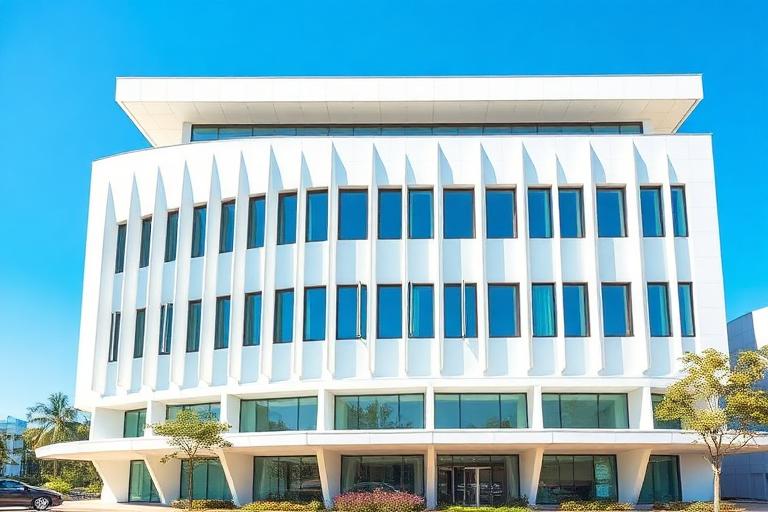
The editorial depth, with membershipOpening soon
Omoro · Editorial depth · 020-AM
05
The index

Neighbours, cross-references, blends, and the questions people ask.

Related concepts

Connected across the creative knowledge graph

Cultural relevance, Architectural Modernism cultural relevance today

Where it stands now, and what it costs you to use it

Modernism won so completely that it became the water everything else swims in, and arguing with it has occupied the profession for sixty years.

Its costs are well documented: the urban renewal it justified destroyed functioning neighbourhoods, and Jacobs was right about that in 1961.

The buildings themselves are mostly excellent and the planning theory attached to them mostly was not. Separating those two is the useful move.

Cross-references

BauhausBauhaus was the school that trained the first generation of Modernist architectsInternational Stylethe International Style was Modernism packaged for global corporate adoptionBrutalist ArchitectureBrutalism emerged from within Modernism as a more radical material positionArchitectural PostmodernismPostmodernism was the direct reaction against Modernist orthodoxy

Compare

Architectural Modernism vs Brutalist Architecture

Blend

Mix Architectural Modernism with any style in the library

Architectural Modernism×
50%50%
100% alike
Architectural Modernism referenceBauhaus Architecture referenceArchitectural Modernism 50%Bauhaus Architecture 50%

Merged palette

#1A1A1A

#3D5A6B

#1C3A8A

#B5C4CC

#F5D800

Leads structured, geometric, minimal

Typography · from Architectural Modernism

Space Grotesk over Inter

Materials

  • White rendered surfaces: #F5F5F0, #EBEBEB, #E0E0DC
  • Exposed concrete and steel: #8A8682, #6B6B6B
  • White rendered walls: #F5F5F0, #EBEBEB

Use it

Modernist architecture with clean geometric volumes, glass curtain walls, steel and concrete, Le Corbusier and Mies van der Rohe influence, pilotis, free plan, ribbon windows (50%), infused with Bauhaus design aesthetic with bold primary-color contrast, geometric shapes, functional art principles, Kandinsky-influenced composition, color palette strictly #1A1A1A #3D5A6B #1C3A8A #B5C4CC #F5D800, overall character: structured, geometric, minimal

One-click generation opens with the studio

About this aesthetic

What defines Modernist architecture?

Modernist architecture is defined by the rejection of historical ornament, honest expression of structure and materials, open floor plans, flat roofs, and the use of industrial materials like reinforced concrete, steel, and glass. Its core principle is that form should follow function.

Who are the key Modernist architects?

Le Corbusier (Villa Savoye, Unite d'Habitation), Mies van der Rohe (Barcelona Pavilion, Farnsworth House), Walter Gropius (Bauhaus building), Frank Lloyd Wright (Fallingwater, though he rejected the Modernist label), and Alvar Aalto (who softened Modernism with organic materials and forms).

How is Modernism different from Contemporary architecture?

Modernism was a specific ideological movement with defined principles (form follows function, no ornament, universal solutions). Contemporary architecture describes current practice, which draws from many movements including Modernism but also embraces complexity, local context, sustainability, and expressive form that Modernist orthodoxy would have rejected.

Build with the architectural modernism aesthetic

Every style in the library is broken down like this one: the palette, the typography, the materials and the lineage.

Explore the style library →