Deconstructivism

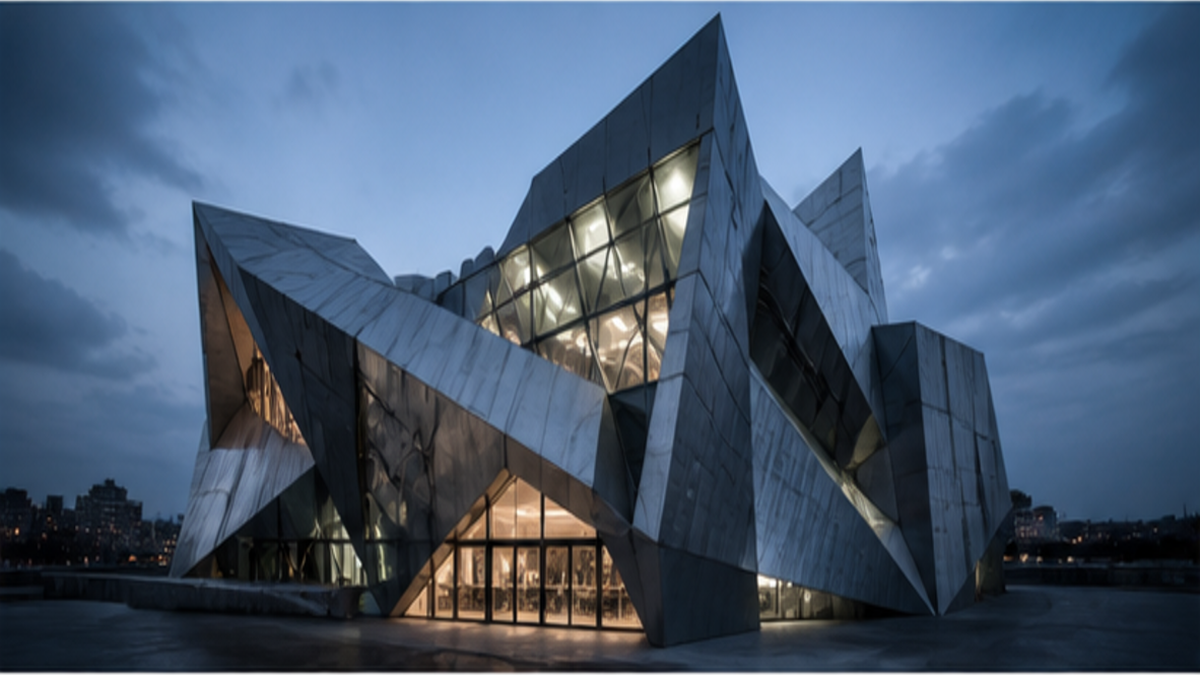
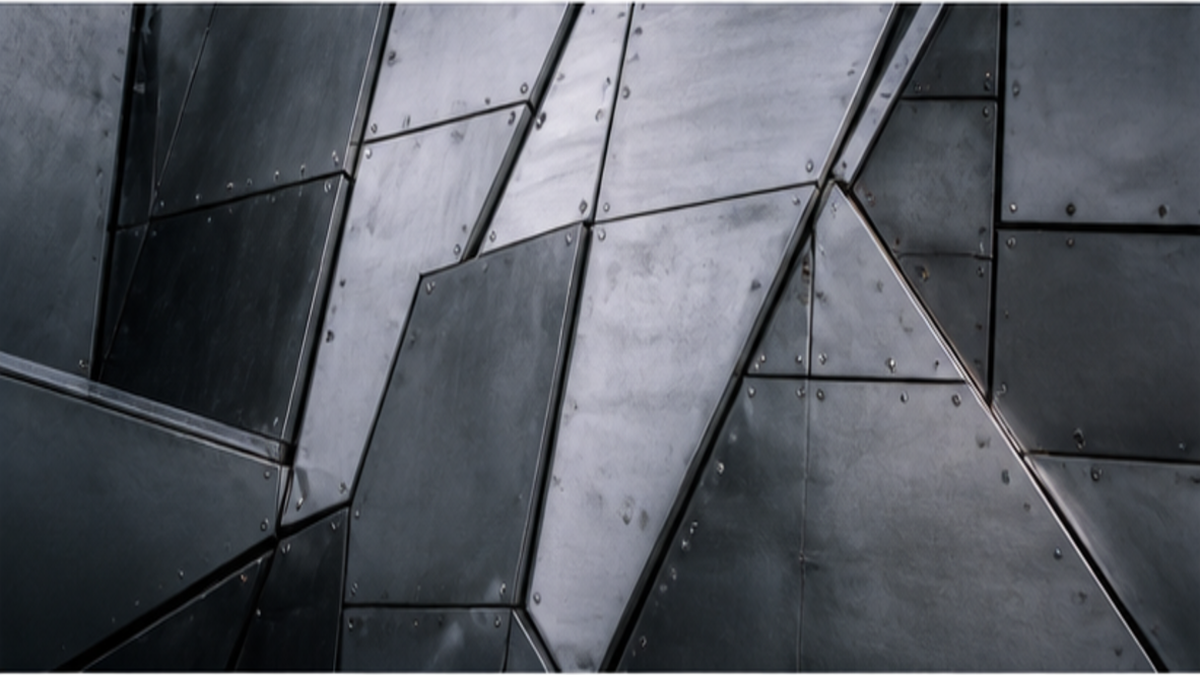
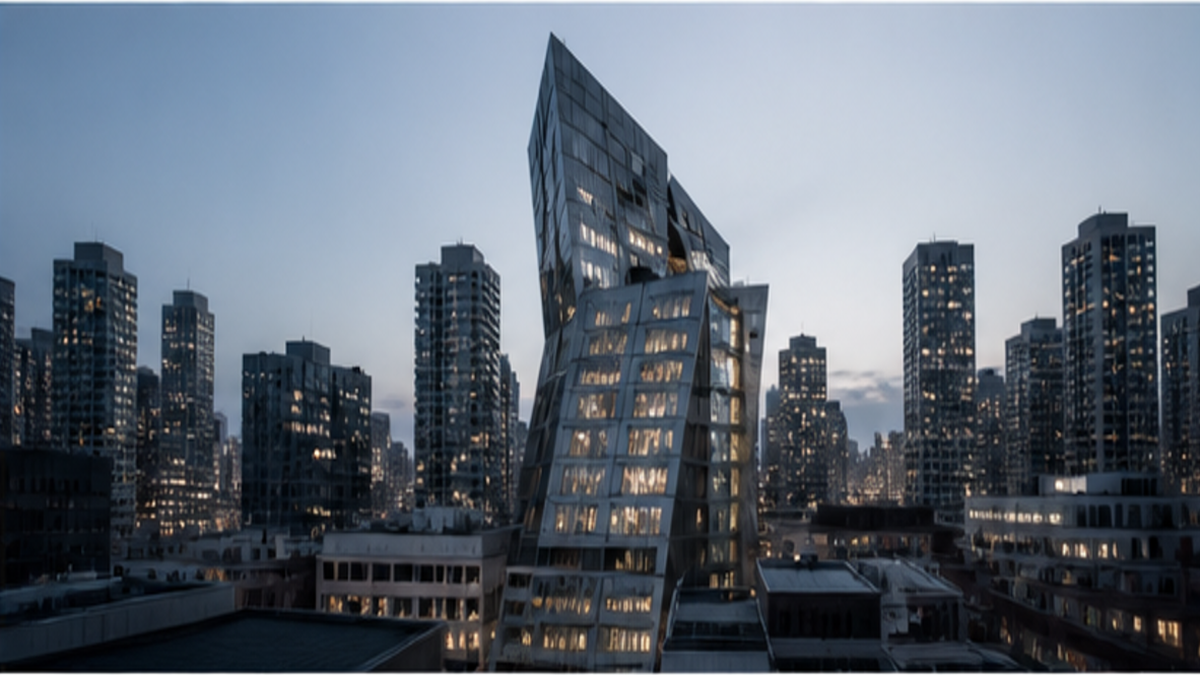
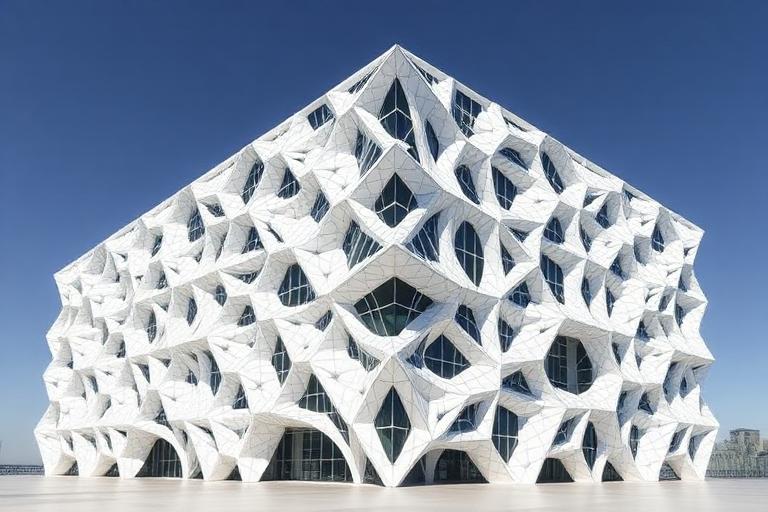
Fragmentation as architecture - Deconstructivism shattered the box into colliding planes, skewed angles, and controlled chaos, rejecting the right angle, from Gehry's titanium folds to Zaha Hadid's flying geometries and Libeskind's fractured voids.

Compare Deconstructivism with another style →See the Deconstructivism typefaces →On the timeline · 1980s
Record020-AD
AestheticDeconstructivism
ClassExpressive / Chaotic
StatusINGESTING
Deconstructivism aesthetic archive image
Archive plate · Deconstructivism
Deconstructivism aesthetic: World dossier scene
Dossier sceneWorld · 1/6
01
The record

What it is, when it works, who it is for, and where it already exists.

How to use it

Record 020-AD - when it works, who it is for, what it looks like

FIELD 01

When to use it

  • Brand identity demanding boldness, disruption, and dynamism
  • Campaigns for culture, fashion, or tech that reject convention
  • Editorial and motion design with fragmented, angular energy
  • Spatial and exhibition design built on instability and tension
FIELD 02

Perfect for

  • Cultural institutions - museums, concert halls - with civic ambition
  • Fashion and luxury brands trading on the avant-garde
  • Tech and innovation brands signalling radical disruption
  • Architecture firms with an expressive, sculptural practice

In the wild, Deconstructivism aesthetic real-world examples

Where this aesthetic shows up in the real world · ↗ opens the source site

Omoro Style GuideEvery aesthetic, every field on this page, in one PDF.
$8Get the guide →
02
The anatomy

Where Deconstructivism came from, what makes it recognisable, and the fingerprint it leaves.

History, Deconstructivism aesthetic history

1988-present · Named at MoMA exhibition (New York); practiced globally

Deconstructivism entered architectural discourse through Philip Johnson and Mark Wigley's 1988 exhibition at MoMA, 'Deconstructivist Architecture,' which presented the work of seven architects: Frank Gehry, Daniel Libeskind, Rem Koolhaas, Peter Eisenman, Zaha Hadid, Coop Himmelb(l)au, and Bernard Tschumi. The curators argued that these architects shared an approach that disrupted conventional architectural harmony: walls tilted, volumes collided, grids warped, and buildings looked as if frozen in the process of coming apart.

The philosophical backing came from Jacques Derrida's literary deconstruction, which questioned the stability of meaning in texts. Eisenman and Tschumi engaged most directly with Derrida's ideas, designing buildings that challenged the assumption that architecture must express stability, order, and functional clarity. Tschumi's Parc de la Villette in Paris (1987) and Eisenman's Wexner Center (1989) applied deconstructive strategies to building programs, producing spaces of deliberate disorientation and formal complexity.

Gehry's Guggenheim Museum Bilbao (1997) brought Deconstructivism to global celebrity, demonstrating that fragmented, sculptural architecture could attract tourists and regenerate cities. Libeskind's Jewish Museum Berlin (2001), with its zinc-clad zigzag plan and voids, showed that deconstructed form could carry profound emotional meaning. The movement has since diffused: its techniques (tilted planes, non-orthogonal geometry, colliding volumes) are now standard tools rather than provocations, absorbed into the mainstream of contemporary architecture.

The box lost an argument with itself.

Omoro dossier · 020-AD

Visual markers, Deconstructivism aesthetic visual markers

The visual DNA: what makes it recognisable

typography

See the fonts
  • Fragmented and deconstructed letterforms: Emigre, experimental type
  • Overlapping, layered text compositions
  • Tilted and rotated text blocks
  • Conflicting grids and deliberately unstable layouts

grid

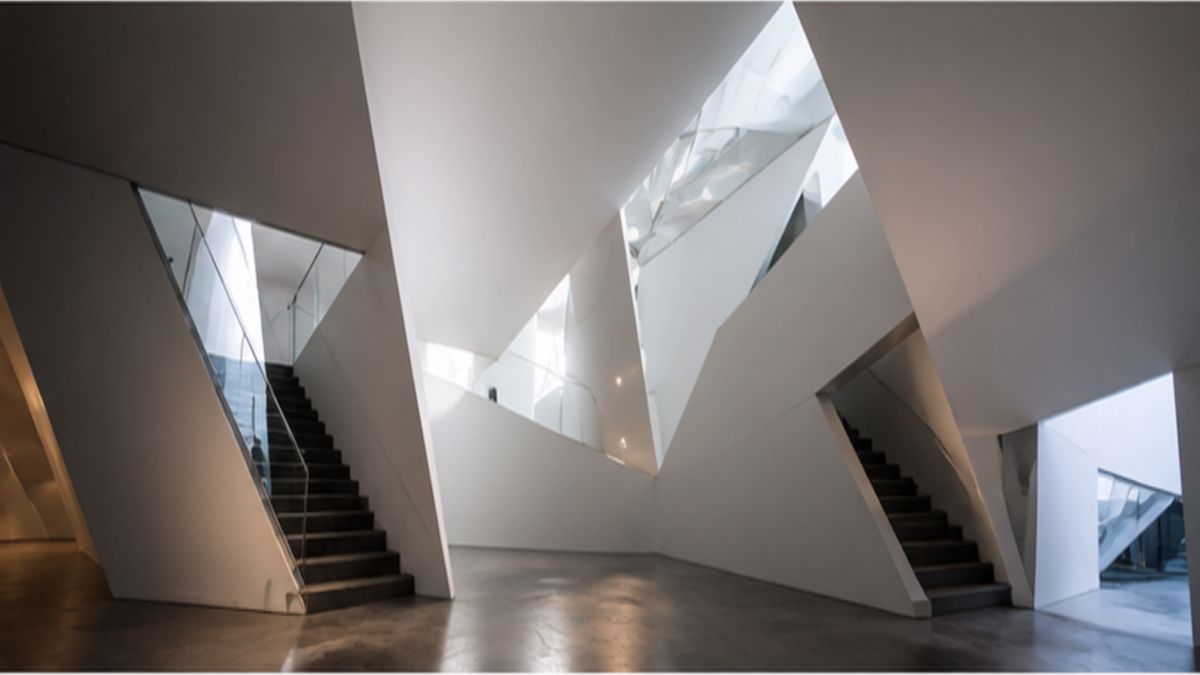
  • Tilted walls and non-orthogonal planes
  • Colliding volumes interpenetrating at unexpected angles
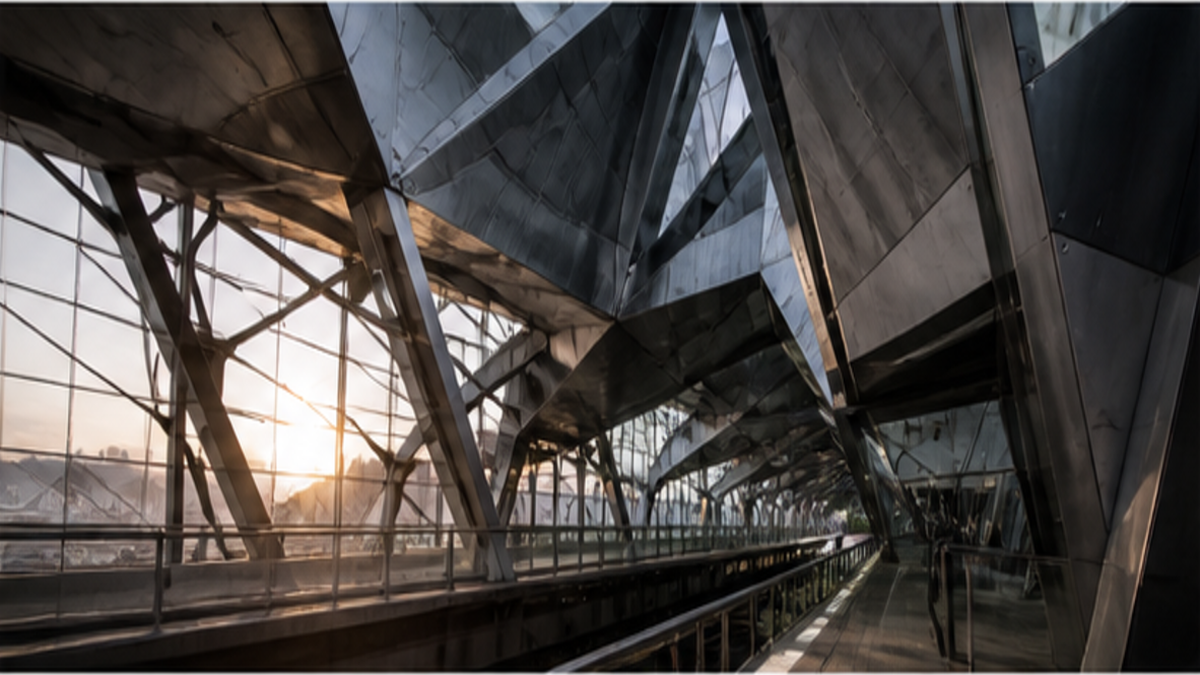
  • Warped or folded grids replacing conventional structural order
  • Deliberate disorientation through spatial complexity

materials

  • Titanium and zinc cladding: #C0C8D0, #A8B0B8, #B8BCC0
  • Raw steel and weathering steel (Corten): #8B4513, #6B3410
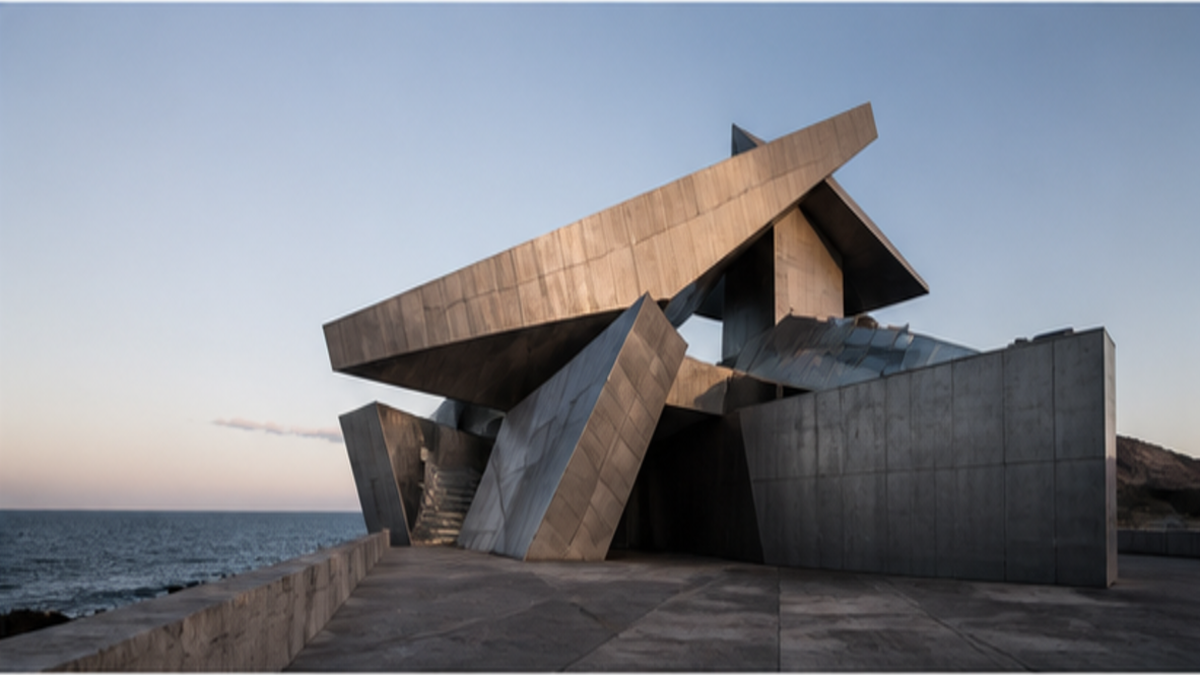
  • Concrete in angular, fractured forms: #A0A0A0, #909090
  • Glass at unusual angles creating unexpected reflections

motifs

  • Sharp angular forms suggesting collision or explosion
  • Void spaces and cuts through building volumes
  • Facades that appear to peel, fold, or fragment
  • Buildings that reject front/back and top/bottom conventions

Aesthetic profile

8-channel console with the fingerprint on its display. Save the card, or share the page

Aesthetic Profile
Deconstructivism
Postmodern
1982–2000
Attribute console · 020-AD
leans expressive, chaotic, maximal
8 CH
FIG. 1
MaximalMinimalDigitalAnalogExpressiveRestrainedCoolWarmFuturisticNostalgicChaoticStructuredDarkLightGeometricOrganic
01Minimal
Maximal50%
02Analog
Digital30%
03Restrained
Expressive70%
04Cool
Warm30%
05Futuristic
Nostalgic30%
06Structured
Chaotic70%
07Dark
Light10%
08Organic
Geometric30%
ExpressiveChaoticMaximal1 materials
Omoro · Attribute console · 020-AD
omoro.io/styles/arch-deconstructivism

Material assembly

The style's primary materials, assembled bottom-up

Tap a stratum for material detail · Full catalog

Place in history

Postmodern · 1982–2000 - tap any style to travel

Color Palettes, Deconstructivism color palettes and hex codes

4 color interpretations of this aesthetic

Deconstructivism
#6B3410 · #8B4513 · #A0A0A0 · #B8BCC0 · #C0C8D0
The box lost an argument with itself
Gehry Titanium
#141418 · #404050 · #8088A0 · #B8C0D0 · #E8ECF0
Bilbao's crumpled titanium: every panel a different angle
Libeskind Void
#080808 · #282830 · #606870 · #A0A8B0 · #D8D8E0
Jewish Museum Berlin: zinc skin slashed by absence
Coop Himmelb(l)au
#101014 · #383848 · #7080A0 · #C0A830 · #E8E4DC
Rooftop intervention: glass and steel erupting from a Vienna building
Omoro Palette Pack575 curated palettes across every aesthetic, 5 export formats.
$8Get the palettes →

Adjacent Palettes, styles related to Deconstructivism

The colour of the styles sitting closest to this one

Parametric Architecture
Neo-Futurism
Blobitecture
Architectural Postmodernism
03
The direction

How to shoot it, how to prompt it, and how to board it.

Photo Direction

How to shoot this aesthetic

"Structure interrupted mid-thought, held together only by tension"

Shot list

  • Wide shot using a deliberately tilted horizon, echoing the building's own fractured planes
  • Detail of intersecting structural lines converging at odd angles
  • Low-angle shot exaggerating the architecture's apparent structural instability

Lighting

Hard directional light creating multiple overlapping shadows from different structural planes let shadow fracture rather than resolve into one clean shape

Omoro Director's Briefs151 photo shot-lists like this one, ready to shoot from.
$8Get the briefs →

Generative Prompt

Drop this into Studio to generate in this aesthetic

Deconstructivist aesthetic with fragmented geometry, non-rectilinear form, controlled visual chaos, dynamic tension

Paste as-is, or append your own subject

Mood Board

The record applied to your project. The record's kit is free; your brand, references and plates come with membership

Mood board
The Deconstructivism board
8 frames · 4 selected
FIG. 4
Deep Raw Steel6B3410Dark Raw Steel8B4513ConcreteA0A0A0Light TitaniumB8BCC0Pale TitaniumC0C8D0
Brand and references
IdleBrand and references open with membership
With membership: the brand's own facts and colours in every prompt, references carried into every frame, and the plates generated.
01 · Hero application
02 · Material and finish
03 · Palette in context
04 · Photography direction
05 · Pattern plate
06 · Object
07 · Environment
08 · Digital presence
Demo kit free, the rest with membershipThe record as a demo kit, free. Name a project and it is written for that
Omoro · Mood board · 020-AD
04
The judgement

Whether to use it, what it costs to do properly, and where it stands right now.

Creative verdict, Deconstructivism feasibility and strategic recommendation

Two written calls, seven meters, and when to walk away

Creative verdict
Should Deconstructivism be the call?
7 meters
FIG. 2
Assessment

Non-orthogonal geometry is a waterproofing problem. Every acute angle and inverted slope is a place water collects, and the failures on famous examples are well documented, so the envelope has to be solved alongside the form. Detail the drainage early. Interior fit-out is the other cost, because no standard component fits a wall that is not vertical.

Verdict

Right when the client can fund complexity that is actually doing something, because the field says openly that its worst examples are complexity without a reason. Its best buildings remain genuinely destabilising. It drew on Derrida and Russian constructivism, and the architects grouped under it in 1988 mostly rejected the grouping; digital modelling then made the forms available to everyone.

Production cost
High

Colliding planes and skewed angles are genuinely harder to engineer.

Creative difficulty
High

Rejecting the right angle only works if the fragmentation still reads as intent.

Execution difficulty
High

Controlled chaos in load-bearing structure is real, demanding engineering.

Risk of misuse
High

Rejecting the right angle only works if the fragmentation still reads as intent.

Prevalence
Rare

A niche reference outside architecture and high-fashion contexts.

Longevity
Enduring

Forty years running as a serious architectural movement.

Brand investment
High

Colliding planes and skewed angles are genuinely harder to engineer.

Avoid if
The brand needs to feel calm or stable
The whole premise here is controlled chaos, not order.
There's no real structural logic behind the fragmentation
Rejecting the right angle only works if it still reads as intent.
Omoro · Creative verdict · 020-AD

Editorial Depth

A Pro feature: origins, practitioners, and pitfalls

Editorial depth
The Deconstructivism file
14 sections
FIG. 3
Context02Brands02Perception04Use04Index02
01Common MisconceptionThe principle beneath the surface
02Historical ContextOrigins, cultural moment, and reaction
03Brands That Accidentally Use This StyleNatural alignment, not category claims
04Brands That Perfectly Represent This StyleExceptional execution
05Psychological EffectHow visual decisions change perception
06Visual ChecklistInclude and avoid
07Creative FormulaThe visual system reduced to essentials
08Recognition SignalsHow to recognize it in two seconds
09When To Use This StyleContexts where the language performs
10Common Creative MistakesWhere imitation weakens the signal
11Best Brand ApplicationsIndustries with a natural advantage
12Creative Application AnalysisFit, feasibility, and production reality
13Related StylesClose languages and the key distinction
14Visual DNA SummaryThe sentence to remember
The editorial depth, with membershipOpening soon
Omoro · Editorial depth · 020-AD
05
The index

Neighbours, cross-references, blends, and the questions people ask.

Related concepts

Connected across the creative knowledge graph

Cultural relevance, Deconstructivism cultural relevance today

Where it stands now, and what it costs you to use it

Deconstructivism drew on Derrida and on Russian constructivism, and the architects grouped under it in the 1988 exhibition mostly rejected the grouping.

Digital modelling made the forms buildable and thereby made them available to everyone, at which point it stopped being an argument and became a style.

Its best buildings are still genuinely destabilising. Its worst are complexity without a reason, and the field says so openly.

Cross-references

Architectural Expressionismboth prioritize formal and emotional intensity over rational functionArchitectural PostmodernismDeconstructivism succeeded Postmodernism as the avant-garde positionParametric ArchitectureParametric design inherited Deconstructivism's complex geometries but rationalized them computationally

Compare

Deconstructivism vs Parametric Architecture

Blend

Mix Deconstructivism with any style in the library

Deconstructivism×
50%50%
87% alike
Deconstructivism referenceParametric Architecture referenceDeconstructivism 50%Parametric Architecture 50%

Merged palette

#6B3410

#B8BCC0

#A0A0A0

#D8DCE0

#E0E0E0

Leads expressive, digital, chaotic

Typography · from Deconstructivism

Anton over Karla

Materials

  • Titanium and zinc cladding: #C0C8D0, #A8B0B8, #B8BCC0
  • Raw steel and weathering steel (Corten): #8B4513, #6B3410
  • Glass-reinforced concrete (GRC) in curved panels: #E0E0E0, #D0D0D0

Use it

Deconstructivist aesthetic with fragmented geometry, non-rectilinear form, controlled visual chaos, dynamic tension (50%), infused with Parametric aesthetic with algorithm-driven organic forms, flowing continuous surfaces, computational design, Zaha Hadid Architects influence, biomorphic geometry, color palette strictly #6B3410 #B8BCC0 #A0A0A0 #D8DCE0 #E0E0E0, overall character: expressive, digital, chaotic

One-click generation opens with the studio

About this aesthetic

What is Deconstructivist architecture?

Deconstructivism is an architectural movement that disrupts conventional harmony through fragmented forms, tilted walls, colliding volumes, and deliberate spatial disorientation. Named at a 1988 MoMA exhibition, its key practitioners include Frank Gehry, Daniel Libeskind, Zaha Hadid, Rem Koolhaas, and Peter Eisenman.

Is Deconstructivism related to Derrida's Deconstruction?

The connection is more metaphorical than direct. Some architects (Eisenman, Tschumi) engaged seriously with Derrida's ideas about the instability of meaning. Others (Gehry, Hadid) developed formally similar work from different starting points. The 1988 MoMA exhibition used the philosophical connection as a curatorial framework.

Is Deconstructivism still practiced?

As a named movement, it has diffused. Its techniques (non-orthogonal geometry, colliding volumes, complex surfaces) have been absorbed into mainstream practice. Gehry, Hadid (studio continuing posthumously), Libeskind, and Koolhaas continue to produce work, but it is no longer framed as a movement. The provocation has become a tool.

Build with the deconstructivism aesthetic

Every style in the library is broken down like this one: the palette, the typography, the materials and the lineage.

Explore the style library →