When to use it
- Sci-fi games and media
- Tech with edge
- Urban nightlife
- Dystopian narratives
High tech, low life: neon-drenched dystopia with rain-slick streets
Part of the Rebellion & Edge mood, alongside Punk and Grunge. Began in the 1980s, on the style timeline.
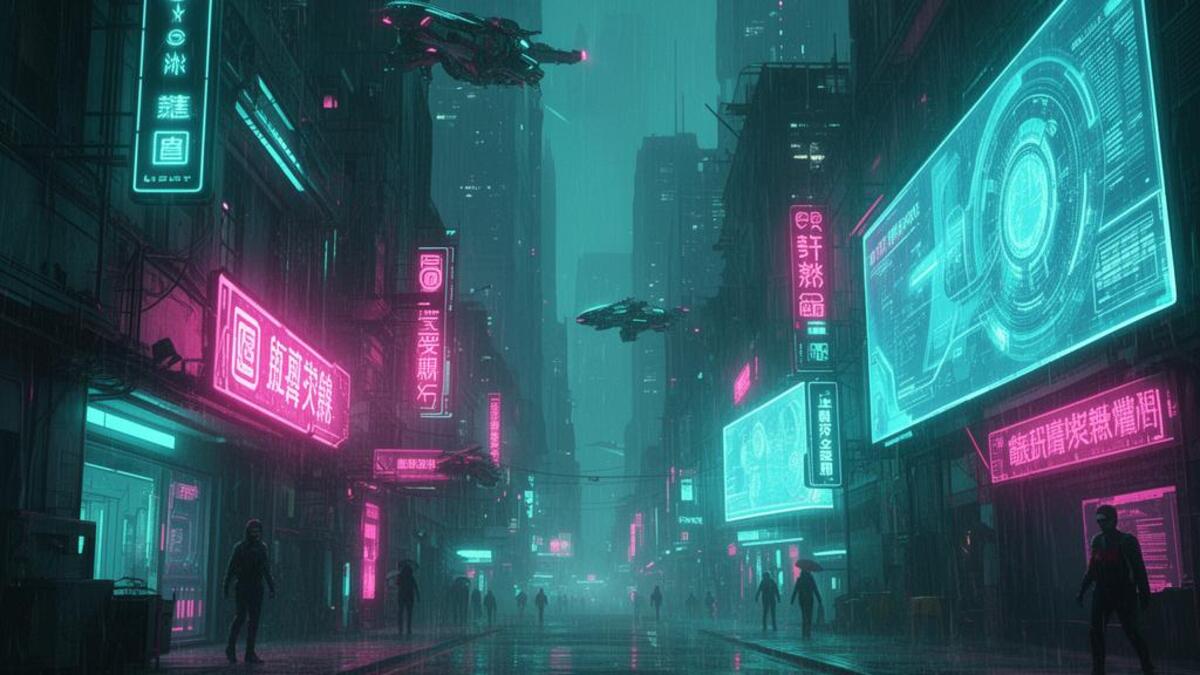
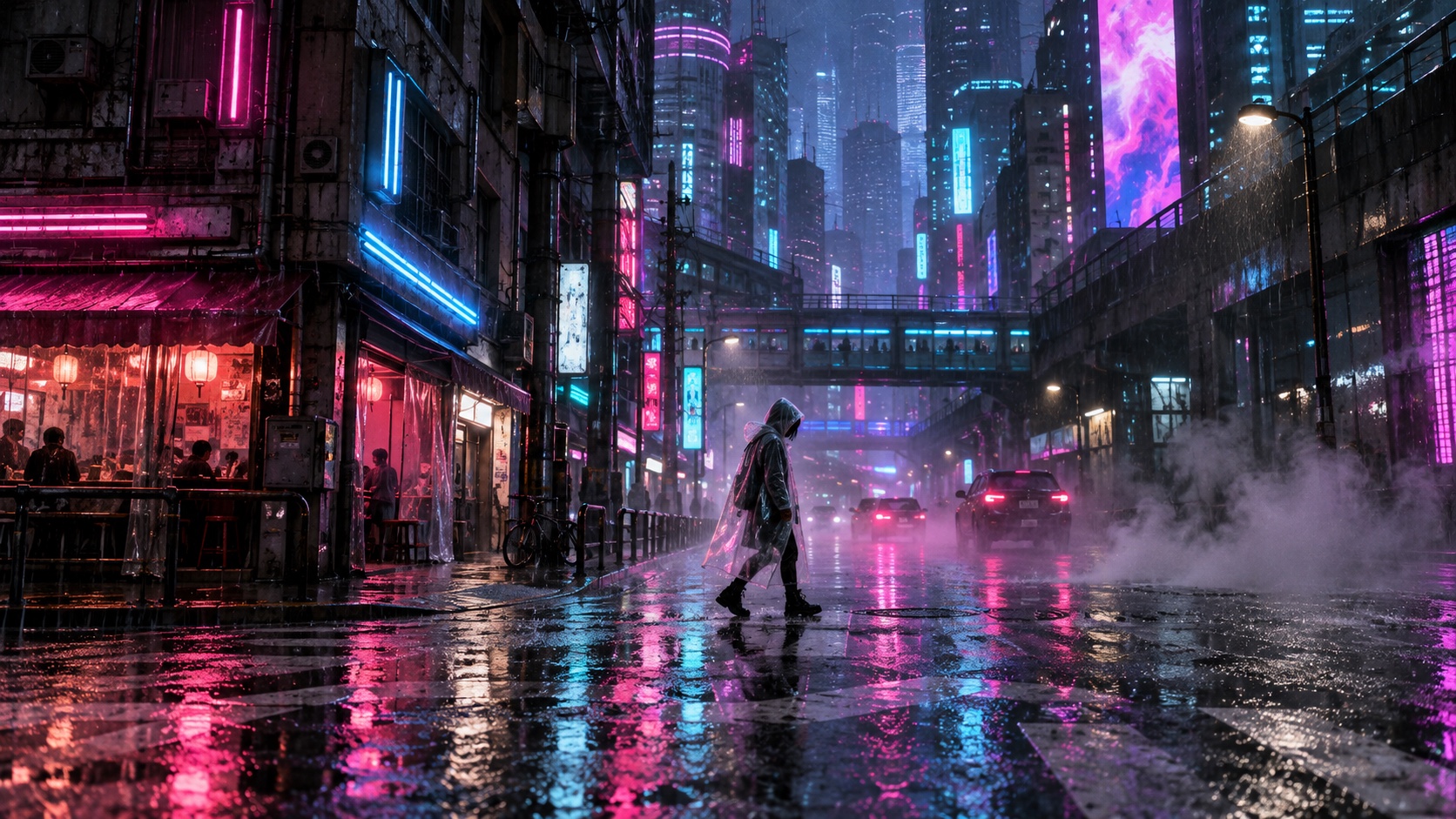
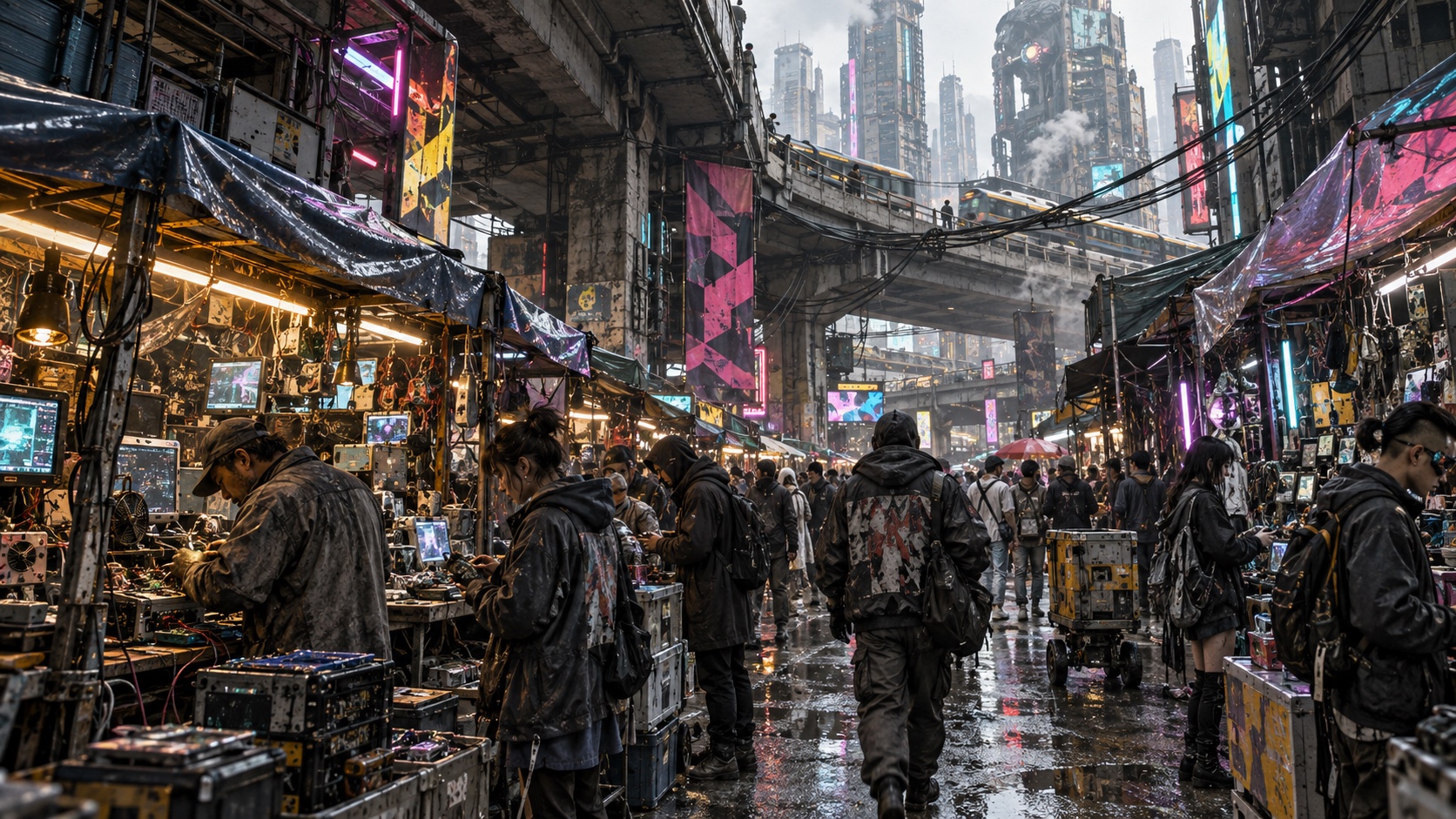
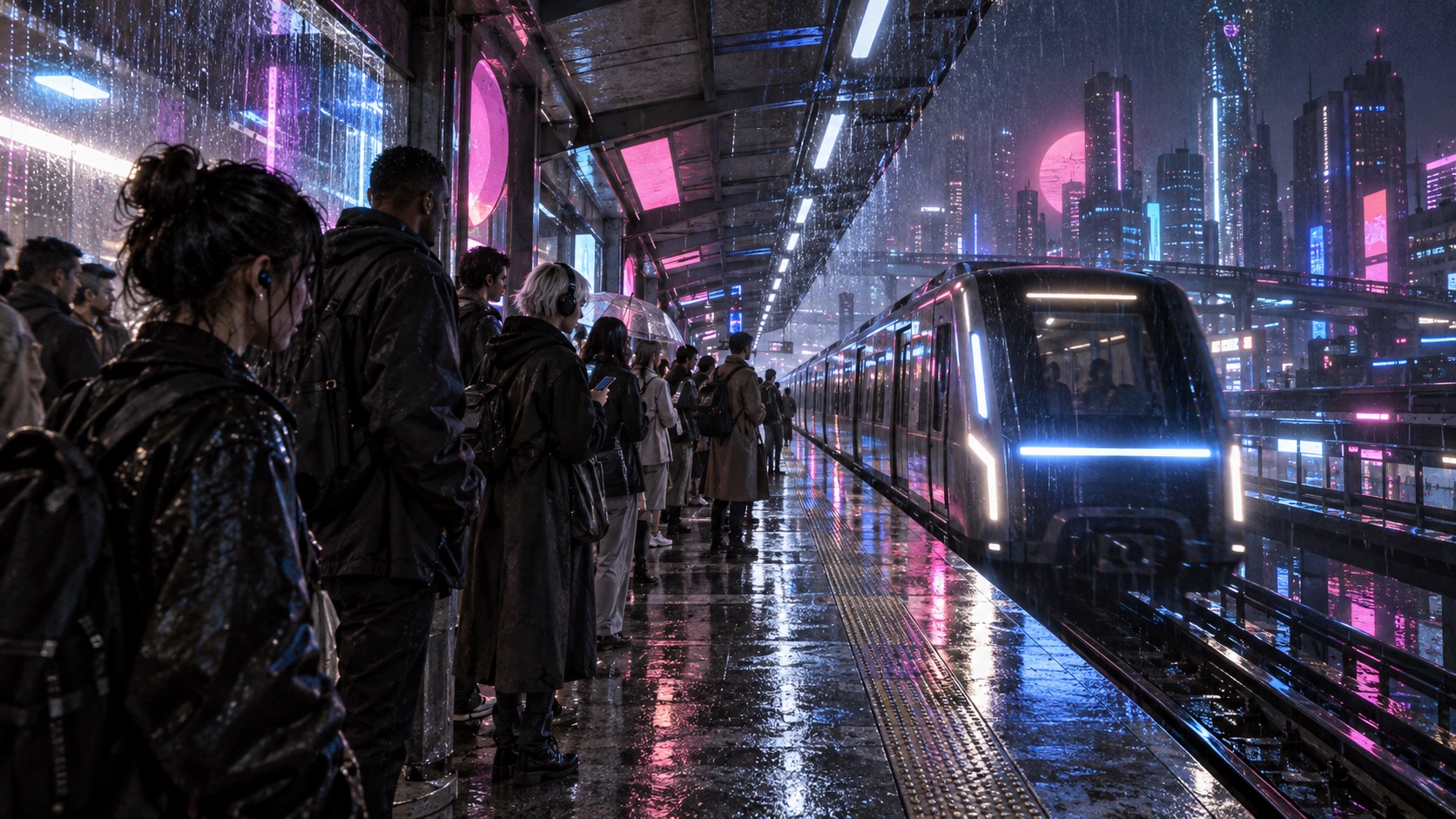
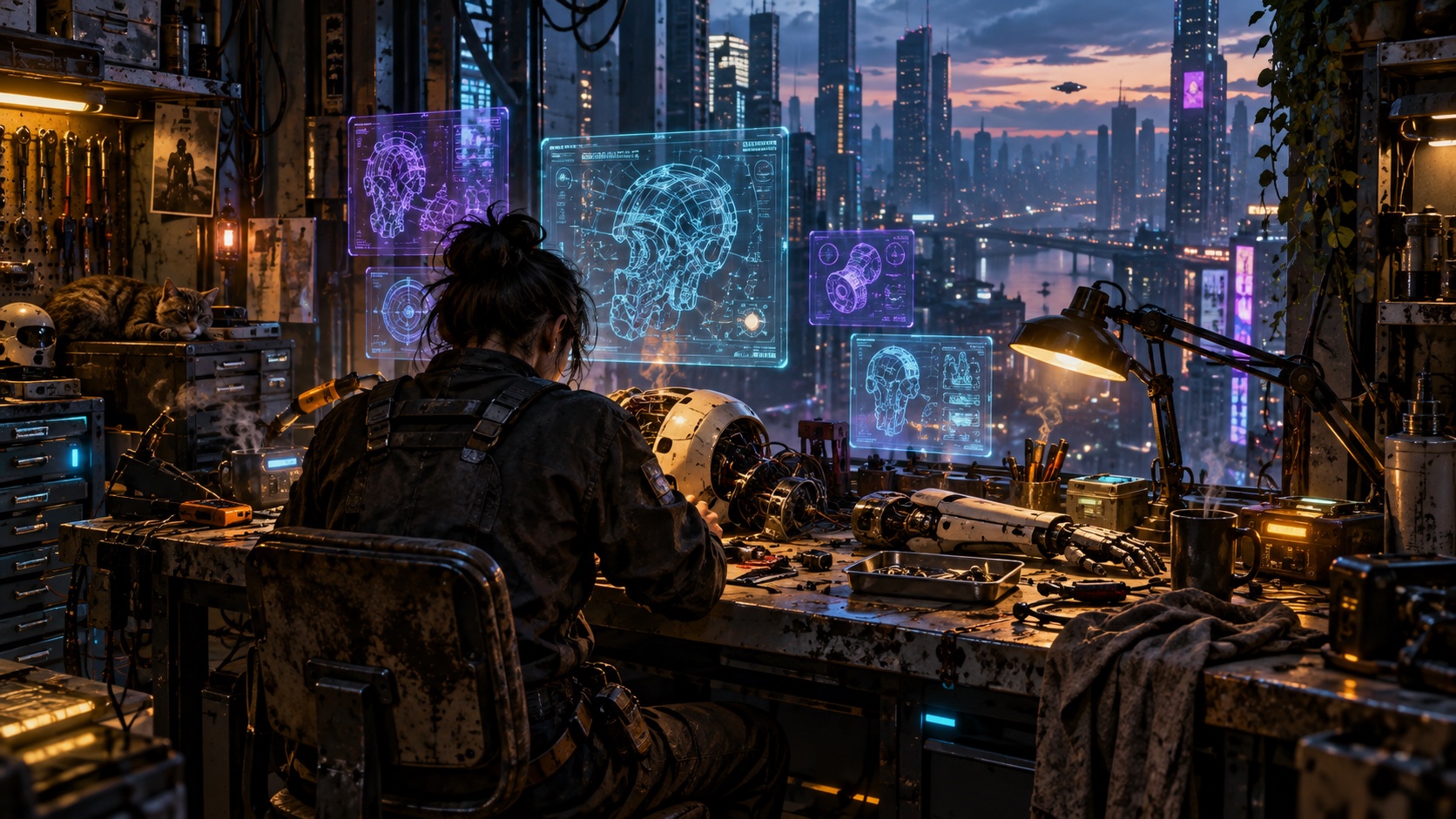
What it is, when it works, who it is for, and where it already exists.
Record 022-CY - when it works, who it is for, what it looks like
Where this aesthetic shows up in the real world · ↗ opens the source site
Where Cyberpunk came from, what makes it recognisable, and the fingerprint it leaves.
1984–present · Science fiction literature; cinematic roots in Hong Kong and Los Angeles
Cyberpunk emerged as a literary genre with William Gibson's 'Neuromancer' (1984), which coined the term 'cyberspace' and described a near-future world of corporate dystopia, body modification, and underground hackers. But the visual language crystallized in cinema: Ridley Scott's 'Blade Runner' (1982, before the genre was named) established the template: perpetual rain, neon kanji advertisements, flying cars above street-level squalor, and the architectural collision of high corporate towers and decaying urban infrastructure.
The aesthetic draws heavily from 1980s Hong Kong street photography and Japan's Akihabara electronics district: the density of commercial signage, the layering of old and new buildings, and the coexistence of extreme wealth and poverty in vertical megacities. The color palette comes directly from this source material: amber streetlight, neon blue and red from shop signs, acid rain reflections, and the blue-white flicker of CRT screens in dark rooms.
Cyberpunk entered mainstream visual culture through video games ('Deus Ex,' 'Cyberpunk 2020,' 'Cyberpunk 2077'), anime ('Akira' 1988, 'Ghost in the Shell' 1995), and fashion's 'techwear' movement in the 2010s. Its core tension: that advanced technology amplifies existing inequality rather than resolving it: has become more resonant, not less, as AI and surveillance capitalism have expanded.
“High tech, low life: the future as a rain-slicked noir thriller.
The visual DNA: what makes it recognisable
8-channel console with the fingerprint on its display. Save the card, or share the page

4 color interpretations of this aesthetic
The colour of the styles sitting closest to this one
How to shoot it, how to prompt it, and how to board it.
How to shoot this aesthetic
"High tech, low life: the human body persisting in a city that has replaced humanity with its infrastructure"
Shot list
Lighting
Hard practical sources from the environment neon signs, LED advertising, screen glow; rain adds a specular quality to every surface that multiplies the light sources infinitely
Drop this into Studio to generate in this aesthetic
Cyberpunk aesthetic with neon-soaked rain-slicked atmosphere, dystopian megacity mood, Blade Runner lineage by way of Ridley Scott and Denis Villeneuve, holographic advertisement clutter, moody high-contrast color grade
The record applied to your project. The record's kit is free; your brand, references and plates come with membership
01 · Hero application02 · Material and finish03 · Palette in context04 · Photography directionWhether to use it, what it costs to do properly, and where it stands right now.
Two written calls, seven meters, and when to walk away
Atmosphere is not a point of view. Rain, neon and a wet street is the establishing shot of every film in the genre, so the design has to say something about the specific world underneath it. Fill the frame with plausible infrastructure: cables, signage, repairs. Grime that shows use reads as lived-in; grime applied evenly reads as a texture pass.
Right when the work has something to say about power and technology, which is what the genre was written for. Wrong as neon dressing on a product that is itself the corporation the fiction warns about, a contradiction the audience feels even when they cannot name it. The 2020 game fixed the look in one register of rain and neon, so anything that reads as Night City reads as ten years late.
CGI or heavily dressed locations. Rarely built from scratch.
A crowded genre. Atmosphere alone isn't a point of view.
Neon lighting and atmospheric depth take real technical control.
Neon-and-rain without a real world underneath is a genre cliche.
One of the most reached-for sci-fi visual languages there is.
Forty years running as a durable genre, not a fad.
Consistent atmosphere across a project, not a whole environment.
A Pro feature: origins, practitioners, and pitfalls
Neighbours, cross-references, blends, and the questions people ask.
Connected across the creative knowledge graph
Where it stands now, and what it costs you to use it
Cyberpunk stopped being a warning and became a product line. It was written against corporate power and is now most often used to sell it, which is the joke everyone in the scene has already made.
The 2020 game fixed the look in one register of neon and rain, and everything since has had to argue with Night City whether it wants to or not. Directors working in this space now are mostly trying to get out from under it.
The living end of it is non-Anglo: Chinese and Southeast Asian cyberpunk built from actual dense-city texture rather than a Blade Runner memory. Shoot the real density and it reads. Add rain and a katakana sign and it reads as costume.
Mix Cyberpunk with any style in the library
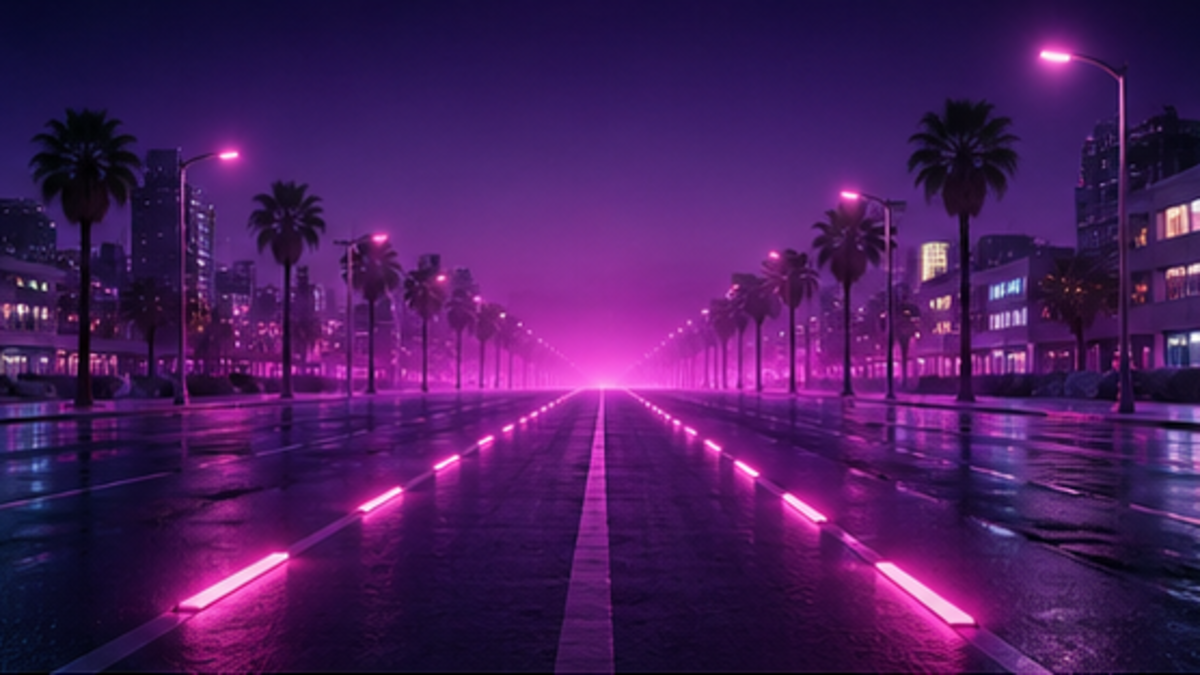 Cyberpunk 50%Synthwave 50%
Merged palette
#0D1117
#0D0221
#1A0A2E
#FF003C
#9400D3
Leads digital, expressive, maximal
Typography · from Cyberpunk
Oswald over Roboto
Materials
The calls this blend forces
These two disagree on 3 things, and a blend cannot average them: you pick a side. At this mix:
Futuristic or Nostalgic? Cyberpunk is futuristic, Synthwave is nostalgic. This mix lands futuristic.
Cool or Warm? Cyberpunk is cool, Synthwave is warm. This mix lands warm.
Chaotic or Structured? Cyberpunk is chaotic, Synthwave is structured. This mix lands chaotic.
Use it
Cyberpunk aesthetic with neon-soaked rain-slicked atmosphere, dystopian megacity mood, Blade Runner lineage by way of Ridley Scott and Denis Villeneuve, holographic advertisement clutter, moody high-contrast color grade (50%), infused with Synthwave aesthetic with retro-futuristic 1980s digital sunset, Kavinsky and Outrun album-art lineage, glowing neon color intensity against deep night sky, color palette strictly #0D1117 #0D0221 #1A0A2E #FF003C #9400D3, leaning futuristic over nostalgic, cool over warm, chaotic over structured, overall character: digital, expressive, maximal
Cyberpunk is a science-fiction aesthetic defined by high technology existing alongside social decay: neon-lit megacity streets, corporate dystopia, body augmentation, and underground resistance. Visually: deep blacks, acid neon, rain reflections, and a collision of ultra-modern technology with decaying urban infrastructure.
Both use dark backgrounds and neon accents, but their emotional registers differ. Synthwave is nostalgic and aspirational: the 1980s future as cool and romantic. Cyberpunk is dystopian and critical: the future as a warning. Synthwave is chrome and clean; cyberpunk is gritty, crowded, and wet.
Base: near-black #0D0A14 or dark navy #0A0E24. Neon accents: cyan #00FFFF, hot magenta #FF007A, acid yellow #CCFF00, amber #FF6600. Rain and atmosphere: muted teals and greys. The palette is high-contrast with neon punching through dark environmental tones.
Every style in the library is broken down like this one: the palette, the typography, the materials and the lineage.
Explore the style library →