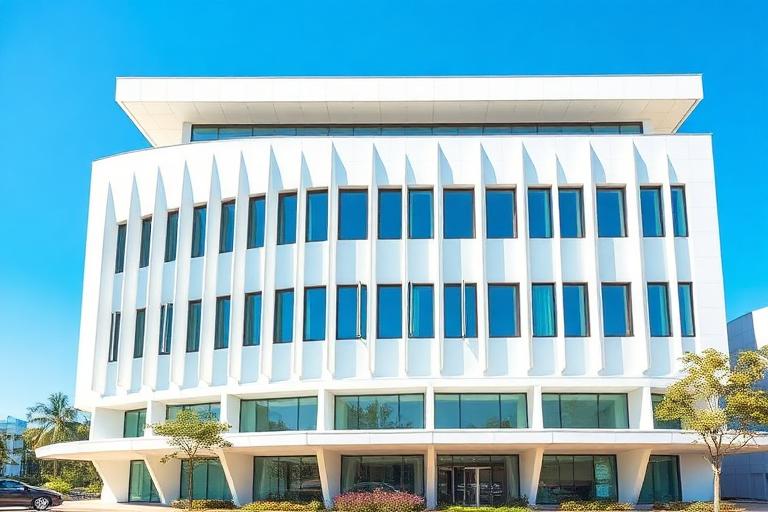
International Style

The glass tower as global default - after Johnson and Hitchcock's 1932 exhibition, Mies's steel skeleton and curtain wall became the template for every postwar corporate headquarters from New York to Tokyo to São Paulo.

Compare International Style with another style →See the International Style typefaces →On the timeline · 1930s
Record020-AI
AestheticInternational Style
ClassStructured / Geometric
StatusINGESTING
International Style aesthetic archive image
Archive plate · International Style
01
The record

What it is, when it works, who it is for, and where it already exists.

How to use it

Record 020-AI - when it works, who it is for, what it looks like

FIELD 01

When to use it

  • Corporate identity systems demanding authority, clarity, and universality
  • Financial and professional services brands communicating global reach
  • Real estate developer branding for commercial office and mixed-use towers
  • Institutional identity for international organizations and embassies
FIELD 02

Perfect for

  • Global financial institutions, banks, and investment firms
  • Multinational corporate headquarters and professional services firms
  • Commercial real estate developers with a Modernist portfolio
  • International governmental and diplomatic organizations

In the wild, International Style aesthetic real-world examples

Where this aesthetic shows up in the real world · ↗ opens the source site

Omoro Style GuideEvery aesthetic, every field on this page, in one PDF.
$8Get the guide →
02
The anatomy

Where International Style came from, what makes it recognisable, and the fingerprint it leaves.

History, International Style aesthetic history

1932-1970s · Named in New York; practiced globally

The International Style was not a movement but a branding exercise. In 1932, Philip Johnson and Henry-Russell Hitchcock curated an exhibition at MoMA called 'The International Style: Architecture Since 1922.' They identified three principles in the European avant-garde work of Le Corbusier, Mies van der Rohe, Gropius, and J.J.P. Oud: emphasis on volume rather than mass, regularity rather than symmetry, and the elimination of applied decoration. By naming and exhibiting these principles, they made them exportable.

After World War II, the International Style became the default language of corporate and institutional building worldwide. Mies van der Rohe's Seagram Building in New York (1958), a bronze-and-glass tower on a granite plaza, set the template that would be replicated in every major city for three decades. Skidmore, Owings & Merrill (SOM) industrialized the approach with Lever House (1952) and hundreds of corporate towers. The glass curtain wall became a universal symbol of modernity, progress, and corporate authority.

The International Style's universalism was also its weakness. By the 1960s, critics argued that buildings in Lagos looked like buildings in London looked like buildings in Los Angeles, erasing local identity and climate response. The backlash fed both Brutalism (more honest materialism) and Postmodernism (more communicative symbolism). Today, the pure International Style glass tower is largely a historical form, though its DNA remains in every commercial high-rise.

Modernism got a passport and a corner office.

Omoro dossier · 020-AI

Visual markers, International Style aesthetic visual markers

The visual DNA: what makes it recognisable

typography

See the fonts
  • Helvetica and Univers as default corporate type
  • Clean, light-weight sans-serifs for institutional identity
  • Restrained type hierarchies: one family, weight contrasts only
  • Lobby signage in stainless steel or bronze lettering

grid

  • Regular structural grids expressed on the facade
  • Curtain wall systems with uniform module repetition
  • Ground-floor setbacks creating public plazas
  • Podium-and-tower composition for mixed-use buildings

materials

  • Glass curtain walls with aluminum or steel mullions: #C8D0D8, #B0B8C0
  • Bronze and dark metal cladding: #6B5C4C, #5C4E3E
  • Polished stone lobbies: marble, granite, travertine
  • White or light grey spandrel panels: #E8E4E0, #D8D4D0

motifs

  • Floor-to-ceiling glass walls expressing structural independence
  • Recessed ground floors with pilotis or columns
  • Flat roofs with mechanical penthouse setbacks
  • Corporate plazas with abstract sculpture

Aesthetic profile

8-channel console with the fingerprint on its display. Save the card, or share the page

Aesthetic Profile
International Style
Modern Movement
1930–1970
Attribute console · 020-AI
leans structured, geometric, minimal
8 CH
FIG. 1
MinimalMaximalDigitalAnalogRestrainedExpressiveCoolWarmNostalgicFuturisticStructuredChaoticLightDarkGeometricOrganic
01Minimal
Maximal60%
02Analog
DigitalEVEN
03Restrained
Expressive60%
04Cool
Warm40%
05Futuristic
Nostalgic20%
06Structured
Chaotic80%
07Dark
Light30%
08Organic
Geometric80%
StructuredGeometricMinimal4 materials
Omoro · Attribute console · 020-AI
omoro.io/styles/arch-international-style

Material assembly

The style's primary materials, assembled bottom-up

Tap a stratum for material detail · Full catalog

Place in history

Modern Movement · 1930–1970 - tap any style to travel

Color Palettes, International Style color palettes and hex codes

4 color interpretations of this aesthetic

International Style
#1A1A1A · #4A6FA5 · #7AACCC · #ECECEC · #0A1020
Steel skeleton, curtain wall, flat roof: the architectural lingua franca
Lever House
#0A1020 · #284878 · #6898C0 · #A8C0D8 · #E8F0F8
Glass curtain wall on Park Avenue: the corporate tower distilled
Farnsworth
#0C0C0C · #303030 · #708868 · #C8D0C8 · #F0F0EC
Mies: steel frame and glass plane floating above the Fox River
Seagram
#0C0A08 · #483818 · #7A6030 · #A89060 · #E0D8C0
Bronze I-beams and topaz glass: Mies on Park Avenue
Omoro Palette Pack575 curated palettes across every aesthetic, 5 export formats.
$8Get the palettes →

Adjacent Palettes, styles related to International Style

The colour of the styles sitting closest to this one

Architectural Modernism
Bauhaus Architecture
Neo-Modernism
Stripped Classicism
03
The direction

How to shoot it, how to prompt it, and how to board it.

Photo Direction

How to shoot this aesthetic

"Steel, glass, and the belief that less really was more"

Shot list

  • Wide shot of unornamented planar surfaces and ribbon windows
  • Detail shot of steel-frame structural expression at a corner junction
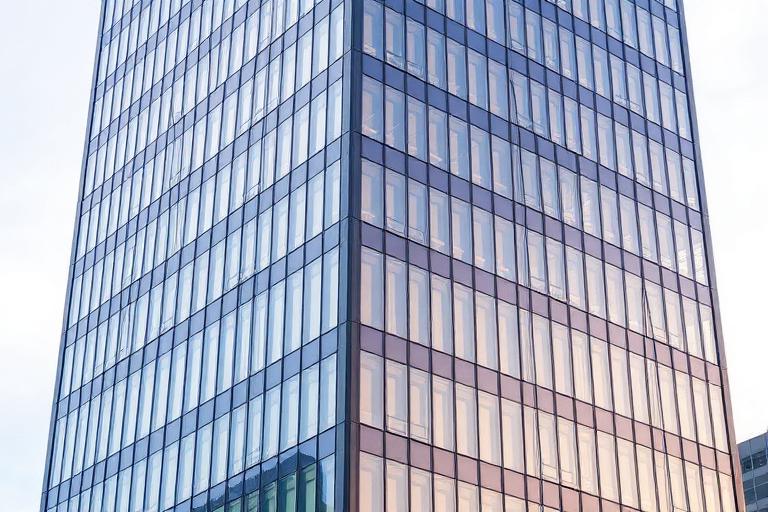
  • Wide shot showing glass curtain-wall clarity reflecting sky and surroundings

Lighting

Clean daylight that lets the glass curtain wall reflect and refract the sky shoot at an angle where reflection adds depth rather than glare

Omoro Director's Briefs151 photo shot-lists like this one, ready to shoot from.
$8Get the briefs →

Generative Prompt

Drop this into Studio to generate in this aesthetic

International Style architecture with unornamented planar surfaces and ribbon windows, steel-frame structural expression, Mies van der Rohe and Philip Johnson influence, universal machine-age rationalism, glass-and-steel curtain-wall clarity

Paste as-is, or append your own subject

Mood Board

The record applied to your project. The record's kit is free; your brand, references and plates come with membership

Mood board
The International Style board
8 frames · 4 selected
FIG. 4
Steel Column1A1A1AGlass Blue4A6FA5Sky Reflect7AACCCCurtain WallECECECLobby Dark0A1020
Brand and references
IdleBrand and references open with membership
With membership: the brand's own facts and colours in every prompt, references carried into every frame, and the plates generated.
01 · Hero application
02 · Material and finish
03 · Palette in context
04 · Photography direction
05 · Pattern plate
06 · Object
07 · Environment
08 · Digital presence
Demo kit free, the rest with membershipThe record as a demo kit, free. Name a project and it is written for that
Omoro · Mood board · 020-AI
04
The judgement

Whether to use it, what it costs to do properly, and where it stands right now.

Creative verdict, International Style feasibility and strategic recommendation

Two written calls, seven meters, and when to walk away

Creative verdict
Should International Style be the call?
7 meters
FIG. 2
Assessment

The purity depends on the detailing being invisible. Curtain wall, flat roof and no ornament leave nothing to distract from a misaligned mullion, so the setting-out has to be exact. Hold one module across the whole facade. Context is the fair criticism: the style ignores site by design, and that is a choice to defend rather than hide.

Verdict

Know what was edited out. It arrived in America as a style after a 1932 exhibition deliberately stripped the politics from European modernism to make it palatable, and the loss of the housing agenda is the standing critique. It became the language of corporate headquarters, roughly the opposite of what its originators intended. Right when that corporate register is genuinely the brief.

Production cost
High

Steel skeleton and curtain wall. Real structural engineering.

Creative difficulty
Medium

Became the corporate default. Distinguishing it from generic glass towers is the work.

Execution difficulty
High

The glass and steel module has to be precise or it reads cheap.

Risk of misuse
Medium

Became the corporate default. Distinguishing it from generic glass towers is the work.

Prevalence
Common

The default architectural language for postwar corporate headquarters.

Longevity
Timeless

Nearly a century old and still the global default for towers.

Brand investment
High

Real steel skeleton and curtain wall construction.

Avoid if
The brand needs to feel distinct from every other glass tower
This became the corporate default. Standing out inside it is the real work.
There's no budget for real steel and curtain wall construction
A cheap version of this reads instantly as a knockoff.
Omoro · Creative verdict · 020-AI

Editorial Depth

A Pro feature: origins, practitioners, and pitfalls

Editorial depth
The International Style file
14 sections
FIG. 3
Context02Brands02Perception04Use04Index02
01Common MisconceptionThe principle beneath the surface
02Historical ContextOrigins, cultural moment, and reaction
03Brands That Accidentally Use This StyleNatural alignment, not category claims
04Brands That Perfectly Represent This StyleExceptional execution
05Psychological EffectHow visual decisions change perception
06Visual ChecklistInclude and avoid
07Creative FormulaThe visual system reduced to essentials
08Recognition SignalsHow to recognize it in two seconds
09When To Use This StyleContexts where the language performs
10Common Creative MistakesWhere imitation weakens the signal
11Best Brand ApplicationsIndustries with a natural advantage
12Creative Application AnalysisFit, feasibility, and production reality
13Related StylesClose languages and the key distinction
14Visual DNA SummaryThe sentence to remember
The editorial depth, with membershipOpening soon
Omoro · Editorial depth · 020-AI
05
The index

Neighbours, cross-references, blends, and the questions people ask.

Related concepts

Connected across the creative knowledge graph

Cultural relevance, International Style cultural relevance today

Where it stands now, and what it costs you to use it

The International Style was named by an American exhibition in 1932 that deliberately stripped the politics out of European modernism to make it palatable, and that editing is documented.

What arrived in America as a style had been a social project in Europe, and the loss of the housing agenda is the standing critique.

It became the language of corporate headquarters, which is roughly the opposite of what its originators intended.

Cross-references

Architectural Modernismthe International Style is Modernism's most systematized and corporate expressionBauhaus ArchitectureBauhaus provided the educational foundation for International Style practitionersNeo-ModernismNeo-Modernism returned to International Style principles with greater contextual awareness

Blend

Mix International Style with any style in the library

International Style×
50%50%
99% alike
International Style referenceArchitectural Modernism referenceInternational Style 50%Architectural Modernism 50%

Merged palette

#1A1A1A

#4A6FA5

#3D5A6B

#7AACCC

#B5C4CC

Leads structured, geometric, minimal

Typography · from International Style

Space Grotesk over Inter

Materials

  • Glass curtain walls with aluminum or steel mullions: #C8D0D8, #B0B8C0
  • Bronze and dark metal cladding: #6B5C4C, #5C4E3E
  • White rendered surfaces: #F5F5F0, #EBEBEB, #E0E0DC

Use it

International Style architecture with unornamented planar surfaces and ribbon windows, steel-frame structural expression, Mies van der Rohe and Philip Johnson influence, universal machine-age rationalism, glass-and-steel curtain-wall clarity (50%), infused with Modernist architecture with clean geometric volumes, glass curtain walls, steel and concrete, Le Corbusier and Mies van der Rohe influence, pilotis, free plan, ribbon windows, color palette strictly #1A1A1A #4A6FA5 #3D5A6B #7AACCC #B5C4CC, overall character: structured, geometric, minimal

One-click generation opens with the studio

About this aesthetic

What is the International Style?

The International Style is the name given by Philip Johnson and Henry-Russell Hitchcock in 1932 to the European Modernist architecture of Le Corbusier, Mies, and Gropius. It defined three principles: volume over mass, regularity over symmetry, and no applied decoration. After WWII it became the global standard for corporate and institutional buildings.

What is the difference between the International Style and Modernism?

Modernism is the broad movement; the International Style is its most standardized, exportable form. Modernism includes many approaches (Brutalism, Expressionism, Organic architecture) that the International Style's smooth curtain walls would not accommodate. The International Style is Modernism made corporate-friendly.

Why did the International Style decline?

Critics argued it produced identical buildings regardless of climate, culture, or context. A glass tower in tropical Lagos performed the same as one in Nordic Helsinki, ignoring local conditions. Postmodernism, Critical Regionalism, and Brutalism all offered alternatives that engaged with place, history, and material specificity.

Build with the international style aesthetic

Every style in the library is broken down like this one: the palette, the typography, the materials and the lineage.

Explore the style library →