When to use it
- Gaming brand identity and merch
- Retro-inspired tech and app branding
- Nostalgia-forward entertainment campaigns
- Character and world-building for indie games
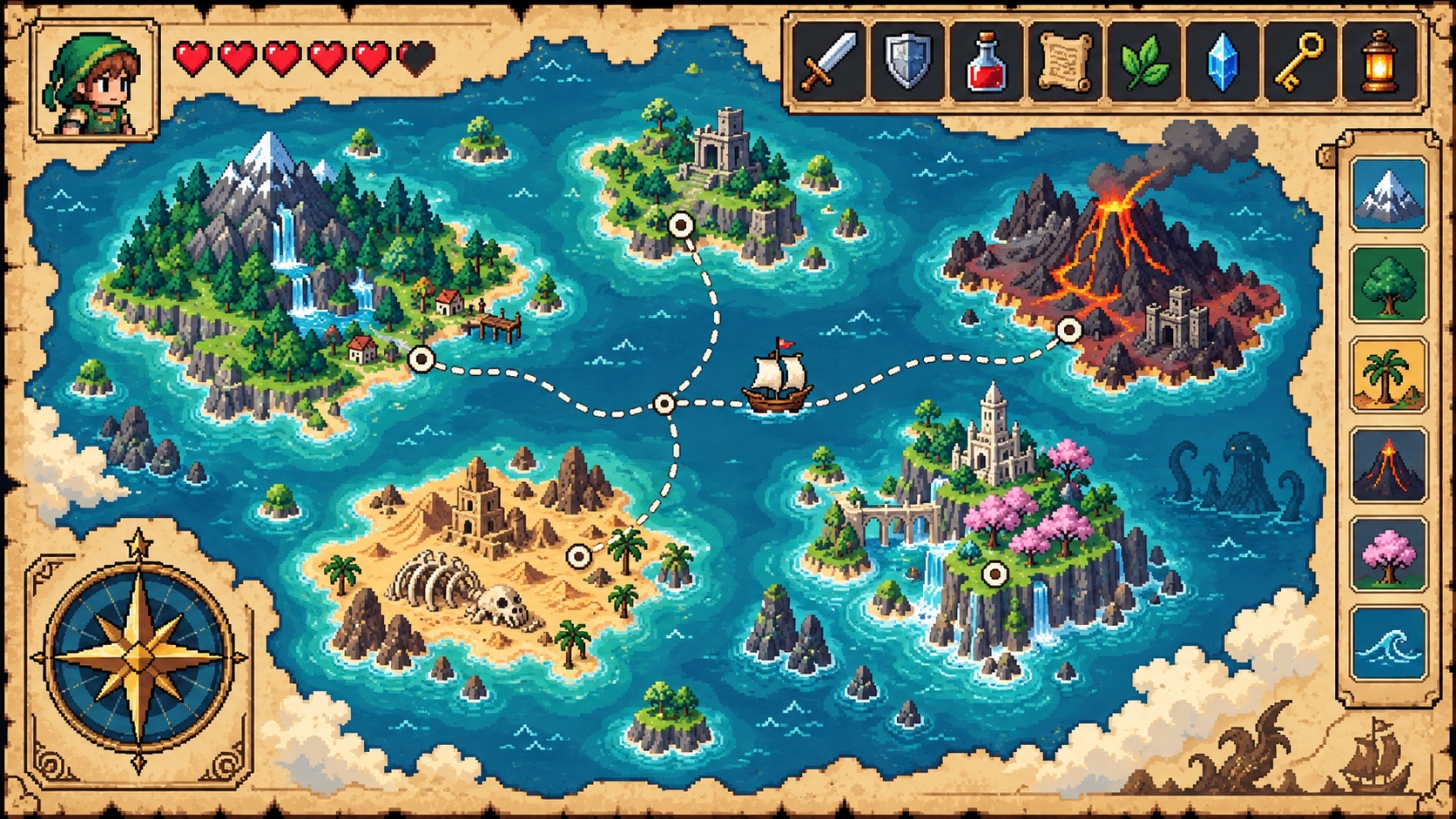
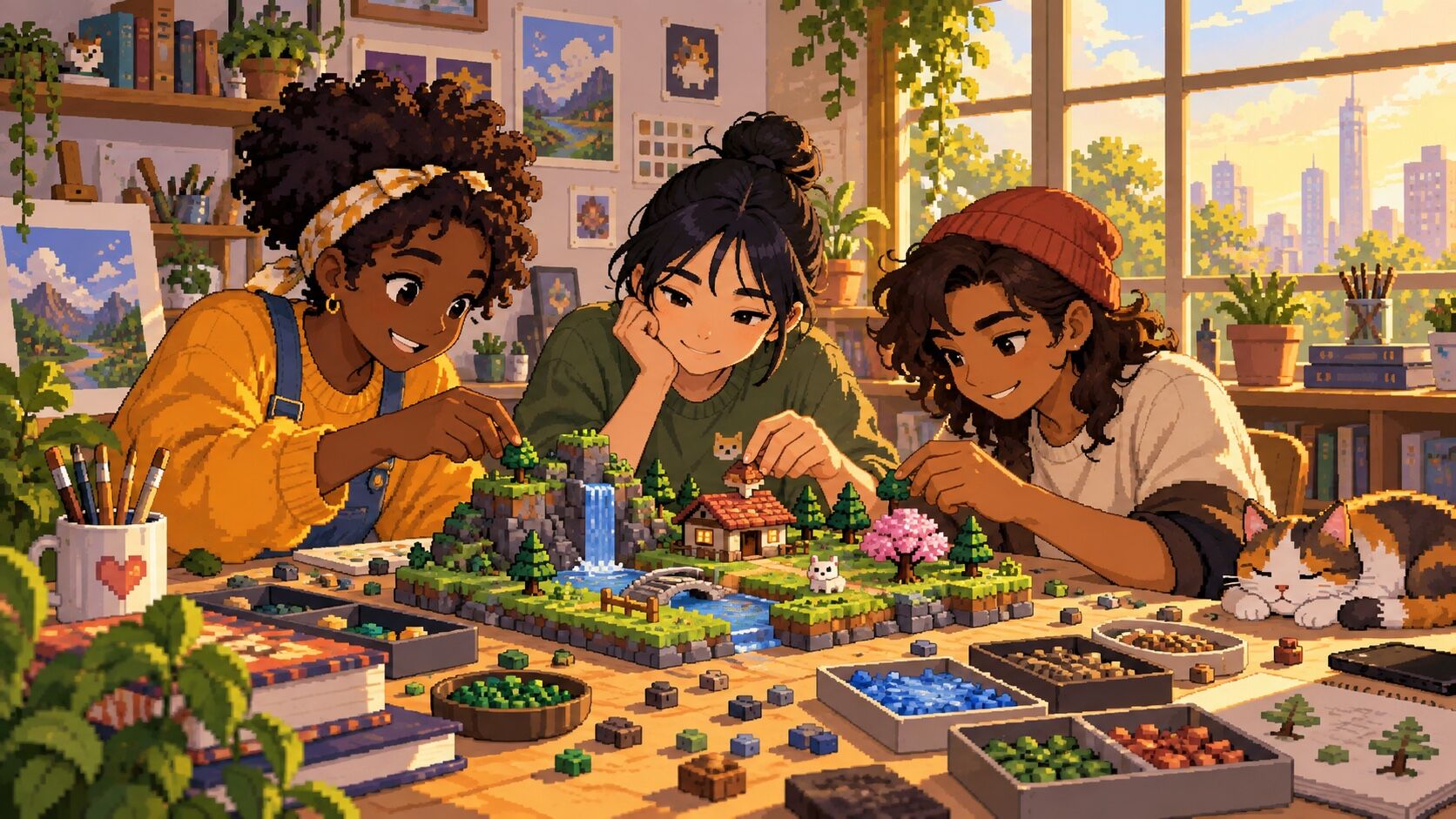
Retro video game sprites and limited palettes - the 8-bit and 16-bit fidelity of NES and SNES as a fully realized aesthetic language
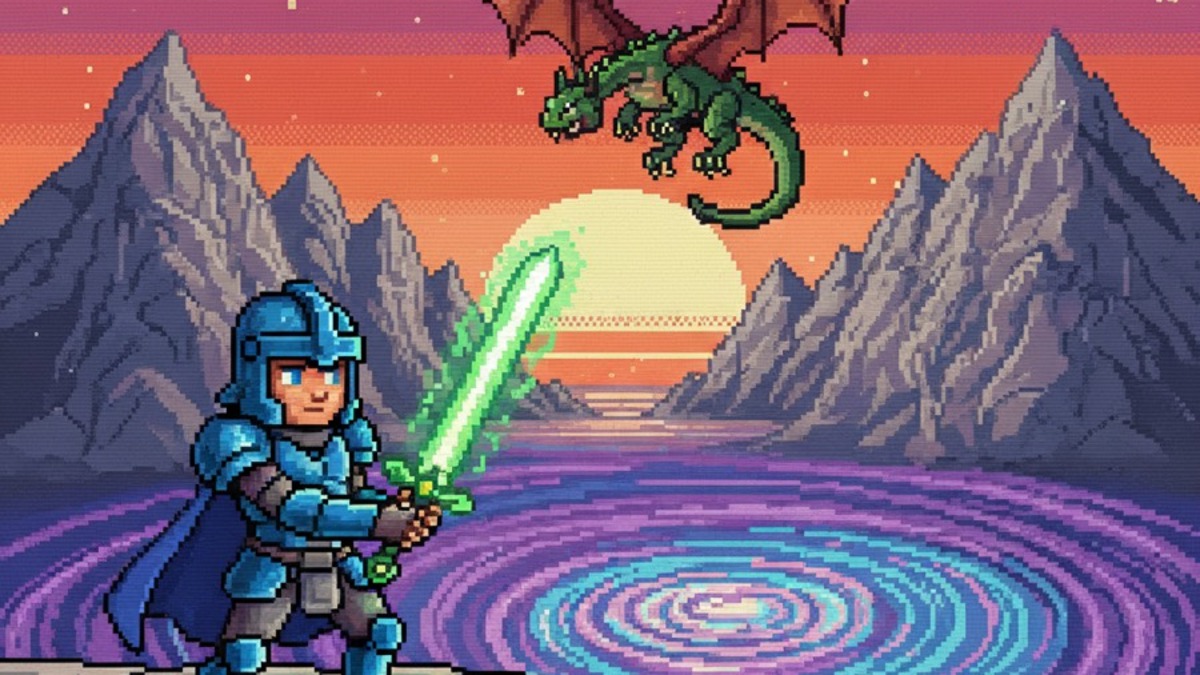
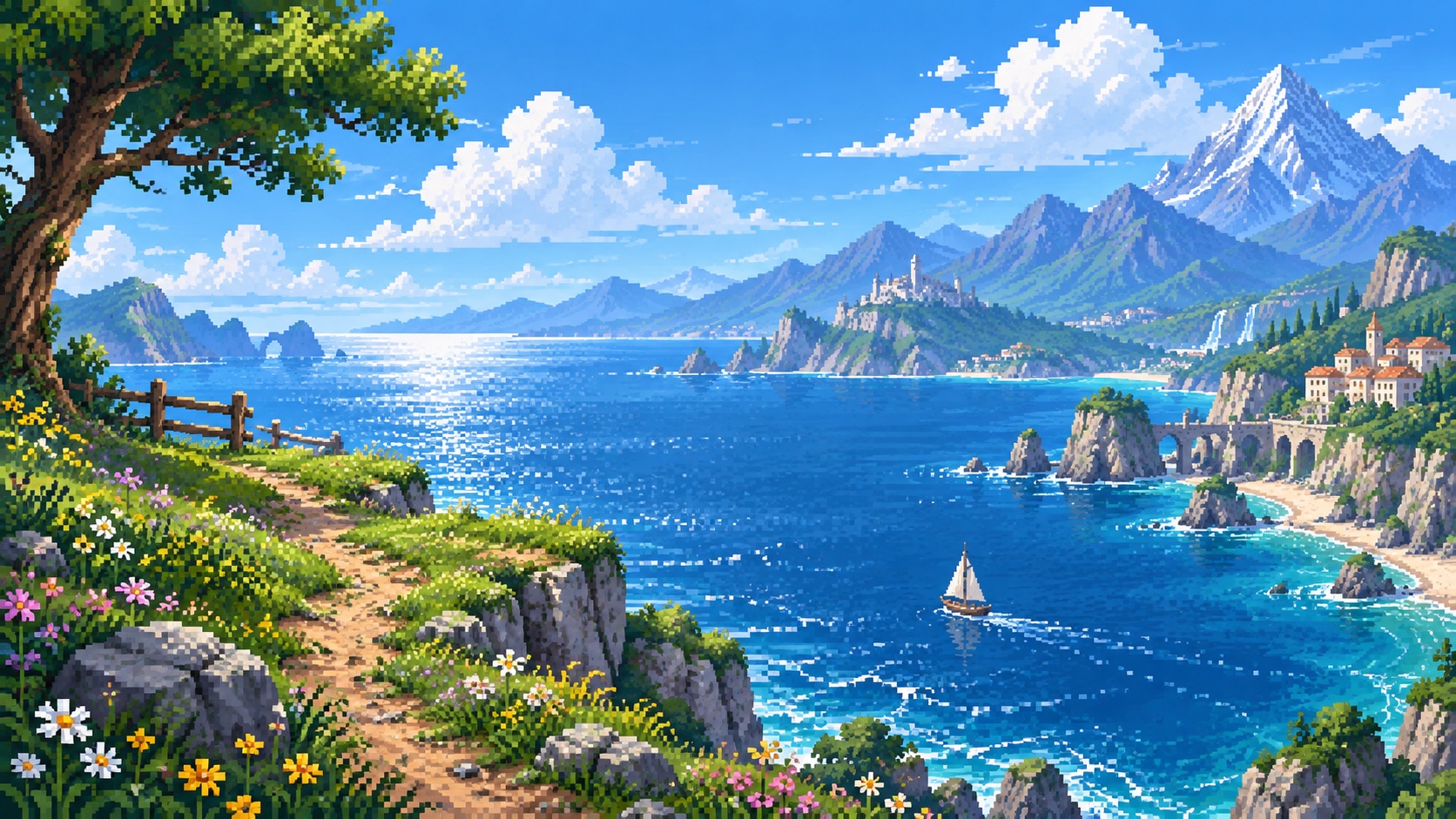
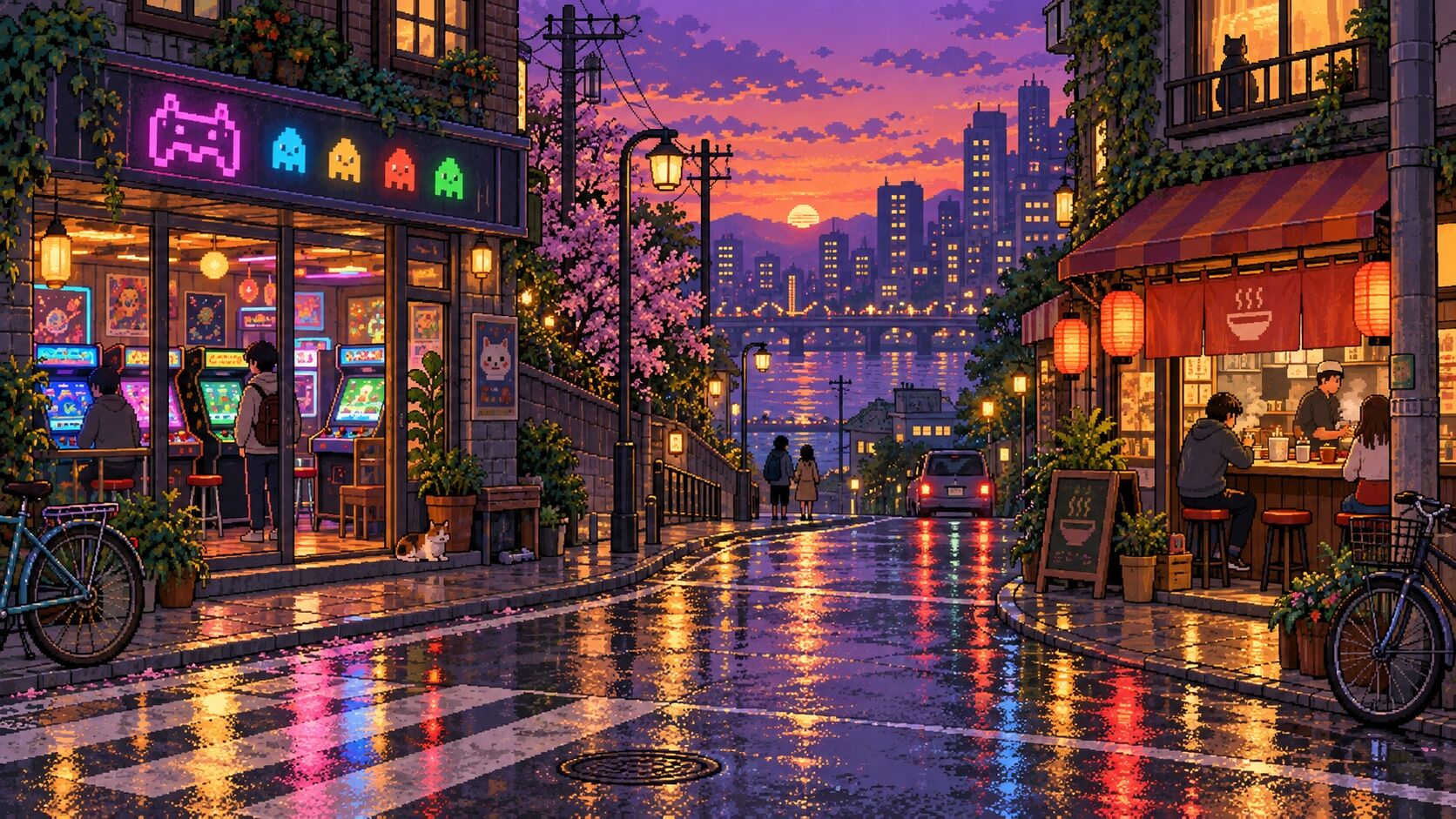
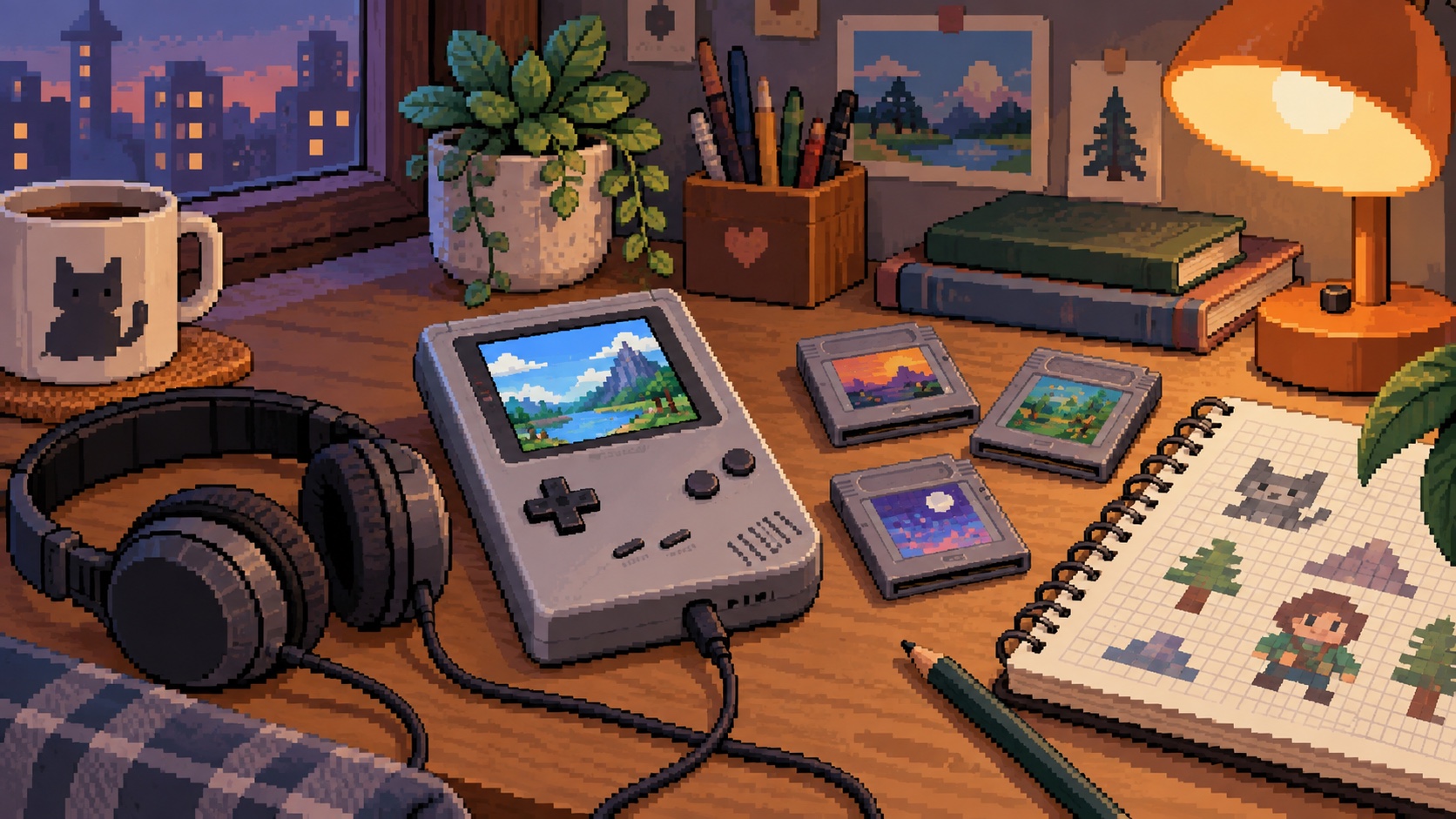
What it is, when it works, who it is for, and where it already exists.
Record 035-PA - when it works, who it is for, what it looks like
Where this aesthetic shows up in the real world · ↗ opens the source site
Where Pixel Art came from, what makes it recognisable, and the fingerprint it leaves.
1977–present · Early video games and computing; Atari, Nintendo, Sega
Pixel art emerged from the technical constraints of early computer graphics hardware. The Atari 2600 (1977), Nintendo Entertainment System (1985), and Sega Genesis (1988) imposed strict limits: fixed screen resolutions (as low as 160×192 pixels), limited color palettes (4 to 64 simultaneous colors), and tiny sprite sizes (typically 8×8 to 16×16 pixels for characters). Game artists working within these constraints developed sophisticated techniques: dithering (alternating two colors to simulate a third), sub-pixel shading (placing dark pixels at edges to simulate anti-aliasing), and color cycling (animating a fixed palette to suggest moving water or fire): that constitute the craft vocabulary of pixel art.
When hardware constraints were lifted in the mid-1990s with the transition to polygon 3D graphics, pixel art became a choice rather than a necessity: and immediately acquired the nostalgic charge of a recently lost medium. Independent game developers (Spelunky, Stardew Valley, Undertale, Celeste) have adopted it continuously since, partly for its nostalgic associations, partly for its immediate visual readability, and partly because a single developer can produce pixel art at a pace impossible with 3D modeling.
Contemporary pixel art exists both as game aesthetic and as standalone art form. Pixel art communities online (Pixilart, Lospec) maintain active traditions around specific limited palettes: particularly the Game Boy 4-color palette (4 shades of grey-green) and various 16-color and 32-color palettes derived from historical hardware. The Lospec Palette List has catalogued thousands of community-designed palettes, making palette selection a distinctive creative act within the medium.
“The grid so small it becomes a painting.
The visual DNA: what makes it recognisable
8-channel console with the fingerprint on its display. Save the card, or share the page

4 color interpretations of this aesthetic
The colour of the styles sitting closest to this one
How to shoot it, how to prompt it, and how to board it.
How to shoot this aesthetic
"The 8-bit dream, rendered at a scale you can actually touch"
Shot list
Lighting
Hard, saturated colored gels in a limited palette pick 3-4 colors maximum and commit, echoing a limited-palette sprite's constraint
Drop this into Studio to generate in this aesthetic
Pixel art aesthetic with chunky retro video game sprite style, strictly limited color palette of 16 to 32 colors, visible square pixel grid structure, Nintendo NES and SNES and Game Boy era graphic fidelity, dithering patterns for shading and form, crisp aliased edges with zero anti-aliasing
The record applied to your project. The record's kit is free; your brand, references and plates come with membership
01 · Hero application02 · Material and finish03 · Palette in context04 · Photography directionWhether to use it, what it costs to do properly, and where it stands right now.
Two written calls, seven meters, and when to walk away
The pixel grid is a hard rule. Mixed resolutions, anti-aliased edges and non-integer scaling break the whole discipline, and they are the first thing anyone in the community notices. Work at native size and scale by whole numbers. A tight palette is the craft: limiting to sixteen colours forces the dithering and hue shifts that make it read as real pixel work.
Use it when you can respect the rules, because the community enforces them: consistent pixel density, deliberate clusters, restrained palettes, no accidental anti-aliasing. Downscaling a photo is instantly visible and will not be accepted as pixel art. The constraints are real rather than referential, which is exactly why the work stays honest.
Software only, no physical production.
A limited palette forces real decisions. Nowhere to hide behind detail.
Every pixel is a decision at this resolution. Genuinely exacting work.
A limited palette forces real decisions. Sloppy pixel placement is obvious.
A constant presence in gaming and nostalgic tech branding.
Forty years since the NES and SNES era and still instantly legible.
Software only, no physical production.
A Pro feature: origins, practitioners, and pitfalls
Neighbours, cross-references, blends, and the questions people ask.
Connected across the creative knowledge graph
Where it stands now, and what it costs you to use it
Pixel art is a craft with rules, and the community enforces them: consistent pixel density, deliberate cluster placement, restrained palettes, no accidental anti-aliasing. It is not a filter and it is not nostalgia.
Downscaling a photo produces something the scene will not accept as pixel art, and the distinction is instantly visible to anyone who makes it.
It is durable because the constraints are real rather than referential. A limited palette and a fixed grid remain genuinely hard, which keeps the work honest.
Mix Pixel Art with any style in the library
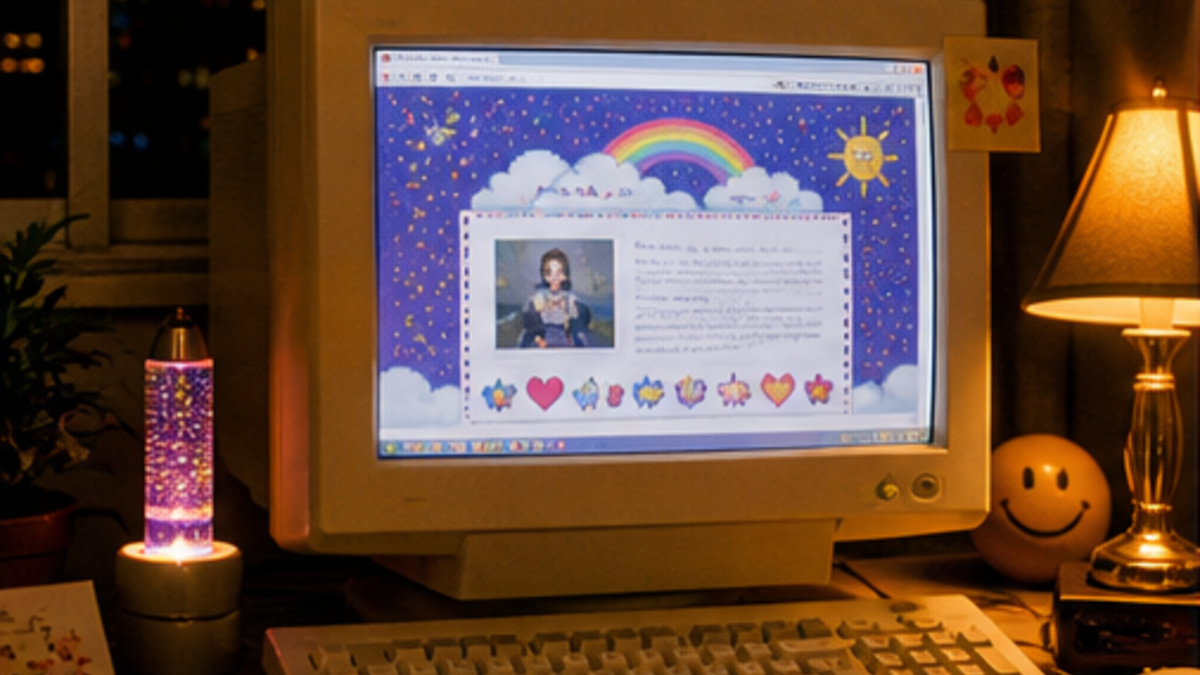 Pixel Art 50%Web 1.0 50%
Merged palette
#1565C0
#000080
#43A047
#800080
#E53935
Leads digital, nostalgic, geometric
Typography · from Pixel Art
Press Start 2P over IBM Plex Mono
Materials
The calls this blend forces
These two disagree on 2 things, and a blend cannot average them: you pick a side. At this mix:
Structured or Chaotic? Pixel Art is structured, Web 1.0 is chaotic. This mix lands chaotic.
Minimal or Maximal? Pixel Art is minimal, Web 1.0 is maximal. This mix lands maximal.
Use it
Pixel art aesthetic with chunky retro video game sprite style, strictly limited color palette of 16 to 32 colors, visible square pixel grid structure, Nintendo NES and SNES and Game Boy era graphic fidelity, dithering patterns for shading and form, crisp aliased edges with zero anti-aliasing (50%), infused with Web 1.0 aesthetic with early-internet GeoCities and Angelfire homepage naivety, HTML table-layout construction, tiled background patterns and animated GIF ornament, beveled button graphics, under-construction signage, charmingly unrefined dial-up-era visual clutter, color palette strictly #1565C0 #000080 #43A047 #800080 #E53935, leaning structured over chaotic, minimal over maximal, overall character: digital, nostalgic, geometric
Pixel art is a digital art form where images are created and edited at the pixel level, typically at low resolutions with limited color palettes. It originated in 1970s–1990s video games (Atari, NES, Sega Genesis) as a technical constraint and has become a deliberate aesthetic chosen for its nostalgic associations, visual directness, and the craft challenge of expression within tight limits.
Historical hardware palettes are the primary reference: NES (54 colors), Game Boy (4 greens), CGA (16 colors including the notorious cyan-magenta-white set), and Commodore 64 (16 colors). Contemporary pixel artists use these or community-designed palettes from Lospec: typically 4, 8, 16, or 32 colors: because the color limit is part of the medium's constraint-beauty.
Pixel art is 2D: images created from colored square pixels on a flat grid. Voxel art is 3D: objects built from colored cubes (volumetric pixels) in three-dimensional space. Both share the blocky, grid-visible aesthetic and retro digital associations, but voxel art (as in Minecraft and Magica Voxel) has volume and can be lit and rendered three-dimensionally.
Every style in the library is broken down like this one: the palette, the typography, the materials and the lineage.
Explore the style library →