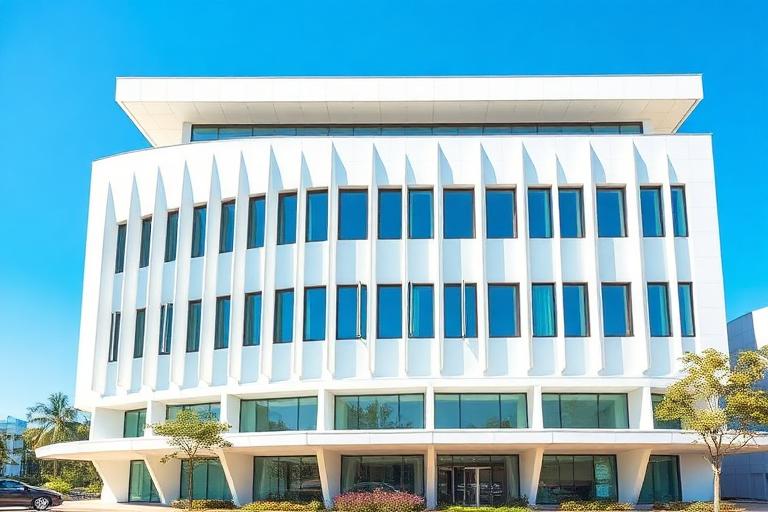
Neo-Modernism

Modernism returned to - not as nostalgia but as unfinished business: David Chipperfield's immaculate civic precision, Annabelle Selldorf's cultural institutions, Johnston Marklee's material exactness, all recovering what postmodernism abandoned.

Compare Neo-Modernism with another style →See the Neo-Modernism typefaces →On the timeline · 1990s
Record020-AN
AestheticNeo-Modernism
ClassStructured / Geometric
StatusINGESTING
Neo-Modernism aesthetic archive image
Archive plate · Neo-Modernism
01
The record

What it is, when it works, who it is for, and where it already exists.

How to use it

Record 020-AN - when it works, who it is for, what it looks like

FIELD 01

When to use it

  • Brand identity for cultural institutions and galleries seeking rigorous restraint
  • Architecture firm identity where craft and structure are the only arguments
  • High-end residential and hospitality brands with a discerning design audience
  • Design publication and editorial platform positioning itself against trend culture
FIELD 02

Perfect for

  • Architecture firms working in a late-Modern rational tradition
  • Art galleries, museums, and cultural foundations with serious design ambitions
  • Luxury residential developers targeting a design-literate buyer
  • Design and architecture schools with a contemporary critical practice

In the wild, Neo-Modernism aesthetic real-world examples

Where this aesthetic shows up in the real world · ↗ opens the source site

Omoro Style GuideEvery aesthetic, every field on this page, in one PDF.
$8Get the guide →
02
The anatomy

Where Neo-Modernism came from, what makes it recognisable, and the fingerprint it leaves.

History, Neo-Modernism aesthetic history

1990s-present · Western Europe and Japan

Neo-Modernism emerged in the 1990s when a generation of architects concluded that Postmodernism's irony and Deconstructivism's spectacle had exhausted themselves without solving the problems Modernism had originally posed. David Chipperfield, in London and Berlin, demonstrated that Modernist principles of material honesty, structural clarity, and spatial restraint could produce buildings of extraordinary refinement. His Neues Museum reconstruction in Berlin (2009) inserted precise new concrete and brick into a bombed-out neoclassical shell, proving that Modernist intervention and historical preservation were not opposites.

The movement was less a manifesto than a quiet return to rigor. In Switzerland, Peter Markli and Christian Kerez explored abstract composition with the precision of Mies but without his universal pretensions. In Portugal, Alvaro Siza and Eduardo Souto de Moura (both Pritzker laureates) had never abandoned Modernism's core principles but inflected them with Mediterranean light, local stone, and site-specific geometry. In Japan, SANAA's transparent, diagram-like buildings at Kanazawa and Lausanne refined Modernism toward an almost immaterial minimalism.

Neo-Modernism differs from its predecessor in key ways: it engages with context rather than imposing universal solutions, it embraces material warmth alongside intellectual rigor, and it acknowledges rather than erases the buildings and landscapes it inhabits. The result is architecture that looks spare but feels generous, that is disciplined but not doctrinaire.

Modernism reopened its own files.

Omoro dossier · 020-AN

Visual markers, Neo-Modernism aesthetic visual markers

The visual DNA: what makes it recognisable

typography

See the fonts
  • Neutral sans-serifs: Akkurat, Atlas Grotesk, Neue Haas Grotesk
  • Extreme weight restraint: regular or light weights only
  • Generous margins and minimal text density
  • Type as information infrastructure, never as expression

grid

  • Structural grids refined to extreme precision
  • Facade rhythms derived from structural logic, not decorative pattern
  • Plans that are diagrammatically clear when drawn
  • Material transitions as deliberate architectural events

materials

  • Fair-faced concrete with refined formwork: #C4C0B8, #B4B0A8
  • Brick in precise bonds with minimal mortar joints: #A08870, #B89878
  • Natural stone cladding in large format: #D8D4CC, #C8C4BC
  • Timber cladding and screens: #A08C70, #8C7858

motifs

  • Deep window reveals creating shadow depth
  • Material continuity from exterior to interior
  • Roof profiles that engage with skyline context
  • Ground floors that mediate between city and building

Aesthetic profile

8-channel console with the fingerprint on its display. Save the card, or share the page

Aesthetic Profile
Neo-Modernism
Contemporary
1990–present
Attribute console · 020-AN
leans structured, geometric, minimal
8 CH
FIG. 1
MinimalMaximalDigitalAnalogRestrainedExpressiveCoolWarmFuturisticNostalgicStructuredChaoticLightDarkGeometricOrganic
01Minimal
Maximal40%
02Analog
Digital20%
03Restrained
Expressive30%
04Cool
Warm20%
05Futuristic
Nostalgic10%
06Structured
Chaotic60%
07Dark
Light30%
08Organic
Geometric50%
StructuredGeometricMinimal4 materials
Omoro · Attribute console · 020-AN
omoro.io/styles/arch-neo-modernism

Material assembly

The style's primary materials, assembled bottom-up

Tap a stratum for material detail · Full catalog

Place in history

Contemporary · 1990–present - tap any style to travel

Color Palettes, Neo-Modernism color palettes and hex codes

4 color interpretations of this aesthetic

Neo-Modernism
#2D2D2D · #6B8F9E · #A8B8BF · #E8E4DF · #141414
Modernism refined, stripped to structural bones with material warmth restored
Chipperfield
#141414 · #484840 · #908880 · #C8C0B8 · #F0ECE4
David Chipperfield: refined column grid in pale stone
Campo Baeza
#0C0C0C · #404040 · #909090 · #D8D8D8 · #FAFAFA
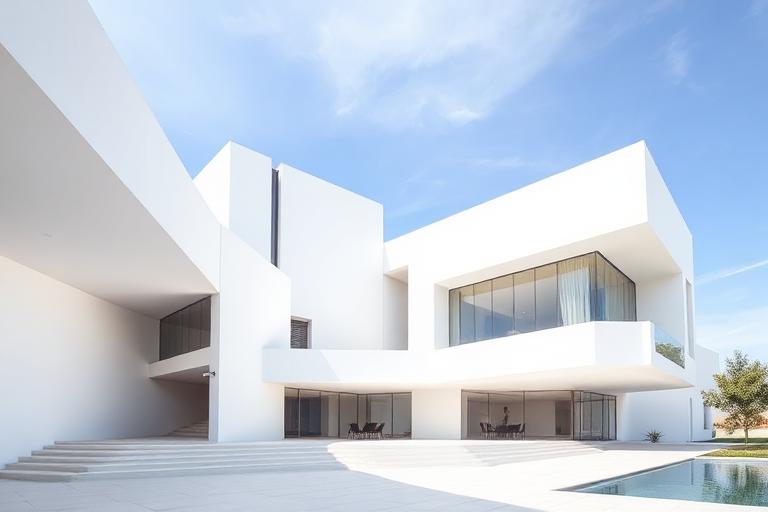
Alberto Campo Baeza: radical white and the gravity of light
Pawson Void
#101010 · #383830 · #A09888 · #D8D0C4 · #F5F0E8
John Pawson: minimum means and maximum stillness
Omoro Palette Pack575 curated palettes across every aesthetic, 5 export formats.
$8Get the palettes →

Adjacent Palettes, styles related to Neo-Modernism

The colour of the styles sitting closest to this one

Architectural Modernism
Architectural Minimalism
International Style
Soft Minimalism
03
The direction

How to shoot it, how to prompt it, and how to board it.

Photo Direction

How to shoot this aesthetic

"Mid-century clarity, refined one more time for the present"

Shot list

  • Wide shot of clean rectilinear volumes in refined contemporary material
  • Detail shot of a seamless, honest structural connection
  • Interior shot demonstrating disciplined proportion without ornament

Lighting

Clean, even daylight that reveals material refinement without harsh shadow

Omoro Director's Briefs151 photo shot-lists like this one, ready to shoot from.
$8Get the briefs →

Generative Prompt

Drop this into Studio to generate in this aesthetic

Neo-Modernist architecture reviving mid-century clarity with contemporary material refinement, clean rectilinear volumes, honest structural expression updated with current technology, disciplined proportion without ornament

Paste as-is, or append your own subject

Mood Board

The record applied to your project. The record's kit is free; your brand, references and plates come with membership

Mood board
The Neo-Modernism board
8 frames · 4 selected
FIG. 4
Joint Dark2D2D2DStone Shadow6B8F9ETravertineA8B8BFGallery LightE8E4DFJoint Black141414
Brand and references
IdleBrand and references open with membership
With membership: the brand's own facts and colours in every prompt, references carried into every frame, and the plates generated.
01 · Hero application
02 · Material and finish
03 · Palette in context
04 · Photography direction
05 · Pattern plate
06 · Object
07 · Environment
08 · Digital presence
Demo kit free, the rest with membershipThe record as a demo kit, free. Name a project and it is written for that
Omoro · Mood board · 020-AN
04
The judgement

Whether to use it, what it costs to do properly, and where it stands right now.

Creative verdict, Neo-Modernism feasibility and strategic recommendation

Two written calls, seven meters, and when to walk away

Creative verdict
Should Neo-Modernism be the call?
7 meters
FIG. 2
Assessment

The moves are familiar, so refinement is the only argument. White volumes, glass and clean lines have been done for eighty years, and a competent version says nothing new, which puts the weight entirely on proportion and detail. Push one idea further than convention. Sustainability is now the honest test, because a glass box has to justify its energy performance.

Verdict

The safe institutional default for museums and universities, which is a strong commercial position and a weak critical one. It is modernism practised after the arguments against it, so nobody building this believes it will solve society, and critics are split on whether that loss of conviction reads as maturity or as emptiness. Right when consensus is the requirement.

Production cost
High

Immaculate civic-scale precision, not a quick renovation.

Creative difficulty
High

Recovering modernism's rigor without slipping into pure nostalgia.

Execution difficulty
High

Material exactness is the entire point. Sloppiness has nowhere to hide.

Risk of misuse
Medium

Recovering modernism's rigor without slipping into pure nostalgia is the hard part.

Prevalence
Rare

A niche reference among architecture-literate audiences.

Longevity
Enduring

Explicitly building on principles that have already proven durable.

Brand investment
High

Immaculate civic-scale precision, not a quick renovation.

Avoid if
The audience won't recognize what's being recovered
This explicitly builds on modernism's own history, which needs that context.
There's no budget for immaculate, civic-scale precision
This depends on execution quality most projects can't sustain.
Omoro · Creative verdict · 020-AN

Editorial Depth

A Pro feature: origins, practitioners, and pitfalls

Editorial depth
The Neo-Modernism file
14 sections
FIG. 3
Context02Brands02Perception04Use04Index02
01Common MisconceptionThe principle beneath the surface
02Historical ContextOrigins, cultural moment, and reaction
03Brands That Accidentally Use This StyleNatural alignment, not category claims
04Brands That Perfectly Represent This StyleExceptional execution
05Psychological EffectHow visual decisions change perception
06Visual ChecklistInclude and avoid
07Creative FormulaThe visual system reduced to essentials
08Recognition SignalsHow to recognize it in two seconds
09When To Use This StyleContexts where the language performs
10Common Creative MistakesWhere imitation weakens the signal
11Best Brand ApplicationsIndustries with a natural advantage
12Creative Application AnalysisFit, feasibility, and production reality
13Related StylesClose languages and the key distinction
14Visual DNA SummaryThe sentence to remember
The editorial depth, with membershipOpening soon
Omoro · Editorial depth · 020-AN
05
The index

Neighbours, cross-references, blends, and the questions people ask.

Related concepts

Connected across the creative knowledge graph

Cultural relevance, Neo-Modernism cultural relevance today

Where it stands now, and what it costs you to use it

Neo-modernism is modernism practised after the arguments against it, which means it is knowing rather than naive. Nobody building this now believes it will solve society.

That loss of conviction is visible in the work, and critics are split on whether it reads as maturity or as emptiness.

It is the safe institutional default for museums and universities, which is a strong commercial position and a weak critical one.

Cross-references

Architectural ModernismNeo-Modernism continues and refines original Modernist principlesArchitectural Minimalismoverlapping aesthetics but different motivations: discipline vs. reductionContemporary ArchitectureNeo-Modernism is one of several positions within contemporary practice

Blend

Mix Neo-Modernism with any style in the library

Neo-Modernism×
50%50%
94% alike
Neo-Modernism referenceArchitectural Modernism referenceNeo-Modernism 50%Architectural Modernism 50%

Merged palette

#2D2D2D

#6B8F9E

#3D5A6B

#A8B8BF

#E8E4DF

Leads structured, geometric, minimal

Typography · from Neo-Modernism

Poppins over Manrope

Materials

  • Fair-faced concrete with refined formwork: #C4C0B8, #B4B0A8
  • Brick in precise bonds with minimal mortar joints: #A08870, #B89878
  • White rendered surfaces: #F5F5F0, #EBEBEB, #E0E0DC

Use it

Neo-Modernist architecture reviving mid-century clarity with contemporary material refinement, clean rectilinear volumes, honest structural expression updated with current technology, disciplined proportion without ornament (50%), infused with Modernist architecture with clean geometric volumes, glass curtain walls, steel and concrete, Le Corbusier and Mies van der Rohe influence, pilotis, free plan, ribbon windows, color palette strictly #2D2D2D #6B8F9E #3D5A6B #A8B8BF #E8E4DF, overall character: structured, geometric, minimal

One-click generation opens with the studio

About this aesthetic

What is Neo-Modernism in architecture?

Neo-Modernism is a contemporary approach that returns to Modernism's core principles (material honesty, structural clarity, spatial discipline) but with greater sensitivity to context, history, and material warmth. Key practitioners include David Chipperfield, Alvaro Siza, Eduardo Souto de Moura, and SANAA.

How is Neo-Modernism different from the original Modernism?

Original Modernism (1920s-1970s) pursued universal solutions independent of context. Neo-Modernism engages with specific sites, existing buildings, and local materials. It keeps Modernism's discipline but abandons its universalist ambitions, producing buildings that are rigorous yet place-specific.

Is Neo-Modernism the same as minimalist architecture?

They overlap but are distinct. Minimalist architecture reduces to essentials as a philosophical position. Neo-Modernism may produce minimal-looking buildings, but its concern is disciplined Modernist composition rather than radical reduction. A Neo-Modernist building can be materially rich while remaining formally restrained.

Build with the neo-modernism aesthetic

Every style in the library is broken down like this one: the palette, the typography, the materials and the lineage.

Explore the style library →