When to use it
- Coffee roasters, breweries, barbers and small-batch makers
- Independent record shops, venues and bookshops
- Campaigns looking back at the late 2000s with affection
- Menswear and vintage resale with a handmade, local story
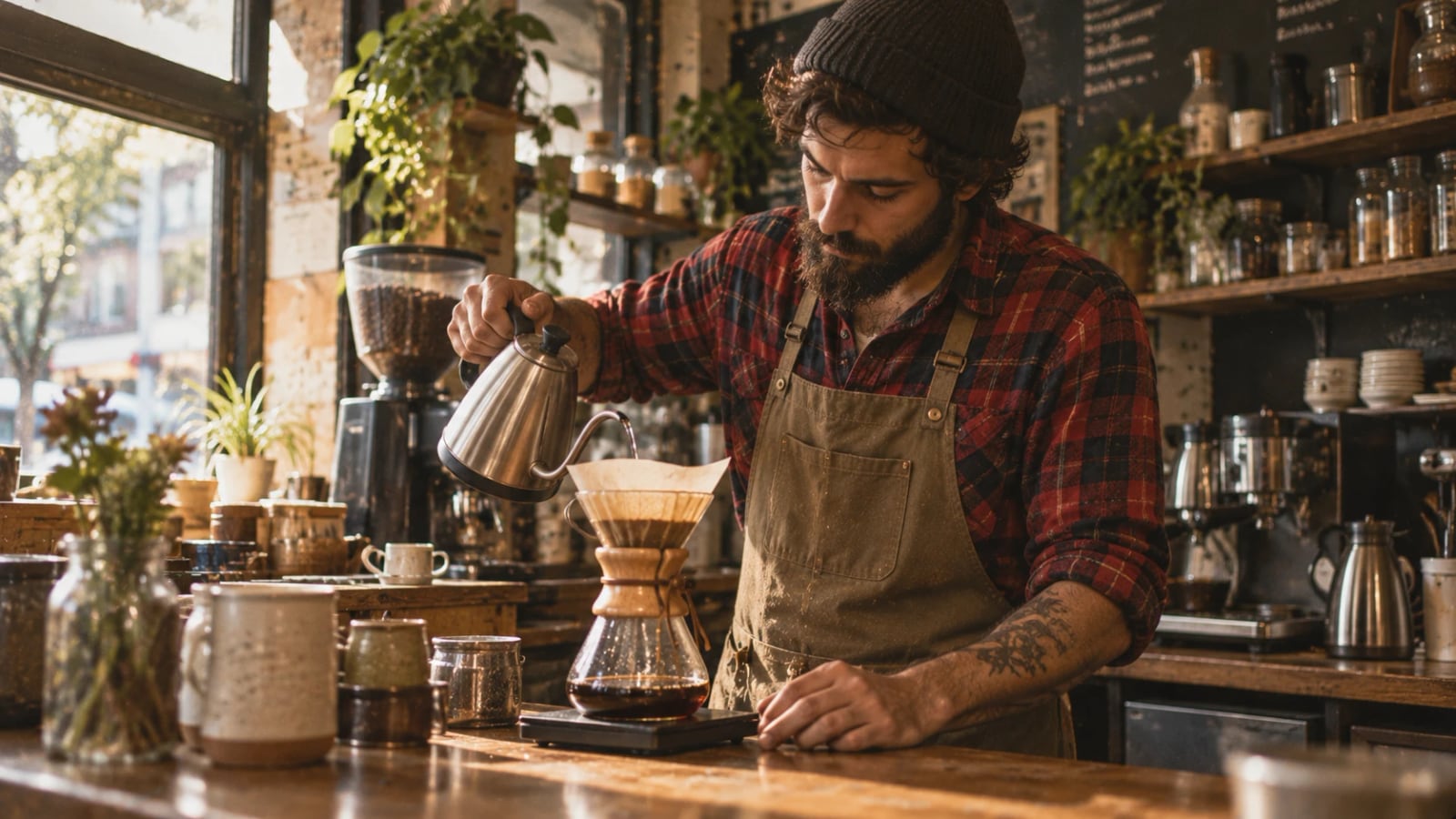
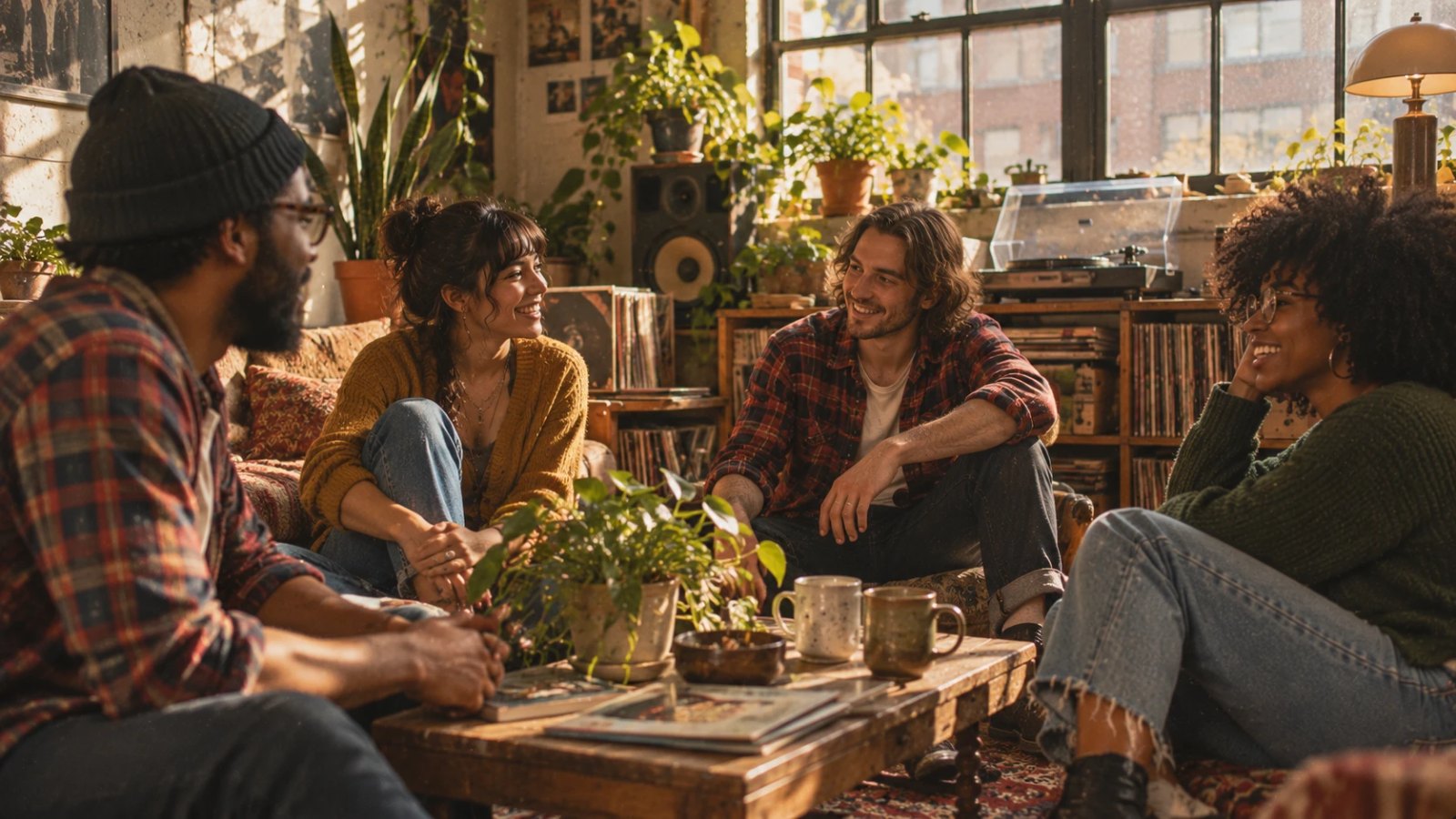
The 2000s independent look: plaid flannel, rolled selvedge jeans, thick-rimmed glasses, beards, beanies and thrifted knits
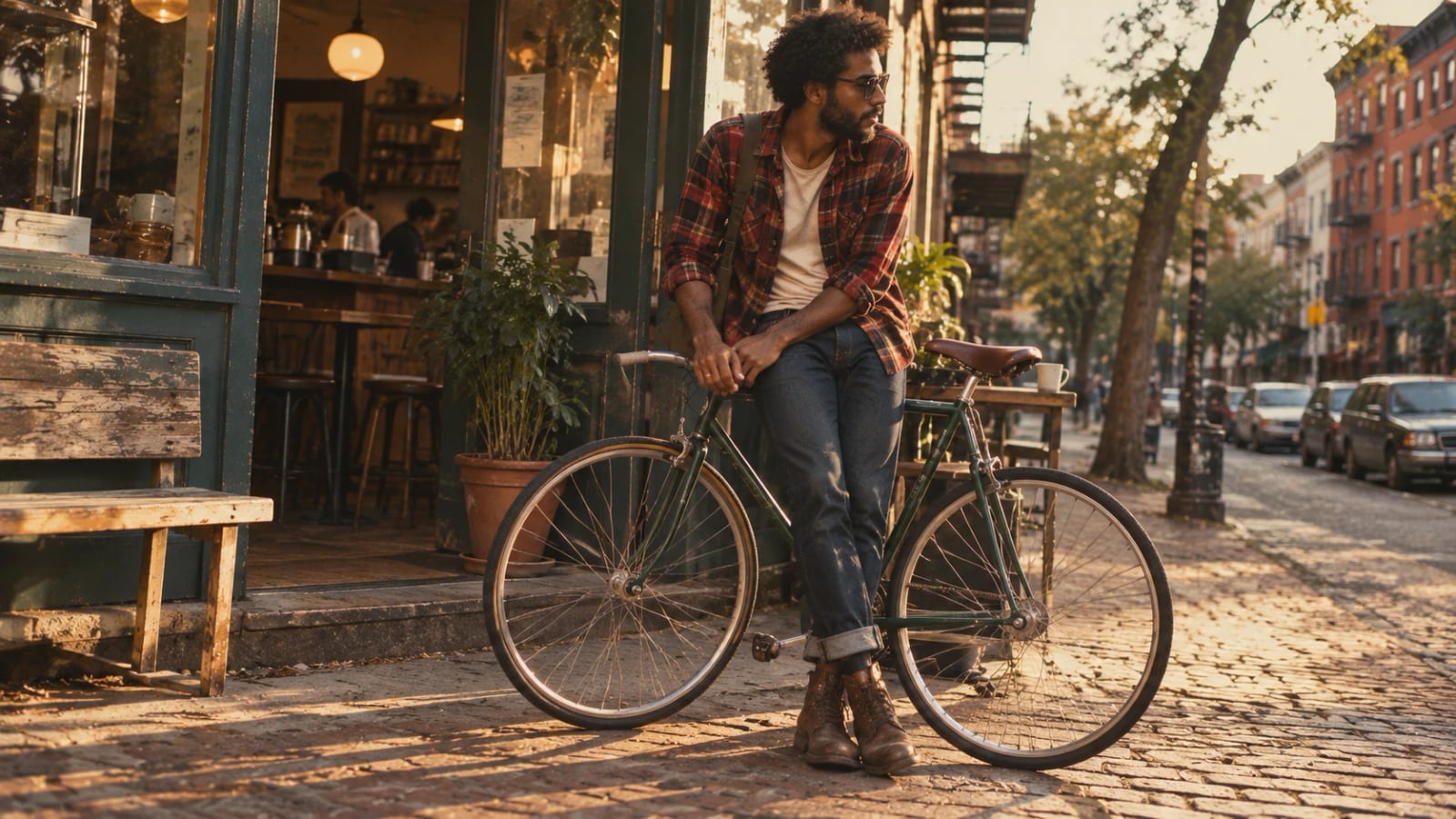
The 2000s independent look: plaid flannel, rolled selvedge jeans, thick-rimmed glasses, beards, beanies and thrifted knits
What it is, when it works, who it is for, and where it already exists.
Record 027-HI - when it works, who it is for, what it looks like
Where this aesthetic shows up in the real world · ↗ opens the source site
Where Hipster came from, what makes it recognisable, and the fingerprint it leaves.
Early 2000s to mid-2010s · Williamsburg, Silver Lake and Portland
The word is older than the look. In the 1940s a hipster was a follower of bebop jazz, and the term drifted through the Beats before falling out of use. It returned around the turn of the millennium for a new group of young people in cheap post-industrial neighbourhoods: Williamsburg in Brooklyn above all, then Silver Lake in Los Angeles, Portland and East London. They dressed from thrift shops and army surplus, in plaid flannel, tight jeans, trucker caps, vintage cardigans and thick-rimmed glasses, and listened to independent music on vinyl.
By 2003 the style was established enough to be mocked: Robert Lanham's The Hipster Handbook appeared that year. Through the decade it hardened into a recognisable uniform, with beards, beanies, selvedge denim rolled at the ankle, fixed-gear bicycles, craft beer and pour-over coffee, and it spread through blogs and photo sites. Instagram, launched in 2010 with filters that made phone pictures look like faded film, gave the whole world the hipster's nostalgic colour.
In 2010 the magazine n+1 published What Was the Hipster?, already treating it in the past tense, and Portlandia, first aired in 2011, turned its manners into sketch comedy. By then its pieces had become mainstream: flannel, beards, craft coffee and heritage workwear filled high streets everywhere, and a reaction called normcore followed. What survives is not the irony but the taste it spread: for the independent, the handmade, the local and the secondhand.
“Thrifted flannel, rolled denim and thick glasses: the independent look that became the mainstream of the 2010s.
The visual DNA: what makes it recognisable
8-channel console with the fingerprint on its display. Save the card, or share the page

Named in this style's material notes, 3 materials the library documents
The pieces the look is built from, and where the money goes
The definitive color scheme for this aesthetic
The colour of the styles sitting closest to this one
How to shoot it, how to prompt it, and how to board it.
How to shoot this aesthetic
"Collected, not styled: thrifted flannel, rolled denim and a café counter in soft warm light"
Shot list
Lighting
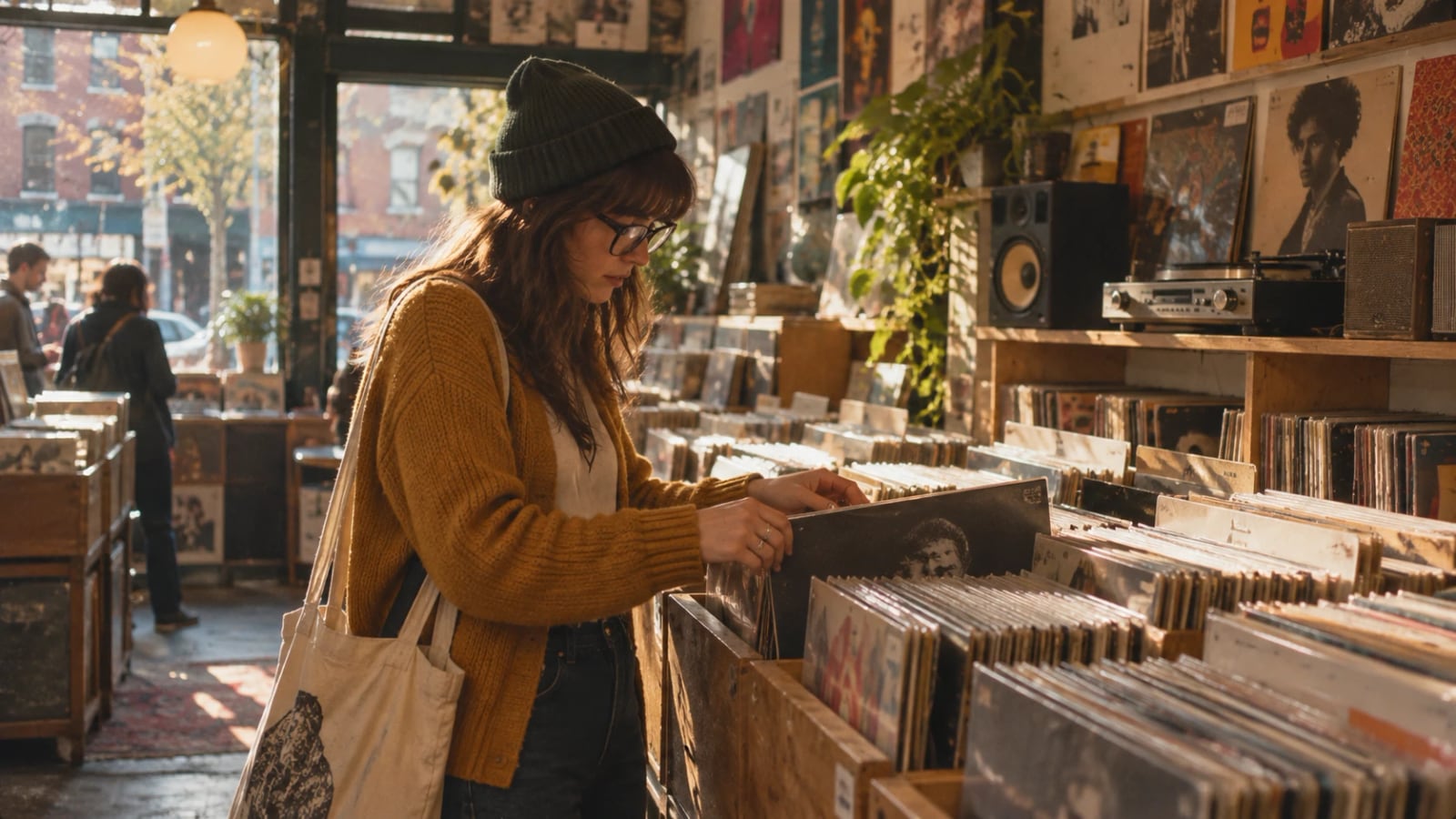
Soft, warm natural light: a café window, late afternoon on a brick street, a record shop with daylight at the front. Slightly faded, never glossy.
Click any prompt row to edit. Copy uses your edited text.
Hipster fashion from the late 2000s
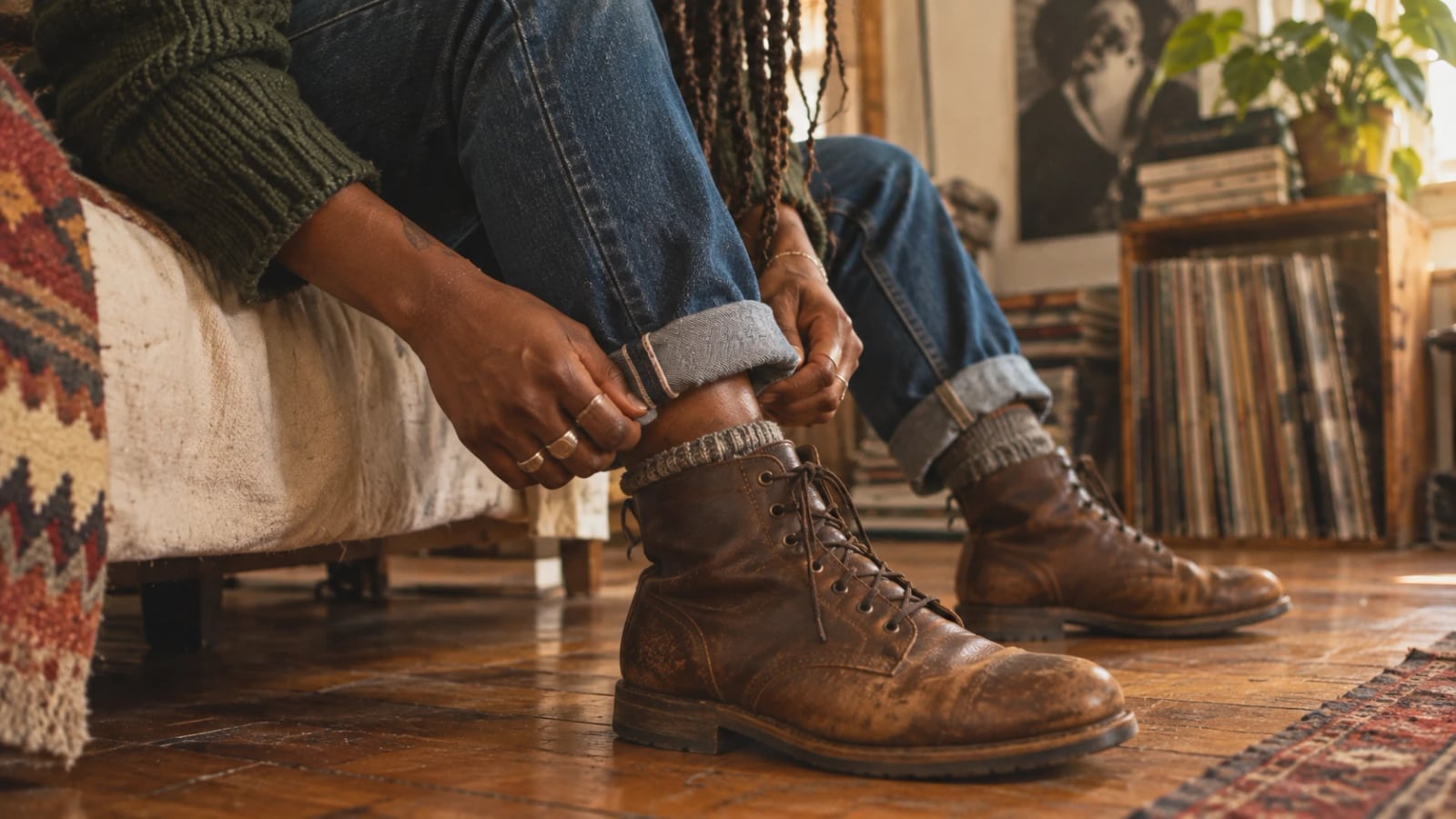
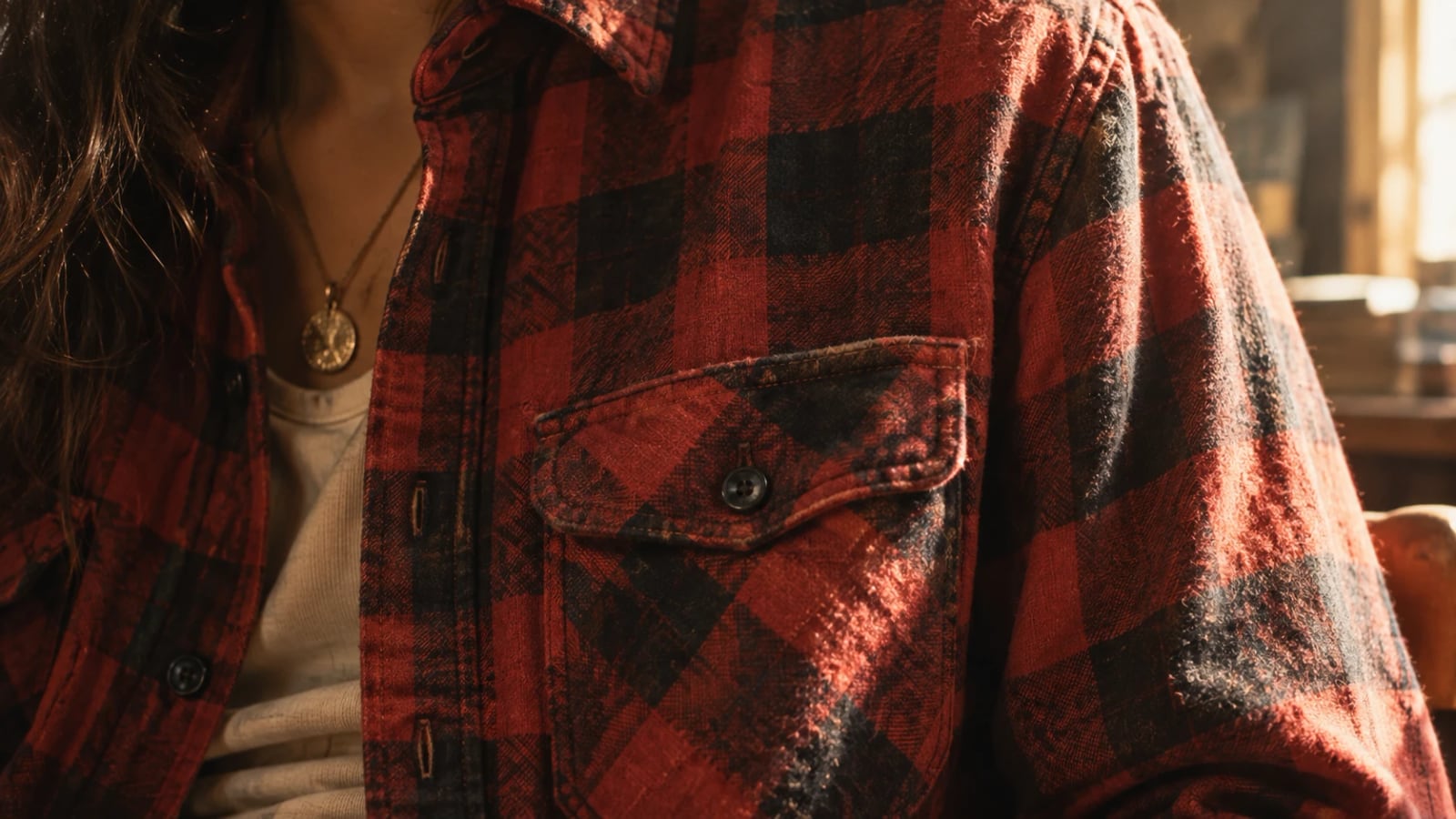
Visual cuesa red plaid cotton flannel shirt, slim selvedge jeans rolled at the ankle, scuffed leather boots, thick-rimmed glasses, a knit beanie, a mustard cardigan, flannel red, mustard, forest green, rinsed denim and faded cream, soft warm natural light in a small café or record shop, thrifted and worn, relaxed and sincere, editorial photograph, no logos, not a parody
Paste as-is, or add your own subject.
Photograph: full-length shot of a figure in a red plaid flannel shirt, slim selvedge jeans rolled at the ankle and scuffed leather boots, leaning on a fixed-gear bike outside a café on a brick street.
SettingSet in an independent record shop. Shot wide, the whole scene with room around it, soft, warm natural light: a café window, late afternoon on a brick street, a record shop with daylight at the front.
ModelModel: a white non-binary model in their twenties with freckles and copper hair, standing square to the camera, arms loose.
OutfitDress the model in a completely new outfit: a fitted dress under a short cape, low heels, the main piece cut in silk organza, mainly flannel red with forest green. It replaces any other garment or accessory in this prompt and carries the shot's one idea; no hat, bag, jewellery or prop unless it is part of this outfit.
DetailKeep thick-rimmed glasses and a knit beanie in the frame.
StyleStyle: Hipster fashion from the late 2000s, a red plaid cotton flannel shirt, slim selvedge jeans rolled at the ankle, scuffed leather boots, thick-rimmed glasses, a knit beanie, a mustard cardigan, soft warm natural light in a small café or record shop, thrifted and worn, relaxed and sincere, editorial photograph, no logos, not a parody.
PaletteColour palette #A33B2C #C9962B #2F4A35 #3B5068 #EDE3CC.
FrameComposed for a 16:9 landscape frame.
RulesPhotographic, not an illustration. No text, no logos, no watermark.
The whole record as a portable skill for Claude, ChatGPT, Gemini, image and video models, or a human brief
The whole record, compiled into a skill another system can work inside: lineage, axes, palettes, type, materials, photography, verdicts and a critique checklist. Nothing is generated; it is the dossier, restructured.
The record applied to your project. The record's kit is free; your brand, references and plates come with membership
01 · Hero application02 · Material and finish03 · Palette in context04 · Photography directionWhether to use it, what it costs to do properly, and where it stands right now.
Two written calls, seven meters, and when to walk away
Make it look collected, not styled. Mix one or two thrifted pieces, a faded flannel shirt, a cardigan, glasses from another decade, with good denim and scuffed boots, and let the setting do the rest: a café counter, a record shop, a fixed-gear bike at the kerb. Keep the light soft and slightly warm. The moment it winks at the camera, it becomes a parody of itself.
Right when the brand is small, local and independent, or wants to look back at the late 2000s with affection: cafés, barbers, breweries, record shops and vintage stores. Borrow the thrifted mix, the warm faded colour and the independent places; never borrow the irony, which has aged worse than the flannel.
Thrifted flannel, secondhand denim and vintage glasses; the look was built on not paying much.
It has to look found and personal. Everything new and matching turns it into a costume or a parody.
Natural light, a café or a record shop, and clothes that have been worn.
It is easy to parody, and the word itself has become a mild insult; the look needs affection, not irony about irony.
Its pieces, flannel, beards, craft coffee and rolled denim, became the mainstream of the 2010s.
It belongs to a decade, roughly 2003 to 2014, and now reads as period and nostalgia.
Vintage clothes, real independent places and natural light; very cheap to make well.
A Pro feature: origins, practitioners, and pitfalls
Neighbours, cross-references, blends, and the questions people ask.
Connected across the creative knowledge graph
Where it stands now, and what it costs you to use it
The hipster look is the clearest style of the 2000s and early 2010s, and its taste for the independent, the handmade and the secondhand reshaped cafés, barbers, breweries and fashion far beyond the neighbourhoods it started in.
Today it reads as a period. Used with affection it gives a small, local brand warmth and history; used with a wink it becomes a parody. The strongest work treats it as a decade to remember, not a joke to repeat.
Mix Hipster with any style in the library, or see the pairs worth trying
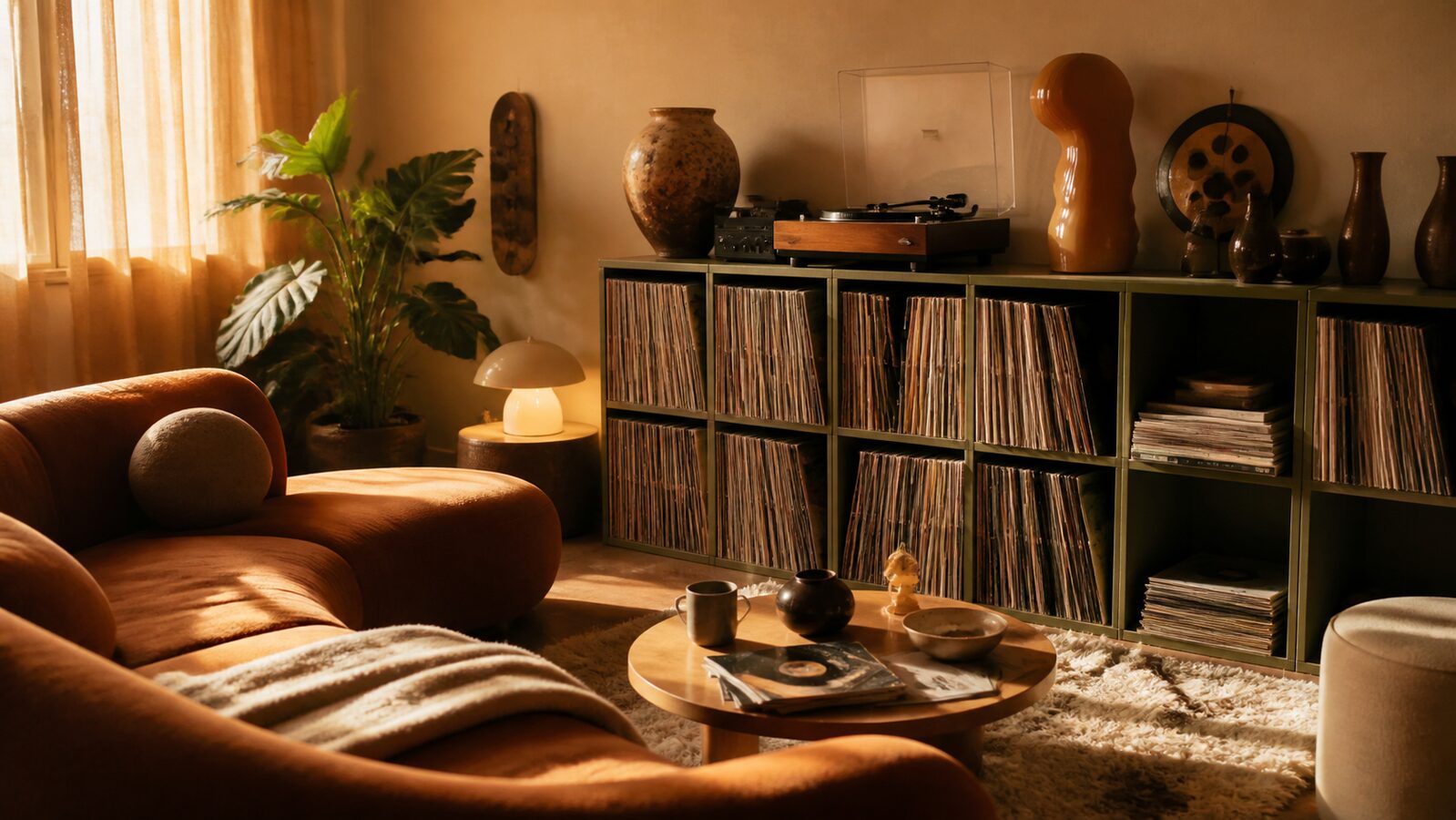 Hipster 50%Indie Groovy 50%
Merged palette
#A33B2C
#BF6020
#C9962B
#6B8E23
#2F4A35
Leads analog, nostalgic, warm
Typography · from Hipster
Zilla Slab over Source Sans 3
Materials
Use it
Create one visual direction that synthesizes Hipster × Indie Groovy. Preserve a clear hierarchy; do not make a contact sheet or a collage of unrelated styles.
Let it read as analog, nostalgic, warm. Resolve the strongest tensions deliberately: keep the balance coherent.
Use these colors as a controlled system: #A33B2C (Flannel Red) · #BF6020 (Rust) · #C9962B (Mustard) · #6B8E23 (Moss) · #2F4A35 (Forest Green).
Use Zilla Slab for display type and Source Sans 3 for supporting text.
Bring in Brushed cotton flannel in plaid, worn soft and slightly faded, Raw selvedge denim, rolled at the cuff to show the selvedge line, Vinyl records in matte card sleeves and cassettes with printed J-cards, Risograph and screen prints on uncoated, cream-tinted stock.
Keep one subject or one clear interface state in focus. Use the visual language to guide composition, lighting, spacing and material decisions.
The independent look of the 2000s and early 2010s: plaid flannel shirts, slim selvedge jeans rolled at the ankle, thick-rimmed glasses, beards, beanies, thrifted cardigans and leather boots, worn in cafés, record shops and on fixed-gear bikes.
In cheap post-industrial neighbourhoods around 2000, above all Williamsburg in Brooklyn, then Silver Lake, Portland and East London. The word itself dates back to 1940s jazz.
Hipster dressing is curated and a little ironic: thrifted flannel, vintage glasses, carefully rolled denim. Normcore grew up as a reaction to it, choosing deliberately plain, anonymous basics instead.
Every style in the library is broken down like this one: the palette, the typography, the materials and the lineage.
Explore the style library →