When to use it
- An original character with a clear recognizable silhouette
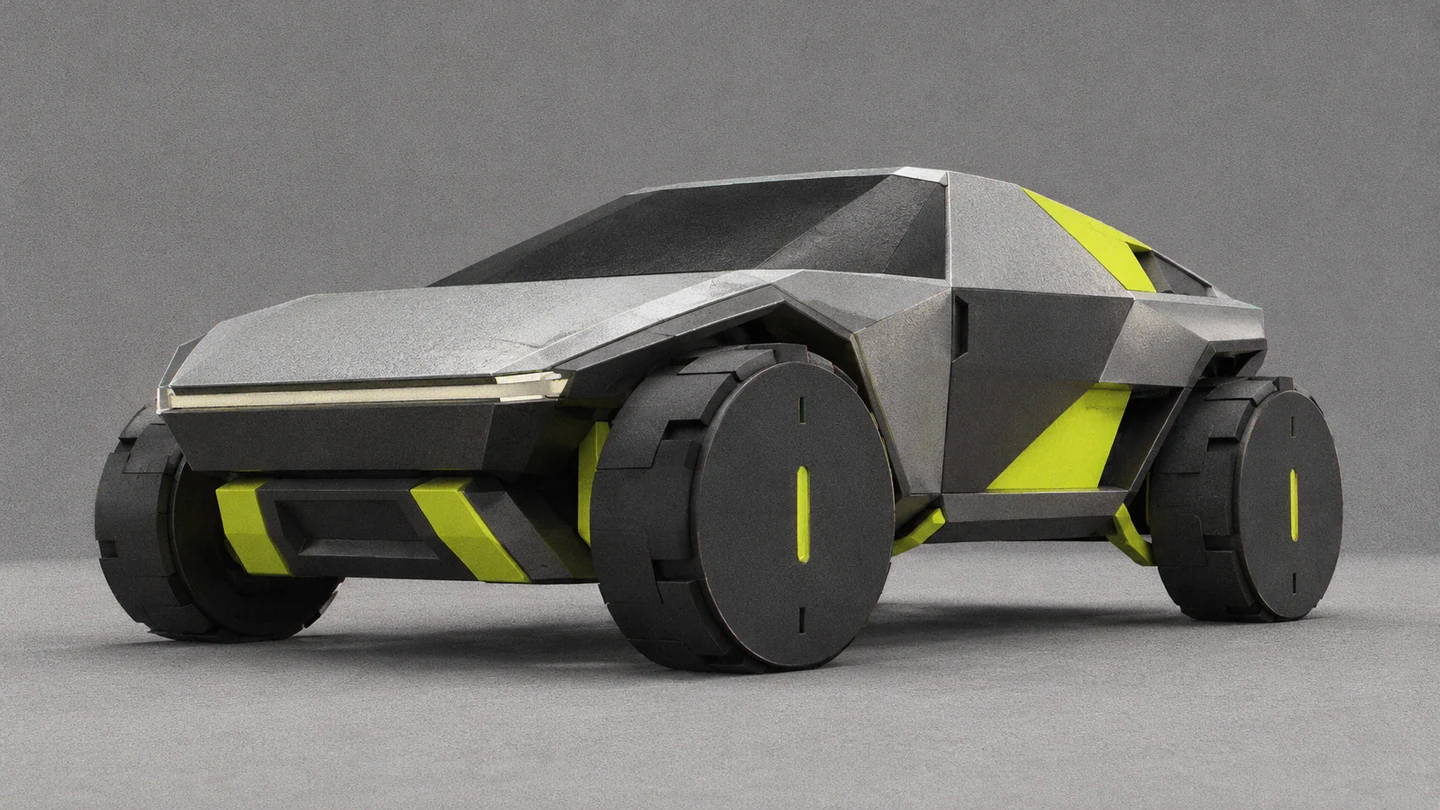
- Graphic product or object studies
- Editorial illustrations that explain a form through simplification
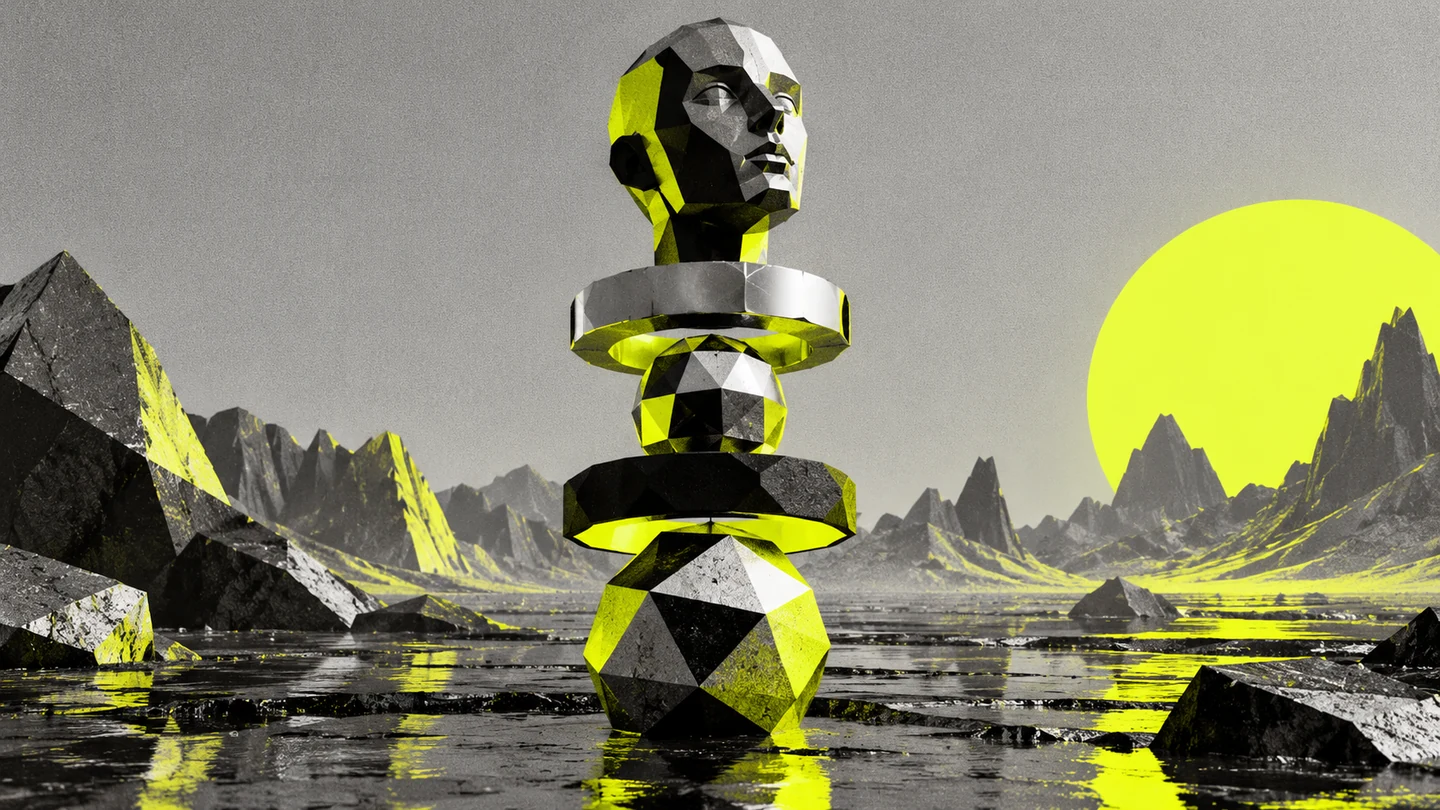
Simplified three-dimensional objects and characters whose few polygons, angular silhouettes and economical surfaces remain visibly part of the design.
Part of the Nostalgia & Memory mood, alongside Vaporwave and Y2K.
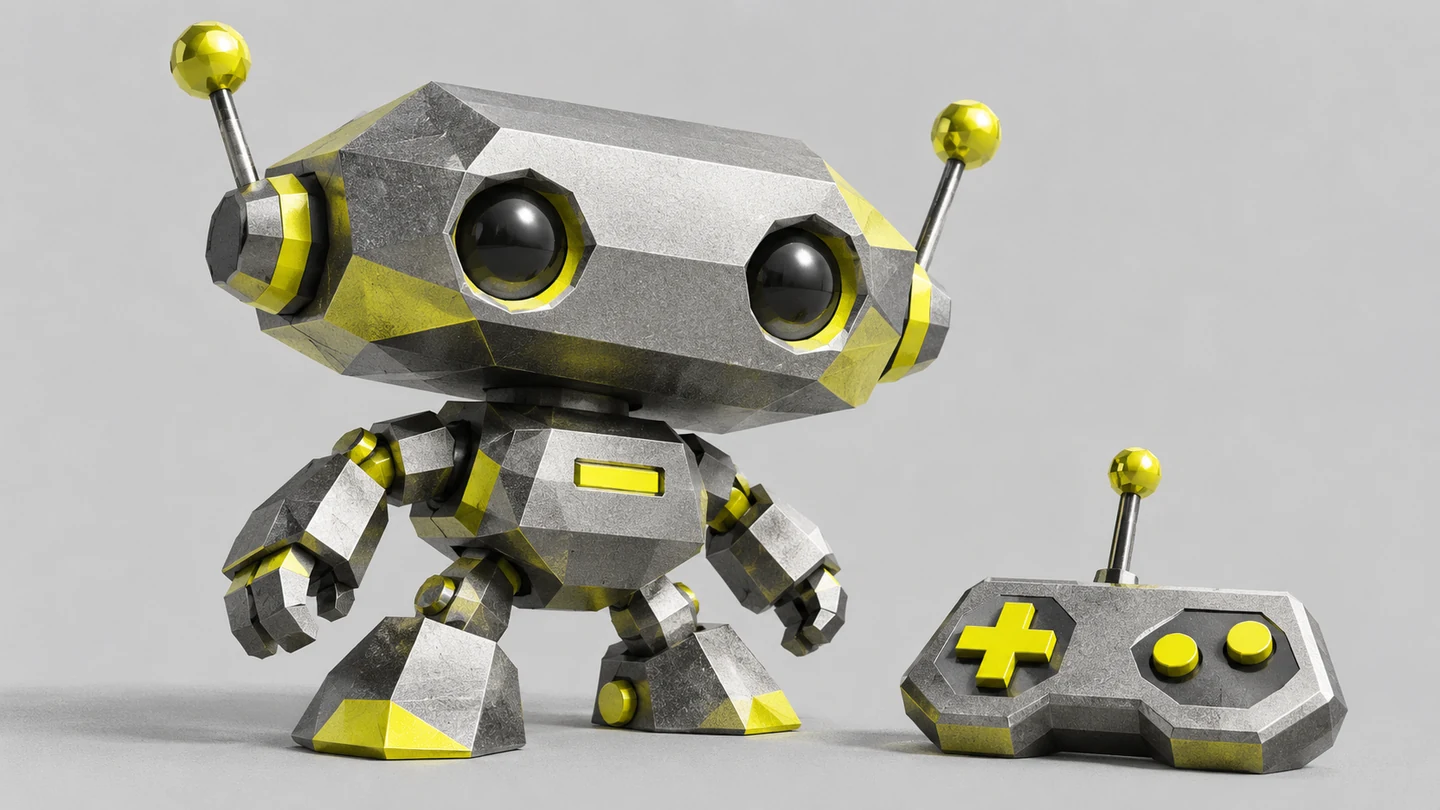
Simplified three-dimensional objects and characters whose few polygons, angular silhouettes and economical surfaces remain visibly part of the design.
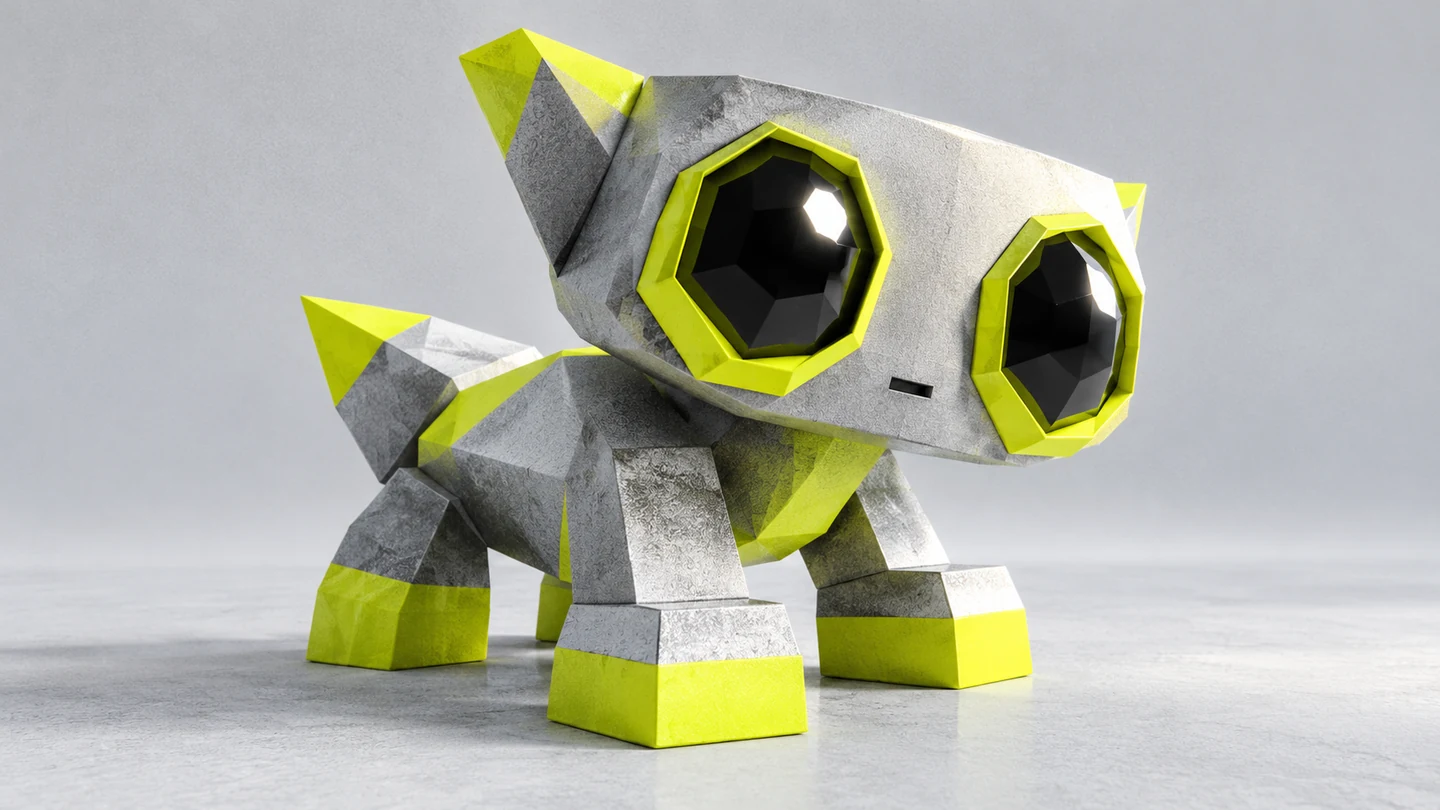
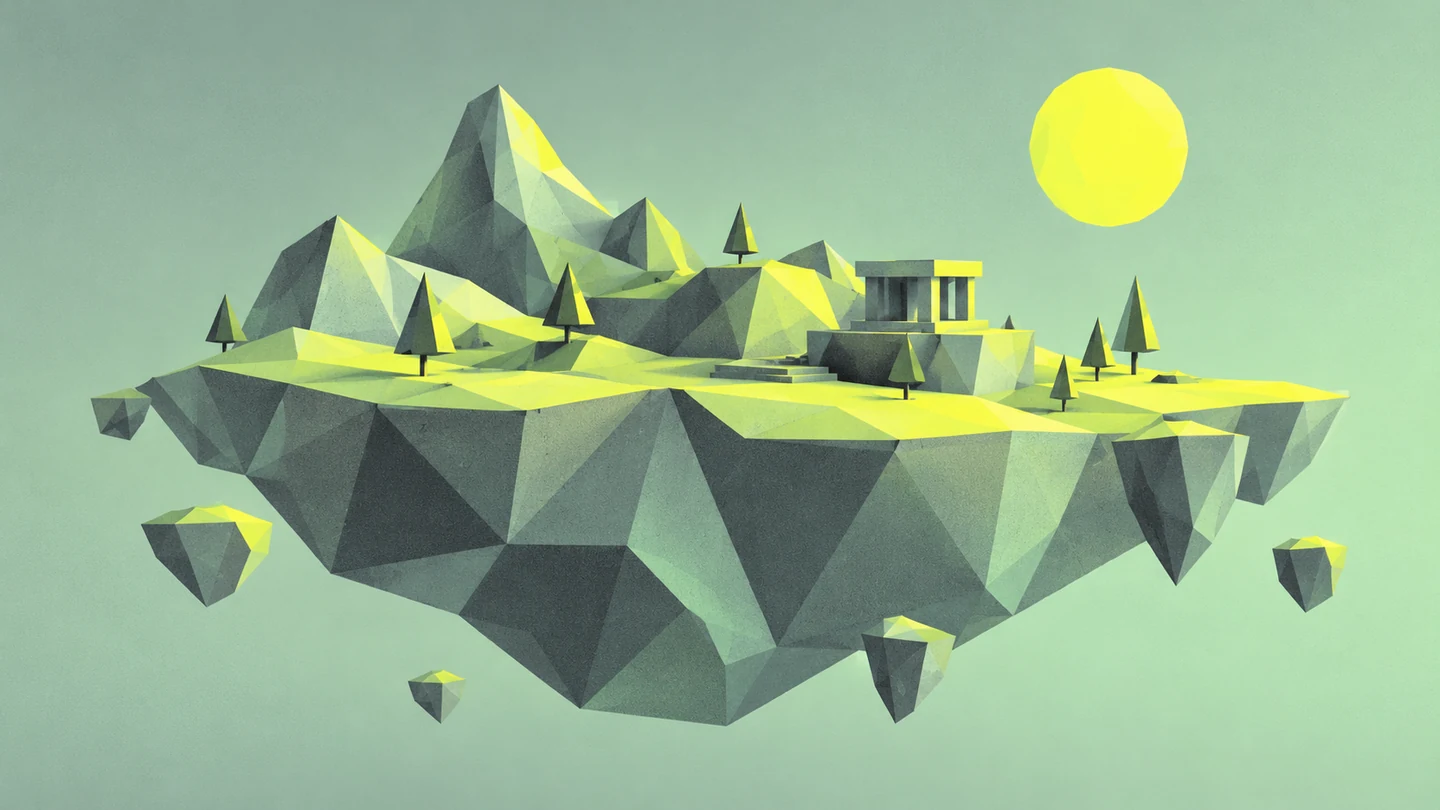
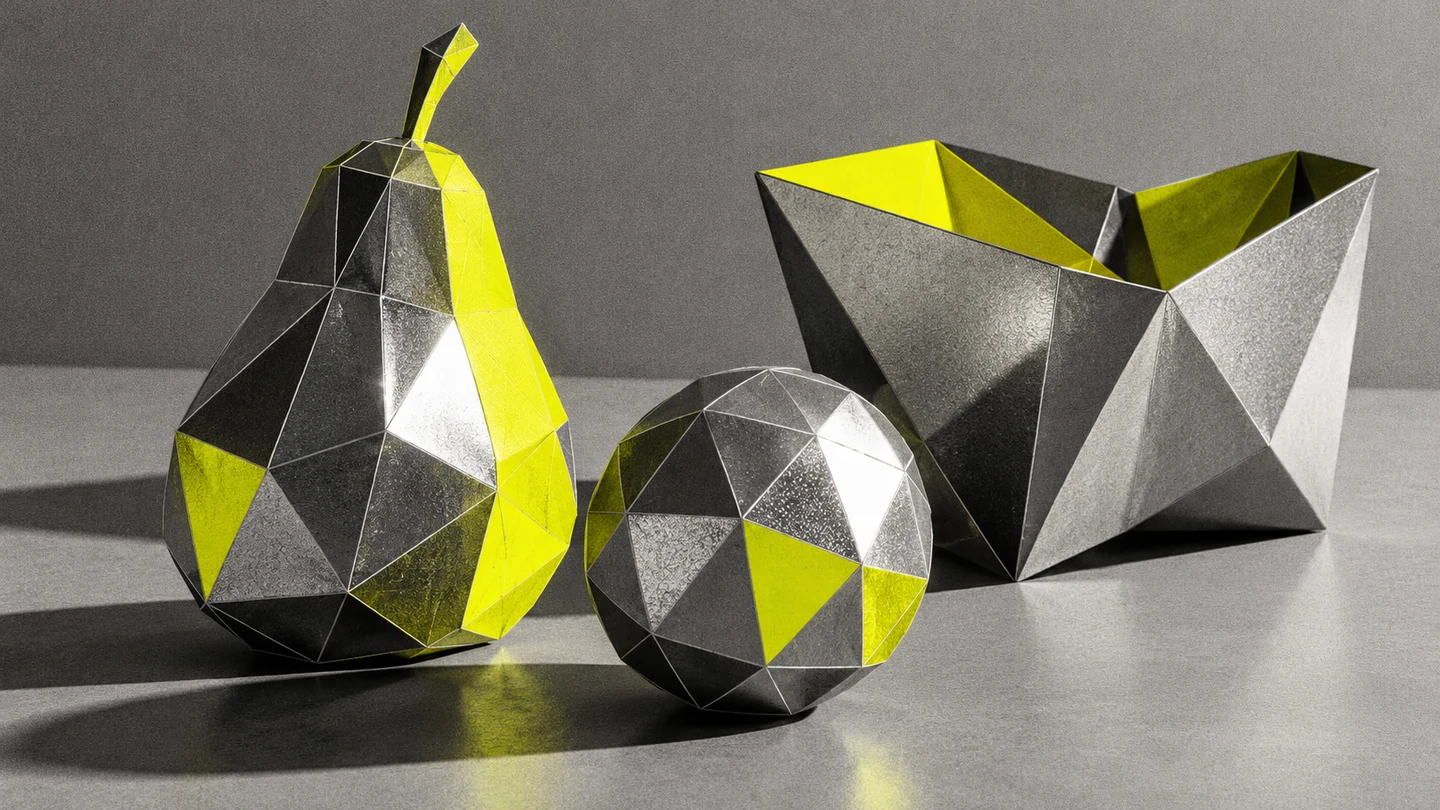
What it is, when it works, who it is for, and where it already exists.
Record 031-LP - when it works, who it is for, what it looks like
Where Low-Poly came from, what makes it recognisable, and the fingerprint it leaves.
Early real-time 3D constraints; continuing graphic and illustration practice · Polygon-based computer graphics and deliberate mesh simplification
Low-poly describes a relative economy of polygon geometry rather than a universal numerical threshold. A low-poly object keeps its structure visible through a simplified silhouette, large planar surfaces and restrained detail. Flat shading can emphasize facets, while smooth shading can leave an angular outline with softer highlights.
Hardware limits made economical models central to early real-time graphics. Contemporary artists also choose sparse geometry for its visual clarity and character. This entry focuses on objects, mascots and graphic still lifes; OMORO’s PS1 / Dreamcast Low-Poly entry addresses the more specific game-world language of texture warping, draw distance and atmospheric scenes.
Research informing this technique
“Fewer surfaces. More character.
The visual DNA: what makes it recognisable
8-channel console with the fingerprint on its display. Save the card, or share the page

The definitive color scheme for this aesthetic
The colour of the styles sitting closest to this one
How to shoot it, how to prompt it, and how to board it.
How to shoot this aesthetic
"Fewer surfaces. More character."
Shot list
Lighting
Use a broad key light or hard directional light to reveal the planes. Avoid complex reflections that conceal the simplified geometry.
Click any prompt row to edit. Copy uses your edited text.
Low-Poly graphic 3D: economical polygon mesh
Visual cuesangular silhouette, broad readable facets, simplified primitives and limited surface detail, intentional flat shading or restrained smooth highlights; preserve visible geometry and a strong object silhouette; optional coarse early-render grain; avoid high-poly photorealism, voxel cubes, gratuitous triangular overlays on a photograph and dense procedural microtexture
Paste as-is, or add your own subject.
3D render: a character with a readable angular silhouette.
SettingSet in sparse faceted landscapes. Shot wide, the whole scene with room around it, use a broad key light or hard directional light to reveal the planes.
DetailKeep large simple planar surfaces in the frame.
StyleStyle: Low-Poly graphic 3D: economical polygon mesh, angular silhouette, broad readable facets, simplified primitives and limited surface detail, intentional flat shading or restrained smooth highlights; preserve visible geometry and a strong object silhouette; optional coarse early-render grain; avoid high-poly photorealism, voxel cubes, gratuitous triangular overlays on a photograph and dense procedural microtexture.
PaletteColour palette #D9EF47 #B9BCC0 #4A4D52 #ECEDE7 #839B90.
WardrobeFor character models, model clothing as a few clear volumes instead of adding dense fabric detail.
FrameComposed for a 16:9 landscape frame.
RulesRender visibly simplified polygon geometry; do not turn it into a photoreal photograph. No text, no logos, no watermark.
The whole record as a portable skill for Claude, ChatGPT, Gemini, image and video models, or a human brief
The whole record, compiled into a skill another system can work inside: lineage, axes, palettes, type, materials, photography, verdicts and a critique checklist. Nothing is generated; it is the dossier, restructured.
The record applied to your project. The record's kit is free; your brand, references and plates come with membership
01 · Hero application02 · Material and finish03 · Palette in context04 · Photography directionWhether to use it, what it costs to do properly, and where it stands right now.
Two written calls, seven meters, and when to walk away
Budget geometry according to what the camera can see. The silhouette earns the polygons. A generated reference illustrates the look; a production model still needs mesh and topology review.
Choose it for deliberate abstraction and distinct character. A simple object needs precise proportions, especially when there is little surface detail to distract the eye.
Original illustration, lettering or mesh construction needs dedicated design time; a reusable system can reduce subsequent production cost.
The image needs a clear composition before the treatment is applied.
Geometry, optical spacing or linework requires deliberate control at the final delivery size.
A strong effect can obscure the subject and replace the creative idea.
Best considered a specialist treatment rather than a default brand language; this is an editorial assessment.
A descriptive contemporary treatment whose appeal depends on context and execution.
Can be confined to a campaign image series without rebuilding the full identity.
A Pro feature: origins, practitioners, and pitfalls
Neighbours, cross-references, blends, and the questions people ask.
Connected across the creative knowledge graph
Mix Low-Poly with any style in the library, or see the pairs worth trying
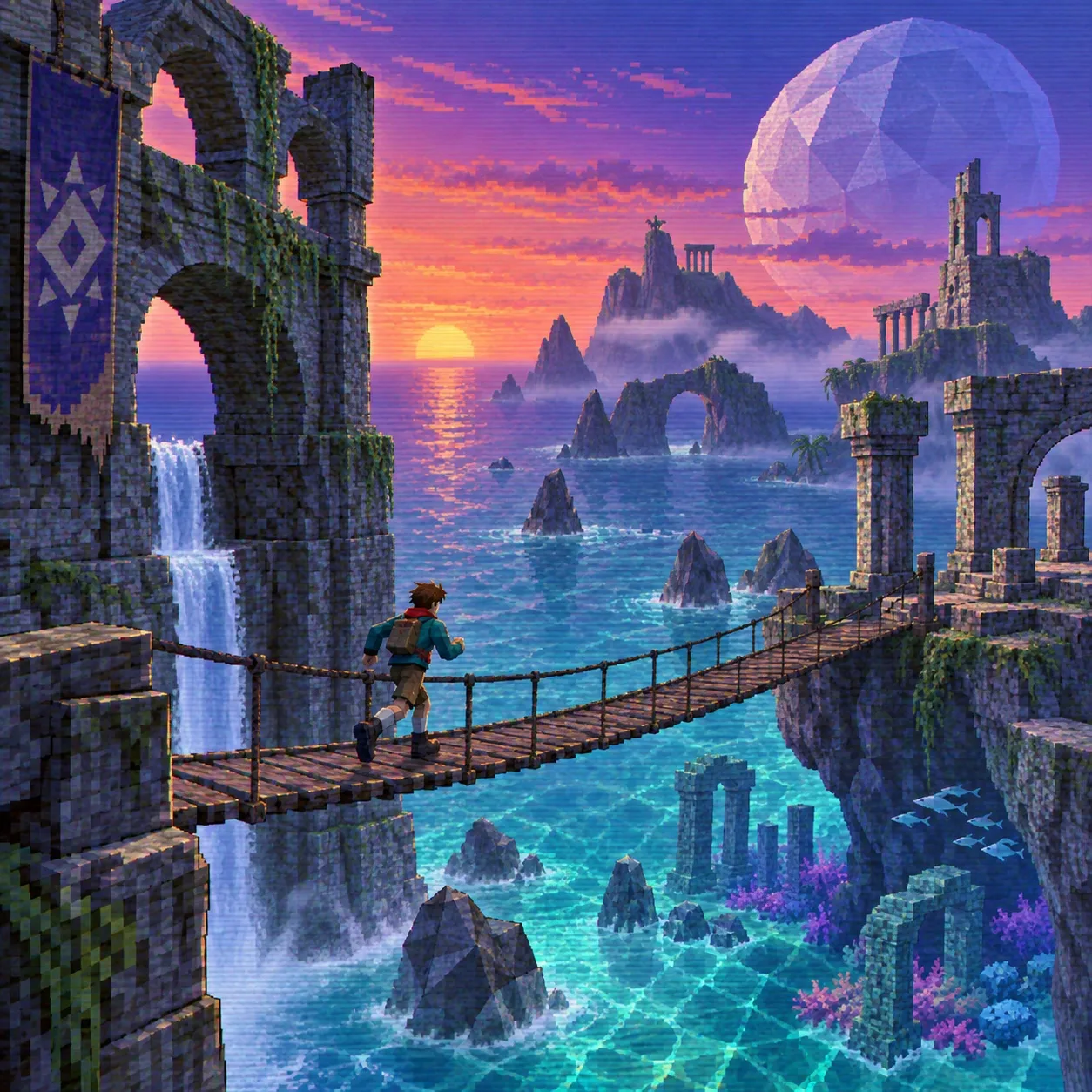 Low-Poly 50%PS1 / Dreamcast Low-Poly 50%
Merged palette
#D9EF47
#101C3A
#B9BCC0
#5FD9E8
#4A4D52
Leads digital, geometric, expressive
Typography · from Low-Poly
Space Grotesk over Inter
Materials
The calls this blend forces
These two disagree on one thing, and a blend cannot average them: you pick a side. At this mix:
Light or Dark? Low-Poly is light, PS1 / Dreamcast Low-Poly is dark. This mix lands dark.
Use it
Create one visual direction that synthesizes Low-Poly × PS1 / Dreamcast Low-Poly. Preserve a clear hierarchy; do not make a contact sheet or a collage of unrelated styles.
Let it read as digital, geometric, expressive. Resolve the strongest tensions deliberately: light / dark.
Use these colors as a controlled system: #D9EF47 (Acid Highlight) · #101C3A (Midnight Blue) · #B9BCC0 (Mesh Silver) · #5FD9E8 (Icy Cyan) · #4A4D52 (Facet Shadow).
Use Space Grotesk for display type and Inter for supporting text.
Bring in Triangulated polygon meshes with visible facets and hard edges between planes, Flat or Gouraud shading: one tone per face, or a coarse smooth gradient, Low-polygon meshes with affine texture warping and no depth buffer, Low-resolution textures, nearest-neighbour or lightly filtered, with visible texels.
Keep one subject or one clear interface state in focus. Use the visual language to guide composition, lighting, spacing and material decisions.
There is no universal cutoff. The count is relative to the object, platform and purpose; visibly economical geometry matters more for this aesthetic than a fixed number.
No. Smooth normals can soften highlights while the silhouette remains angular. Flat shading makes individual faces more visible but does not itself prove a small polygon count.
This entry centers on simplified objects and characters. The game-specific entry also covers texture warping, draw-distance fog and the atmosphere of early 3D worlds.
Every style in the library is broken down like this one: the palette, the typography, the materials and the lineage.
Explore the style library →