When to use it
- Concept development and ideation
- Sketch-based branding
- Hand-drawn typography
- Personal artistic expression
Line-based artwork, sketches, and hand-drawn mark-making
What it is, when it works, who it is for, and where it already exists.
Record 023-DR - when it works, who it is for, what it looks like
Where this aesthetic shows up in the real world · ↗ opens the source site
Where Drawing / Sketch came from, what makes it recognisable, and the fingerprint it leaves.
40,000 BCE–present · Universal; all human cultures; the foundational visual practice
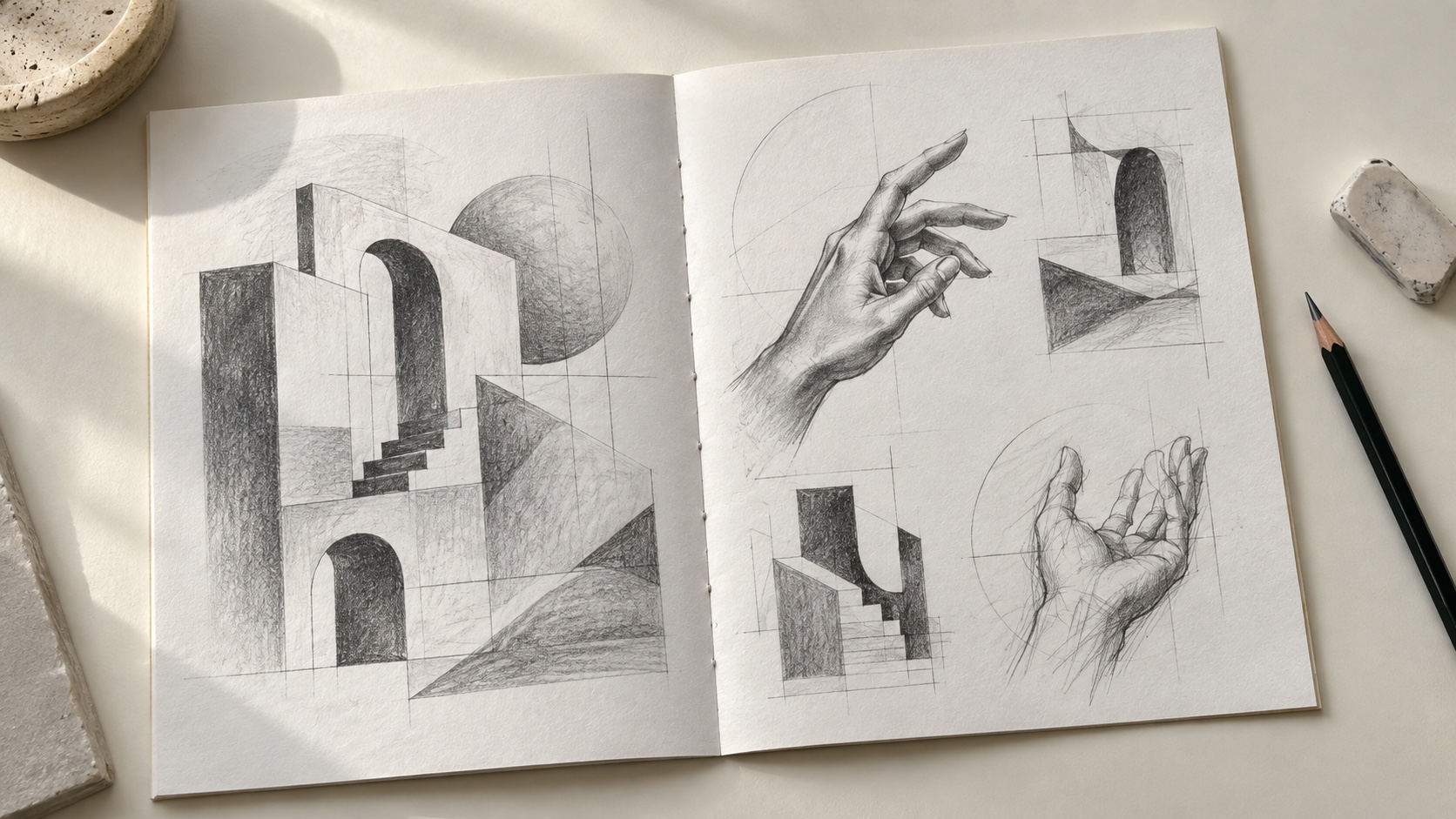
Drawing is the most direct form of mark-making: a tool moved across a surface, leaving a trace. The visual qualities of drawing: line weight, pressure variation, speed indication in the stroke, the evidence of hand tremor or confident gesture: are the direct record of a physical and mental act. This directness gives drawing an intimacy that other media cannot replicate: you see the drawer thinking.
Drawing traditions span: the Old Master disegno tradition (where drawing was the foundation of all visual practice: Raphael's compositional studies, Rembrandt's rapid sketches, Dürer's precise naturalism), architectural drawing (Piranesi's etchings, Le Corbusier's sketchbooks), cartoon and comic art (Winsor McCay, Crumb, Hergé), fashion illustration (René Gruau, Antonio Lopez), and contemporary artists who return to drawing as primary medium (Kara Walker's silhouettes, Julie Mehretu's architectural webs, Cy Twombly's scrawled paintings).
For visual design, drawing aesthetics appear as: the sketch and wireframe tradition (UX design borrowed directly from architectural drawing practice), editorial illustration (the rapid observational drawing published in newspapers and magazines), hand-drawn UI and app icon traditions, and the general visual culture of showing process: the 'drawing visible' aesthetic that appears in design that wants to signal handcraft and human presence.
“The fastest distance between a thought and a form.
The visual DNA: what makes it recognisable
8-channel console with the fingerprint on its display. Save the card, or share the page

4 color interpretations of this aesthetic
The colour of the styles sitting closest to this one
How to shoot it, how to prompt it, and how to board it.
How to shoot this aesthetic
"The quietest discipline: graphite on paper, thought made line"
Shot list
Lighting
Window light to one side only let the shadow side go dark; the single source creates the same quality of light the old masters used and references the discipline's history
Drop this into Studio to generate in this aesthetic
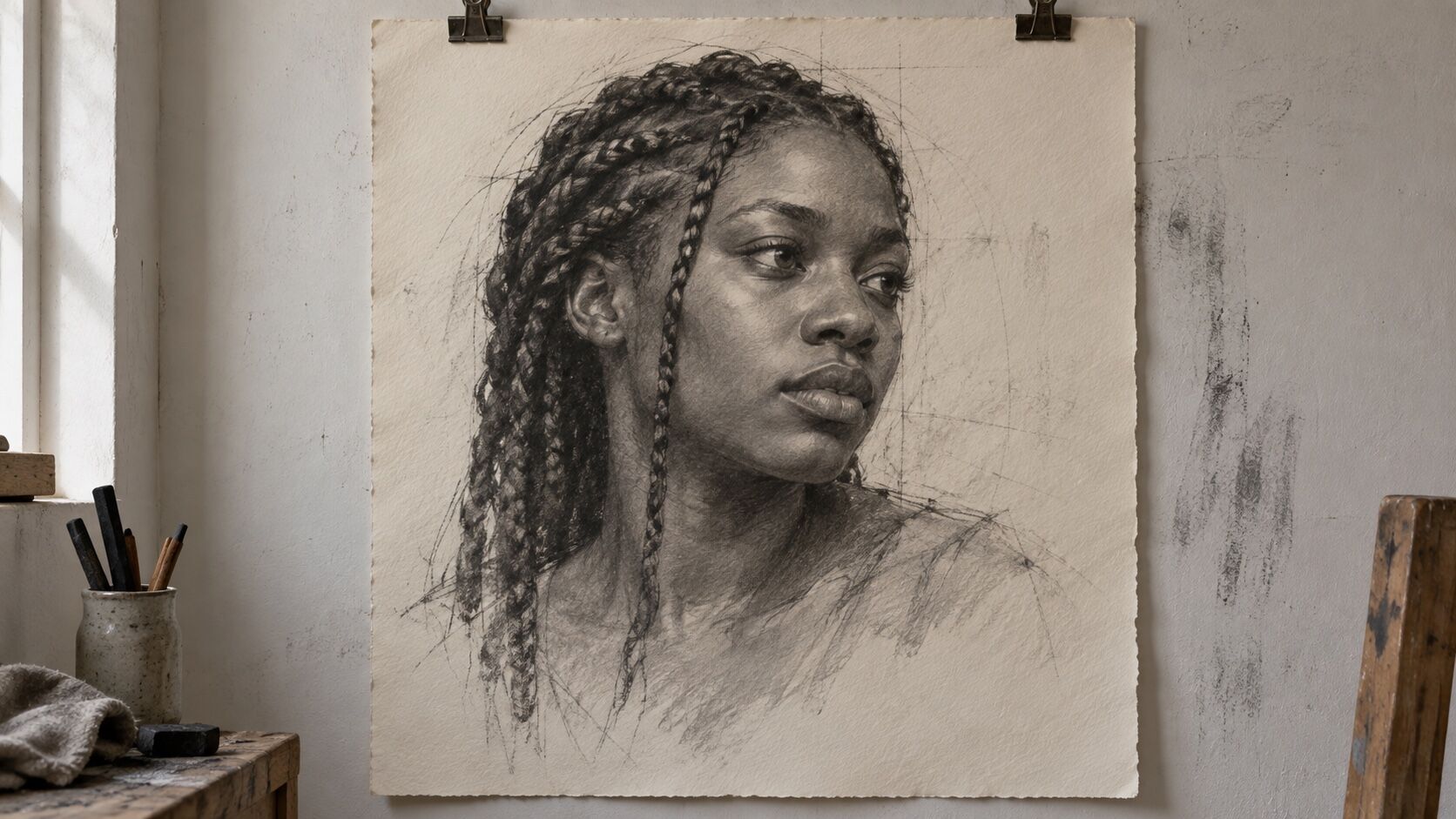
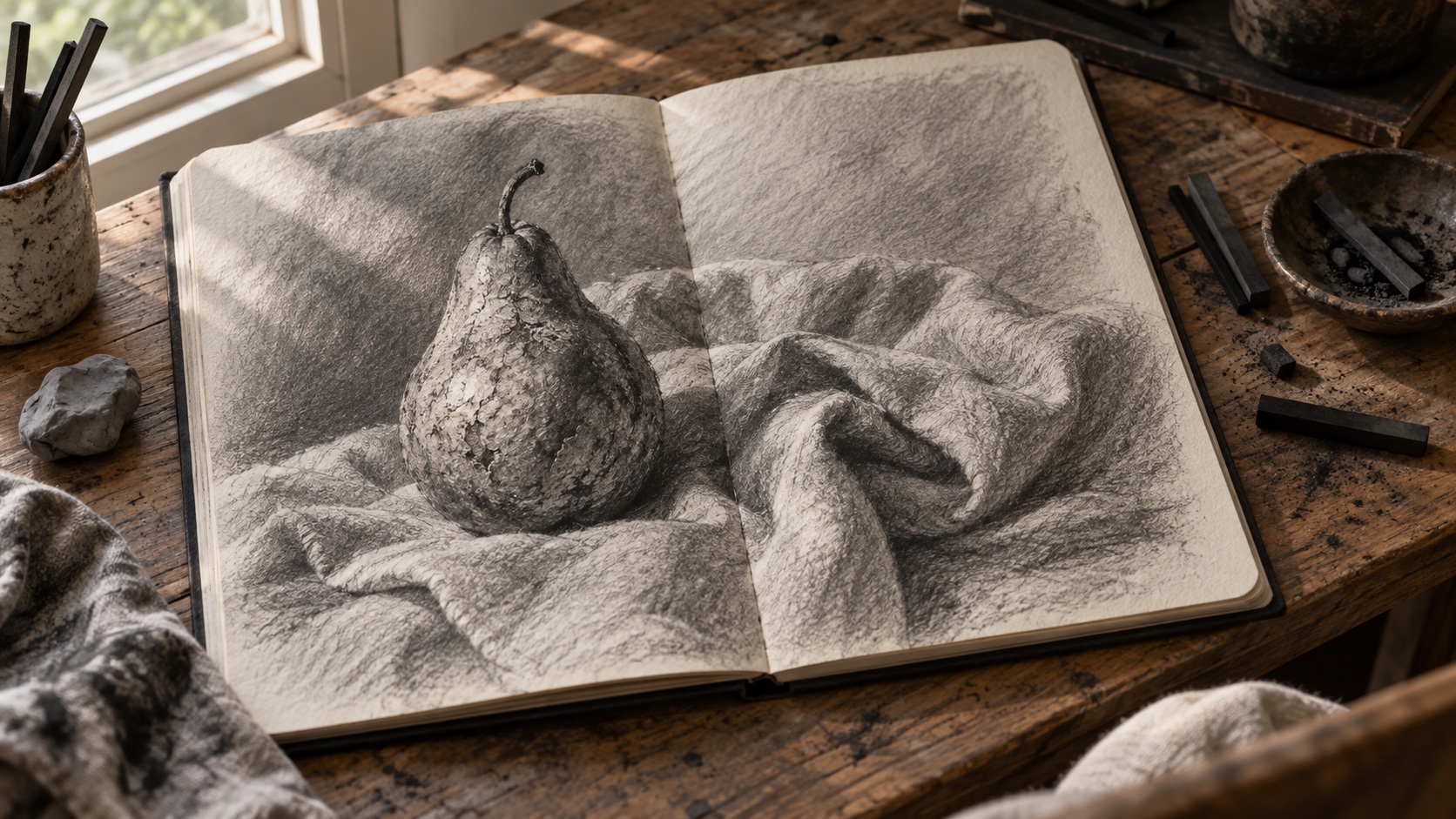
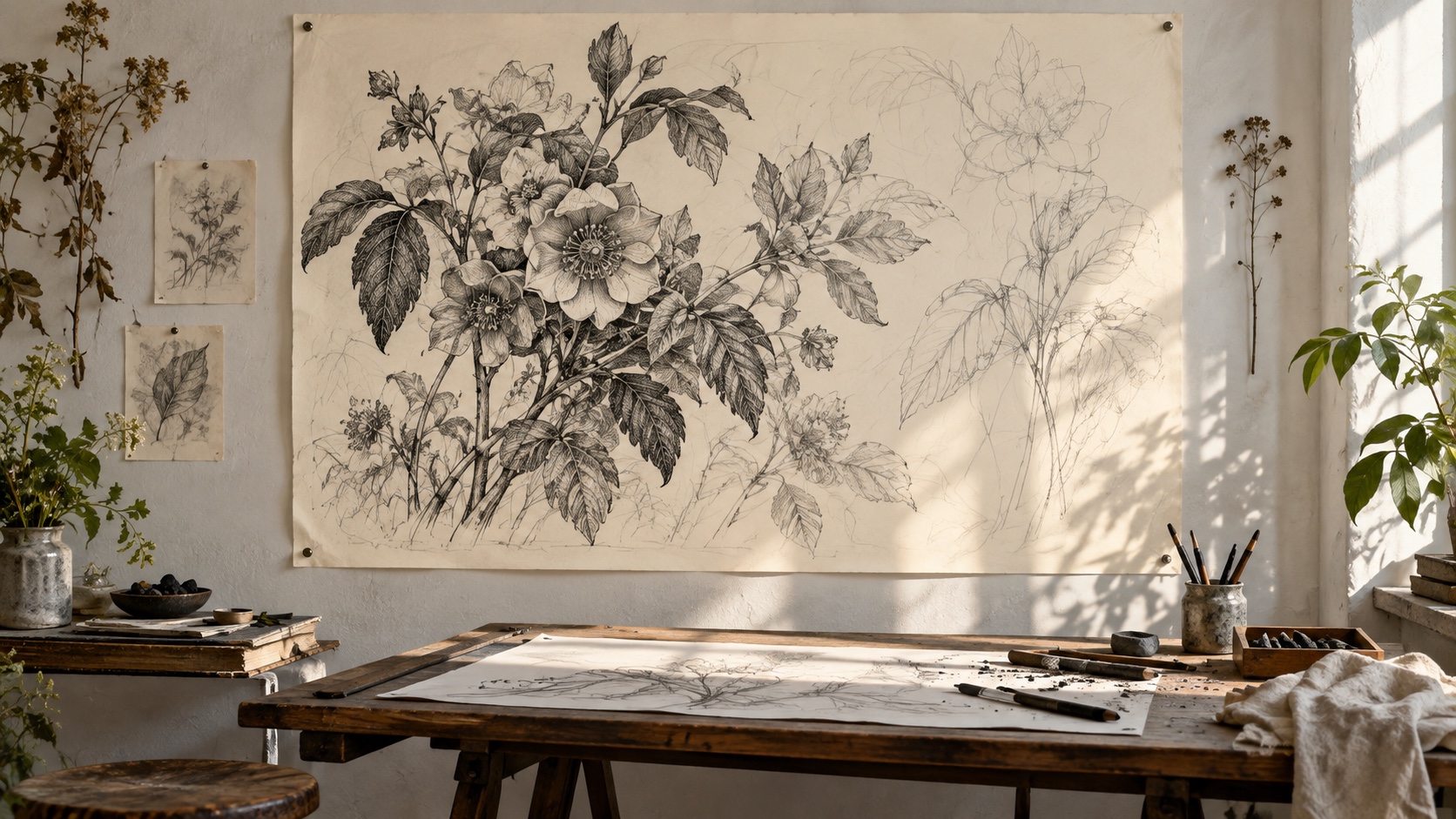
Fine art drawing with expressive graphite or charcoal linework, visible construction lines and cross-hatching for shading, sketchbook immediacy and gestural confidence, tonal range from paper-white to deep charcoal, hand-drawn observational-study quality
The record applied to your project. The record's kit is free; your brand, references and plates come with membership
01 · Hero application02 · Material and finish03 · Palette in context04 · Photography directionWhether to use it, what it costs to do properly, and where it stands right now.
Two written calls, seven meters, and when to walk away
Line weight carries everything colour would have. A single-weight line reads as flat and unresolved, while varying it by pressure and speed gives form without any shading at all. Work from the shoulder for long strokes and the wrist for detail. Draw through the form rather than around it, because contour alone always looks traced.
The foundational discipline, and the one most often skipped by fields that then quietly reintroduce it. Right whenever thinking needs to be visible: architects, animators and designers keep returning to it regardless of what the software can do. It has gained value as evidence of process, since a sketchbook proves a sequence of decisions a finished file cannot.
Paper and a pencil. The lowest barrier here.
Simple tools mean the idea has to carry the whole piece.
Confident line work is a skill, but a learnable one.
Simple and direct enough that there's little to get visibly wrong.
The most basic, constantly-used visual tool there is.
The oldest form of mark-making. It isn't going anywhere.
A single sketch can do the whole job.
A Pro feature: origins, practitioners, and pitfalls
Neighbours, cross-references, blends, and the questions people ask.
Connected across the creative knowledge graph
Where it stands now, and what it costs you to use it
Drawing is the foundational discipline and the one most often skipped, and every field that skipped it has quietly reintroduced it after finding out what was missing.
It is thinking made visible, which is why architects, animators and designers keep returning to it regardless of what the software can do.
It has gained value as evidence of process. A sketchbook proves a sequence of decisions in a way a finished file cannot.
Mix Drawing / Sketch with any style in the library
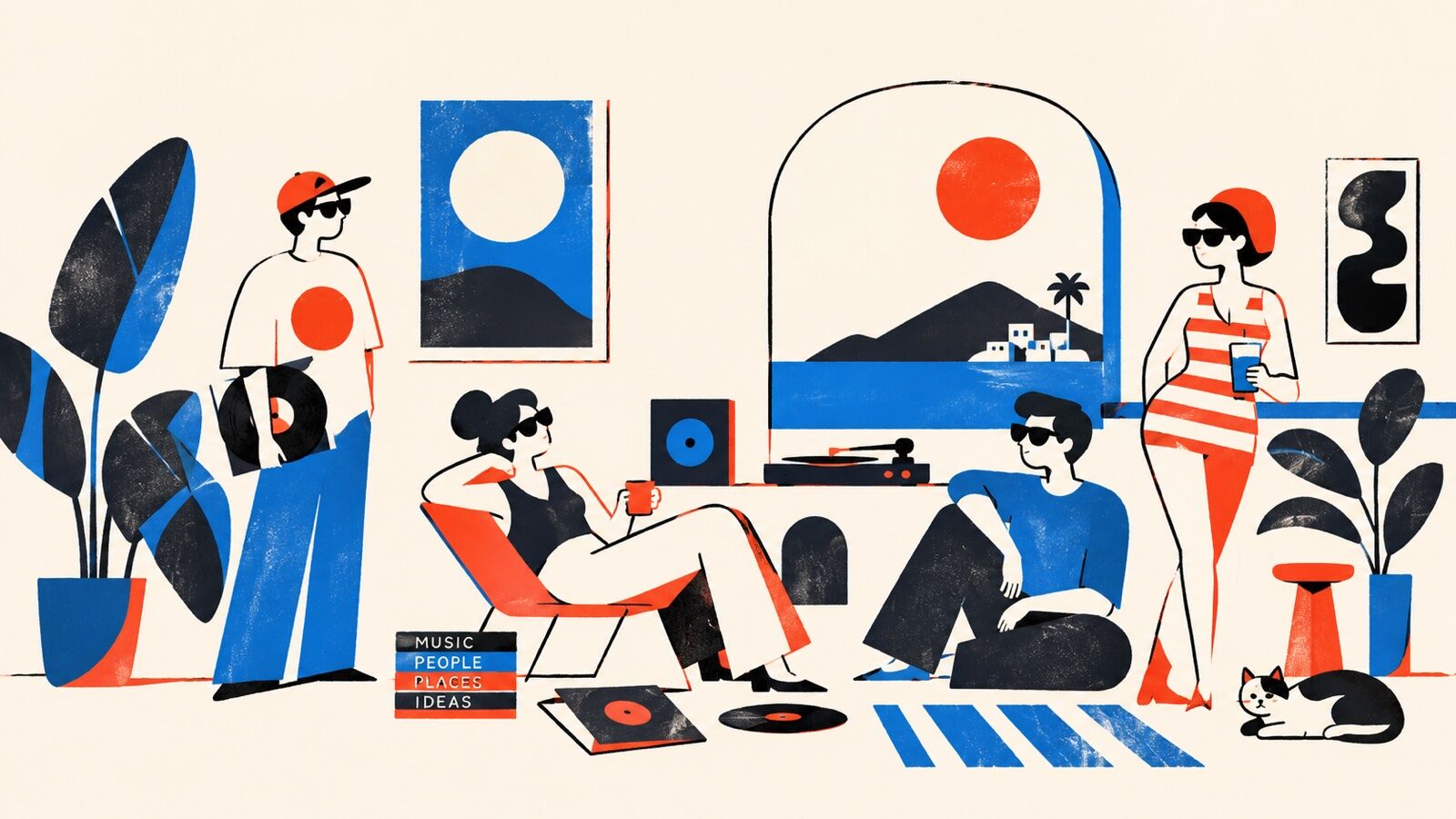 Drawing / Sketch 50%Illustration 50%
Merged palette
#1C1C1C
#1A1208
#3A3A3A
#C84B1A
#7A7A7A
Leads analog, expressive, nostalgic
Typography · from Drawing / Sketch
IBM Plex Sans over IBM Plex Mono
Materials
The calls this blend forces
These two disagree on one thing, and a blend cannot average them: you pick a side. At this mix:
Analog or Digital? Drawing / Sketch is analog, Illustration is digital. This mix lands analog.
Use it
Fine art drawing with expressive graphite or charcoal linework, visible construction lines and cross-hatching for shading, sketchbook immediacy and gestural confidence, tonal range from paper-white to deep charcoal, hand-drawn observational-study quality (50%), infused with Editorial illustration with confident linework and considered composition, mixed-media or digital-painting technique, conceptual visual metaphor communicating an idea at a glance, magazine and book-cover illustration tradition, expressive color mood suited to the story being told, color palette strictly #1C1C1C #1A1208 #3A3A3A #C84B1A #7A7A7A, leaning analog over digital, overall character: analog, expressive, nostalgic
Drawing aesthetic is the visual language of direct mark-making: contour lines, hatching, pressure variation, and the visible evidence of hand and thought in real time. Key visual qualities: graphite grey (#B0A898), ink black (#1E1A16), cartridge white (#F5F1EB). Spans Old Master study tradition, architectural drawing, comic and cartoon art, and contemporary artists for whom drawing is primary medium (Kara Walker, Julie Mehretu).
Drawing is a medium and practice: the physical act of making marks. Illustration is a purpose: making images for communication and publication. All illustration uses drawing (or equivalent digital tools), but not all drawing is illustration. An artist's sketchbook practice is drawing; a book cover image is illustration. The aesthetic distinction: drawing shows process, thought, and the evidence of making; illustration refines those marks toward a communicative end.
Digital drawing tablets (Wacom, iPad with Apple Pencil) replicate the physical act with high fidelity while offering undo, layers, and infinite media simulation. The result has been a massive democratization of drawing practice: the technical barriers to entry (learning to handle a dip pen, control charcoal) are significantly reduced. Simultaneously, physical drawing has become more valued precisely because it cannot be undone: the visible error, the committed line, is now a statement of material investment.
Every style in the library is broken down like this one: the palette, the typography, the materials and the lineage.
Explore the style library →