When to use it
- Process-rich editorials
- Music, travel, and personal archives
- Projects that benefit from restraint and tactile evidence
- Series where sequence matters as much as a hero shot
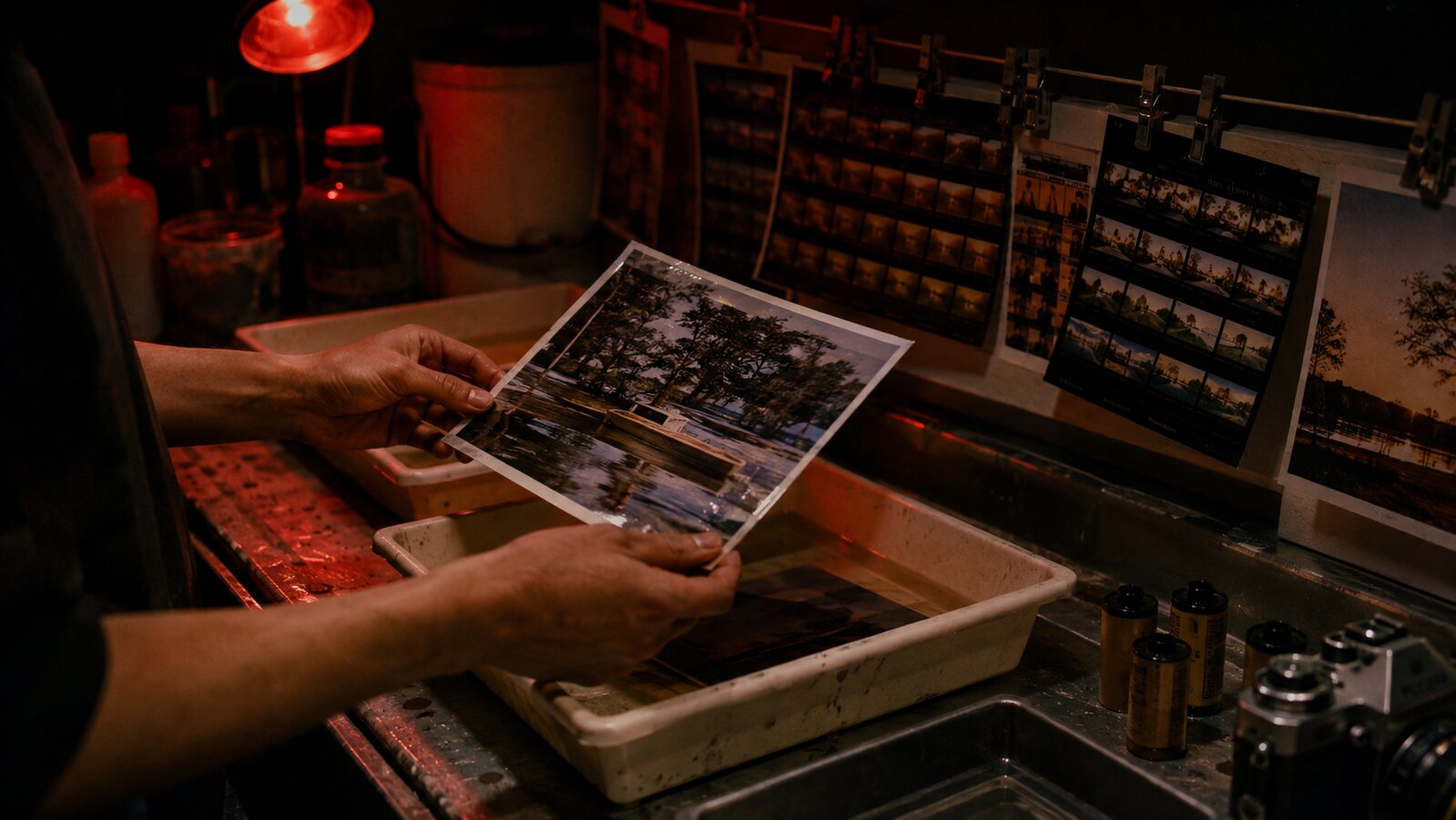
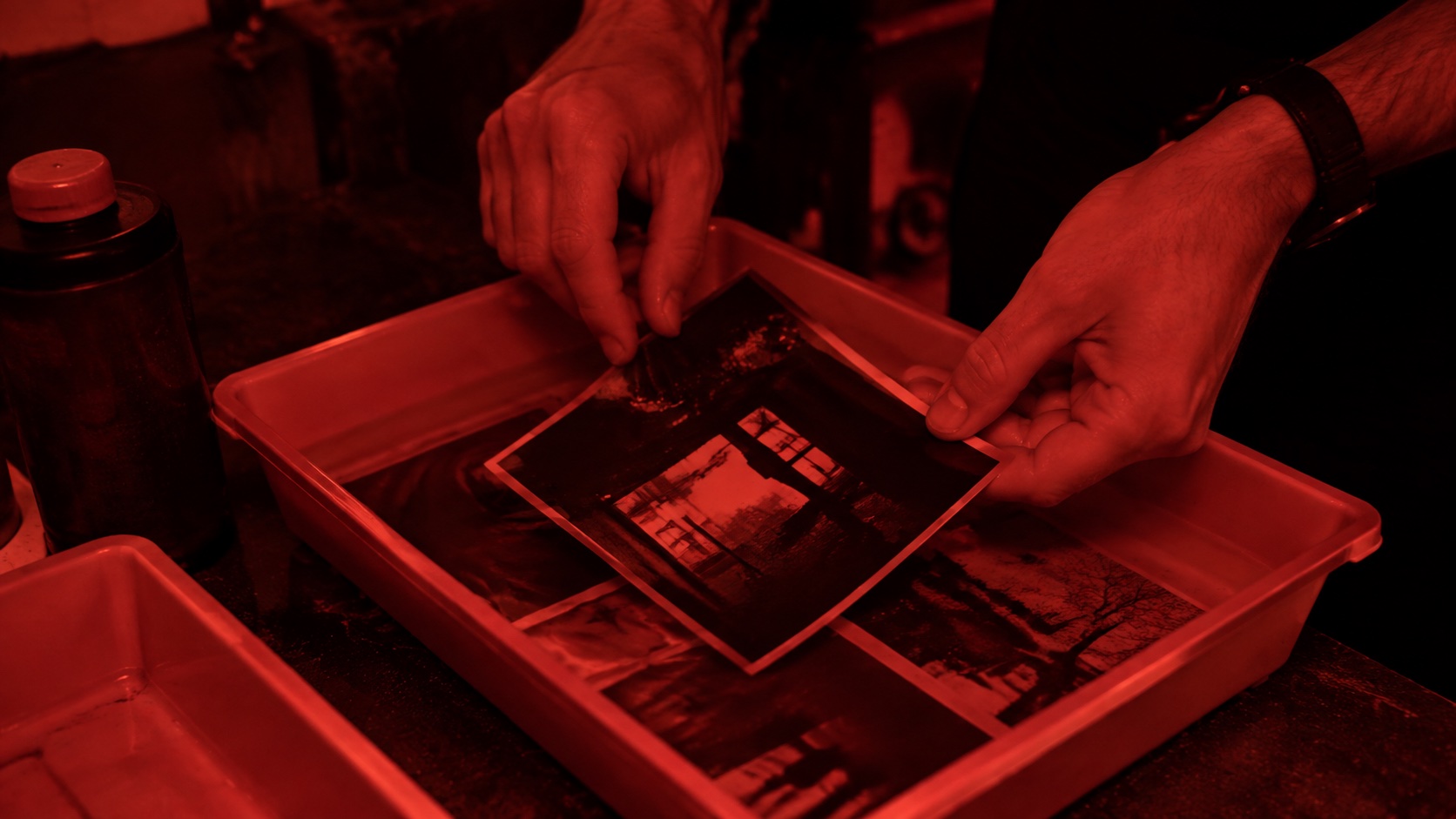
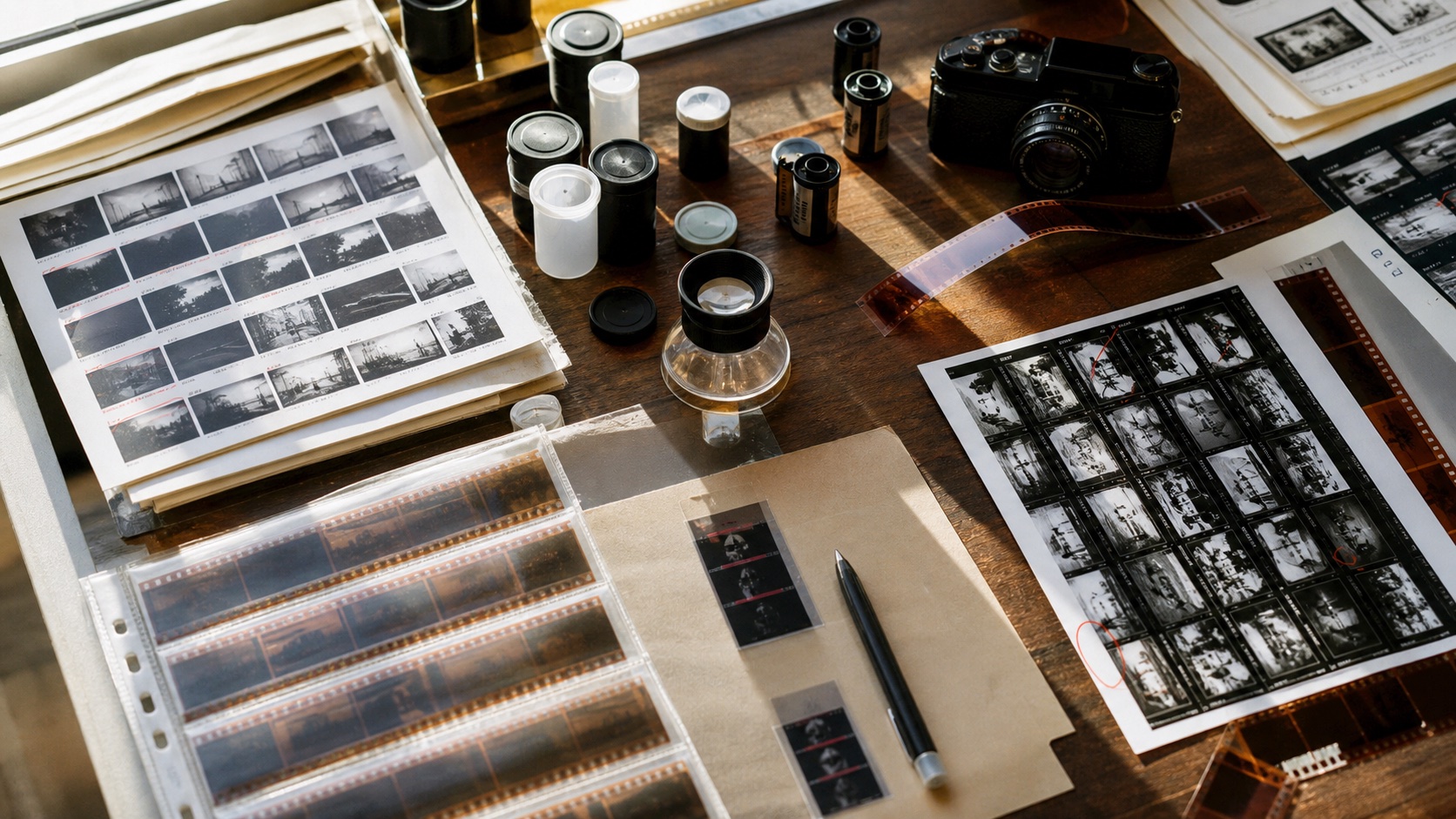
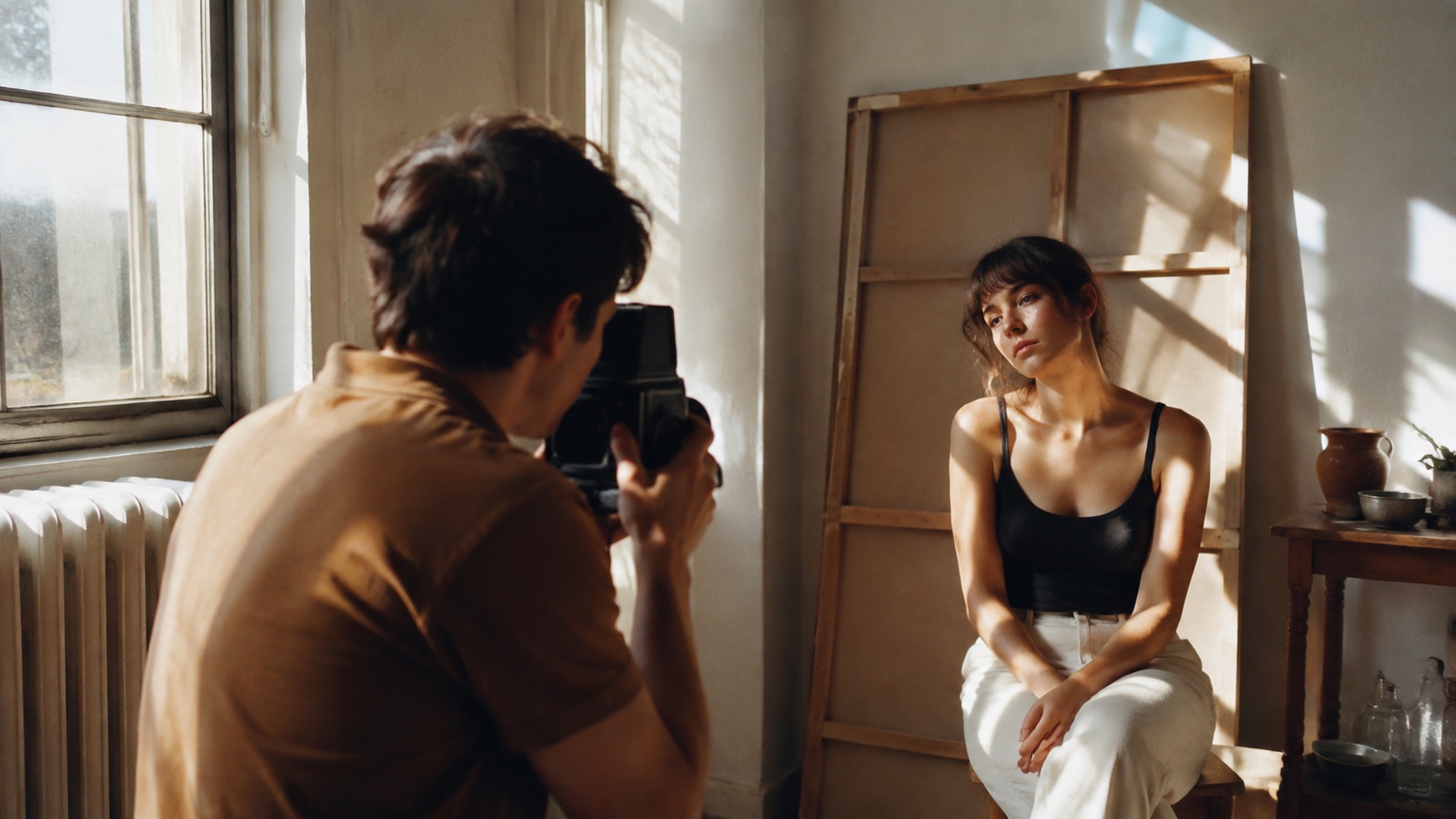
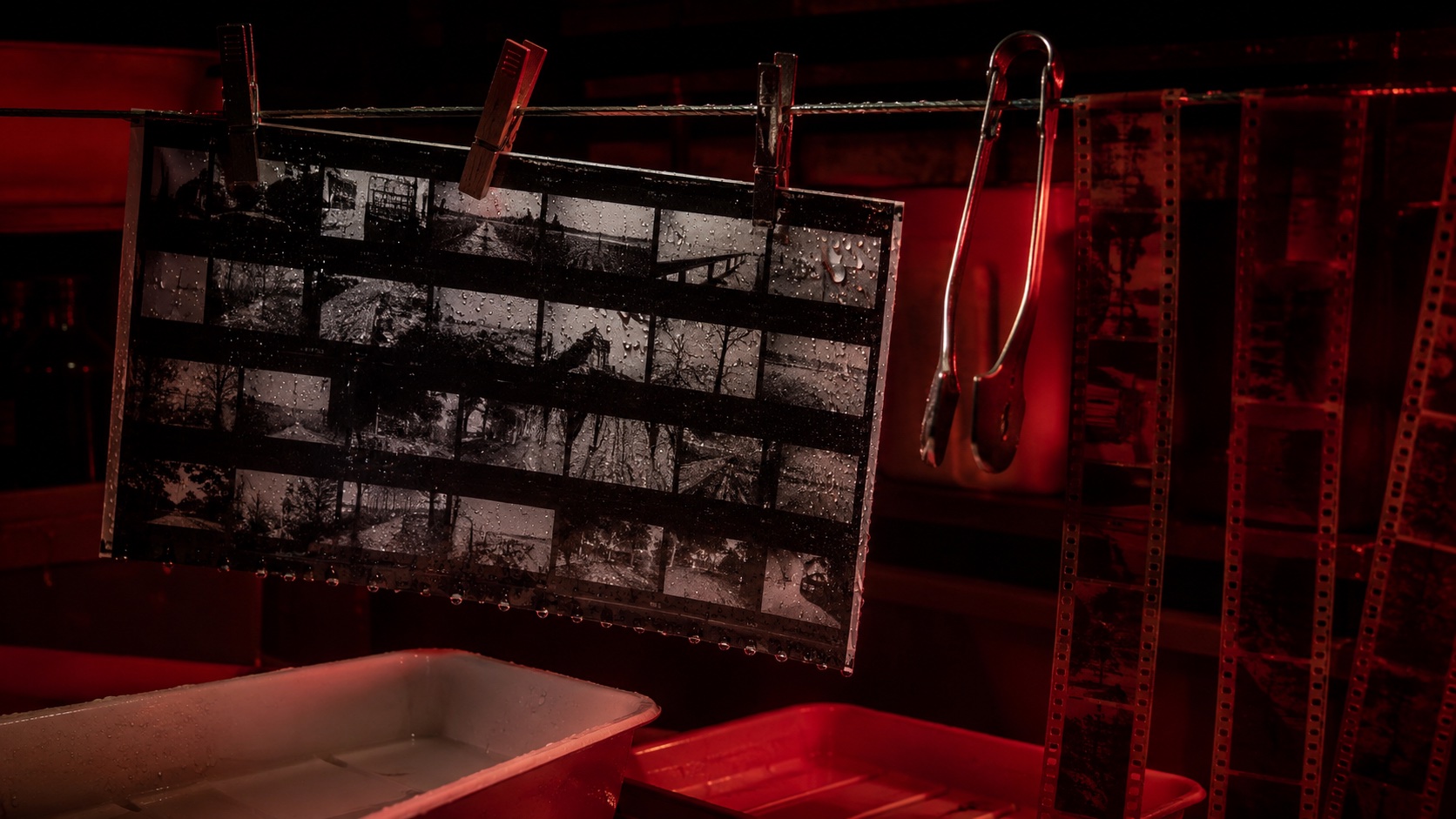
Film, contact sheets, darkroom labor, and material imperfection treated as part of the image—not an effect applied afterward
What it is, when it works, who it is for, and where it already exists.
Record 020-AP - when it works, who it is for, what it looks like
Where this aesthetic shows up in the real world · ↗ opens the source site
Where Analog Photography came from, what makes it recognisable, and the fingerprint it leaves.
1839–present · Global; photographic laboratories, studios, family archives and artist-run darkrooms
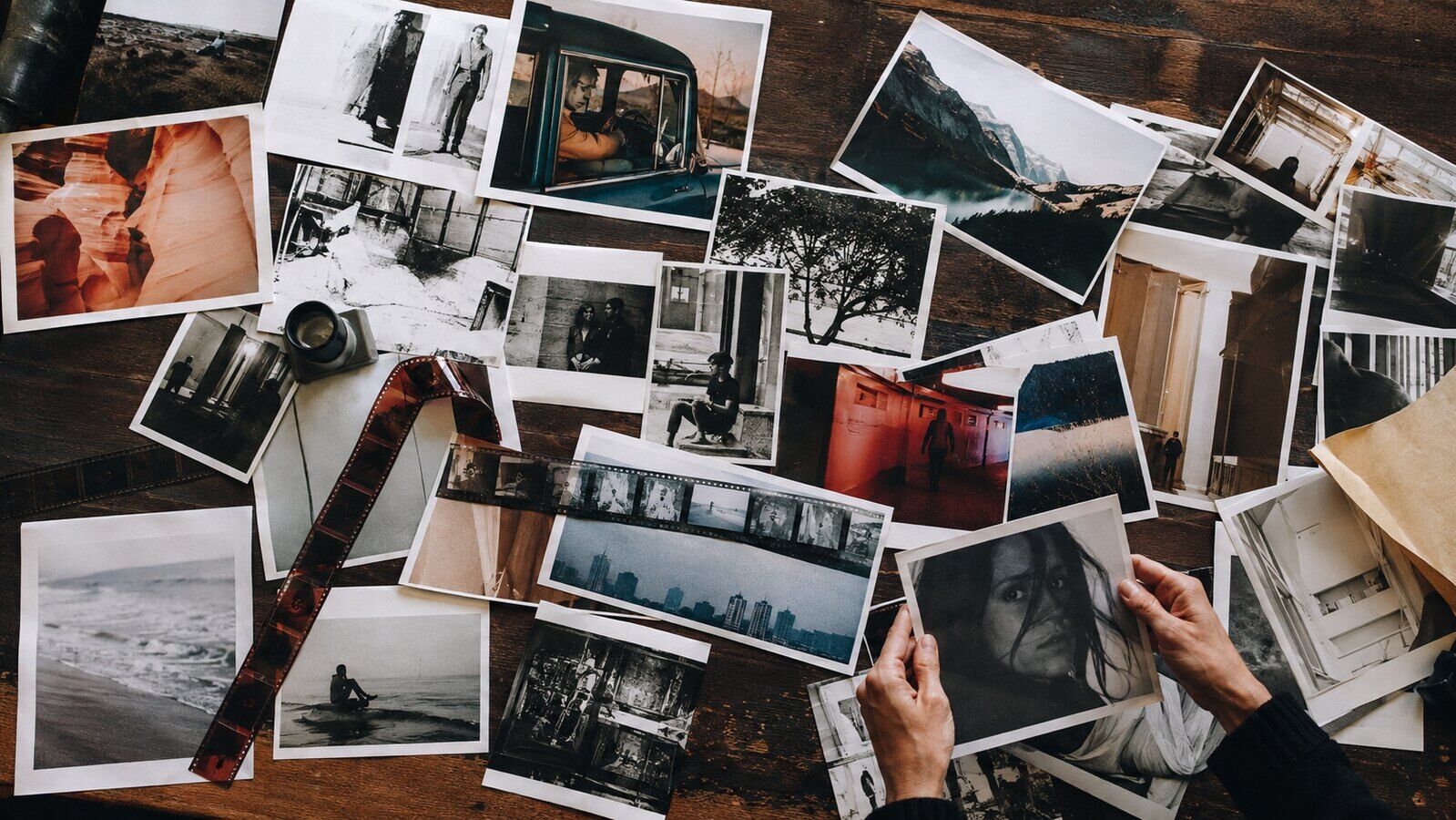
For most of photography's history, every image was analog: light altered a sensitized surface, a negative held a latent image, and development converted exposure into a physical object. The material changed from daguerreotype plates to roll film, color transparencies, instant cameras and C-prints, but the basic fact remained that each result carried a trace of chemistry, equipment and handling.
Film culture created its own working grammar. Contact sheets reveal choice and sequence; darkroom dodging and burning make the print an interpretation rather than a neutral output; different stocks produce recognizably different grain, color and latitude. Artists from William Eggleston to Nan Goldin and countless lab technicians made these material decisions part of the image's meaning.
The contemporary return to analog photography is strongest when it values slowness, limits and physical archives—not when film effects are simply applied as a nostalgia filter. The process matters because it changes how someone sees and edits, not because dust is automatically beautiful.
“Light, chemistry, time—and no instant answer.
The visual DNA: what makes it recognisable
8-channel console with the fingerprint on its display. Save the card, or share the page

The definitive color scheme for this aesthetic
The colour of the styles sitting closest to this one
How to shoot it, how to prompt it, and how to board it.
How to shoot this aesthetic
"Thirty-six frames, a contact sheet, and enough time to notice what you nearly missed"
Shot list
Lighting
Honor the stock: daylight, a small flash, or safelight in the darkroom. Let grain and exposure variation remain rather than correcting every imperfection.
Drop this into Studio to generate in this aesthetic
Analog photography with film grain, gentle halation, imperfect exposure, contact-sheet logic, real paper and negative texture, and the material evidence of a slow photographic process
The record applied to your project. The record's kit is free; your brand, references and plates come with membership
01 · Hero application02 · Material and finish03 · Palette in context04 · Photography directionWhether to use it, what it costs to do properly, and where it stands right now.
Two written calls, seven meters, and when to walk away
Analog Photography earns its keep when it gives a brand a standard of judgment, not just a finish. It falls apart the moment recognizable cues get collected without a point of view behind them. The tell is always proportion: what's shown, what's held back, and whether every choice belongs to the same world.
Use Analog Photography when the brand can back a real point of view and protect it through execution. Not when the goal is broad, neutral, or cheap to produce. The advantage is differentiation through judgment: the work reads as authored, not packaged. Average executions borrow the signals and lose the coherence. The best ones treat the visual language as a system of choices, including what they leave out.
Budget goes into art direction and casting, not the toolkit.
Anyone can spot the references. A real system out of them is the hard part.
One wrong prop or one off color reads as costume instead of conviction.
The surface is easy to copy. What separates the real thing from a knockoff is the system underneath.
The ingredients are everywhere right now. A disciplined execution is still the minority.
This holds up because it's built on composition and material, not a filter that ages out.
It only works if every touchpoint agrees. Cut a corner anywhere and the whole thing shows it.
A Pro feature: origins, practitioners, and pitfalls
Neighbours, cross-references, blends, and the questions people ask.
Connected across the creative knowledge graph
Where it stands now, and what it costs you to use it
Analog photography has become a meaningful counterweight to infinite capture. A limited roll and a physical contact sheet make selection visible again.
Film is not automatically honest. It is a set of processes and biases; its cultural value comes from using those constraints consciously rather than treating them as a filter preset.
Mix Analog Photography with any style in the library
 Analog Photography 50%Photography 50%
Merged palette
#180F0D
#1C1A18
#9A4739
#4A4640
#7A5E3D
Leads nostalgic, organic, analog
Typography · from Analog Photography
IBM Plex Sans over IBM Plex Mono
Materials
The calls this blend forces
These two disagree on one thing, and a blend cannot average them: you pick a side. At this mix:
Analog or Digital? Analog Photography is analog, Photography is digital. This mix lands analog.
Use it
Analog photography with film grain, gentle halation, imperfect exposure, contact-sheet logic, real paper and negative texture, and the material evidence of a slow photographic process (50%), infused with Fine art photography with intentional composition and considered light, full tonal range and sharp technical execution, decisive-moment or carefully staged image-making, gallery-print quality, an authored point of view over snapshot documentation, color palette strictly #180F0D #1C1A18 #9A4739 #4A4640 #7A5E3D, leaning analog over digital, overall character: nostalgic, organic, analog
Analog photography records light on a physical photosensitive medium such as film or paper, then develops that exposure chemically. It differs from digital photography in both capture and workflow, from limited frames to the physical negative or print.
Film stocks respond to color, contrast and exposure differently, and their grain is produced by physical silver-halide crystals or dye clouds rather than pixel noise. Lens character, scanning and lab process also affect the final image.
Every style in the library is broken down like this one: the palette, the typography, the materials and the lineage.
Explore the style library →