When to use it
- Electronic dance music
- Rave and club culture
- Underground events
- Streetwear graphics
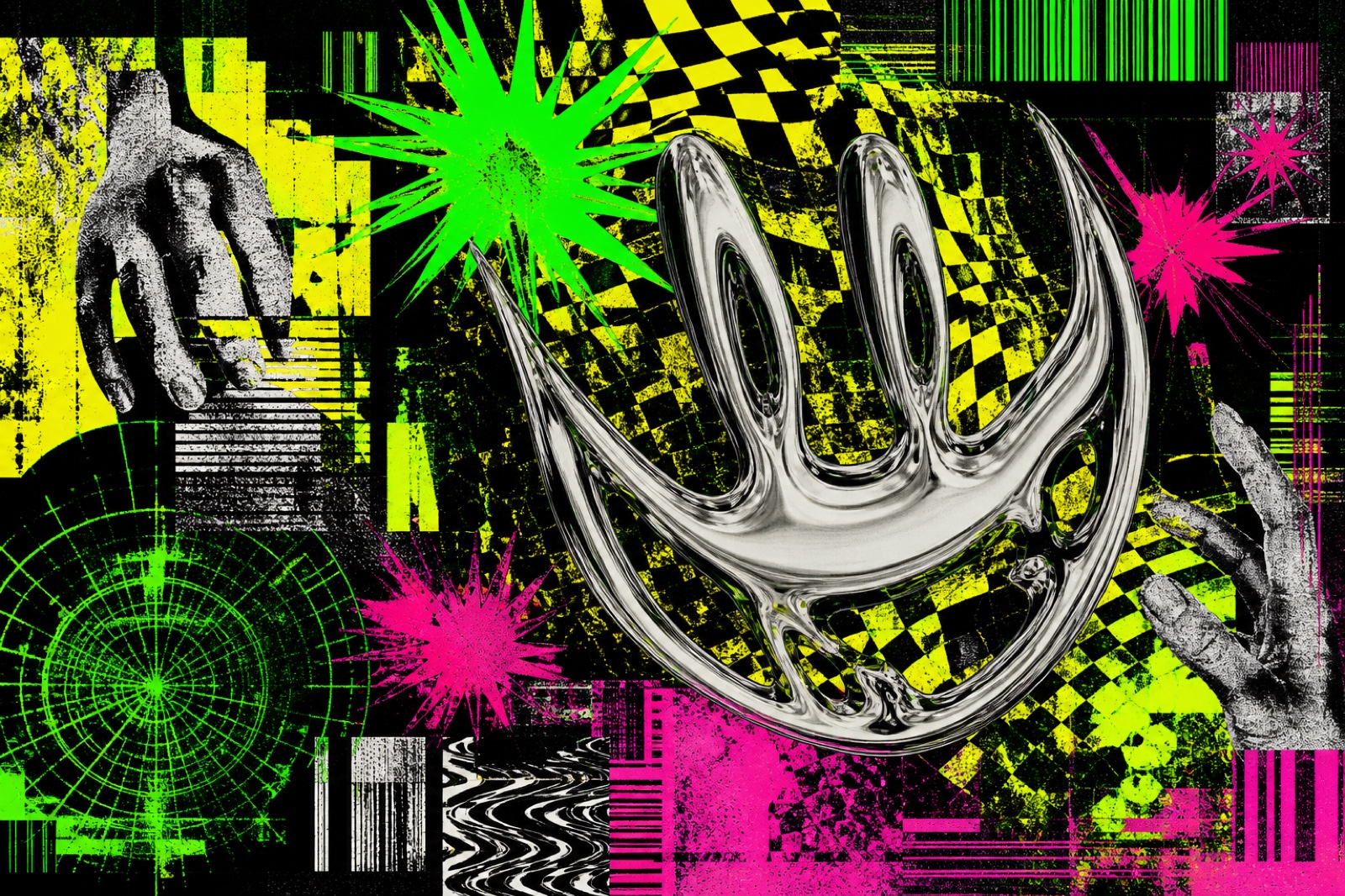
Rave culture graphics with warped faces, smiley icons, and toxic neon
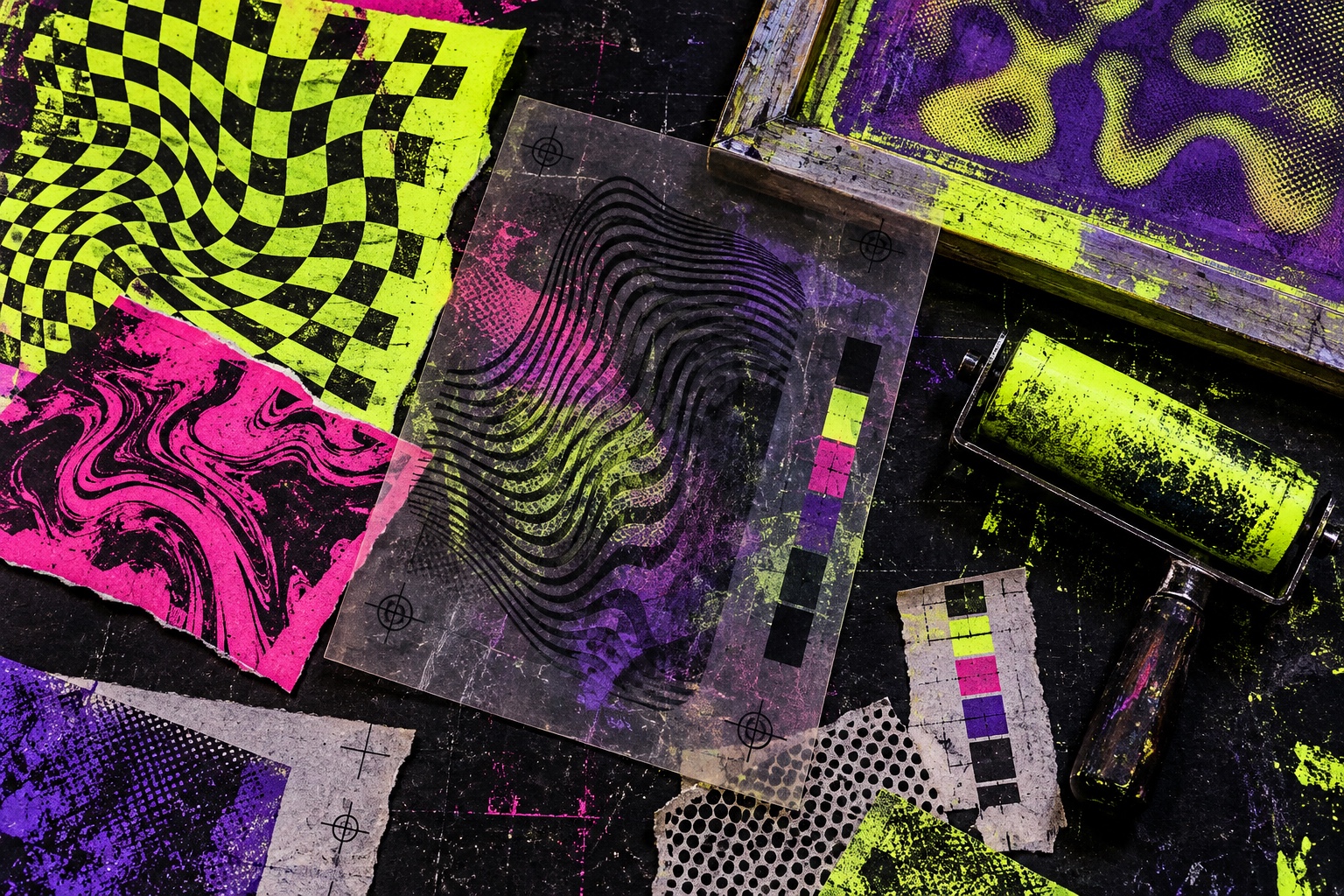
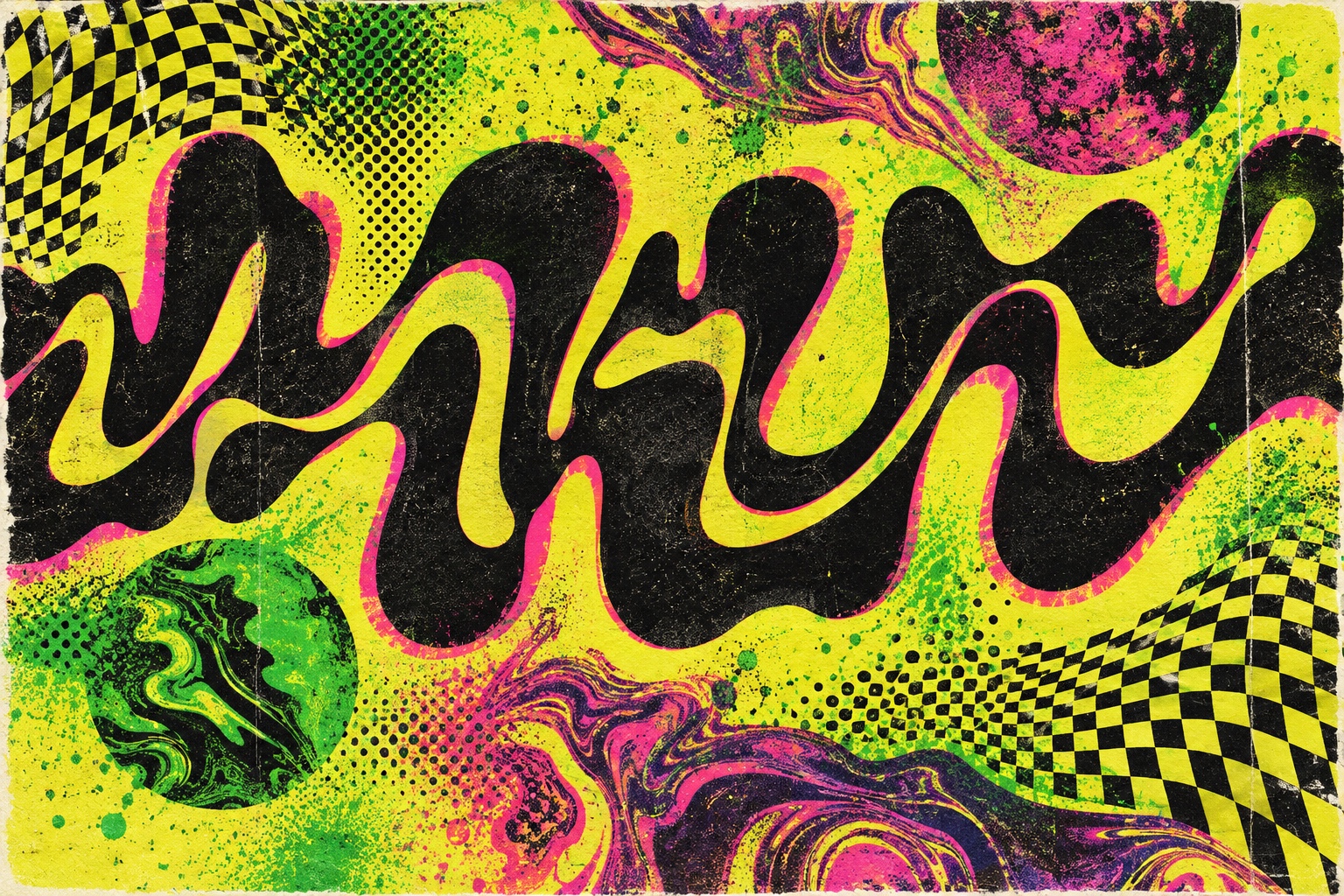
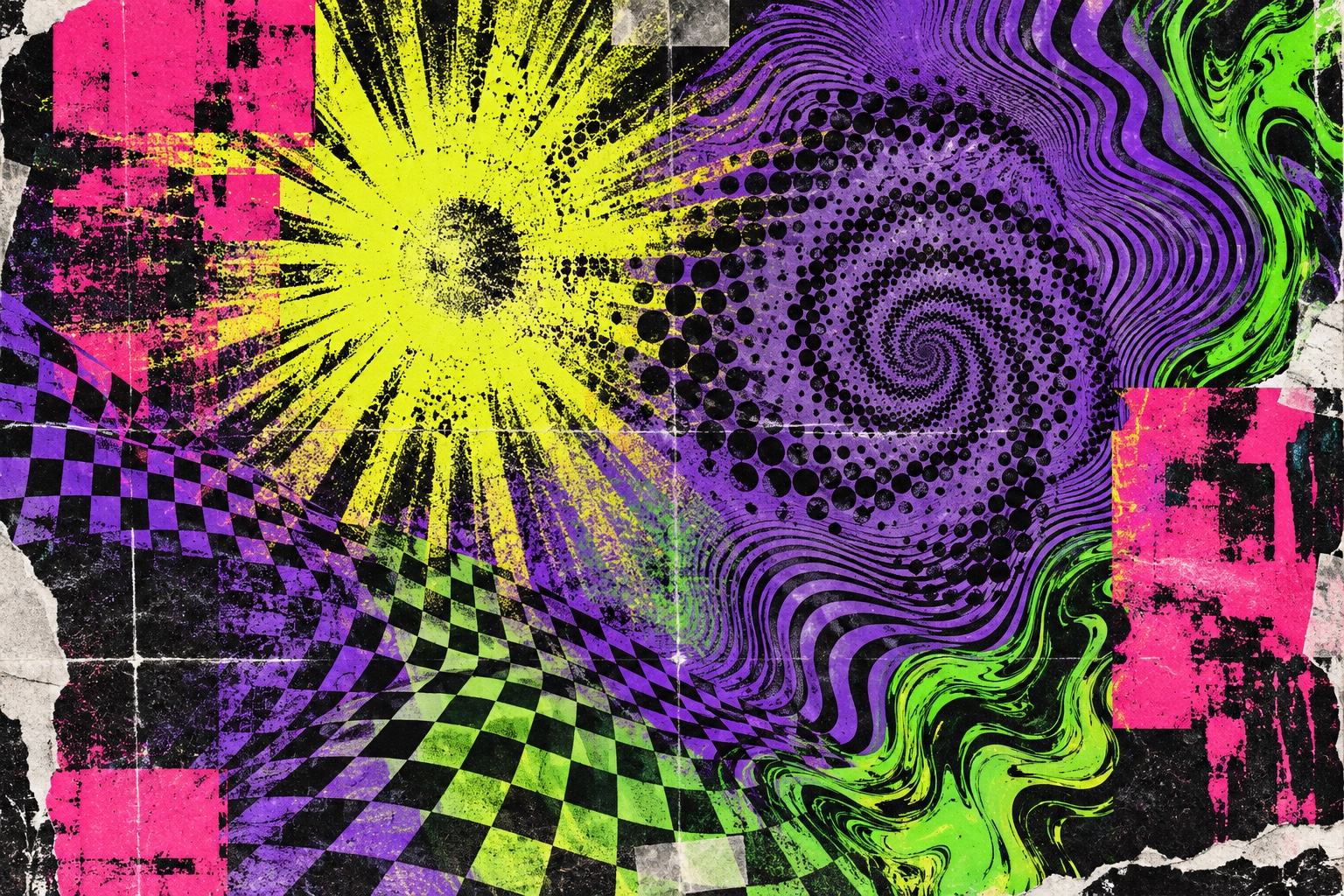
What it is, when it works, who it is for, and where it already exists.
Record 020-AC - when it works, who it is for, what it looks like
Where this aesthetic shows up in the real world · ↗ opens the source site
Where Acid came from, what makes it recognisable, and the fingerprint it leaves.
1987–1993 (original); revival 2012–present · Chicago, US (music); Manchester and London, UK (visual culture)
Acid House emerged from Chicago's black and Latino club scenes in 1985–1987, reaching the UK in 1987 where it ignited a cultural explosion. The music: Roland TB-303 basslines, repetitive 4/4 beats: combined with MDMA to create an ecstatic mass experience. The visuals followed: high-energy, disorienting, fluorescent.
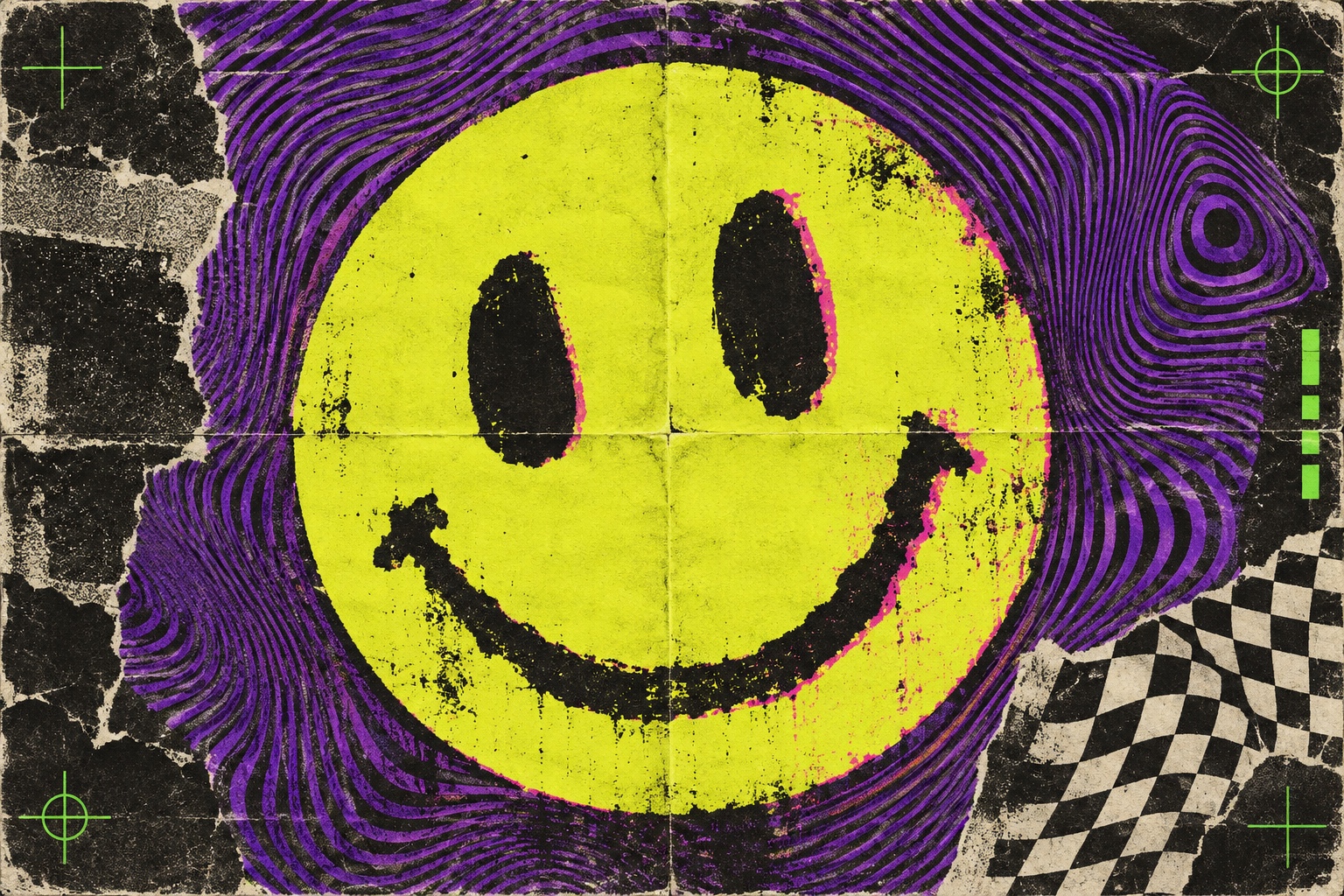
The yellow smiley face became the scene's emblem: originally a 1970s American commercial image repurposed by DJ Danny Rampling for his Shoom club night in 1988. From there it spread across UK club culture: flyers, t-shirts, flags. The palette expanded to neon greens, pinks, and oranges: the most saturated colors printable in the late 1980s, designed to be visible under UV black light.
Acid aesthetics persist as shorthand for euphoric, countercultural, and deliberately anti-sophisticated. 2010s revival acts including Jamie xx, Four Tet, and the DJ Koze aesthetic have reactivated the iconography, making it available to contemporary designers who want to signal underground authenticity and hedonistic joy.
“The yellow smiley face that swallowed British youth culture in 1988.
The visual DNA: what makes it recognisable
8-channel console with the fingerprint on its display. Save the card, or share the page

4 color interpretations of this aesthetic
The colour of the styles sitting closest to this one
How to shoot it, how to prompt it, and how to board it.
How to shoot this aesthetic
"The rave that started at midnight and never technically ended: fluorescent, hypnotic, and completely sincere"
Shot list
Lighting
UV-only environment for maximum impact; supplement with a single very brief strobe pop at 1/10,000 sec to freeze the face while the rest of the long exposure blurs the frozen face against motion blur is the signature acid image
Drop this into Studio to generate in this aesthetic
Acid house rave graphic design with smiley-face iconography, warped liquid typography, Day-Glo neon color intensity, 1988 UK rave-flyer aesthetic, swirling psychedelic tie-dye patterns, euphoric electronic-music visual energy
The record applied to your project. The record's kit is free; your brand, references and plates come with membership
01 · Hero application02 · Material and finish03 · Palette in context04 · Photography directionWhether to use it, what it costs to do properly, and where it stands right now.
Two written calls, seven meters, and when to walk away
Chrome and distortion are everywhere now, so execution is the only separator. Real acid work has a specific 3D quality, liquid metal with sharp environment reflections, not a gradient with a bevel, and the difference is a render decision. Push contrast until it hurts. The type should feel wet and deformed but still spellable at a glance.
Right for club and rave work where the flyer exists for one night and the people making it treat it as disposable. Chrome, distortion and unreadable type filter for an audience that already knows. Wrong in mainstream commercial work, where it loses the filter and becomes a texture: the scene notices and does not particularly mind, but the work stops doing anything.
Fully digital, no physical production.
Needs real rave-culture fluency, not just a warped smiley slapped on.
Warping and neon color work is a known digital technique.
A warped smiley without rave-culture fluency reads as a shallow reference.
A niche subculture reference, not broadly mainstream.
Tied to a specific rave-era revival that will eventually fade.
Fully digital, no physical production.
A Pro feature: origins, practitioners, and pitfalls
Neighbours, cross-references, blends, and the questions people ask.
Connected across the creative knowledge graph
Where it stands now, and what it costs you to use it
Acid graphics come out of the rave and club scene, and the people who make them mostly treat the work as disposable, because a flyer exists for one night.
Chrome, distortion and unreadable type are doing the same job punk's ransom note did, filtering for an audience that already knows.
Brought into mainstream commercial work it loses that filter and reads as a texture. The scene notices, and does not particularly mind, but the work stops doing anything.
Mix Acid with any style in the library
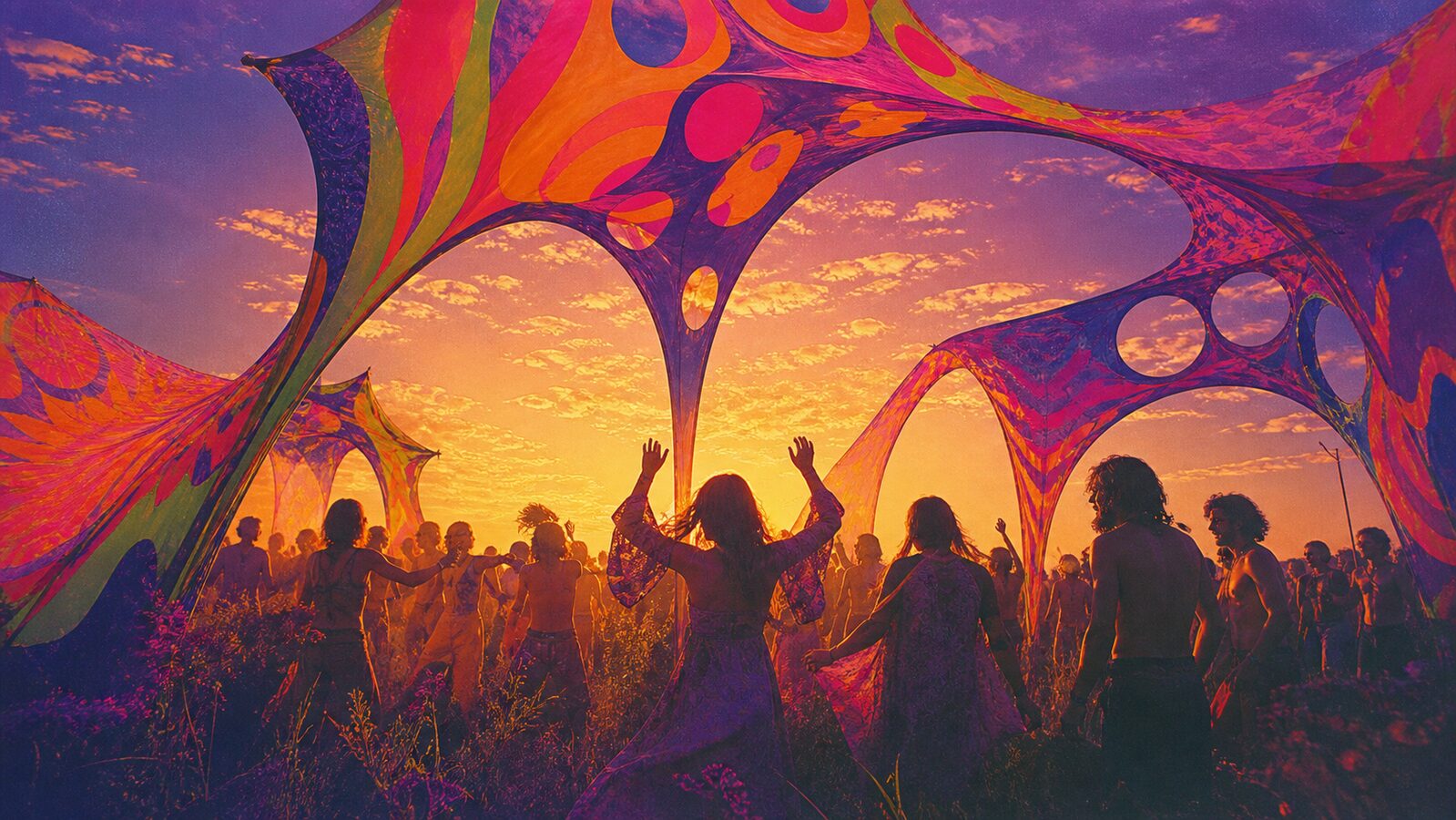 Acid 50%Psychedelic 50%
Merged palette
#0A0A0A
#FF00FF
#FF7700
#CCFF00
#00FF00
Leads maximal, expressive, chaotic
Typography · from Acid
Bebas Neue over Roboto
Materials
Use it
Acid house rave graphic design with smiley-face iconography, warped liquid typography, Day-Glo neon color intensity, 1988 UK rave-flyer aesthetic, swirling psychedelic tie-dye patterns, euphoric electronic-music visual energy (50%), infused with Psychedelic aesthetic with swirling kaleidoscopic patterns, Peter Max and Wes Wilson concert-poster lineage, electric neon color clashes, optical illusion spirals, 1967 Summer of Love mood, vibrant color halation and chromatic excess, color palette strictly #0A0A0A #FF00FF #FF7700 #CCFF00 #00FF00, overall character: maximal, expressive, chaotic
Acid house aesthetic is the visual culture of late-1980s UK rave and club scenes, centered on the yellow smiley face, day-glo neons (yellow #FFE600, neon green #00FF41, hot pink #FF007F), warped type, and psychedelic spirals. It emerged from Chicago house music culture and became a mass youth movement in the UK in 1988, defining the visual identity of warehouse raves and pirate radio.
Acid house palette is defined by maximum saturation and UV visibility: day-glo yellow (#FFE600), neon green (#39FF14), hot pink (#FF007F), and electric blue (#00BFFF), all on a black (#000000) ground. Colors were chosen for visibility under UV black light in darkened clubs and for maximum contrast on photocopied rave flyers.
The 'acid' in acid house refers to the Roland TB-303 bass synthesizer: which was described as having an 'acid' sound: not to LSD, though MDMA was widely associated with the scene. The 303 produces the distinctive squelchy, warbling basslines that define the music. The visual aesthetic followed the disorienting, hallucinatory quality of that sound.
Every style in the library is broken down like this one: the palette, the typography, the materials and the lineage.
Explore the style library →