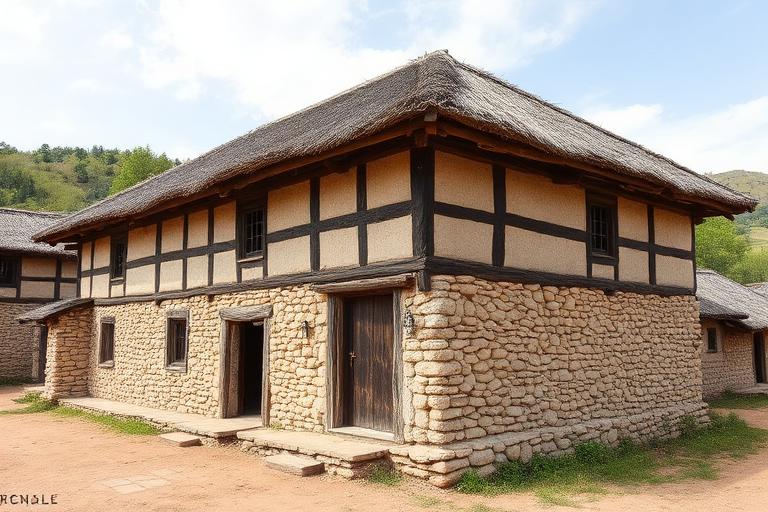
Critical Regionalism

Kenneth Frampton's theoretical weapon against placeless universalism - Álvaro Siza writing Portuguese light into every concrete wall, Glenn Murcutt threading corrugated iron through Australian bush, local material and climate elevated as resistance.

Compare Critical Regionalism with another style →See the Critical Regionalism typefaces →On the timeline · 1980s
Record020-AC
AestheticCritical Regionalism
ClassAnalog / Nostalgic
StatusINGESTING
Critical Regionalism aesthetic archive image
Archive plate · Critical Regionalism
01
The record

What it is, when it works, who it is for, and where it already exists.

How to use it

Record 020-AC - when it works, who it is for, what it looks like

FIELD 01

When to use it

  • Brand identity asserting place-specific identity against global homogenization
  • Architecture firm practice rooted in climate response and local material intelligence
  • Tourism and destination brand that positions specificity of place as the proposition
  • Cultural institution communicating a regional identity with global ambition
FIELD 02

Perfect for

  • Architecture firms with a geographically rooted and climate-responsive practice
  • Regional cultural institutions asserting local identity
  • Tourism boards and destination brands competing on authenticity
  • Conservation and heritage organizations defending the specificity of place

In the wild, Critical Regionalism aesthetic real-world examples

Where this aesthetic shows up in the real world · ↗ opens the source site

Omoro Style GuideEvery aesthetic, every field on this page, in one PDF.
$8Get the guide →
02
The anatomy

Where Critical Regionalism came from, what makes it recognisable, and the fingerprint it leaves.

History, Critical Regionalism aesthetic history

1983-present (as named theory) · Theoretical: Kenneth Frampton at Columbia University. Practice: global

Kenneth Frampton coined the term Critical Regionalism in his 1983 essay 'Towards a Critical Regionalism: Six Points for an Architecture of Resistance.' He argued that architecture faced two equally dangerous paths: nostalgic regionalism (copying local vernacular forms) and the universal placelessness of the International Style. Critical Regionalism proposed a third way: buildings that engaged with Modernist spatial and structural innovation while being rooted in specific place through their response to climate, topography, light, and local building culture.

Frampton pointed to architects already practicing this approach. Alvaro Siza in Portugal shaped buildings around the contours of hillside sites and filtered Atlantic light through precisely placed windows. Tadao Ando in Japan combined Le Corbusier's concrete with traditional Japanese spatial concepts. Jorn Utzon, Glenn Murcutt in Australia, and Luis Barragan in Mexico all demonstrated that Modernism could speak with regional accents without becoming parochial. The key distinction was 'critical': these architects did not replicate local forms but engaged with local conditions through modern means.

Critical Regionalism has become one of the most enduring theoretical frameworks in contemporary architecture. It anticipated the sustainability movement's emphasis on passive climate response, the post-colonial critique of Western architectural hegemony, and the current interest in local materials and construction cultures. When Diebedo Francis Kere builds schools in Burkina Faso using compressed earth and local labor, or when Studio Mumbai constructs buildings through traditional Indian craft practices, they are practicing what Frampton theorized.

Modern buildings that remember where they are.

Omoro dossier · 020-AC

Visual markers, Critical Regionalism aesthetic visual markers

The visual DNA: what makes it recognisable

typography

See the fonts
  • Typefaces that reflect regional typographic traditions
  • Bilingual or multilingual text acknowledging local language
  • Modest, contextually appropriate signage
  • Hand-lettered or craft-based approaches where culturally relevant

grid

  • Plans oriented to prevailing winds and sun paths
  • Building forms shaped by topographic contours
  • Covered outdoor spaces calibrated to local climate
  • Section-driven design responding to ground conditions

materials

  • Local stone, earth, and timber varying by region
  • Climate-responsive materials: thermal mass for hot climates, insulation for cold
  • Handcraft visible in material surfaces (brick bonds, timber joints)
  • Colors derived from local landscape: earth, vegetation, sky

motifs

  • Deep overhangs and loggias responding to local sun angles
  • Thick walls providing thermal mass in hot climates
  • Water features in arid climates for evaporative cooling
  • Landscape integrated as architectural material

Aesthetic profile

8-channel console with the fingerprint on its display. Save the card, or share the page

Aesthetic Profile
Critical Regionalism
Contemporary
1980–present
Attribute console · 020-AC
leans analog, nostalgic, warm
8 CH
FIG. 1
MinimalMaximalAnalogDigitalExpressiveRestrainedWarmCoolNostalgicFuturisticStructuredChaoticLightDarkOrganicGeometric
01Minimal
Maximal10%
02Analog
Digital40%
03Restrained
Expressive20%
04Cool
Warm30%
05Futuristic
Nostalgic40%
06Structured
Chaotic30%
07Dark
Light20%
08Organic
Geometric10%
AnalogNostalgicWarm8 materials
Omoro · Attribute console · 020-AC
omoro.io/styles/arch-critical-regionalism

Material assembly

The style's primary materials, assembled bottom-up

Tap a stratum for material detail · Full catalog

Place in history

Contemporary · 1980–present - tap any style to travel

Color Palettes, Critical Regionalism color palettes and hex codes

4 color interpretations of this aesthetic

Critical Regionalism
#3C2C1C · #9E7A5A · #D4B898 · #F0E0CC · #1A1810
Local material and climate elevated against global homogenization
Siza Limestone
#1A1810 · #807060 · #B8A890 · #D8D0C0 · #F0ECE4
Álvaro Siza: Portuguese limestone catching late Atlantic light
Murcutt Verandah
#181808 · #5A6830 · #908880 · #C0B8A0 · #E8E0D0
Corrugated steel and eucalyptus shade in the Australian bush
Barragán Wall
#2A1008 · #C84870 · #D08830 · #A07060 · #F0E0D0
Luis Barragán's Mexican pink and volcanic stone in slanting light
Omoro Palette Pack575 curated palettes across every aesthetic, 5 export formats.
$8Get the palettes →

Adjacent Palettes, styles related to Critical Regionalism

The colour of the styles sitting closest to this one

Vernacular Architecture
Contextualism
Tropical Modernism
Organic Architecture
03
The direction

How to shoot it, how to prompt it, and how to board it.

Photo Direction

How to shoot this aesthetic

"Modern principles, translated into the local dialect"

Shot list

  • Wide shot showing modernist form built from unmistakably local material
  • Detail shot of a craft technique local stone, timber joinery specific to the region
  • Wide shot demonstrating the building's response to local climate deep eaves, shaded courtyards

Lighting

Natural light specific to the region's own climate and latitude the whole point is site-specificity, so shoot in the actual conditions the building was designed for

Omoro Director's Briefs151 photo shot-lists like this one, ready to shoot from.
$8Get the briefs →

Generative Prompt

Drop this into Studio to generate in this aesthetic

Critical Regionalist architecture blending modernist principles with local climate, material, and craft tradition, resistance to placeless global style, tectonic honesty, architecture rooted in a specific site and culture

Paste as-is, or append your own subject

Mood Board

The record applied to your project. The record's kit is free; your brand, references and plates come with membership

Mood board
The Critical Regionalism board
8 frames · 4 selected
FIG. 4
Cliff Shadow3C2C1CWarm Stone9E7A5ALimestoneD4B898Atlantic LightF0E0CCBush Dark1A1810
Brand and references
IdleBrand and references open with membership
With membership: the brand's own facts and colours in every prompt, references carried into every frame, and the plates generated.
01 · Hero application
02 · Material and finish
03 · Palette in context
04 · Photography direction
05 · Pattern plate
06 · Object
07 · Environment
08 · Digital presence
Demo kit free, the rest with membershipThe record as a demo kit, free. Name a project and it is written for that
Omoro · Mood board · 020-AC
04
The judgement

Whether to use it, what it costs to do properly, and where it stands right now.

Creative verdict, Critical Regionalism feasibility and strategic recommendation

Two written calls, seven meters, and when to walk away

Creative verdict
Should Critical Regionalism be the call?
7 meters
FIG. 2
Assessment

The balance is genuinely difficult to hold. Frampton's argument was resistance to placelessness without retreating into folklore, and most attempts land on one side or the other. Take the climate response and the material, leave the ornament. The test is whether a local builder recognises the logic, not whether a visitor recognises the picture.

Verdict

More relevant now than when it was written, because it addresses exactly the condition the field is in: global practice converging. Right when you want to take from a place without romanticising it, which is what the word critical is doing. Wrong if what you actually want is folk revival, and the distinction is the whole position.

Production cost
High

Local material and climate response, built for real, not simulated.

Creative difficulty
High

Resisting placeless universalism with real local specificity.

Execution difficulty
High

Threading material through climate and site takes real technical judgment.

Risk of misuse
Medium

Resisting placeless universalism only works with real local specificity, not a slogan.

Prevalence
Rare

A niche, theory-driven reference in architecture circles.

Longevity
Enduring

A durable theoretical position, still actively cited today.

Brand investment
High

Local material and climate response, built for real.

Avoid if
The project has no real relationship to a specific place
This position exists specifically to resist placeless, generic design.
The climate and material response is superficial
Without real local specificity, this is just a slogan, not a position.
Omoro · Creative verdict · 020-AC

Editorial Depth

A Pro feature: origins, practitioners, and pitfalls

Editorial depth
The Critical Regionalism file
14 sections
FIG. 3
Context02Brands02Perception04Use04Index02
01Common MisconceptionThe principle beneath the surface
02Historical ContextOrigins, cultural moment, and reaction
03Brands That Accidentally Use This StyleNatural alignment, not category claims
04Brands That Perfectly Represent This StyleExceptional execution
05Psychological EffectHow visual decisions change perception
06Visual ChecklistInclude and avoid
07Creative FormulaThe visual system reduced to essentials
08Recognition SignalsHow to recognize it in two seconds
09When To Use This StyleContexts where the language performs
10Common Creative MistakesWhere imitation weakens the signal
11Best Brand ApplicationsIndustries with a natural advantage
12Creative Application AnalysisFit, feasibility, and production reality
13Related StylesClose languages and the key distinction
14Visual DNA SummaryThe sentence to remember
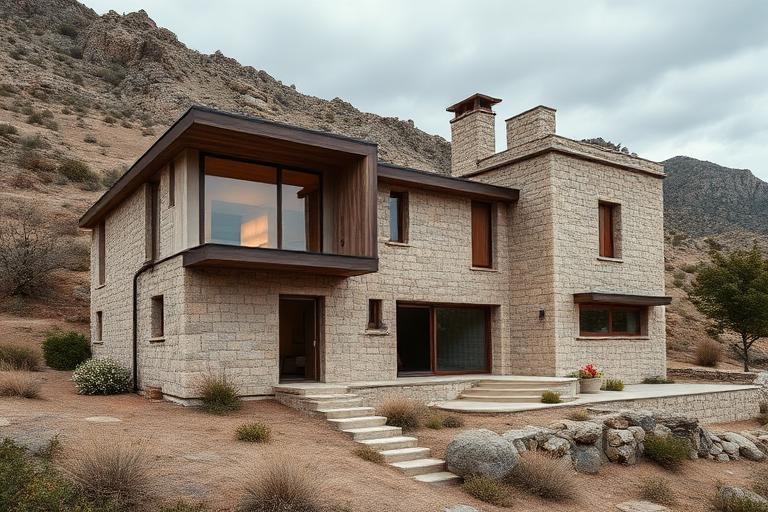
The editorial depth, with membershipOpening soon
Omoro · Editorial depth · 020-AC
05
The index

Neighbours, cross-references, blends, and the questions people ask.

Related concepts

Connected across the creative knowledge graph

Cultural relevance, Critical Regionalism cultural relevance today

Where it stands now, and what it costs you to use it

Critical regionalism was formulated as a middle path, resisting both the sameness of international modernism and the nostalgia of historical pastiche, and it remains one of the more useful positions in the field.

The key word is critical: it takes from a place without romanticising it, which is what separates it from folk revival.

It has become more relevant as global practice has converged, which is precisely the condition it was written to address.

Cross-references

Vernacular ArchitectureCritical Regionalism draws on vernacular knowledge without copying vernacular formsContextualismContextualism engages with immediate urban fabric; Critical Regionalism with broader regional identitySustainable ArchitectureCritical Regionalism's climate responsiveness anticipated sustainable design

Blend

Mix Critical Regionalism with any style in the library

Critical Regionalism×
50%50%
96% alike
Critical Regionalism referenceVernacular Architecture referenceCritical Regionalism 50%Vernacular Architecture 50%

Merged palette

#3C2C1C

#5C3D2E

#9E7A5A

#D4B898

#F0E0CC

Leads analog, nostalgic, warm

Typography · from Critical Regionalism

Raleway over Merriweather

Materials

  • Local stone, earth, and timber varying by region
  • Climate-responsive materials: thermal mass for hot climates, insulation for cold
  • Mud brick and adobe: #C4A87C, #B89868, #A08858

Use it

Critical Regionalist architecture blending modernist principles with local climate, material, and craft tradition, resistance to placeless global style, tectonic honesty, architecture rooted in a specific site and culture (50%), infused with Vernacular architecture built from local material and inherited regional technique, climate-responsive form passed down through generations of builders, unpretentious functional honesty, deep connection to place and available resource, color palette strictly #3C2C1C #5C3D2E #9E7A5A #D4B898 #F0E0CC, overall character: analog, nostalgic, warm

One-click generation opens with the studio

About this aesthetic

What is Critical Regionalism?

Critical Regionalism is an architectural theory proposed by Kenneth Frampton in 1983. It advocates buildings that engage with Modernist innovation while responding to local climate, topography, light, and building culture. It rejects both nostalgic historicism and placeless universalism.

Who practices Critical Regionalism?

Architects associated with Critical Regionalism include Alvaro Siza (Portugal), Tadao Ando (Japan), Glenn Murcutt (Australia), Luis Barragan (Mexico), Diebedo Francis Kere (Burkina Faso/Germany), and Studio Mumbai (India). Each engages with local conditions through modern formal and structural means.

Is Critical Regionalism anti-modern?

No. It is a critique from within Modernism, not a rejection of it. Critical Regionalism uses modern structural and spatial concepts but insists they be inflected by specific place. Frampton's argument was that Modernism went wrong when it became universal and placeless, not when it rejected ornament.

Build with the critical regionalism aesthetic

Every style in the library is broken down like this one: the palette, the typography, the materials and the lineage.

Explore the style library →