Tropical Modernism

Modernism rewritten by monsoon - Geoffrey Bawa's Sri Lankan courtyard bungalows dissolving into garden, Correa's tube houses pulling breeze through section, Niemeyer's Brasília swooping under the cerrado sky: Modernism learned to sweat.

Compare Tropical Modernism with another style →See the Tropical Modernism typefaces →On the timeline · 1950s
Record020-AT
AestheticTropical Modernism
ClassWarm / Light
StatusINGESTING
Tropical Modernism aesthetic archive image
Archive plate · Tropical Modernism
Tropical Modernism aesthetic: World dossier scene
Dossier sceneWorld · 1/6
01
The record

What it is, when it works, who it is for, and where it already exists.

How to use it

Record 020-AT - when it works, who it is for, what it looks like

FIELD 01

When to use it

  • Brand identity for tropical resort, hospitality, or wellness brand communicating climate intelligence
  • Architecture firm practice rooted in climate-responsive tropical design
  • Real estate developer brand in Southeast Asia, India, Brazil, or Caribbean markets
  • Cultural institution communicating postcolonial design modernity in global south contexts
FIELD 02

Perfect for

  • Luxury tropical resort and eco-lodge brands in Asia, Africa, and Latin America
  • Architecture firms practicing in tropical climates with a climate-responsive methodology
  • Real estate developers in Singapore, Bali, Sri Lanka, and Brazil
  • Cultural institutions in postcolonial cities celebrating local modernist heritage

In the wild, Tropical Modernism aesthetic real-world examples

Where this aesthetic shows up in the real world · ↗ opens the source site

Omoro Style GuideEvery aesthetic, every field on this page, in one PDF.
$8Get the guide →
02
The anatomy

Where Tropical Modernism came from, what makes it recognisable, and the fingerprint it leaves.

History, Tropical Modernism aesthetic history

1950s-present · South and Southeast Asia, West Africa, Brazil

Tropical Modernism emerged when architects in post-colonial nations adapted Modernist principles to hot, humid climates that European Modernism had never addressed. Geoffrey Bawa in Sri Lanka, Balkrishna Doshi in India, and the partnership of Maxwell Fry and Jane Drew in West Africa were pioneers, developing strategies for shade, ventilation, and rain management that the International Style's glass curtain walls could never provide. Their buildings breathed: louvered walls, deep overhangs, courtyards, and cross-ventilation replaced the sealed, air-conditioned box.

Bawa's Parliament of Sri Lanka (1982), set on an island in a lake, and his Kandalama Hotel (1994), carved into a hillside and gradually consumed by jungle, demonstrated that Modernist spatial ambitions and tropical climate response were not only compatible but could produce architecture of extraordinary power. Doshi's Indian Institute of Management Bangalore (1992) and his own studio, Sangath (1981), used vaulted roofs, water channels, and garden courtyards to create naturally cooled working environments in one of the world's hottest climates.

Tropical Modernism has experienced a critical reassessment in recent years. The V&A mounted a major exhibition in 2023. Contemporary architects including Studio Mumbai (India), WOHA (Singapore), and Francis Kere (Burkina Faso/Germany) continue to develop architecture that responds to tropical conditions with modern means. As air conditioning's carbon cost becomes untenable, Tropical Modernism's passive strategies are recognized as essential knowledge rather than regional curiosities.

The modern building that learned to sweat.

Omoro dossier · 020-AT

Visual markers, Tropical Modernism aesthetic visual markers

The visual DNA: what makes it recognisable

typography

See the fonts
  • Humanist sans-serifs: Gill Sans, Calibre, Source Sans
  • Light weights reflecting visual lightness of brise-soleil
  • Bilingual text reflecting post-colonial cultural contexts
  • Generous spacing reflecting architectural openness

grid

  • Deep overhangs and verandas creating shaded transition zones
  • Cross-ventilated plans with openings on opposing walls
  • Courtyards as climate-moderating organizing elements
  • Elevated ground floors for air circulation beneath the building

materials

  • Exposed laterite and local stone: #B87840, #A06830, #C88850
  • Fair-faced concrete with tropical aggregate: #B0A898, #A09888
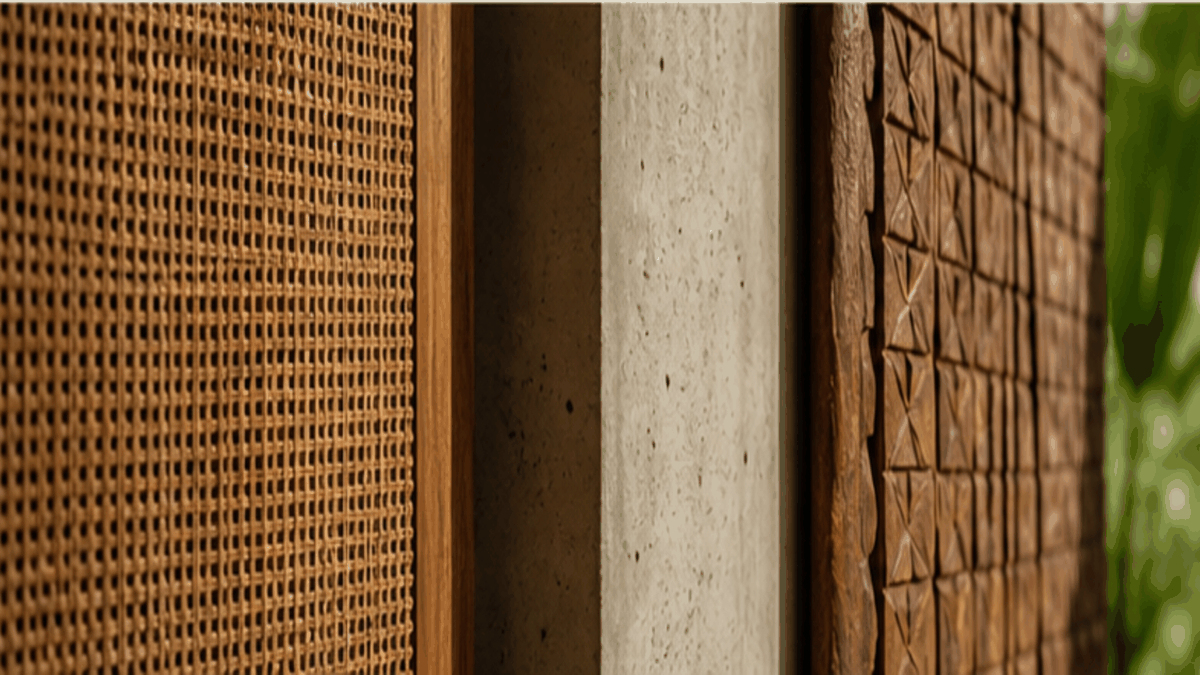
  • Timber louvers and screens: #8C6840, #7C5830
  • Terracotta tile roofing and flooring: #C87050, #B86040

motifs

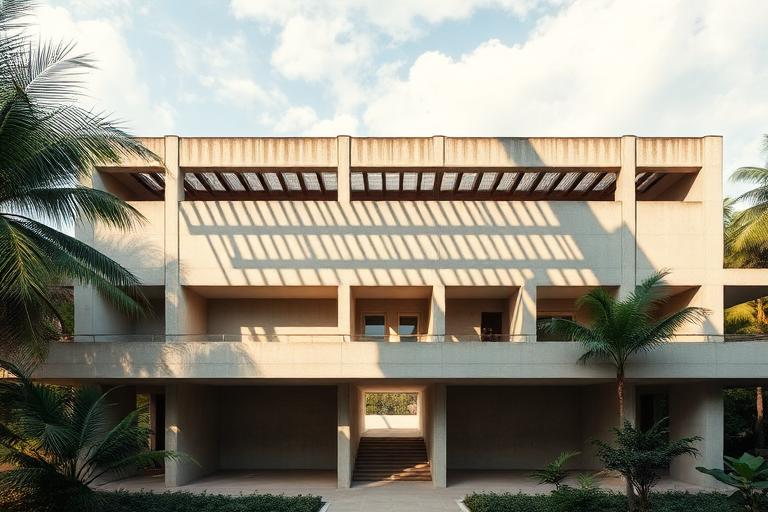
  • Brise-soleil (sun-breaking louvers) on sun-facing facades
  • Perforated concrete screens (jaali) filtering light and air
  • Water features for evaporative cooling
  • Planted roofs and living walls merging building with jungle

Aesthetic profile

8-channel console with the fingerprint on its display. Save the card, or share the page

Aesthetic Profile
Tropical Modernism
Postwar
1950–1975
Attribute console · 020-AT
leans warm, light, structured
8 CH
FIG. 1
MinimalMaximalAnalogDigitalExpressiveRestrainedWarmCoolNostalgicFuturisticStructuredChaoticLightDarkOrganicGeometric
01Minimal
Maximal20%
02Analog
Digital30%
03Restrained
Expressive20%
04Cool
Warm60%
05Futuristic
Nostalgic20%
06Structured
Chaotic40%
07Dark
Light50%
08Organic
Geometric30%
WarmLightStructured3 materials
Omoro · Attribute console · 020-AT
omoro.io/styles/arch-tropical-modernism

Material assembly

The style's primary materials, assembled bottom-up

Tap a stratum for material detail · Full catalog

Place in history

Postwar · 1950–1975 - tap any style to travel

Color Palettes, Tropical Modernism color palettes and hex codes

4 color interpretations of this aesthetic

Tropical Modernism
#1A3A1A · #3A6B3A · #D4B87A · #F0E0B0 · #5A4020
Modernism adapted to heat and monsoon, breeze pulled through section
Bawa Garden
#0C1808 · #2A6030 · #5A4020 · #A09070 · #D0C8A8
Geoffrey Bawa: Sri Lankan bungalow dissolving into monsoon garden
Niemeyer Tropical
#141418 · #C84020 · #3870B8 · #A0A098 · #F0ECE0
Oscar Niemeyer: free-form concrete under Brasília's tropical sun
Tropical Screen
#181818 · #385838 · #808878 · #C8C0B0 · #F0E8D8
Perforated concrete breeze block: ventilation as pattern
Omoro Palette Pack575 curated palettes across every aesthetic, 5 export formats.
$8Get the palettes →

Adjacent Palettes, styles related to Tropical Modernism

The colour of the styles sitting closest to this one

Organic Architecture
Critical Regionalism
Vernacular Architecture
Scandinavian Architecture
03
The direction

How to shoot it, how to prompt it, and how to board it.

Photo Direction

How to shoot this aesthetic

"Modernism, taught to breathe in the heat instead of fighting it"

Shot list

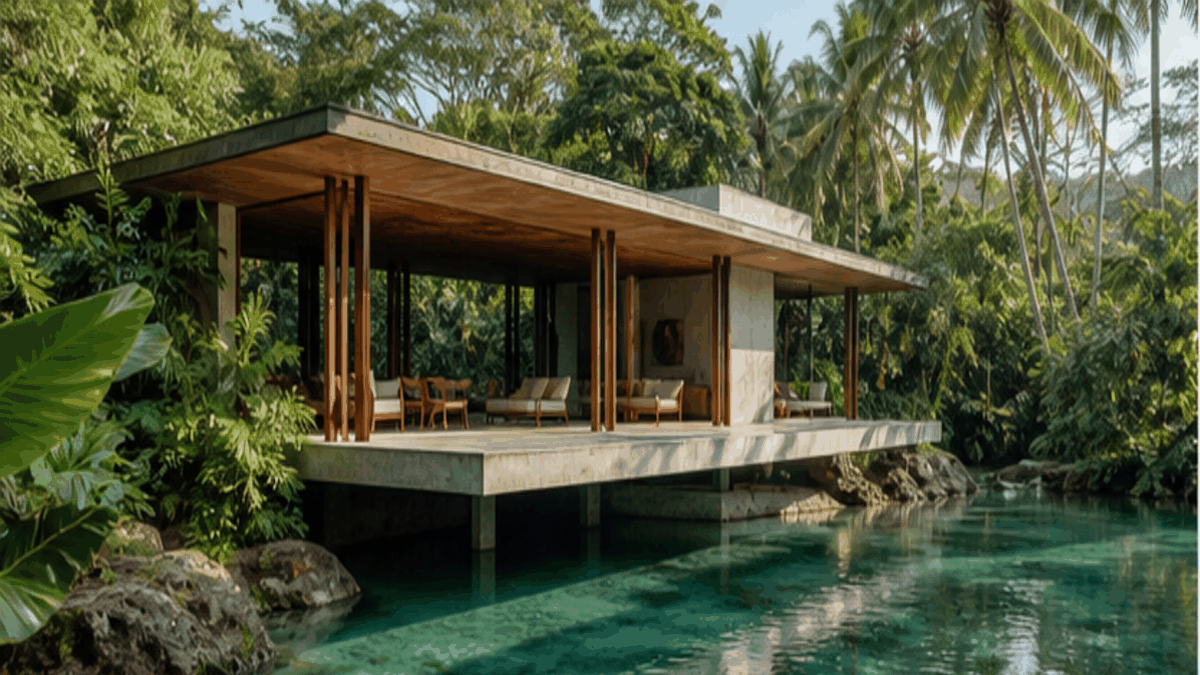
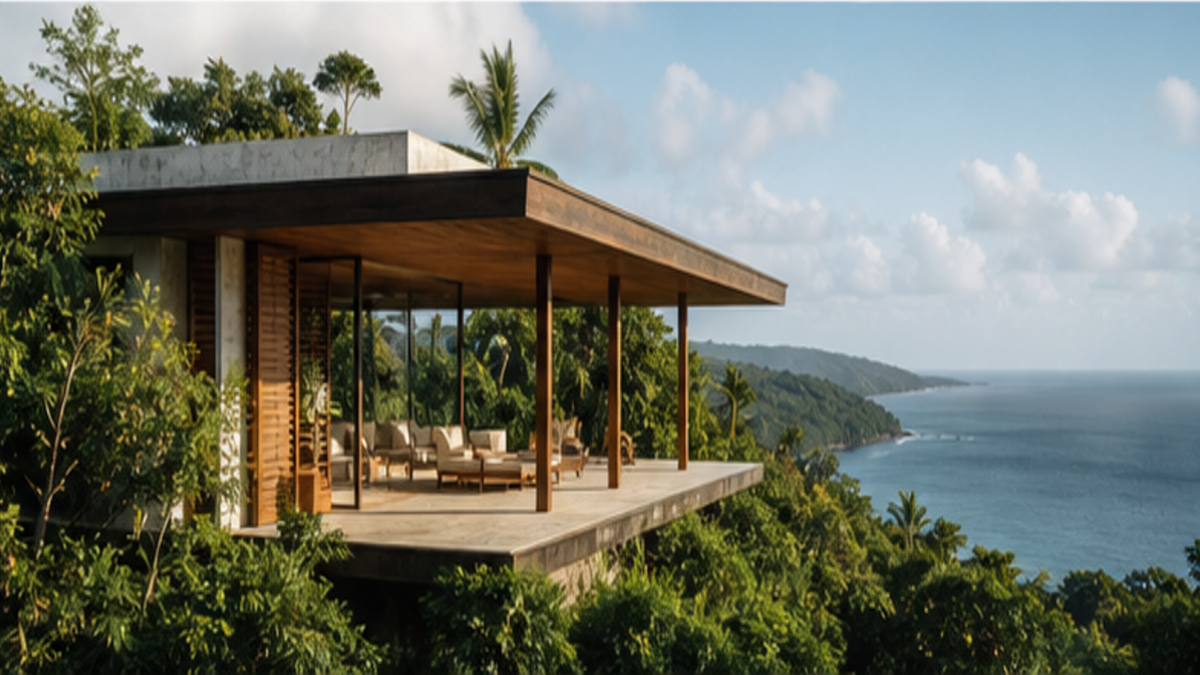
  • Wide shot of an open-air pavilion structure under lush equatorial foliage
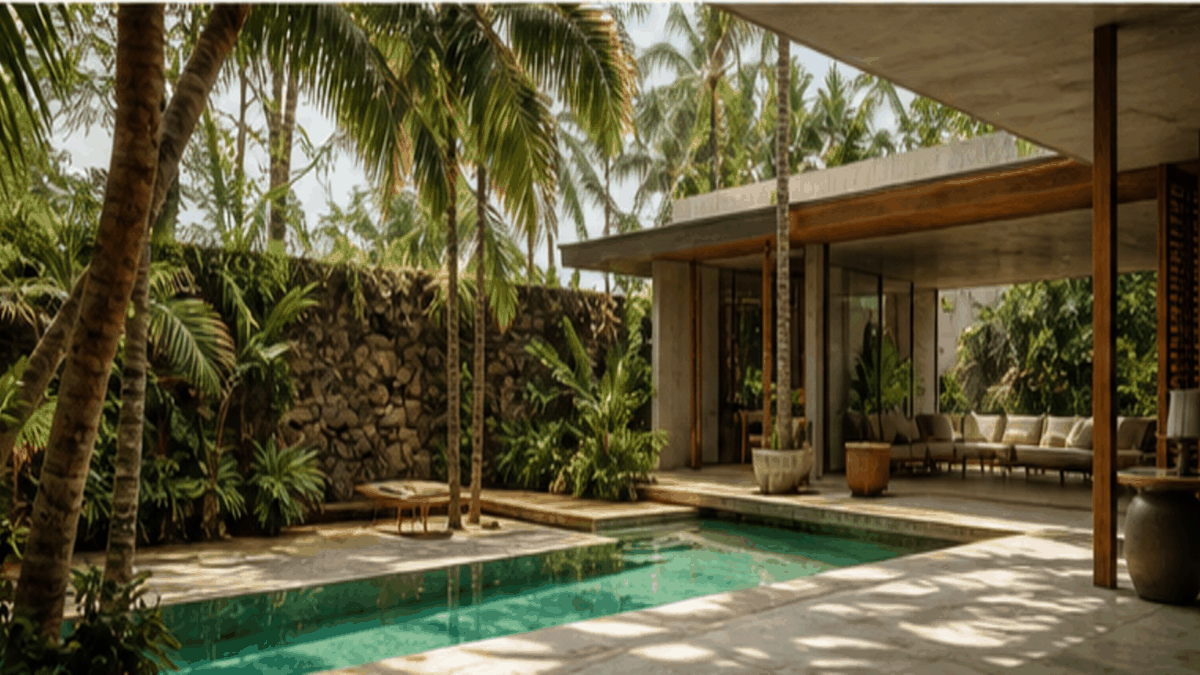
  • Detail shot of warm dappled sunlight filtering through a palm canopy onto the building
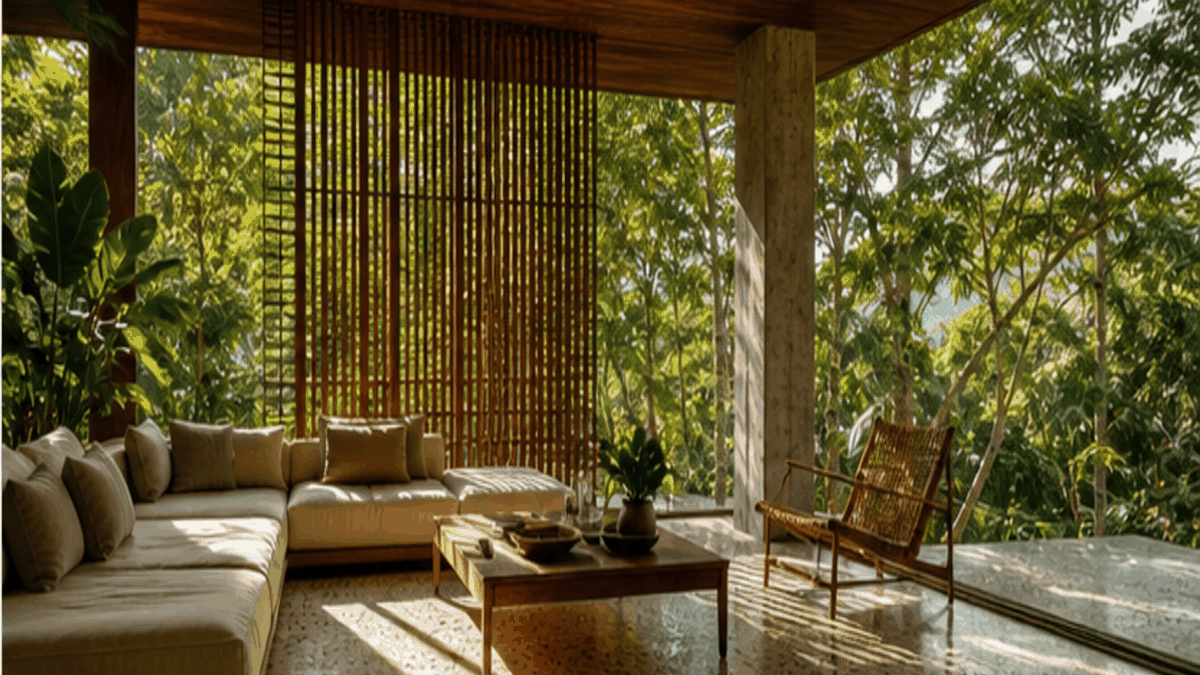
  • Interior shot with rattan or teak material against tropical natural light

Lighting

Warm, dappled natural light filtered through surrounding foliage the entire style depends on this specific quality of shaded tropical daylight

Omoro Director's Briefs151 photo shot-lists like this one, ready to shoot from.
$8Get the briefs →

Generative Prompt

Drop this into Studio to generate in this aesthetic

Tropical modern aesthetic with lush equatorial foliage, open-air pavilion architecture, warm dappled sunlight through palm canopy, rattan and teak materials, resort-level refinement

Paste as-is, or append your own subject

Mood Board

The record applied to your project. The record's kit is free; your brand, references and plates come with membership

Mood board
The Tropical Modernism board
8 frames · 4 selected
FIG. 4
Jungle Dark1A3A1AMonsoon Green3A6B3ALateriteD4B87ATropic LightF0E0B0Timber Column5A4020
Brand and references
IdleBrand and references open with membership
With membership: the brand's own facts and colours in every prompt, references carried into every frame, and the plates generated.
01 · Hero application
02 · Material and finish
03 · Palette in context
04 · Photography direction
05 · Pattern plate
06 · Object
07 · Environment
08 · Digital presence
Demo kit free, the rest with membershipThe record as a demo kit, free. Name a project and it is written for that
Omoro · Mood board · 020-AT
04
The judgement

Whether to use it, what it costs to do properly, and where it stands right now.

Creative verdict, Tropical Modernism feasibility and strategic recommendation

Two written calls, seven meters, and when to walk away

Creative verdict
Should Tropical Modernism be the call?
7 meters
FIG. 2
Assessment

Every move answers heat and rain. Deep overhangs, cross ventilation, raised floors and brise-soleil are climate responses, and copying them into a temperate site makes them ornament, which is the usual misuse. Size the shading to the actual sun path. Air movement is the design goal, so a sealed, air-conditioned version defeats the whole logic.

Verdict

Directly relevant to a warming world, which is why it is being studied again: deep shade, cross-ventilation and breeze block are climate strategies, not styling. Its politics are contested and worth stating, since it was both an instrument of empire and, after independence, the language new nations chose to build themselves with.

Production cost
High

Sectional design for monsoon climate. Real environmental engineering.

Creative difficulty
High

Modernism rewritten by climate, not just modernism with plants.

Execution difficulty
High

Pulling breeze through a section only works if the physics actually works.

Risk of misuse
Medium

Modernism with plants isn't the same as modernism rewritten by climate.

Prevalence
Common

Growing as climate-responsive design gets more attention globally.

Longevity
Enduring

Genuinely solves a climate problem, which keeps it relevant.

Brand investment
High

Sectional design for monsoon climate, real environmental engineering.

Avoid if
The climate isn't actually hot and humid
This was built to solve monsoon-climate problems. It doesn't transfer casually.
The sectional design is decorative, not functional
Modernism with plants isn't the same as modernism rewritten by real climate response.
Omoro · Creative verdict · 020-AT

Editorial Depth

A Pro feature: origins, practitioners, and pitfalls

Editorial depth
The Tropical Modernism file
14 sections
FIG. 3
Context02Brands02Perception04Use04Index02
01Common MisconceptionThe principle beneath the surface
02Historical ContextOrigins, cultural moment, and reaction
03Brands That Accidentally Use This StyleNatural alignment, not category claims
04Brands That Perfectly Represent This StyleExceptional execution
05Psychological EffectHow visual decisions change perception
06Visual ChecklistInclude and avoid
07Creative FormulaThe visual system reduced to essentials
08Recognition SignalsHow to recognize it in two seconds
09When To Use This StyleContexts where the language performs
10Common Creative MistakesWhere imitation weakens the signal
11Best Brand ApplicationsIndustries with a natural advantage
12Creative Application AnalysisFit, feasibility, and production reality
13Related StylesClose languages and the key distinction
14Visual DNA SummaryThe sentence to remember
The editorial depth, with membershipOpening soon
Omoro · Editorial depth · 020-AT
05
The index

Neighbours, cross-references, blends, and the questions people ask.

Related concepts

Connected across the creative knowledge graph

Cultural relevance, Tropical Modernism cultural relevance today

Where it stands now, and what it costs you to use it

Tropical modernism adapted the modernist vocabulary to heat and monsoon, and it developed in West Africa and South Asia during the final decades of colonial rule.

Its politics are contested: it was both an instrument of empire and, after independence, the language new nations chose to build themselves with.

The climate strategies, deep shade, cross-ventilation, breeze block, are directly relevant to a warming world and are being studied again for exactly that reason.

Cross-references

Critical RegionalismTropical Modernism is Critical Regionalism's most climatically specific expressionSustainable ArchitectureTropical Modernism's passive strategies anticipate sustainable designVernacular ArchitectureTropical Modernism draws on indigenous building knowledge for climate response

Blend

Mix Tropical Modernism with any style in the library

Tropical Modernism×
50%50%
81% alike
Tropical Modernism referenceOrganic Architecture referenceTropical Modernism 50%Organic Architecture 50%

Merged palette

#1A3A1A

#2E3D1F

#3A6B3A

#5C7A3E

#D4B87A

Leads organic, warm, light

Typography · from Tropical Modernism

Poppins over Manrope

Materials

  • Exposed laterite and local stone: #B87840, #A06830, #C88850
  • Fair-faced concrete with tropical aggregate: #B0A898, #A09888
  • Local stone in rough-cut or rubble walls: #8A7C6C, #A09080, #7C6E5E

The calls this blend forces

These two disagree on one thing, and a blend cannot average them: you pick a side. At this mix:

Structured or Chaotic? Tropical Modernism is structured, Organic Architecture is chaotic. This mix lands structured.

Use it

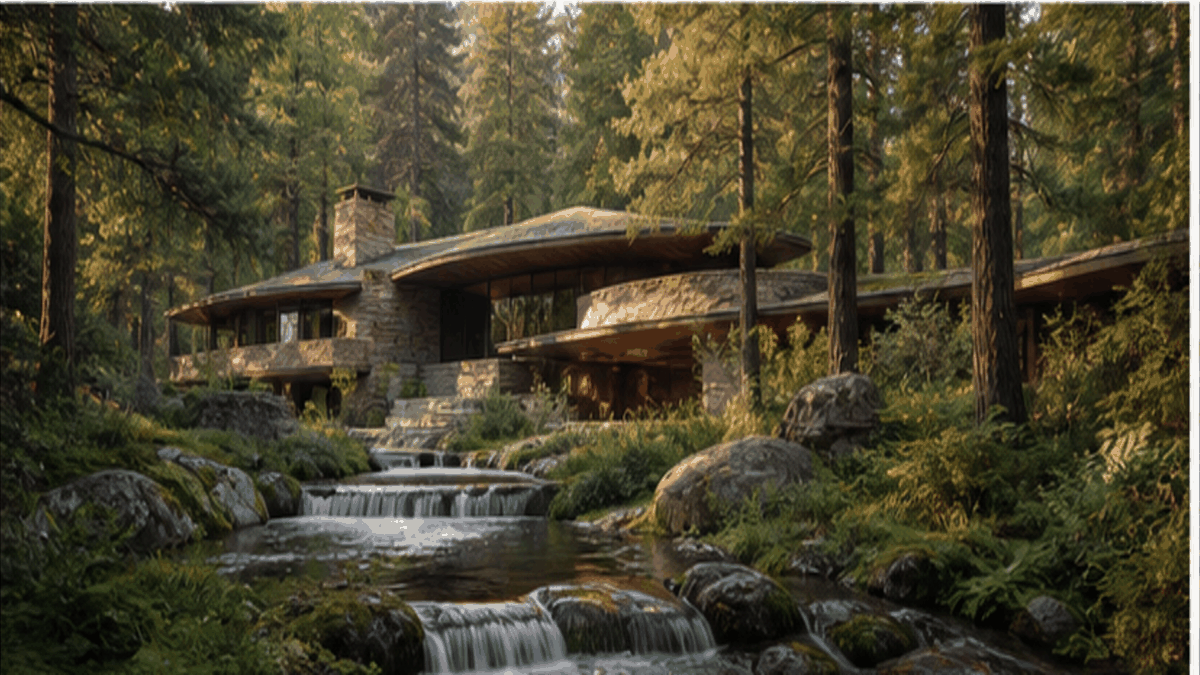
Tropical modern aesthetic with lush equatorial foliage, open-air pavilion architecture, warm dappled sunlight through palm canopy, rattan and teak materials, resort-level refinement (50%), infused with Frank Lloyd Wright organic architecture with horizontal prairie lines, integration with natural landscape, Fallingwater-inspired cantilevers over water, Usonian warmth, natural stone and wood, color palette strictly #1A3A1A #2E3D1F #3A6B3A #5C7A3E #D4B87A, leaning structured over chaotic, overall character: organic, warm, light

One-click generation opens with the studio

About this aesthetic

What is Tropical Modernism?

Tropical Modernism adapts Modernist architecture to hot, humid climates through deep overhangs, cross-ventilation, brise-soleil, courtyards, and local materials. Developed in post-colonial nations of South Asia, Southeast Asia, West Africa, and Brazil from the 1950s onward, it rejects the sealed glass box in favor of buildings that breathe.

Who are the key Tropical Modernist architects?

Geoffrey Bawa (Sri Lanka), Balkrishna Doshi (India), Oscar Niemeyer and Lina Bo Bardi (Brazil), Maxwell Fry and Jane Drew (West Africa), and contemporary practitioners including WOHA (Singapore), Studio Mumbai (India), and Francis Kere (Burkina Faso). Each developed region-specific responses to tropical conditions.

Why is Tropical Modernism relevant today?

Air conditioning accounts for roughly 10% of global electricity consumption. Tropical Modernism's passive cooling strategies (natural ventilation, shading, thermal mass, evaporative cooling) offer alternatives that reduce energy use while creating more comfortable, healthier buildings. Its techniques are essential knowledge for sustainable architecture in warming climates.

Build with the tropical modernism aesthetic

Every style in the library is broken down like this one: the palette, the typography, the materials and the lineage.

Explore the style library →