When to use it
- Lifestyle and wellness brands
- Hospitality and travel with a sense of place
- Craft, ceramics and textile products
- Editorial about slow living and making
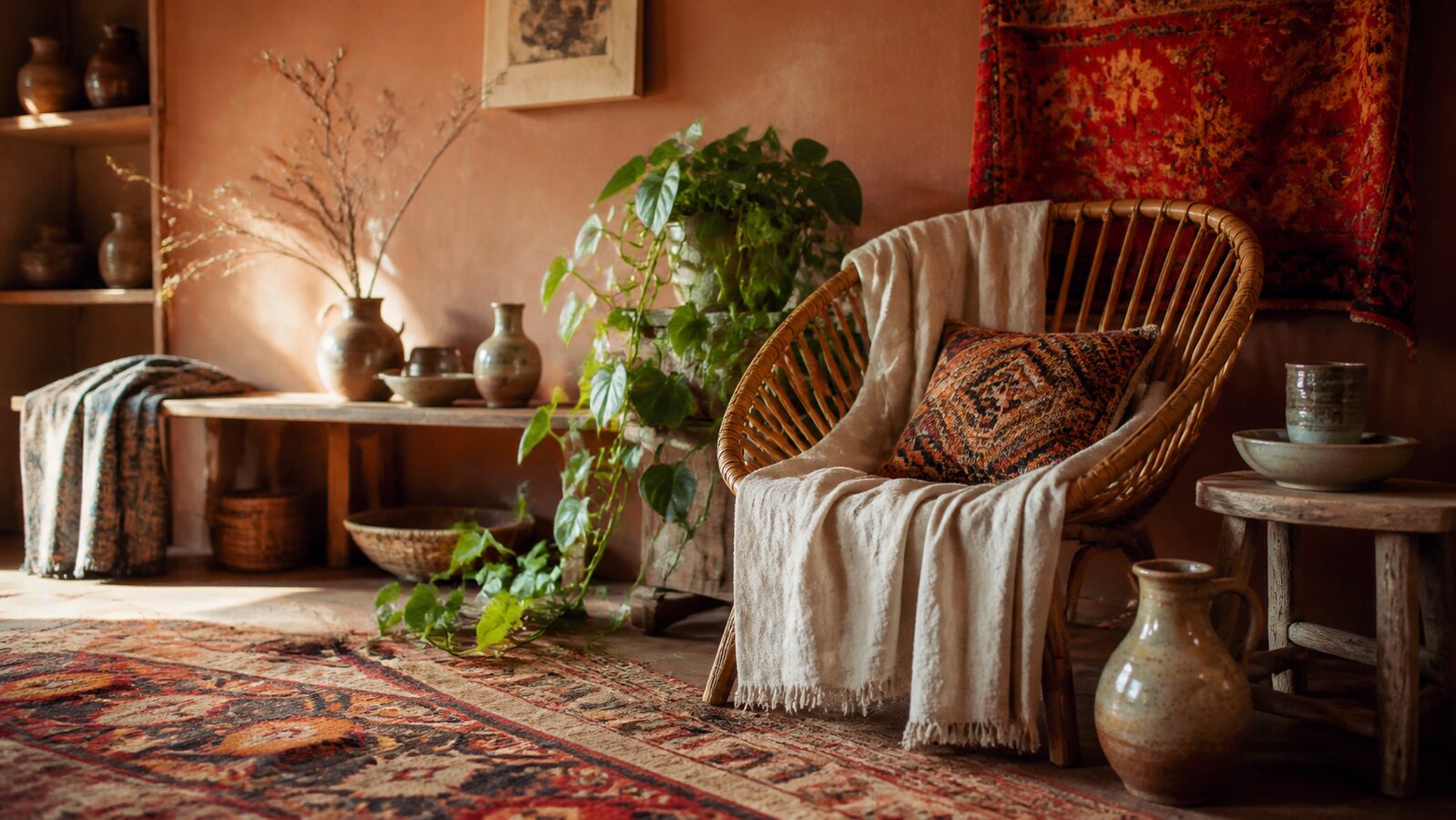
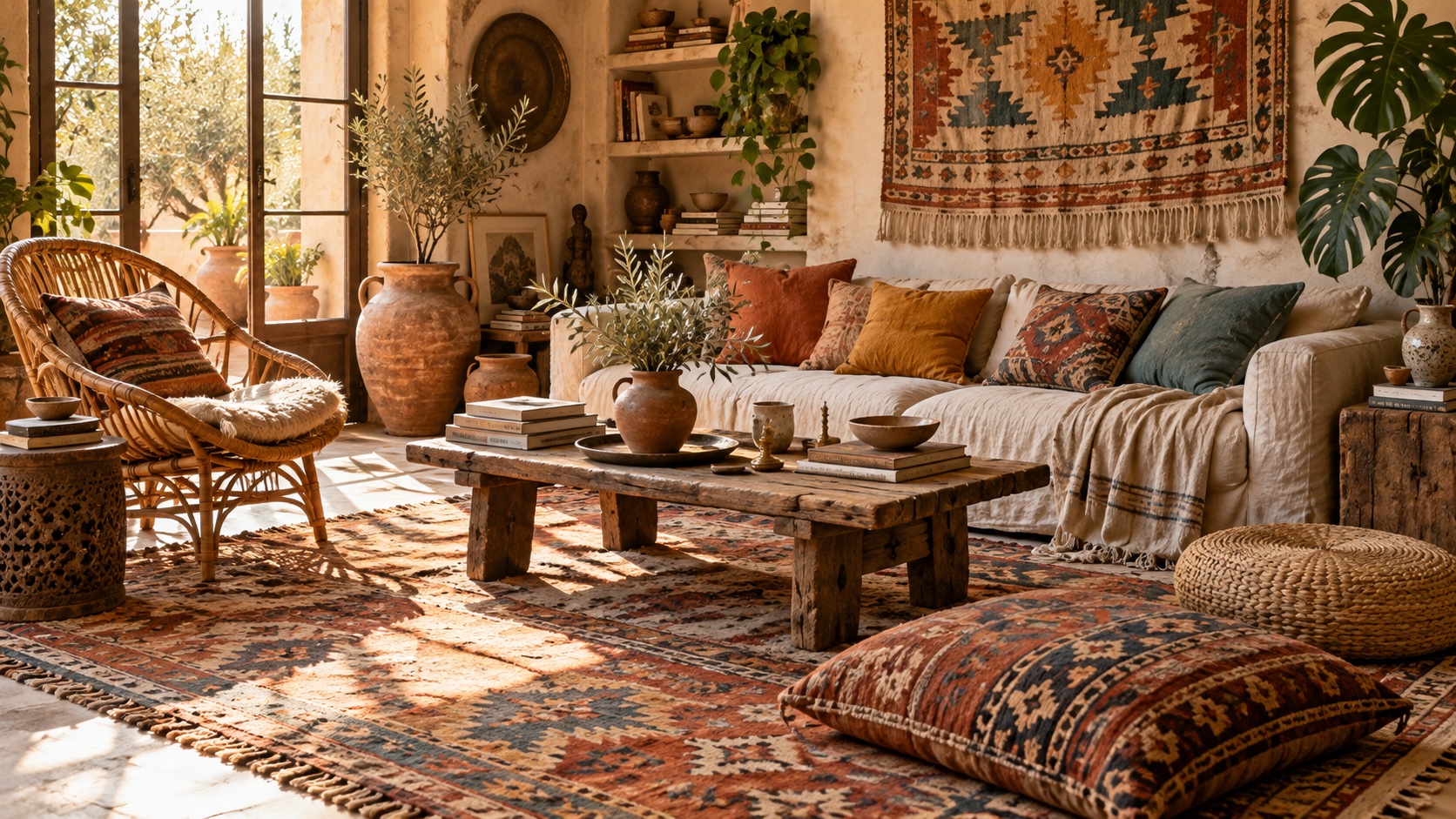
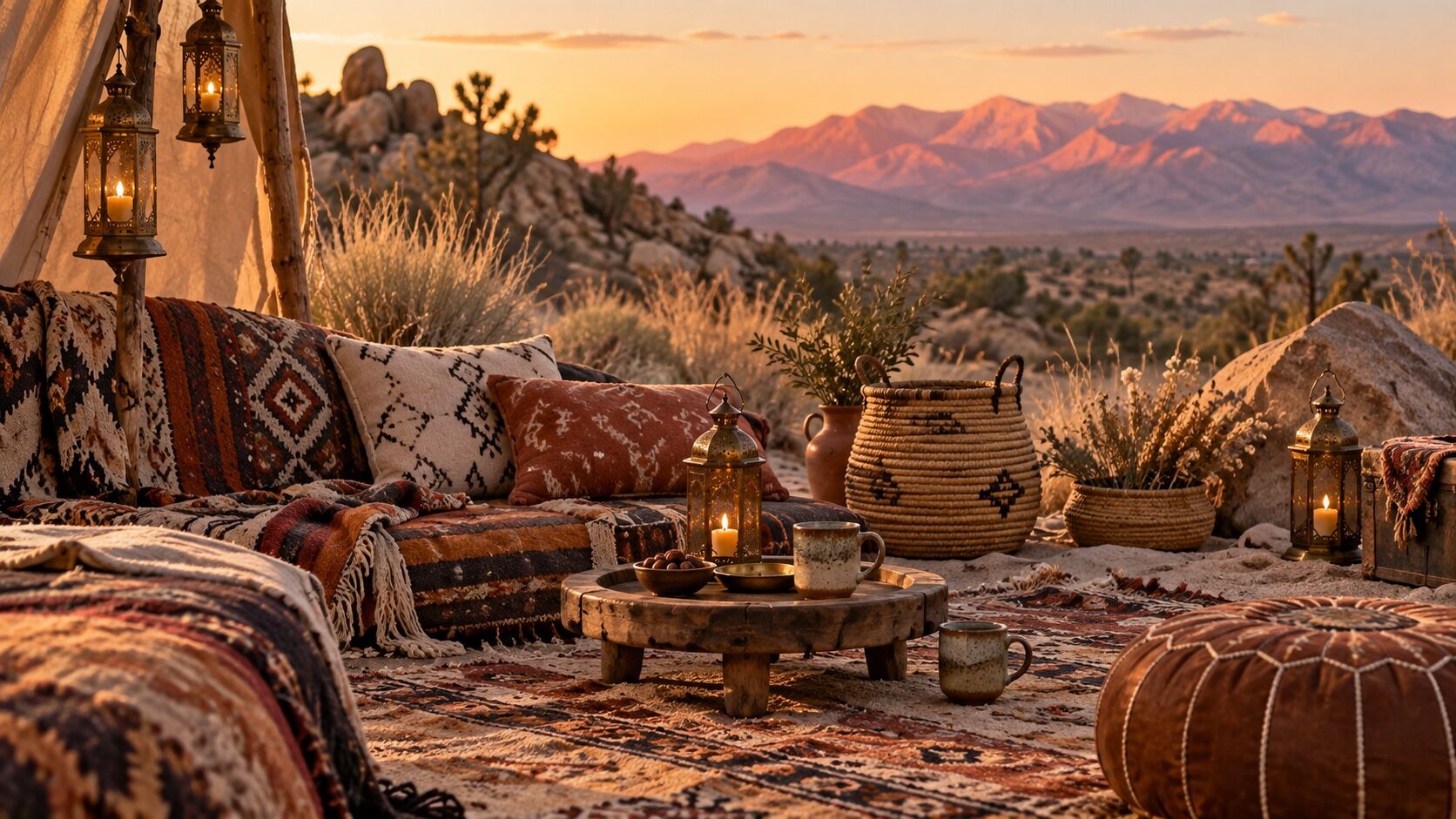
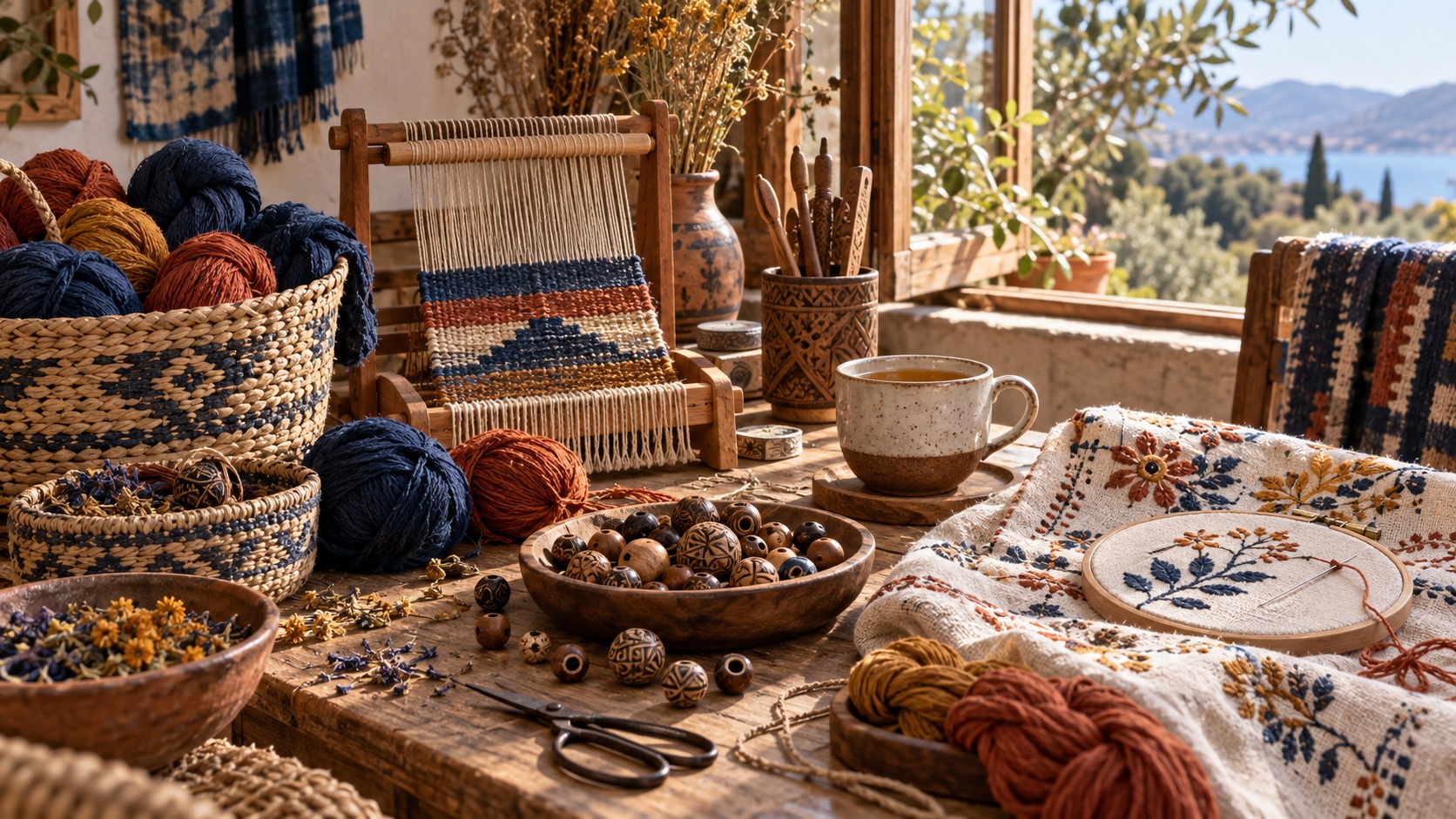
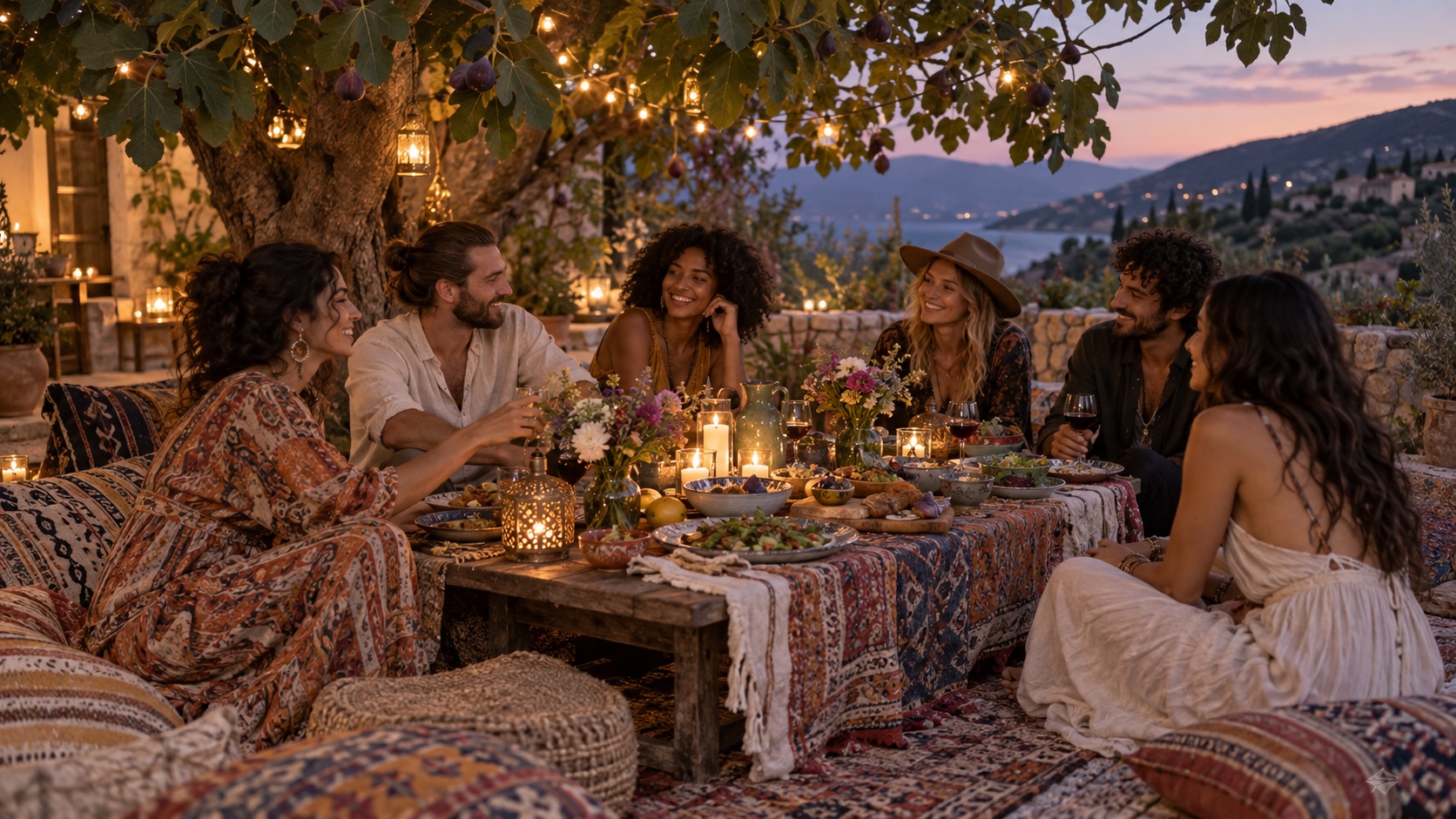
Layered pattern, warm earth pigment and handmade texture, collected over time rather than designed in one pass
What it is, when it works, who it is for, and where it already exists.
Record 021-BO - when it works, who it is for, what it looks like
Where this aesthetic shows up in the real world · ↗ opens the source site
Where Bohemian came from, what makes it recognisable, and the fingerprint it leaves.
1840s-present · Paris, then global counterculture
Bohemianism began as a slur. Nineteenth-century Parisians used it for artists living in the cheap quarters, borrowing the name from a mistaken belief that the Romani had come from Bohemia. The people it described took it up as a badge, and the visual language followed the life: what you could afford, what you were given, and what you carried back from somewhere else.
That origin explains the grammar. Bohemian interiors are additive and unmatched by design, because they were genuinely assembled over time from different places. Pattern sits beside pattern without a rule reconciling them. The unifying force is not composition, it is pigment: everything has been dyed with something from the ground, so ochre, terracotta, indigo and madder agree even when the patterns argue.
The 1960s and 70s revival attached it to counterculture and travel, and the 2010s revival attached it to hospitality and wellness, where it now does most of its commercial work. The failure mode in both is the same: bought all at once, from one supplier, it stops reading as collected and starts reading as a set.
“A room that looks collected, not decorated.
The visual DNA: what makes it recognisable
8-channel console with the fingerprint on its display. Save the card, or share the page

The definitive color scheme for this aesthetic
The colour of the styles sitting closest to this one
The record applied to your project. The record's kit is free; your brand, references and plates come with membership
01 · Hero application02 · Material and finish03 · Palette in context04 · Photography directionWhether to use it, what it costs to do properly, and where it stands right now.
Two written calls, seven meters, and when to walk away
The collection has to look collected. A room styled in one afternoon from one supplier reads as a showroom, which is the exact opposite of the claim, so the objects need different ages and origins. Mix pattern scales rather than pattern types. Natural fibre is doing the work: jute, rattan and worn cotton photograph as history, while synthetics photograph as new.
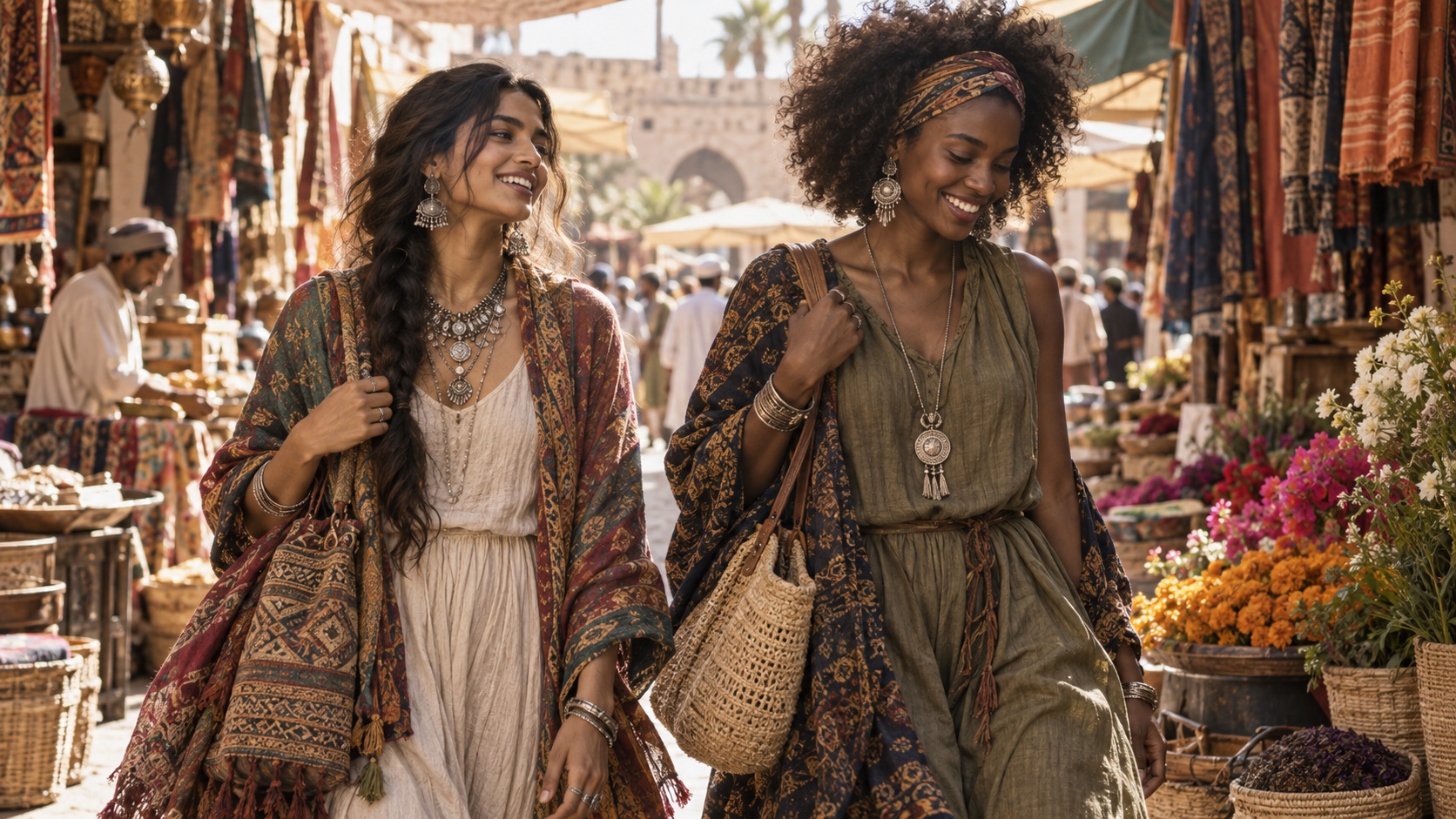
Right when the objects are real and collected over time, because done as a purchase it reads as a set and the difference photographs. The unresolved problem is sourcing: the textiles and motifs come from specific living cultures, and mass-market boho has a long record of taking them without credit or payment. Worth remembering it originally meant artists living cheaply, at a price that would have excluded them.
Textiles, plants and collected objects rather than a production budget.
Collected over time is the point, so a bought-in set reads as staged.
Layering pattern and texture without it turning into clutter.
The motifs come from living cultures; mass-market boho has a long record of taking without credit.
A permanent fixture of interiors and festival retail.
The identity is nineteenth-century and has never fully gone away.
Real objects collected over time cost more than a styled set.
A Pro feature: origins, practitioners, and pitfalls
Neighbours, cross-references, blends, and the questions people ask.
Connected across the creative knowledge graph
Where it stands now, and what it costs you to use it
Bohemian is the oldest identity on this list, going back to nineteenth-century Paris, and it has always meant artists living cheaply. The look now sells at a price that would have excluded everyone who invented it.
The unresolved problem is sourcing: the textiles, symbols and motifs come from specific living cultures, and mass-market boho has a long record of taking them without credit or payment.
Done seriously it means real objects with real provenance, collected over time. Done as a purchase it reads as a set, and the difference photographs.
Mix Bohemian with any style in the library
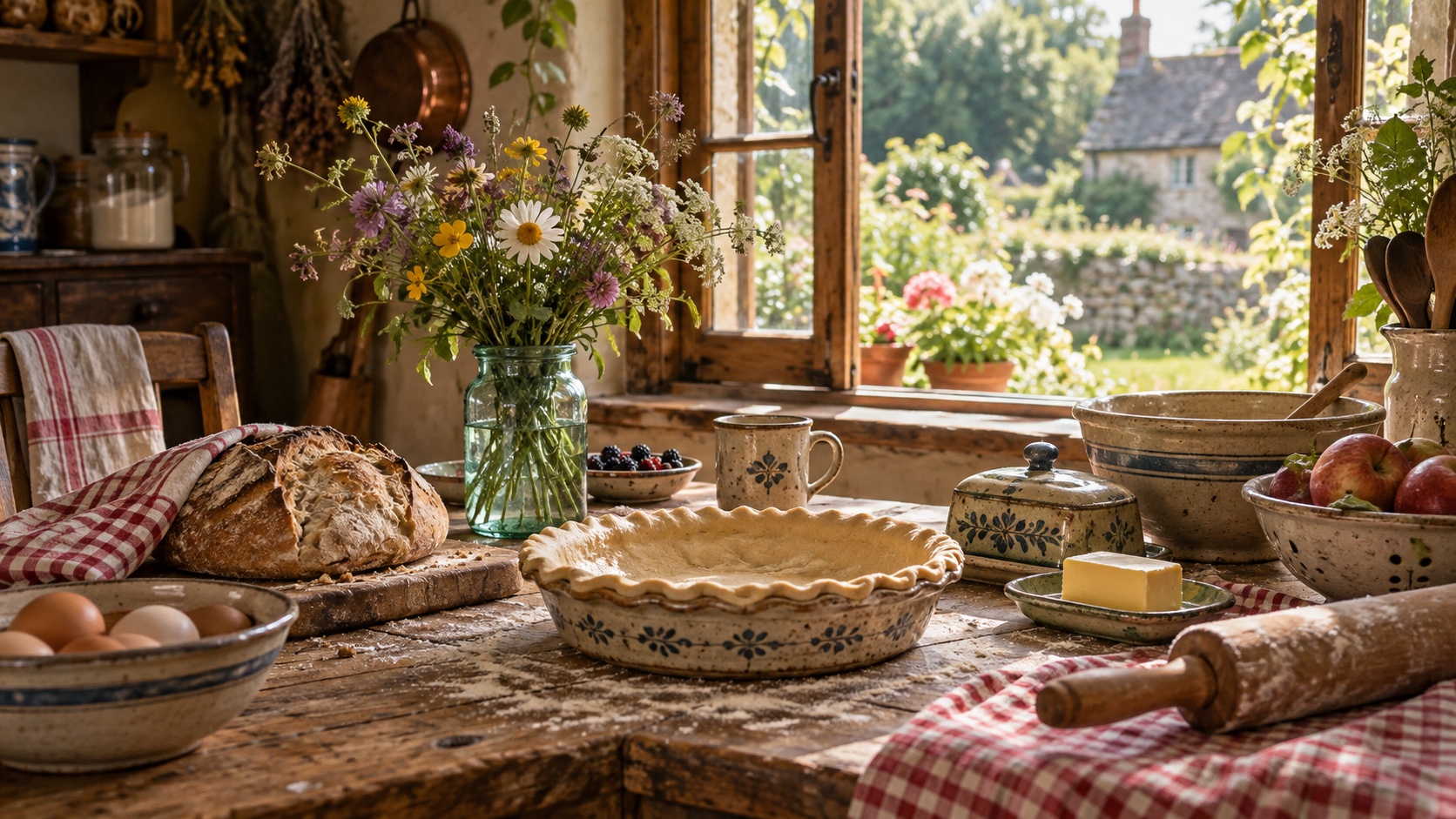 Bohemian 50%Cottagecore 50%
Merged palette
#C4763E
#2D4A2D
#D9A441
#6B8F6B
#7A6A53
Leads analog, warm, nostalgic
Typography · from Bohemian
Caveat over Lora
Materials
Use it
Bohemian aesthetic (50%), infused with Cottagecore aesthetic with pastoral English countryside romanticism, William Morris repeat-pattern influence, handmade craft values and slow-living philosophy, warm golden-afternoon light mood, color palette strictly #C4763E #2D4A2D #D9A441 #6B8F6B #7A6A53, overall character: analog, warm, nostalgic
A layered, pattern-rich style built on earth pigment and handmade texture, organised so a space reads as collected over time rather than specified in one pass.
Cottagecore is pastoral, European and nostalgic for rural domesticity: florals, baking, soft light. Bohemian is urban and itinerant in origin, built from travel and trade, and reaches for global pattern and earth pigment rather than countryside sentiment.
Pigments you could historically dig or dye from the ground: terracotta, ochre, rust and olive, held together by an undyed neutral like raw linen so the layered patterns have somewhere to breathe.
Every style in the library is broken down like this one: the palette, the typography, the materials and the lineage.
Explore the style library →