Brutalist Architecture

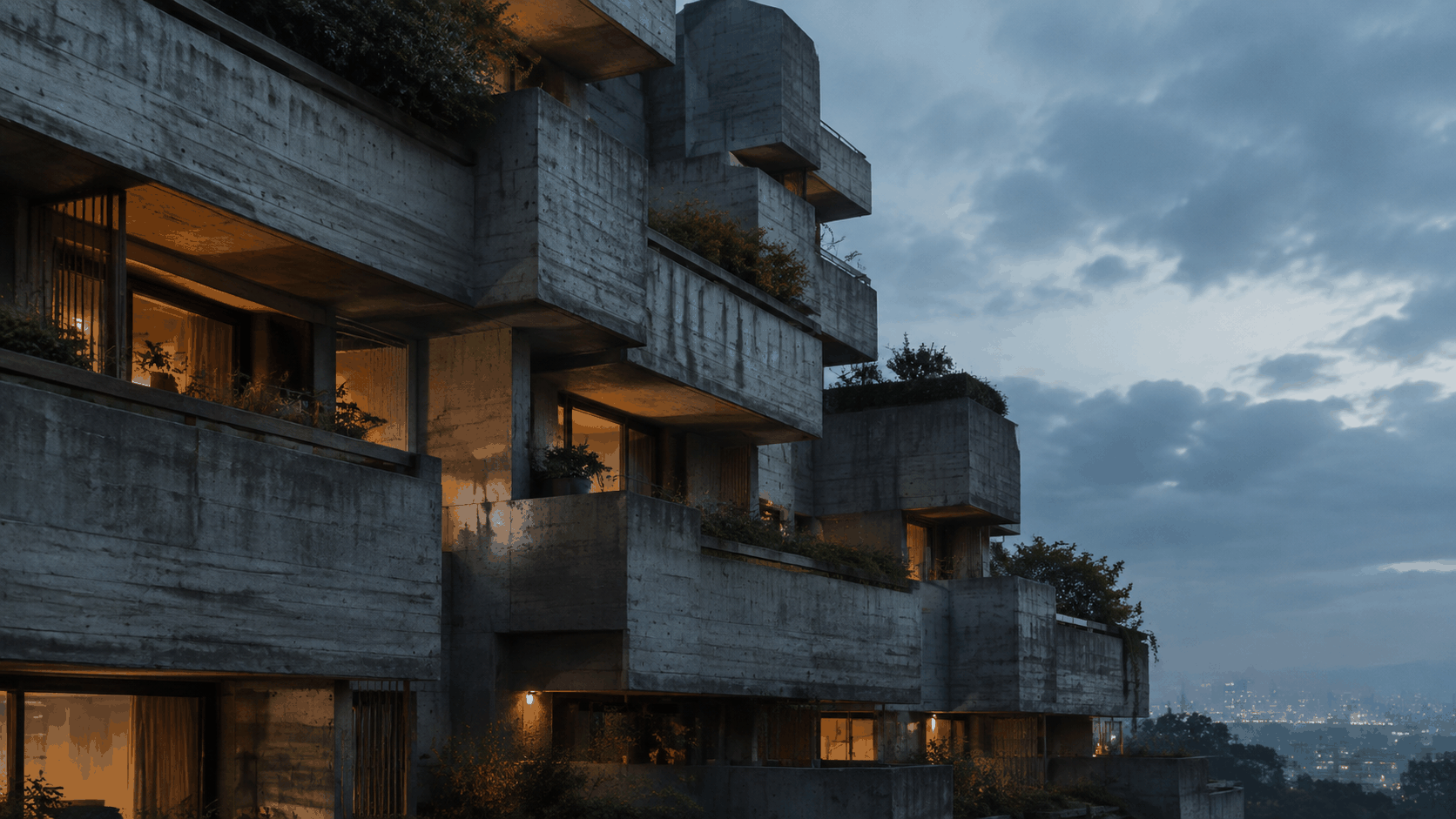
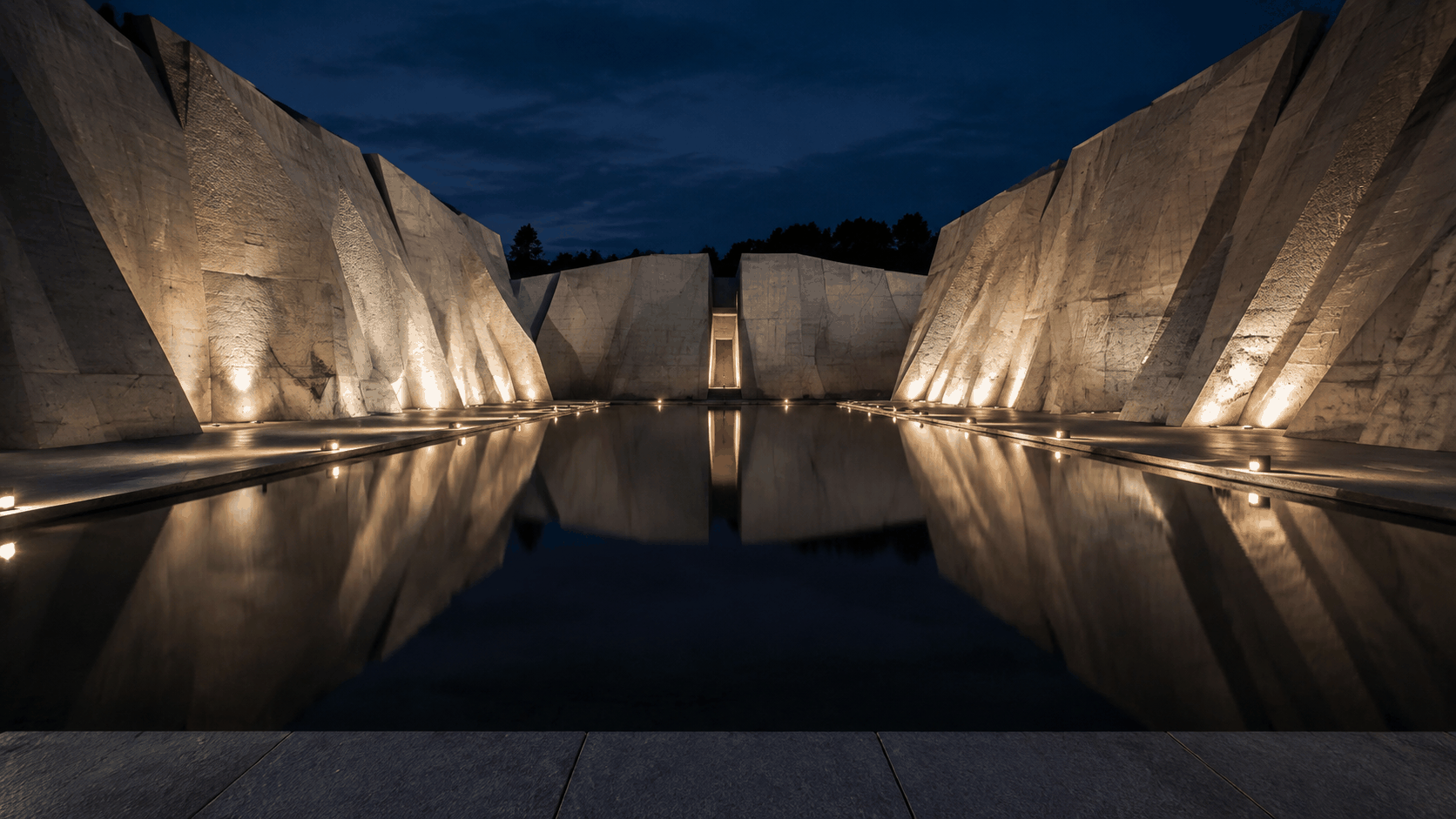
Raw concrete as conviction - Brutalism treated exposed béton brut as an honest material statement, from Paul Rudolph's corrugated towers to Moshe Safdie's Habitat 67 stacked modules and Marcel Breuer's Whitney Museum.

Compare Brutalist Architecture with another style →See the Brutalist Architecture typefaces →On the timeline · 1950s
Record020-AB
AestheticBrutalist Architecture
ClassGeometric / Structured
StatusINGESTING
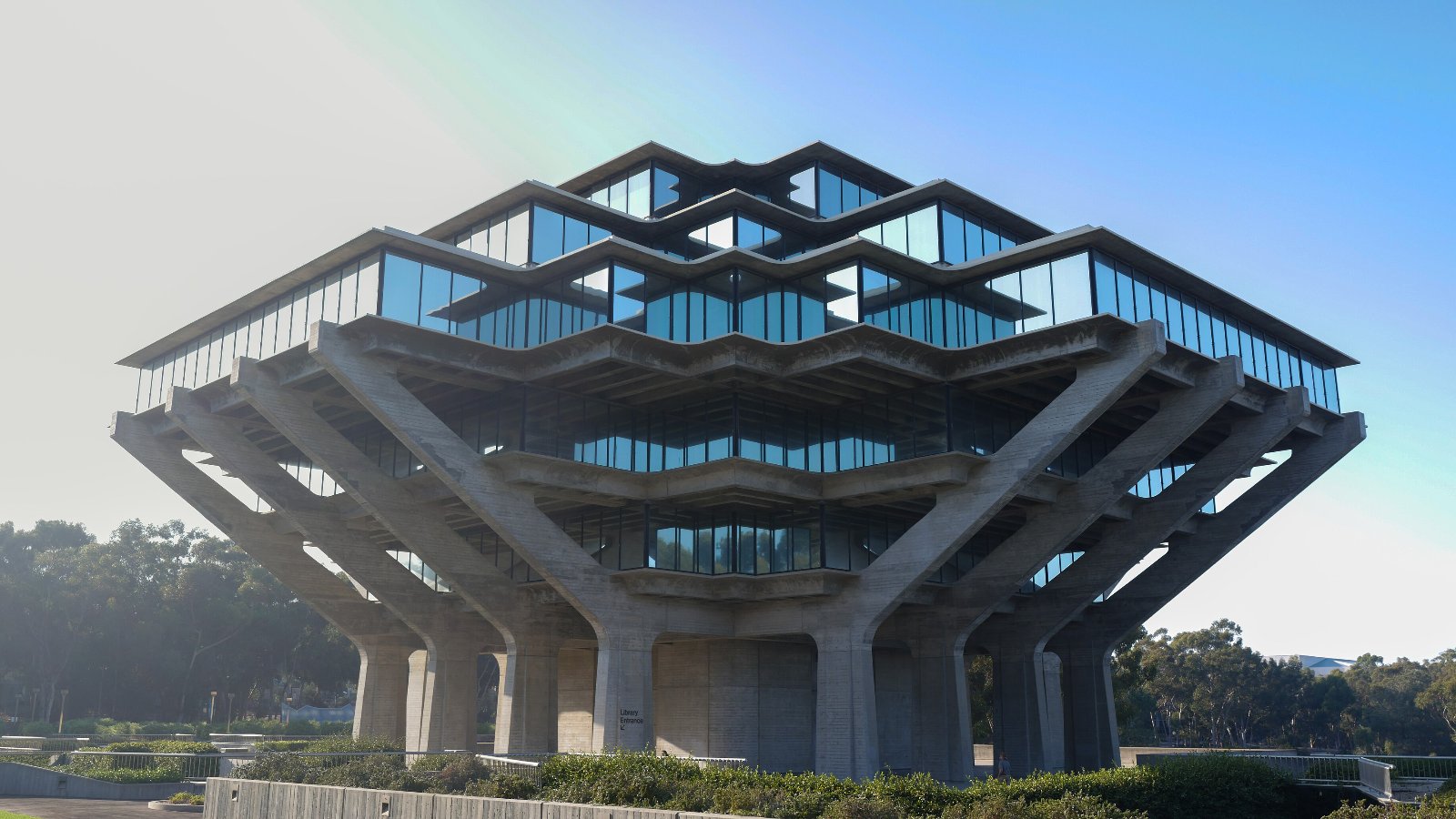
Geisel Library, UC San Diego, photograph by Westxtk
Archive plate · Brutalist ArchitectureGeisel Library, UC San Diego · Westxtk · CC BY-SA 4.0 · Wikimedia Commons
Brutalist Architecture aesthetic: Omoro scene dossier scene
Dossier sceneOmoro scene · 1/6
01
The record

What it is, when it works, who it is for, and where it already exists.

How to use it

Record 020-AB - when it works, who it is for, what it looks like

FIELD 01

When to use it

  • Brand identity demanding unapologetic weight and material honesty
  • Editorial design for culture, architecture, or academic institutions
  • Campaign work for luxury brands subverting softness with severity
  • Portfolio or publication design requiring confrontational spatial presence
FIELD 02

Perfect for

  • Architecture firms with a Brutalist or materialist practice
  • Cultural institutions - museums, theaters, universities - with bold civic ambition
  • Fashion and luxury brands playing against minimalist softness
  • Publishers and magazines covering architecture, urbanism, or critical theory

In the wild, Brutalist Architecture aesthetic real-world examples

Where this aesthetic shows up in the real world · ↗ opens the source site

Omoro Style GuideEvery aesthetic, every field on this page, in one PDF.
$8Get the guide →
02
The anatomy

Where Brutalist Architecture came from, what makes it recognisable, and the fingerprint it leaves.

History, Brutalist Architecture aesthetic history

1950s-1970s (peak); ongoing revival · Post-war Britain and France

Brutalism takes its name from the French beton brut (raw concrete), a term Le Corbusier used to describe the board-marked finish of his Unite d'Habitation in Marseille (1952). The style emerged from post-war necessity and socialist idealism: governments needed to rebuild quickly and cheaply, and a generation of architects believed that honest materials and visible structure could embody democratic values. The Smithsons' Hunstanton School (1954), with its exposed steel frame and visible services, announced the movement in Britain.

Through the 1960s and 1970s, Brutalism produced some of the most ambitious public architecture ever built. Denys Lasdun's National Theatre in London (1976), Moshe Safdie's Habitat 67 in Montreal, Erno Goldfinger's Trellick Tower, and Boston City Hall by Kallmann, McKinnell & Knowles all shared the conviction that a building's structure was its ornament. The Barbican Estate in London (1969-1982) remains the most complete Brutalist urban vision: housing, arts center, schools, and gardens unified by a continuous concrete megastructure.

Public opinion turned against Brutalism in the 1980s as concrete aged badly, maintenance budgets shrank, and postmodernism offered a more populist alternative. Many Brutalist buildings were demolished or threatened. The 21st-century revival reframed the movement: Instagram discovered Brutalism's photogenic geometry, preservation campaigns saved key buildings, and a new generation of architects like Grafton Architects and Adjaye Associates returned to exposed concrete with better technology and detailing. Brutalism is no longer a period style but a living position about material honesty.

Concrete as confession.

Omoro dossier · 020-AB

Visual markers, Brutalist Architecture aesthetic visual markers

The visual DNA: what makes it recognisable

typography

See the fonts
  • Heavy geometric sans-serifs: Eurostile, Bank Gothic, DIN
  • Uppercase with wide tracking, echoing inscribed concrete lettering
  • Monospaced alternatives for utilitarian identity systems
  • Minimal type hierarchy: one weight, one size, maximum impact

grid

  • Modular repetition of structural bays
  • Strong horizontal and vertical rhythms from floor slabs and columns
  • Setbacks and cantilevers creating deep shadow patterns
  • Elevated podiums and pilotis separating building from ground

materials

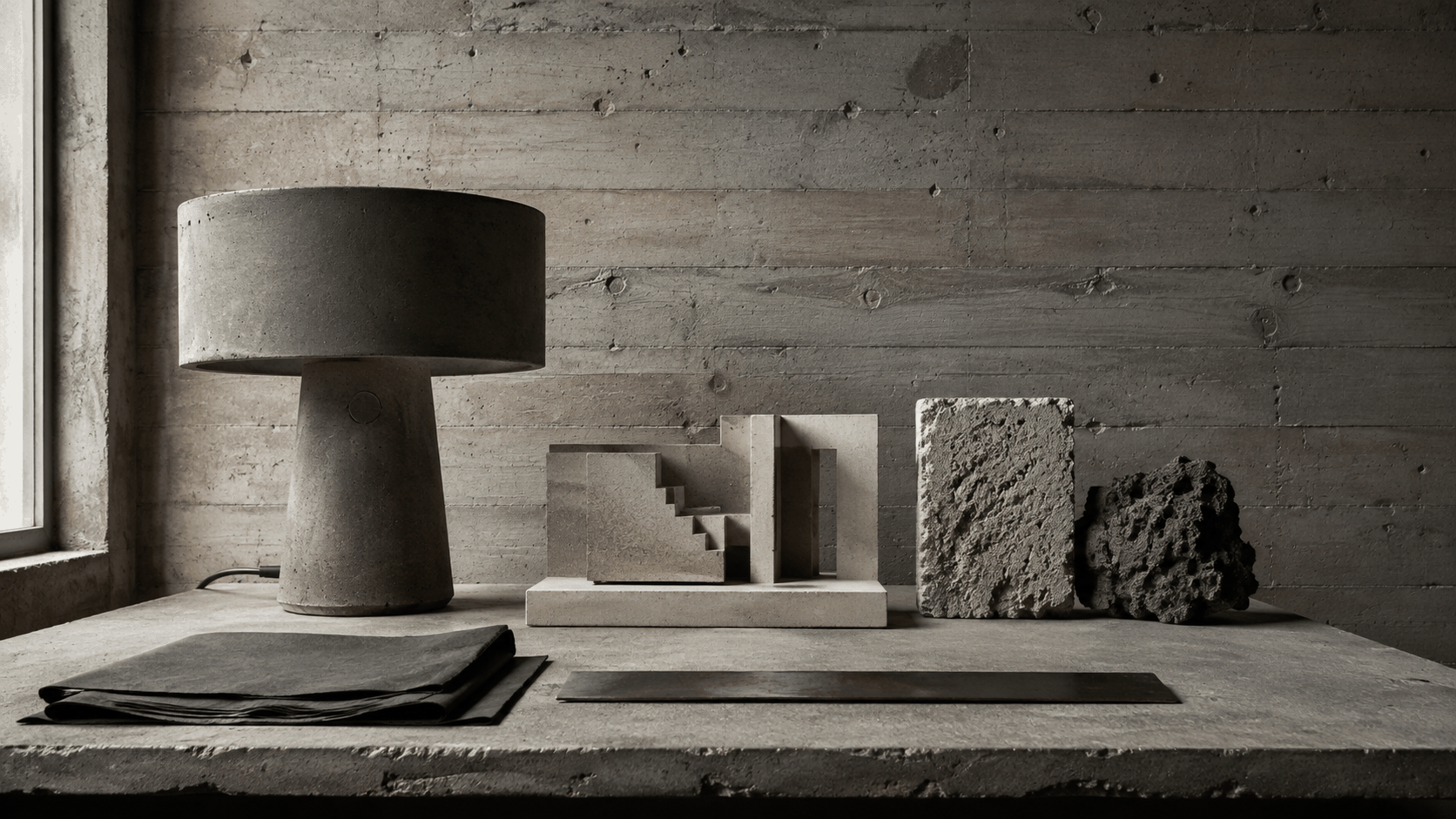
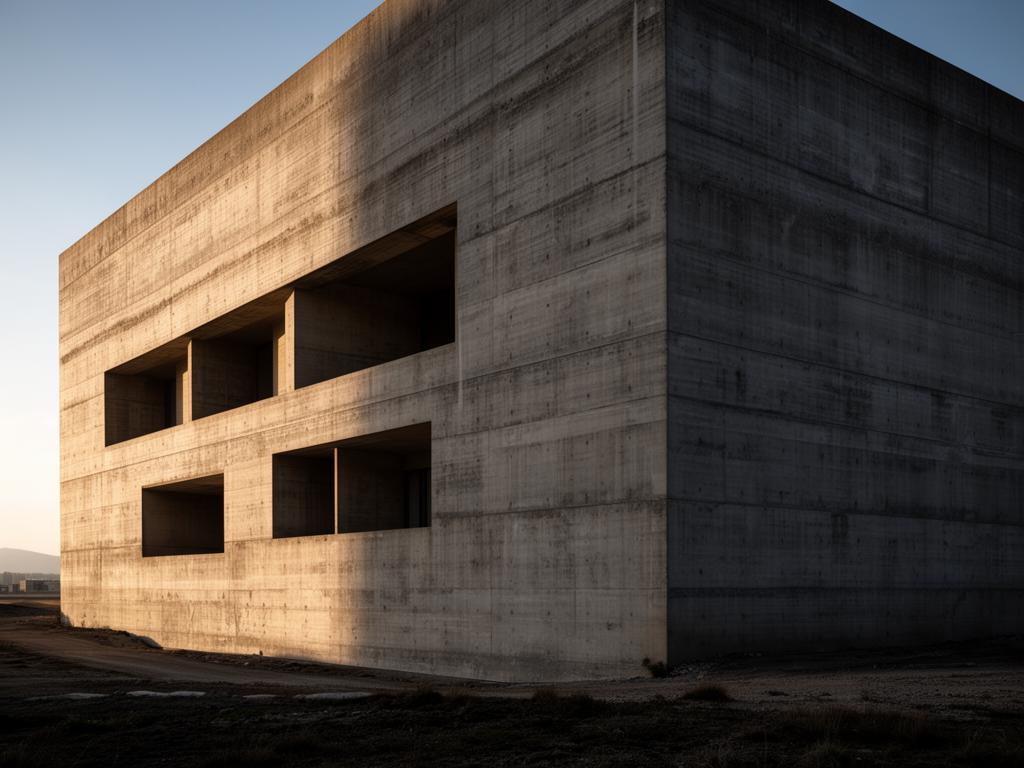
  • Board-marked concrete showing formwork grain: #8A8682, #A09C98
  • Weathered concrete with water staining: #6E6A66, #7A7672
  • Exposed aggregate surfaces: #948F8A, #B0ACA8
  • Accent colors from services and signage: signal red, safety yellow

motifs

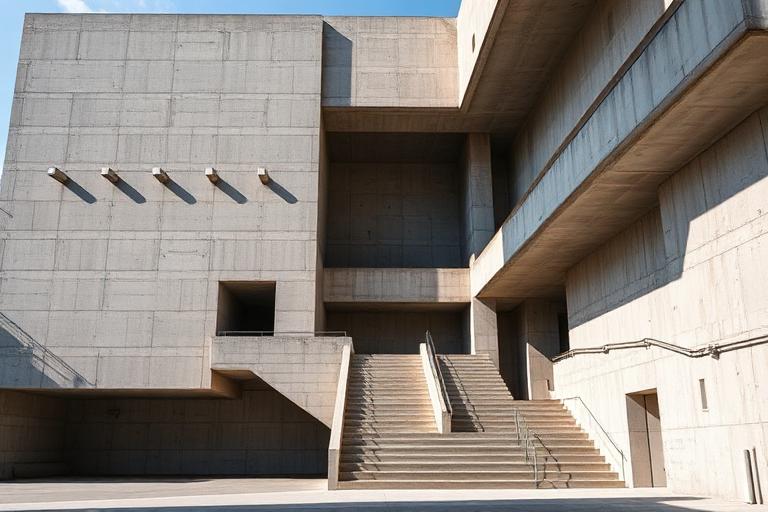
  • Deeply recessed windows creating shadow grids
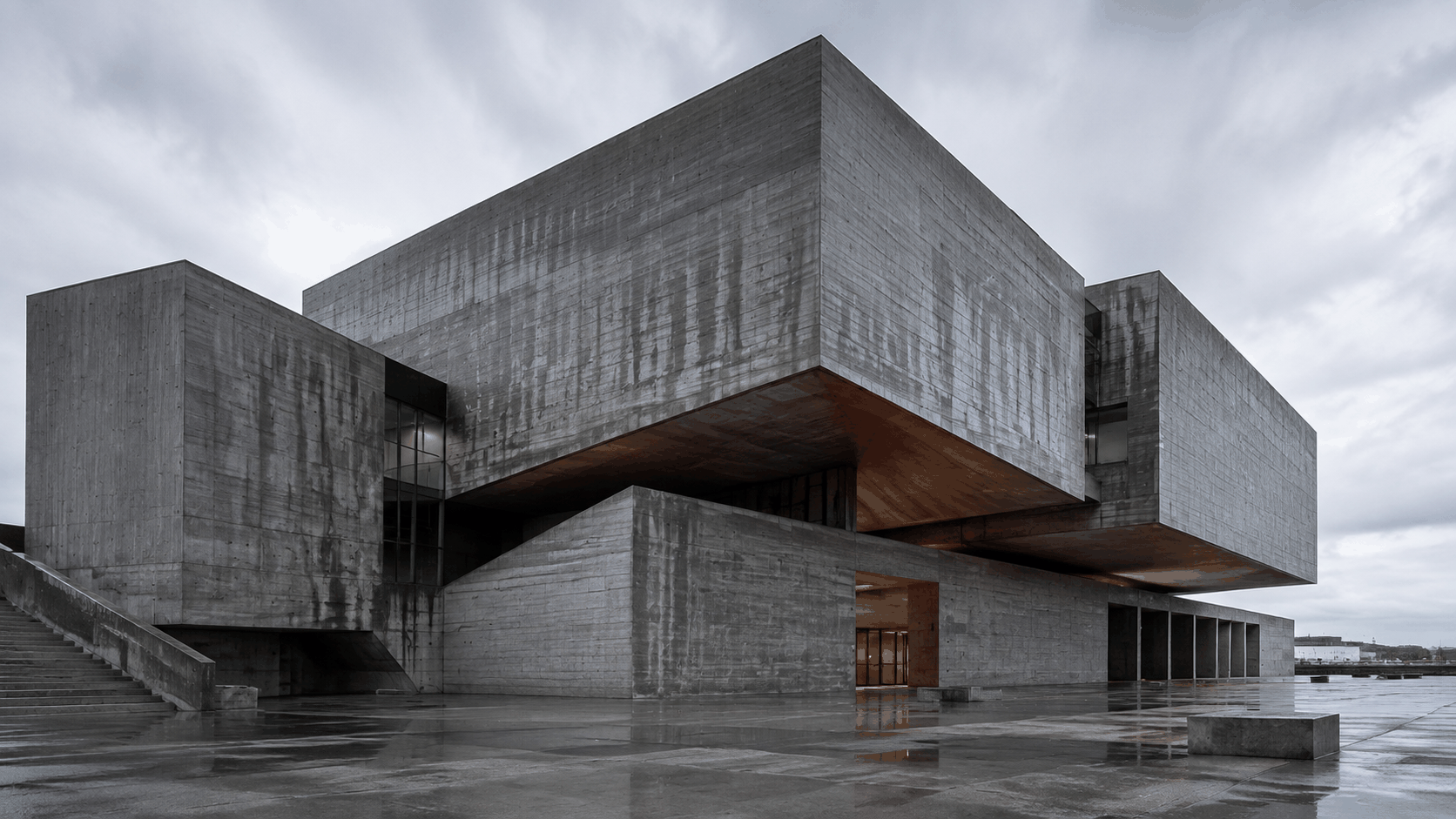
  • Cantilevered volumes defying apparent structural logic
  • Exposed mechanical services as visual elements
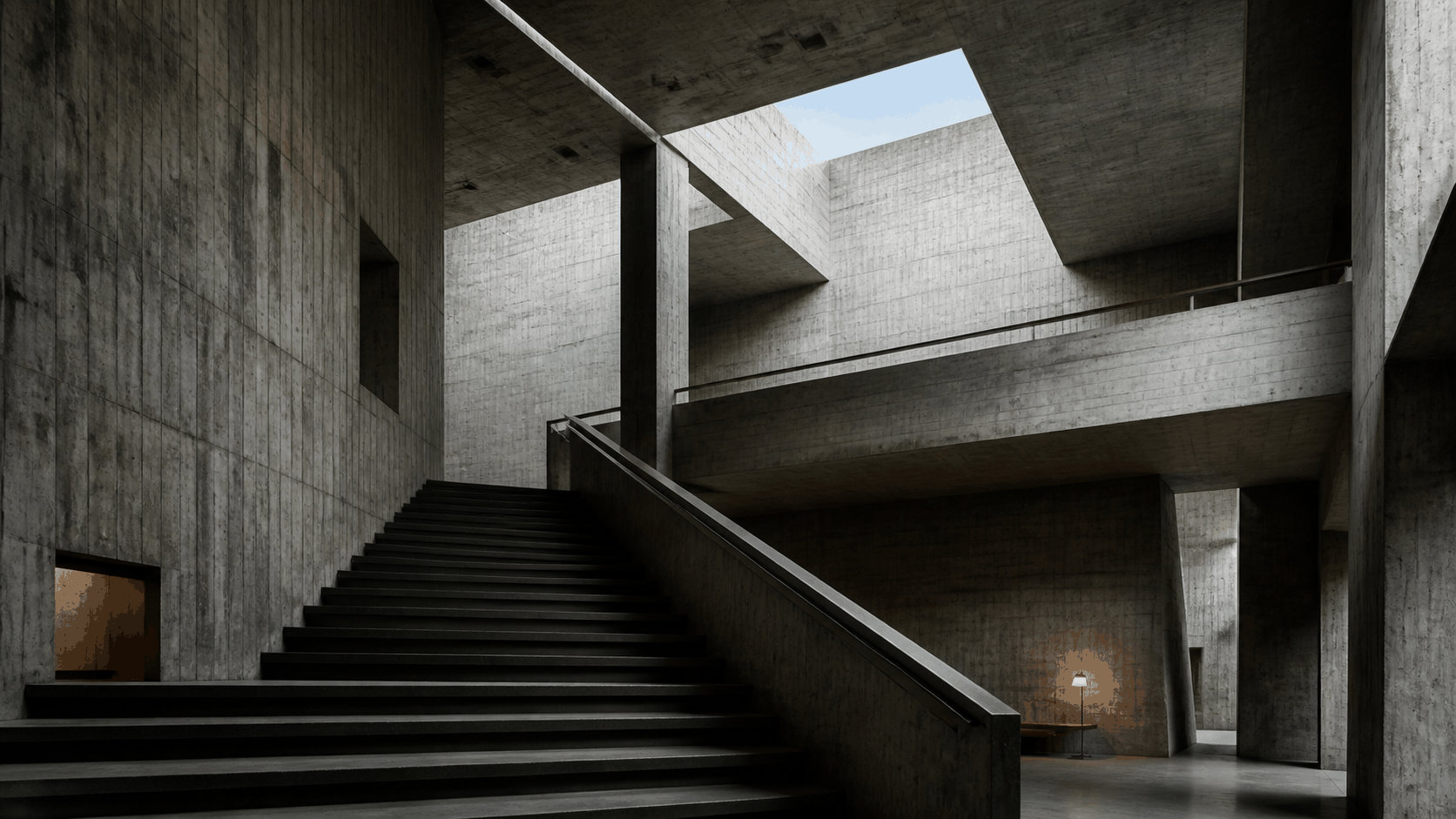
  • Monumental entrance sequences through compressed-to-expanded space

Aesthetic profile

8-channel console with the fingerprint on its display. Save the card, or share the page

Aesthetic Profile
Brutalist Architecture
Postwar
1950–1979
Attribute console · 020-AB
leans geometric, structured, cool
8 CH
FIG. 1
MinimalMaximalAnalogDigitalExpressiveRestrainedCoolWarmNostalgicFuturisticStructuredChaoticDarkLightGeometricOrganic
01Minimal
Maximal20%
02Analog
Digital40%
03Restrained
Expressive30%
04Cool
Warm50%
05Futuristic
Nostalgic30%
06Structured
Chaotic60%
07Dark
Light40%
08Organic
Geometric70%
GeometricStructuredCool4 materials
Omoro · Attribute console · 020-AB
omoro.io/styles/arch-brutalism

Material assembly

The style's primary materials, assembled bottom-up

Tap a stratum for material detail · Full catalog

Place in history

Postwar · 1950–1979 - tap any style to travel

Color Palettes, Brutalist Architecture color palettes and hex codes

4 color interpretations of this aesthetic

Brutalist Architecture
#2B2926 · #5C5346 · #8C8070 · #BFB8AC · #D0CCC4
Raw béton brut as moral statement, mass without apology
Barbican
#141414 · #3A3838 · #686460 · #A8A098 · #D0CCC4
London's concrete city: walkways suspended between monolithic towers
Habitat 67
#1A1810 · #504838 · #888078 · #B8B0A0 · #E0D8C8
Safdie's stacked cubes: each apartment a shifted concrete box
Bunker Form
#0C0C0C · #2A2A2A · #585858 · #989088 · #C0B8B0
Defensive mass: windowless concrete slab as civic statement
Omoro Palette Pack575 curated palettes across every aesthetic, 5 export formats.
$8Get the palettes →

Adjacent Palettes, styles related to Brutalist Architecture

The colour of the styles sitting closest to this one

Monolithic Architecture
Constructivist Architecture
Industrial Architecture
Architectural Modernism
03
The direction

How to shoot it, how to prompt it, and how to board it.

Photo Direction

How to shoot this aesthetic

"Concrete does not apologize: the body made small against poured, honest mass"

Shot list

  • Wide shot of subject dwarfed by a monolithic concrete facade, human scale as the only softness in frame
  • Close detail of raw board-formed concrete texture with subject's hand resting against it
  • Symmetrical portrait centered in a brutalist stairwell or corridor, converging lines leading to the figure

Lighting

Hard, direct sunlight at midday brutalism rewards harsh shadow and raking light across raw texture; avoid soft diffusion, which flatters the wrong things here

Omoro Director's Briefs151 photo shot-lists like this one, ready to shoot from.
$8Get the briefs →

Generative Prompt

Drop this into Studio to generate in this aesthetic

Brutalist design with raw architectural mass and exposed concrete beton brut texture, monolithic volumes with zero applied decoration, Alison and Peter Smithson and Le Corbusier Unite d'Habitation reference, weight and gravity as aesthetic values, anti-ornament philosophy

Paste as-is, or append your own subject

Mood Board

The record applied to your project. The record's kit is free; your brand, references and plates come with membership

Mood board
The Brutalist Architecture board
8 frames · 4 selected
FIG. 4
Formwork Shadow2B2926Raw Concrete5C5346Aggregate8C8070Weathered FaceBFB8ACSky ConcreteD0CCC4
Brand and references
IdleBrand and references open with membership
With membership: the brand's own facts and colours in every prompt, references carried into every frame, and the plates generated.
01 · Hero application
02 · Material and finish
03 · Palette in context
04 · Photography direction
05 · Pattern plate
06 · Object
07 · Environment
08 · Digital presence
Demo kit free, the rest with membershipThe record as a demo kit, free. Name a project and it is written for that
Omoro · Mood board · 020-AB
04
The judgement

Whether to use it, what it costs to do properly, and where it stands right now.

Creative verdict, Brutalist Architecture feasibility and strategic recommendation

Two written calls, seven meters, and when to walk away

Creative verdict
Should Brutalist Architecture be the call?
7 meters
FIG. 2
Assessment

The concrete finish is the entire building. Board-marked and bush-hammered surfaces are deliberate and expensive, while a flat grey render is the cheap imitation everyone now associates with the style, which is why it earned its reputation. Detail the drip edges. It is beton brut, raw concrete, not brutality, and staining is the maintenance cost nobody budgets for.

Verdict

Right when the client will fund the maintenance, because that is what actually decides whether this ages as monument or as eyesore: concrete needs upkeep these buildings were rarely funded for, which is why the reference images are always the few that got it. Correct the word while you are at it, it is beton brut, raw concrete, not brutality. Most of it was public housing built by governments that believed in building it.

Production cost
High

Poured concrete at scale. Real construction, not a facade.

Creative difficulty
High

Honest material as conviction, not just gray and heavy.

Execution difficulty
High

Board-formed concrete texture is exact, unforgiving craft.

Risk of misuse
High

Gray concrete without the honesty-of-material conviction is just brutal, not Brutalist.

Prevalence
Common

One of the most referenced architectural movements in design right now.

Longevity
Enduring

Sixty years on and still a live, debated architectural position.

Brand investment
High

Real poured concrete construction, not a facade treatment.

Avoid if
The brand needs to feel warm or welcoming
Raw concrete reads as severe and monumental, not friendly.
There's no budget for real poured concrete or a convincing equivalent
A facade treatment doesn't carry the same conviction as real construction.
Omoro · Creative verdict · 020-AB

Editorial Depth

A Pro feature: origins, practitioners, and pitfalls

Editorial depth
The Brutalist Architecture file
14 sections
FIG. 3
Context02Brands02Perception04Use04Index02
01Common MisconceptionThe principle beneath the surface
02Historical ContextOrigins, cultural moment, and reaction
03Brands That Accidentally Use This StyleNatural alignment, not category claims
04Brands That Perfectly Represent This StyleExceptional execution
05Psychological EffectHow visual decisions change perception
06Visual ChecklistInclude and avoid
07Creative FormulaThe visual system reduced to essentials
08Recognition SignalsHow to recognize it in two seconds
09When To Use This StyleContexts where the language performs
10Common Creative MistakesWhere imitation weakens the signal
11Best Brand ApplicationsIndustries with a natural advantage
12Creative Application AnalysisFit, feasibility, and production reality
13Related StylesClose languages and the key distinction
14Visual DNA SummaryThe sentence to remember
The editorial depth, with membershipOpening soon
Omoro · Editorial depth · 020-AB
05
The index

Neighbours, cross-references, blends, and the questions people ask.

Related concepts

Connected across the creative knowledge graph

Cultural relevance, Brutalist Architecture cultural relevance today

Where it stands now, and what it costs you to use it

Brutalism is the most litigated word in architecture. It comes from beton brut, raw concrete, not from brutality, and correcting that is the first thing anyone in the field will do.

Most of it was public housing, universities and civic buildings, built by governments that believed in building them, and the demolition wave since 2010 is as much about who those buildings were for as about how they look.

It photographs far better than it weathers. Concrete needs maintenance that these buildings were rarely funded for, which is why the reference images are usually of the few that were looked after.

Cross-references

Brutalismgraphic design Brutalism borrows the raw, unfinished ethosArchitectural ModernismBrutalism emerged from and reacted against the refinement of late ModernismHigh-Tech ArchitectureHigh-Tech inherited Brutalism's structural honesty but swapped concrete for steel and glass

Compare

Brutalist Architecture vs Architectural ModernismBrutalist Architecture vs Architectural MinimalismBrutalist Architecture vs High-Tech ArchitectureBrutalist Architecture vs Brutalism

Blend

Mix Brutalist Architecture with any style in the library

Brutalist Architecture×
50%50%
99% alike
Brutalist Architecture referenceMonolithic Architecture referenceBrutalist Architecture 50%Monolithic Architecture 50%

Merged palette

#2B2926

#5C5346

#8C8070

#BFB8AC

#0C0C0A

Leads structured, geometric, cool

Typography · from Brutalist Architecture

Space Grotesk over Inter

Materials

  • Board-marked concrete showing formwork grain: #8A8682, #A09C98
  • Weathered concrete with water staining: #6E6A66, #7A7672
  • Pigmented concrete in earth tones: #8C7C6C, #7C6C5C, #6C5C4C

Use it

Brutalist design with raw architectural mass and exposed concrete beton brut texture, monolithic volumes with zero applied decoration, Alison and Peter Smithson and Le Corbusier Unite d'Habitation reference, weight and gravity as aesthetic values, anti-ornament philosophy (50%), infused with Monolithic architecture with single-material expression, massive sculptural volumes, sense of geological weight, Peter Zumthor influence, stone or concrete carved by light, primal shelter, color palette strictly #2B2926 #5C5346 #8C8070 #BFB8AC #0C0C0A, overall character: structured, geometric, cool

One-click generation opens with the studio

About this aesthetic

What is Brutalist architecture?

Brutalism is an architectural movement from the 1950s-1970s defined by raw, exposed concrete (beton brut), visible structural systems, and the belief that a building should express its construction honestly. It emerged from post-war reconstruction and socialist idealism, producing monumental public buildings, housing estates, and civic centers.

Why is Brutalism called Brutalism?

The name comes from the French beton brut, meaning raw concrete, the material Le Corbusier left exposed and board-marked on his Unite d'Habitation (1952). British critic Reyner Banham formalized the term in his 1955 essay 'The New Brutalism.' Despite the name, the movement was about material honesty, not aggression.

Is Brutalism making a comeback?

Yes. Instagram and architectural photography rediscovered Brutalism's photogenic qualities in the 2010s. Preservation campaigns have saved buildings like Preston Bus Station and Robin Hood Gardens. Contemporary architects like Adjaye Associates and Grafton Architects work with exposed concrete but with improved detailing, warmer aggregates, and better weathering strategies.

Build with the brutalist architecture aesthetic

Every style in the library is broken down like this one: the palette, the typography, the materials and the lineage.

Explore the style library →