When to use it
- Retro architecture references
- Light and transparency themes
- Nostalgic interior design
- Prismatic effects
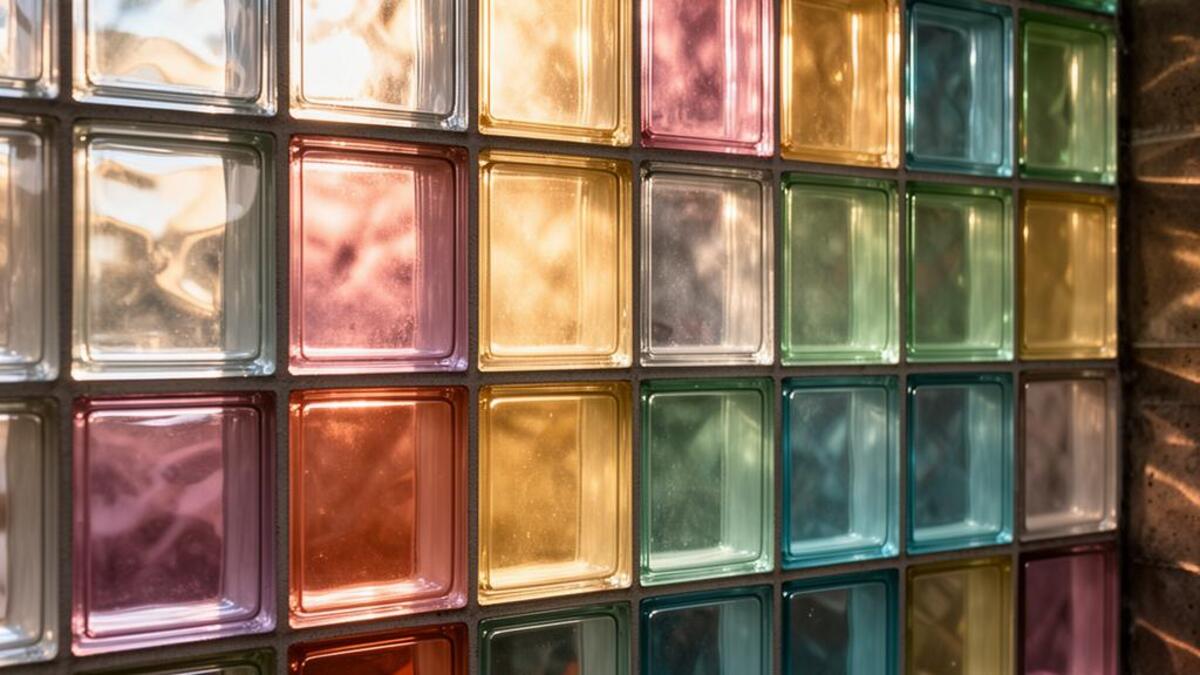
80s architectural glass with prismatic light and transparent building blocks
What it is, when it works, who it is for, and where it already exists.
Record 026-GB - when it works, who it is for, what it looks like
Where this aesthetic shows up in the real world · ↗ opens the source site
Where Glass Block came from, what makes it recognisable, and the fingerprint it leaves.
1980s–1990s (architectural material); 2019–present (aesthetic revival) · Architecture and interior design; 1980s commercial interiors; design revival communities
Glass blocks (or glass bricks) are a construction material developed in the 1930s and popularized in 1970s–1990s architecture: thick glass units that transmit light while obscuring detail, used in bathroom walls, exterior windows, and commercial interiors. Their distinctive visual quality: the soft, distorted transmission of light and color through an opaque medium: became culturally associated with the era of their peak use.
The glass block aesthetic revival in design began around 2019, initially in fashion photography (shooting through glass blocks to create distorted, dreamlike portraits) and digital art (simulating the material's frosted-glass distortion in Photoshop and After Effects). The aesthetic connects to a broader nostalgia for 1980s–1990s material culture that also produced the terrazzo revival, the brutalism appreciation, and the return of brass fixtures.
In contemporary design, the glass block aesthetic appears as: photography effects (shooting through or compositing glass block material), digital UI elements that reference the material's translucency, illustration that simulates the look, and actual architectural revival in high-end hospitality and residential projects. It occupies a specific register: nostalgic but sophisticated, warm but obscuring.
“The material that shows you something without showing you anything.
The visual DNA: what makes it recognisable
8-channel console with the fingerprint on its display. Save the card, or share the page
4 color interpretations of this aesthetic
The colour of the styles sitting closest to this one
How to shoot it, how to prompt it, and how to board it.
How to shoot this aesthetic
"Light multiplied and divided: the architectural material that makes vision physical"
Shot list
Lighting
Strong backlight through the glass blocks a large daylight source or a powerful LED panel positioned behind the glass; the subject should be lit by the refracted light that passes through
Drop this into Studio to generate in this aesthetic
Glass block architecture and design aesthetic with translucent textured glass masonry, diffused privacy-preserving light transmission, 1980s-90s commercial-building material signature, geometric grid of glowing glass units
The record applied to your project. The record's kit is free; your brand, references and plates come with membership
01 · Hero applicationWhether to use it, what it costs to do properly, and where it stands right now.
Two written calls, seven meters, and when to walk away
The refraction has to be physically consistent. Every block should distort what is behind it by the same rule, and hand-faked panels never match, so the effect belongs in a shader or a real photograph. Light it from behind. The 1980s association is strong, so one modern element is needed or it reads as a period bathroom.
Right when the light it makes is the point, which is the actual appeal and the hard part to fake. It went from ubiquitous to embarrassing to sought-after inside forty years, the standard cycle for anything strongly dated. Architects mostly abandoned it because it performs poorly thermally, so the revival is largely surface rather than structural.
Real glass block or a convincing render. Neither is free.
A specific 80s reference. Generic 'glass' misses the point.
Refraction and light behavior are hard to fake convincingly.
Generic glass without the specific 80s reference misses the point.
A niche architectural-nostalgia reference, not widely used.
Tied closely to a specific decade of design.
Real material or a convincing render, either way real effort.
A Pro feature: origins, practitioners, and pitfalls
Neighbours, cross-references, blends, and the questions people ask.
Connected across the creative knowledge graph
Where it stands now, and what it costs you to use it
Glass block is a genuine 1980s and early-1990s construction material that went from ubiquitous to embarrassing to sought-after inside forty years, which is the standard cycle for anything strongly dated.
Architects mostly abandoned it because it performs poorly thermally, so the revival is largely surface rather than structural.
It reads as a very specific period and it is expensive to fake convincingly. The light it makes is the actual appeal and that part is hard to reproduce.
Mix Glass Block with any style in the library
 Glass Block 50%Post-Modernism 50%
Merged palette
#1A3A4A
#2A2A2A
#4A7A8A
#FF6B9D
#7AA8B8
Leads light, geometric, maximal
Typography · from Glass Block
Cormorant Garamond over Lora
Materials
The calls this blend forces
These two disagree on 3 things, and a blend cannot average them: you pick a side. At this mix:
Minimal or Maximal? Glass Block is minimal, Post-Modernism is maximal. This mix lands maximal.
Restrained or Expressive? Glass Block is restrained, Post-Modernism is expressive. This mix lands expressive.
Structured or Chaotic? Glass Block is structured, Post-Modernism is chaotic. This mix lands chaotic.
Use it
Glass block architecture and design aesthetic with translucent textured glass masonry, diffused privacy-preserving light transmission, 1980s-90s commercial-building material signature, geometric grid of glowing glass units (50%), infused with Postmodern aesthetic with playful historicism, ironic classical references, Michael Graves and Robert Venturi influence, color palette strictly #1A3A4A #2A2A2A #4A7A8A #FF6B9D #7AA8B8, leaning minimal over maximal, restrained over expressive, structured over chaotic, overall character: light, geometric, maximal
Glass block aesthetic references the architectural construction material: thick glass bricks that transmit light while obscuring detail: and its visual quality: frosted opacity, soft color distortion, diffused light transmission. Colors: frosted white (#E8EAEC), diffused blue (#A8B8C8), warm amber (#E8D0A8). Associated with 1980s–1990s architecture and bathrooms; revived since 2019 in photography, digital art, and high-end interior design.
Photography through actual glass blocks creates the most authentic effect: the material introduces specific optical distortions no filter can fully replicate. Digitally: use a frosted glass effect (Gaussian blur at high radius on a copy layer, reduced to 60-80% opacity) combined with a subtle grid pattern overlay to suggest the block structure. Add a slight color temperature shift (toward blue-white) and reduce contrast. The key is the combination of frosted blur AND grid structure.
Glass block revival is part of a broader 1980s–1990s material nostalgia (also driving the terrazzo revival, Memphis design resurgence, and brass fixture return). The aesthetic also solves a practical creative problem: glass block photography creates portraits that feel intimate but private: a face that is present but protected. In an era of overexposed social-media self-presentation, the obscuring quality of glass block feels meaningfully different.
Every style in the library is broken down like this one: the palette, the typography, the materials and the lineage.
Explore the style library →