When to use it
- A space or system needs to be understood at a glance
- Several activities must share one consistent visual world
- An illustration should reveal layout without camera perspective
Parallel projection turns objects, rooms and systems into clear dimensional illustrations, with equal scale along three axes and no vanishing points.

Parallel projection turns objects, rooms and systems into clear dimensional illustrations, with equal scale along three axes and no vanishing points.


What it is, when it works, who it is for, and where it already exists.
Record 028-II - when it works, who it is for, what it looks like
Where Isometric came from, what makes it recognisable, and the fingerprint it leaves.
An established projection method with contemporary illustration applications · Technical drawing, spatial representation and graphic illustration
Isometric describes a projection method rather than a single historical art movement. The three principal axes share the same scale, so objects retain consistent dimensions as they move through the scene. In the familiar upright view, vertical edges stay vertical and the other two principal axes slope at matching angles to the horizontal.
Unlike perspective drawing, parallel edges do not converge toward a vanishing point. This makes it useful for comparing parts, explaining processes and showing interiors or neighborhoods as coherent systems. Contemporary illustration can render that construction with flat fills, fine outlines, pixels or dimensional materials without changing the underlying projection.
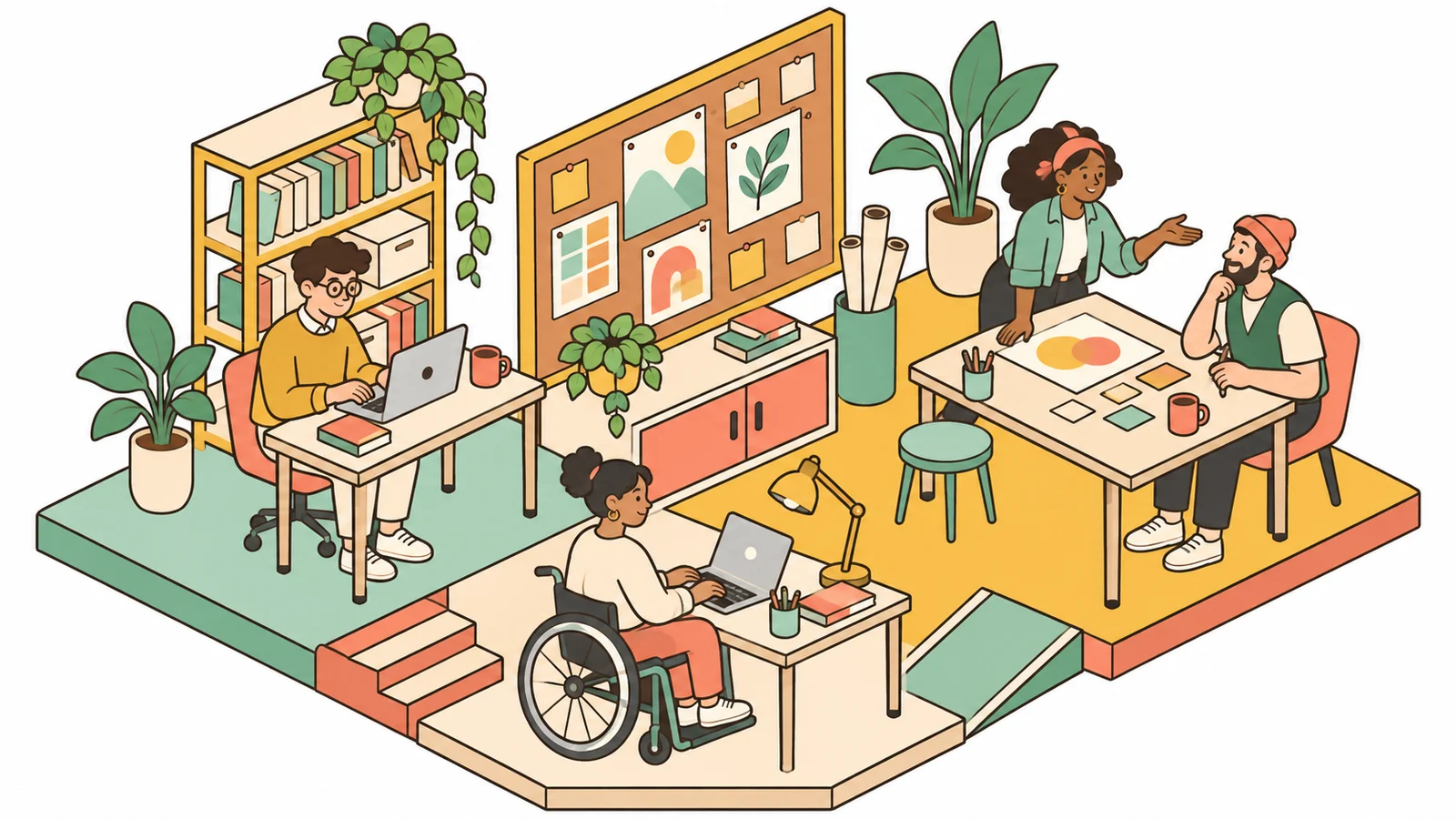
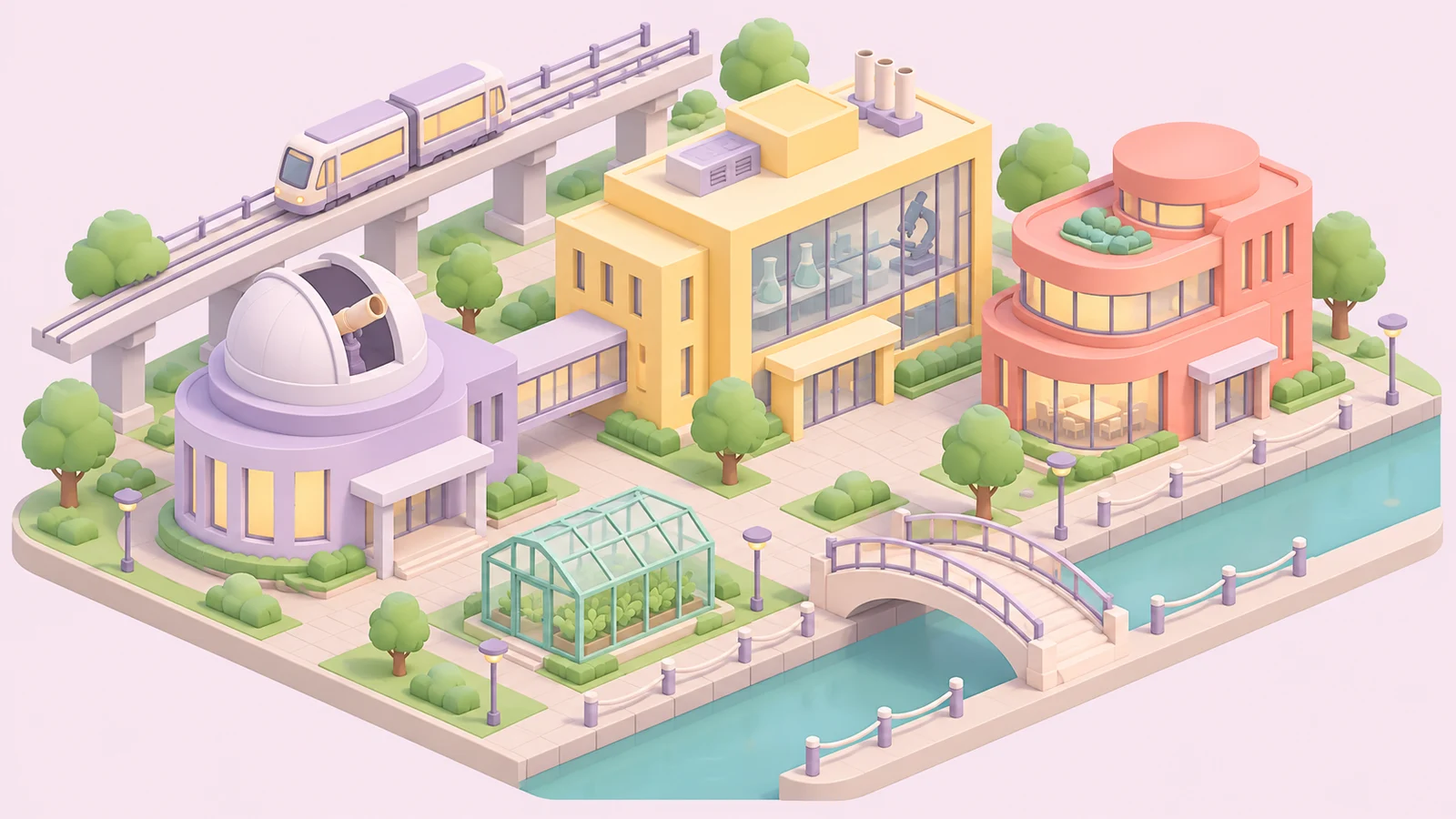
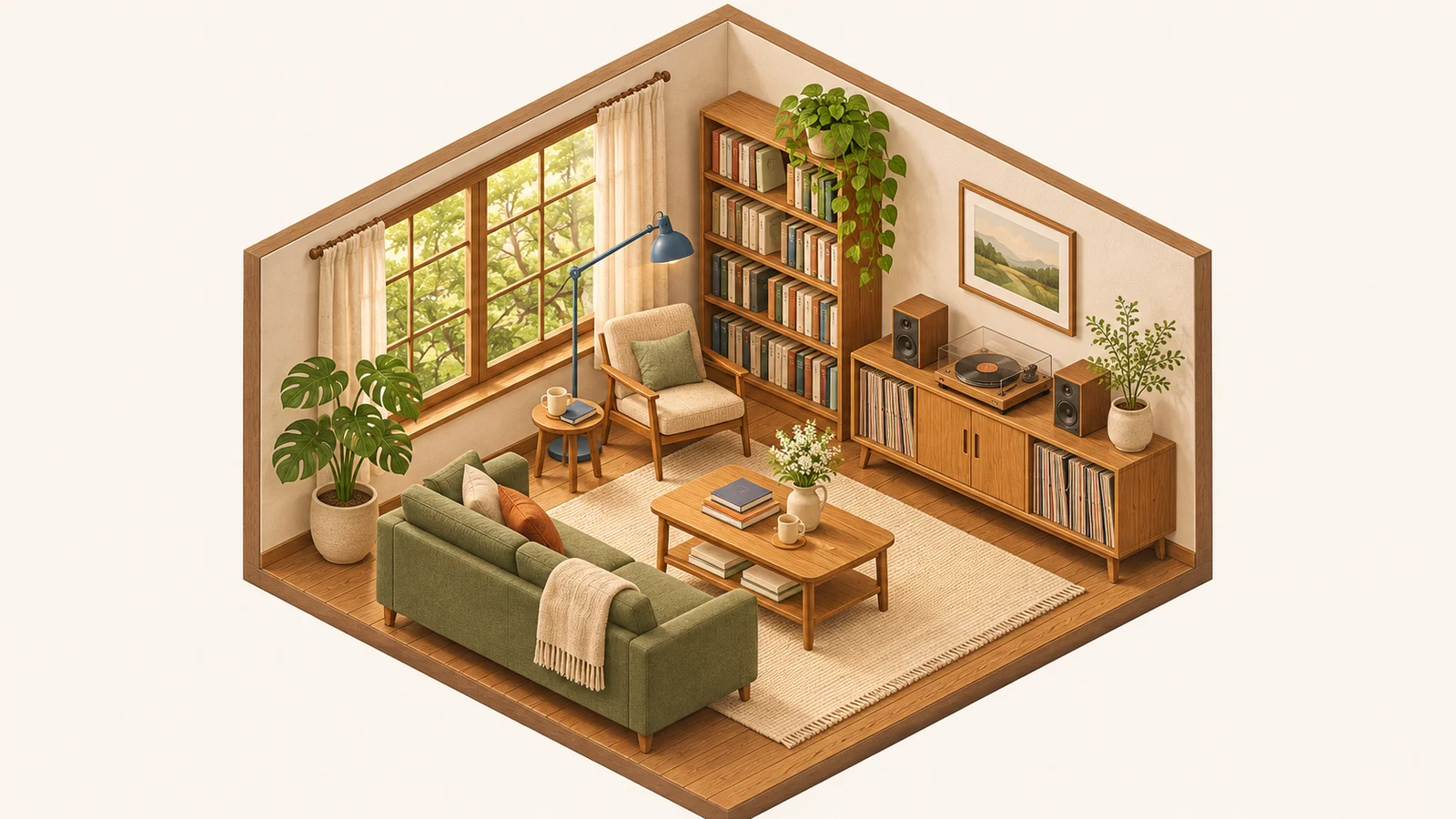
The reference images on this page explore several applications, from compact illustrated shops to a textured cutaway room. A tilted miniature is not automatically isometric: check axis alignment, repeated-object scale and parallel edges. These are original AI-generated visual studies rather than measured technical drawings.
Research informing this technique
“One consistent view makes a whole system legible.
The visual DNA: what makes it recognisable
The definitive color scheme for this aesthetic
The colour of the styles sitting closest to this one
Click any prompt row to edit. Copy uses your edited text.
Original isometric illustration using orthographic parallel projection: equal scale along three principal axes; in the standard upright view
Visual cuesvertical edges stay vertical and receding axes slope at equal opposing 30-degree angles. Parallel edges remain parallel; no vanishing points or shrinking objects with distance. Build one coherent scene with consistent scale, clear silhouettes and restrained detail. Surface treatment follows the selected medium. Avoid copied reference compositions, generic perspective miniatures and inconsistent camera angles.
Paste as-is, or add your own subject.
Photograph: raised ground platforms, filling the frame.
SettingSet in a setting of matte dimensional solids. Shot wide, the whole scene with room around it, in the style's own light, as the brief describes it.
DetailKeep miniature streets and buildings in the frame.
StyleStyle: Original isometric illustration using orthographic parallel projection: equal scale along three principal axes; in the standard upright view, vertical edges stay vertical and receding axes slope at equal opposing 30-degree angles. Parallel edges remain parallel; no vanishing points or shrinking objects with distance. Build one coherent scene with consistent scale, clear silhouettes and restrained detail. Surface treatment follows the selected medium. Avoid copied reference compositions, generic perspective miniatures and inconsistent camera angles..
PaletteColour palette #EE826E #73BDB0 #E8C556 #4A5974 #F5F0E5.
FrameComposed for a 16:9 landscape frame.
RulesPhotographic, not an illustration. No text, no logos, no watermark.
The whole record as a portable skill for Claude, ChatGPT, Gemini, image and video models, or a human brief
The whole record, compiled into a skill another system can work inside: lineage, axes, palettes, type, materials, photography, verdicts and a critique checklist. Nothing is generated; it is the dossier, restructured.
The record applied to your project. The record's kit is free; your brand, references and plates come with membership
01 · Hero application02 · Material and finish03 · Palette in context04 · Photography direction
Whether to use it, what it costs to do properly, and where it stands right now.
Two written calls, seven meters, and when to walk away
Establish the grid and repeated-object scale first. A consistent projection carries more weight than extra detail.
Use when the viewer benefits from seeing how parts relate. Make the arrangement explain something.
Small scenes are economical, while detailed assets and repeated views require a reusable construction system.
The challenge is choosing which spatial relationships and activities explain the idea.
Inconsistent axes, scale or occlusion become obvious as the scene grows.
Decorative miniatures can hide the information they were meant to explain.
It is an established approach for diagrams, maps, games and product illustration.
Parallel projection remains useful for communicating spatial relationships.
A shared grid, palette and component library improve consistency across a set.
A Pro feature: origins, practitioners, and pitfalls
Neighbours, cross-references, blends, and the questions people ask.
Connected across the creative knowledge graph
The three principal axes use equal scale and parallel edges remain parallel. In a standard upright drawing, one axis is vertical and the other two appear at equal opposing angles to the horizontal.
No. It can use linework, pixels, flat fills or 3D materials. Projection defines the method; surface treatment defines the finish.
Perspective usually makes objects smaller with distance and directs parallel edges toward vanishing points. Isometric maintains consistent scale and parallel edges.
No. Some use perspective or other axonometric constructions. Check the projected axes and scale rather than judging only the elevated viewpoint.
No. Generated scenes can communicate a visual idea but may contain geometric inaccuracies. Use constructed vector geometry or a validated orthographic 3D camera when measurements matter.
Every style in the library is broken down like this one: the palette, the typography, the materials and the lineage.
Explore the style library →