When to use it
- Sci-fi and speculative fiction
- Cultural celebrations
- Tech with heritage
- Music and film projects
African diaspora culture fused with technology, sci-fi, and cosmic mythology
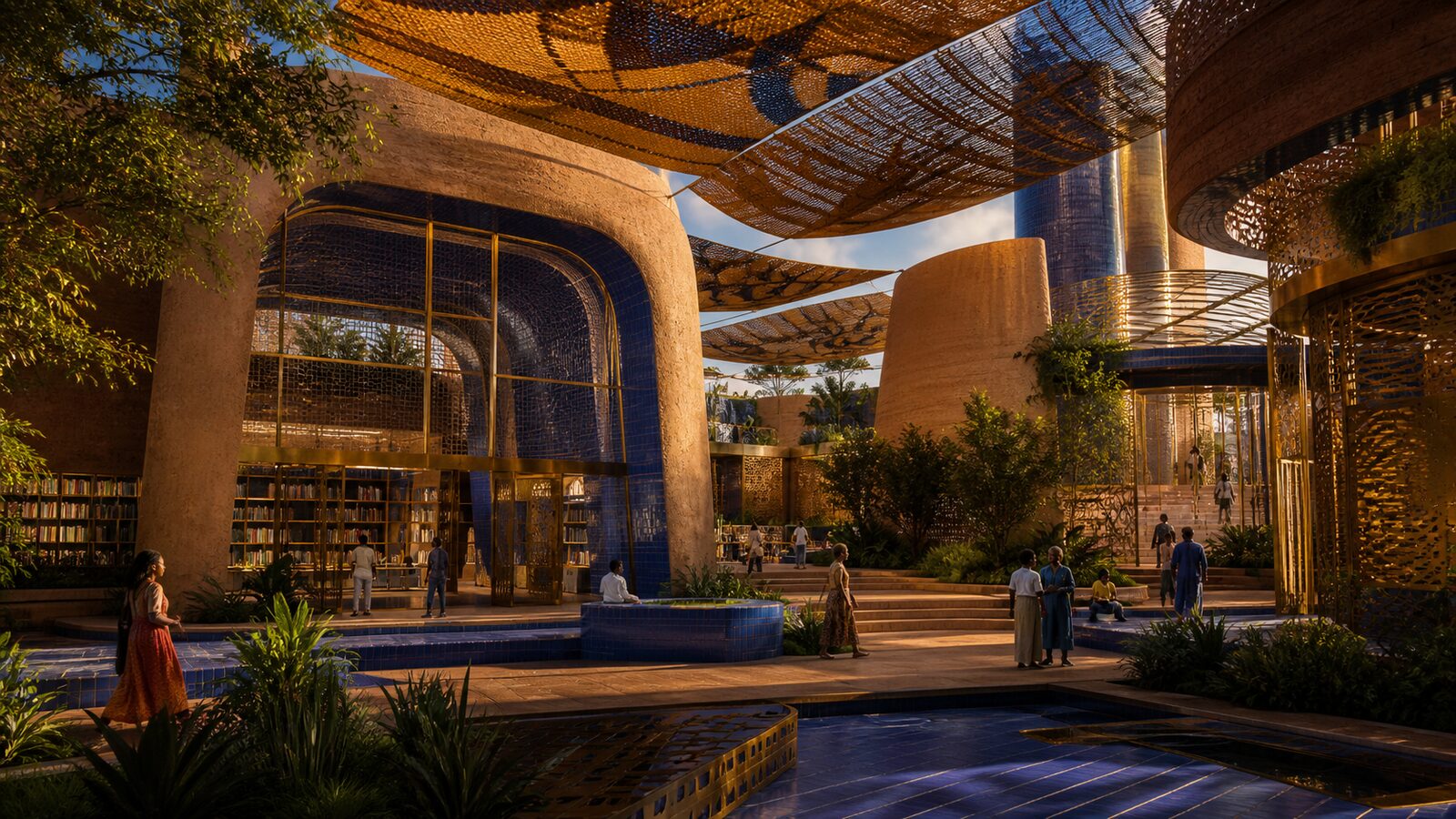
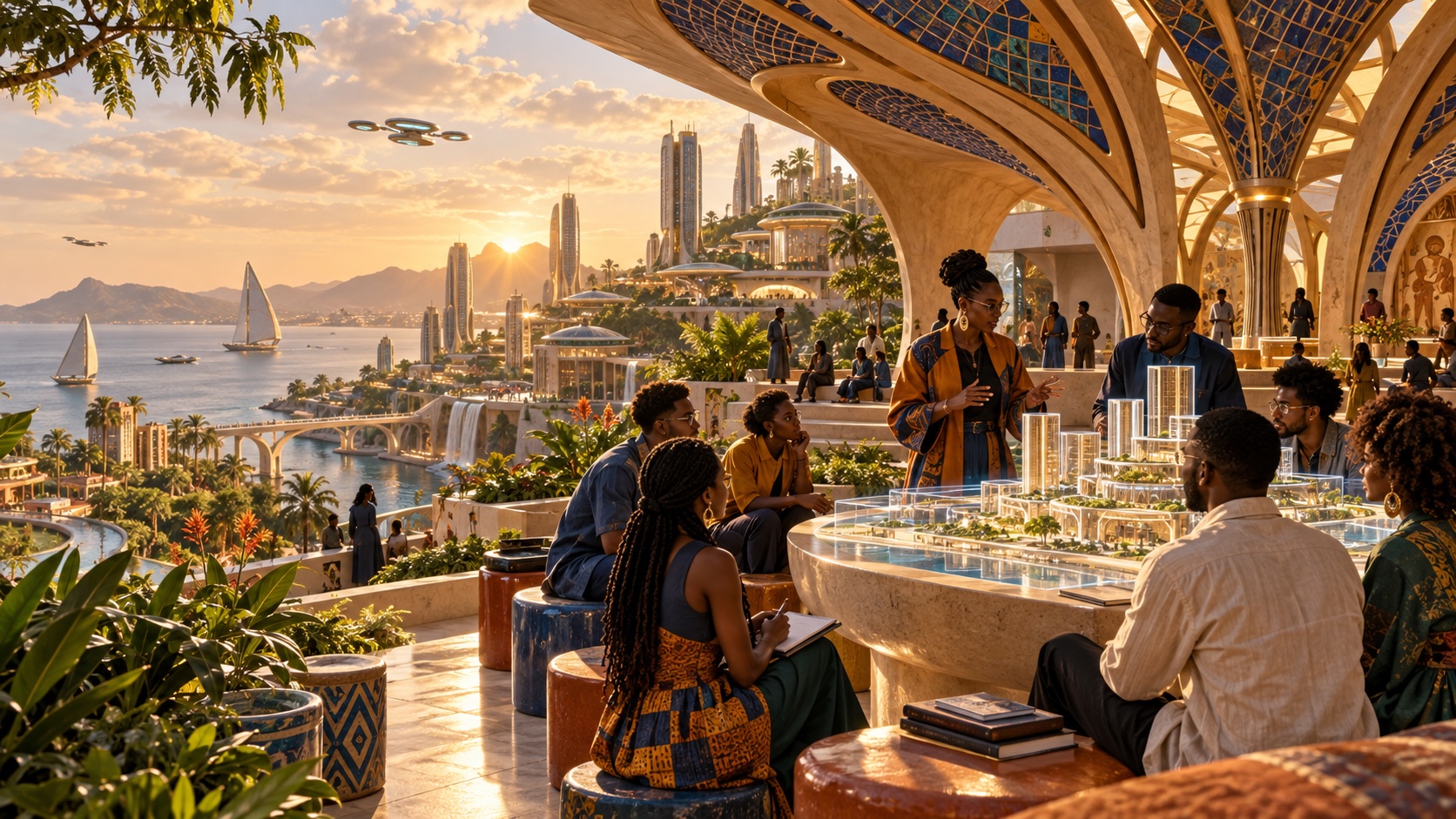
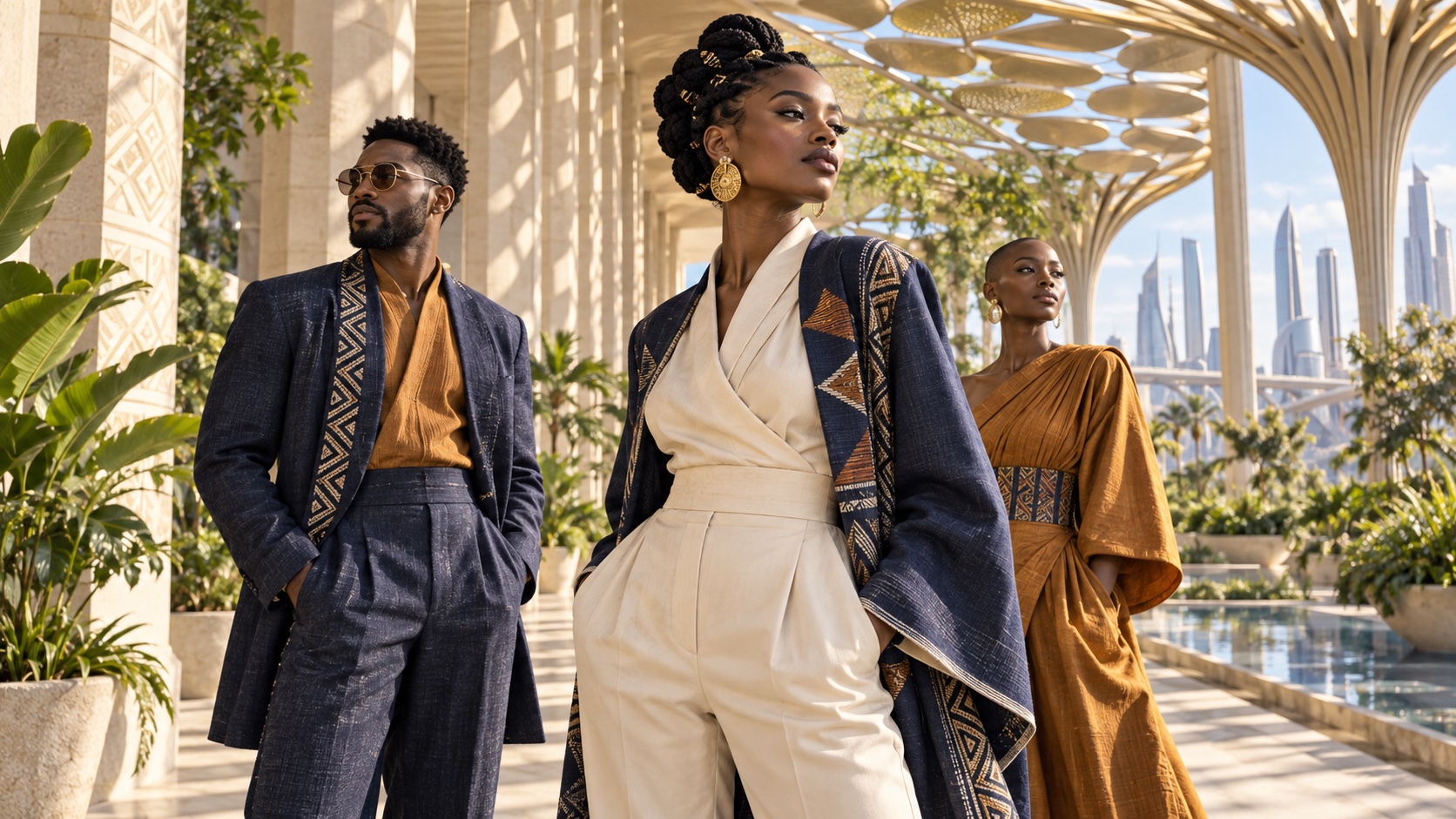




What it is, when it works, who it is for, and where it already exists.
Record 020-AF - when it works, who it is for, what it looks like
Where this aesthetic shows up in the real world · ↗ opens the source site
Where Afrofuturism came from, what makes it recognisable, and the fingerprint it leaves.
1960s–present (term coined 1993) · African American culture; music, literature, and visual art traditions
The term 'Afrofuturism' was coined by cultural critic Mark Dery in a 1993 essay, but the cultural practice it named had been ongoing for decades. Sun Ra's Arkestra (1950s onward) performed in Egyptian pharaonic costumes and claimed to have been born on Saturn. Parliament-Funkadelic's 'Mothership Connection' (1975) placed Black Americans in the role of cosmic travelers. Octavia Butler's science fiction novels (beginning with 'Patternmaster,' 1976) imagined futures where Black people were agents rather than objects of history. Visual artists like Jean-Michel Basquiat drew connections between Haitian Vodou iconography, African masks, and American urban experience.
The aesthetic emerged as a synthesis of African traditional visual culture (Kente textile geometry, Egyptian hieroglyphic iconography, Yoruba beadwork, Malian Dogon cosmology) with the visual language of science fiction (spacecraft, futuristic technology, alien environments): filtered through Black American cultural experience (jazz, funk, hip-hop, the history of slavery and liberation). The underlying proposition: that African people have ancient cosmological traditions as sophisticated as any and that futures belong to all of humanity, not only those who colonized the past.
Afrofuturism entered mainstream visual culture through Ryan Coogler's 'Black Panther' (2018), whose costume designer Ruth E. Carter drew explicitly on the tradition. Beyoncé's visual album 'Lemonade' (2016) and 'Black Is King' (2020) applied the aesthetic to pop visual culture. Contemporary designers and visual artists: Kehinde Wiley, Kara Walker, Kerry James Marshall: engage with its visual vocabulary in fine art contexts.
“Ancient history and the far future meeting in the same gilded frame.
The visual DNA: what makes it recognisable
8-channel console with the fingerprint on its display. Save the card, or share the page

5 color interpretations of this aesthetic
The colour of the styles sitting closest to this one
How to shoot it, how to prompt it, and how to board it.
How to shoot this aesthetic
"The African diaspora imagines tomorrow: ancestral technology, cosmic spirituality, and the future that was always present"
Shot list
Lighting
Deep warm golden key light (approximating the quality of African afternoon sun) with a cool fill that implies technology or cosmic light from the other direction
Drop this into Studio to generate in this aesthetic
Afrofuturist aesthetic with African diasporic cultural motifs fused with speculative technology, cosmic and celestial imagery, Sun Ra-lineage visual futurism, vibrant jewel-toned color richness
The record applied to your project. The record's kit is free; your brand, references and plates come with membership
01 · Hero application02 · Material and finish03 · Palette in context04 · Photography directionWhether to use it, what it costs to do properly, and where it stands right now.
Two written calls, seven meters, and when to walk away
The specificity is the point and generic futurism is the failure. Drawing on actual traditions, textile patterns, adornment and cosmology, rather than a vague sci-fi gloss, is what separates the work from a palette swap. Research the sources and credit them. Collaborate with the culture being drawn on, because the alternative is extraction wearing a chrome finish.
If you are working from outside the tradition, the expectation is collaboration and credit, not reference: it has named authors, a scholarly literature, and practitioners you can hire. Right where the work is genuinely about Black futures and Black authorship. Wrong as a palette. Black Panther made it globally legible and flattened it in the same move, which people inside the tradition said at the time.
Research and often real styling or costume, not just filters.
Needs real cultural grounding. Surface pastiche is obvious and hollow.
Blending cultural specificity with sci-fi visual language takes real skill.
Surface pastiche without real cultural grounding is obvious and hollow.
Growing steadily across music, fashion, and film right now.
A serious cultural movement, not a passing visual trend.
Real research and often real styling, not just filters.
A Pro feature: origins, practitioners, and pitfalls
Neighbours, cross-references, blends, and the questions people ask.
Connected across the creative knowledge graph
Where it stands now, and what it costs you to use it
Afrofuturism is a tradition with named authors, not a mood board: Sun Ra, Octavia Butler, George Clinton, Rammellzee, and a scholarly literature that predates the internet by decades. Treating it as a palette is the fastest way to get it wrong.
Black Panther made it globally legible and flattened it in the same move, which people inside the tradition said plainly at the time. Wakanda is one Afrofuturist proposition, not the definition.
Working with it from outside, the expectation is credit and collaboration rather than reference. It is a living practice with practitioners you can hire.
Mix Afrofuturism with any style in the library
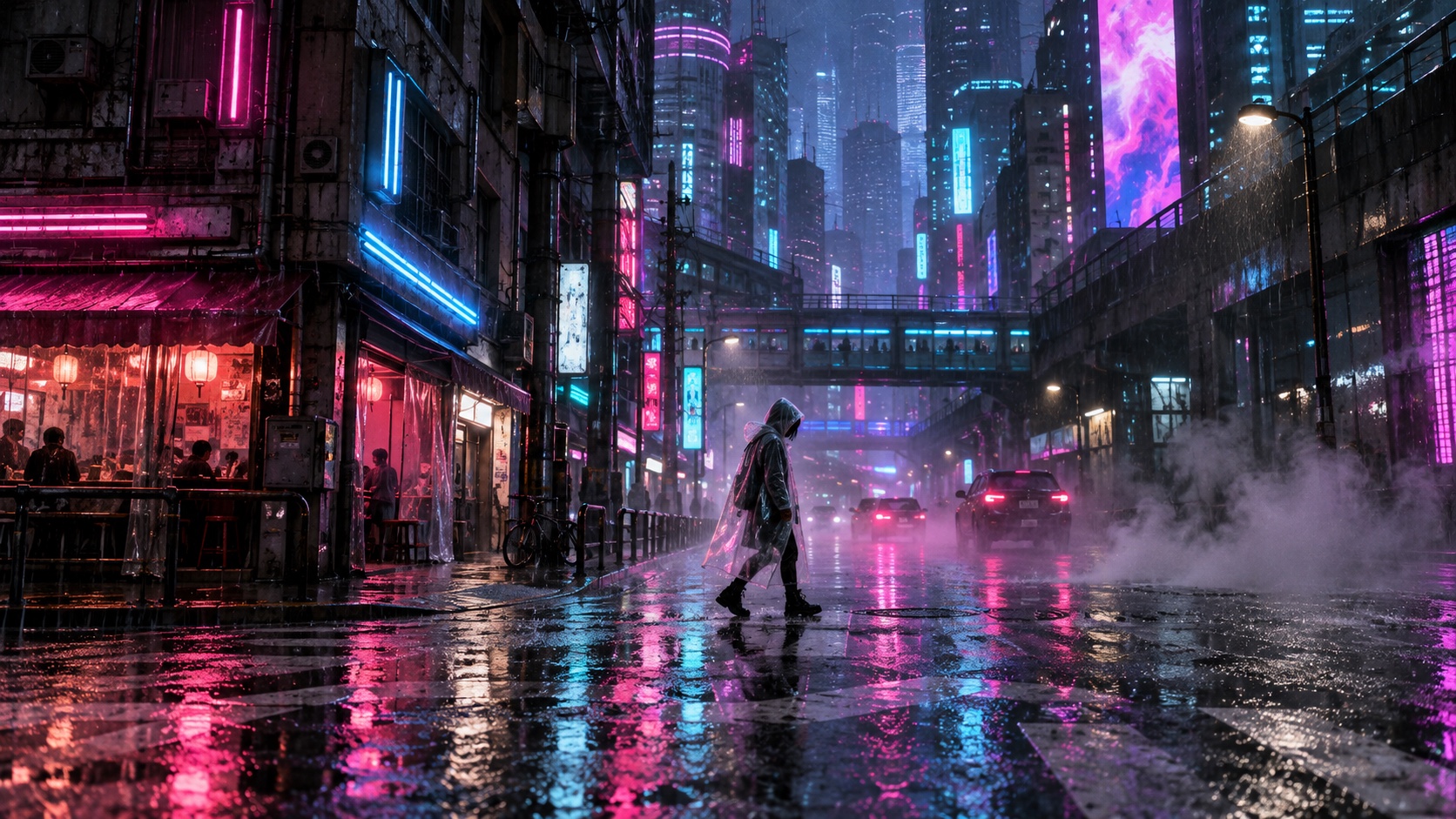 Afrofuturism 50%Cyberpunk 50%
Merged palette
#1A0A2E
#0D1117
#9B1D20
#FF6B35
#FF003C
Leads expressive, maximal, digital
Typography · from Afrofuturism
Space Grotesk over Inter
Materials
Use it
Afrofuturist aesthetic with African diasporic cultural motifs fused with speculative technology, cosmic and celestial imagery, Sun Ra-lineage visual futurism, vibrant jewel-toned color richness (50%), infused with Cyberpunk aesthetic with neon-soaked rain-slicked atmosphere, dystopian megacity mood, Blade Runner lineage by way of Ridley Scott and Denis Villeneuve, holographic advertisement clutter, moody high-contrast color grade, color palette strictly #1A0A2E #0D1117 #9B1D20 #FF6B35 #FF003C, overall character: expressive, maximal, digital
Afrofuturism is an aesthetic and cultural framework that combines African traditional imagery, Black American cultural experience, and science fiction to imagine Black-centered futures and reclaim the past. Visually: gold and deep indigo, Egyptian and sub-Saharan African iconography fused with futuristic technology, and cosmic scale.
Core elements: Egyptian and West African traditional imagery (headdresses, masks, Kente patterns), cosmic backgrounds (deep space, nebulae), gold as a unifying metallic, advanced technology designed with African aesthetic sensibilities, and a color palette of royal gold, deep space indigo, and terracotta earth tones.
Both imagine alternative futures and both center on equity and liberation. Afrofuturism is specifically grounded in Black and African cultural experience, using ancient African traditions as a cosmological foundation for future visions. Solarpunk is a broader ecological future vision (renewable energy, community, nature-integration) that doesn't have a specific cultural anchoring.
Every style in the library is broken down like this one: the palette, the typography, the materials and the lineage.
Explore the style library →