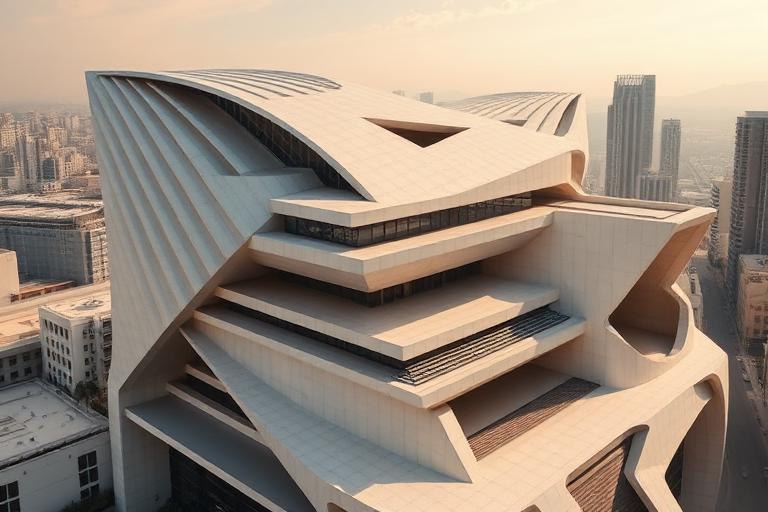
Constructivist Architecture

The Soviet avant-garde weaponized architecture - Melnikov's rotating cylindrical house, Tatlin's spiraling tower to the Third International, Leonidov's crystalline social condensers: ideology made material and diagonal.

Compare Constructivist Architecture with another style →See the Constructivist Architecture typefaces →On the timeline · 1920s
Record020-AC
AestheticConstructivist Architecture
ClassGeometric / Expressive
StatusINGESTING
Constructivist Architecture aesthetic archive image
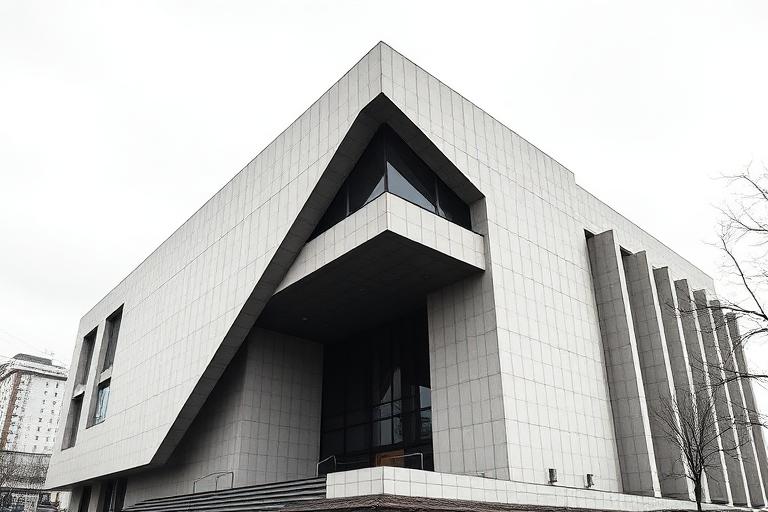
Archive plate · Constructivist Architecture
01
The record

What it is, when it works, who it is for, and where it already exists.

How to use it

Record 020-AC - when it works, who it is for, what it looks like

FIELD 01

When to use it

  • Brand identity that wants political edge, avant-garde credentials, and graphic dynamism
  • Cultural institution brand for exhibitions on Soviet, revolutionary, or utopian history
  • Design publication or platform positioning itself as oppositional and intellectually rigorous
  • Fashion brand that mines early-twentieth-century avant-garde as aesthetic resource
FIELD 02

Perfect for

  • Cultural institutions covering revolutionary and avant-garde design history
  • Fashion and streetwear brands with a visual politics or propaganda aesthetic
  • Architecture and design schools with a radical theoretical orientation
  • Political and advocacy organizations that want historical avant-garde credibility

In the wild, Constructivist Architecture aesthetic real-world examples

Where this aesthetic shows up in the real world · ↗ opens the source site

Omoro Style GuideEvery aesthetic, every field on this page, in one PDF.
$8Get the guide →
02
The anatomy

Where Constructivist Architecture came from, what makes it recognisable, and the fingerprint it leaves.

History, Constructivist Architecture aesthetic history

1920-1932 · Soviet Union

Constructivist architecture was the Soviet Union's contribution to the interwar avant-garde. While Bauhaus pursued the unity of art and industry and De Stijl explored abstract composition, the Constructivists saw architecture as a direct instrument of social transformation. Konstantin Melnikov's workers' clubs in Moscow (1927-1929) used radical geometry to create collective spaces for the new proletarian culture. Each club had a different formal strategy: the Rusakov Club's cantilevered auditorium sections, the Kauchuk Club's cylindrical volumes, the Burevestnik Club's interlocking triangular plans.

Vladimir Tatlin's Monument to the Third International (1920), though never built, became the movement's icon: a spiraling steel tower taller than the Eiffel Tower, containing rotating glass volumes for the Comintern's legislative, executive, and information functions. Its impossibility was part of its power. The Vesnin brothers, Moisei Ginzburg, and Ivan Leonidov produced designs that ranged from buildable social housing (Ginzburg's Narkomfin Building, 1930) to visionary proposals for entire socialist cities.

Stalin's turn toward Socialist Realism in the early 1930s effectively killed Constructivism. The Palace of the Soviets competition (1931-1933) rejected Le Corbusier's and the Constructivists' entries in favor of Boris Iofan's neoclassical tower. Many Constructivist architects were marginalized or persecuted. Their buildings, neglected for decades, are now being recognized as some of the twentieth century's most radical architectural achievements. The Narkomfin Building was restored in 2020.

Architecture enlisted in the revolution.

Omoro dossier · 020-AC

Visual markers, Constructivist Architecture aesthetic visual markers

The visual DNA: what makes it recognisable

typography

See the fonts
  • Bold geometric sans-serifs and Cyrillic display faces
  • Diagonal and rotated text creating dynamic composition
  • Red and black two-color printing traditions
  • Propaganda poster typography: bold, condensed, urgent

grid

  • Dynamic diagonal compositions and asymmetric massing
  • Interlocking geometric volumes (cylinders, cubes, wedges)
  • Elevated walkways and bridges connecting building masses
  • Plans generated by circulation diagrams and program relationships

materials

  • Rendered and painted concrete in white and grey: #D8D4CC, #C0BCB4
  • Red brick and painted accents: #B84040, #C85050
  • Steel frame and industrial glazing: #6B6B6B, #808080
  • Glass in horizontal strip windows and curtain walls

motifs

  • Cantilevered volumes projecting beyond the structural grid
  • Cylindrical stair towers and rotunda forms
  • Ribbon windows wrapping around corners
  • Rooftop terraces and communal facilities

Aesthetic profile

8-channel console with the fingerprint on its display. Save the card, or share the page

Aesthetic Profile
Constructivist Architecture
Early Modern
1920–1932
Attribute console · 020-AC
leans geometric, expressive, nostalgic
8 CH
FIG. 1
MaximalMinimalAnalogDigitalExpressiveRestrainedCoolWarmNostalgicFuturisticStructuredChaoticDarkLightGeometricOrganic
01Minimal
Maximal30%
02Analog
Digital20%
03Restrained
Expressive50%
04Cool
Warm30%
05Futuristic
Nostalgic50%
06Structured
Chaotic40%
07Dark
Light10%
08Organic
Geometric70%
GeometricExpressiveNostalgic3 materials
Omoro · Attribute console · 020-AC
omoro.io/styles/arch-constructivism

Material assembly

The style's primary materials, assembled bottom-up

Tap a stratum for material detail · Full catalog

Place in history

Early Modern · 1920–1932 - tap any style to travel

Color Palettes, Constructivist Architecture color palettes and hex codes

4 color interpretations of this aesthetic

Constructivist Architecture
#1A1A1A · #B5240A · #E8C800 · #F0F0F0 · #484848
Diagonal dynamism and industrial material as built ideology
Tatlin Tower
#0C0C0C · #C82020 · #484848 · #A0A0A0 · #E8E4DC
The unbuilt monument: steel spiral and revolutionary red
Workers Club
#1A1A1A · #B82018 · #2A5088 · #C8B898 · #E8E0D0
Rodchenko's interior: angular furniture and diagonal composition
Melnikov House
#181818 · #585050 · #A89880 · #C8C0B0 · #E8E0D0
Twin interlocking cylinders: hexagonal windows in Moscow plaster
Omoro Palette Pack575 curated palettes across every aesthetic, 5 export formats.
$8Get the palettes →

Adjacent Palettes, styles related to Constructivist Architecture

The colour of the styles sitting closest to this one

Architectural Futurism
De Stijl
Bauhaus Architecture
Socialist Modernism
03
The direction

How to shoot it, how to prompt it, and how to board it.

Photo Direction

How to shoot this aesthetic

"Revolution rendered in diagonal steel"

Shot list

  • Wide shot emphasizing a dynamic diagonal structural element cutting across the frame
  • Detail shot of exposed industrial material riveted steel, raw concrete honestly presented
  • Low-angle shot exaggerating the structure's machine-age geometric abstraction

Lighting

Hard, high-contrast daylight that separates each diagonal structural plane into a distinct value flat light merges the geometry into a single confusing mass

Omoro Director's Briefs151 photo shot-lists like this one, ready to shoot from.
$8Get the briefs →

Generative Prompt

Drop this into Studio to generate in this aesthetic

Russian Constructivist architecture with dynamic diagonal structural elements, industrial materials expressed honestly, geometric abstraction serving utilitarian function, Tatlin and Melnikov influence, revolutionary machine-age optimism

Paste as-is, or append your own subject

Mood Board

The record applied to your project. The record's kit is free; your brand, references and plates come with membership

Mood board
The Constructivist Architecture board
8 frames · 4 selected
FIG. 4
Iron Frame1A1A1ARevolutionary RedB5240APropaganda GoldE8C800PlasterF0F0F0Industrial Steel484848
Brand and references
IdleBrand and references open with membership
With membership: the brand's own facts and colours in every prompt, references carried into every frame, and the plates generated.
01 · Hero application
02 · Material and finish
03 · Palette in context
04 · Photography direction
05 · Pattern plate
06 · Object
07 · Environment
08 · Digital presence
Demo kit free, the rest with membershipThe record as a demo kit, free. Name a project and it is written for that
Omoro · Mood board · 020-AC
04
The judgement

Whether to use it, what it costs to do properly, and where it stands right now.

Creative verdict, Constructivist Architecture feasibility and strategic recommendation

Two written calls, seven meters, and when to walk away

Creative verdict
Should Constructivist Architecture be the call?
7 meters
FIG. 2
Assessment

The dynamism came from real structural ideas. Tatlin and the Vesnins drew forms that expressed load and rotation, and a diagonal drawn for excitement is the empty version, which is easy to spot. Let the structure make the angle. Bold flat colour and heavy geometric type belong to the language, so the graphics are part of the building, not applied to it.

Verdict

Right when the work needs a graphic language of urgency, which is the part that outlived the buildings: the diagonal, the sans serif, the red and black, quoted constantly by people unaware of the source. The architecture itself had about a decade before Stalin ended it in favour of classicism, and much of it was never built or has been lost.

Production cost
High

Ideology made material at diagonal, structural scale.

Creative difficulty
High

Ideology has to actually show up in the form, not just the intent.

Execution difficulty
High

Diagonal, cantilevered structure is genuinely hard engineering.

Risk of misuse
Medium

Ideology has to actually show up in the form, not just the intent.

Prevalence
Rare

A rare, mostly historical and academic reference.

Longevity
Enduring

Still studied and cited a century after the fact.

Brand investment
High

Ideology made material at diagonal, structural scale.

Avoid if
The audience is unfamiliar with the ideology behind it
Without that context, the diagonal forms just look arbitrary.
The form doesn't actually express the ideology
Ideology has to show up in the structure itself, not just the artist's statement.
Omoro · Creative verdict · 020-AC

Editorial Depth

A Pro feature: origins, practitioners, and pitfalls

Editorial depth
The Constructivist Architecture file
14 sections
FIG. 3
Context02Brands02Perception04Use04Index02
01Common MisconceptionThe principle beneath the surface
02Historical ContextOrigins, cultural moment, and reaction
03Brands That Accidentally Use This StyleNatural alignment, not category claims
04Brands That Perfectly Represent This StyleExceptional execution
05Psychological EffectHow visual decisions change perception
06Visual ChecklistInclude and avoid
07Creative FormulaThe visual system reduced to essentials
08Recognition SignalsHow to recognize it in two seconds
09When To Use This StyleContexts where the language performs
10Common Creative MistakesWhere imitation weakens the signal
11Best Brand ApplicationsIndustries with a natural advantage
12Creative Application AnalysisFit, feasibility, and production reality
13Related StylesClose languages and the key distinction
14Visual DNA SummaryThe sentence to remember
The editorial depth, with membershipOpening soon
Omoro · Editorial depth · 020-AC
05
The index

Neighbours, cross-references, blends, and the questions people ask.

Related concepts

Connected across the creative knowledge graph

Cultural relevance, Constructivist Architecture cultural relevance today

Where it stands now, and what it costs you to use it

Russian constructivism produced roughly a decade of the most radical architecture of the twentieth century before Stalin ended it in favour of classicism.

Much of it was never built and much of what was built has been lost, so the movement survives largely through drawings and photographs.

Its graphic language, the diagonal, the sans serif, the red and black, has outlived its buildings and is quoted constantly by people unaware of the source.

Cross-references

Brutalist ArchitectureBrutalism inherited Constructivism's commitment to social architectureDe Stijlboth explored abstract geometric composition in architecture simultaneouslySocialist ModernismSocialist Modernism was the Eastern Bloc's post-Stalinist return to modernist principles

Blend

Mix Constructivist Architecture with any style in the library

Constructivist Architecture×
50%50%
52% alike
Constructivist Architecture referenceArchitectural Futurism referenceConstructivist Architecture 50%Architectural Futurism 50%

Merged palette

#1A1A1A

#1A1A2E

#B5240A

#3A3A5C

#E8C800

Leads geometric, expressive, cool

Typography · from Constructivist Architecture

Space Grotesk over Inter

Materials

  • Rendered and painted concrete in white and grey: #D8D4CC, #C0BCB4
  • Red brick and painted accents: #B84040, #C85050
  • Polished metal and machine-finished surfaces: #C0C0C0, #A8A8A8

The calls this blend forces

These two disagree on 3 things, and a blend cannot average them: you pick a side. At this mix:

Nostalgic or Futuristic? Constructivist Architecture is nostalgic, Architectural Futurism is futuristic. This mix lands futuristic.

Analog or Digital? Constructivist Architecture is analog, Architectural Futurism is digital. This mix lands digital.

Structured or Chaotic? Constructivist Architecture is structured, Architectural Futurism is chaotic. This mix lands structured.

Use it

Russian Constructivist architecture with dynamic diagonal structural elements, industrial materials expressed honestly, geometric abstraction serving utilitarian function, Tatlin and Melnikov influence, revolutionary machine-age optimism (50%), infused with Futurist architecture with dynamic speed-lines and machine-age optimism, Sant'Elia's visionary unbuilt city drawings, industrial materials celebrating velocity and technology, bold diagonal thrust, early-20th-century avant-garde energy, color palette strictly #1A1A1A #1A1A2E #B5240A #3A3A5C #E8C800, leaning nostalgic over futuristic, analog over digital, structured over chaotic, overall character: geometric, expressive, cool

One-click generation opens with the studio

About this aesthetic

What is Constructivist architecture?

Constructivist architecture was the Soviet avant-garde movement of the 1920s that used radical geometric forms and innovative construction to serve the goals of socialist revolution. Key works include Melnikov's workers' clubs, Ginzburg's Narkomfin Building, and Tatlin's unbuilt Monument to the Third International.

Why did Constructivism end?

Stalin's regime rejected avant-garde experimentation in favor of Socialist Realism (monumental neoclassicism) starting in the early 1930s. Constructivist architects were sidelined, their buildings neglected, and the movement's radical social vision was replaced by state-mandated traditionalism.

How is Constructivism different from Brutalism?

Constructivism (1920s Soviet Union) used dynamic geometric forms as instruments of social revolution. Brutalism (1950s-70s, primarily Western) used raw concrete as an expression of material honesty. Both produced monumental public buildings, but Constructivism was more formally adventurous while Brutalism was more materially focused.

Build with the constructivist architecture aesthetic

Every style in the library is broken down like this one: the palette, the typography, the materials and the lineage.

Explore the style library →