When to use it
- Limited edition art sales
- Poster and print design
- Textile pattern design
- Traditional craft marketing
Art created through printing techniques like etching and screen printing
Part of the Authenticity & Craft mood, alongside Wabi-Sabi and Cottagecore.
What it is, when it works, who it is for, and where it already exists.
Record 035-PR - when it works, who it is for, what it looks like
Where this aesthetic shows up in the real world · ↗ opens the source site
Where Printmaking came from, what makes it recognisable, and the fingerprint it leaves.
10th century CE (woodblock printing)–present · China and Japan (woodblock); Europe (intaglio); contemporary global practice
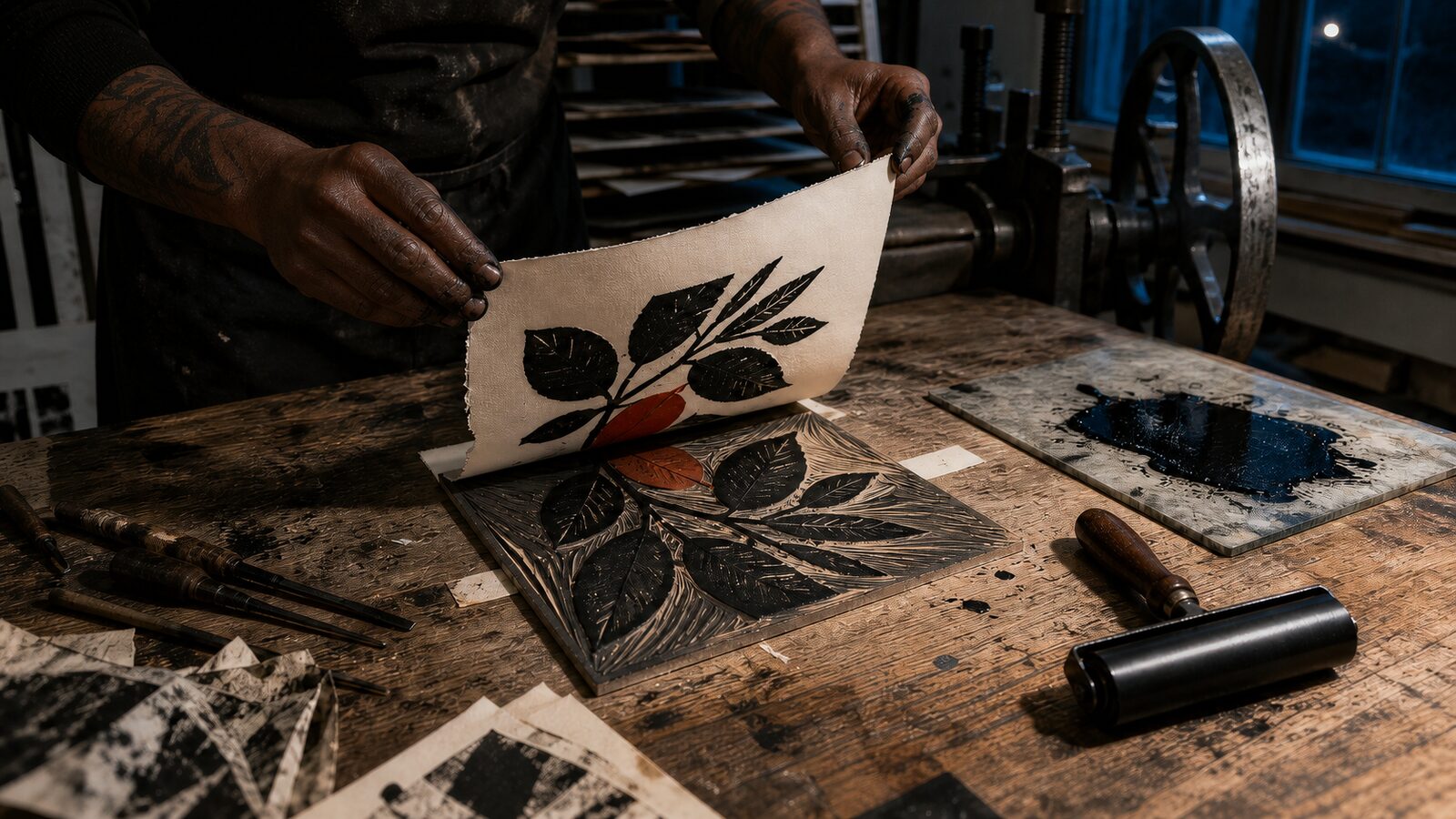
Printmaking encompasses techniques that transfer ink from a prepared matrix (carved wood, etched metal, drawn stone, photosensitive screen) to paper or fabric. The major traditions: relief printing (woodcut: the oldest Western technique, used by Dürer and Hokusai), intaglio (etching, engraving, aquatint: the medium of Rembrandt, Goya, and Piranesi), planographic (lithography: the medium of Toulouse-Lautrec and the 19th-century poster tradition), and screen printing (the 20th-century technique popularized by Warhol and the concert poster tradition).
Each printmaking technique produces a distinctive visual signature: woodcut's bold, graphic quality and visible grain; etching's fine lines and rich blacks from ink pooling in recessed grooves; lithography's tonal range and the photographic quality it enabled in commercial reproduction; screen printing's flat color layers and registration-error charm. These signatures are not merely technical but aesthetic: they tell you something about the conditions of the image's making.
The printmaking aesthetic is widely referenced in contemporary graphic design: the RISOGRAPH printer (a digital-stencil duplicator) has enabled an entire design aesthetic of limited flat colors, slight misregistration, and the halftone dot visible at normal viewing distances. Letterpress printing's deep impression into paper, the woodcut grain appearing in editorial illustration, and the screen print's ink-on-ink layering are all printmaking aesthetics actively deployed in contemporary design.
“The art of making the same image twice: and watching what changes.
The visual DNA: what makes it recognisable
8-channel console with the fingerprint on its display. Save the card, or share the page
4 color interpretations of this aesthetic
The colour of the styles sitting closest to this one
How to shoot it, how to prompt it, and how to board it.
How to shoot this aesthetic
"Ink under pressure: the discipline where each impression is both a copy and an original"
Shot list
Lighting
Side raking light for plates and blocks to reveal texture; overhead diffused light for finished prints to show color accurately; fluorescent or daylight-balanced tubes for the studio environment
Drop this into Studio to generate in this aesthetic
Printmaking aesthetic with visible plate texture and ink-transfer character, woodcut, etching, or screenprint process marks, registration and layering evident in the image, limited-edition print tradition, bold graphic reduction of form
The record applied to your project. The record's kit is free; your brand, references and plates come with membership
01 · Hero applicationWhether to use it, what it costs to do properly, and where it stands right now.
Two written calls, seven meters, and when to walk away
The matrix is the work and the print is the record. A weak plate cannot be rescued in the pulling, so the hours go into cutting and etching rather than proofing. Register in the right order, keep the edition honest, and number it truthfully. Work with the process: the marks the technique makes on its own are the only reason to use it.
Choose the process for the surface it gives, not for economics, which digital settled long ago. Its editions and numbering conventions exist to answer a question the discipline has argued for centuries: what makes a multiple original. Riso has taken most of the small-run market because it delivers the flaws people want at a fraction of the setup cost.
Press access and plates add up beyond materials.
The process itself shapes the image. Work with it, not against it.
Registration and technique are unforgiving of small errors.
Bad registration and technique are visible even to non-experts.
A niche craft presence outside dedicated print-forward brands.
One of the oldest reproducible art forms there is.
Press access and materials, but a contained process.
A Pro feature: origins, practitioners, and pitfalls
Neighbours, cross-references, blends, and the questions people ask.
Connected across the creative knowledge graph
Where it stands now, and what it costs you to use it
Printmaking sits between craft and reproduction, and its editions and numbering conventions exist to answer a question the discipline has argued about for centuries: what makes a multiple original.
Riso has taken over much of the small-run market, because it delivers the flaws people want at a fraction of the setup cost.
The traditional processes survive as choices rather than as necessities, which has made the field more deliberate about why a given method is being used.
Mix Printmaking with any style in the library
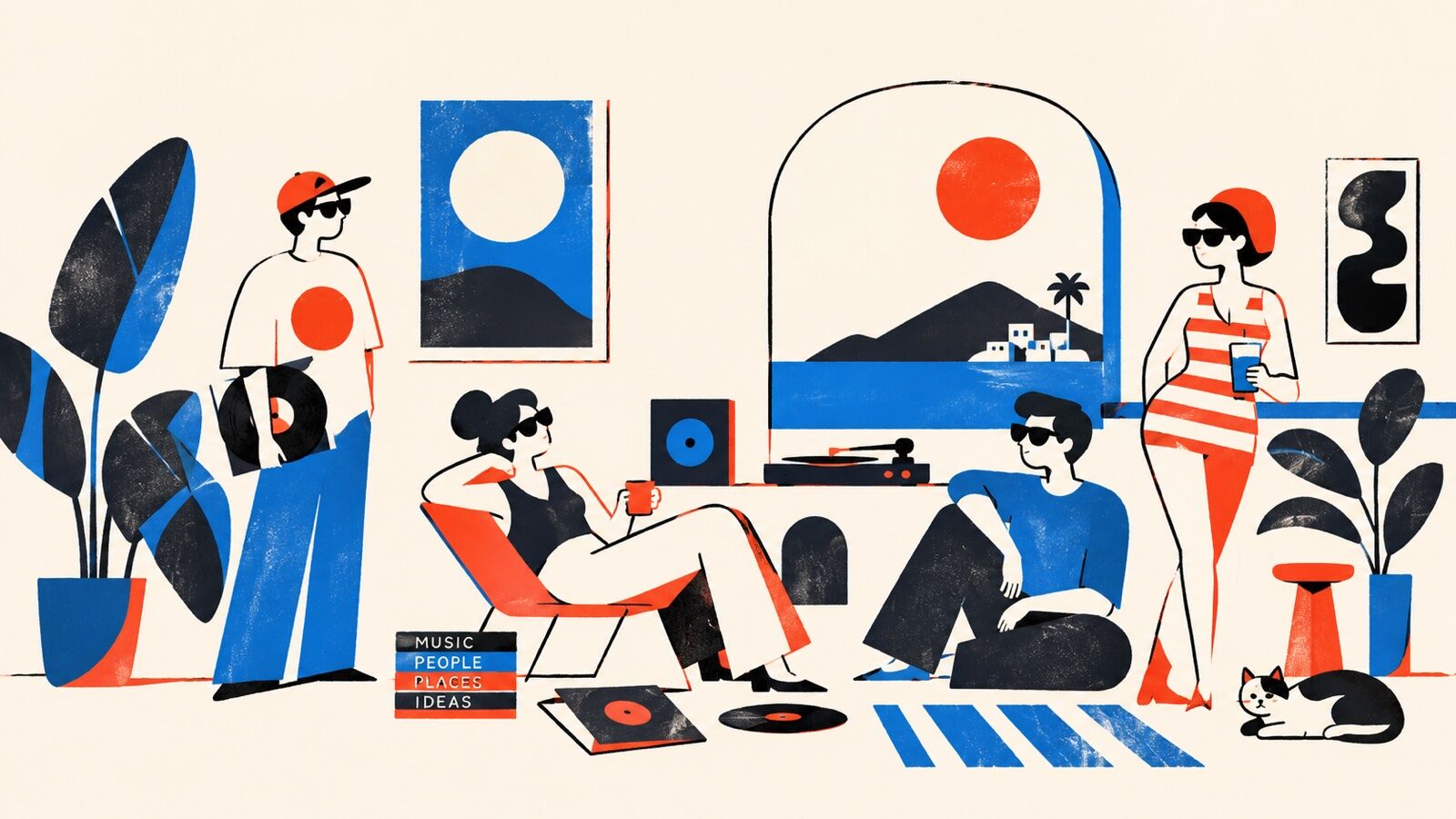 Printmaking 50%Illustration 50%
Merged palette
#1A1208
#D4361C
#2B4FAA
#4A7A3E
#8B6914
Leads expressive, analog, nostalgic
Typography · from Printmaking
Lobster over Libre Baskerville
Materials
The calls this blend forces
These two disagree on one thing, and a blend cannot average them: you pick a side. At this mix:
Analog or Digital? Printmaking is analog, Illustration is digital. This mix lands analog.
Use it
Printmaking aesthetic with visible plate texture and ink-transfer character, woodcut, etching, or screenprint process marks, registration and layering evident in the image, limited-edition print tradition, bold graphic reduction of form (50%), infused with Editorial illustration with confident linework and considered composition, mixed-media or digital-painting technique, conceptual visual metaphor communicating an idea at a glance, magazine and book-cover illustration tradition, expressive color mood suited to the story being told, color palette strictly #1A1208 #D4361C #2B4FAA #4A7A3E #8B6914, leaning analog over digital, overall character: expressive, analog, nostalgic
Printmaking aesthetic is defined by the visible traces of print processes: woodcut's bold grain and tool marks, etching's fine intaglio lines, screen print's flat color layers, lithography's tonal softness, RISOGRAPH's halftone dots and misregistration. Palette: ink black (#1A1814), RISOGRAPH orange (#F05018) and teal (#009090), warm paper (#F2EEE6). The aesthetic values the process mark: evidence of how the image was made: over seamless reproduction.
RISOGRAPH is a digital stencil duplicator (originally designed for office copying) that prints with soy-based ink through a thermal stencil at high speed. Its aesthetic qualities: limited flat color palette, visible halftone dots, slight ink variation, possible misregistration between colors: have become enormously popular in indie publishing, zine culture, and contemporary design. RISO printing produces results that digital printing cannot replicate, at a per-print cost accessible to small publishers.
Printmaking influences contemporary design through: RISOGRAPH's aesthetic popularizing limited-palette, halftone-visible, mis-register-friendly design; letterpress's revival creating appetite for tactile, impression-visible typography; screen printing's continued role in poster and merchandise design; and the general valorization of process visibility: design that shows how it was made. Woodcut's bold graphic quality appears in editorial illustration; etching's fine line in decorative and ornamental design.
Every style in the library is broken down like this one: the palette, the typography, the materials and the lineage.
Explore the style library →