When to use it
- Alternative history fiction
- Vintage tech products
- Themed experiences
- Craft and maker culture
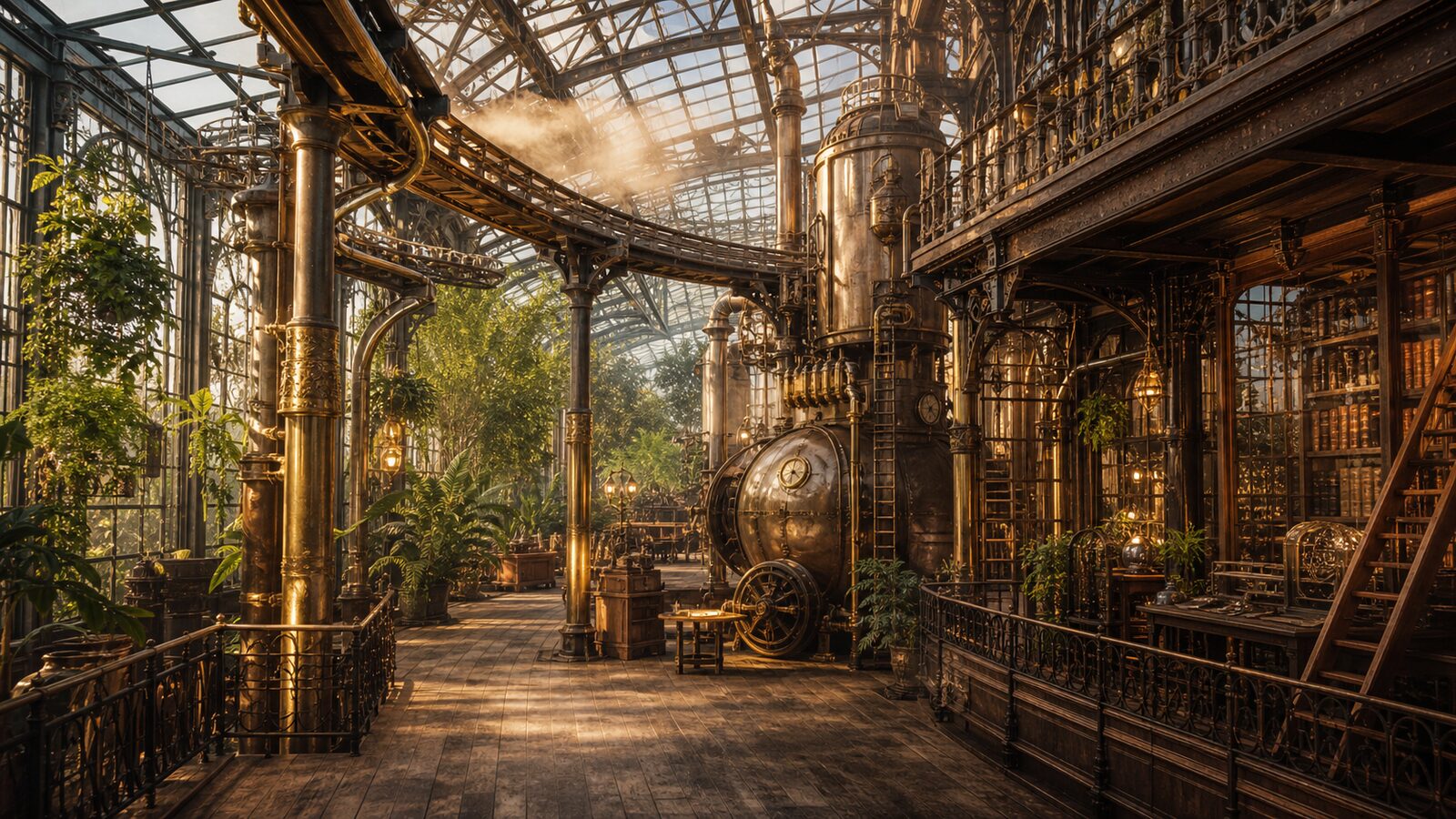
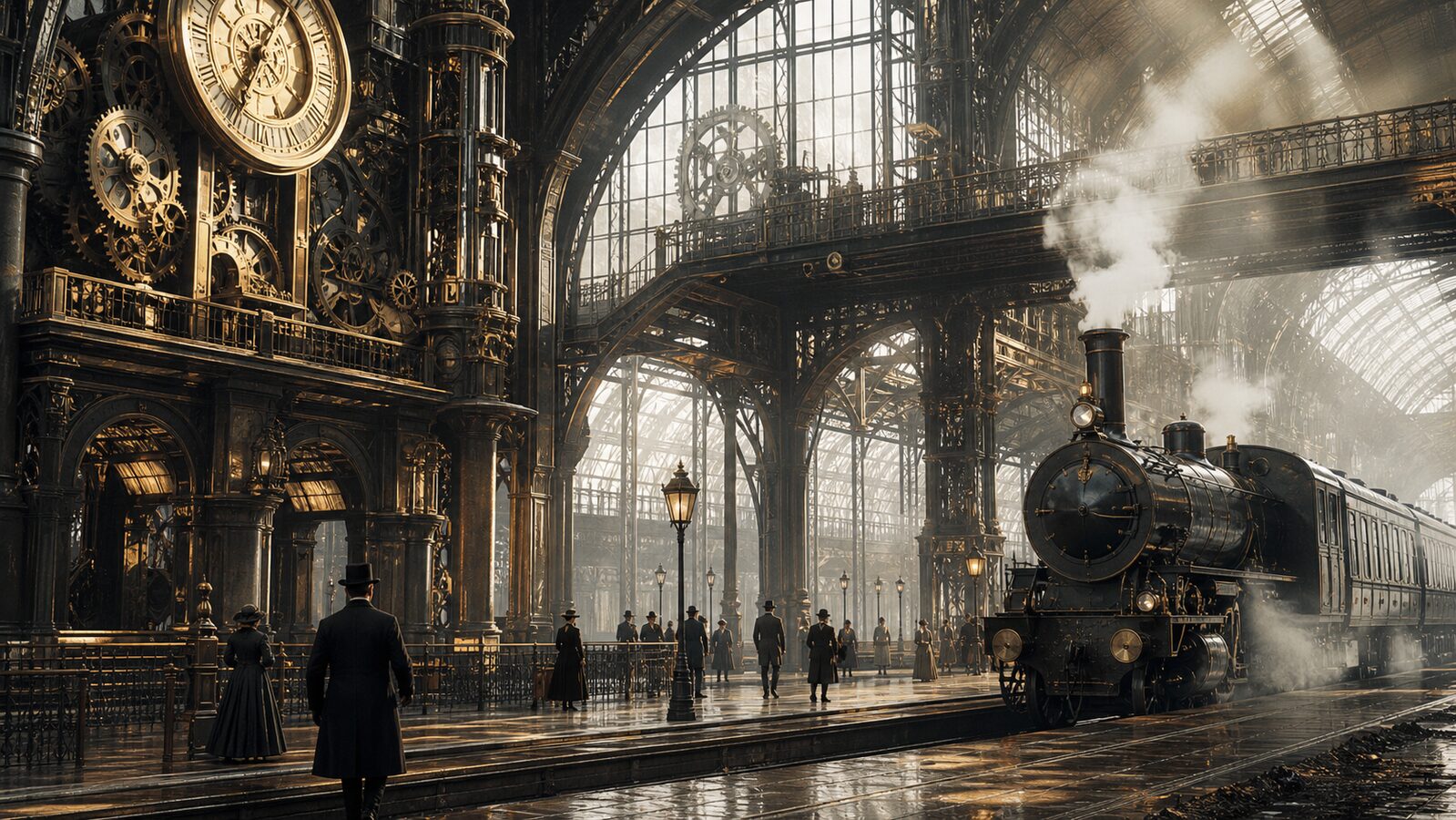
Victorian-era machinery meets speculative fiction with brass and gears
What it is, when it works, who it is for, and where it already exists.
Record 038-ST - when it works, who it is for, what it looks like
Where this aesthetic shows up in the real world · ↗ opens the source site
Where Steampunk came from, what makes it recognisable, and the fingerprint it leaves.
References 1837–1901; movement from 1980s onward · Science fiction literature; cyberpunk literature's Victorian cousin
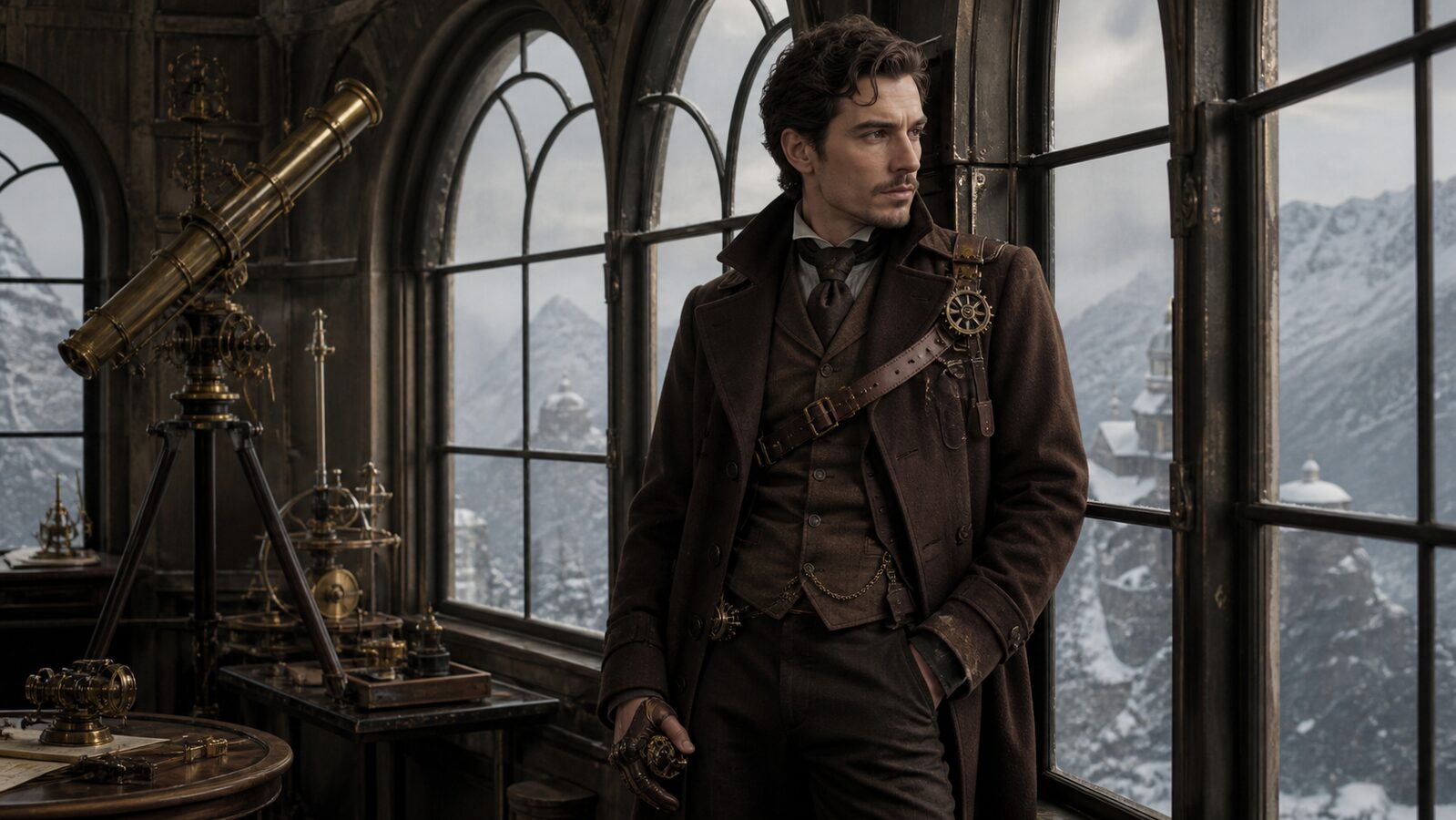
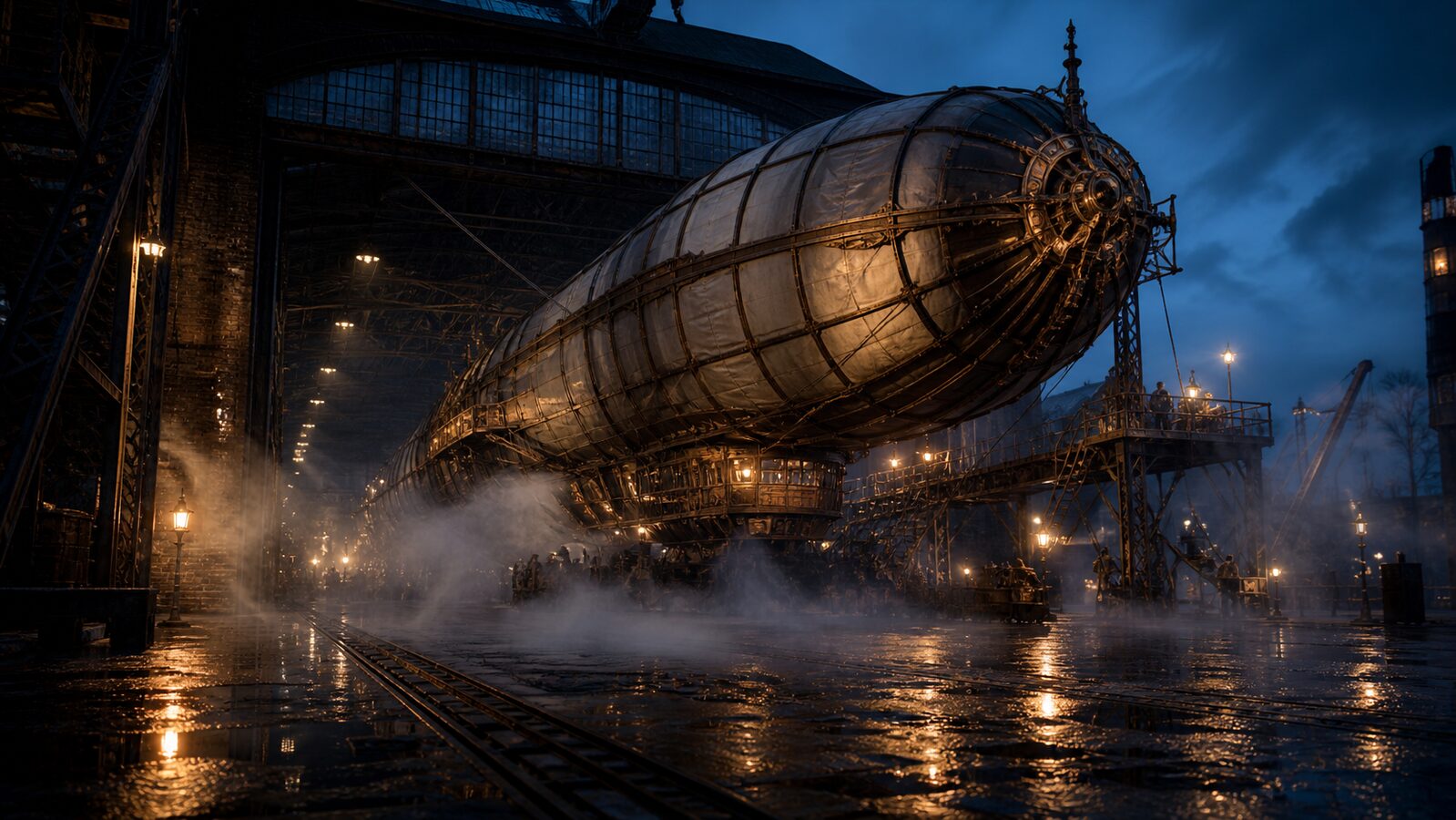
Steampunk as a named aesthetic emerged in the 1980s as an offshoot of cyberpunk, substituting steam technology for electronics and the Victorian era for the near-future. The term was coined (partially in jest) by author K.W. Jeter in a 1987 letter to Locus magazine, but the mode it described had precedents in H.G. Wells, Jules Verne, and Michael Moorcock's 'Nomad of Time' (1971). The premise: an alternate history where Victorian-era steam technology was developed to far greater sophistication: steam-powered computers, airships, mechanical automata, analytical engines: without the transition to electrical power.
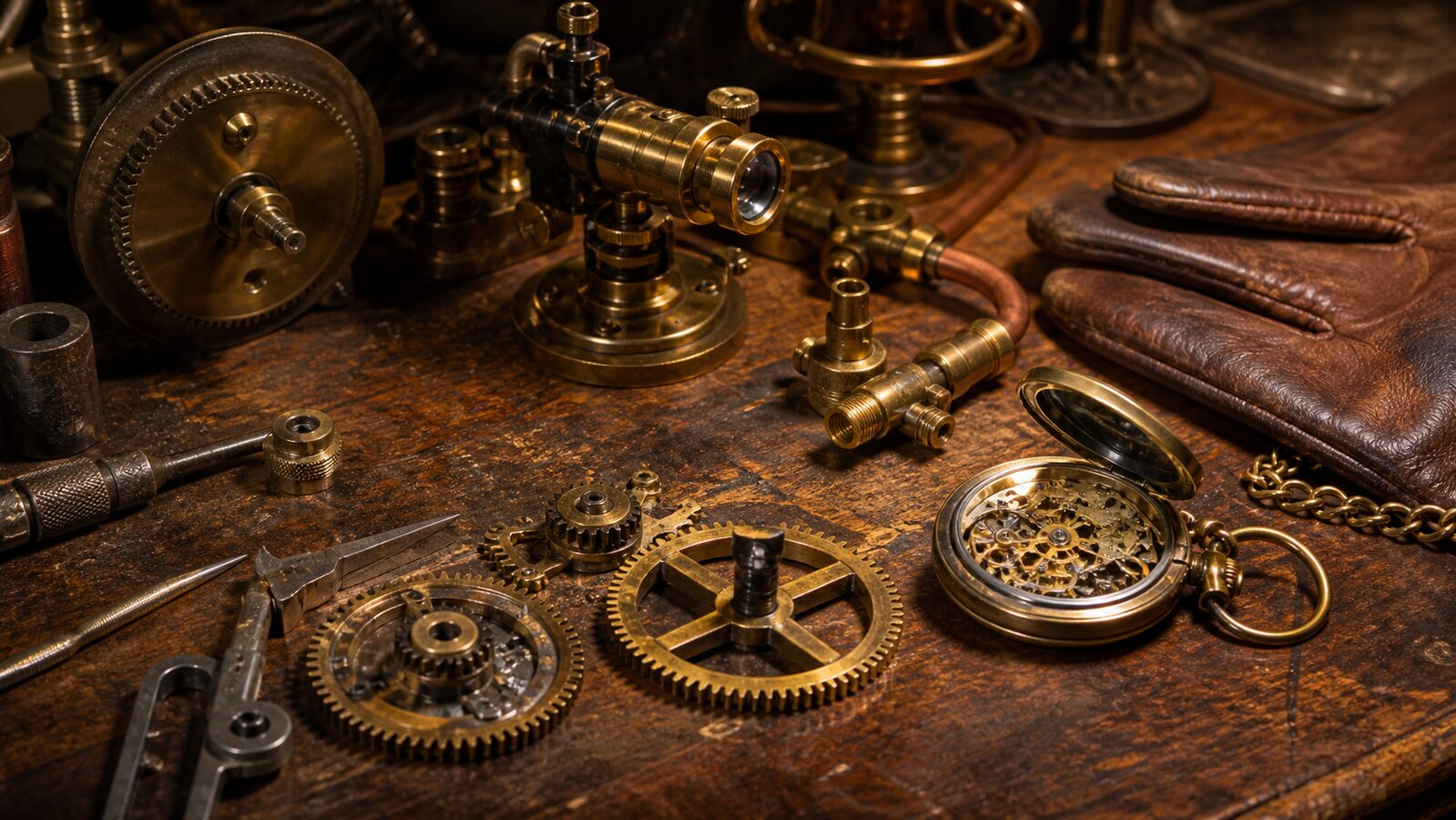
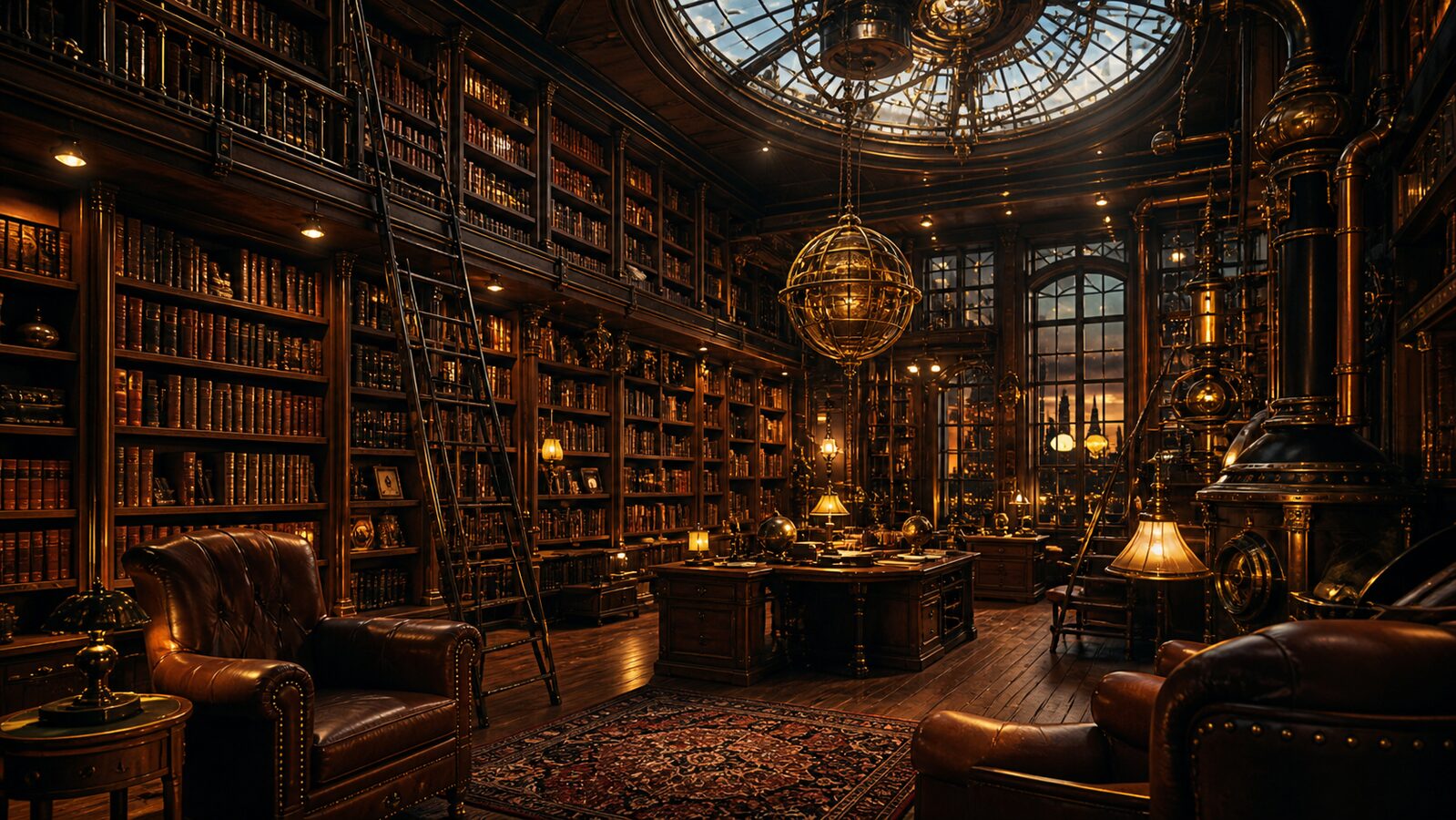
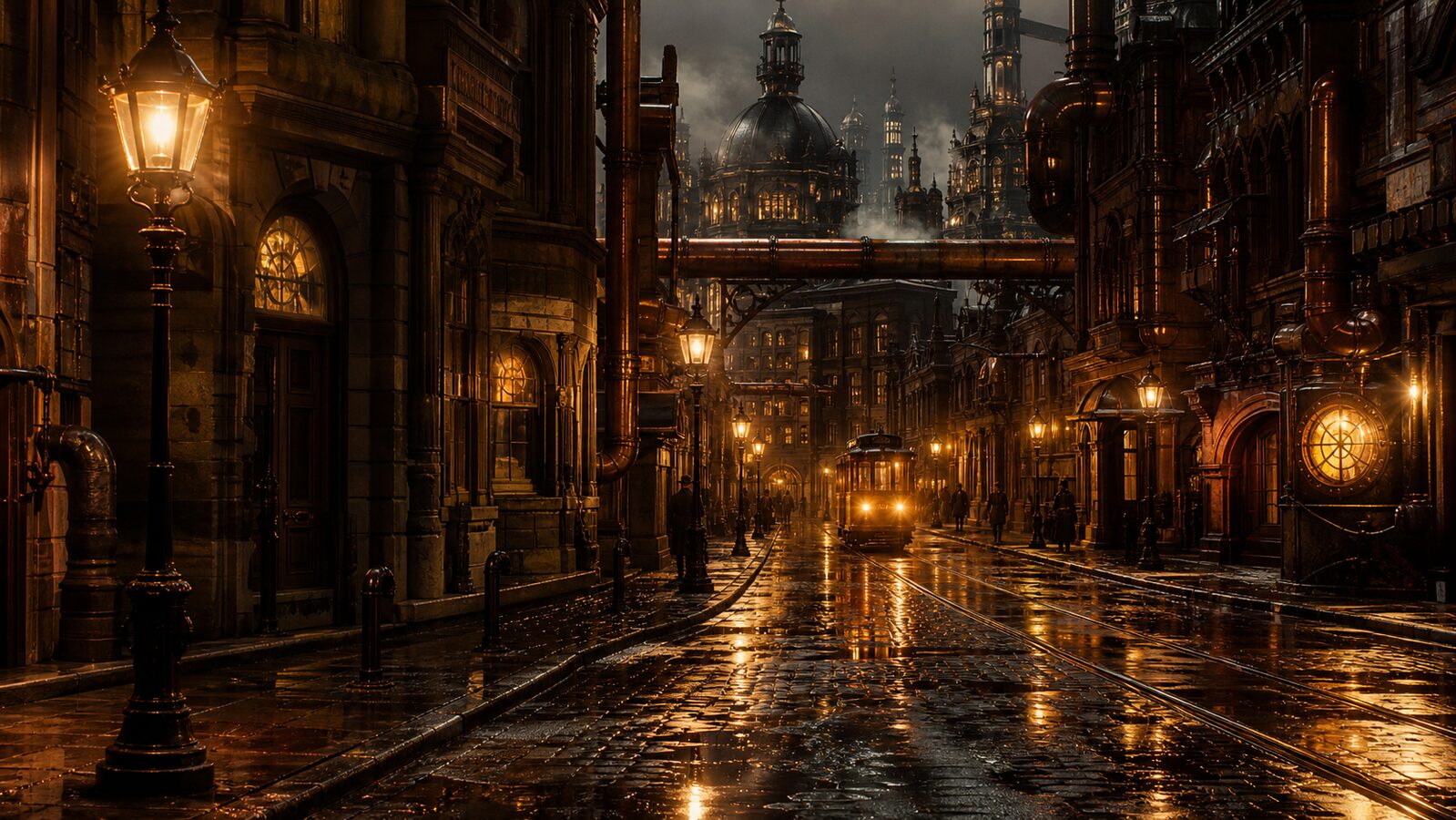
The visual vocabulary draws from actual Victorian industrial design (the ornate cast iron of early industrial architecture, the brass and mahogany of navigation instruments, the leather and rivet of military equipment) and fantasy extrapolation of those elements into flight machines, mechanical prosthetics, and analytical computers. Isambard Kingdom Brunel's engineering: the Great Eastern steamship, the Clifton Suspension Bridge: provides a visual model: massive, confident, ornately detailed without sacrificing function.
Contemporary steampunk is primarily a subculture (cosplay, music, convention culture) and a visual design language (applied to clocks, lamps, goggles, firearms, and custom computer cases). Its color palette and material vocabulary have been absorbed by craft markets, alternative fashion, and themed entertainment design.
“The Victorian future that was never quite allowed to happen.
The visual DNA: what makes it recognisable
8-channel console with the fingerprint on its display. Save the card, or share the page

4 color interpretations of this aesthetic
The colour of the styles sitting closest to this one
How to shoot it, how to prompt it, and how to board it.
How to shoot this aesthetic
"The Victorian imagination applied to a machine age that never quite arrived"
Shot list
Lighting
Warm tungsten (3000K) as base ambient to reinforce the gas-lamp era feeling; add a hard backlight through steam for the atmospheric volumetric quality
Drop this into Studio to generate in this aesthetic
Steampunk aesthetic with Victorian-era brass and copper machinery, anachronistic steam-powered technology, warm aged-metal patina
The record applied to your project. The record's kit is free; your brand, references and plates come with membership
01 · Hero application02 · Material and finish03 · Palette in context04 · Photography directionWhether to use it, what it costs to do properly, and where it stands right now.
Two written calls, seven meters, and when to walk away
The mechanism has to look like it would work. Gears glued to a surface in a decorative cluster are the signature of a bad execution, because a viewer reads load paths without knowing they are doing it. Every part should connect to something. Brass ages to a specific green-brown, and uniformly shiny brass is the fastest way to look like a costume shop.
Use it only where the machinery plausibly works: exposed gearing, real brass, functional-looking mechanism. The accessory end, goggles worn on a hat, is dead. Wrong for anything that cannot survive the critique that it romanticises the Victorian empire while omitting what the empire ran on, which the serious practitioners answered directly through Afrofuturist and South Asian steampunk.
Real brass and mechanical props beat CGI ones every time.
A beloved genre. Needs a real idea past 'gears on everything.'
Prop-making and material texture take real craft.
Gears glued onto everything is an instantly recognizable cliche.
A dedicated niche audience, not a mainstream current look.
A stable subculture presence for over two decades now.
Real props and material texture across a shoot.
A Pro feature: origins, practitioners, and pitfalls
Neighbours, cross-references, blends, and the questions people ask.
Connected across the creative knowledge graph
Where it stands now, and what it costs you to use it
Steampunk aged harder than anything else on this list. It peaked in the late-2000s convention scene and now carries the whole memory of that era of maker culture, brass goggles included.
The critique that stuck is that it romanticises the Victorian empire while omitting what the empire ran on. The practitioners still serious about it answered that directly, through Afrofuturist and South Asian steampunk that keeps the machinery and changes whose hands built it.
For commercial work the accessory end is dead and the functional end is not. Exposed gearing, real brass patina and machinery that plausibly works still hold up. Goggles worn on a hat do not.
Mix Steampunk with any style in the library
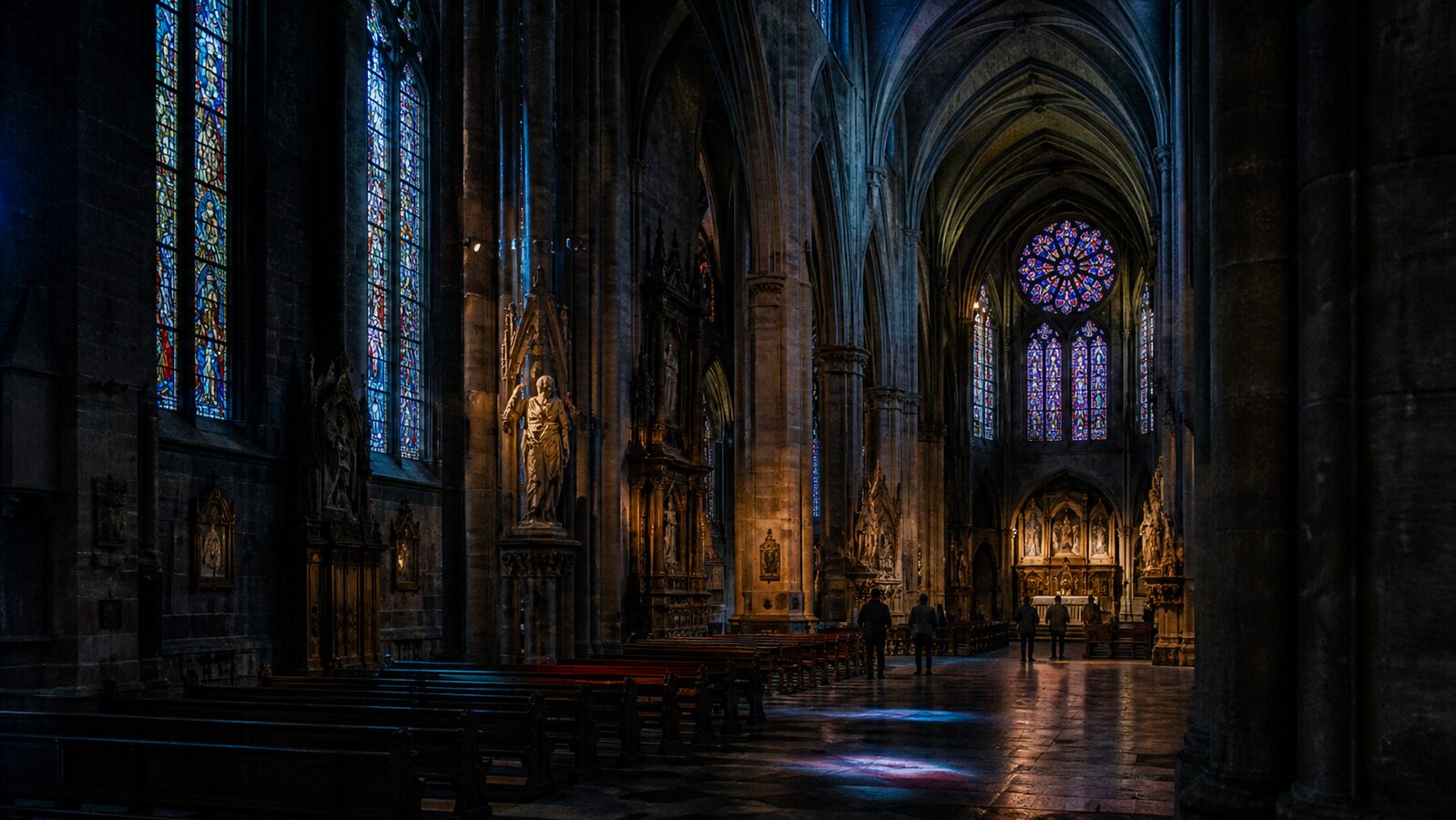 Steampunk 50%Gothic 50%
Merged palette
#1C0E02
#0D0208
#3D1C00
#4A0E2C
#B87333
Leads nostalgic, analog, maximal
Typography · from Steampunk
Lobster over Libre Baskerville
Materials
The calls this blend forces
These two disagree on one thing, and a blend cannot average them: you pick a side. At this mix:
Warm or Cool? Steampunk is warm, Gothic is cool. This mix lands warm.
Use it
Steampunk aesthetic with Victorian-era brass and copper machinery, anachronistic steam-powered technology, warm aged-metal patina (50%), infused with Gothic subculture aesthetic with dramatic dark romanticism, candlelit or moonlit atmosphere, theatrical melancholic elegance, color palette strictly #1C0E02 #0D0208 #3D1C00 #4A0E2C #B87333, leaning warm over cool, overall character: nostalgic, analog, maximal
Steampunk is a science fiction and design aesthetic imagining a Victorian era where steam technology was developed to far greater sophistication: airships, mechanical computers, steam-powered automata. Visually: brass, leather, exposed gears, Victorian silhouettes, and an alternate-history London or Paris backdrop.
Steampunk's palette centers on warm brown-golds: brass (#B5860D), aged leather (#5C3A1E), verdigris copper (#4F8076), parchment (#D4B483), and dark brown-black (#1A0E06). Secondary accents in deep burgundy and forest green appear as Victorian fashion colors. The overall effect is warm, aged, and mechanical.
Both are alternate-history aesthetics, but they reference different eras and technologies. Steampunk is Victorian (19th century) with steam-powered technology extrapolated beyond its historical limits. Retrofuturism references 20th-century atomic, space, and streamline-moderne visions of the near future. Steampunk is sepia and brass; retrofuturism is chrome and pastel.
Every style in the library is broken down like this one: the palette, the typography, the materials and the lineage.
Explore the style library →