When to use it
- Experimental photography
- Emotional expression
- Identity exploration
- Avant-garde art
Human faces stretched, warped, or manipulated for emotional effect
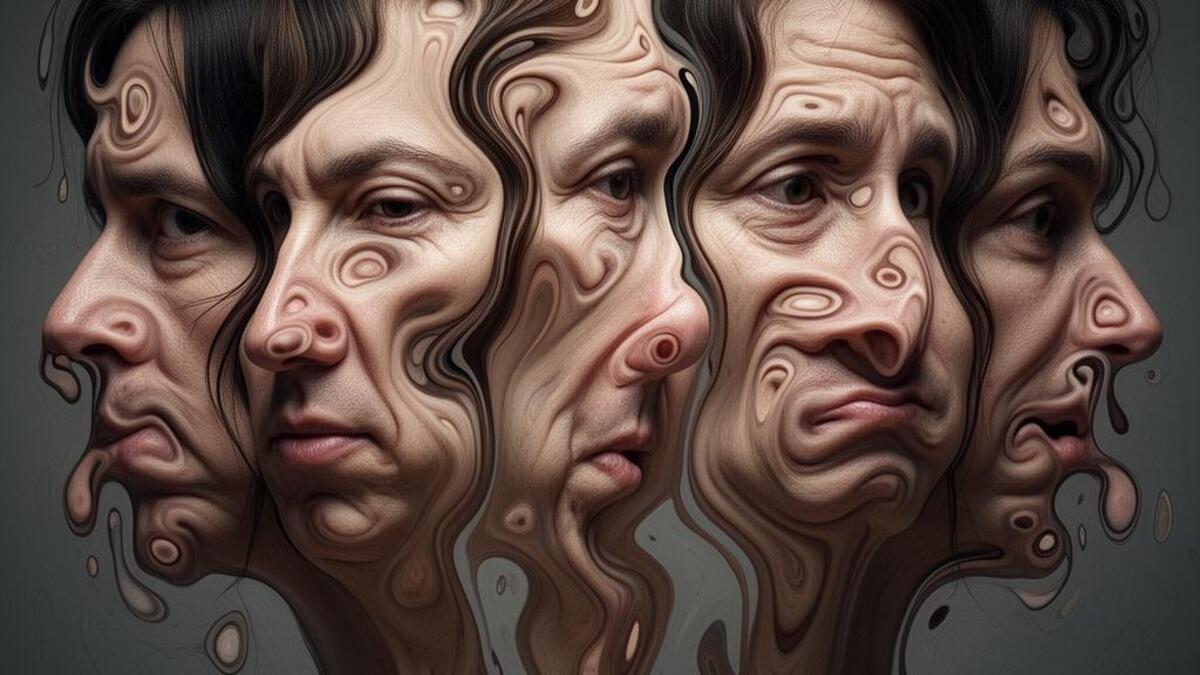
What it is, when it works, who it is for, and where it already exists.
Record 023-DP - when it works, who it is for, what it looks like
Where this aesthetic shows up in the real world · ↗ opens the source site
Where Distorted Portraits came from, what makes it recognisable, and the fingerprint it leaves.
1940s–present (painterly tradition); digital acceleration 2015–present · Expressionist and gestural painting; photography manipulation; digital art communities
Distorted portrait aesthetics draws from multiple traditions of representing the human face under duress: Francis Bacon's traumatized flesh paintings (1945–1992), Lucian Freud's psychologically intense close studies, the motion-blur portraiture tradition in photography, and the digital distortion tools (liquify, pixel sorting, glitch effects) that became widely available in the 2010s. The connecting logic is that distortion reveals psychological truth that realistic representation cannot.
Digital distortion democratized the aesthetic: the Photoshop Liquify tool, datamosh effects (where video codec artifacts create smearing and glitching), pixel sorting algorithms, and Instagram filters that stretch and warp faces all produced a visual culture where distorted portraiture moved from gallery to social media. Artists like Nicola Samori, David Altmejd, and the digital art community on DeviantArt and later Instagram developed the visual grammar.
Distorted portrait aesthetic appears in: experimental music album art (the tradition from Joy Division's Unknown Pleasures to Arca's visual identity), high-fashion photography (avant-garde magazine shoots that reference Bacon), gallery art that engages with the politics of the face and identity, and the broader internet culture of face-swap, deepfake, and filter aesthetics that constitute contemporary portrait photography's uncanny register.
“The face that tells the truth by lying about its geometry.
The visual DNA: what makes it recognisable
8-channel console with the fingerprint on its display. Save the card, or share the page

4 color interpretations of this aesthetic
The colour of the styles sitting closest to this one
How to shoot it, how to prompt it, and how to board it.
How to shoot this aesthetic
"Identity under pressure: the human face stretched, compressed, and made strange"
Shot list
Lighting
Hard directional light that maximizes the appearance of distortion the edge definition created by hard light makes distorted features more legible than soft light, which blurs the very information the distortion depends on
Drop this into Studio to generate in this aesthetic
Distorted portrait art with intentional facial and figural warping, glitch-adjacent digital manipulation or painterly smear technique, Francis Bacon-influenced unsettling deformation, psychological tension conveyed through physical distortion
The record applied to your project. The record's kit is free; your brand, references and plates come with membership
01 · Hero applicationWhether to use it, what it costs to do properly, and where it stands right now.
Two written calls, seven meters, and when to walk away
The face has to survive the distortion. Push too far and the viewer loses the person, which removes the tension the technique exists to create, so keep the eyes readable even when everything else smears. Distort along one axis. The source portrait must be strong on its own, because warping cannot rescue a weak frame.
Right when the distortion is about the subject rather than the effect, which is what the tradition from Bacon through Saville is consistently about: the body under pressure. Painters are quick to say so. Generative tools made facial distortion trivially cheap, which raised rather than lowered the bar for it to mean anything.
A real photo to start from, then digital manipulation.
Distortion for shock value fades fast. It needs to say something.
Warping a face and keeping it unsettling, not silly, is a real skill.
Distortion for shock value alone fades fast without a real idea.
A common technique across editorial and music visuals.
Face manipulation as a technique has stayed current for decades.
A source photo and digital manipulation.
A Pro feature: origins, practitioners, and pitfalls
Neighbours, cross-references, blends, and the questions people ask.
Connected across the creative knowledge graph
Where it stands now, and what it costs you to use it
Distorted portraiture runs from Bacon through Saville to contemporary digital work, and it is consistently about the body under pressure rather than about a visual effect.
Applying the distortion without the subject matter is where it becomes decoration, and painters are quick to say so.
Generative tools have made facial distortion trivially cheap, which has raised rather than lowered the bar for it to mean anything.
Mix Distorted Portraits with any style in the library
 Distorted Portraits 50%Glitch 50%
Merged palette
#1A1A1A
#000000
#FF0000
#00FF00
#00FFFF
Leads chaotic, digital, expressive
Typography · from Distorted Portraits
Anton over Karla
Materials
The calls this blend forces
These two disagree on one thing, and a blend cannot average them: you pick a side. At this mix:
Organic or Geometric? Distorted Portraits is organic, Glitch is geometric. This mix lands organic.
Use it
Distorted portrait art with intentional facial and figural warping, glitch-adjacent digital manipulation or painterly smear technique, Francis Bacon-influenced unsettling deformation, psychological tension conveyed through physical distortion (50%), infused with Glitch art aesthetic with digital signal corruption, RGB channel splitting and datamosh smearing, pixel-sorting artifacts and scan-line tearing, deliberate technological malfunction as visual language, chaotic broken-media beauty, color palette strictly #1A1A1A #000000 #FF0000 #00FF00 #00FFFF, leaning organic over geometric, overall character: chaotic, digital, expressive
Distorted portraits is a visual aesthetic where the human face is deliberately stretched, fragmented, or distorted: through painting (Francis Bacon tradition), photography (lens and motion blur), or digital manipulation (Photoshop liquify, pixel sorting, datamosh). It appears in experimental music art, avant-garde fashion photography, and digital art. The distortion conveys psychological intensity that realistic portraiture cannot.
Fine art: Francis Bacon (screaming figures, 1945–1992), Lucian Freud (psychological intensity in flesh), Nicola Samorì (Renaissance painting manipulated and erased), David Altmejd (sculptural portrait fragmentation). Photography: Richard Avedon's motion blur work, Cindy Sherman's self-portrait distortions. Digital: Arca's visual identity (directed with Jesse Kanda), and the broad pixel-sorting and glitch art communities on Tumblr and Instagram.
Photoshop Liquify tool for controlled facial stretching. Datamosh effects (video codec artifacts) using apps like Avisynth or dedicated datamoshing software. Pixel sorting via Processing sketches or apps like ArtMorph. Displacement maps using noise patterns to warp facial geometry. Each method produces a different quality: Liquify is controlled and smooth; datamosh creates horizontal smearing; pixel sorting creates vertical color streaks; displacement maps create wave-like deformation.
Every style in the library is broken down like this one: the palette, the typography, the materials and the lineage.
Explore the style library →