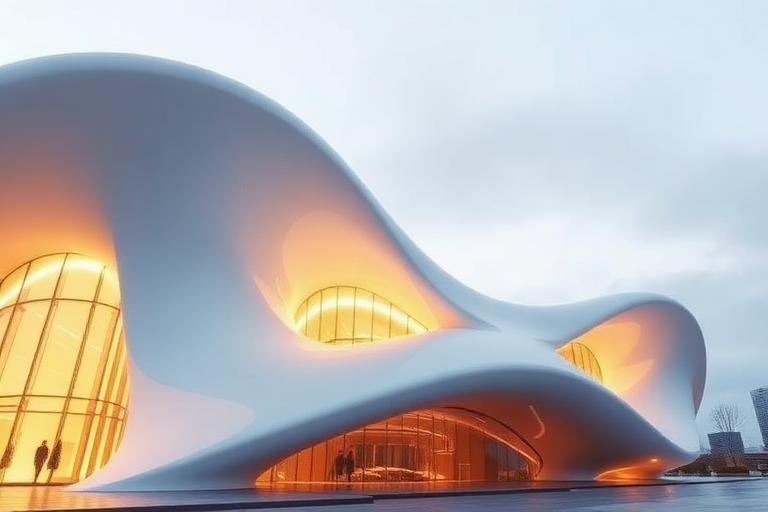
Architectural Futurism

Antonio Sant'Elia's unbuilt Città Nuova - tiered megastructures, aerial walkways, power stations as monuments - the Italian Futurists declared war on the past and drew cities that glorified speed, industry, and dynamism.

Compare Architectural Futurism with another style →See the Architectural Futurism typefaces →On the timeline · 1900s
Record020-AF
AestheticArchitectural Futurism
ClassFuturistic / Digital
StatusINGESTING
Architectural Futurism aesthetic archive image
Archive plate · Architectural Futurism
01
The record

What it is, when it works, who it is for, and where it already exists.

How to use it

Record 020-AF - when it works, who it is for, what it looks like

FIELD 01

When to use it

  • Brand identity for technology or mobility companies claiming radical vision
  • Campaign work for aerospace, automotive, or infrastructure projects
  • Cultural institution exhibitions on technology, modernity, or urban futures
  • Speculative design and concept visualization requiring radical ambition
FIELD 02

Perfect for

  • Aerospace, automotive, and transportation brands with a visionary mandate
  • Technology companies building infrastructure at civilizational scale
  • Architecture firms focused on masterplanning and urban futures
  • Exhibitors at technology and mobility trade shows

In the wild, Architectural Futurism aesthetic real-world examples

Where this aesthetic shows up in the real world · ↗ opens the source site

Architectural drawingCostruzioni per una Metropoli Moderna (Mario Chiattone)1914
Omoro Style GuideEvery aesthetic, every field on this page, in one PDF.
$8Get the guide →
02
The anatomy

Where Architectural Futurism came from, what makes it recognisable, and the fingerprint it leaves.

History, Architectural Futurism aesthetic history

1909-1944 (historical); influence ongoing · Italy

Futurist architecture was born from Filippo Tommaso Marinetti's Futurist Manifesto (1909), which celebrated speed, machinery, and violence while demanding the destruction of museums and libraries. Architect Antonio Sant'Elia translated this rhetoric into architectural vision with his Citta Nuova (New City) drawings of 1914: stepped-back towers connected by elevated walkways and multi-level transportation networks, power stations that looked like temples to electricity, and buildings with external elevators and exposed infrastructure. His 'Manifesto of Futurist Architecture' (1914) demanded that every generation build its own city.

Sant'Elia was killed in World War I at age 28, and almost none of his designs were built. But his drawings became some of the most influential unbuilt architecture of the twentieth century. The diagonal lines, the layered circulation, and the celebration of infrastructure as spectacle anticipated the megastructure movement of the 1960s, the High-Tech architecture of the 1970s, and the transportation-obsessed urbanism of contemporary smart city proposals.

Futurism's political entanglement with Italian Fascism complicated its legacy. Marinetti supported Mussolini, and some Futurist architects worked within the regime. The architecture that was actually built under Fascism tended toward Stripped Classicism rather than Sant'Elia's radical visions. Contemporary references to Futurist architecture typically engage with the formal language (dynamism, diagonals, technological celebration) while distancing from the political ideology.

The city rebuilt for the speed of machines.

Omoro dossier · 020-AF

Visual markers, Architectural Futurism aesthetic visual markers

The visual DNA: what makes it recognisable

typography

See the fonts
  • Angular, dynamic typefaces: Futura Display, Bank Gothic
  • Diagonal and vertical text placement suggesting motion
  • Bold condensed faces with sharp terminals
  • Typography as velocity: stretched, slanted, compressed

grid

  • Diagonal axes replacing orthogonal grids
  • Stepped-back massing creating dynamic silhouettes
  • Multi-level circulation (vehicles, pedestrians, trains) stacked vertically
  • Buildings as machines: functional elements externalized

materials

  • Polished metal and machine-finished surfaces: #C0C0C0, #A8A8A8
  • Concrete and industrial glazing: #888888, #707070
  • Accent lighting suggesting electrical energy: #FFD700, #FF4500
  • Glass and steel in dynamic angles: #B8C8D8, #90A0B0

motifs

  • External elevators and visible mechanical services
  • Streamlined forms suggesting aerodynamic movement
  • Multi-level bridges connecting tower blocks
  • Smokestacks and power infrastructure as monumental elements

Aesthetic profile

8-channel console with the fingerprint on its display. Save the card, or share the page

Aesthetic Profile
Architectural Futurism
Early Modern
1909–1944
Attribute console · 020-AF
leans futuristic, digital, expressive
8 CH
FIG. 1
MaximalMinimalDigitalAnalogExpressiveRestrainedCoolWarmFuturisticNostalgicChaoticStructuredLightDarkGeometricOrganic
01Minimal
Maximal30%
02Analog
Digital70%
03Restrained
Expressive50%
04Cool
Warm50%
05Futuristic
Nostalgic90%
06Structured
Chaotic20%
07Dark
Light20%
08Organic
Geometric40%
FuturisticDigitalExpressive3 materials
Omoro · Attribute console · 020-AF
omoro.io/styles/arch-futurism

Material assembly

The style's primary materials, assembled bottom-up

Tap a stratum for material detail · Full catalog

Place in history

Early Modern · 1909–1944 - tap any style to travel

Color Palettes, Architectural Futurism color palettes and hex codes

4 color interpretations of this aesthetic

Architectural Futurism
#1A1A2E · #3A3A5C · #7A7AB8 · #E8E0D0 · #A0B0C8
The unbuilt cities of speed: tiered megastructure and flying bridge
Sant'Elia
#0C0C10 · #383848 · #6878A0 · #A0B0C8 · #E0E4EC
Unbuilt speed: tiered megastructure and flying bridge
Dynamic Tower
#101018 · #2840A0 · #70A0D8 · #C0D0E0 · #F0F0F8
Rotating floors: each level turns independently in the wind
Speed Line
#181818 · #C82020 · #484848 · #A0A8B0 · #E8E8EC
Aerodynamic profile: the building as vehicle in motion
Omoro Palette Pack575 curated palettes across every aesthetic, 5 export formats.
$8Get the palettes →

Adjacent Palettes, styles related to Architectural Futurism

The colour of the styles sitting closest to this one

Neo-Futurism
Constructivist Architecture
Retrofuturism
Architectural Expressionism
03
The direction

How to shoot it, how to prompt it, and how to board it.

Photo Direction

How to shoot this aesthetic

"Tomorrow, sketched with total confidence it would look exactly like this"

Shot list

  • Wide shot emphasizing dynamic diagonal thrust and machine-age structural energy
  • Detail shot of industrial material treated as a celebration of velocity and technology
  • Low-angle shot exaggerating the structure's forward-leaning, speed-suggesting geometry

Lighting

Hard, dramatic directional light that reads as motion strong shadow cast diagonally across the frame reinforces the sense of implied speed

Omoro Director's Briefs151 photo shot-lists like this one, ready to shoot from.
$8Get the briefs →

Generative Prompt

Drop this into Studio to generate in this aesthetic

Futurist architecture with dynamic speed-lines and machine-age optimism, Sant'Elia's visionary unbuilt city drawings, industrial materials celebrating velocity and technology, bold diagonal thrust, early-20th-century avant-garde energy

Paste as-is, or append your own subject

Mood Board

The record applied to your project. The record's kit is free; your brand, references and plates come with membership

Mood board
The Architectural Futurism board
8 frames · 4 selected
FIG. 4
Void1A1A2ESteel Shadow3A3A5CMachine Blue7A7AB8Future LightE8E0D0Sky MetalA0B0C8
Brand and references
IdleBrand and references open with membership
With membership: the brand's own facts and colours in every prompt, references carried into every frame, and the plates generated.
01 · Hero application
02 · Material and finish
03 · Palette in context
04 · Photography direction
05 · Pattern plate
06 · Object
07 · Environment
08 · Digital presence
Demo kit free, the rest with membershipThe record as a demo kit, free. Name a project and it is written for that
Omoro · Mood board · 020-AF
04
The judgement

Whether to use it, what it costs to do properly, and where it stands right now.

Creative verdict, Architectural Futurism feasibility and strategic recommendation

Two written calls, seven meters, and when to walk away

Creative verdict
Should Architectural Futurism be the call?
7 meters
FIG. 2
Assessment

Speed and motion have to be structural. Sant'Elia drew buildings as dynamic systems, and a swooping cladding panel on a static frame is the shallow version, which reads as styling. Let circulation and structure express the movement. The vision has to be coherent: a future built from three unrelated fantasies convinces nobody.

Verdict

Powerful precisely because it was barely built: Sant'Elia drew constantly, died at twenty-eight, and the movement survives as drawings that never had to survive a budget. Right for visionary and speculative work. Wrong without acknowledging its uncomfortable proximity to early fascism, which the field addresses directly rather than around.

Production cost
High

Megastructure ambition. Even a model or render isn't cheap.

Creative difficulty
High

It was never built. The whole point is drawing what doesn't exist yet.

Execution difficulty
High

Selling speed and dynamism through pure form takes real drafting skill.

Risk of misuse
Medium

The whole point is drawing what doesn't exist. A weak drawing has nothing to hide behind.

Prevalence
Rare

A niche, mostly historical reference in speculative and concept work.

Longevity
Timeless

Never built, so it never got the chance to date.

Brand investment
High

Megastructure ambition, even a model or render isn't cheap.

Avoid if
The brand needs a grounded, practical feel
This was never built. It's speculative by nature, not realistic.
There's no real drafting or rendering skill behind it
A weak drawing has nothing else here to hide behind.
Omoro · Creative verdict · 020-AF

Editorial Depth

A Pro feature: origins, practitioners, and pitfalls

Editorial depth
The Architectural Futurism file
14 sections
FIG. 3
Context02Brands02Perception04Use04Index02
01Common MisconceptionThe principle beneath the surface
02Historical ContextOrigins, cultural moment, and reaction
03Brands That Accidentally Use This StyleNatural alignment, not category claims
04Brands That Perfectly Represent This StyleExceptional execution
05Psychological EffectHow visual decisions change perception
06Visual ChecklistInclude and avoid
07Creative FormulaThe visual system reduced to essentials
08Recognition SignalsHow to recognize it in two seconds
09When To Use This StyleContexts where the language performs
10Common Creative MistakesWhere imitation weakens the signal
11Best Brand ApplicationsIndustries with a natural advantage
12Creative Application AnalysisFit, feasibility, and production reality
13Related StylesClose languages and the key distinction
14Visual DNA SummaryThe sentence to remember
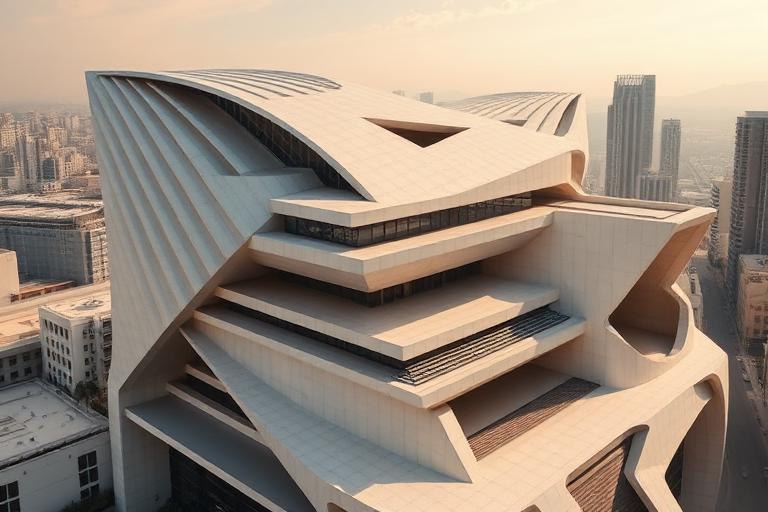
The editorial depth, with membershipOpening soon
Omoro · Editorial depth · 020-AF
05
The index

Neighbours, cross-references, blends, and the questions people ask.

Related concepts

Connected across the creative knowledge graph

Cultural relevance, Architectural Futurism cultural relevance today

Where it stands now, and what it costs you to use it

Architectural futurism began as an Italian movement in 1914 whose founder wrote manifestos about speed and demolition, and it has an uncomfortable proximity to early fascism that the field acknowledges directly.

Sant'Elia drew constantly and built almost nothing, dying at twenty-eight, so the movement exists mostly as drawings.

That is arguably why it remains potent. Unbuilt architecture never has to survive contact with a budget.

Cross-references

Neo-FuturismNeo-Futurism realizes Futurism's dynamic forms with contemporary engineeringHigh-Tech ArchitectureHigh-Tech inherited Futurism's celebration of visible structure and servicesMetabolismMetabolism shared Futurism's megastructure ambitions in 1960s Japan

Blend

Mix Architectural Futurism with any style in the library

Architectural Futurism×
50%50%
94% alike
Architectural Futurism referenceNeo-Futurism referenceArchitectural Futurism 50%Neo-Futurism 50%

Merged palette

#1A1A2E

#0A1628

#3A3A5C

#2E6DA4

#7A7AB8

Leads futuristic, digital, expressive

Typography · from Architectural Futurism

Bebas Neue over Roboto

Materials

  • Polished metal and machine-finished surfaces: #C0C0C0, #A8A8A8
  • Concrete and industrial glazing: #888888, #707070
  • White concrete and GRC (glass-reinforced concrete): #F0EEEA, #E4E2DE

The calls this blend forces

These two disagree on one thing, and a blend cannot average them: you pick a side. At this mix:

Geometric or Organic? Architectural Futurism is geometric, Neo-Futurism is organic. This mix lands geometric.

Use it

Futurist architecture with dynamic speed-lines and machine-age optimism, Sant'Elia's visionary unbuilt city drawings, industrial materials celebrating velocity and technology, bold diagonal thrust, early-20th-century avant-garde energy (50%), infused with Neo-Futurist architecture with fluid parametric-adjacent forms expressing forward-looking ambition, dramatic cantilevers and sweeping curves, Calatrava-influenced structural expressionism, tomorrow-facing civic monumentality, color palette strictly #1A1A2E #0A1628 #3A3A5C #2E6DA4 #7A7AB8, leaning geometric over organic, overall character: futuristic, digital, expressive

One-click generation opens with the studio

About this aesthetic

What is Futurist architecture?

Futurist architecture was a movement originating in Italy around 1914, championed by Antonio Sant'Elia. It envisioned cities built for speed and machines: towers with external elevators, multi-level transportation networks, and buildings that celebrated industrial infrastructure. Though largely unbuilt, its drawings profoundly influenced twentieth-century architecture.

Was any Futurist architecture actually built?

Very little. Sant'Elia died in World War I before building his designs. Some Futurist-influenced buildings were constructed in Italy in the 1920s-1930s, but the Fascist regime generally preferred Stripped Classicism. Futurism's greatest architectural impact was through its drawings and ideas, which influenced High-Tech, Metabolist, and megastructure movements.

How is Futurist architecture different from Neo-Futurism?

Historical Futurism (1910s-1940s) was a radical movement tied to Italian politics, largely theoretical and unbuilt. Neo-Futurism (1960s-present) revives the formal language of dynamism and technological celebration but with actual structural engineering: Calatrava's kinetic bridges, Hadid's flowing forms, and contemporary parametric design.

Build with the architectural futurism aesthetic

Every style in the library is broken down like this one: the palette, the typography, the materials and the lineage.

Explore the style library →