When to use it
- Cannabis and wellness brand identity
- Retro-inspired beverage packaging
- Organic lifestyle brand campaigns
- Music festival visual identity
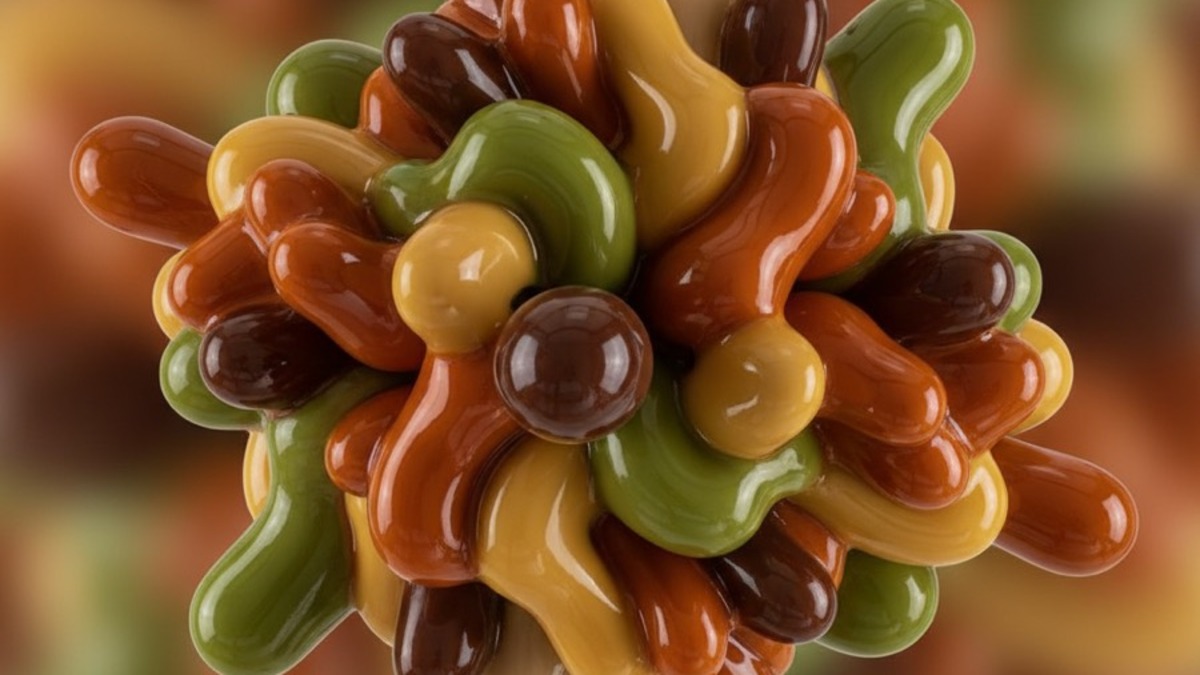
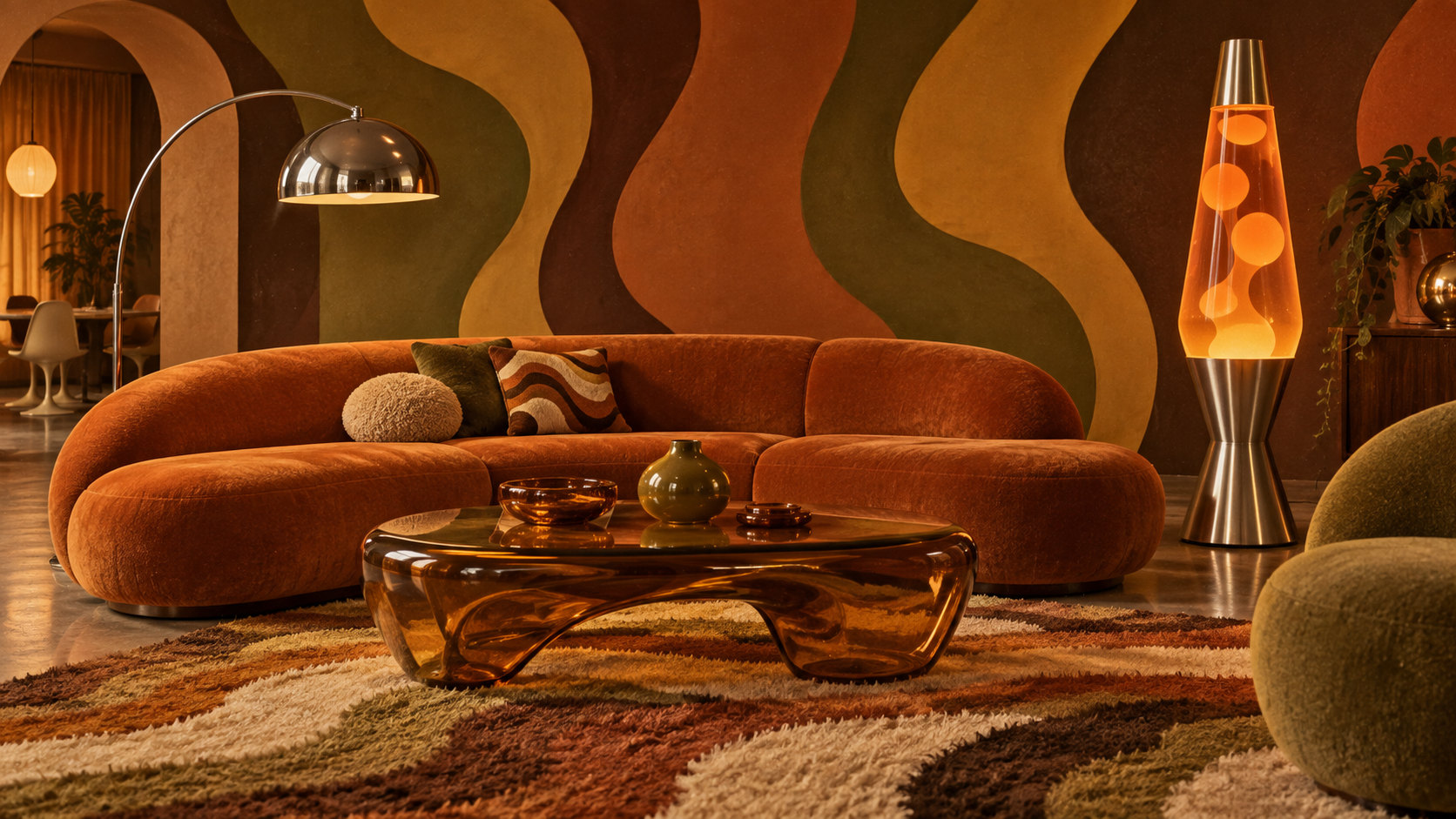
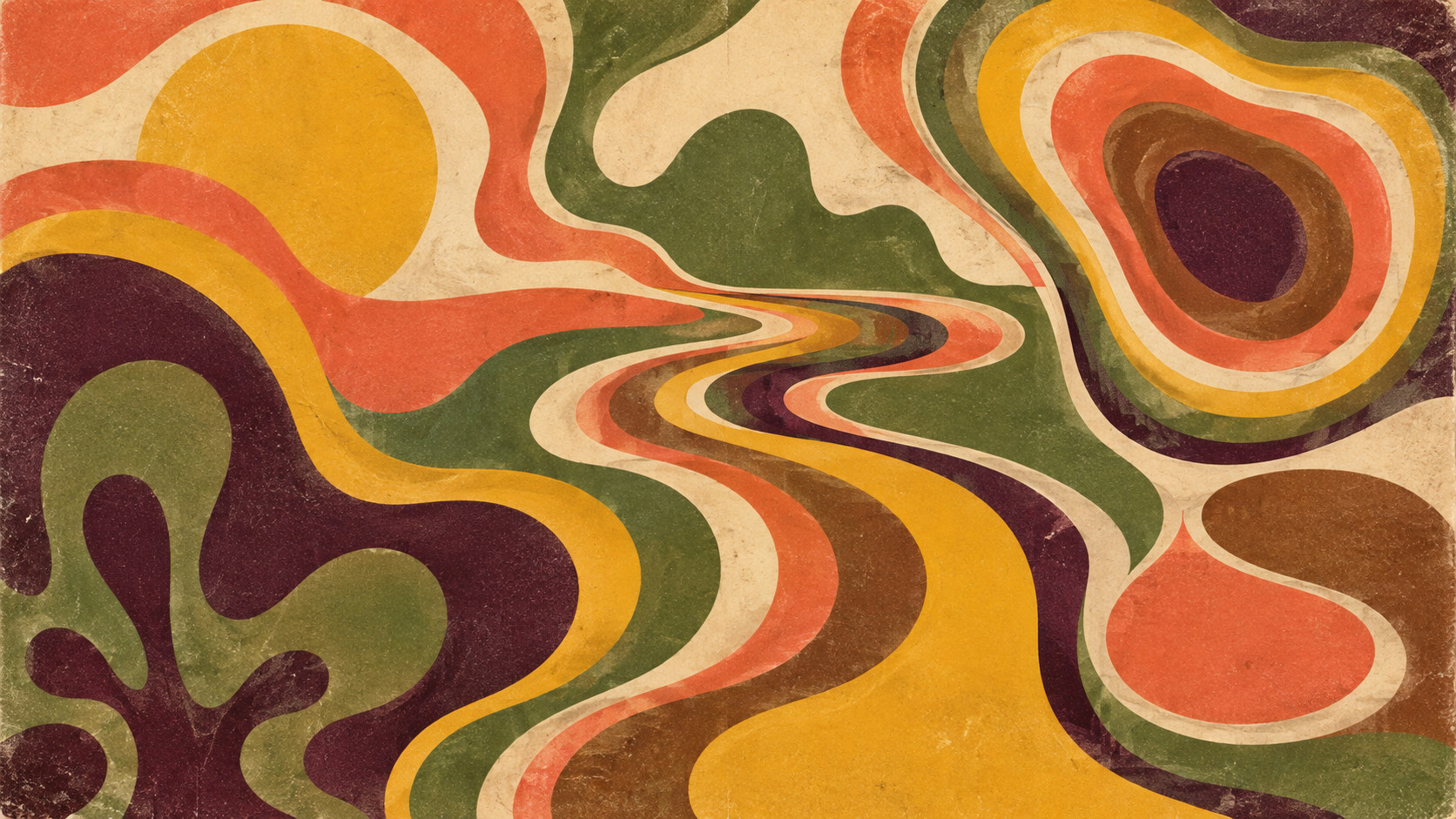
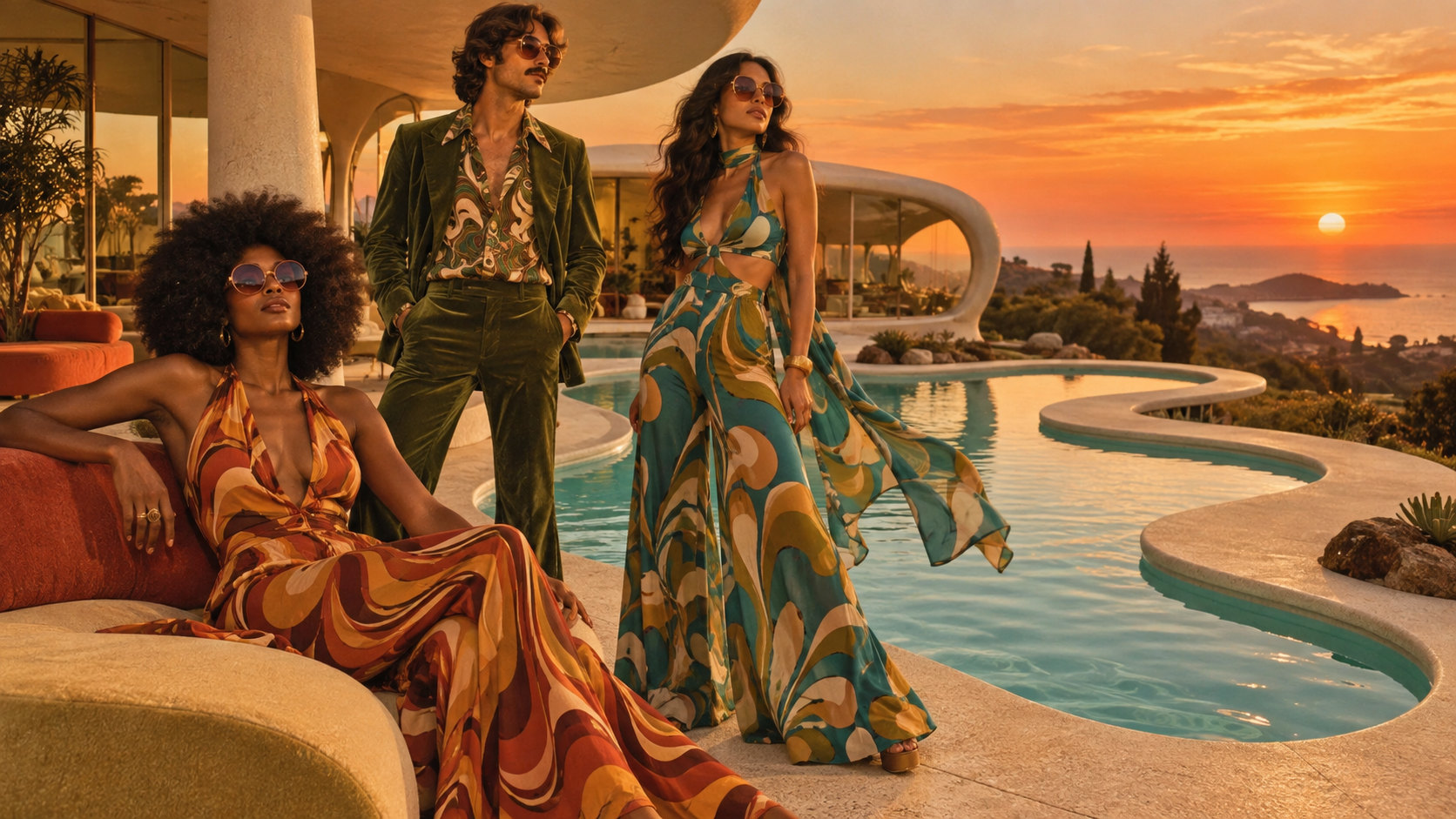
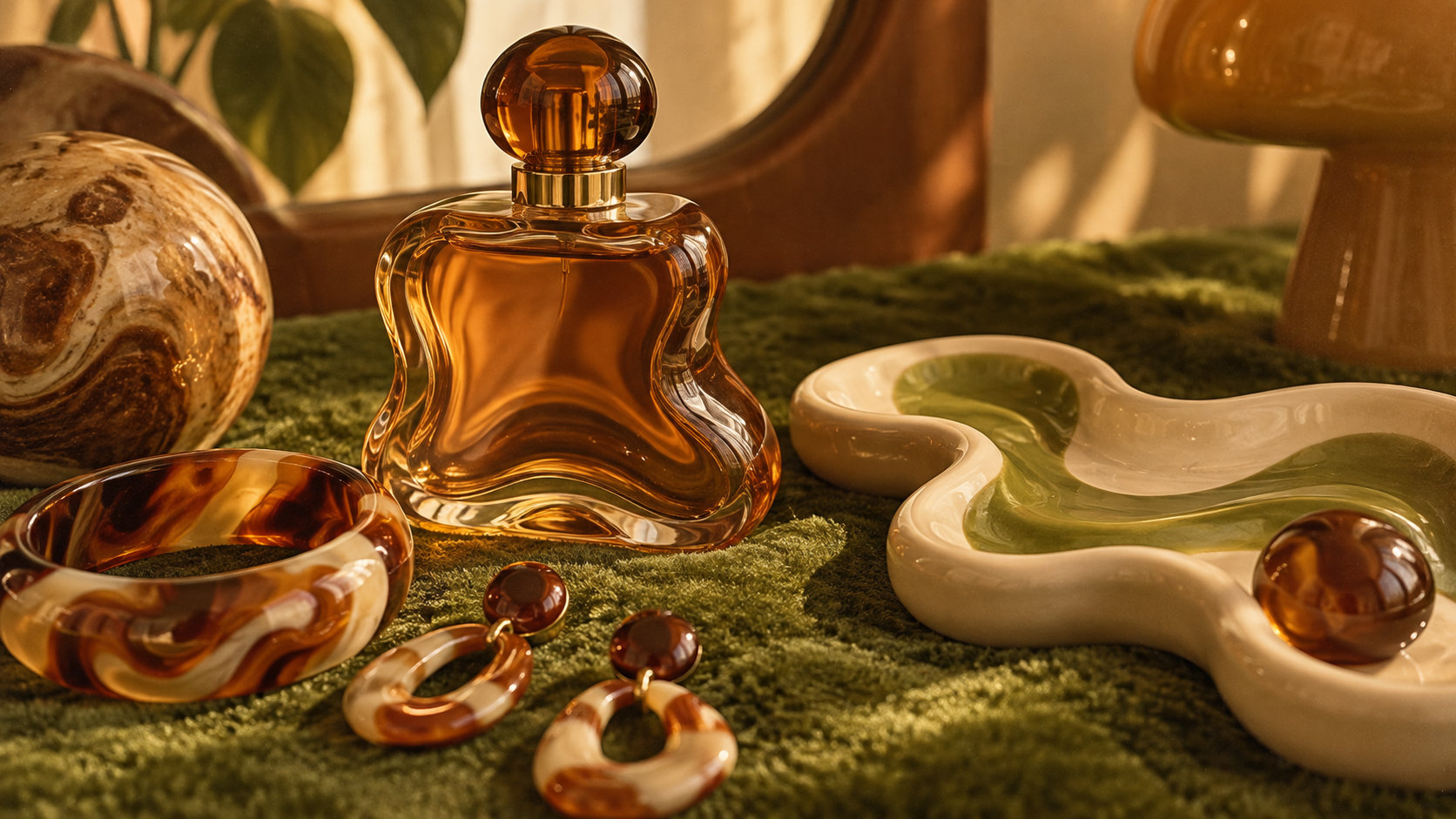
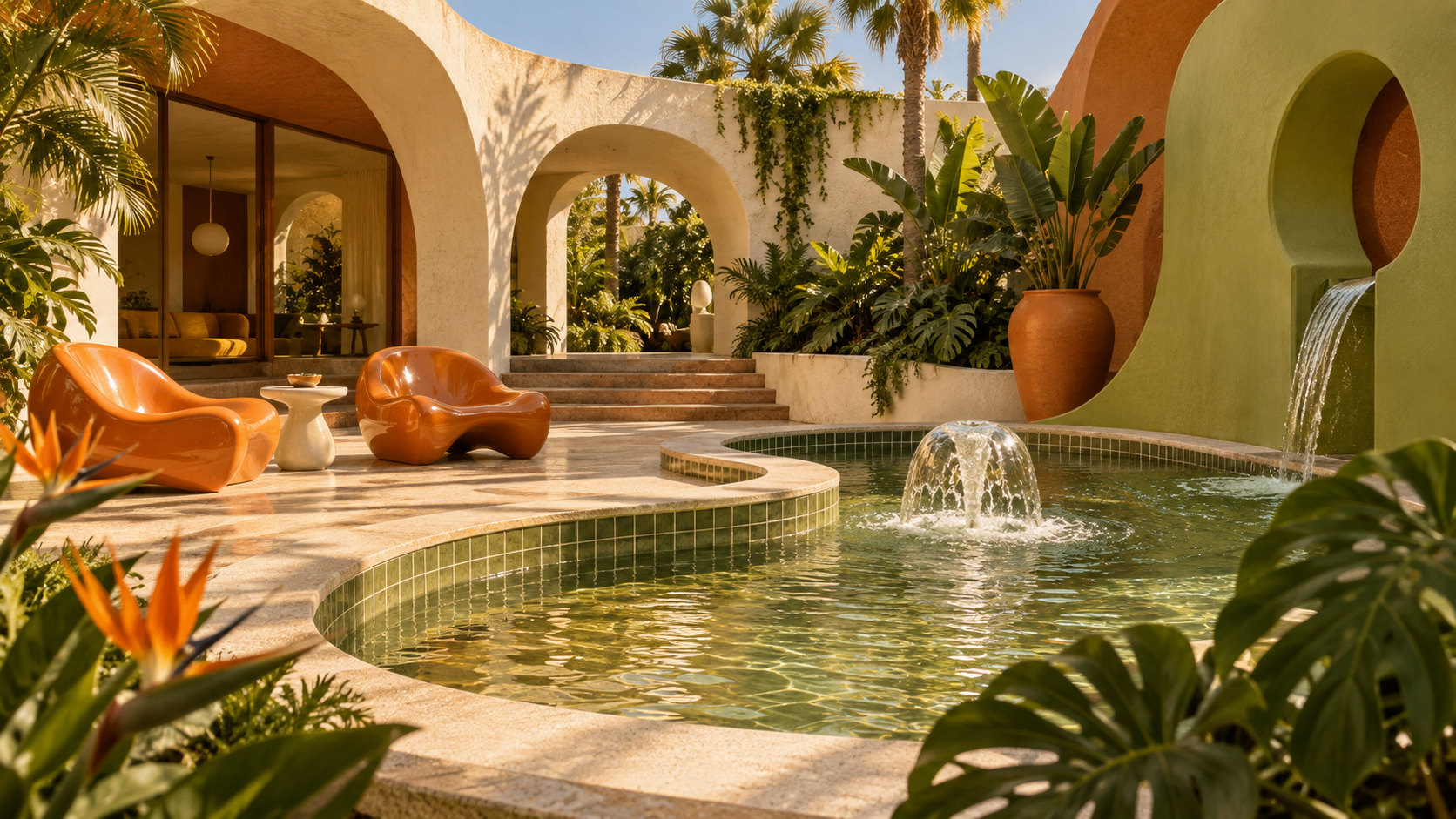
Amoeba blob shapes, lava lamp fluidity, and 70s earth palettes - California psychedelia refined into graphic design language
What it is, when it works, who it is for, and where it already exists.
Record 031-LR - when it works, who it is for, what it looks like
Where this aesthetic shows up in the real world · ↗ opens the source site
Where Liquid Retro came from, what makes it recognisable, and the fingerprint it leaves.
2019–present · 3D design communities; CGI art; Instagram aesthetic culture
Liquid retro emerged from the 3D CGI art community's exploration of fluid simulation and subsurface scattering: digital tools that allow designers to render objects as if they were made of mercury, chrome-plated liquid, or molten glass. The aesthetic combines retrofuturist color references (the chrome and silver of 1970s science fiction) with contemporary 3D simulation capabilities that make liquid metal convincing at high resolution.
The visual influences include: industrial design of the 1970s (chrome car accessories, mirrored surfaces), the T-1000 from Terminator 2 (liquid metal as cinematic spectacle), Jeff Koons's highly polished stainless steel sculptures, and contemporary CGI art from Behance and ArtStation communities. The aesthetic is fundamentally about material: what does the most reflective, most fluid, most optically complex material look like when rendered at maximum quality?
Liquid retro appears in: premium consumer brand campaigns (luxury skincare, fragrances), electronic music visual identity, high-end fashion photography, and the CGI art NFT community. It's a prestige aesthetic: the kind of render that requires computational cost to produce: and carries associations with technological sophistication and luxury material production.
“Gravity gave up and the chrome started flowing.
The visual DNA: what makes it recognisable
8-channel console with the fingerprint on its display. Save the card, or share the page

4 color interpretations of this aesthetic
The colour of the styles sitting closest to this one
How to shoot it, how to prompt it, and how to board it.
How to shoot this aesthetic
"1970s shapes that never stopped morphing: a lava lamp caught mid-thought"
Shot list
Lighting
Warm gelled light in earthy orange, harvest gold, and avocado green, shifting slowly across the frame to suggest movement even in a still image
Drop this into Studio to generate in this aesthetic
Liquid retro design with organic blob and amoeba biomorphic shapes in warm earthy 1970s color mood, flowing lava lamp forms that appear slowly morphing, Heinz Edelmann Yellow Submarine inspiration, rounded irregular shapes with soft gradient fills
The record applied to your project. The record's kit is free; your brand, references and plates come with membership
01 · Hero application02 · Material and finish03 · Palette in context04 · Photography directionWhether to use it, what it costs to do properly, and where it stands right now.
Two written calls, seven meters, and when to walk away
The era is specific and generic blobs miss it. Seventies liquid type has a particular thick-thin rhythm and a palette of avocado, ochre and rust, and a modern blobby shape in bright colours is a different decade. Draw the letterforms rather than warping a font. Keep the flow continuous: any hard corner in a liquid form breaks the illusion instantly.
Right for music and fashion work with a short, deliberate life. The original was a technology showing off because warping type was newly possible, and the revival knows it, which is why the best of it is overdone rather than tasteful. Once a look reaches the streaming platform tile it has about a season left, so treat it accordingly.
Digital illustration, no physical materials.
A specific 70s reference. Generic 'blobby' misses the palette and era.
Fluid blob shapes are learnable, repeatable illustration work.
Generic 'blobby' misses the specific 70s palette and era.
A niche reference compared to more common retro revivals.
Part of a broader psychedelic-nostalgia cycle.
Digital illustration, no physical materials.
A Pro feature: origins, practitioners, and pitfalls
Neighbours, cross-references, blends, and the questions people ask.
Connected across the creative knowledge graph
Where it stands now, and what it costs you to use it
Liquid chrome and blob type came back through fashion and music around 2020, quoting a very specific window of late-1990s software when warping type was newly possible and therefore irresistible.
The original was a technology showing off, and the revival knows that, which is why the best of it is deliberately overdone rather than tasteful.
It has moved fast from novel to expected. Once a look reaches the streaming platform tile it has roughly a season left.
Mix Liquid Retro with any style in the library
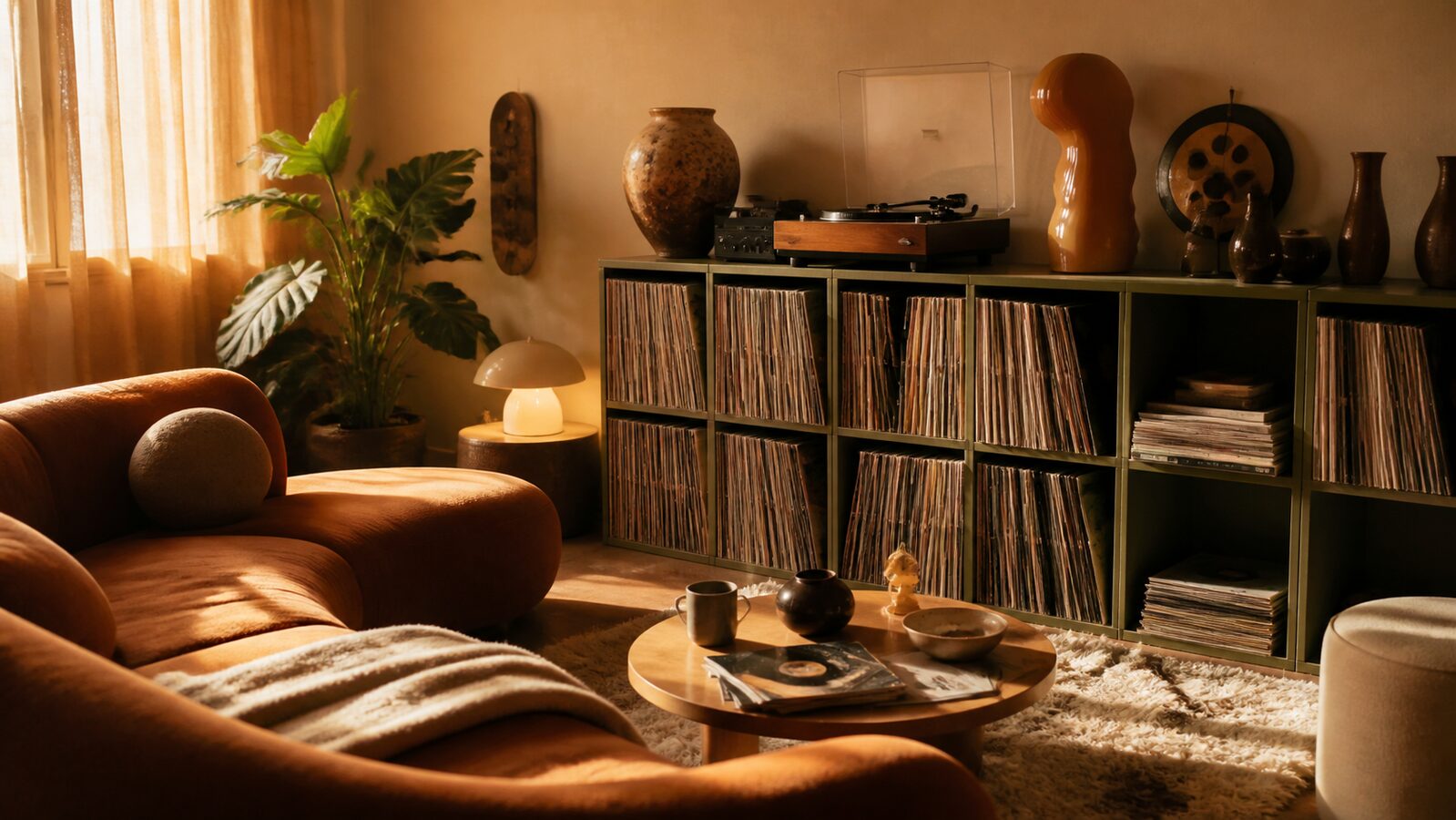 Liquid Retro 50%Indie Groovy 50%
Merged palette
#8D6E63
#BF6020
#6B8E23
#F5E6CC
#1A0808
Leads warm, analog, nostalgic
Typography · from Liquid Retro
Orbitron over Space Grotesk
Materials
Use it
Liquid retro design with organic blob and amoeba biomorphic shapes in warm earthy 1970s color mood, flowing lava lamp forms that appear slowly morphing, Heinz Edelmann Yellow Submarine inspiration, rounded irregular shapes with soft gradient fills (50%), infused with Indie groovy design with 1970s-inspired organic warmth, hand-drawn lettering with retro slab serif and groovy curves, muted earthy color warmth, mushroom and botanical motifs, indie record label and zine aesthetic, color palette strictly #8D6E63 #BF6020 #6B8E23 #F5E6CC #1A0808, overall character: warm, analog, nostalgic
Liquid retro is a 3D CGI aesthetic where objects: letterforms, everyday items, abstract forms: are rendered as molten chrome or mercury liquid: highly reflective (#C0C4C8), iridescent, and defying gravity. It combines 1970s retrofuturist chrome references with contemporary 3D fluid simulation. Appears in luxury brand campaigns, electronic music visuals, and CGI art communities on Behance and ArtStation.
Liquid retro renders require: Blender or Cinema 4D for 3D geometry, fluid simulation plugins (Flip Fluids for Blender, X-Particles for C4D), environment HDRI maps for realistic chrome reflection, and compositing in After Effects or DaVinci Resolve for final color grading. The material setup is the critical element: PBR metallic materials with near-zero roughness and environment reflection mapping.
Chrome aesthetic is a broader category: any visual use of highly reflective chrome-like surfaces. Liquid retro is specifically about the fluid, melting quality: objects that appear to be made of liquid metal rather than solid chrome. Chrome aesthetic can be static and industrial; liquid retro requires implied or rendered fluid motion, the sense that the material is in the process of flowing.
Every style in the library is broken down like this one: the palette, the typography, the materials and the lineage.
Explore the style library →