Rotoscoping

Live action redrawn frame by frame so motion becomes line, timing and visible gesture

Collect references in this style →
Rotoscoping visual example
Visual language · Rotoscoping

Live action redrawn frame by frame so motion becomes line, timing and visible gesture

Key colors
Era
1910s–present
Origin
Animation studios and experimental film; later extended into music, sport and editorial motion.
Typography
condensed grotesk frame labels, handwritten annotation
Best for
Motion identities and title design
Explore Motion Design
Record037-RO
AestheticRotoscoping
ClassExpressive / Analog
StatusINGESTING
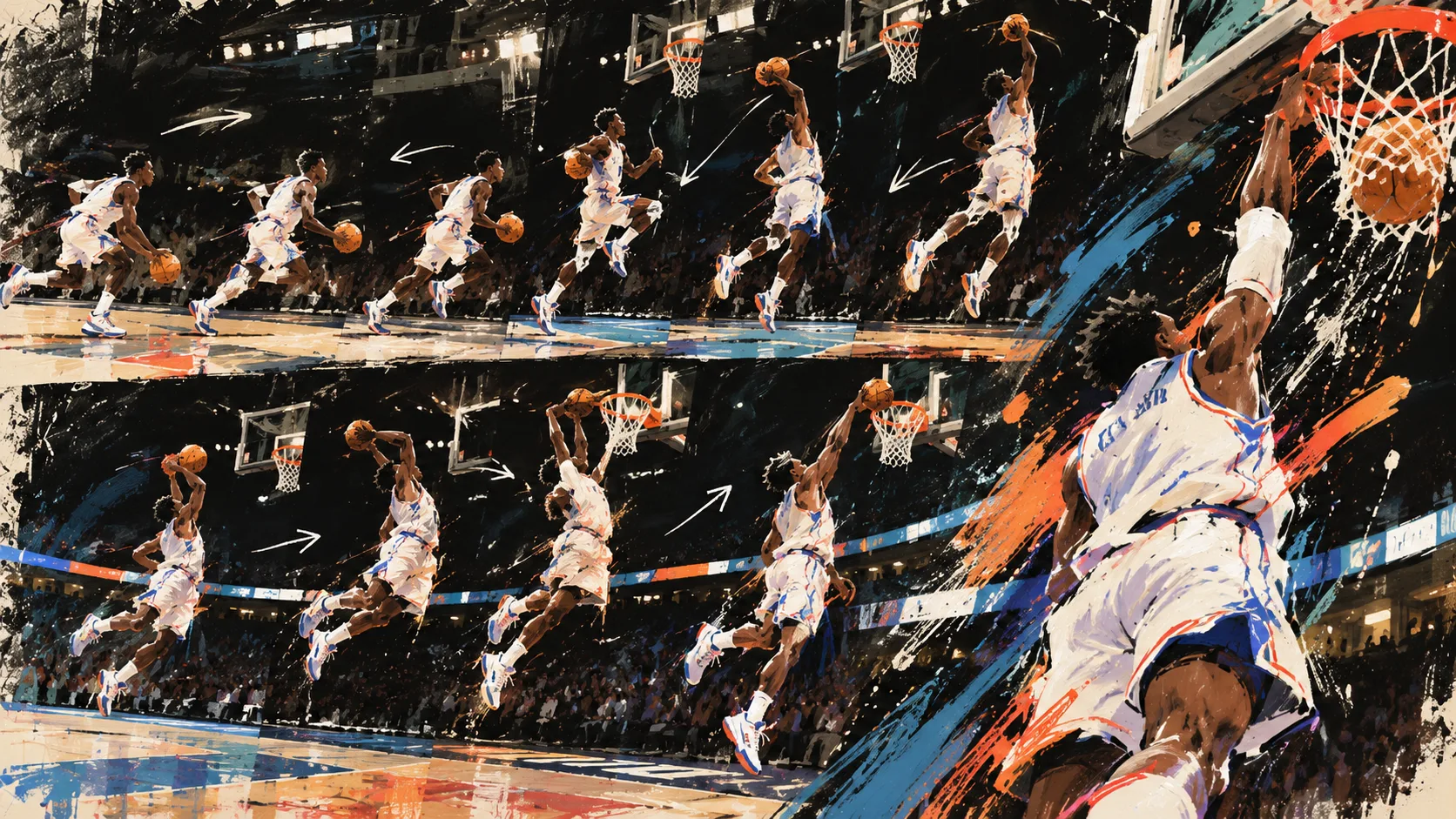
A basketball player traced through a dunk sequence with painted contours, arrows and vivid orange and blue marks.
Archive plate · Rotoscoping
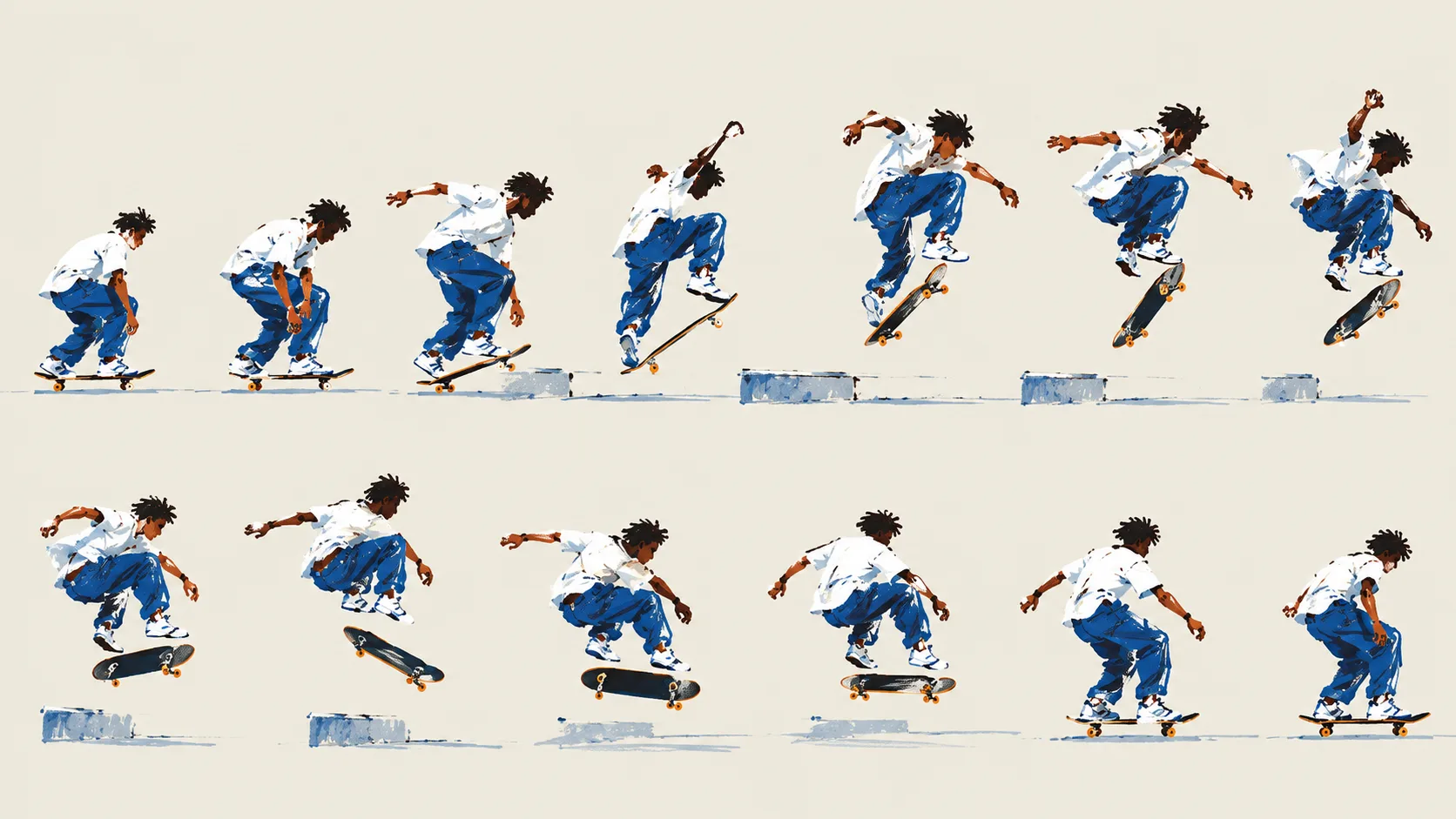
A skateboarder repeated across the stages of a trick, painted in blue and orange on warm paper.
Dossier sceneConstruction · 1/3
01
The record

What it is, when it works, who it is for, and where it already exists.

How to use it

Record 037-RO - when it works, who it is for, what it looks like

FIELD 01

When to use it

  • Music videos and title sequences that need human timing
  • Sports and dance campaigns where movement is the subject
  • Documentary work that wants to annotate what the camera sees
  • Editorial motion systems built from traces rather than effects
FIELD 02

Perfect for

  • Motion identities and title design
  • Sports, footwear and performance campaigns
  • Experimental documentary and editorial film
  • Visual essays about bodies, rhythm or process
FIELD 03

What it looks like

  • The Thief Catcher, animation technique, 1916
  • Waking Life, rotoscoped feature film, 2001
  • A Scanner Darkly, rotoscoped feature film, 2006
  • Contemporary sports motion studies, 2020s

In the wild, Rotoscoping aesthetic real-world examples

Where this aesthetic shows up in the real world · ↗ opens the source site

editorial film languageMotion study (opens in a new tab)2020
Omoro Style GuideEvery aesthetic, every field on this page, in one PDF.
$8Get the guide →
02
The anatomy

Where Rotoscoping came from, what makes it recognisable, and the fingerprint it leaves.

History, Rotoscoping aesthetic history

1910s–present · Animation studios and experimental film; later extended into music, sport and editorial motion.

Rotoscoping began as a practical way to preserve the weight and timing of filmed movement. Tracing a reference frame by frame gave animators a more exact basis for bodies, gestures and objects than intuition alone.

As animation developed, the technique became expressive rather than merely corrective. Artists could keep a recognisable movement while changing its contour, colour, texture or continuity, making the labour of looking part of the image.

Digital tools made the process faster but did not remove its central decision: what to retain from the camera and what to redraw. Contemporary rotoscoping moves between documentary evidence, graphic annotation and painted abstraction.

Where observation becomes line.

Omoro dossier · 037-RO

Visual markers, Rotoscoping aesthetic visual markers

The visual DNA: what makes it recognisable

typography

See the fonts
  • condensed grotesk frame labels
  • handwritten annotation
  • small registration numbers

grid

  • sequential horizontal rhythm
  • registration guides
  • repeated poses with deliberate gaps

materials

  • Max Fleischer's rotoscope: live film projected frame by frame onto a glass easel
  • Peg-registered animation paper traced in pencil over projected footage
  • Ink and gouache on acetate cels, shot on a rostrum camera
  • 35mm and 16mm live-action reference footage, its grain and gesture traced
  • Digital trace and interpolated vector line, as in Rotoshop for A Scanner Darkly
  • Light inherited from the source footage: real shadows flattened into fills

motifs

  • arrows
  • frame numbers
  • traced contours
  • repeated gestures

Aesthetic profile

8-channel console with the fingerprint on its display. Save the card, or share the page

Aesthetic Profile
Rotoscoping
1910s–present · Animation studios and experimental film; later extended into music, sport and editorial motion.
Attribute console · 037-RO
leans expressive, analog, maximal
8 CH
FIG. 1
MaximalMinimalAnalogDigitalExpressiveRestrainedWarmCoolNostalgicFuturisticChaoticStructuredLightDarkOrganicGeometric
01Minimal
Maximal20%
02Analog
Digital60%
03Restrained
Expressive80%
04Cool
Warm10%
05Futuristic
Nostalgic10%
06Structured
Chaotic20%
07Dark
Light20%
08Organic
Geometric20%
ExpressiveAnalogMaximal
Omoro · Attribute console · 037-RO
omoro.io/styles/rotoscoping

Color Palettes, Rotoscoping color palettes and hex codes

The definitive color scheme for this aesthetic

Rotoscoping
#11100E · #F1EBDD · #EF6A2E · #2E79C7 · #EF2B8F
Ink, paper, court orange and electric blue: a working palette that keeps the trace visible.
Omoro Palette Pack575 curated palettes across every aesthetic, 5 export formats.
$8Get the palettes →

Adjacent Palettes, styles related to Rotoscoping

The colour of the styles sitting closest to this one

Motion Design
Cinematography
Illustration
Drawing / Sketch
03
The direction

How to shoot it, how to prompt it, and how to board it.

Photo Direction

How to shoot this aesthetic

"Bodies and objects caught between camera evidence and drawn gesture"

Shot list

  • Full-length athlete frozen at the peak of one action, with traced contour and visible frame registration
  • Three-quarter figure moving through a turn, alternating clean live-action detail and rough painted line
  • Close construction detail of brush marks, traced joints, arrows and registration marks on animation paper

Lighting

Hard directional light with deep ink shadows, paper highlights and one saturated accent.

Omoro Director's Briefs151 photo shot-lists like this one, ready to shoot from.
$8Get the briefs →

Prompts

Click any prompt row to edit. Copy uses your edited text.

Make
Rotoscoping · image
Style

A single subject in motion redrawn across a live-action sequence: visible hand-traced contour

Visual cues

selective painted fill, registration marks, dry brush texture and intentional frame-to-frame variation. The physical action remains legible; the drawing reveals timing and weight. Ink black, animation paper, one court orange or signal blue accent. No logos, no captions, no contact sheet, no decorative scribble detached from the subject.

Paste as-is, or add your own subject.

Variant 1 of 8Same style, a different picture each time: new subject, setting, framing and light. Add a model if you want someone in the picture.
Frame
Variant 1 · image
Shot

Photograph: full-length athlete frozen at the peak of one action, with traced contour and visible frame registration.

Setting

Set in dance rehearsal room. Shot wide, the whole scene with room around it, hard directional light with deep ink shadows, paper highlights and one saturated accent..

Detail

Keep traced contours in the frame.

Style

Style: A single subject in motion redrawn across a live-action sequence: visible hand-traced contour, selective painted fill, registration marks, dry brush texture and intentional frame-to-frame variation. The physical action remains legible; the drawing reveals timing and weight. Ink black, animation paper, one court orange or signal blue accent. No logos, no captions, no contact sheet, no decorative scribble detached from the subject..

Palette

Colour palette #11100E #F1EBDD #EF6A2E #2E79C7 #EF2B8F.

Wardrobe

Simple athletic or everyday clothing with clear silhouettes; no logos or text.

Frame

Composed for a 16:9 landscape frame.

Rules

Photographic, not an illustration. No text, no logos, no watermark.

Use as skill

The whole record as a portable skill for Claude, ChatGPT, Gemini, image and video models, or a human brief

The whole record, compiled into a skill another system can work inside: lineage, axes, palettes, type, materials, photography, verdicts and a critique checklist. Nothing is generated; it is the dossier, restructured.

Mood Board

The record applied to your project. The record's kit is free; your brand, references and plates come with membership

Mood board
The Rotoscoping board
8 frames · 4 selected
FIG. 4
Registration Ink11100EAnimation PaperF1EBDDCourt OrangeEF6A2ESignal Blue2E79C7Trace PinkEF2B8F
Brand and references
IdleBrand and references open with membership
With membership: the brand's own facts and colours in every prompt, references carried into every frame, and the plates generated.
01 · Hero application
02 · Material and finish
03 · Palette in context
04 · Photography direction
05 · Pattern plate
06 · Object
07 · Environment
08 · Digital presence
Demo kit free, the rest with membershipThe record as a demo kit, free. Name a project and it is written for that
Omoro · Mood board · 037-RO
04
The judgement

Whether to use it, what it costs to do properly, and where it stands right now.

Creative verdict, Rotoscoping feasibility and strategic recommendation

Two written calls, seven meters, and when to walk away

Creative verdict
Should Rotoscoping be the call?
7 meters
FIG. 2
Assessment

Trace movement with intention. Keep enough of the live action to preserve weight, then let the line simplify or exaggerate the gesture. The best results make the labour visible without losing the body or object being observed.

Verdict

Right when movement itself is the message and the project can support visible craft. It suits film, music, sport and editorial work. Borrow the trace and the timing; never use a scribble as decoration without observation.

Production cost
High

Frame-by-frame tracing and cleanup take sustained animation time.

Creative difficulty
High

The line, omissions and timing decide what the viewer understands.

Execution difficulty
High

Registration, consistency and compositing need careful control across the sequence.

Risk of misuse
Medium

A generic scribble overlay can make the work feel like a preset rather than an authored observation.

Prevalence
Emerging

The technique is established in animation but is being rediscovered in sports, fashion and music imagery.

Longevity
Enduring

The language is tied to the durable idea of drawing movement by hand.

Brand investment
High

The distinctive result comes from time spent tracing, editing and compositing.

Avoid if
The work needs frictionless realism
Visible traces and changing contours interrupt photographic continuity; use clean cinematography when the camera should disappear.
The project only wants decorative motion
Rotoscoping earns its labour through timing and observation. A few random scribbles read as a filter, not a visual language.
Omoro · Creative verdict · 037-RO

Editorial Depth

A Pro feature: origins, practitioners, and pitfalls

Editorial depth
The Rotoscoping file
14 sections
FIG. 3
Context02Brands02Perception04Use04Index02
01Common MisconceptionThe principle beneath the surface
02Historical ContextOrigins, cultural moment, and reaction
03Brands That Accidentally Use This StyleNatural alignment, not category claims
04Brands That Perfectly Represent This StyleExceptional execution
05Psychological EffectHow visual decisions change perception
06Visual ChecklistInclude and avoid
07Creative FormulaThe visual system reduced to essentials
08Recognition SignalsHow to recognize it in two seconds
09When To Use This StyleContexts where the language performs
10Common Creative MistakesWhere imitation weakens the signal
11Best Brand ApplicationsIndustries with a natural advantage
12Creative Application AnalysisFit, feasibility, and production reality
13Related StylesClose languages and the key distinction
14Visual DNA SummaryThe sentence to remember
The editorial depth, with membershipOpening soon
Omoro · Editorial depth · 037-RO
05
The index

Neighbours, cross-references, blends, and the questions people ask.

Related concepts

Connected across the creative knowledge graph

Cultural relevance, Rotoscoping cultural relevance today

Where it stands now, and what it costs you to use it

The technique makes creative labour visible instead of presenting motion as a seamless effect.

It can document bodies and movement with care when the source subject remains legible and is not reduced to a decorative filter.

Cross-references

Motion DesignRotoscoping supplies observed movement to motion design's designed system.CinematographyIt starts with filmed evidence, then makes the camera's timing visible.IllustrationThe traced contour turns a moving subject into an authored drawing.Drawing / SketchIts mark-making comes from drawing, but its rhythm comes from time.

Blend

Mix Rotoscoping with any style in the library, or see the pairs worth trying

Rotoscoping×
50%50%
40% alike
Rotoscoping referenceMotion Design referenceRotoscoping 50%Motion Design 50%

Merged palette

#11100E

#2244F2

#F1EBDD

#FF5A1F

#EF6A2E

Leads expressive, maximal, futuristic

Typography · from Rotoscoping

Bebas Neue over Roboto

Materials

  • Max Fleischer's rotoscope: live film projected frame by frame onto a glass easel
  • Peg-registered animation paper traced in pencil over projected footage
  • Cut paper and card shapes animated frame by frame, as in Saul Bass's titles

The calls this blend forces

These two disagree on 3 things, and a blend cannot average them: you pick a side. At this mix:

Analog or Digital? Rotoscoping is analog, Motion Design is digital. This mix lands digital.

Chaotic or Structured? Rotoscoping is chaotic, Motion Design is structured. This mix lands structured.

Organic or Geometric? Rotoscoping is organic, Motion Design is geometric. This mix lands geometric.

Use it

DIRECTION

Create one visual direction that synthesizes Rotoscoping × Motion Design. Preserve a clear hierarchy; do not make a contact sheet or a collage of unrelated styles.

CHARACTER

Let it read as expressive, maximal, futuristic. Resolve the strongest tensions deliberately: analog / digital, chaotic / structured, organic / geometric.

PALETTE

Use these colors as a controlled system: #11100E (Registration Ink) · #2244F2 (Signal Cobalt) · #F1EBDD (Animation Paper) · #FF5A1F (Cue Orange) · #EF6A2E (Court Orange).

TYPE

Use Bebas Neue for display type and Roboto for supporting text.

MATERIALS

Bring in Max Fleischer's rotoscope: live film projected frame by frame onto a glass easel, Peg-registered animation paper traced in pencil over projected footage, Cut paper and card shapes animated frame by frame, as in Saul Bass's titles, 35mm film stock with fine grain, gate weave and optical-printer effects.

OUTPUT

Keep one subject or one clear interface state in focus. Use the visual language to guide composition, lighting, spacing and material decisions.

Open in blends, with pairs worth trying →

About this aesthetic

What is rotoscoping?

Rotoscoping is the process of tracing or redrawing filmed movement frame by frame, then using those drawings as the animation or as a visible layer over the footage.

Is rotoscoping the same as motion graphics?

No. Motion graphics often begins with designed shapes and transitions. Rotoscoping begins with observed movement and keeps a relationship to the source action.

When should I use rotoscoping?

Use it when timing, gesture or physical movement carries the idea and you want the viewer to feel the hand of the maker.

Build with the rotoscoping aesthetic

Every style in the library is broken down like this one: the palette, the typography, the materials and the lineage.

Explore the style library →