When to use it
- Bold brand statements
- Eclectic interiors
- Festival and event branding
- Expressive fashion
More is more: layered patterns, saturated color, and decorative abundance
Part of the Energy & Excitement mood, alongside Neubrutalism and Synthwave. Began in the 2010s, on the style timeline.
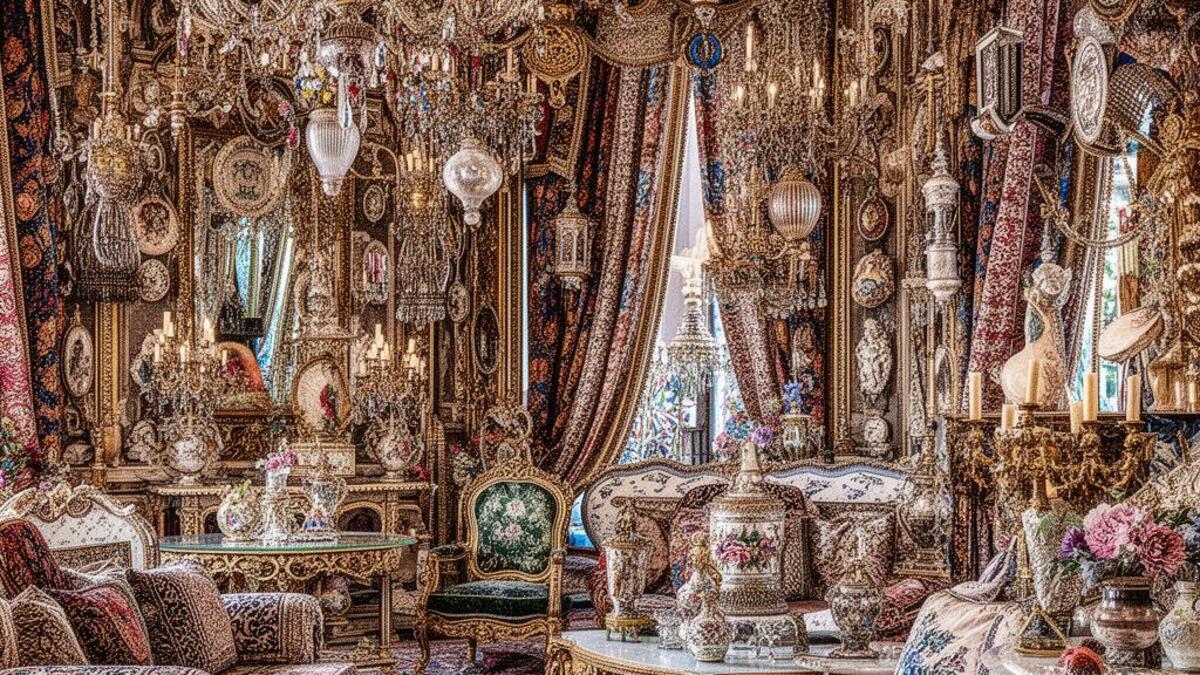
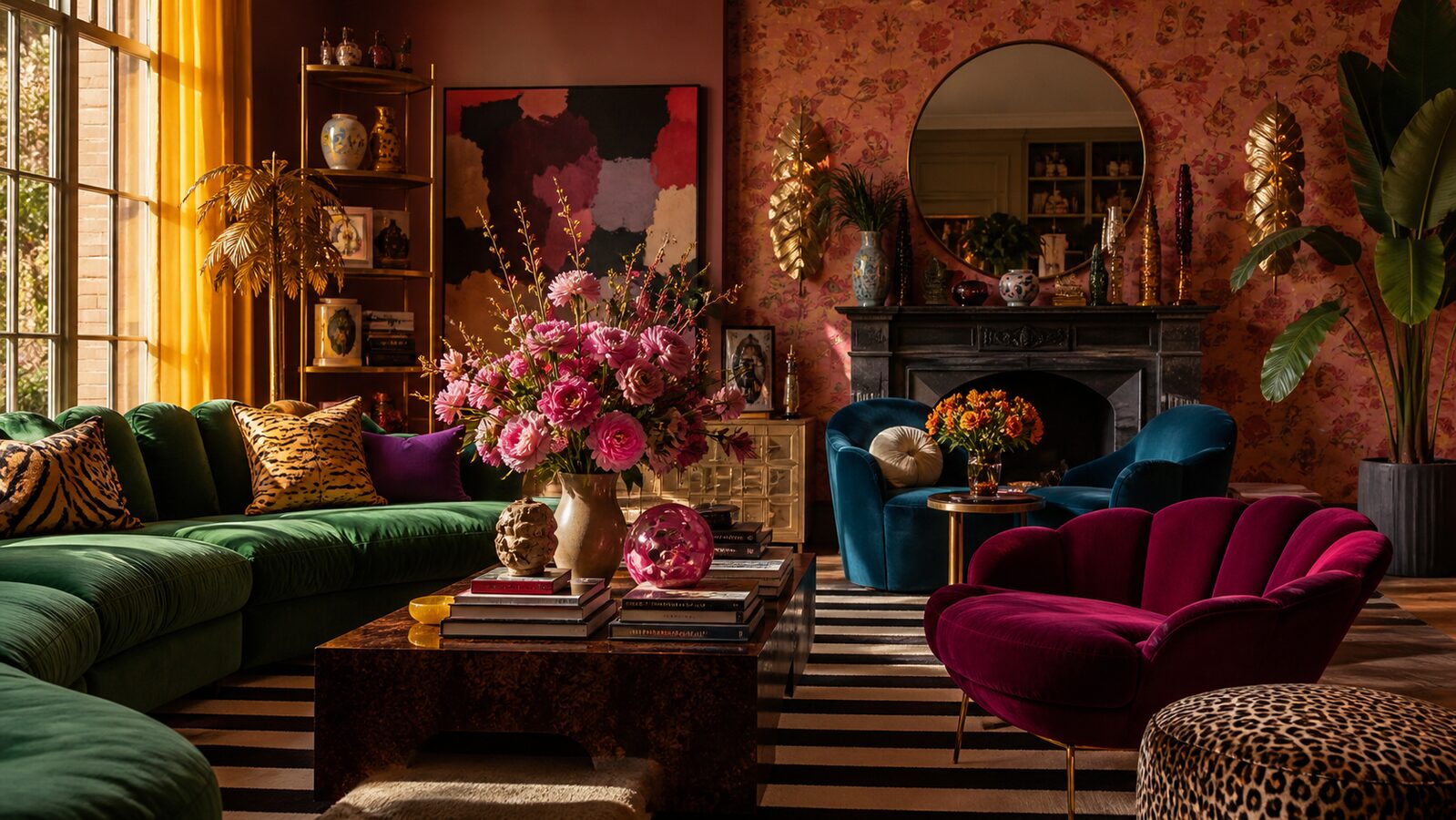
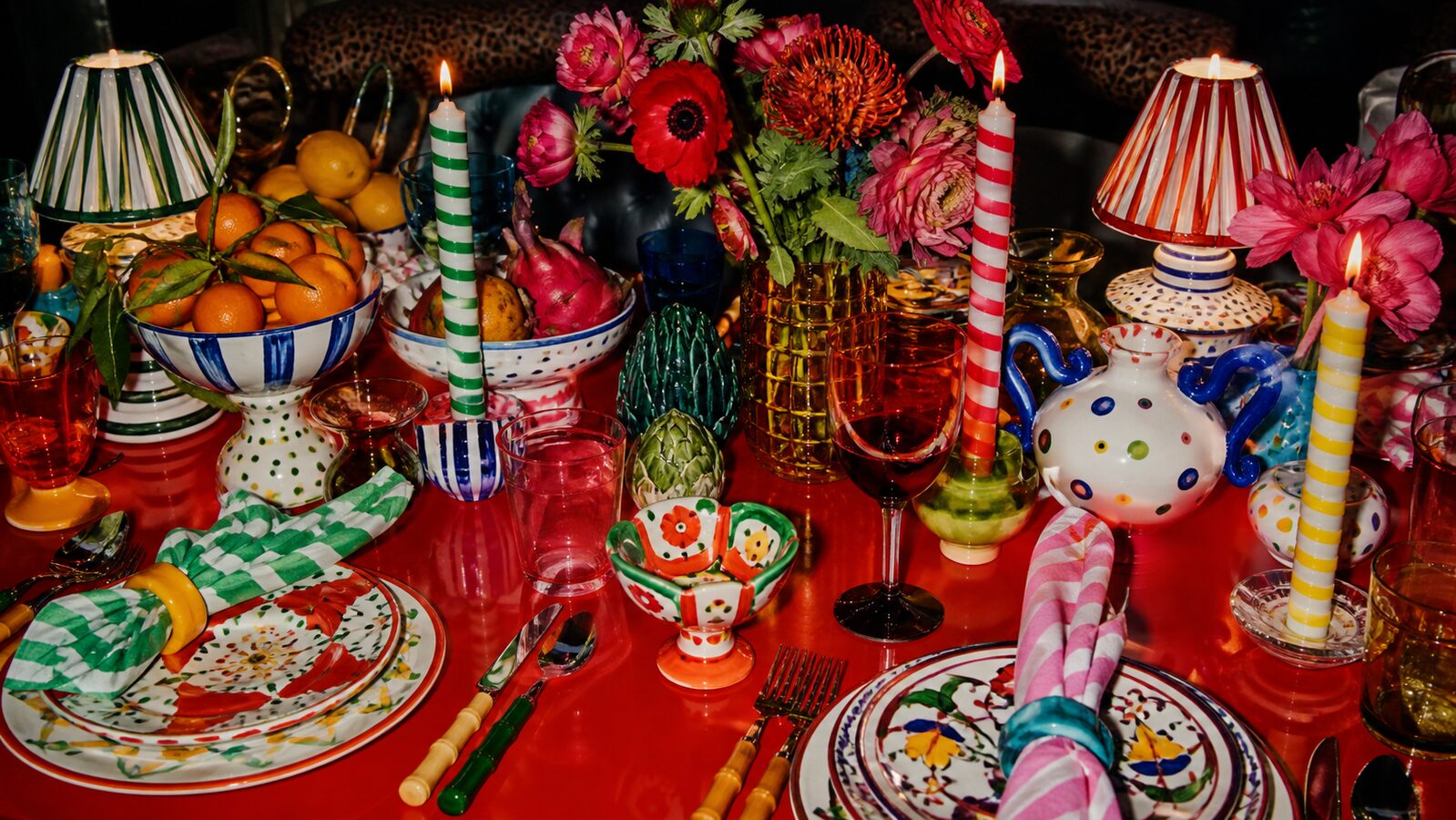
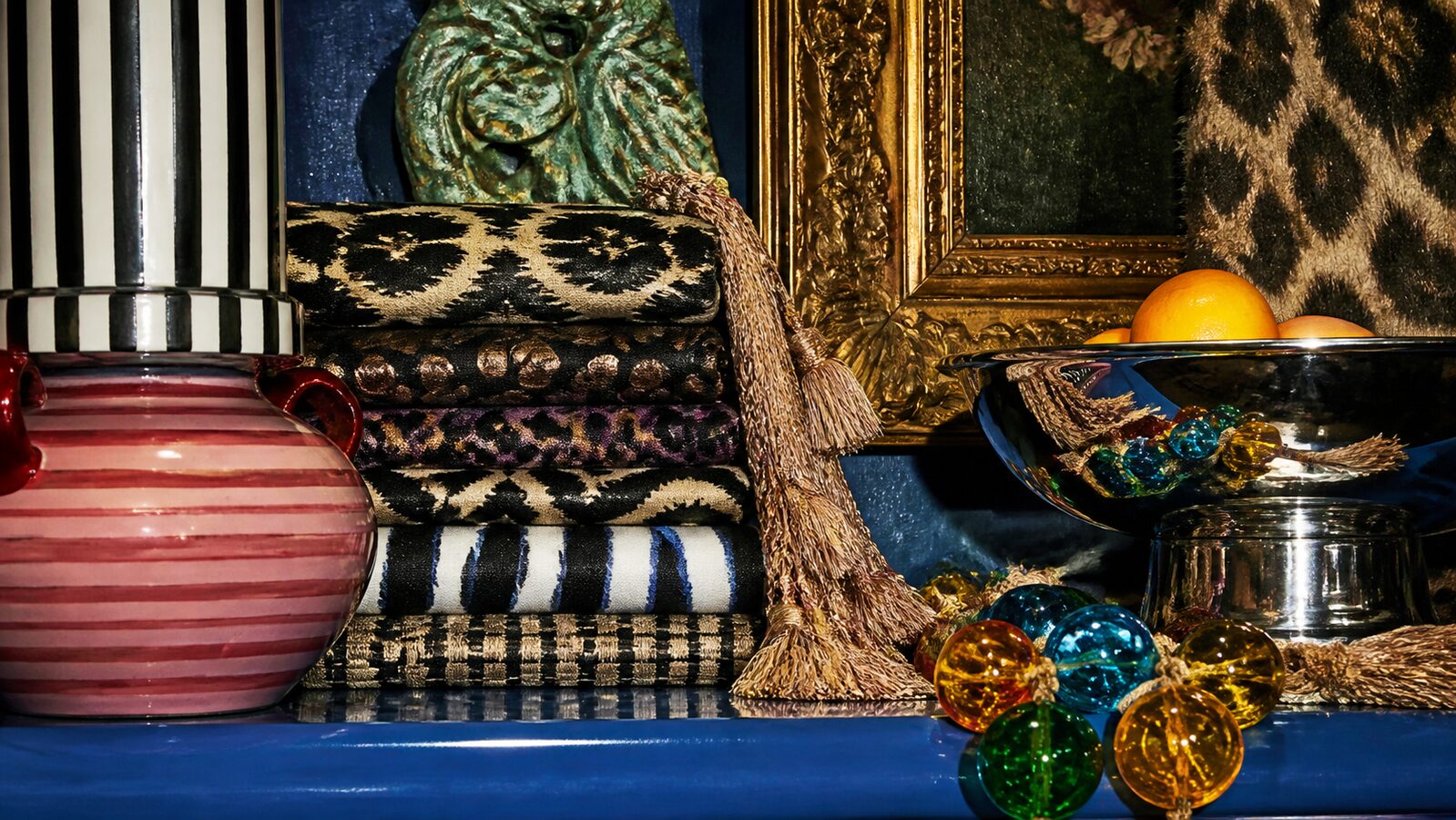
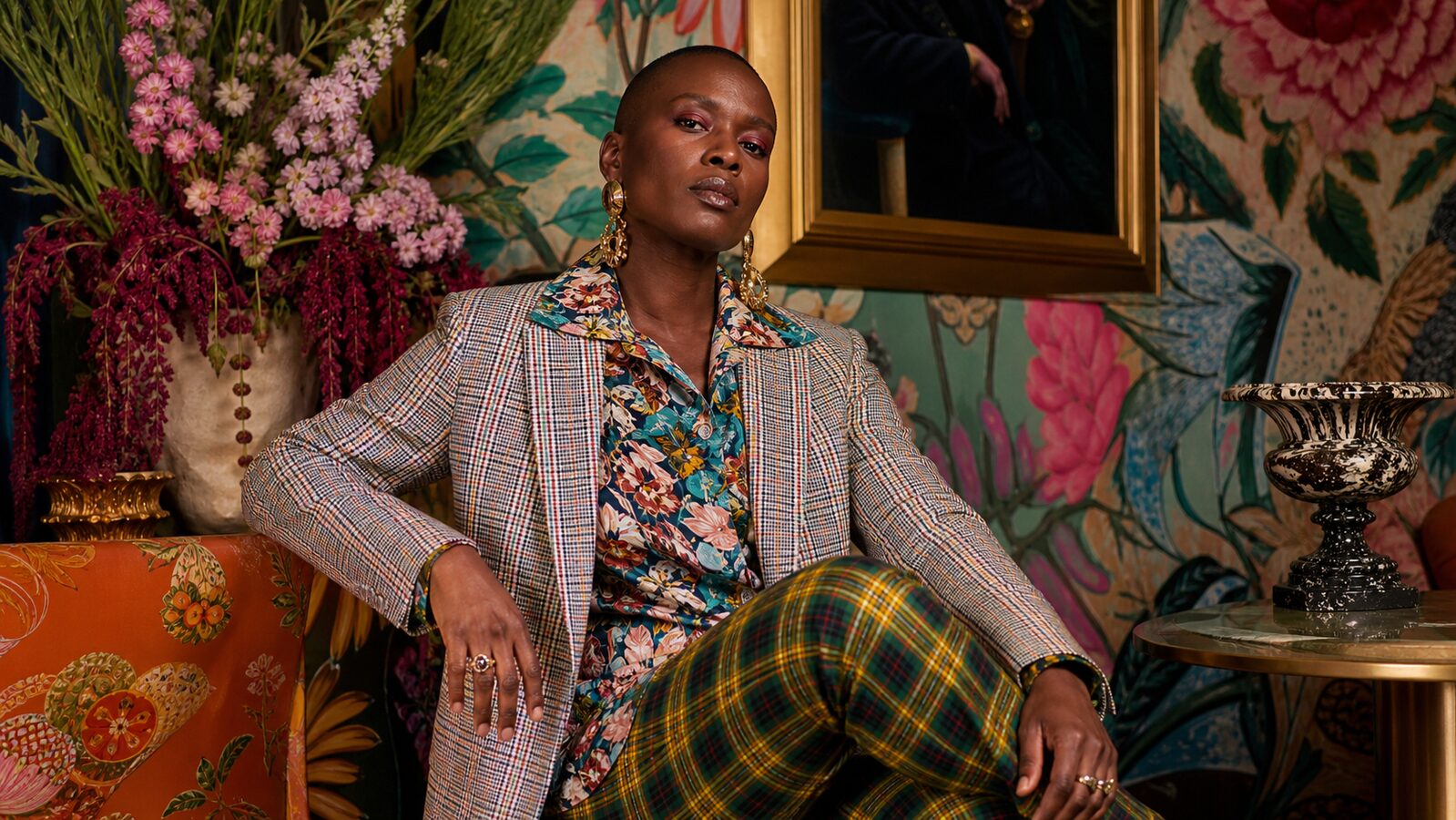
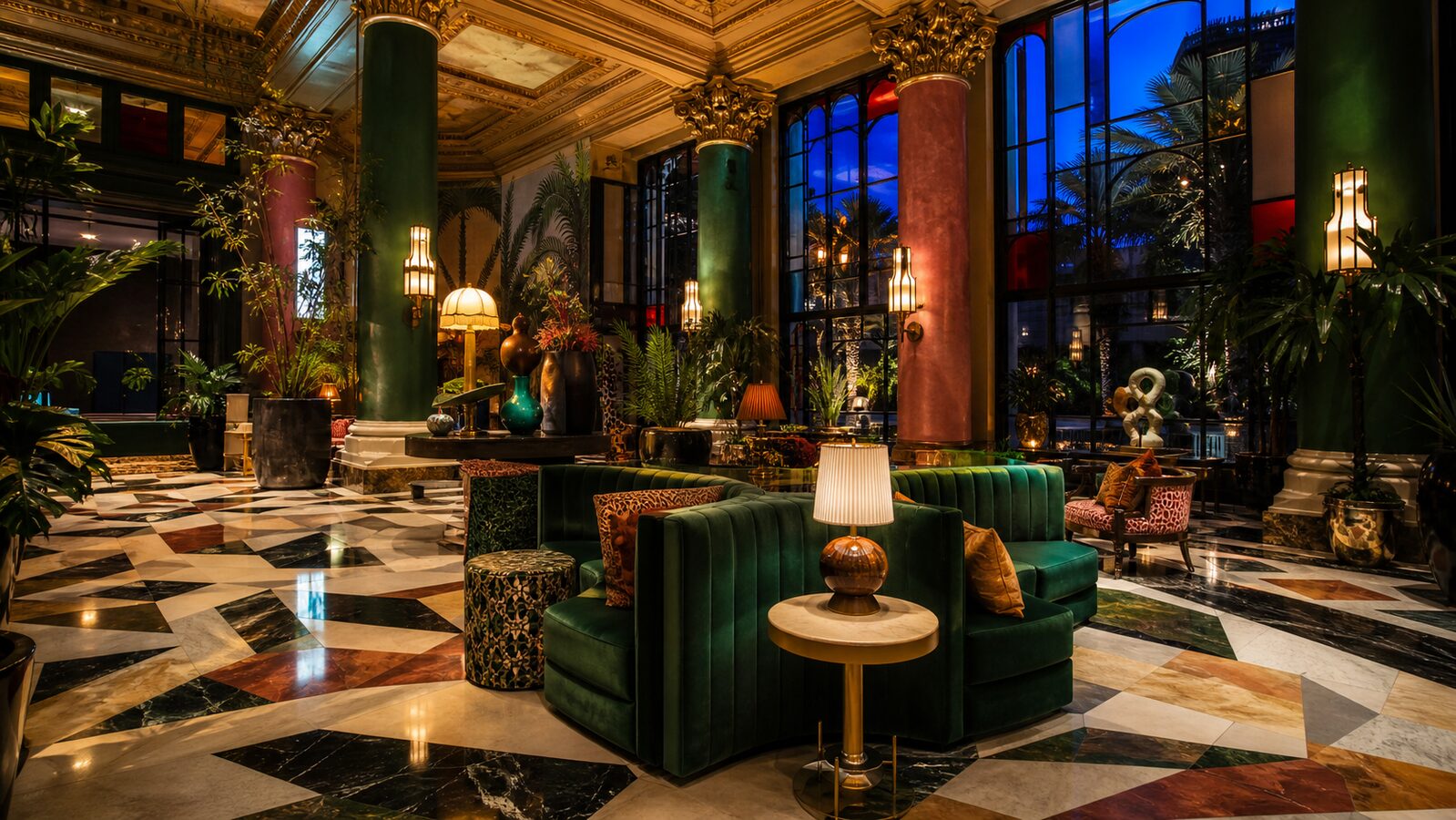
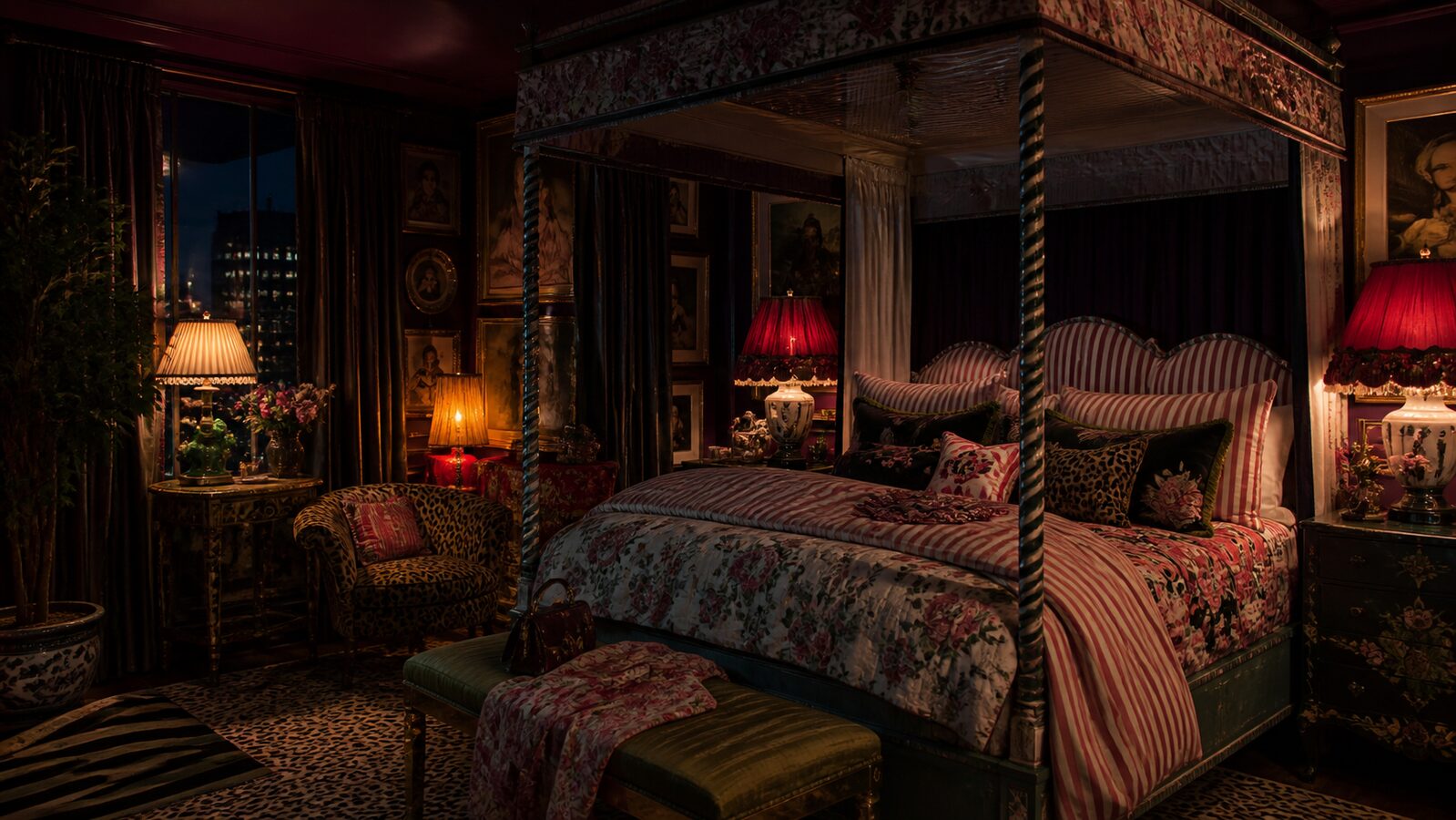
What it is, when it works, who it is for, and where it already exists.
Record 032-MA - when it works, who it is for, what it looks like
Where this aesthetic shows up in the real world · ↗ opens the source site
Where Maximalism came from, what makes it recognisable, and the fingerprint it leaves.
Historical; contemporary revival from 2015 · Decoration tradition across cultures; contemporary reaction to minimalism
Maximalism as a conscious aesthetic philosophy has no single origin: it describes a decorative impulse that appears across cultures and eras wherever human beings have had the resources to fill their environments with beautiful objects. Victorian interiors (walls covered floor-to-ceiling with paintings, shelves crowded with ceramics and taxidermy, floors layered with patterned rugs) are one historical expression. Baroque architecture is another. The Morris-crafted interior, the Ottoman palace, and the Mughal miniature painting are related expressions across different cultural traditions.
Contemporary maximalism emerged partly as a reaction against the hegemony of Scandinavian minimalism and its corporate offspring: the ubiquitous white-walls-light-wood-Eames-chair interior that dominated Instagram from 2012–2018. The counter-trend gathered force around 2015–2017 through the influence of designers like Luke Edward Hall (English country house layering), Kelly Wearstler (American glamour maximalism), and the revival of 'grandmillennial' and 'cottagecore' aesthetics that embraced accumulated objects and mixed patterns.
In graphic design, maximalism takes the form of all-over pattern, layered typography, multiple competing textures in a single composition, and a deliberate rejection of negative space. Memphis Design is one maximalist design language; the psychedelic poster tradition is another; fashion editorial that fills every inch of the frame is a third. The underlying proposition is that complexity is not confusion: that a richly decorated surface rewards extended attention in ways a spare surface cannot.
“Every surface a story, every corner a collection.
The visual DNA: what makes it recognisable
8-channel console with the fingerprint on its display. Save the card, or share the page

4 color interpretations of this aesthetic
The colour of the styles sitting closest to this one
How to shoot it, how to prompt it, and how to board it.
How to shoot this aesthetic
"Every surface spoken for, every corner an argument for abundance"
Shot list
Lighting
Multiple practical sources every lamp in the room switched on, competing color temperatures accepted and embraced; maximalism has no lighting budget because the whole room is the light
Drop this into Studio to generate in this aesthetic
Maximalist aesthetic with dense layering, rich pattern mixing, ornamental detail, saturated color abundance
The record applied to your project. The record's kit is free; your brand, references and plates come with membership
01 · Hero application02 · Material and finish03 · Palette in context04 · Photography directionWhether to use it, what it costs to do properly, and where it stands right now.
Two written calls, seven meters, and when to walk away
More is only more when it is organised. Abundance needs a repeating structural rule underneath, a grid or a colour interval, or it collapses into clutter, which is the failure everyone assumes is inherent to the style. Vary scale aggressively, hold hue tightly. Every element should reward a close look, because the viewer will give it one.
Right when there is budget and a strong enough eye to compose rather than accumulate. More things is not maximalism; many things held in a working structure is. Wrong when the team is thin, because minimalism hides a weak eye behind restraint and this puts every decision on the surface. It arrives whenever minimalism has been dominant long enough to feel like a rule, which is now.
More elements, more materials, more sourcing.
Composed chaos versus actual clutter is the entire difference.
Balancing that much visual information without losing hierarchy is hard.
Actual clutter versus composed abundance is an easy line to cross.
A constant counter-trend to minimalism across design.
Has cycled in and out for decades and always comes back.
Needs real sourcing and layering, but contained to key pieces.
A Pro feature: origins, practitioners, and pitfalls
Neighbours, cross-references, blends, and the questions people ask.
Connected across the creative knowledge graph
Where it stands now, and what it costs you to use it
Maximalism is defined by what it opposes, which makes it cyclical rather than progressive. It arrives whenever minimalism has been dominant long enough to feel like a rule, and it is arriving now.
The distinction that matters to practitioners is between accumulation and composition. More things is not maximalism. Maximalism is many things held in a structure that is working hard.
It is expensive to execute and unforgiving. Minimalism hides a weak eye behind restraint; maximalism puts every decision on the surface.
Mix Maximalism with any style in the library
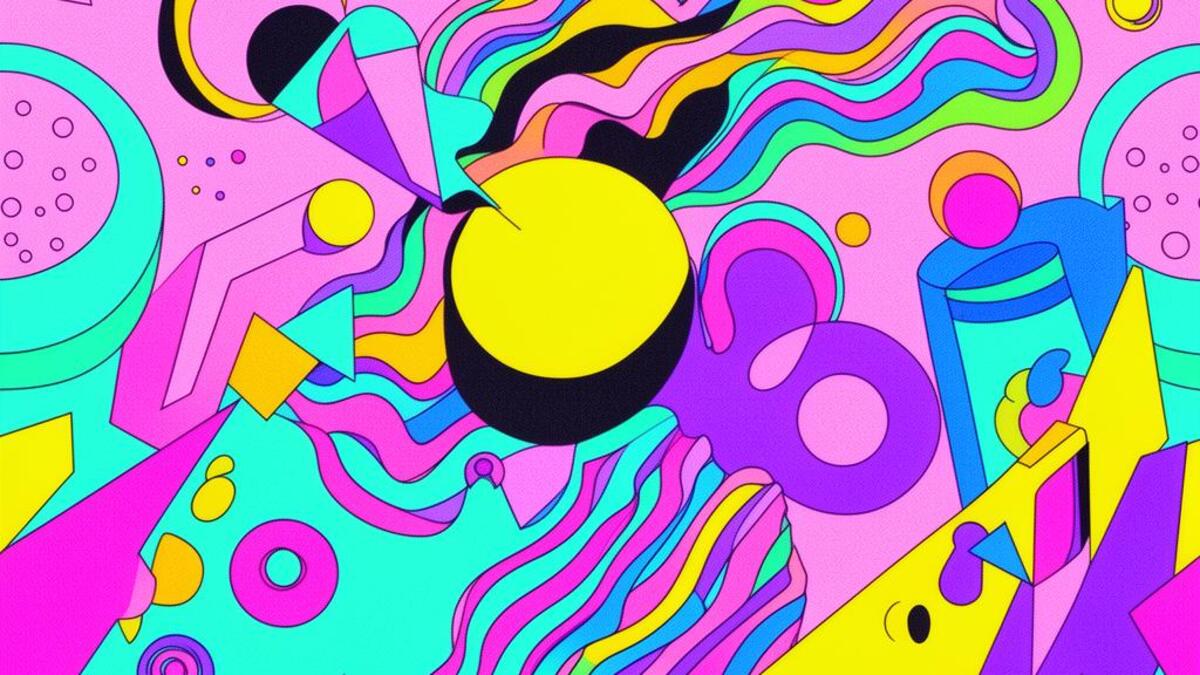 Maximalism 50%Memphis 50%
Merged palette
#FF3333
#FFFFFF
#FF9900
#33CC33
#00CCFF
Leads maximal, expressive, chaotic
Typography · from Maximalism
Abril Fatface over Lora
Materials
The calls this blend forces
These two disagree on one thing, and a blend cannot average them: you pick a side. At this mix:
Organic or Geometric? Maximalism is organic, Memphis is geometric. This mix lands geometric.
Use it
Maximalist aesthetic with dense layering, rich pattern mixing, ornamental detail, saturated color abundance (50%), infused with Memphis Design Group aesthetic with bold geometric patterns, clashing color, squiggles and zigzags, terrazzo texture, Ettore Sottsass-inspired irreverence, postmodern playfulness, color palette strictly #FF3333 #FFFFFF #FF9900 #33CC33 #00CCFF, leaning organic over geometric, overall character: maximal, expressive, chaotic
Maximalism is a design philosophy that embraces abundance, layering, and complexity: the opposite of minimalism. In interior design: walls covered with art, shelves crowded with objects, pattern on pattern. In graphic design: all-over composition, multiple typefaces, layered textures. The underlying principle: more attention rewards more detail.
Maximalism uses the full spectrum simultaneously rather than a curated palette. Rich jewel tones are common (emerald, sapphire, ruby, gold), but the defining quality is saturation and abundance rather than any specific hue. Vintage jewel-toned maximalism, Memphis primary-color maximalism, and grandmillennial pastel maximalism are all valid expressions.
Maximalism is intentional abundance: everything chosen and placed with purpose, even when the purpose is creating a feeling of richness through density. Clutter is unintentional accumulation without curation. The maximalist interior is carefully composed to reward exploration; the cluttered space is just stuff that hasn't been edited. Maximalism has intention; clutter lacks it.
Every style in the library is broken down like this one: the palette, the typography, the materials and the lineage.
Explore the style library →