Contextualism

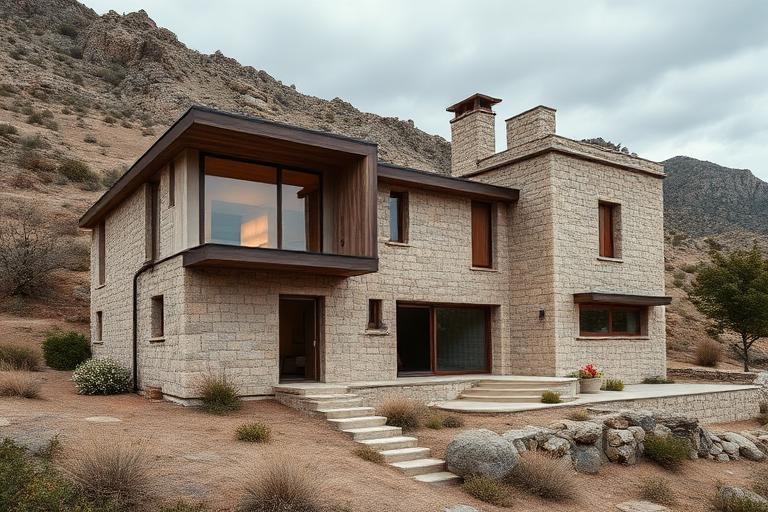
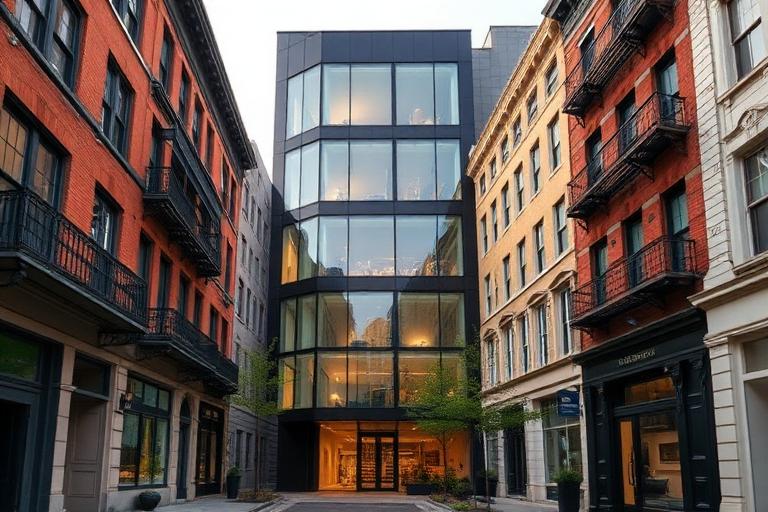
Colin Rowe's figure-ground urbanism as discipline - the new building completes the city fabric rather than disrupting it, reading scale, material, and grain and responding with precision: Moneo in Mérida, Chipperfield in Berlin.

Compare Contextualism with another style →See the Contextualism typefaces →On the timeline · 1960s
Record020-AC
AestheticContextualism
ClassAnalog / Nostalgic
StatusINGESTING
Contextualism aesthetic archive image
Archive plate · Contextualism
01
The record

What it is, when it works, who it is for, and where it already exists.

How to use it

Record 020-AC - when it works, who it is for, what it looks like

FIELD 01

When to use it

  • Brand identity for projects with deep respect for existing urban or historical fabric
  • Developer brand positioning neighborhood integration as a value rather than constraint
  • Architecture firm identity rooted in urban repair and civic responsibility
  • Municipal and planning authority communication about sensitive infill development
FIELD 02

Perfect for

  • Architecture firms practicing in historic city centers and sensitive urban contexts
  • Municipal planning departments and heritage conservation authorities
  • Real estate developers working in protected historic districts
  • Urban regeneration organizations committed to fabric repair over tabula rasa

In the wild, Contextualism aesthetic real-world examples

Where this aesthetic shows up in the real world · ↗ opens the source site

Omoro Style GuideEvery aesthetic, every field on this page, in one PDF.
$8Get the guide →
02
The anatomy

Where Contextualism came from, what makes it recognisable, and the fingerprint it leaves.

History, Contextualism aesthetic history

1960s-present · United States and Europe (academic origins at Cornell)

Contextualism emerged as a critique of Modernism's disregard for existing urban fabric. Colin Rowe and Fred Koetter's 'Collage City' (1978) argued that the Modernist free-standing tower in open space destroyed the spatial continuity of traditional cities. Using figure-ground analysis (mapping the relationship between building mass and open space), they demonstrated that pre-modern cities created defined outdoor rooms, connected streets, and legible public spaces that Modernist planning eliminated.

The practical impact was immediate. Architects began designing buildings that respected street walls, maintained cornice lines, used materials sympathetic to their neighbors, and created enclosed public spaces rather than leftover plazas. In the 1980s, Contextualism overlapped with Postmodernism (both rejected Modernist universalism) but was a more serious and enduring position: where Postmodernism quoted historical styles for communicative effect, Contextualism studied urban morphology to understand how cities actually worked.

Contemporary Contextualism has become more nuanced. It no longer means simply matching neighboring building heights and materials (which the earliest Contextualists sometimes reduced it to). Current practice engages with climate context, social context, ecological context, and temporal context (how will the neighborhood change?) alongside formal and spatial analysis. David Chipperfield's Neues Museum, Caruso St John's Newport Street Gallery, and Grafton Architects' university buildings all demonstrate Contextual thinking without Contextual mimicry.

The building that finishes the sentence the street started.

Omoro dossier · 020-AC

Visual markers, Contextualism aesthetic visual markers

The visual DNA: what makes it recognisable

typography

See the fonts
  • Typefaces that harmonize with their surroundings rather than dominating
  • Classical proportions for institutional contexts, modern for commercial
  • Restrained signage that reads as part of the streetscape
  • Material-appropriate lettering: carved stone, painted wood, cast metal

grid

  • Street walls maintained and reinforced
  • Cornice lines and datum lines aligned with neighboring buildings
  • Ground-floor transparency and activation at pedestrian scale
  • Setbacks and massing responding to adjacent building profiles

materials

  • Materials sympathetic to neighborhood palette
  • Local stone or brick matching existing context: variable by site
  • Contemporary interpretations of traditional material patterns
  • Metal or glass used where context has no strong material precedent

motifs

  • Buildings that complete urban blocks rather than standing alone
  • Entrance sequences aligned with established pedestrian routes
  • Window proportions echoing neighboring rhythms
  • Roof profiles that engage with the existing skyline

Aesthetic profile

8-channel console with the fingerprint on its display. Save the card, or share the page

Aesthetic Profile
Contextualism
Contemporary
1960–present
Attribute console · 020-AC
leans analog, nostalgic, warm
8 CH
FIG. 1
MaximalMinimalAnalogDigitalExpressiveRestrainedWarmCoolNostalgicFuturisticStructuredChaoticLightDarkGeometricOrganic
01Minimal
MaximalEVEN
02Analog
Digital30%
03Restrained
Expressive10%
04Cool
Warm20%
05Futuristic
Nostalgic30%
06Structured
Chaotic20%
07Dark
Light20%
08Organic
GeometricEVEN
AnalogNostalgicWarm5 materials
Omoro · Attribute console · 020-AC
omoro.io/styles/arch-contextualism

Material assembly

The style's primary materials, assembled bottom-up

Tap a stratum for material detail · Full catalog

Place in history

Contemporary · 1960–present - tap any style to travel

Color Palettes, Contextualism color palettes and hex codes

4 color interpretations of this aesthetic

Contextualism
#3C2E24 · #8C7A6A · #D4C4B0 · #F0E8DC · #281810
New buildings that complete the fabric they enter rather than compete with it
Infill
#281810 · #7A4028 · #A88068 · #C8B8A0 · #E8E0D0
New building matching its neighbours' cornice line and brick tone
Campus Quad
#181814 · #585040 · #908070 · #C0B8A8 · #E8E4D8
New library speaking the same stone language as the old chapel
Harbour Edge
#1A1810 · #6A3820 · #508868 · #B8A080 · #E0D8C8
Maritime warehouse vocabulary: brick, timber, and patinated copper
Omoro Palette Pack575 curated palettes across every aesthetic, 5 export formats.
$8Get the palettes →

Adjacent Palettes, styles related to Contextualism

The colour of the styles sitting closest to this one

Critical Regionalism
Vernacular Architecture
Neoclassical Architecture
Adaptive Reuse
03
The direction

How to shoot it, how to prompt it, and how to board it.

Photo Direction

How to shoot this aesthetic

"The building that chose to fit in, on purpose"

Shot list

  • Wide street-level shot showing the building matched in scale and material to its neighbors
  • Detail shot at the seam where the contextual infill meets an older adjacent building
  • Wide shot from across the street capturing the full streetwall continuity

Lighting

Natural daylight matched to the time of day the street is typically seen this style is about legibility within a real urban context, not a dramatic isolated moment

Omoro Director's Briefs151 photo shot-lists like this one, ready to shoot from.
$8Get the briefs →

Generative Prompt

Drop this into Studio to generate in this aesthetic

Contextualist architecture responding directly to its surrounding urban fabric, material and scale matched to neighboring buildings, respectful infill design, streetwall continuity, architecture as a considerate neighbor rather than a standalone statement

Paste as-is, or append your own subject

Mood Board

The record applied to your project. The record's kit is free; your brand, references and plates come with membership

Mood board
The Contextualism board
8 frames · 4 selected
FIG. 4
Old Brick Dark3C2E24Matching Mortar8C7A6ALocal StoneD4C4B0Lime RenderF0E8DCOld Brick Shadow281810
Brand and references
IdleBrand and references open with membership
With membership: the brand's own facts and colours in every prompt, references carried into every frame, and the plates generated.
01 · Hero application
02 · Material and finish
03 · Palette in context
04 · Photography direction
05 · Pattern plate
06 · Object
07 · Environment
08 · Digital presence
Demo kit free, the rest with membershipThe record as a demo kit, free. Name a project and it is written for that
Omoro · Mood board · 020-AC
04
The judgement

Whether to use it, what it costs to do properly, and where it stands right now.

Creative verdict, Contextualism feasibility and strategic recommendation

Two written calls, seven meters, and when to walk away

Creative verdict
Should Contextualism be the call?
7 meters
FIG. 2
Assessment

Reading the context takes longer than responding to it. Matching a material and a roofline is the surface answer, while the real one is in grain, plot rhythm and datum lines, which only a proper site study surfaces. Analyse before proposing. Deference can go too far: a pastiche adds nothing, and the best contextual work is clearly of its own time.

Verdict

Right when context is read as scale, material and pattern rather than style, which is where the serious version lives. The weak version is used to enforce conservatism, since it can justify blocking anything that does not match what is already there. Worth asking early: who gets to decide what the context is.

Production cost
High

Real construction that has to match the surrounding city fabric.

Creative difficulty
High

Completing the city instead of disrupting it takes real discipline.

Execution difficulty
High

Matching scale, material, and grain precisely is exacting work.

Risk of misuse
Medium

Completing the city instead of disrupting it takes real discipline to pull off.

Prevalence
Rare

A niche, mostly academic and urban-planning reference.

Longevity
Enduring

A discipline about fitting in, which by definition doesn't date.

Brand investment
High

Real construction that has to match the surrounding city fabric.

Avoid if
The brand wants the building to stand out from its surroundings
The entire discipline here is completing the city, not disrupting it.
The surrounding fabric isn't studied carefully
Matching scale and material takes real research, not a guess.
Omoro · Creative verdict · 020-AC

Editorial Depth

A Pro feature: origins, practitioners, and pitfalls

Editorial depth
The Contextualism file
14 sections
FIG. 3
Context02Brands02Perception04Use04Index02
01Common MisconceptionThe principle beneath the surface
02Historical ContextOrigins, cultural moment, and reaction
03Brands That Accidentally Use This StyleNatural alignment, not category claims
04Brands That Perfectly Represent This StyleExceptional execution
05Psychological EffectHow visual decisions change perception
06Visual ChecklistInclude and avoid
07Creative FormulaThe visual system reduced to essentials
08Recognition SignalsHow to recognize it in two seconds
09When To Use This StyleContexts where the language performs
10Common Creative MistakesWhere imitation weakens the signal
11Best Brand ApplicationsIndustries with a natural advantage
12Creative Application AnalysisFit, feasibility, and production reality
13Related StylesClose languages and the key distinction
14Visual DNA SummaryThe sentence to remember
The editorial depth, with membershipOpening soon
Omoro · Editorial depth · 020-AC
05
The index

Neighbours, cross-references, blends, and the questions people ask.

Related concepts

Connected across the creative knowledge graph

Cultural relevance, Contextualism cultural relevance today

Where it stands now, and what it costs you to use it

Contextualism argues a building's first obligation is to its surroundings, which sounds uncontroversial until you ask who decides what the context is.

In practice it is often used to enforce conservatism, since it can justify blocking anything that does not match what is already there.

The serious version reads context as scale, material and pattern rather than as style, and that distinction is where the argument lives.

Cross-references

Critical RegionalismCritical Regionalism extends Contextualism from urban to regional scaleArchitectural Postmodernismboth rejected Modernist universalism but Contextualism engaged more deeply with urban analysisNeo-ModernismNeo-Modernism often employs Contextualist thinking within a modern formal language

Blend

Mix Contextualism with any style in the library

Contextualism×
50%50%
99% alike
Contextualism referenceCritical Regionalism referenceContextualism 50%Critical Regionalism 50%

Merged palette

#3C2E24

#8C7A6A

#9E7A5A

#D4C4B0

#D4B898

Leads analog, nostalgic, warm

Typography · from Contextualism

Space Grotesk over Inter

Materials

  • Materials sympathetic to neighborhood palette
  • Local stone or brick matching existing context: variable by site
  • Local stone, earth, and timber varying by region

Use it

Contextualist architecture responding directly to its surrounding urban fabric, material and scale matched to neighboring buildings, respectful infill design, streetwall continuity, architecture as a considerate neighbor rather than a standalone statement (50%), infused with Critical Regionalist architecture blending modernist principles with local climate, material, and craft tradition, resistance to placeless global style, tectonic honesty, architecture rooted in a specific site and culture, color palette strictly #3C2E24 #8C7A6A #9E7A5A #D4C4B0 #D4B898, overall character: analog, nostalgic, warm

One-click generation opens with the studio

About this aesthetic

What is Contextualism in architecture?

Contextualism is the principle that buildings should respond to and complete their physical, cultural, and historical surroundings rather than existing as isolated objects. It emerged as a critique of Modernism's tendency to place buildings in open space without regard for the existing city fabric.

Is Contextualism the same as traditional architecture?

No. Contextualism does not require historical style or traditional construction. A fully contemporary building can be Contextual if it responds to street patterns, building heights, material palettes, and spatial sequences of its surroundings. The goal is dialogue with context, not imitation of it.

How does Contextualism differ from Critical Regionalism?

Contextualism focuses primarily on the immediate built surroundings: the street, the block, the neighborhood. Critical Regionalism engages with broader regional identity: climate, landscape, cultural traditions, and tectonic practices. They overlap but operate at different scales.

Build with the contextualism aesthetic

Every style in the library is broken down like this one: the palette, the typography, the materials and the lineage.

Explore the style library →