When to use it
- Hyperpop and electronic music
- Digital-native Gen-Z brands
- Gaming and streaming
- Maximalist digital art
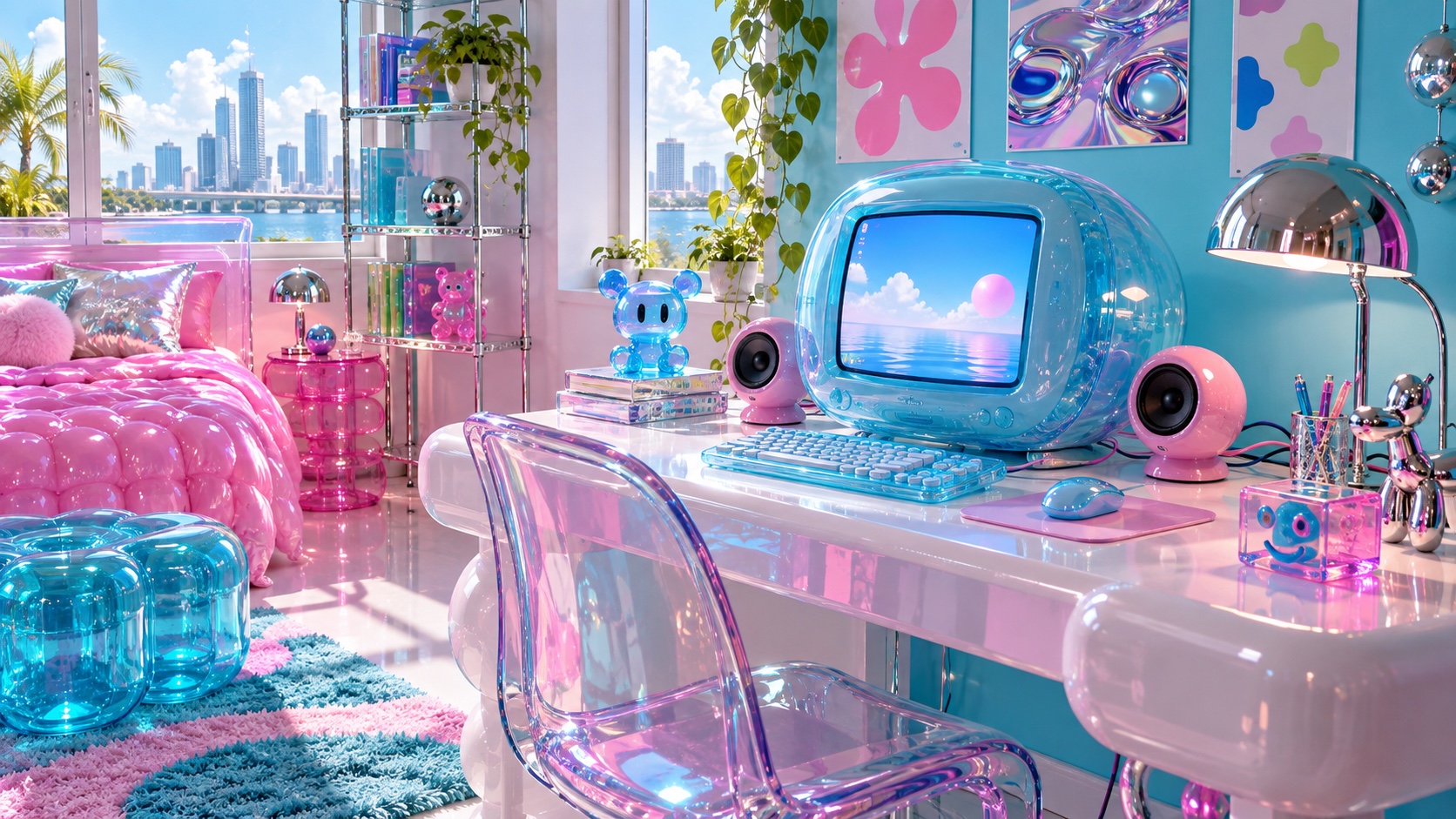
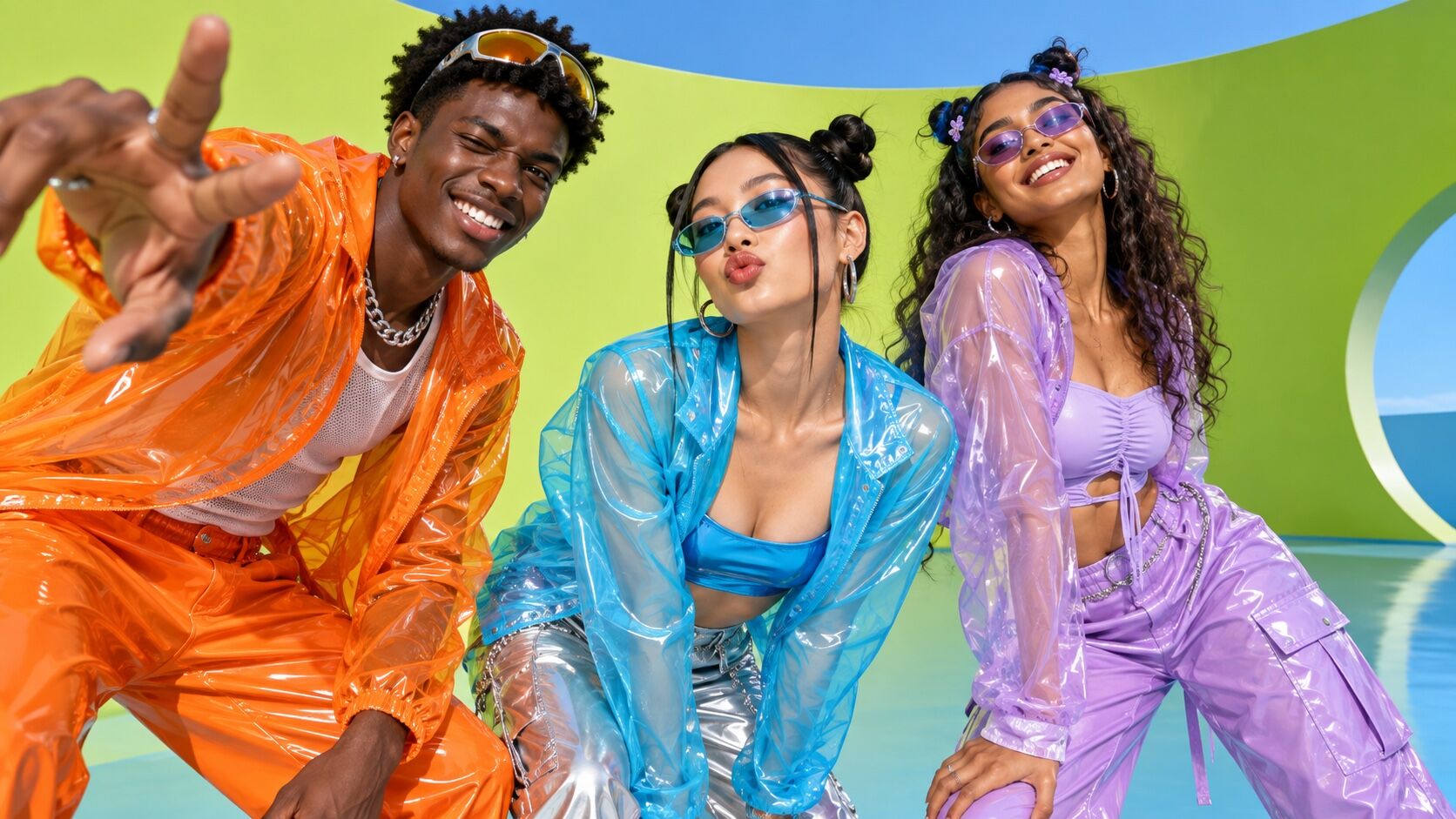
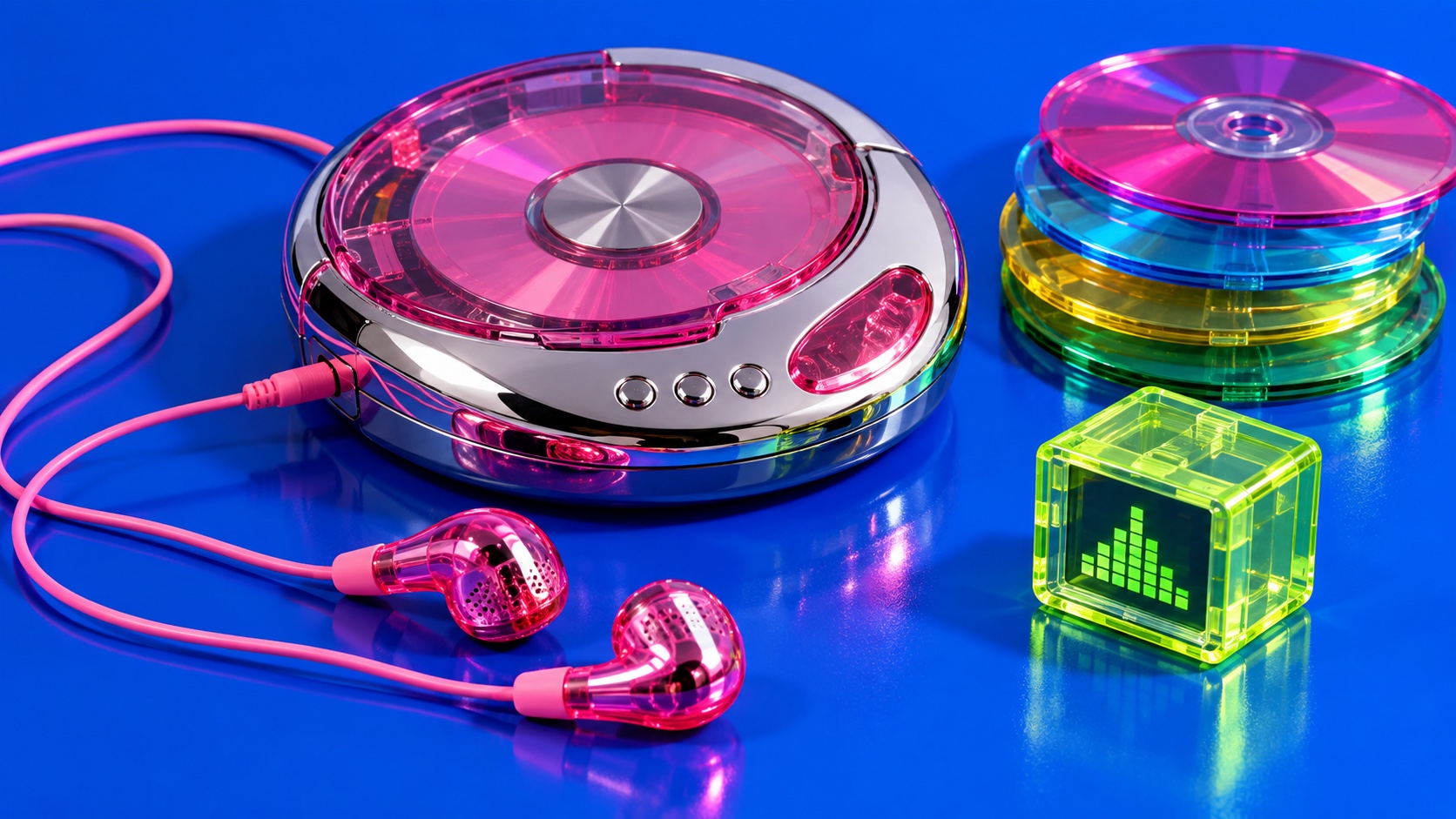
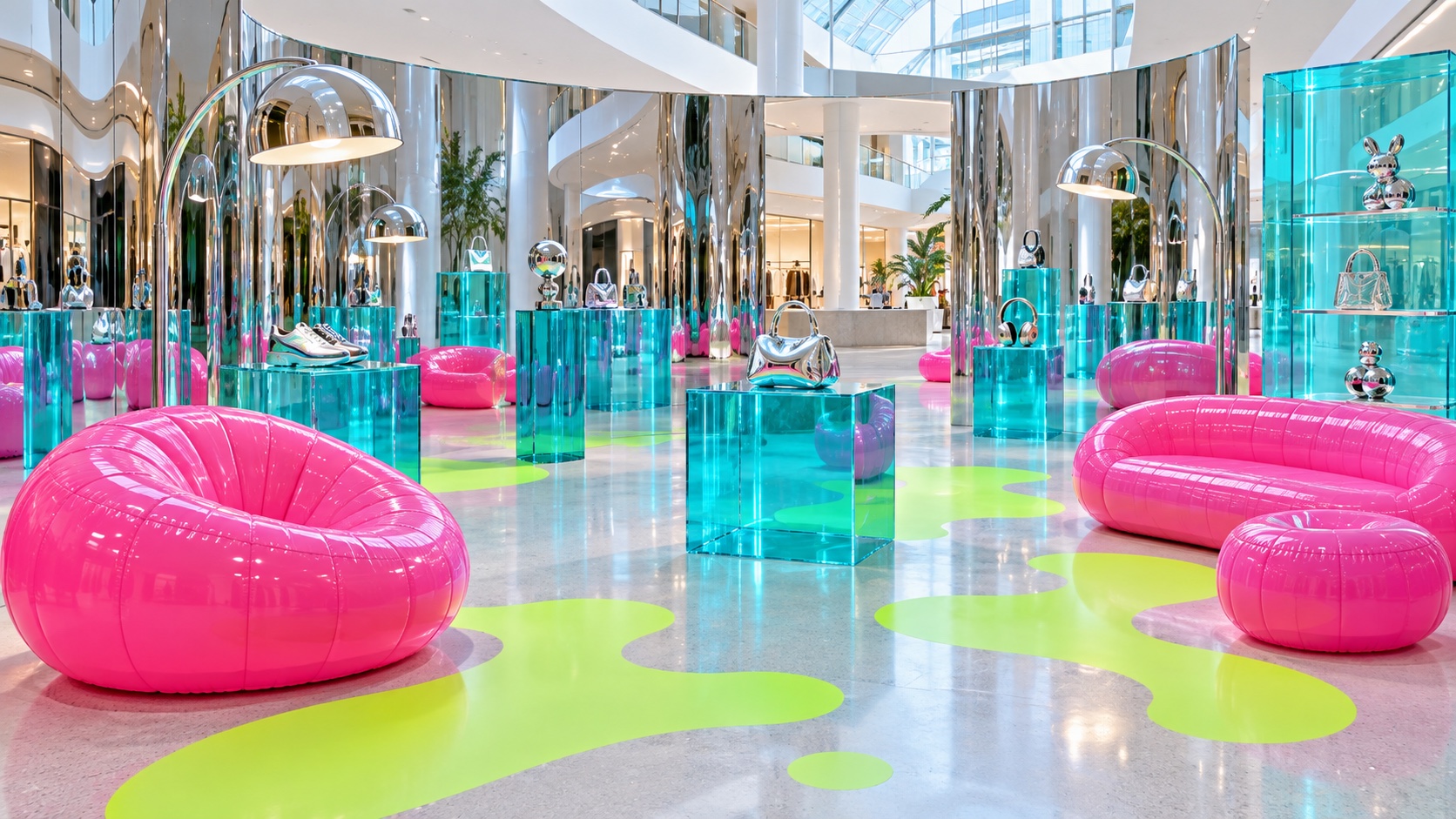
Digital maximalism meets pop culture with saturated screens and interface elements


What it is, when it works, who it is for, and where it already exists.
Record 022-CY - when it works, who it is for, what it looks like
Where this aesthetic shows up in the real world · ↗ opens the source site
Where Cyberpop came from, what makes it recognisable, and the fingerprint it leaves.
2016–present · K-pop visual culture, global pop music; internet aesthetics communities
Cyberpop emerged in the mid-2010s at the intersection of K-pop production design and the global spread of internet aesthetics. Where cyberpunk is dystopian and dark: grimy neons in the rain: cyberpop inverts the palette: bright magenta, electric blue, and holographic silver on white or pastel backgrounds. The future, in cyberpop, is exciting rather than threatening.
K-pop visual language was a central driver: groups like BLACKPINK, aespa, and EXO developed a visual grammar that drew from gaming aesthetics, sci-fi concept art, and digital interfaces but in a hyper-optimistic register. Holographic materials, geometric grids, AR interfaces, and digital avatars were filtered through the production values of major entertainment companies to create something simultaneously futuristic and explicitly commercial.
Cyberpop is now a dominant aesthetic in influencer content, product packaging for tech-adjacent consumer products, and independent music production. It represents the mainstreaming of cyberculture: the future is now an aesthetic choice, available to anyone with a good 3D renderer and a neon gradient preset.
“The cyberculture aesthetic for people who find cyberpunk too dark.
The visual DNA: what makes it recognisable
8-channel console with the fingerprint on its display. Save the card, or share the page

3 color interpretations of this aesthetic
The colour of the styles sitting closest to this one
How to shoot it, how to prompt it, and how to board it.
How to shoot this aesthetic
"Digital maximalism collides with pop fantasy: the screen is the stage and everything is content"
Shot list
Lighting
RGB LED panels in competing hues; no single color should dominate; cyan, magenta, and yellow provide the widest gamut and the most cyberpop color combinations
Drop this into Studio to generate in this aesthetic
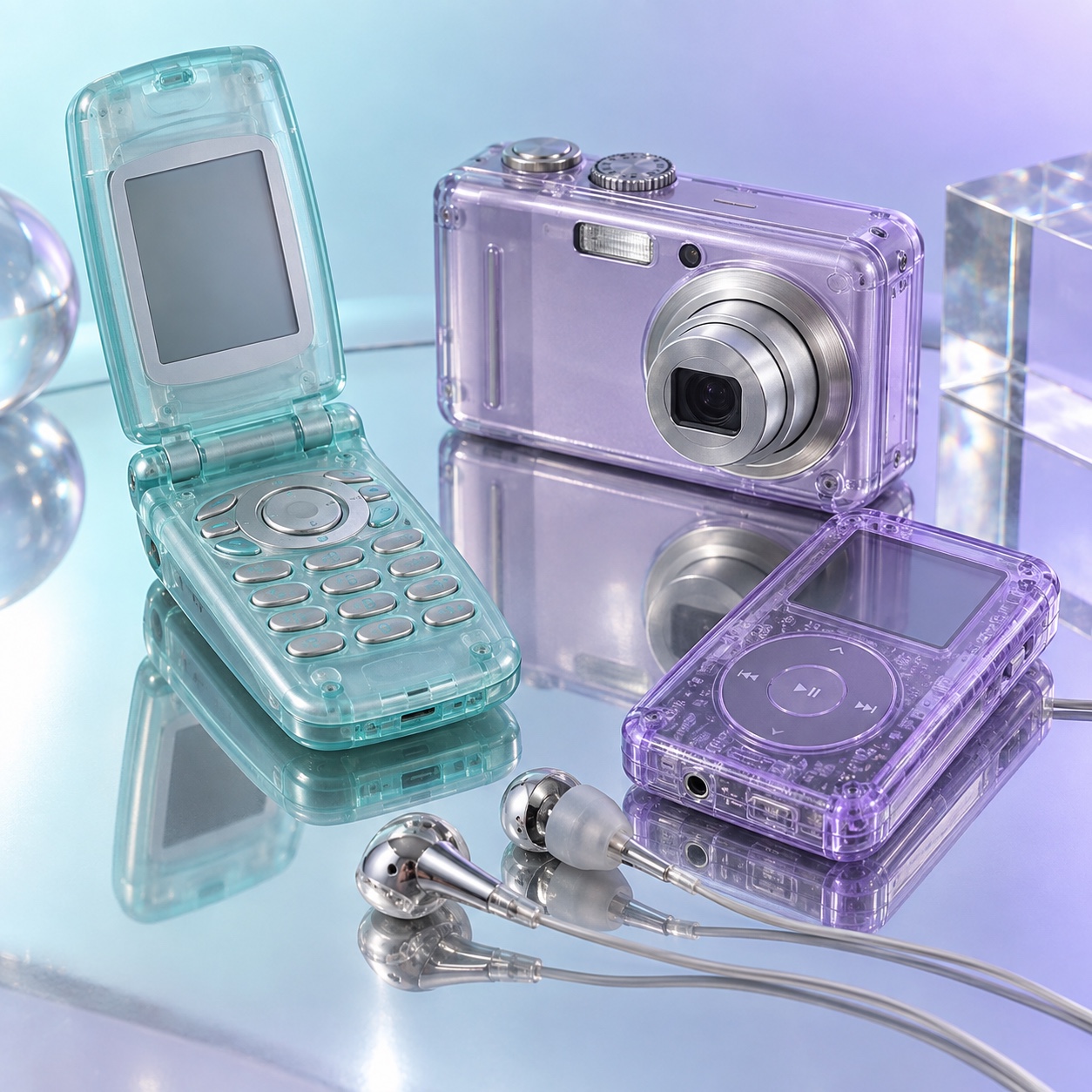
Cyberpop aesthetic with bubblegum-bright futurism, candy-colored tech optimism, 3D-rendered glossy toylike forms, playful sci-fi maximalism, Y2K-adjacent chrome and neon fusion
The record applied to your project. The record's kit is free; your brand, references and plates come with membership
01 · Hero application02 · Material and finish03 · Palette in context04 · Photography directionWhether to use it, what it costs to do properly, and where it stands right now.
Two written calls, seven meters, and when to walk away
Maximalism turns to noise without a hierarchy holding it. Pick one loudest element and subordinate everything else to it, or the eye finds no entry point and leaves. Layer at different scales rather than the same one. Clashing colour works when the values are controlled; three saturated hues at identical brightness vibrate and become unreadable.
Use it for platform-native work with a short shelf life: it is cyberpunk with the pessimism removed, tuned to survive compression and hold attention in a feed. Purists call that a betrayal and the audience does not care. Wrong as a long-term identity, because it is optimised for a distribution system that changes every couple of years.
Purely digital. No location or material cost.
Maximalism can become noise fast without a real hierarchy.
Layering interface elements is simple, keeping it legible isn't.
Layered interface elements without hierarchy just look cluttered.
Growing alongside broader digital-maximalist and Y2K revival trends.
Tied to the current wave of digital nostalgia.
Purely digital assets, easy to refresh.
A Pro feature: origins, practitioners, and pitfalls
Neighbours, cross-references, blends, and the questions people ask.
Connected across the creative knowledge graph
Where it stands now, and what it costs you to use it
Cyberpop is what happens when cyberpunk's visual language is separated from its pessimism, keeping the neon and dropping the dystopia. Purists consider that a betrayal and the audience does not care.
It is built for platforms rather than for cinema, optimised to survive compression and hold attention in a feed.
That makes it genuinely current and genuinely short-lived. It is tuned to a distribution system that changes every couple of years.
Mix Cyberpop with any style in the library
 Cyberpop 50%Y2K 50%
Merged palette
#0A0A1A
#C0D8F0
#AA00FF
#00CCFF
#FF0090
Leads digital, maximal, expressive
Typography · from Cyberpop
Space Grotesk over Inter
Materials
The calls this blend forces
These two disagree on one thing, and a blend cannot average them: you pick a side. At this mix:
Futuristic or Nostalgic? Cyberpop is futuristic, Y2K is nostalgic. This mix lands nostalgic.
Use it
Cyberpop aesthetic with bubblegum-bright futurism, candy-colored tech optimism, 3D-rendered glossy toylike forms, playful sci-fi maximalism, Y2K-adjacent chrome and neon fusion (50%), infused with Y2K aesthetic with millennium futurism, Paris Hilton and early Beyoncé-era cultural touchstone, butterfly motifs, bedazzled maximalism, candy-pastel and metallic color mood, color palette strictly #0A0A1A #C0D8F0 #AA00FF #00CCFF #FF0090, leaning futuristic over nostalgic, overall character: digital, maximal, expressive
Cyberpop is an optimistic, high-gloss take on cyberculture aesthetics: neon magentas (#FF007F), electric cyans (#00FFFF), holographic gradients, and digital grid overlays but in a bright, poppy register rather than dark dystopian. It emerged from K-pop visual design (BLACKPINK, aespa) and global pop music production in the mid-2010s. It's the cyberculture aesthetic for the mainstream.
Cyberpunk aesthetic is dark, dystopian, and gritty: neon signs reflected in rain, crumbling urban infrastructure, the hacker's underworld. Cyberpop takes the same neon palette (magenta, cyan, electric blue) and bright gloss materials but places them in a clean, optimistic context: sleek surfaces, light backgrounds, futurism as aspiration rather than warning.
Cyberpop appears in K-pop entertainment brands (HYBE, SM Entertainment), gaming aesthetics (Fortnite, Valorant), consumer tech products targeting younger demographics, and beauty brands that reference digital culture. Products like AirPods Pro packaging, Samsung Galaxy campaigns, and independent music releases from pop artists frequently use cyberpop visual language.
Every style in the library is broken down like this one: the palette, the typography, the materials and the lineage.
Explore the style library →