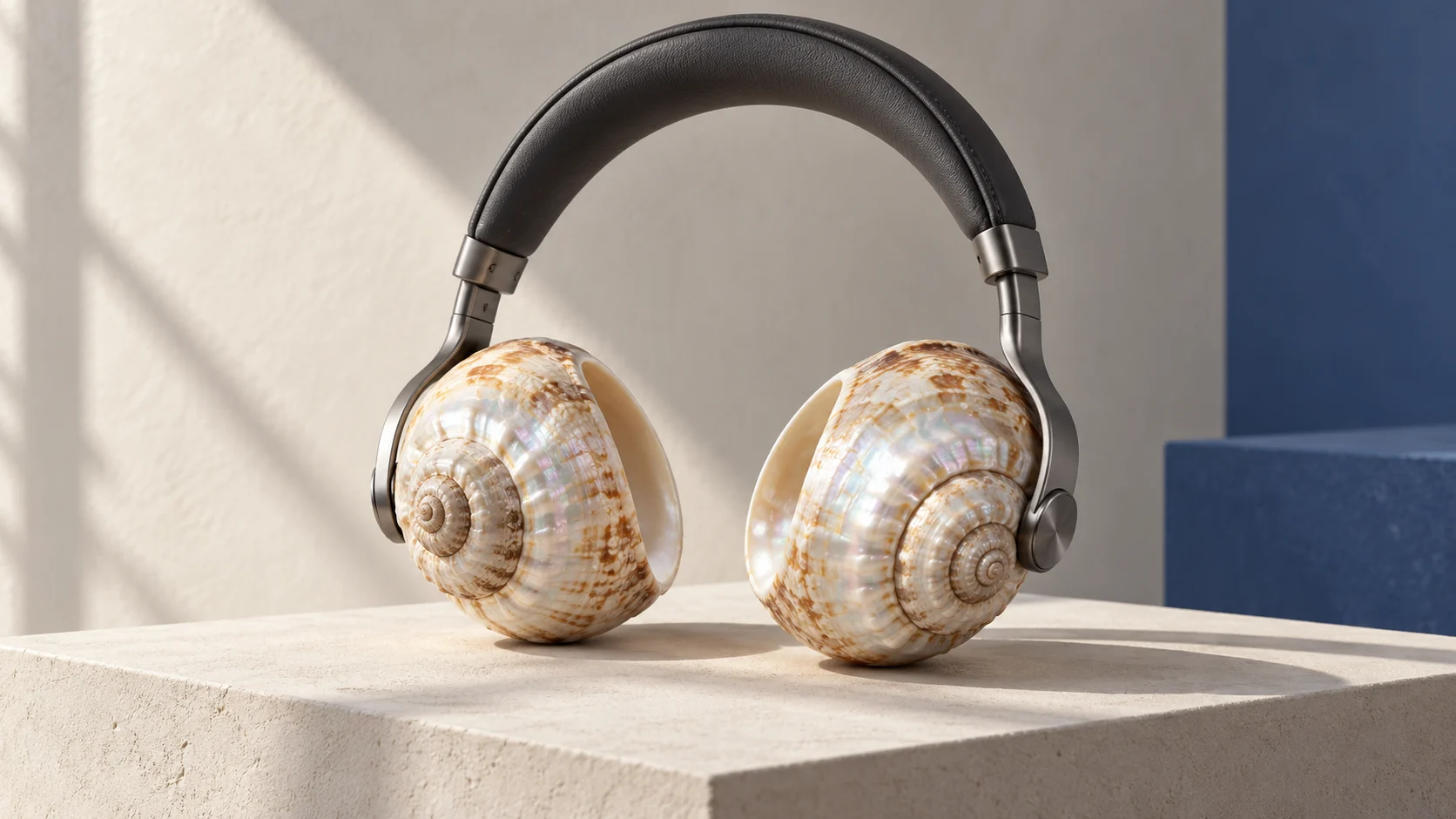
Form Substitution

A familiar object stays readable while one of its defining forms is replaced by an unexpected material or object

Collect references in this style →
Form Substitution visual example
Visual language · Form Substitution

A familiar object stays readable while one of its defining forms is replaced by an unexpected material or object

Key colors
Era
Sixteenth-century composite images to contemporary campaigns
Origin
Composite portraiture, found-object art and Surrealist experiments with the everyday
Typography
Plain editorial sans set away from the transformed object, A short line of type after the image has already landed
Best for
Editorial covers and essays
Explore Surrealism
Record025-FS
AestheticForm Substitution
ClassExpressive / Minimal
StatusINGESTING
A lighthouse made from stacked cream books stands on a rocky coast at dusk, substituting paper volumes for masonry.
Archive plate · Form Substitution
A person in a grey raincoat holds a giant orange poppy in place of an umbrella canopy on a wet city street.
Dossier sceneFashion · 1/3
01
The record

What it is, when it works, who it is for, and where it already exists.

How to use it

Record 025-FS - when it works, who it is for, what it looks like

FIELD 01

When to use it

  • A visual metaphor must communicate before a headline is read
  • A product campaign can borrow a second object to explain a benefit
  • Editorial imagery needs a single strong conceptual image
  • A poster or cover should turn one object into the whole argument
FIELD 02

Perfect for

  • Editorial covers and essays
  • Music and cultural campaigns
  • Product and packaging concepts
  • Public-interest messages with a clear metaphor
FIELD 03

What it looks like

  • Giuseppe Arcimboldo, Four Seasons in One Head, c. 1590
  • Meret Oppenheim, Object, 1936
  • Salvador Dalí and Edward James, Lobster Telephone, 1938
  • Pablo Picasso, Bull’s Head, 1942

In the wild, Form Substitution aesthetic real-world examples

Where this aesthetic shows up in the real world · ↗ opens the source site

Omoro Style GuideEvery aesthetic, every field on this page, in one PDF.
$8Get the guide →
02
The anatomy

Where Form Substitution came from, what makes it recognisable, and the fingerprint it leaves.

History, Form Substitution aesthetic history

Sixteenth-century composite images to contemporary campaigns · Composite portraiture, found-object art and Surrealist experiments with the everyday

The method begins with recognition. A viewer identifies an object from its overall structure, then notices that one essential part has been supplied by something else. Sixteenth-century painter Giuseppe Arcimboldo built faces from fruit, flowers and other natural forms; the portrait remains readable while every component refuses to be ordinary anatomy. His work is a useful early example of a recognisable whole made from substitute parts, though the contemporary design technique is broader than composite portraiture.

Twentieth-century artists made the swap an argument about use. Meret Oppenheim covered a teacup, saucer and spoon in fur in 1936, keeping the objects intact while making their ordinary function suddenly uncomfortable. Salvador Dalí and Edward James’s Lobster Telephone of 1938 put a lobster where a telephone receiver belongs. In 1942 Picasso assembled a bicycle saddle and handlebars so they became a bull’s head. Each work depends on the tension between what the object used to do and what the substitute makes the viewer imagine.

In contemporary image-making, the device appears in editorial covers, public campaigns and product photography. A well-made substitution changes one thing at a time: the form still reads at a glance, the new element fits the light and scale, and the comparison says something worth saying. It differs from figure–ground reversal, which asks the empty background to become a second image. Here a physical component is swapped. The result should feel inevitable once noticed, not merely strange.

The object is familiar. One of its forms has become something else.

Omoro dossier · 025-FS

Visual markers, Form Substitution aesthetic visual markers

The visual DNA: what makes it recognisable

typography

See the fonts
  • Plain editorial sans set away from the transformed object
  • A short line of type after the image has already landed
  • Steady margins and modest caption scale

grid

  • One object and one substitution per frame
  • The original object silhouette remains recognisable
  • Ordinary environmental context establishes scale
  • Enough clear space around the swap to see its attachment

materials

  • Practical props built and shot in camera: petals, shell, fruit, metal parts
  • Photographic composites matched for grain, perspective and lens
  • Chalky matt paper and card as calm grounds
  • Machined metal and moulded plastic parts swapped for natural forms
  • Fruit, vegetables and flowers assembled into one form, after Arcimboldo
  • Directional studio light with real cast shadows to sell the impossible join

motifs

  • A natural form performing an industrial role
  • An essential component replaced at its joint
  • Real shadows that make the impossible plausible
  • A metaphor carried by scale and silhouette

Aesthetic profile

8-channel console with the fingerprint on its display. Save the card, or share the page

Aesthetic Profile
Form Substitution
Sixteenth-century composite images to contemporary campaigns · Composite portraiture, found-object art and Surrealist experiments with the everyday
Attribute console · 025-FS
leans expressive, minimal, structured
8 CH
FIG. 1
MinimalMaximalAnalogDigitalExpressiveRestrainedWarmCoolNostalgicFuturisticStructuredChaoticLightDarkOrganicGeometric
01Minimal
Maximal50%
02Analog
Digital20%
03Restrained
Expressive70%
04Cool
Warm20%
05Futuristic
NostalgicEVEN
06Structured
Chaotic50%
07Dark
Light20%
08Organic
Geometric20%
ExpressiveMinimalStructured
Omoro · Attribute console · 025-FS
omoro.io/styles/form-substitution

Color Palettes, Form Substitution color palettes and hex codes

The definitive color scheme for this aesthetic

Form Substitution
#F1ECE0 · #222527 · #64798A · #D66B28 · #E7B76A
Keep the substituted object as the chromatic event: chalk, graphite and sea slate establish a real world, with petal orange and amber used once.
Omoro Palette Pack575 curated palettes across every aesthetic, 5 export formats.
$8Get the palettes →

Adjacent Palettes, styles related to Form Substitution

The colour of the styles sitting closest to this one

Surrealism
Rebus
Figure–Ground Reversal
Conceptual Art
03
The direction

How to shoot it, how to prompt it, and how to board it.

Photo Direction

How to shoot this aesthetic

"Keep the object. Replace one essential form. Let the new material carry the meaning."

Shot list

  • Wide coastal campaign scene: an unmistakable lighthouse tower made from stacked blank books, with an ordinary glass lantern above
  • Three-quarter fashion scene: a charcoal-coated person holds an umbrella whose canopy is a single oversized orange flower
  • Construction close-up: the black umbrella shaft connects convincingly to the flower centre, rain visible on its petals

Lighting

Use believable environmental light in every scene. The substitute shares the same light and shadow as the object it replaces.

Omoro Director's Briefs151 photo shot-lists like this one, ready to shoot from.
$8Get the briefs →

Prompts

Click any prompt row to edit. Copy uses your edited text.

Make
Form Substitution · image
Style

One clear form substitution in an otherwise believable contemporary editorial photograph: retain a familiar object silhouette but replace one essential physical component with a different recognisable object of compatible scale and shape

Visual cues

precise attachment and real shared light, restrained palette, no extra transformation, no logos, no text

Paste as-is, or add your own subject.

Variant 1 of 8Same style, a different picture each time: new subject, setting, framing and light. Add a model if you want someone in the picture.
Frame
Variant 1 · image
Shot

Photograph: wide coastal campaign scene: an unmistakable lighthouse tower made from stacked blank books, with an ordinary glass lantern above.

Setting

Set in rain-dark city pavement. Shot wide, the whole scene with room around it, use believable environmental light in every scene.

Detail

Keep real shadows that make the impossible plausible in the frame.

Style

Style: One clear form substitution in an otherwise believable contemporary editorial photograph: retain a familiar object silhouette but replace one essential physical component with a different recognisable object of compatible scale and shape, precise attachment and real shared light, restrained palette, no extra transformation, no logos, no text.

Palette

Colour palette #F1ECE0 #222527 #64798A #D66B28 #E7B76A.

Wardrobe

Contemporary anonymous charcoal clothing only where a person gives scale.

Frame

Composed for a 16:9 landscape frame.

Rules

Photographic, not an illustration. No text, no logos, no watermark.

Use as skill

The whole record as a portable skill for Claude, ChatGPT, Gemini, image and video models, or a human brief

The whole record, compiled into a skill another system can work inside: lineage, axes, palettes, type, materials, photography, verdicts and a critique checklist. Nothing is generated; it is the dossier, restructured.

Mood Board

The record applied to your project. The record's kit is free; your brand, references and plates come with membership

Mood board
The Form Substitution board
8 frames · 4 selected
FIG. 4
Chalk StockF1ECE0Graphite Form222527Salt Blue64798APoppy OrangeD66B28Lantern AmberE7B76A
Brand and references
IdleBrand and references open with membership
With membership: the brand's own facts and colours in every prompt, references carried into every frame, and the plates generated.
01 · Hero application
02 · Material and finish
03 · Palette in context
04 · Photography direction
05 · Pattern plate
06 · Object
07 · Environment
08 · Digital presence
Demo kit free, the rest with membershipThe record as a demo kit, free. Name a project and it is written for that
Omoro · Mood board · 025-FS
04
The judgement

Whether to use it, what it costs to do properly, and where it stands right now.

Creative verdict, Form Substitution feasibility and strategic recommendation

Two written calls, seven meters, and when to walk away

Creative verdict
Should Form Substitution be the call?
7 meters
FIG. 2
Assessment

Start with a familiar silhouette and change only one essential part. Choose a substitute whose shape and meaning both justify the swap, then build or composite it at the correct scale and angle. Keep the rest of the scene ordinary. If viewers cannot name the first object instantly, the metaphor has lost its anchor.

Verdict

Right when one substituted form can say something specific that a normal product photograph cannot. It can compress a benefit or contradiction into a glance. Borrow the precise swap; never pile up transformations until the original object disappears.

Production cost
Medium

A single carefully fabricated prop or composite can carry the idea, but realistic integration needs time and retouching.

Creative difficulty
High

The replacement must preserve recognition of the original while adding a new meaning.

Execution difficulty
Medium

Scale, lighting, attachment points and shadows must make the impossible swap feel intentionally placed.

Risk of misuse
Medium

The trick can overpower the product or make a serious subject feel flippant.

Prevalence
Common

Object swaps are common in editorial illustration and advertising because one image can carry an entire proposition.

Longevity
Enduring

The logic of an unexpected but recognisable replacement is independent of any current visual effect.

Brand investment
Medium

The idea is compact, while convincing prop construction or retouching may require specialist craft.

Avoid if
The two objects have no meaningful relationship
A replacement without a reason becomes a random surreal gag. Make the swap carry a benefit, tension or specific point of view.
The image relies on words standing in for things
That is closer to Rebus. Form substitution keeps one familiar object structure and changes an essential part of its physical form.
Omoro · Creative verdict · 025-FS

Editorial Depth

A Pro feature: origins, practitioners, and pitfalls

Editorial depth
The Form Substitution file
14 sections
FIG. 3
Context02Brands02Perception04Use04Index02
01Common MisconceptionThe principle beneath the surface
02Historical ContextOrigins, cultural moment, and reaction
03Brands That Accidentally Use This StyleNatural alignment, not category claims
04Brands That Perfectly Represent This StyleExceptional execution
05Psychological EffectHow visual decisions change perception
06Visual ChecklistInclude and avoid
07Creative FormulaThe visual system reduced to essentials
08Recognition SignalsHow to recognize it in two seconds
09When To Use This StyleContexts where the language performs
10Common Creative MistakesWhere imitation weakens the signal
11Best Brand ApplicationsIndustries with a natural advantage
12Creative Application AnalysisFit, feasibility, and production reality
13Related StylesClose languages and the key distinction
14Visual DNA SummaryThe sentence to remember

The editorial depth, with membershipOpening soon
Omoro · Editorial depth · 025-FS
05
The index

Neighbours, cross-references, blends, and the questions people ask.

Related concepts

Connected across the creative knowledge graph

Cultural relevance, Form Substitution cultural relevance today

Where it stands now, and what it costs you to use it

A single object swap can make an abstract proposition visible before a reader reaches the caption. It suits attention-poor environments because the first shape provides an instant anchor and the replacement rewards a second look.

It can also flatten an idea into a joke. The relationship between the original and substitute should be precise: shape, function, sound or cultural association must explain why these two things meet. A strong image needs only one impossible component.

Cross-references

SurrealismThe artistic tradition of making ordinary objects behave impossiblyRebusAnother compact visual metaphor, built by replacing words instead of object partsFigure–Ground ReversalA perceptual switch made with empty space rather than a physical substituteConceptual ArtThe idea matters more than the craft of the object

Blend

Mix Form Substitution with any style in the library, or see the pairs worth trying

Form Substitution×
50%50%
54% alike
Form Substitution referenceSurrealism referenceForm Substitution 50%Surrealism 50%

Merged palette

#F1ECE0

#1A1A2E

#222527

#E84393

#64798A

Leads expressive, organic, analog

Typography · from Form Substitution

Poppins over Manrope

Materials

  • Practical props built and shot in camera: petals, shell, fruit, metal parts
  • Photographic composites matched for grain, perspective and lens
  • Smooth oil painting on canvas and panel, with invisible academic brushwork

The calls this blend forces

These two disagree on 2 things, and a blend cannot average them: you pick a side. At this mix:

Structured or Chaotic? Form Substitution is structured, Surrealism is chaotic. This mix lands chaotic.

Minimal or Maximal? Form Substitution is minimal, Surrealism is maximal. This mix lands maximal.

Use it

DIRECTION

Create one visual direction that synthesizes Form Substitution × Surrealism. Preserve a clear hierarchy; do not make a contact sheet or a collage of unrelated styles.

CHARACTER

Let it read as expressive, organic, analog. Resolve the strongest tensions deliberately: structured / chaotic, minimal / maximal.

PALETTE

Use these colors as a controlled system: #F1ECE0 (Chalk Stock) · #1A1A2E (Subconscious) · #222527 (Graphite Form) · #E84393 (Surreal Pink) · #64798A (Salt Blue).

TYPE

Use Poppins for display type and Manrope for supporting text.

MATERIALS

Bring in Practical props built and shot in camera: petals, shell, fruit, metal parts, Photographic composites matched for grain, perspective and lens, Smooth oil painting on canvas and panel, with invisible academic brushwork, Frottage and grattage rubbings: wood grain and leaf textures, as in Ernst.

OUTPUT

Keep one subject or one clear interface state in focus. Use the visual language to guide composition, lighting, spacing and material decisions.

Open in blends, with pairs worth trying →

About this aesthetic

What is form substitution in visual design?

Replacing one recognisable object or essential component with another while preserving the original overall structure, so the comparison itself communicates an idea.

How is it different from Surrealism?

Surrealism is a broad artistic movement. Form substitution is one specific image-making technique that can be used inside or outside surrealist work.

What makes an object swap work?

The original object must remain legible, the substitute must fit its position and scale, and the new relationship should express a specific thought rather than arbitrary oddness.

How is it different from figure–ground reversal?

Form substitution swaps a physical component or material. Figure–ground reversal makes the empty space around a shape read as a second image.

Build with the form substitution aesthetic

Every style in the library is broken down like this one: the palette, the typography, the materials and the lineage.

Explore the style library →