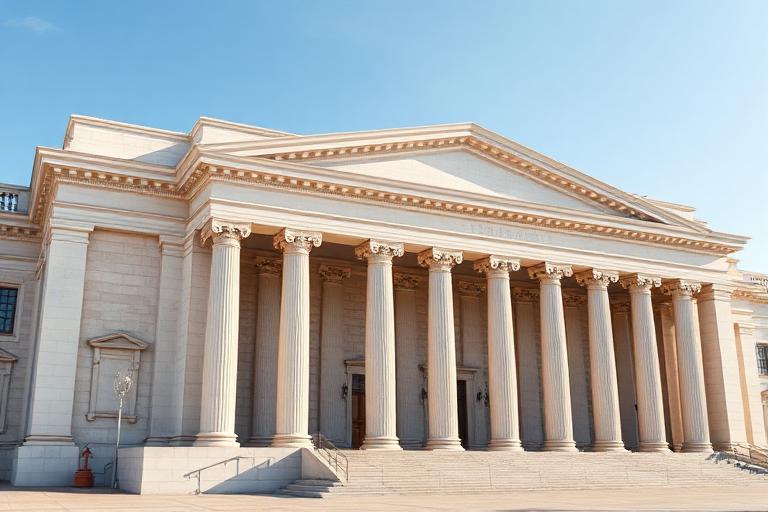
Art Deco Architecture

Jazz-age optimism in stainless steel and gilded terracotta - the Chrysler Building's eagle gargoyles, Rockefeller Center's gilded Prometheus, and the setback zigzag tower that defined the American city between the wars.

Compare Art Deco Architecture with another style →See the Art Deco Architecture typefaces →On the timeline · 1920s
Record020-AA
AestheticArt Deco Architecture
ClassGeometric / Structured
StatusINGESTING
Art Deco Architecture aesthetic archive image
Archive plate · Art Deco Architecture
01
The record

What it is, when it works, who it is for, and where it already exists.

How to use it

Record 020-AA - when it works, who it is for, what it looks like

FIELD 01

When to use it

  • Brand identity evoking interwar glamour, confidence, and decorative ambition
  • Luxury hotel, entertainment, or hospitality brand in or referencing the Art Deco period
  • Fashion and beauty brand mining 1920s–1930s visual culture for contemporary sophistication
  • Cultural institution or performing arts brand in a significant Art Deco building
FIELD 02

Perfect for

  • Luxury hotel and resort brands with Art Deco buildings - South Beach, the Savoy, Claridge's
  • Fashion and beauty brands referencing 1920s–1930s glamour
  • Cinema, entertainment, and performing arts venues in Art Deco theaters
  • Jewelry and watchmaking brands communicating geometric precision and interwar luxury

In the wild, Art Deco Architecture aesthetic real-world examples

Where this aesthetic shows up in the real world · ↗ opens the source site

Omoro Style GuideEvery aesthetic, every field on this page, in one PDF.
$8Get the guide →
02
The anatomy

Where Art Deco Architecture came from, what makes it recognisable, and the fingerprint it leaves.

History, Art Deco Architecture aesthetic history

1925-1940 · France (named at 1925 Paris exposition); global adoption

Art Deco architecture emerged from the 1925 Exposition Internationale des Arts Decoratifs et Industriels Modernes in Paris, which gave the style its name. It was not a unified movement but a shared sensibility: the conviction that modern life deserved modern ornament. Where the avant-garde wanted to eliminate decoration entirely, Art Deco abstracted historical and natural motifs into geometric patterns compatible with machine production. Zigzags, sunbursts, chevrons, and stylized flora replaced the flowing curves of Art Nouveau.

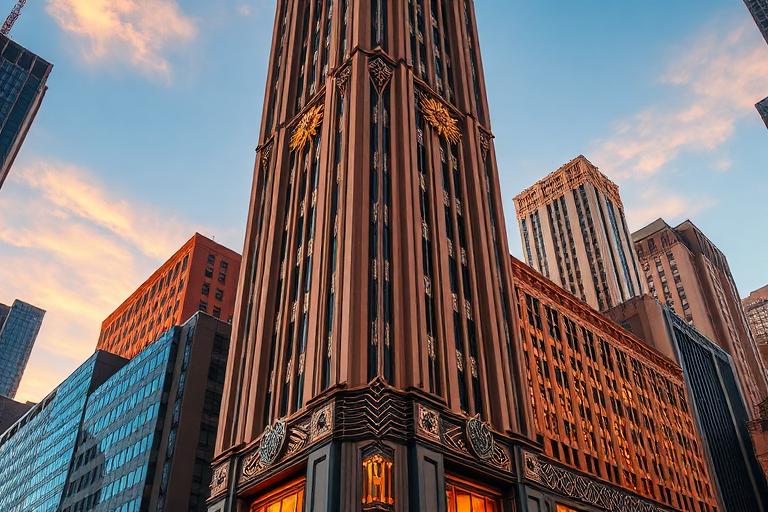
The style found its fullest expression in American skyscrapers. William Van Alen's Chrysler Building in New York (1930), with its stainless steel eagles, radiator-cap gargoyles, and needle spire, is architecture as jewelry. The Empire State Building (1931), though more restrained, shares the Art Deco vocabulary of setbacks and geometric ornament. In Miami Beach, a different strand of Art Deco developed: pastel-colored, horizontally banded, and nautically themed, creating the largest concentration of Art Deco buildings in the world.

Art Deco was a genuinely global style. The Marine Building in Vancouver, the Peace Hotel in Shanghai, the Palacio de Bellas Artes in Mexico City, and the Anshun Bridge in Chengdu all speak the language with local accents. The style declined during World War II as austerity made ornament untenable, and post-war Modernism rejected decoration entirely. Art Deco's rehabilitation began in the 1960s with preservation campaigns in Miami Beach and New York, and it remains one of the most popular and recognizable architectural styles worldwide.

Ornament went to the gym and came back as geometry.

Omoro dossier · 020-AA

Visual markers, Art Deco Architecture aesthetic visual markers

The visual DNA: what makes it recognisable

typography

See the fonts
  • Geometric display faces: Broadway, Parisian, Futura Display
  • Condensed sans-serifs with high contrast: Kabel, Neutraface
  • Gold-leaf and metallic lettering on dark backgrounds
  • Zigzag and stepped letterforms echoing architectural ornament

grid

  • Stepped-back massing (wedding cake silhouette) per zoning laws
  • Strong vertical emphasis with clustered piers and mullions
  • Symmetrical facades with elaborated entrance bays
  • Ground-floor lobbies as showcase for ornamental program

materials

  • Polished metal (stainless steel, chrome, nickel): #C0C0C0, #D0D0D0
  • Gilded terracotta and bronze: #C8A028, #D4B040, #8B7355
  • Black granite and marble: #1A1A1A, #2C2C2C
  • Pastel stucco (Miami Deco): #F0C0A0, #B0D8D0, #D0C0E0

motifs

  • Sunburst and fan patterns radiating from entrance points
  • Zigzag and chevron ornamental bands
  • Stylized eagles, gazelles, and geometric flora
  • Stepped pyramidal forms and setback silhouettes

Aesthetic profile

8-channel console with the fingerprint on its display. Save the card, or share the page

Aesthetic Profile
Art Deco Architecture
Early Modern
1920–1940
Attribute console · 020-AA
leans geometric, structured, maximal
8 CH
FIG. 1
MaximalMinimalAnalogDigitalExpressiveRestrainedWarmCoolNostalgicFuturisticStructuredChaoticLightDarkGeometricOrganic
01Minimal
Maximal40%
02Analog
Digital40%
03Restrained
Expressive40%
04Cool
Warm30%
05Futuristic
Nostalgic40%
06Structured
Chaotic50%
07Dark
Light30%
08Organic
Geometric70%
GeometricStructuredMaximal6 materials
Omoro · Attribute console · 020-AA
omoro.io/styles/arch-art-deco

Material assembly

The style's primary materials, assembled bottom-up

Tap a stratum for material detail · Full catalog

Place in history

Early Modern · 1920–1940 - tap any style to travel

Color Palettes, Art Deco Architecture color palettes and hex codes

4 color interpretations of this aesthetic

Art Deco Architecture
#1A1A1A · #8B6914 · #C4970A · #E8D88A · #F0E4B8
Jazz-age optimism hammered into zigzag ornament and setback towers
Chrysler Arch
#0A0808 · #3A2808 · #C09020 · #D8C078 · #F0E8D0
Sunburst lobby: terrazzo floor and stainless steel elevator doors
Deco Cinema
#0C0810 · #481838 · #C08828 · #E8D8A0 · #D04030
Streamlined picture palace: neon marquee and velvet interior
Ocean Liner
#081828 · #1850A0 · #C0A030 · #E8E0D0 · #D8D0C0
First-class promenade: lacquer, chrome, and Atlantic blue
Omoro Palette Pack575 curated palettes across every aesthetic, 5 export formats.
$8Get the palettes →

Adjacent Palettes, styles related to Art Deco Architecture

The colour of the styles sitting closest to this one

Stripped Classicism
Neoclassical Architecture
Mid-Century Modern
Retrofuturism
03
The direction

How to shoot it, how to prompt it, and how to board it.

Photo Direction

How to shoot this aesthetic

"Geometric luxury, stepped toward the sky one setback at a time"

Shot list

  • Low-angle wide shot up a stepped, zigzag-set building facade toward the sky
  • Detail shot of gilded or chrome ornamental relief catching raking light
  • Symmetrical shot centered on a sunburst motif or decorative entrance

Lighting

Warm late-afternoon light raking across the facade to catch every stepped setback in shadow relief, or blue hour with interior and crown lighting on for the glamour shot

Omoro Director's Briefs151 photo shot-lists like this one, ready to shoot from.
$8Get the briefs →

Generative Prompt

Drop this into Studio to generate in this aesthetic

Art Deco aesthetic with geometric luxury, stepped zigzag forms, gilded ornamentation, sunburst motifs, 1920s glamour

Paste as-is, or append your own subject

Mood Board

The record applied to your project. The record's kit is free; your brand, references and plates come with membership

Mood board
The Art Deco Architecture board
8 frames · 4 selected
FIG. 4
Lobby Black1A1A1ABronze8B6914BrassC4970AGiltE8D88AMarble CreamF0E4B8
Brand and references
IdleBrand and references open with membership
With membership: the brand's own facts and colours in every prompt, references carried into every frame, and the plates generated.
01 · Hero application
02 · Material and finish
03 · Palette in context
04 · Photography direction
05 · Pattern plate
06 · Object
07 · Environment
08 · Digital presence
Demo kit free, the rest with membershipThe record as a demo kit, free. Name a project and it is written for that
Omoro · Mood board · 020-AA
04
The judgement

Whether to use it, what it costs to do properly, and where it stands right now.

Creative verdict, Art Deco Architecture feasibility and strategic recommendation

Two written calls, seven meters, and when to walk away

Creative verdict
Should Art Deco Architecture be the call?
7 meters
FIG. 2
Assessment

The ornament is geometric and constructed. Chevrons, ziggurats and sunbursts are drawn from arcs and set angles, so freehand versions look subtly wrong, and the setbacks have to follow a proportional rule. Build the motifs geometrically. Materials carry the luxury: terracotta, bronze and polished stone, and painted substitutes read as a film set.

Verdict

The most commercially reliable historical style available, which is why cinemas, hotels and casinos keep returning to it: it survived the end of ornament because the public never stopped liking it. Right for occasion and glamour. Its motifs were drawn from Egyptian, Aztec and African sources during a period of colonial excavation, a provenance museums now discuss directly.

Production cost
High

Gilded terracotta and stainless steel. Genuinely expensive materials.

Creative difficulty
High

Jazz-age optimism, not just a zigzag tower shape.

Execution difficulty
High

Ornament at this density and precision is exacting metalwork.

Risk of misuse
High

Jazz-age optimism, not just a zigzag tower shape copied without context.

Prevalence
Common

A constant presence in luxury and hospitality branding.

Longevity
Timeless

A century old and still the shorthand for interwar glamour.

Brand investment
High

Real gilded terracotta and stainless steel. Genuinely expensive materials.

Avoid if
The budget doesn't cover real gilded or metal detail
Genuinely expensive materials are what separate this from a flat print.
The audience is unfamiliar with the interwar reference
A zigzag tower shape without the jazz-age context is just a shape.
Omoro · Creative verdict · 020-AA

Editorial Depth

A Pro feature: origins, practitioners, and pitfalls

Editorial depth
The Art Deco Architecture file
14 sections
FIG. 3
Context02Brands02Perception04Use04Index02
01Common MisconceptionThe principle beneath the surface
02Historical ContextOrigins, cultural moment, and reaction
03Brands That Accidentally Use This StyleNatural alignment, not category claims
04Brands That Perfectly Represent This StyleExceptional execution
05Psychological EffectHow visual decisions change perception
06Visual ChecklistInclude and avoid
07Creative FormulaThe visual system reduced to essentials
08Recognition SignalsHow to recognize it in two seconds
09When To Use This StyleContexts where the language performs
10Common Creative MistakesWhere imitation weakens the signal
11Best Brand ApplicationsIndustries with a natural advantage
12Creative Application AnalysisFit, feasibility, and production reality
13Related StylesClose languages and the key distinction
14Visual DNA SummaryThe sentence to remember
The editorial depth, with membershipOpening soon
Omoro · Editorial depth · 020-AA
05
The index

Neighbours, cross-references, blends, and the questions people ask.

Related concepts

Connected across the creative knowledge graph

Cultural relevance, Art Deco Architecture cultural relevance today

Where it stands now, and what it costs you to use it

Deco architecture was the last widely popular ornamental style before modernism ended ornament, and it survived the transition because the public never stopped liking it.

Its motifs were drawn from Egyptian, Aztec and African sources during a period of colonial excavation, and museums now discuss that sourcing directly.

It remains the most commercially reliable historical style, which is why cinemas, hotels and casinos keep returning to it.

Cross-references

Art DecoArt Deco in graphic and product design shares the geometric ornamental vocabularyStreamline ModerneStreamline Moderne evolved from Art Deco by stripping its ornamentStripped Classicismcontemporaneous approaches to modernizing traditional architecture

Compare

Art Deco Architecture vs Streamline Moderne

Blend

Mix Art Deco Architecture with any style in the library

Art Deco Architecture×
50%50%
84% alike
Art Deco Architecture referenceStripped Classicism referenceArt Deco Architecture 50%Stripped Classicism 50%

Merged palette

#1A1A1A

#3C3428

#8B6914

#9E9080

#C4970A

Leads geometric, structured, nostalgic

Typography · from Art Deco Architecture

Abril Fatface over Lora

Materials

  • Polished metal (stainless steel, chrome, nickel): #C0C0C0, #D0D0D0
  • Gilded terracotta and bronze: #C8A028, #D4B040, #8B7355
  • Cut limestone and marble: #E0DCD4, #D0CCC4, #C8C4BC

The calls this blend forces

These two disagree on 2 things, and a blend cannot average them: you pick a side. At this mix:

Maximal or Minimal? Art Deco Architecture is maximal, Stripped Classicism is minimal. This mix lands maximal.

Expressive or Restrained? Art Deco Architecture is expressive, Stripped Classicism is restrained. This mix lands expressive.

Use it

Art Deco aesthetic with geometric luxury, stepped zigzag forms, gilded ornamentation, sunburst motifs, 1920s glamour (50%), infused with Stripped Classicism architecture with classical proportion and symmetry retained but ornament removed, monumental civic authority through mass and rhythm alone, 1930s government-building tradition, austere dignified restraint, color palette strictly #1A1A1A #3C3428 #8B6914 #9E9080 #C4970A, leaning maximal over minimal, expressive over restrained, overall character: geometric, structured, nostalgic

One-click generation opens with the studio

About this aesthetic

What is Art Deco architecture?

Art Deco is an architectural style from the 1920s-1940s characterized by geometric ornament, stepped massing, rich materials (chrome, bronze, terracotta, marble), and a fusion of modern technology with decorative ambition. The Chrysler Building in New York and the hotels of Miami Beach's Ocean Drive are iconic examples.

How is Art Deco different from Art Nouveau?

Art Nouveau (1890-1910) used flowing, organic curves inspired by nature. Art Deco (1925-1940) used geometric, angular forms inspired by machines and abstracted natural motifs. Art Nouveau was handcrafted and asymmetric; Art Deco was machine-compatible and often symmetrical. They represent successive attempts to create modern ornament.

Where can I see Art Deco architecture today?

Miami Beach's Art Deco Historic District is the largest concentration. New York's Chrysler Building, Rockefeller Center, and Empire State Building are major examples. Mumbai (formerly Bombay) has the world's second-largest collection of Art Deco buildings. The style was global: notable examples exist in Shanghai, Havana, Buenos Aires, and Napier (New Zealand).

Build with the art deco architecture aesthetic

Every style in the library is broken down like this one: the palette, the typography, the materials and the lineage.

Explore the style library →