When to use it
- Upbeat electronic music
- Anime-inspired projects
- Japanese culture appreciation
- Optimistic retro feels
Disco-sampling optimism with anime aesthetics and city-pop color palettes
What it is, when it works, who it is for, and where it already exists.
Record 025-FF - when it works, who it is for, what it looks like
Where this aesthetic shows up in the real world · ↗ opens the source site
Where Future Funk came from, what makes it recognisable, and the fingerprint it leaves.
2012–present · Internet, global; inspired by 1980s Japanese city pop and anime
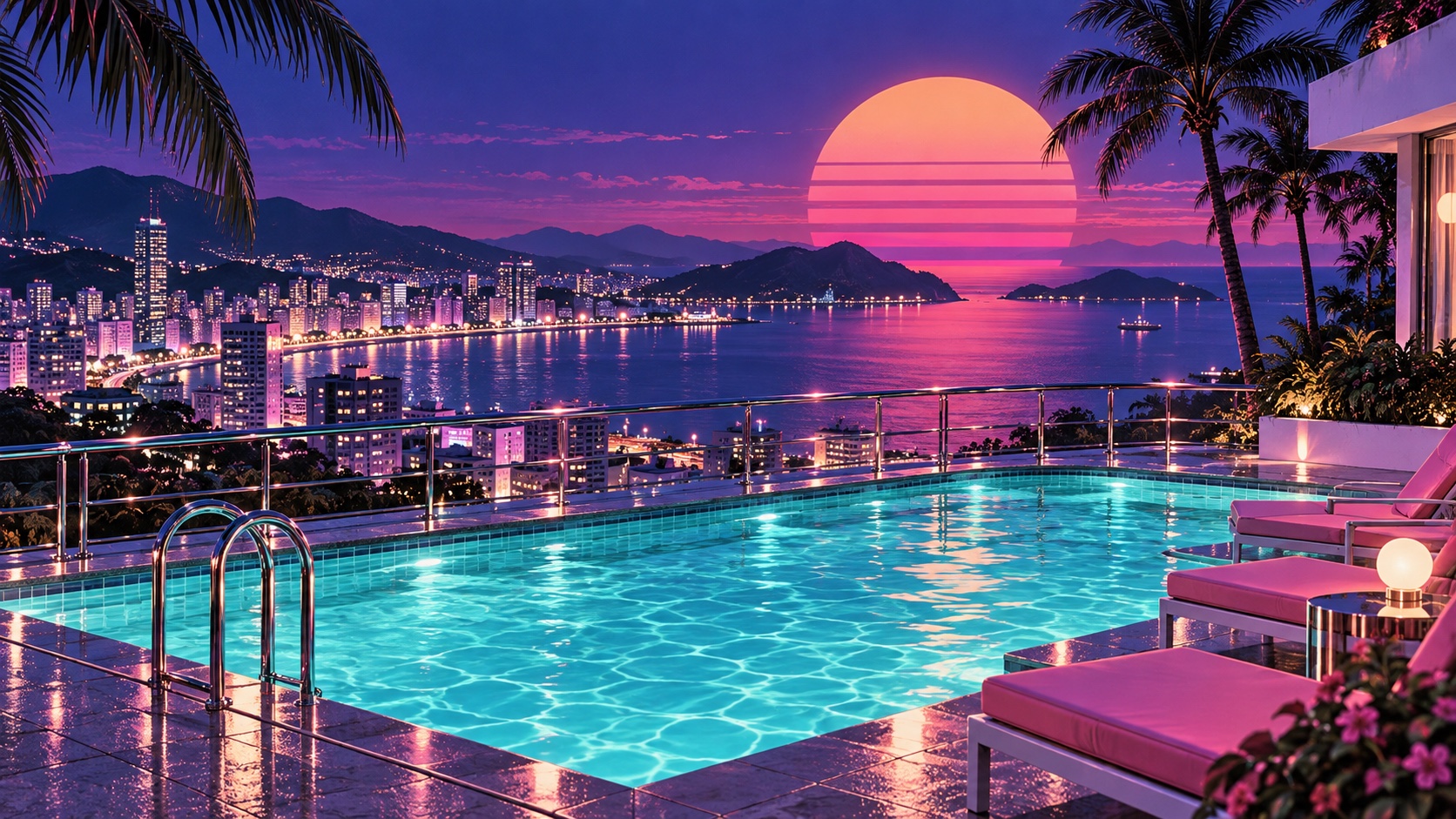
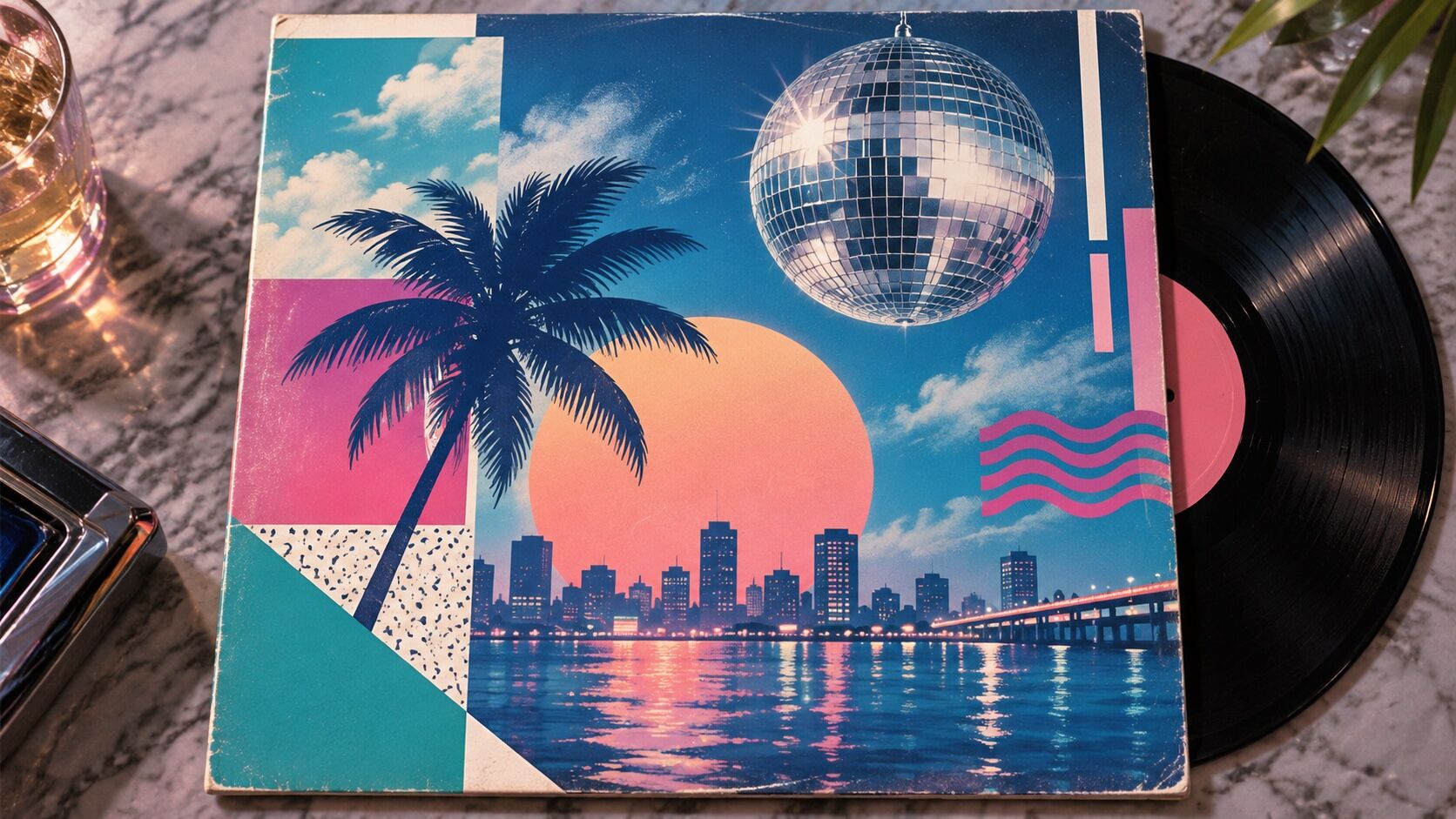
Future funk emerged from the same Bandcamp and SoundCloud communities that produced vaporwave: both draw from 1980s Japanese city pop (Mariya Takeuchi, Tatsuro Yamashita): but where vaporwave is melancholic and critical, future funk is euphoric and dance-floor oriented. Musically it's chopped, sped-up city pop with a 4/4 house kick. Visually, it's the aesthetic of that music: 1980s Japanese anime filtered through a candy-pastel dreamworld.
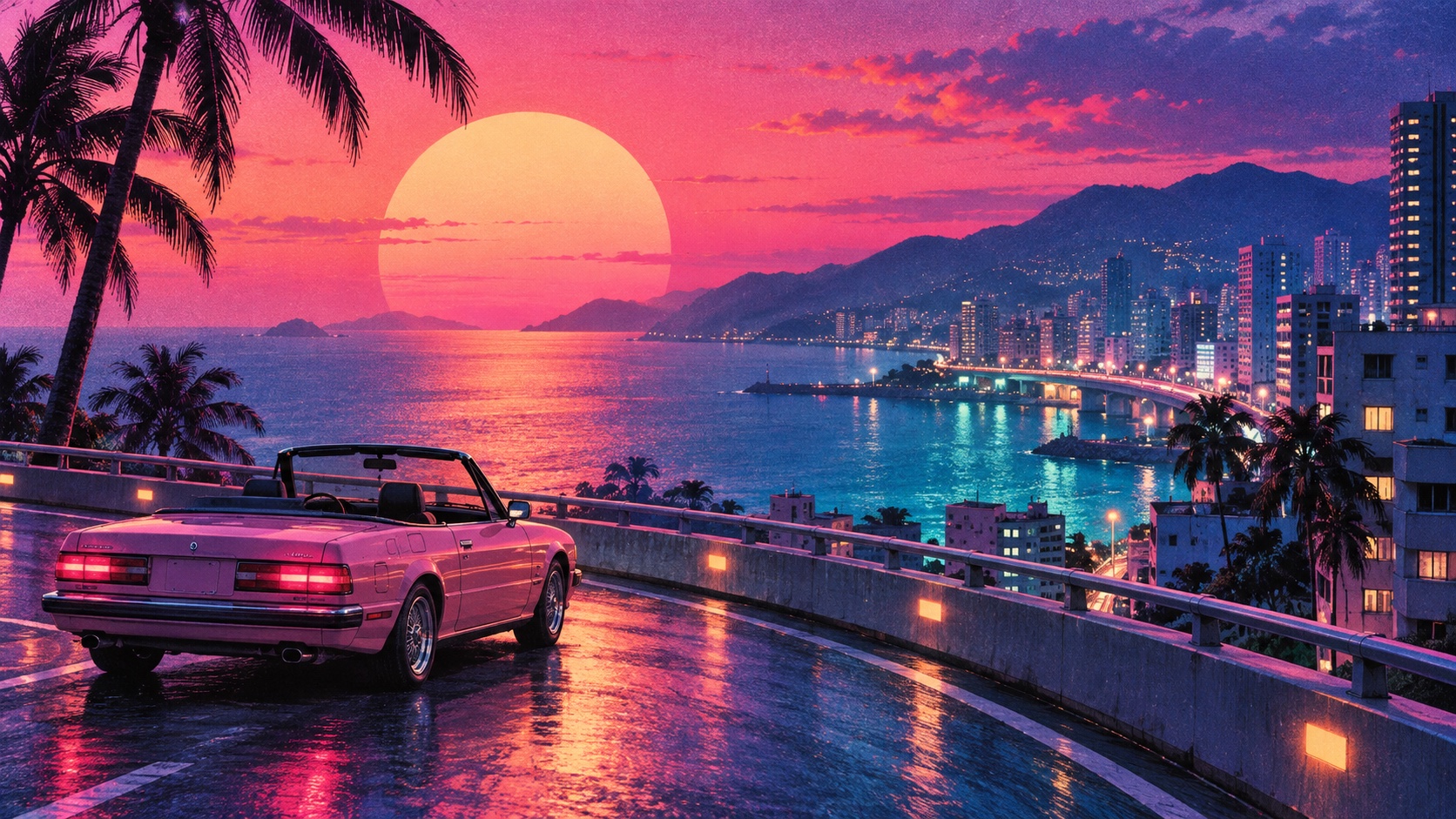
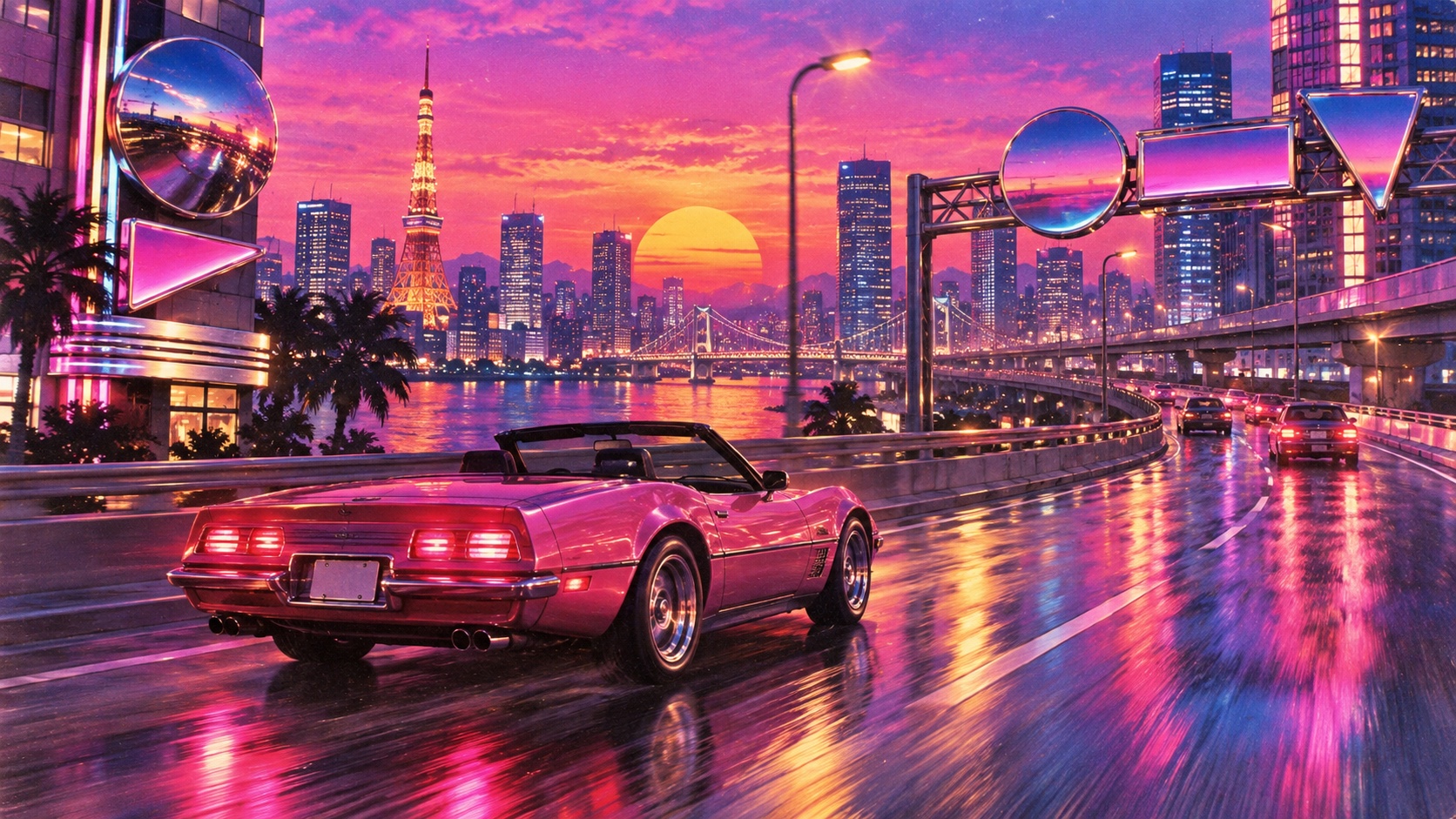
The canonical future funk image is an anime character in silhouette against a purple-to-pink gradient sunset, often with palm trees, a city grid, or a convertible. References include Macross (1982), City Hunter (1987), and the cover art of 1980s Japanese pop records: all filtered through the Instagram-era aesthetic of soft, highly saturated sunsets.
Future funk occupies a unique position in internet aesthetics: it's simultaneously nostalgic and optimistic, drawing from a past (1980s Japan's bubble era prosperity) that most of its creators never experienced personally. It represents a desire for a specific emotional quality: confident, cosmopolitan, slightly romantic: that the aesthetic promises through its visual warmth.
“Shibuya at dusk in 1985, in a memory that was never real.
The visual DNA: what makes it recognisable
8-channel console with the fingerprint on its display. Save the card, or share the page
3 color interpretations of this aesthetic
The colour of the styles sitting closest to this one
How to shoot it, how to prompt it, and how to board it.
How to shoot this aesthetic
"City pop dreams and VHS summer: anime optimism with a disco heartbeat"
Shot list
Lighting
Warm golden-hour sun or a tungsten key matched to 3200K at the same angle; add a cyan or teal fill from below for the anime ambient light quality
Drop this into Studio to generate in this aesthetic
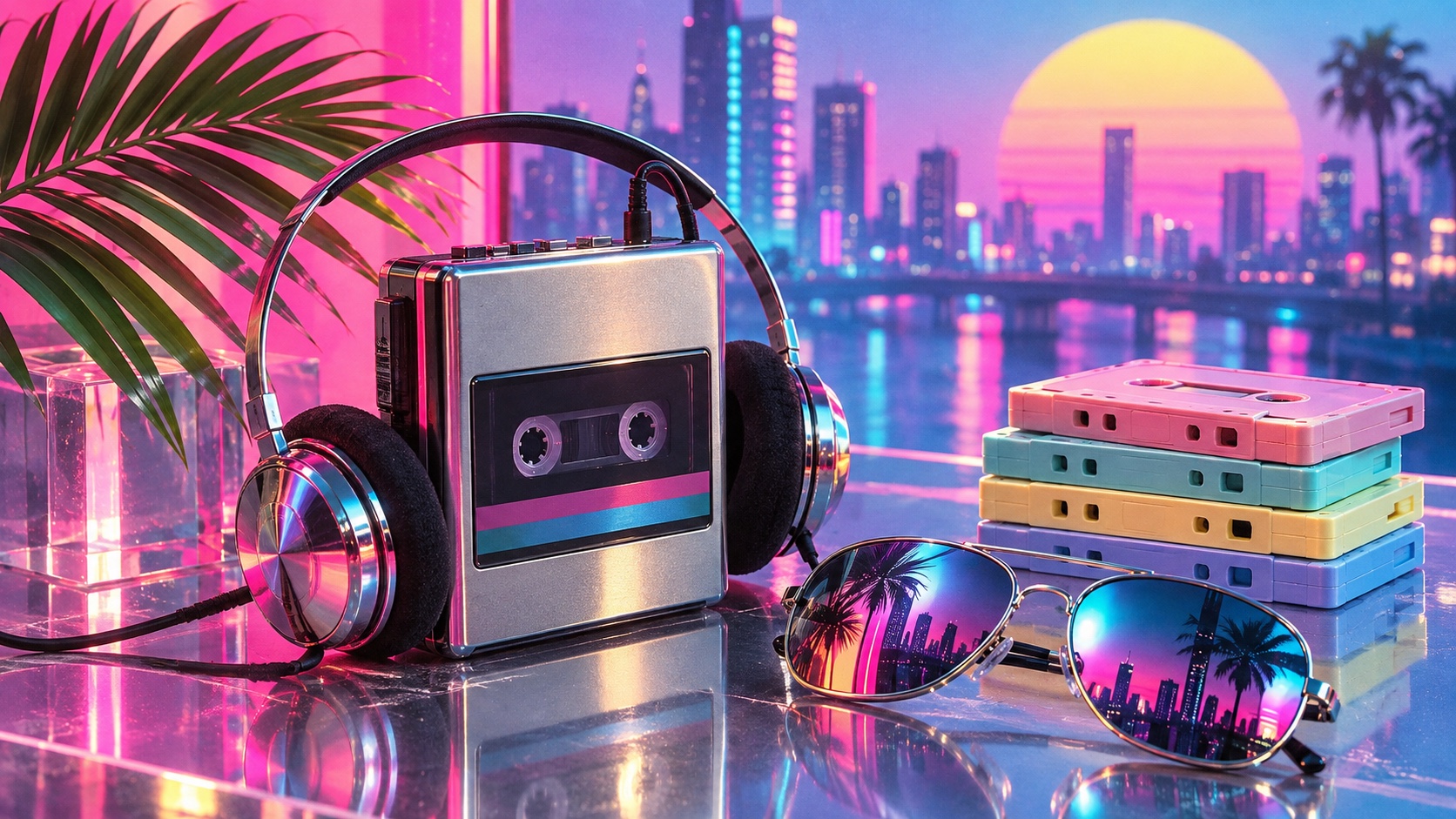
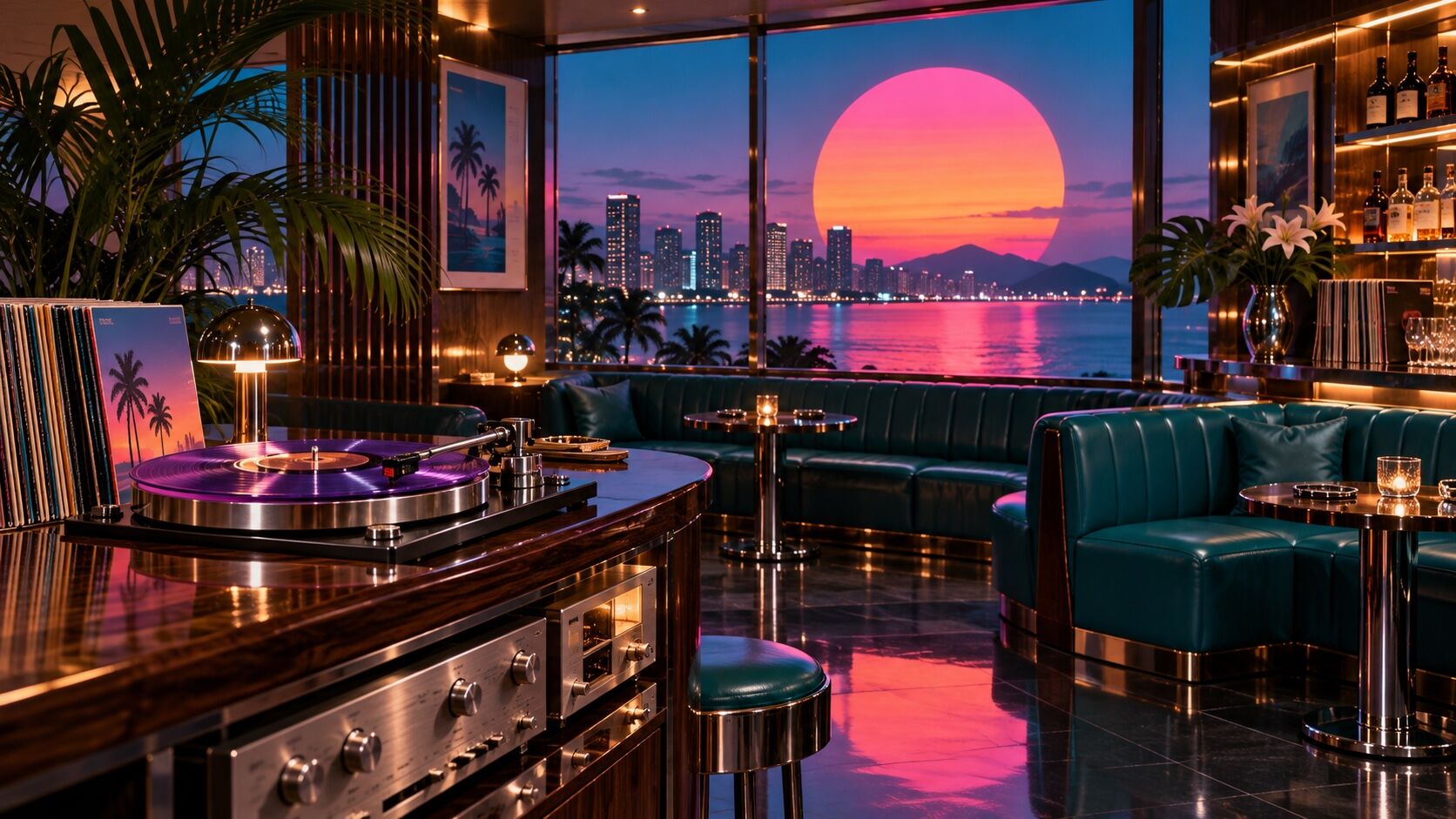
Future Funk aesthetic with slowed disco-sampled visual nostalgia, VHS-glow retro anime imagery, chrome text and grainy vintage film texture, 1970s-80s Japanese city-pop album-art influence, warm nostalgic neon glow
The record applied to your project. The record's kit is free; your brand, references and plates come with membership
01 · Hero application02 · Material and finish03 · Palette in context04 · Photography directionWhether to use it, what it costs to do properly, and where it stands right now.
Two written calls, seven meters, and when to walk away
The sample is the source, so the visuals follow the same rule. City pop album art and 1980s anime cels are the reference, and second-hand versions of them are obvious, since the original line work has a quality no modern trace reproduces. Push chroma and let the VHS bleed. Motion sells this more than any still frame does.
Right for warm, danceable music work with an audience that recognises the 1980s Japanese sources. The community is small, self-aware and not resentful of commercial use, but it is unforgiving about sloppiness with the sources, which lean almost entirely on anime whose original animators are rarely credited. Get the credit right and the scene is welcoming.
Digital illustration and color work, no physical production.
A specific enough reference that generic versions are obvious.
City-pop color grading is a known, repeatable palette.
A generic reference misses the specific city-pop and anime lineage.
A niche music-scene aesthetic, not broadly mainstream.
Tied to a specific music-sampling subculture and its moment.
Digital illustration only.
A Pro feature: origins, practitioners, and pitfalls
Neighbours, cross-references, blends, and the questions people ask.
Connected across the creative knowledge graph
Where it stands now, and what it costs you to use it
Future funk grew directly out of vaporwave, took the same 1980s Japanese source material and made it danceable and sincere rather than ironic and slow.
Its imagery leans almost entirely on 1980s anime, which raises a live question in the scene about credit to the original animators.
It is a small, warm and fairly self-aware community. Commercial use is not resented in the way it is elsewhere, but sloppiness with the sources is.
Mix Future Funk with any style in the library
 Future Funk 50%Vaporwave 50%
Merged palette
#1A0A0A
#1A1A2E
#CC00FF
#B967FF
#FF6B35
Leads maximal, expressive, nostalgic
Typography · from Future Funk
Raleway over Merriweather
Materials
Use it
Future Funk aesthetic with slowed disco-sampled visual nostalgia, VHS-glow retro anime imagery, chrome text and grainy vintage film texture, 1970s-80s Japanese city-pop album-art influence, warm nostalgic neon glow (50%), infused with Vaporwave aesthetic with glitched Greco-Roman statuary, VHS chromatic aberration, dreamy pastel-and-neon color mood, ironic consumerist nostalgia, color palette strictly #1A0A0A #1A1A2E #CC00FF #B967FF #FF6B35, overall character: maximal, expressive, nostalgic
Future funk aesthetic draws from 1980s Japanese city pop, anime, and the warm, euphoric version of vaporwave: anime silhouettes against gradient sunsets (magenta #FF6B9D, lavender #9B59B6, peach #FF9A7B), palm trees, city grids, and VHS artifacts. Where vaporwave is melancholic, future funk is optimistic and dance-floor-energized: the nostalgia for a prosperous 1980s Japan that most fans never experienced.
Future funk palette: sunset magenta (#FF6B9D), lavender (#9B59B6), warm peach (#FFB347), and deep teal (#2C9AB7). Always warm-to-cool gradients mimicking a sunset sky. The palette is universally soft and highly saturated: the saturated, high-key colors of 1980s animation cels and cheap VHS color processing.
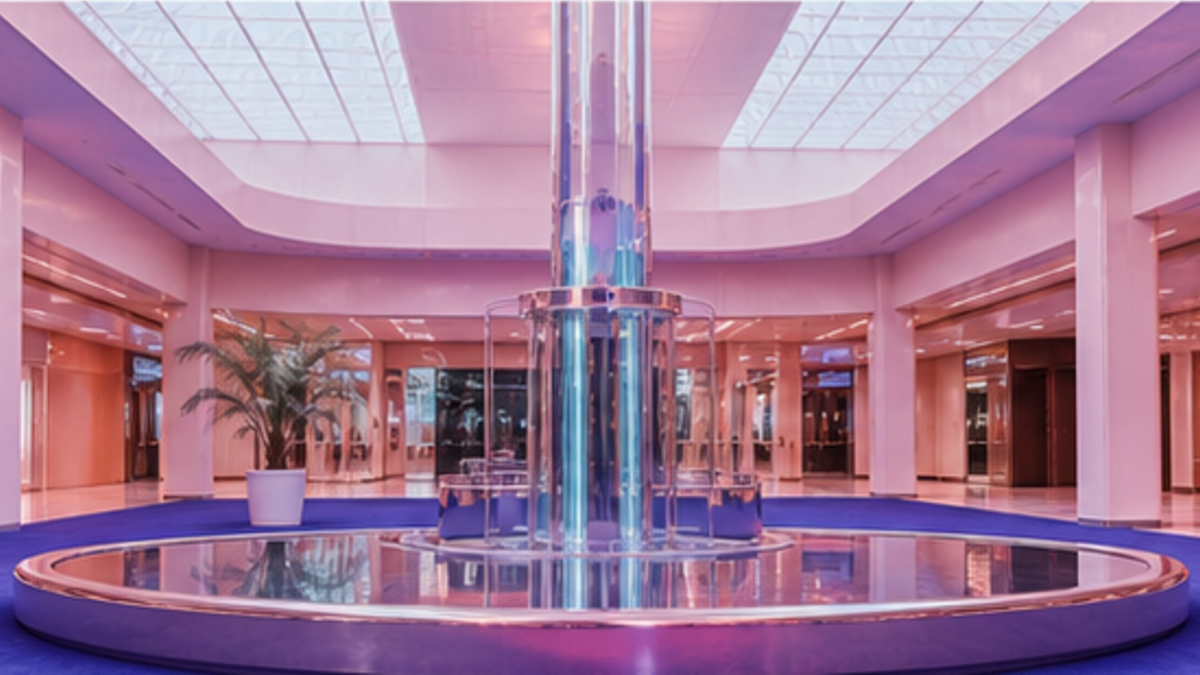
Both draw from 1980s Japanese consumer culture but with opposite emotional registers. Vaporwave is melancholic, alienated, and critical: the uncanny mall, the empty corporate lobby, the consumer promise that feels hollow. Future funk is euphoric, warm, and celebratory: the city at its most beautiful, the night drive, the music that made you feel alive. Vaporwave is blue and teal; future funk is magenta and peach.
Every style in the library is broken down like this one: the palette, the typography, the materials and the lineage.
Explore the style library →