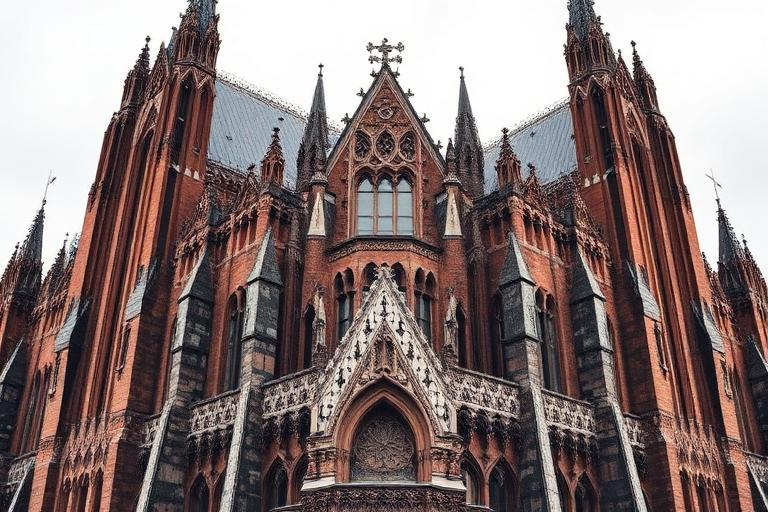
Gothic Architecture

The medieval engineering miracle that made stone weightless - pointed arch, flying buttress, and ribbed vault working together to dissolve walls into stained glass at Chartres, and reaching its delirious chromatic limit at Sainte-Chapelle.

Compare Gothic Architecture with another style →See the Gothic Architecture typefaces →
Record020-AG
AestheticGothic Architecture
ClassAnalog / Nostalgic
StatusINGESTING
Gothic Architecture aesthetic archive image
Archive plate · Gothic Architecture
01
The record

What it is, when it works, who it is for, and where it already exists.

How to use it

Record 020-AG - when it works, who it is for, what it looks like

FIELD 01

When to use it

  • Brand identity requiring mystery, spiritual depth, and the weight of medieval history
  • Cultural institution or church organization brand with a Gothic built heritage
  • Fashion and luxury brand mining Gothic architecture for dramatic dark romanticism
  • University or academic institution brand with a Gothic Revival collegiate identity
FIELD 02

Perfect for

  • Universities and colleges in Gothic Revival buildings - Oxford, Yale, Princeton, Chicago
  • Fashion brands with a dark romantic or medieval aesthetic
  • Cultural institutions in Gothic cathedrals, abbeys, or Revival civic buildings
  • Publishing and editorial brands in literary genres connected to Gothic tradition

In the wild, Gothic Architecture aesthetic real-world examples

Where this aesthetic shows up in the real world · ↗ opens the source site

Omoro Style GuideEvery aesthetic, every field on this page, in one PDF.
$8Get the guide →
02
The anatomy

Where Gothic Architecture came from, what makes it recognisable, and the fingerprint it leaves.

History, Gothic Architecture aesthetic history

12th-16th centuries (historical); Gothic Revival 18th-19th centuries · Ile-de-France, expanding across Europe

Gothic architecture began with a structural innovation. Abbot Suger's renovation of the Abbey of Saint-Denis near Paris (1140-1144) combined three existing elements (pointed arch, ribbed vault, flying buttress) into a new structural system that transferred the weight of stone roofs outward through buttresses rather than through massive walls. The result was revolutionary: walls could be opened up with enormous windows filled with stained glass, flooding interiors with colored light. Notre-Dame de Paris (begun 1163), Chartres Cathedral (1194), and Sainte-Chapelle (1248) each pushed the system further.

The style spread across Europe, adapting to regional materials and traditions: English Perpendicular Gothic (King's College Chapel, Cambridge), French Rayonnant (Sainte-Chapelle), German Hallenkirche (hall churches with equal-height aisles), and Italian Gothic (which retained broader walls and more surface decoration). Each variant shared the fundamental ambition: to create soaring interior spaces that dissolved the boundary between structure and light. Gothic cathedrals remain the largest enclosed spaces built before the industrial revolution.

Gothic Revival in the eighteenth and nineteenth centuries (Pugin, Viollet-le-Duc, the Palace of Westminster) reinterpreted Gothic forms with contemporary materials and methods. The movement argued that Gothic was not a historical curiosity but a living system of design principles (structural honesty, material expression, ornament derived from construction). This argument directly influenced the Arts and Crafts movement and, through it, early Modernism.

Stone learned to float.

Omoro dossier · 020-AG

Visual markers, Gothic Architecture aesthetic visual markers

The visual DNA: what makes it recognisable

typography

See the fonts
  • Blackletter and Gothic script: Fraktur, Textura, Schwabacher
  • Uncial and insular letterforms for display
  • Carved stone inscriptions with serifs derived from chisel technique
  • Illuminated manuscript traditions influencing color and decoration

grid

  • Nave-aisle-transept cruciform plans
  • Vertical emphasis: height-to-width ratios of 3:1 or higher
  • Bay system of alternating piers and arches creating rhythmic procession
  • West facade composition: twin towers flanking rose window and portals

materials

  • Cut limestone and sandstone: #E0DCD4, #D0CCC4, #C8C4BC
  • Stained glass: deep blue, ruby red, gold, emerald
  • Lead came and iron armatures for glazing
  • Polychrome stone and painted interior surfaces

motifs

  • Pointed arches (ogival arches) as primary structural and decorative element
  • Flying buttresses transferring roof loads outward
  • Rose windows with radiating stone tracery
  • Gargoyles and grotesques as water spouts and protective symbols

Aesthetic profile

8-channel console with the fingerprint on its display. Save the card, or share the page

Aesthetic Profile
Gothic Architecture
Medieval
1140–1500
Attribute console · 020-AG
leans analog, nostalgic, maximal
8 CH
FIG. 1
MaximalMinimalAnalogDigitalExpressiveRestrainedCoolWarmNostalgicFuturisticStructuredChaoticDarkLightGeometricOrganic
01Minimal
Maximal60%
02Analog
Digital90%
03Restrained
Expressive50%
04Cool
Warm30%
05Futuristic
Nostalgic90%
06Structured
Chaotic30%
07Dark
Light50%
08Organic
Geometric40%
AnalogNostalgicMaximal6 materials
Omoro · Attribute console · 020-AG
omoro.io/styles/arch-gothic

Material assembly

The style's primary materials, assembled bottom-up

Tap a stratum for material detail · Full catalog

Place in history

Medieval · 1140–1500 - tap any style to travel

Color Palettes, Gothic Architecture color palettes and hex codes

4 color interpretations of this aesthetic

Gothic Architecture
#1A1A28 · #2C3A5C · #7A5A3A · #C8A870 · #D8D0C0
Pointed arch and flying buttress dissolving stone walls into stained glass
Notre-Dame
#0A0608 · #3A1828 · #2848A0 · #C09030 · #D8D0C0
Rose window: fractured light through tracery stone
Flying Buttress
#141210 · #484038 · #807060 · #B8A890 · #E0D8C8
Structural skeleton: stone arcs leaping across the void
Cathedral Spire
#0C0A08 · #302818 · #686058 · #A8A090 · #D8D4CC
Pointed vault reaching: ribbed ceiling in cool northern light
Omoro Palette Pack575 curated palettes across every aesthetic, 5 export formats.
$8Get the palettes →

Adjacent Palettes, styles related to Gothic Architecture

The colour of the styles sitting closest to this one

Architectural Expressionism
Classical Architecture
Neoclassical Architecture
Stripped Classicism
03
The direction

How to shoot it, how to prompt it, and how to board it.

Photo Direction

How to shoot this aesthetic

"Stone stretched as high as faith could carry it"

Shot list

  • Wide low-angle shot up a soaring pointed arch or spire toward the sky
  • Detail shot of ribbed vaulting seen from directly below
  • Wide shot of flying buttresses supporting the structure from outside

Lighting

Soft, indirect light for interiors to let stained glass carry the color; hard, low-angle sun for exterior shots to model the deep relief of stone tracery

Omoro Director's Briefs151 photo shot-lists like this one, ready to shoot from.
$8Get the briefs →

Generative Prompt

Drop this into Studio to generate in this aesthetic

Gothic architecture with soaring pointed arches and ribbed vaulting, flying buttresses supporting dramatic verticality, stained-glass rose windows, intricate stone tracery, cathedral-scale spiritual grandeur

Paste as-is, or append your own subject

Mood Board

The record applied to your project. The record's kit is free; your brand, references and plates come with membership

Mood board
The Gothic Architecture board
8 frames · 4 selected
FIG. 4
Nave Dark1A1A28Sapphire Glass2C3A5CAged Stone7A5A3AGilt FrameC8A870ClerestoryD8D0C0
Brand and references
IdleBrand and references open with membership
With membership: the brand's own facts and colours in every prompt, references carried into every frame, and the plates generated.
01 · Hero application
02 · Material and finish
03 · Palette in context
04 · Photography direction
05 · Pattern plate
06 · Object
07 · Environment
08 · Digital presence
Demo kit free, the rest with membershipThe record as a demo kit, free. Name a project and it is written for that
Omoro · Mood board · 020-AG
04
The judgement

Whether to use it, what it costs to do properly, and where it stands right now.

Creative verdict, Gothic Architecture feasibility and strategic recommendation

Two written calls, seven meters, and when to walk away

Creative verdict
Should Gothic Architecture be the call?
7 meters
FIG. 2
Assessment

The structure is the ornament and it has to resolve. A pointed arch, a rib vault and a flying buttress are one load path, and drawing them decoratively produces something that could not stand, which trained eyes read immediately. Follow the thrust to the ground. Verticality is cumulative: every element must lift, so a single horizontal band flattens the whole elevation.

Verdict

Right when height and light are the actual problem, because the pointed arch and flying buttress are engineering before they are style. The nineteenth-century revival was a moral argument, with Pugin and Ruskin claiming Gothic was more honest than classicism, and that shaped a century of building. Notre-Dame put the craft question back in public view: rebuild exactly, and do the skills still exist.

Production cost
High

Stone, glass, and structural engineering at cathedral scale.

Creative difficulty
High

Making stone feel weightless is the whole engineering argument.

Execution difficulty
High

Pointed arch, flying buttress, and ribbed vault have to work together structurally.

Risk of misuse
High

Making stone feel weightless is the whole engineering argument, not just pointed arches.

Prevalence
Common

A constant reference across religious, academic, and fantasy branding.

Longevity
Timeless

Eight centuries on and the engineering still reads as a miracle.

Brand investment
High

Real stone, glass, and structural engineering at cathedral scale.

Avoid if
The budget doesn't cover real stone and structural detail
The engineering itself is the whole argument here, not just the silhouette.
The brand needs a light, contemporary feel
This carries eight centuries of religious and dramatic weight.
Omoro · Creative verdict · 020-AG

Editorial Depth

A Pro feature: origins, practitioners, and pitfalls

Editorial depth
The Gothic Architecture file
14 sections
FIG. 3
Context02Brands02Perception04Use04Index02
01Common MisconceptionThe principle beneath the surface
02Historical ContextOrigins, cultural moment, and reaction
03Brands That Accidentally Use This StyleNatural alignment, not category claims
04Brands That Perfectly Represent This StyleExceptional execution
05Psychological EffectHow visual decisions change perception
06Visual ChecklistInclude and avoid
07Creative FormulaThe visual system reduced to essentials
08Recognition SignalsHow to recognize it in two seconds
09When To Use This StyleContexts where the language performs
10Common Creative MistakesWhere imitation weakens the signal
11Best Brand ApplicationsIndustries with a natural advantage
12Creative Application AnalysisFit, feasibility, and production reality
13Related StylesClose languages and the key distinction
14Visual DNA SummaryThe sentence to remember
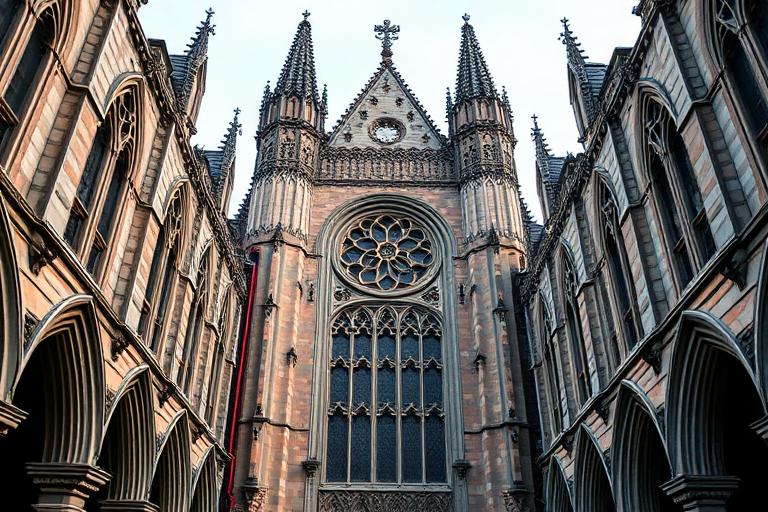
The editorial depth, with membershipOpening soon
Omoro · Editorial depth · 020-AG
05
The index

Neighbours, cross-references, blends, and the questions people ask.

Related concepts

Connected across the creative knowledge graph

Cultural relevance, Gothic Architecture cultural relevance today

Where it stands now, and what it costs you to use it

Gothic construction solved a structural problem, getting height and light out of masonry, and the pointed arch and flying buttress are engineering before they are style.

The nineteenth-century revival was a moral argument, with Pugin and Ruskin claiming Gothic was more honest than classicism, and that argument shaped a century of building.

Notre-Dame's fire and reconstruction put the craft question back in public view: whether to rebuild exactly, and whether the skills still exist.

Cross-references

GothicGothic as design language descends from the architectural aestheticClassical ArchitectureClassical and Gothic represent the two great traditions of Western architectureArt NouveauArt Nouveau revived Gothic's organic, nature-derived structural forms

Blend

Mix Gothic Architecture with any style in the library

Gothic Architecture×
50%50%
73% alike
Gothic Architecture referenceArchitectural Expressionism referenceGothic Architecture 50%Architectural Expressionism 50%

Merged palette

#1A1A28

#1E1008

#2C3A5C

#7A3A1A

#7A5A3A

Leads expressive, nostalgic, maximal

Typography · from Gothic Architecture

UnifrakturMaguntia over EB Garamond

Materials

  • Cut limestone and sandstone: #E0DCD4, #D0CCC4, #C8C4BC
  • Stained glass: deep blue, ruby red, gold, emerald
  • Brick in expressive bonding patterns: #8B4513, #A0522D, #6B3410

The calls this blend forces

These two disagree on 2 things, and a blend cannot average them: you pick a side. At this mix:

Structured or Chaotic? Gothic Architecture is structured, Architectural Expressionism is chaotic. This mix lands chaotic.

Geometric or Organic? Gothic Architecture is geometric, Architectural Expressionism is organic. This mix lands geometric.

Use it

Gothic architecture with soaring pointed arches and ribbed vaulting, flying buttresses supporting dramatic verticality, stained-glass rose windows, intricate stone tracery, cathedral-scale spiritual grandeur (50%), infused with Expressionist architecture with emotionally charged sculptural form, Erich Mendelsohn's dynamic curved massing, brick and concrete used expressively rather than rationally, dramatic silhouette conveying feeling over function, color palette strictly #1A1A28 #1E1008 #2C3A5C #7A3A1A #7A5A3A, leaning structured over chaotic, geometric over organic, overall character: expressive, nostalgic, maximal

One-click generation opens with the studio

About this aesthetic

What defines Gothic architecture?

Gothic architecture is defined by three structural innovations working together: the pointed arch (which distributes loads more efficiently than the round arch), the ribbed vault (which concentrates roof loads on specific points), and the flying buttress (which transfers those loads outward, freeing the wall for windows). The result is soaring, light-filled interior spaces.

Why is it called 'Gothic'?

The term was originally an insult. Renaissance critics called medieval architecture 'Gothic' (after the Goths who sacked Rome) to associate it with barbarism and the Dark Ages. The original builders called it 'opus Francigenum' (French work). The pejorative name stuck but lost its negative connotation during the Gothic Revival of the eighteenth and nineteenth centuries.

What is the tallest Gothic cathedral?

Beauvais Cathedral in France has the tallest Gothic choir vault at 48 meters (157 feet), though its nave was never completed. Among completed buildings, Cologne Cathedral (begun 1248, completed 1880) has the tallest twin spires at 157 meters. Ulm Minster has the world's tallest church steeple at 161.5 meters.

Build with the gothic architecture aesthetic

Every style in the library is broken down like this one: the palette, the typography, the materials and the lineage.

Explore the style library →