When to use it
- Mixed media projects
- Gallery exhibitions
- Art education
- Diverse creative portfolios
General visual arts that don't fit specific categories
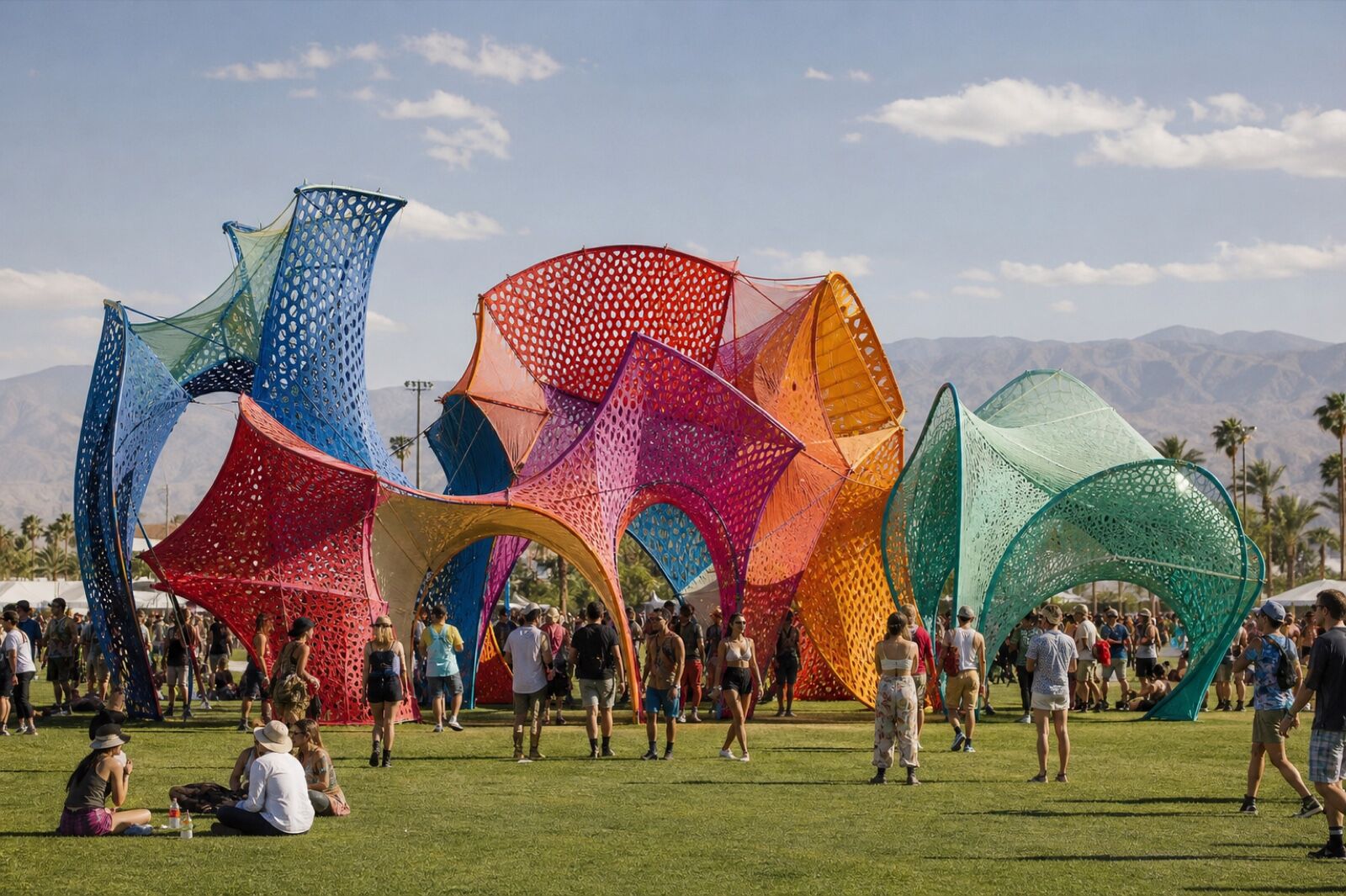
What it is, when it works, who it is for, and where it already exists.
Record 041-VA - when it works, who it is for, what it looks like
Where this aesthetic shows up in the real world · ↗ opens the source site
Where Visual Art came from, what makes it recognisable, and the fingerprint it leaves.
Prehistoric–present · Universal; all human cultures
Visual art is the broad category encompassing all practices of image-making and object-making produced primarily for aesthetic, expressive, or conceptual purposes rather than for strictly functional use. The category includes: painting and drawing (mark on surface), sculpture and three-dimensional object-making, printmaking (matrix to impression), photography, film and video, installation (work that transforms a space), performance (the body as art material), and digital and new media practices. What unites them is intention: work made to be seen and experienced as art.
The Western category of 'fine art' solidified in the 18th century with the establishment of academies that distinguished fine arts (painting, sculpture, architecture, music, poetry) from applied or decorative arts (furniture, ceramics, textiles). This hierarchy has been contested continuously since: Art and Crafts, Bauhaus, feminist art practice, and contemporary art theory have all challenged the distinction. The contemporary art world broadly accepts that anything can be art if presented in an art context with art intentions.
For visual design, 'visual art' as a reference provides the widest possible aesthetic resource: the complete history of image-making from cave paintings to generative AI art. Designers draw on specific art movements and periods (Impressionism's color, Constructivism's geometry, Fluxus's irreverence), specific artists (Rothko's color field informing UI design, Mondrian's grid entering product design), and the general practice of producing images without predetermined commercial or functional purpose: which remains rare and valuable as a way of developing visual intelligence.
“The work made for no purpose except that it had to be made.
The visual DNA: what makes it recognisable
8-channel console with the fingerprint on its display. Save the card, or share the page
4 color interpretations of this aesthetic
The colour of the styles sitting closest to this one
How to shoot it, how to prompt it, and how to board it.
How to shoot this aesthetic
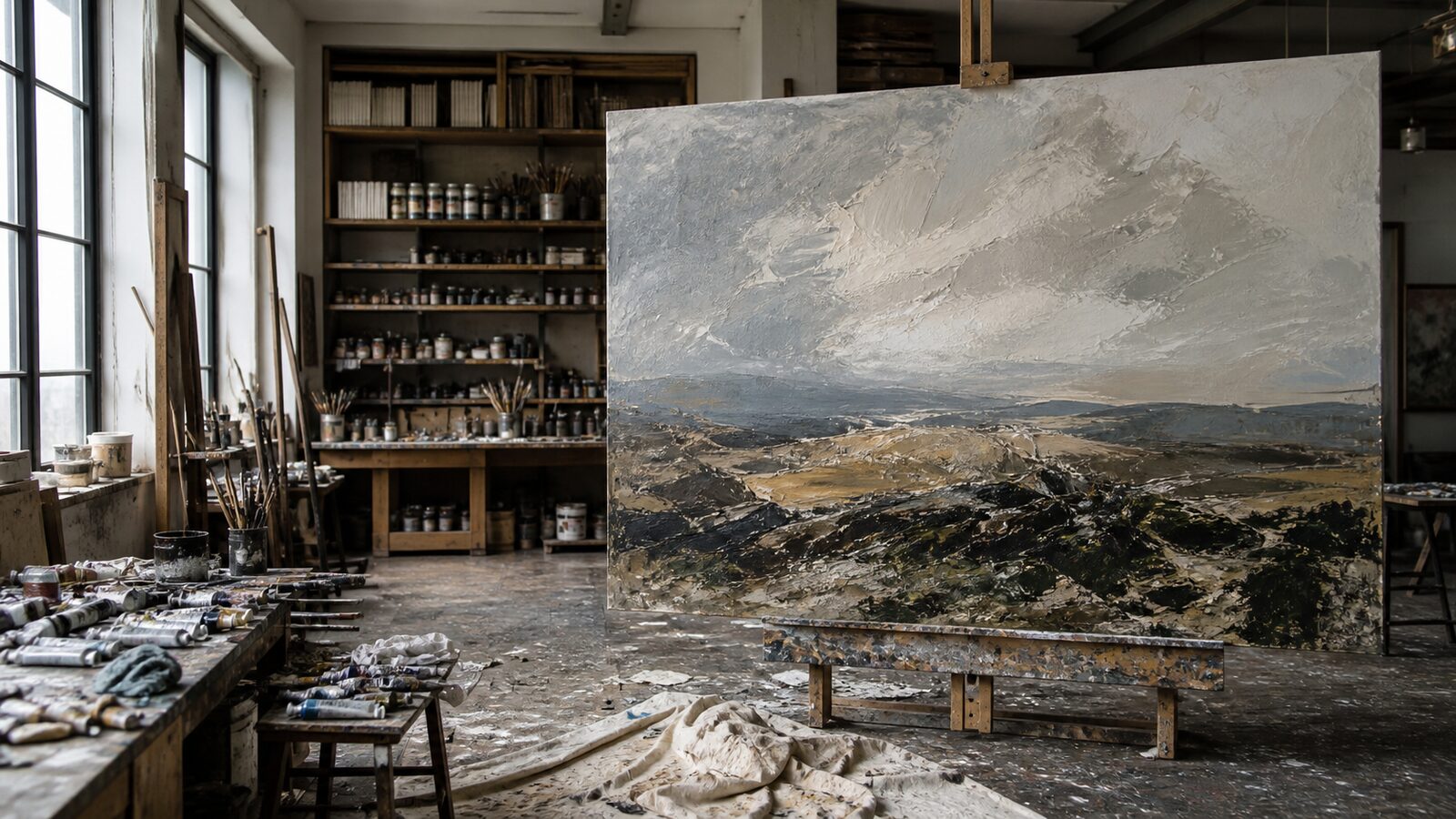
"An artist in the act of seeing: the studio as a thinking space"
Shot list
Lighting
Studio daylight is the default big north window or diffused skylight; supplement only to match the existing color temperature (5500K typically) and extend it
Drop this into Studio to generate in this aesthetic
Fine art visual composition with intentional color and form relationships, gallery-quality presentation, considered negative space and compositional balance, medium-agnostic artistic craftsmanship, a controlled visual statement over documentary description
The record applied to your project. The record's kit is free; your brand, references and plates come with membership
01 · Hero applicationWhether to use it, what it costs to do properly, and where it stands right now.
Two written calls, seven meters, and when to walk away
The category is too broad to guide anything, so the constraint has to be self-imposed. Fix the medium, the format and the limit before starting, because without them the work drifts toward whatever is easiest that day. A defined series beats a pile of singles. The discipline is refusal: what the body of work excludes is what makes it read as a body of work.
Not a practice, an institutional convenience: almost nobody working describes themselves this way. The useful question is always which medium and which tradition, because those carry the actual conventions and the actual conversations. It remains a functional umbrella for searching and for funding, which is roughly the extent of what it does.
Depends entirely on the piece. No fixed cost here.
Too broad on its own. Needs a narrower angle to mean anything.
Execution demands follow whatever medium is actually chosen.
Too generic on its own to have a clear wrong version.
The default fallback category when nothing more specific fits.
As broad and durable as art itself.
No fixed commitment. Depends entirely on what's chosen.
A Pro feature: origins, practitioners, and pitfalls
Neighbours, cross-references, blends, and the questions people ask.
Connected across the creative knowledge graph
Where it stands now, and what it costs you to use it
Visual art as a category is an institutional convenience rather than a practice, and almost nobody working describes themselves that way.
The useful question is always what medium and what tradition, because those carry the actual conventions and the actual conversations.
It remains a functional umbrella for searching and for funding, which is roughly the extent of what it does.
Mix Visual Art with any style in the library
 Visual Art 50%Painting 50%
Merged palette
#0D0D0D
#1C1008
#8B8B8B
#8B4513
#FF3366
Leads expressive, analog, maximal
Typography · from Visual Art
Space Grotesk over Inter
Materials
The calls this blend forces
These two disagree on one thing, and a blend cannot average them: you pick a side. At this mix:
Digital or Analog? Visual Art is digital, Painting is analog. This mix lands analog.
Use it
Fine art visual composition with intentional color and form relationships, gallery-quality presentation, considered negative space and compositional balance, medium-agnostic artistic craftsmanship, a controlled visual statement over documentary description (50%), infused with Fine art oil painting with visible impasto brushstrokes and canvas texture, classical underpainting and glazing technique, painterly light modeling across form, gallery-quality composition and color harmony, traditional easel-painting craftsmanship, color palette strictly #0D0D0D #1C1008 #8B8B8B #8B4513 #FF3366, leaning digital over analog, overall character: expressive, analog, maximal
Visual art is the complete spectrum of fine art practice: painting, sculpture, drawing, print, installation, video, performance, and digital/new media: produced primarily for aesthetic, expressive, or conceptual purposes. The aesthetic it generates is the gallery or museum context: gallery white (#F8F6F4), institutional sans-serif typography, and the convention that the work itself is the primary visual content, with all presentation elements subordinate to it.
Fine art is produced with primarily expressive, exploratory, or conceptual purpose: the work succeeds or fails on its own terms without a brief or functional requirement. Design is produced in response to a brief, for a specific communicative or functional purpose, with a client and an audience. The distinction is increasingly porous: design can be expressive and art-like; art can be commercial and design-like. But the categories orient very different production contexts and evaluation criteria.
Visual art influences graphic design through: specific visual language borrowed from art movements (Constructivism's diagonal composition, Mondrian's primary color grid, Pop Art's appropriation logic), formal principles developed in fine art applied to design (Rothko's color field→UI background, Calder's mobile→kinetic typography), the general expansion of what can be a visual: designers trained in fine art bring openness to what constitutes valid visual material: and the art world's institutional visual culture (museum identity, gallery typography, art publishing) as a highly developed design context.
Every style in the library is broken down like this one: the palette, the typography, the materials and the lineage.
Explore the style library →