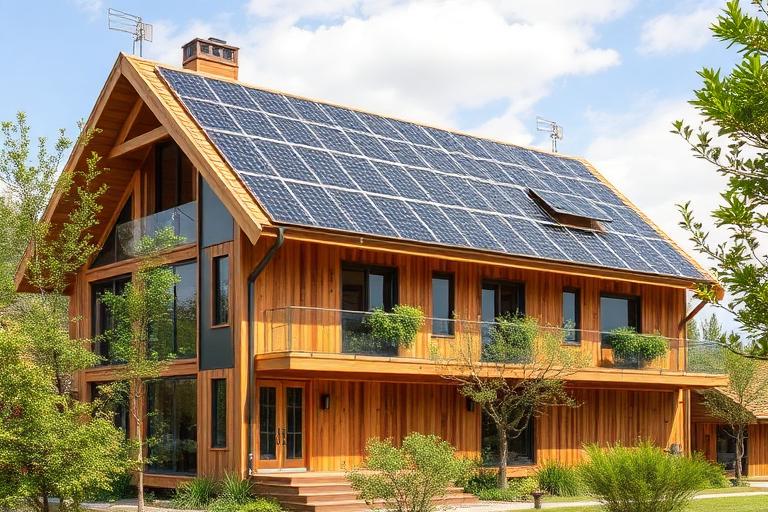
Contemporary Architecture

No single doctrine - the live edge of global practice where Diébédo Francis Kéré builds with compressed earth and Kengo Kuma weaves timber lattices, both answering the same question: what should architecture do right now?

Compare Contemporary Architecture with another style →See the Contemporary Architecture typefaces →On the timeline · 2000s
Record020-AC
AestheticContemporary Architecture
ClassDigital / Structured
StatusINGESTING
Contemporary Architecture aesthetic archive image
Archive plate · Contemporary Architecture
01
The record

What it is, when it works, who it is for, and where it already exists.

How to use it

Record 020-AC - when it works, who it is for, what it looks like

FIELD 01

When to use it

  • Brand identity for organizations engaged in current discourse without historical nostalgia
  • Architecture firm positioning itself at the intersection of technology and culture
  • Cultural institution brand that needs to signal relevance and global conversation
  • Sustainable developer brand demonstrating material and environmental innovation
FIELD 02

Perfect for

  • Contemporary architecture and design firms with an international practice
  • Cultural institutions - biennales, festivals, design weeks - in the present tense
  • Sustainable developers and real estate brands with genuine environmental credentials
  • Technology companies building physical headquarters as brand statements

In the wild, Contemporary Architecture aesthetic real-world examples

Where this aesthetic shows up in the real world · ↗ opens the source site

Omoro Style GuideEvery aesthetic, every field on this page, in one PDF.
$8Get the guide →
02
The anatomy

Where Contemporary Architecture came from, what makes it recognisable, and the fingerprint it leaves.

History, Contemporary Architecture aesthetic history

2000s-present · Global

Contemporary architecture is not a style but a condition: the absence of a single dominant ideology for the first time since Modernism's rise. After Postmodernism exhausted its irony and Deconstructivism its fragmentation, architecture entered a pluralist era where Pritzker Prize winners range from the social activism of Alejandro Aravena to the material refinement of Peter Zumthor to the conceptual transparency of SANAA. No manifesto unites current practice; what unites it is the shared condition of practicing architecture after the certainty of manifestos has dissolved.

Several threads run through contemporary work without constituting a unified movement. Sustainability has shifted from niche concern to baseline requirement, with passive design strategies, mass timber construction, and carbon consciousness reshaping practice. Digital fabrication and parametric design have expanded formal possibilities. A renewed emphasis on social responsibility, visible in Kere Architecture's community buildings in Burkina Faso and Lacaton & Vassal's transformation-over-demolition approach in France, challenges the profession's tendency toward monument-making.

The most significant shift may be geographic. For a century, architectural innovation was concentrated in Western Europe, the United States, and Japan. Contemporary practice is genuinely global: Wang Shu in China, Studio Mumbai in India, Al Borde in Ecuador, and countless others are producing work that draws on local traditions, materials, and construction cultures while engaging with international discourse. Architecture has not had a single center since the decline of the International Style.

Architecture after the last manifesto.

Omoro dossier · 020-AC

Visual markers, Contemporary Architecture aesthetic visual markers

The visual DNA: what makes it recognisable

typography

See the fonts
  • Variable and contemporary sans-serifs: Inter, Sohne, ABC Diatype
  • Mix of geometric and humanist faces reflecting pluralism
  • Strong hierarchy through size and weight rather than typeface variety
  • Digital-native type design with screen legibility as primary concern

grid

  • Site-responsive plans rather than imposed geometric systems
  • Mixed structural systems within single projects
  • Landscape and building as continuous design surface
  • Flexibility and adaptability built into spatial organization

materials

  • Mass timber (CLT, glulam): #C4A87C, #B89468, #A08050
  • Weathering steel (Corten): #8B4513, #6B3410, #A0522D
  • Recycled and reclaimed materials: variable patina and color
  • High-performance glazing with minimal frames: #E8ECF0, #D0D8E0

motifs

  • Green roofs and integrated planting
  • Perforated and operable facade systems
  • Mass timber structure left exposed as finish surface
  • Community spaces and public ground floors as design drivers

Aesthetic profile

8-channel console with the fingerprint on its display. Save the card, or share the page

Aesthetic Profile
Contemporary Architecture
Contemporary
1995–present
Attribute console · 020-AC
leans digital, structured, light
8 CH
FIG. 1
MaximalMinimalDigitalAnalogExpressiveRestrainedWarmCoolFuturisticNostalgicStructuredChaoticLightDarkGeometricOrganic
01Minimal
MaximalEVEN
02Analog
Digital30%
03Restrained
Expressive10%
04Cool
WarmEVEN
05Futuristic
Nostalgic10%
06Structured
Chaotic30%
07Dark
Light20%
08Organic
Geometric10%
DigitalStructuredLight6 materials
Omoro · Attribute console · 020-AC
omoro.io/styles/arch-contemporary

Material assembly

The style's primary materials, assembled bottom-up

Tap a stratum for material detail · Full catalog

Place in history

Contemporary · 1995–present - tap any style to travel

Color Palettes, Contemporary Architecture color palettes and hex codes

4 color interpretations of this aesthetic

Contemporary Architecture
#2C3228 · #7A8C7E · #B8C4BA · #E4E0DA · #1A1820
No single doctrine, but sustainability, fabrication, and spectacle in conversation
Glass Cantilever
#1A1A14 · #5A4830 · #90A8A0 · #C8D0D0 · #F0F4F0
Frameless overhang: engineered timber floating above landscape
Mixed Use
#141820 · #3858A0 · #80A060 · #C8C0B8 · #F0ECE8
Vertical city: retail, office, and garden stacked in one skin
Mass Timber
#2A1A08 · #6A4820 · #A88050 · #D0B888 · #F0E8D8
CLT and glulam: engineered wood as both structure and finish
Omoro Palette Pack575 curated palettes across every aesthetic, 5 export formats.
$8Get the palettes →

Adjacent Palettes, styles related to Contemporary Architecture

The colour of the styles sitting closest to this one

Sustainable Architecture
Neo-Modernism
Tropical Modernism
Adaptive Reuse
03
The direction

How to shoot it, how to prompt it, and how to board it.

Photo Direction

How to shoot this aesthetic

"The present tense, built in glass and considered restraint"

Shot list

  • Wide shot showing clean, articulate massing against sky or water
  • Detail shot of engineered material glass, steel, timber meeting with contemporary precision
  • Wide shot demonstrating the building's context-responsive siting relative to its surroundings

Lighting

Clean daylight or blue-hour dusk with interior lights on contemporary architecture is often designed to read differently day and night, and the transition moment shows both

Omoro Director's Briefs151 photo shot-lists like this one, ready to shoot from.
$8Get the briefs →

Generative Prompt

Drop this into Studio to generate in this aesthetic

Contemporary architecture with current material innovation and sustainable design integration, clean articulate massing, glass and engineered material transparency, context-responsive siting, present-day design sensibility without historical pastiche

Paste as-is, or append your own subject

Mood Board

The record applied to your project. The record's kit is free; your brand, references and plates come with membership

Mood board
The Contemporary Architecture board
8 frames · 4 selected
FIG. 4
Timber Core2C3228Sky Garden7A8C7ELiving WallB8C4BAConcrete BandE4E0DATower Base1A1820
Brand and references
IdleBrand and references open with membership
With membership: the brand's own facts and colours in every prompt, references carried into every frame, and the plates generated.
01 · Hero application
02 · Material and finish
03 · Palette in context
04 · Photography direction
05 · Pattern plate
06 · Object
07 · Environment
08 · Digital presence
Demo kit free, the rest with membershipThe record as a demo kit, free. Name a project and it is written for that
Omoro · Mood board · 020-AC
04
The judgement

Whether to use it, what it costs to do properly, and where it stands right now.

Creative verdict, Contemporary Architecture feasibility and strategic recommendation

Two written calls, seven meters, and when to walk away

Creative verdict
Should Contemporary Architecture be the call?
7 meters
FIG. 2
Assessment

The label describes a moment, so it needs an actual position. Mixed materials, large glazing and a broken massing is the default of every developer render, and defaulting is the risk. Commit to one clear organising idea. Longevity is the question worth answering, because what reads as current now is what dates first.

Verdict

Not a style, a period label, and using it as one is how you get a building that looks like every other building finished that year. The field's own diagnosis is that global practice has converged, so a new office block on three continents is now hard to tell apart. That convergence is the thing worth reacting against.

Production cost
High

No shared doctrine, but the ambition is still full-scale construction.

Creative difficulty
High

No single formula to lean on. Every answer has to be argued fresh.

Execution difficulty
High

Compressed earth, timber lattice. Real, demanding material craft.

Risk of misuse
High

No shared formula to lean on. Every answer has to be argued fresh.

Prevalence
Common

The live edge of current architectural practice, constantly referenced.

Longevity
Enduring

Defined by responding to now, which keeps it perpetually current.

Brand investment
High

Real, demanding material craft: compressed earth, timber lattice.

Avoid if
The team wants a ready-made formula to follow
There's no shared doctrine here. Every answer has to be argued fresh.
There's no budget for genuinely demanding material craft
This depends on real material rigor, not surface reference.
Omoro · Creative verdict · 020-AC

Editorial Depth

A Pro feature: origins, practitioners, and pitfalls

Editorial depth
The Contemporary Architecture file
14 sections
FIG. 3
Context02Brands02Perception04Use04Index02
01Common MisconceptionThe principle beneath the surface
02Historical ContextOrigins, cultural moment, and reaction
03Brands That Accidentally Use This StyleNatural alignment, not category claims
04Brands That Perfectly Represent This StyleExceptional execution
05Psychological EffectHow visual decisions change perception
06Visual ChecklistInclude and avoid
07Creative FormulaThe visual system reduced to essentials
08Recognition SignalsHow to recognize it in two seconds
09When To Use This StyleContexts where the language performs
10Common Creative MistakesWhere imitation weakens the signal
11Best Brand ApplicationsIndustries with a natural advantage
12Creative Application AnalysisFit, feasibility, and production reality
13Related StylesClose languages and the key distinction
14Visual DNA SummaryThe sentence to remember
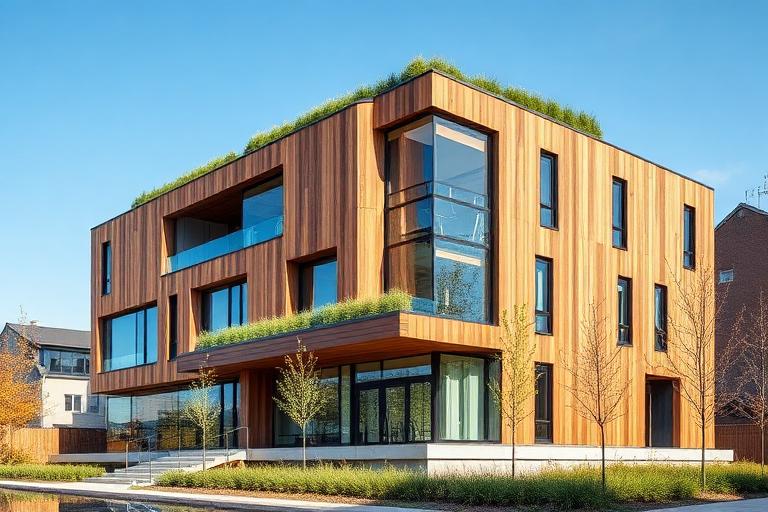
The editorial depth, with membershipOpening soon
Omoro · Editorial depth · 020-AC
05
The index

Neighbours, cross-references, blends, and the questions people ask.

Related concepts

Connected across the creative knowledge graph

Cultural relevance, Contemporary Architecture cultural relevance today

Where it stands now, and what it costs you to use it

Contemporary is not a style, it is a period label, and using it as a style is how you end up with a building that looks like every other building finished that year.

The field's own diagnosis is that global practice has converged, so a new office block in three different continents is now hard to tell apart.

That convergence is the thing worth reacting against, which is exactly what critical regionalism was proposed to do.

Cross-references

Neo-ModernismNeo-Modernism is one of several positions within contemporary practiceSustainable Architecturesustainability has become the baseline concern of contemporary architectureParametric Architectureparametric tools have expanded contemporary architecture's formal range

Blend

Mix Contemporary Architecture with any style in the library

Contemporary Architecture×
50%50%
74% alike
Contemporary Architecture referenceSustainable Architecture referenceContemporary Architecture 50%Sustainable Architecture 50%

Merged palette

#2C3228

#2C3C2C

#7A8C7E

#4A7C5A

#B8C4BA

Leads light, structured, digital

Typography · from Contemporary Architecture

Space Grotesk over Inter

Materials

  • Mass timber (CLT, glulam): #C4A87C, #B89468, #A08050
  • Weathering steel (Corten): #8B4513, #6B3410, #A0522D
  • Mass timber (CLT, glulam): #C4A87C, #B89468, #A08050

Use it

Contemporary architecture with current material innovation and sustainable design integration, clean articulate massing, glass and engineered material transparency, context-responsive siting, present-day design sensibility without historical pastiche (50%), infused with Sustainable architecture with visible green-building strategy (living roofs, solar integration, natural ventilation) biophilic material choices like timber and living plant walls, environmentally responsive orientation, architecture in dialogue with ecology, color palette strictly #2C3228 #2C3C2C #7A8C7E #4A7C5A #B8C4BA, overall character: light, structured, digital

One-click generation opens with the studio

About this aesthetic

What defines contemporary architecture?

Contemporary architecture is current architectural practice, characterized by pluralism rather than a single style. It encompasses sustainability-driven design, parametric experimentation, social activism, material innovation, and contextual sensitivity. What defines it is the absence of a dominant ideology and the coexistence of multiple valid approaches.

How is contemporary architecture different from modern architecture?

Modern architecture (1920s-1970s) was an ideological movement with defined principles. Contemporary architecture is a period descriptor for current practice, which includes Neo-Modernism, Parametricism, sustainable design, and many other approaches. Modern architecture is one of many influences on contemporary work.

What are the biggest trends in contemporary architecture?

Mass timber construction replacing steel and concrete, passive and net-zero energy design, adaptive reuse over demolition, community-driven design processes, computational form-finding, and a geographic diversification of innovative practice beyond the traditional Western centers.

Build with the contemporary architecture aesthetic

Every style in the library is broken down like this one: the palette, the typography, the materials and the lineage.

Explore the style library →