Neoclassical Architecture

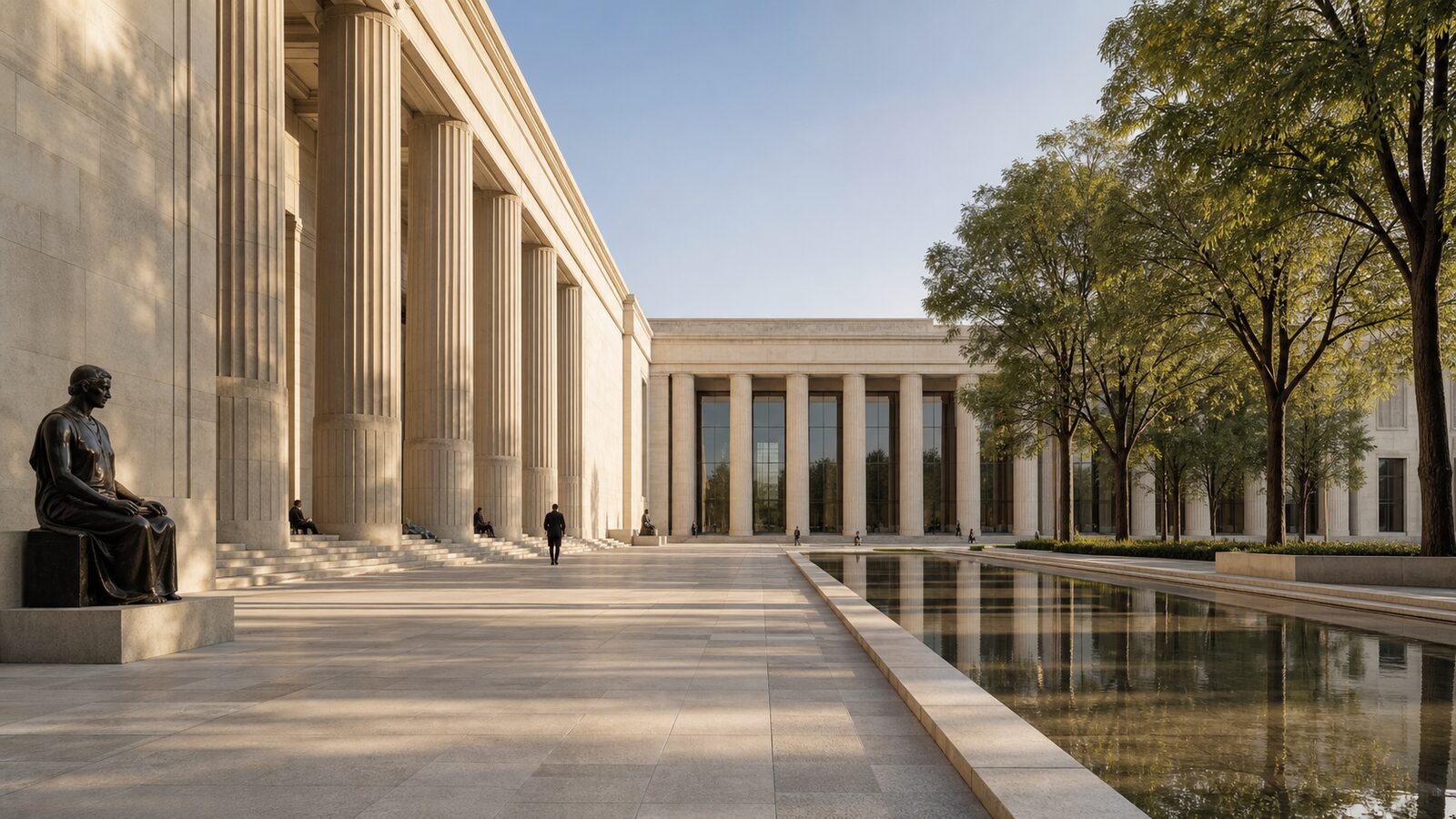
The Enlightenment's archaeological return to Greece and Rome - Schinkel's Altes Museum colonnade reading Prussian sky against Greek portico, Soane's Bank of England as a ruinous fantasy, Jefferson's UVA as a republic of reason built in brick and white column.

Compare Neoclassical Architecture with another style →See the Neoclassical Architecture typefaces →On the timeline · 1750s
Record020-AN
AestheticNeoclassical Architecture
ClassStructured / Analog
StatusINGESTING
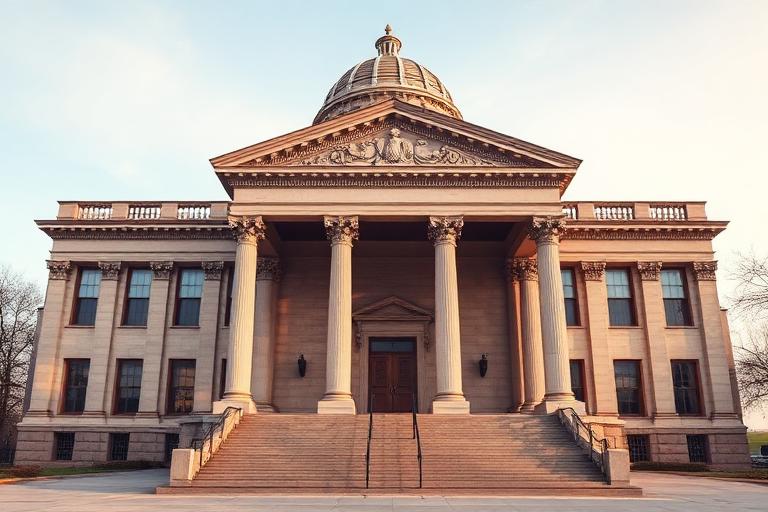
Neoclassical Architecture aesthetic archive image
Archive plate · Neoclassical Architecture
Neoclassical Architecture aesthetic: World dossier scene
Dossier sceneWorld · 1/3
01
The record

What it is, when it works, who it is for, and where it already exists.

How to use it

Record 020-AN - when it works, who it is for, what it looks like

FIELD 01

When to use it

  • Brand identity requiring Enlightenment authority, classical permanence, and civic dignity
  • Governmental, legal, or financial institution brand communicating the weight of institutional history
  • Cultural institution brand in a significant neoclassical building
  • Heritage luxury brand communicating the longevity and authority of classical form
FIELD 02

Perfect for

  • Central banks, constitutional courts, and governmental institutions in neoclassical buildings
  • Universities and academic institutions with neoclassical campuses
  • Auction houses, private banks, and financial institutions with a heritage communication need
  • Museums and cultural institutions in neoclassical buildings - British Museum, Altes Museum

In the wild, Neoclassical Architecture aesthetic real-world examples

Where this aesthetic shows up in the real world · ↗ opens the source site

Omoro Style GuideEvery aesthetic, every field on this page, in one PDF.
$8Get the guide →
02
The anatomy

Where Neoclassical Architecture came from, what makes it recognisable, and the fingerprint it leaves.

History, Neoclassical Architecture aesthetic history

1750-1850 (peak); revivals ongoing · France and Britain, expanding to the Americas and globally

Neoclassicism emerged in the mid-eighteenth century when the excavation of Pompeii and Herculaneum (from 1748) and the publication of Stuart and Revett's 'Antiquities of Athens' (1762) provided European architects with direct archaeological knowledge of ancient Greek and Roman buildings for the first time. The result was a return to classical principles of greater archaeological accuracy than the Renaissance had achieved. Jacques-Germain Soufflot's Pantheon in Paris (1758-1790) and Robert Adam's work in Britain applied Greek and Roman forms with scholarly precision.

The American Republic adopted Neoclassicism as its architectural language of democracy. Thomas Jefferson modeled the Virginia State Capitol (1788) on a Roman temple and designed the University of Virginia campus (1817-1826) around a Pantheon-inspired rotunda. Benjamin Latrobe and Charles Bulfinch developed the US Capitol building in Neoclassical style. The association of columned porticos with democratic government persists: courthouses, state houses, and civic buildings worldwide still deploy the vocabulary.

Neoclassicism experienced multiple revivals. The Beaux-Arts movement (1880s-1920s) produced lavishly detailed Neoclassical buildings (the Paris Opera, New York Public Library). The stripped classicism of the 1930s reduced the vocabulary to essential proportions. Today, architects like Robert A.M. Stern and firms associated with the Institute of Classical Architecture continue to build in Neoclassical idioms, arguing that the classical language remains architecture's most sophisticated system of proportion and composition.

Democracy went looking for a costume and found a toga.

Omoro dossier · 020-AN

Visual markers, Neoclassical Architecture aesthetic visual markers

The visual DNA: what makes it recognisable

typography

See the fonts
  • Roman inscriptional capitals: Trajan, Optima, Perpetua
  • Transitional serifs: Baskerville, Bell, Bulmer
  • Symmetrical title-page layouts with centered text
  • Engraved and copper-plate letterforms

grid

  • Strict bilateral symmetry on primary facades
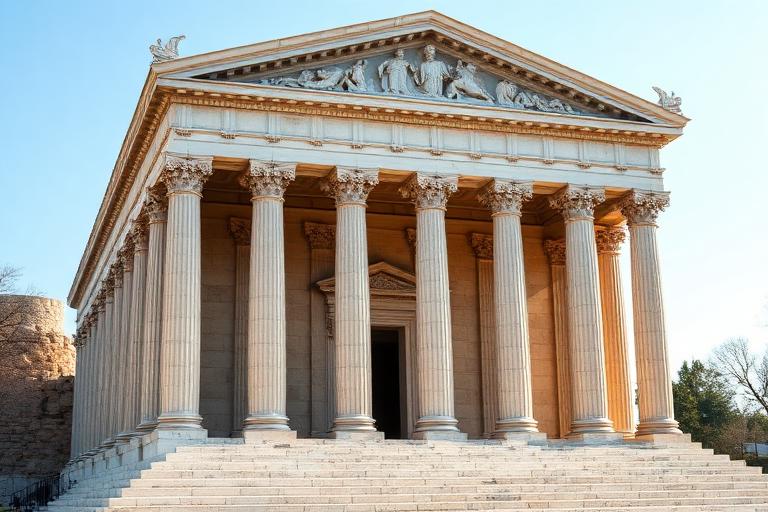
  • Columned porticos with pediments as entrance features
  • Five-part compositions (center block, connecting wings, end pavilions)
  • Proportional systems derived from classical orders

materials

  • White marble and limestone: #F0EDE8, #E8E4DC, #D8D4CC
  • Pale painted stucco: #F5F0E8, #EEECE8
  • Polished granite bases and steps: #4A4A4A, #5C5C5C
  • Gilded interiors and metalwork: #C8A028, #D4B040

motifs

  • Freestanding or engaged columns in Greek or Roman orders
  • Triangular pediments over porticos and windows
  • Domed rotundas (Pantheon-derived)
  • Coffered ceilings and barrel-vaulted halls

Aesthetic profile

8-channel console with the fingerprint on its display. Save the card, or share the page

Aesthetic Profile
Neoclassical Architecture
Classical Revival
1750–1850
Attribute console · 020-AN
leans structured, analog, nostalgic
8 CH
FIG. 1
MaximalMinimalAnalogDigitalRestrainedExpressiveWarmCoolNostalgicFuturisticStructuredChaoticLightDarkGeometricOrganic
01Minimal
Maximal10%
02Analog
Digital80%
03Restrained
Expressive10%
04Cool
WarmEVEN
05Futuristic
Nostalgic80%
06Structured
Chaotic90%
07Dark
Light30%
08Organic
Geometric80%
StructuredAnalogNostalgic3 materials
Omoro · Attribute console · 020-AN
omoro.io/styles/arch-neo-classical

Material assembly

The style's primary materials, assembled bottom-up

Tap a stratum for material detail · Full catalog

Place in history

Classical Revival · 1750–1850 - tap any style to travel

Color Palettes, Neoclassical Architecture color palettes and hex codes

4 color interpretations of this aesthetic

Neoclassical Architecture
#3C3428 · #7A7060 · #B0A898 · #F2EDE6 · #181410
Archaeological precision deployed as civic and moral argument
Schinkel Museum
#181410 · #504030 · #907858 · #C8B890 · #E8E0D0
Altes Museum: Ionic colonnade and rotunda in Prussian sandstone
Soane Dome
#101010 · #404038 · #808070 · #C0B8A8 · #E8E4D8
Bank of England: shallow dome and clerestory in pale Portland stone
Arc de Triomphe
#141008 · #483820 · #908060 · #C8B898 · #E0D8C8
Napoleonic grandeur: massive limestone and bronze relief panels
Omoro Palette Pack575 curated palettes across every aesthetic, 5 export formats.
$8Get the palettes →

Adjacent Palettes, styles related to Neoclassical Architecture

The colour of the styles sitting closest to this one

Classical Architecture
Stripped Classicism
Contextualism
Gothic Architecture
03
The direction

How to shoot it, how to prompt it, and how to board it.

Photo Direction

How to shoot this aesthetic

"The old rules, borrowed again with total conviction"

Shot list

  • Wide symmetrical shot centered on a colonnade or portico
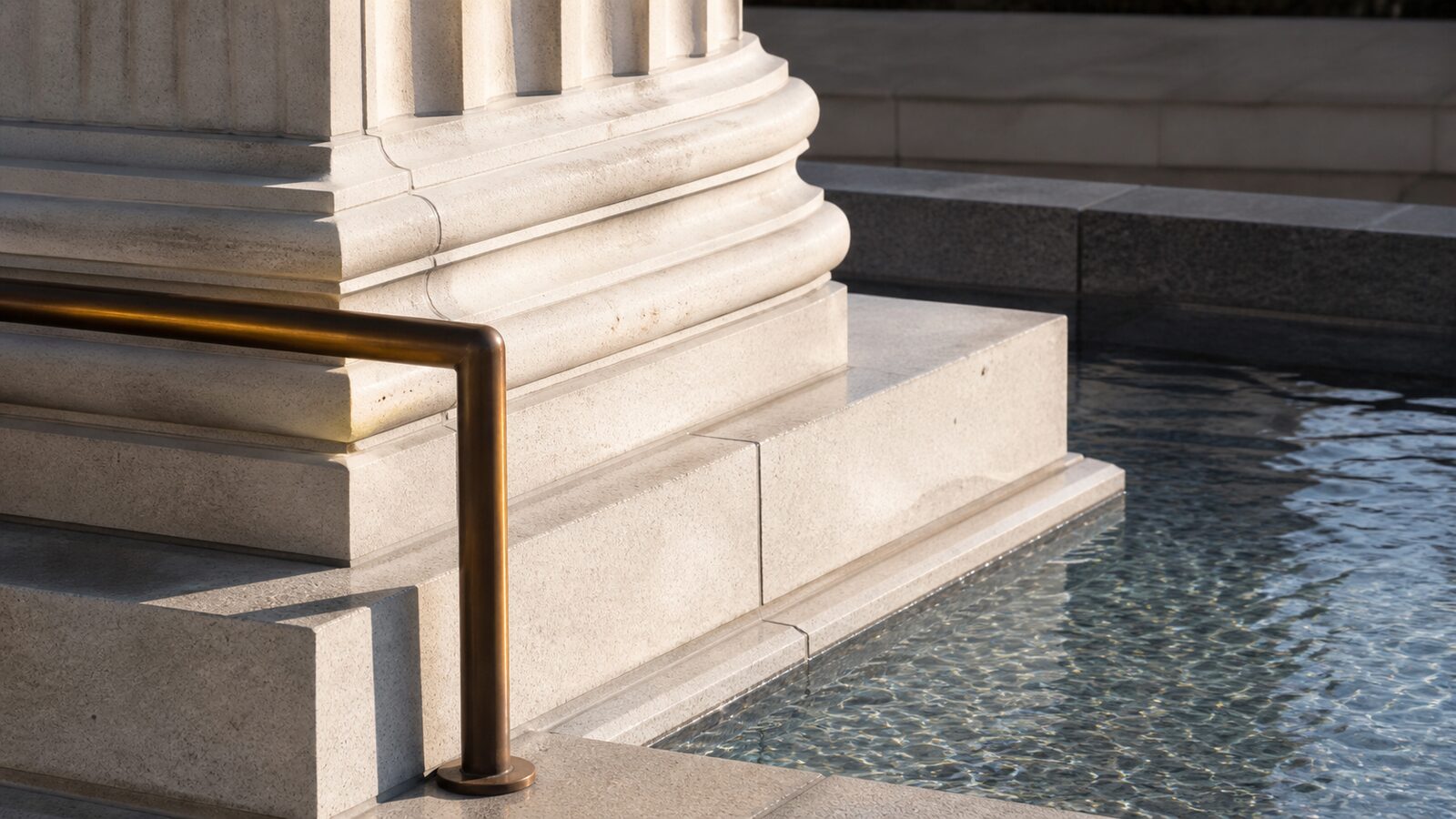
  • Detail shot of a column capital carved in a classical order
  • Low-angle shot up a pediment against the sky

Lighting

Hard, raking low-angle sunlight to carve shadow relief into column fluting and pediment detail

Omoro Director's Briefs151 photo shot-lists like this one, ready to shoot from.
$8Get the briefs →

Generative Prompt

Drop this into Studio to generate in this aesthetic

Neoclassical aesthetic with Greek and Roman revival, toga-draped classical figures and mythology scenes, cool cameo-relief color restraint, rigidly symmetrical composition and golden proportion, Jacques-Louis David painting influence

Paste as-is, or append your own subject

Mood Board

The record applied to your project. The record's kit is free; your brand, references and plates come with membership

Mood board
The Neoclassical Architecture board
8 frames · 4 selected
FIG. 4
Portico Shadow3C3428Column Stone7A7060EntablatureB0A898PedimentF2EDE6Portico Night181410
Brand and references
IdleBrand and references open with membership
With membership: the brand's own facts and colours in every prompt, references carried into every frame, and the plates generated.
01 · Hero application
02 · Material and finish
03 · Palette in context
04 · Photography direction
05 · Pattern plate
06 · Object
07 · Environment
08 · Digital presence
Demo kit free, the rest with membershipThe record as a demo kit, free. Name a project and it is written for that
Omoro · Mood board · 020-AN
04
The judgement

Whether to use it, what it costs to do properly, and where it stands right now.

Creative verdict, Neoclassical Architecture feasibility and strategic recommendation

Two written calls, seven meters, and when to walk away

Creative verdict
Should Neoclassical Architecture be the call?
7 meters
FIG. 2
Assessment

Correctness is the entire measure. The orders, the proportions and the mouldings are documented, so an error is not a stylistic choice, it is an error, and this is the rare style where that is true. Work from measured precedent. Modern construction fights it: a load-bearing language executed as a rain screen shows at every reveal and return.

Verdict

One of the few genuinely contested positions in contemporary architecture rather than a settled historical style, and recent government attempts to mandate it turned an aesthetic preference into policy. Its practitioners make a real case about legibility and public affection; its critics make a real case about who the language has served. Both are worth reading before choosing.

Production cost
High

Real colonnades and brick. An archaeological return, not a print.

Creative difficulty
High

Reading Enlightenment reason into stone, not just columns for status.

Execution difficulty
High

Classical proportion at this rigor takes real architectural training.

Risk of misuse
High

Reading Enlightenment reason into stone, not just columns for status.

Prevalence
Common

A constant reference for institutional and civic architecture.

Longevity
Timeless

An archaeological return to Greece and Rome that keeps returning.

Brand investment
High

Real colonnades and brick, an archaeological return, not a print.

Avoid if
The audience is unfamiliar with the Enlightenment reference
Columns for status alone, without that reasoning, misses the point.
The budget doesn't cover real colonnades or brick
This is an archaeological return, not a printed facade.
Omoro · Creative verdict · 020-AN

Editorial Depth

A Pro feature: origins, practitioners, and pitfalls

Editorial depth
The Neoclassical Architecture file
14 sections
FIG. 3
Context02Brands02Perception04Use04Index02
01Common MisconceptionThe principle beneath the surface
02Historical ContextOrigins, cultural moment, and reaction
03Brands That Accidentally Use This StyleNatural alignment, not category claims
04Brands That Perfectly Represent This StyleExceptional execution
05Psychological EffectHow visual decisions change perception
06Visual ChecklistInclude and avoid
07Creative FormulaThe visual system reduced to essentials
08Recognition SignalsHow to recognize it in two seconds
09When To Use This StyleContexts where the language performs
10Common Creative MistakesWhere imitation weakens the signal
11Best Brand ApplicationsIndustries with a natural advantage
12Creative Application AnalysisFit, feasibility, and production reality
13Related StylesClose languages and the key distinction
14Visual DNA SummaryThe sentence to remember
The editorial depth, with membershipOpening soon
Omoro · Editorial depth · 020-AN
05
The index

Neighbours, cross-references, blends, and the questions people ask.

Related concepts

Connected across the creative knowledge graph

Cultural relevance, Neoclassical Architecture cultural relevance today

Where it stands now, and what it costs you to use it

Neoclassical revival is classicism practised now, and it is one of the few genuinely contested positions in contemporary architecture rather than a settled historical style.

Recent government attempts to mandate it turned an aesthetic preference into policy, which sharpened the argument considerably.

Its practitioners make a real case about legibility and public affection. Its critics make a real case about who the language has historically served. Both are worth reading.

Cross-references

Classical ArchitectureNeoclassicism is the most archaeologically rigorous revival of classical architectureStripped ClassicismStripped Classicism reduced Neoclassicism to essential proportionsArchitectural PostmodernismPostmodernism quoted Neoclassical forms with irony and playfulness

Blend

Mix Neoclassical Architecture with any style in the library

Neoclassical Architecture×
50%50%
100% alike
Neoclassical Architecture referenceClassical Architecture referenceNeoclassical Architecture 50%Classical Architecture 50%

Merged palette

#3C3428

#2C2416

#7A7060

#6B5B45

#B0A898

Leads structured, analog, nostalgic

Typography · from Neoclassical Architecture

Abril Fatface over Lora

Materials

  • White marble and limestone: #F0EDE8, #E8E4DC, #D8D4CC
  • Pale painted stucco: #F5F0E8, #EEECE8
  • White marble and limestone: #F0EDE8, #E8E4DC, #D8D4CC

Use it

Neoclassical aesthetic with Greek and Roman revival, toga-draped classical figures and mythology scenes, cool cameo-relief color restraint, rigidly symmetrical composition and golden proportion, Jacques-Louis David painting influence (50%), infused with Classical architecture with Greek and Roman orders (Doric, Ionic, Corinthian columns) pediments and entablatures, symmetrical proportion governed by classical ratio, marble and stone construction, timeless civic monumentality, color palette strictly #3C3428 #2C2416 #7A7060 #6B5B45 #B0A898, overall character: structured, analog, nostalgic

One-click generation opens with the studio

About this aesthetic

What is Neoclassical architecture?

Neoclassical architecture is the revival of Greek and Roman building forms that began in the mid-eighteenth century, inspired by archaeological discoveries at Pompeii and Athens. It features columned porticos, domed rotundas, symmetrical compositions, and proportional systems derived from classical orders. It became the default style for democratic institutions.

What is the difference between Classical and Neoclassical architecture?

Classical architecture is the original Greek and Roman building tradition. Neoclassical is its Enlightenment-era revival (1750-1850), which studied ancient buildings with archaeological precision and reinterpreted them for modern institutions. The Renaissance also revived classical forms, but Neoclassicism was more archaeologically rigorous.

Why do government buildings use Neoclassical architecture?

The American and French Revolutions adopted Greek and Roman forms as symbols of democratic governance, associating columned temples with civic virtue and republican ideals. This association became self-reinforcing: because early democratic buildings were Neoclassical, later civic buildings continued the tradition to signal institutional authority.

Build with the neoclassical architecture aesthetic

Every style in the library is broken down like this one: the palette, the typography, the materials and the lineage.

Explore the style library →