Mid-Century Modern

Postwar optimism made domestic - Case Study Houses for a California that believed design could improve every life: Eames plywood and fiberglass, Neutra's steel-frame houses opening to the canyon, and Saarinen's organic plastic furniture for the jet-age family.

Compare Mid-Century Modern with another style →See the Mid-Century Modern typefaces →On the timeline · 1940s
Record020-AM
AestheticMid-Century Modern
ClassNostalgic / Analog
StatusINGESTING
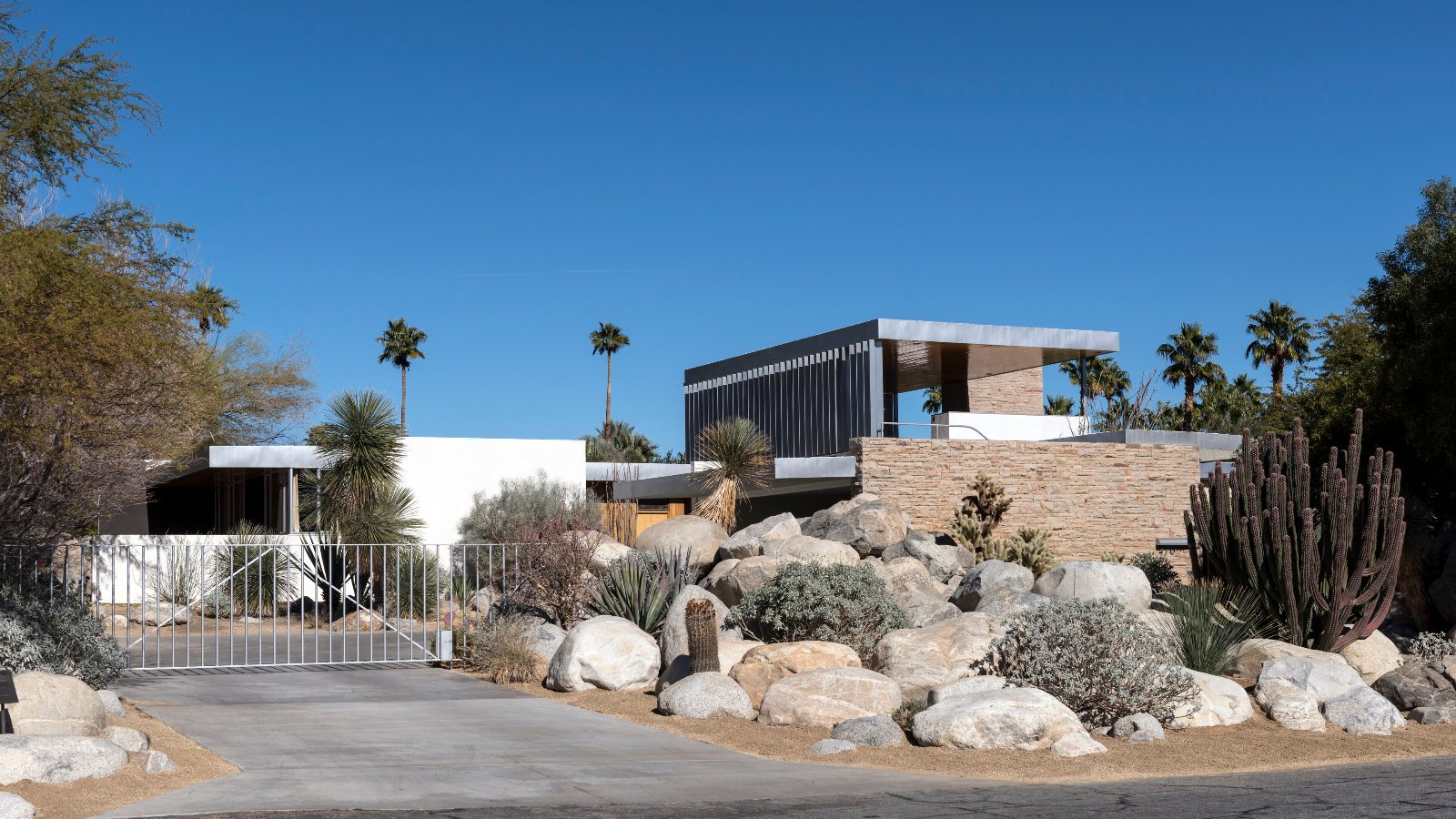
Richard Neutra, Kaufmann House, Palm Springs, photograph by Carol M. Highsmith, Library of Congress
Archive plate · Mid-Century ModernRichard Neutra, Kaufmann House, Palm Springs · Carol M. Highsmith, Library of Congress · Public domain · Wikimedia Commons
Mid-Century Modern aesthetic: Omoro scene dossier scene
Dossier sceneOmoro scene · 1/4
01
The record

What it is, when it works, who it is for, and where it already exists.

How to use it

Record 020-AM - when it works, who it is for, what it looks like

FIELD 01

When to use it

  • Brand identity evoking postwar American optimism, craft, and functional modernism
  • Residential and interior design brand with a mid-century heritage or aesthetic focus
  • Furniture and homeware brand with American 1950s–1960s design lineage
  • Hospitality brand in a significant mid-century building or community
FIELD 02

Perfect for

  • Furniture and homeware brands with a genuine or referenced mid-century design heritage
  • Residential developers and interior designers targeting design-literate homebuyers
  • Boutique hotels in preserved mid-century modern properties - Palm Springs, Fire Island
  • Lifestyle brands communicating functional optimism and material warmth

In the wild, Mid-Century Modern aesthetic real-world examples

Where this aesthetic shows up in the real world · ↗ opens the source site

Omoro Style GuideEvery aesthetic, every field on this page, in one PDF.
$8Get the guide →
02
The anatomy

Where Mid-Century Modern came from, what makes it recognisable, and the fingerprint it leaves.

History, Mid-Century Modern aesthetic history

1945-1969 · United States (California), Scandinavia, Brazil

Mid-Century Modern architecture was born from postwar optimism and a housing shortage. Millions of returning soldiers needed homes, and architects saw an opportunity to bring Modernist principles to the American middle class. The Case Study House Program, sponsored by Arts & Architecture magazine (1945-1966), commissioned architects including Richard Neutra, Charles and Ray Eames, Pierre Koenig, and Craig Ellwood to design experimental houses that could be built affordably with industrial materials. Case Study House #22 (Pierre Koenig, 1960), photographed by Julius Shulman cantilevered over the Los Angeles basin at night, became the era's defining image.

The style spread beyond California through architectural publications, furniture design, and the general culture of postwar consumer optimism. Eero Saarinen designed corporate campuses (GM Technical Center, 1956) and airports (TWA Terminal, 1962) in a sculptural Modernist idiom. In Scandinavia, Arne Jacobsen and Finn Juhl refined Modernism with organic warmth. In Brazil, Oscar Niemeyer and Lina Bo Bardi created a tropical Modernism of sweeping curves and bold color. The common thread was confidence that modern design could improve daily life.

Mid-Century Modern declined in the late 1960s as cultural upheaval, environmental awareness, and architectural postmodernism challenged its optimistic assumptions. Its revival began in the 1990s and has only intensified: Palm Springs mid-century neighborhoods are now preservation districts, Eames and Saarinen furniture commands premium prices, and the style's open plans, natural light, and indoor-outdoor connections remain the template for aspirational domestic architecture.

The good life got a flat roof and a sliding glass door.

Omoro dossier · 020-AM

Visual markers, Mid-Century Modern aesthetic visual markers

The visual DNA: what makes it recognisable

typography

See the fonts
  • Clean geometric sans-serifs: Futura, Neutraface, Avenir
  • Decorative script faces for casual domesticity: Brush Script, Kaufmann
  • Tight lowercase settings with generous line spacing
  • Condensed sans-serifs for architectural lettering and signage

grid

  • Post-and-beam structural frames allowing glass curtain walls
  • Open floor plans connecting living, dining, and outdoor spaces
  • Single-story or split-level massing with flat or low-pitched roofs
  • Modular structural bays based on standard lumber and steel dimensions

materials

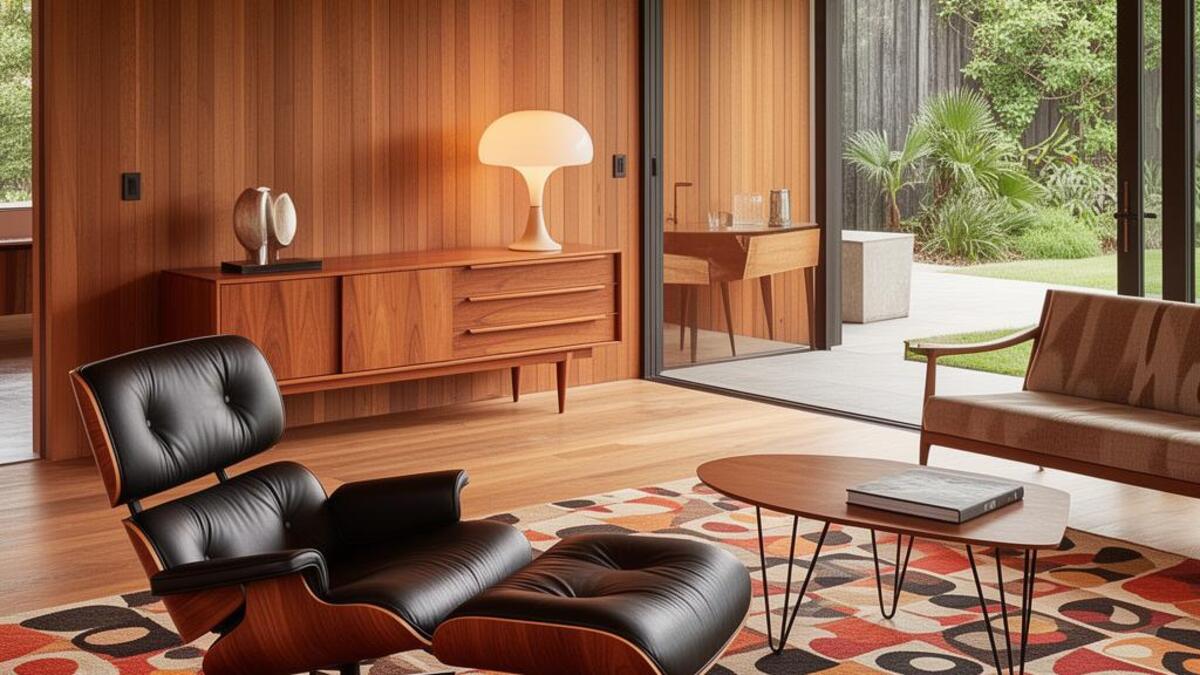
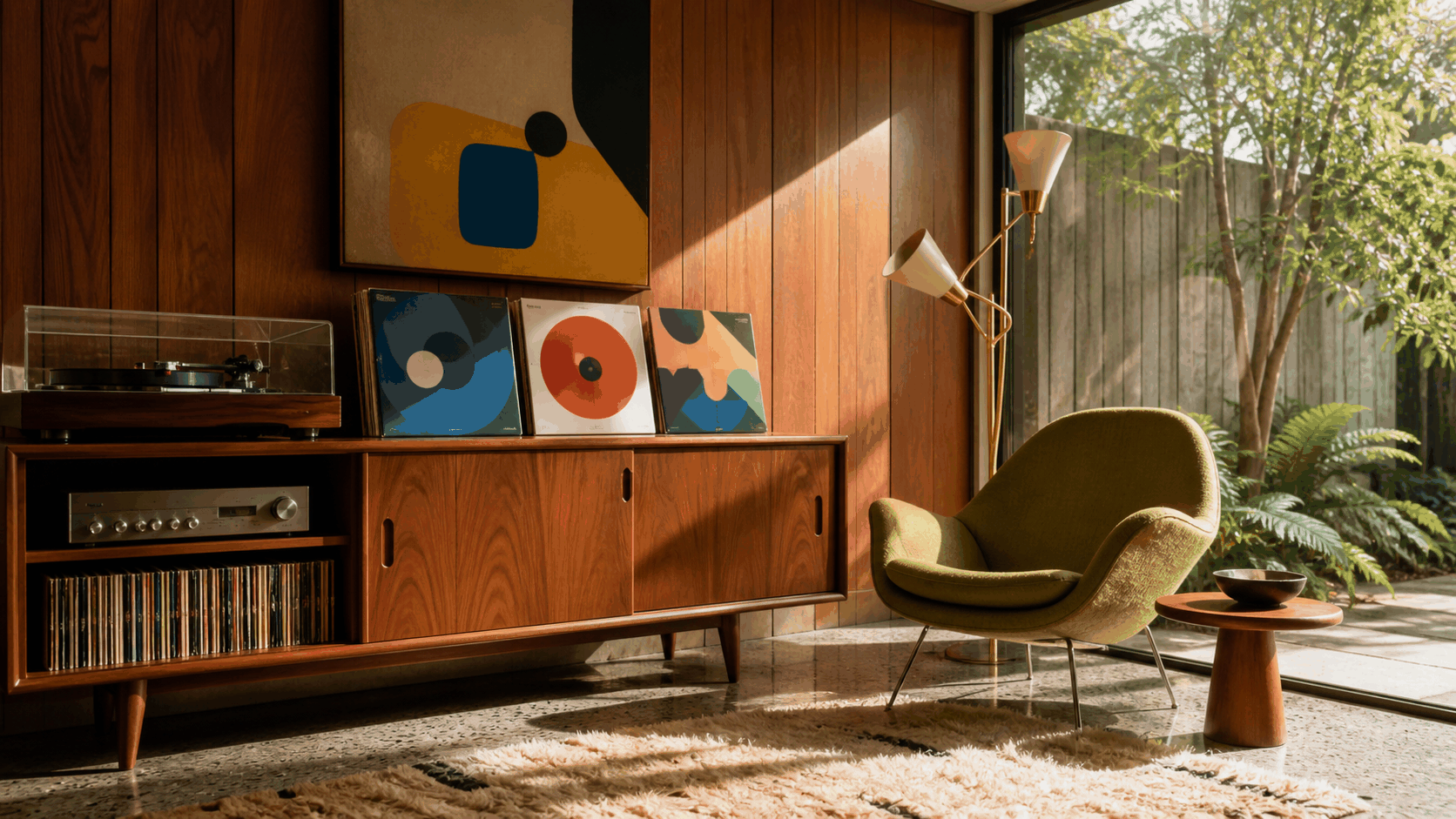
  • Redwood and mahogany: #8B4513, #6B3410, #A0522D
  • Flagstone and terrazzo flooring: #B0A890, #A09880
  • Glass walls with minimal steel or aluminum frames
  • Brick accent walls and fireplaces: #8B5E3C, #7C4E2C

motifs

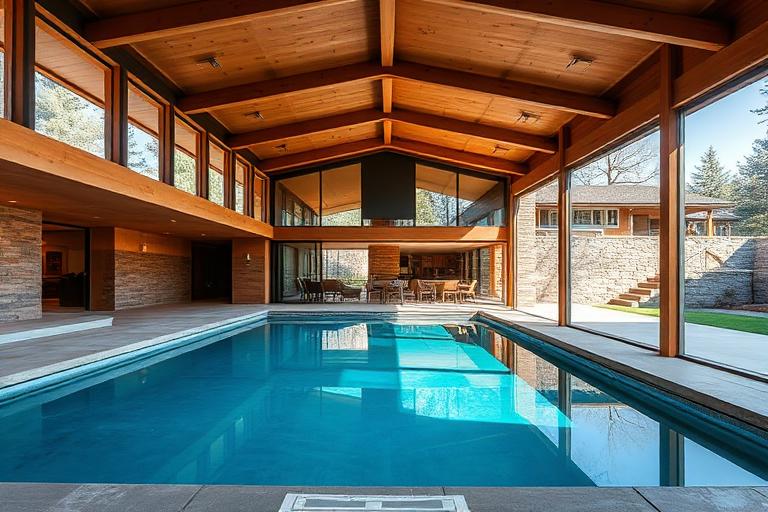
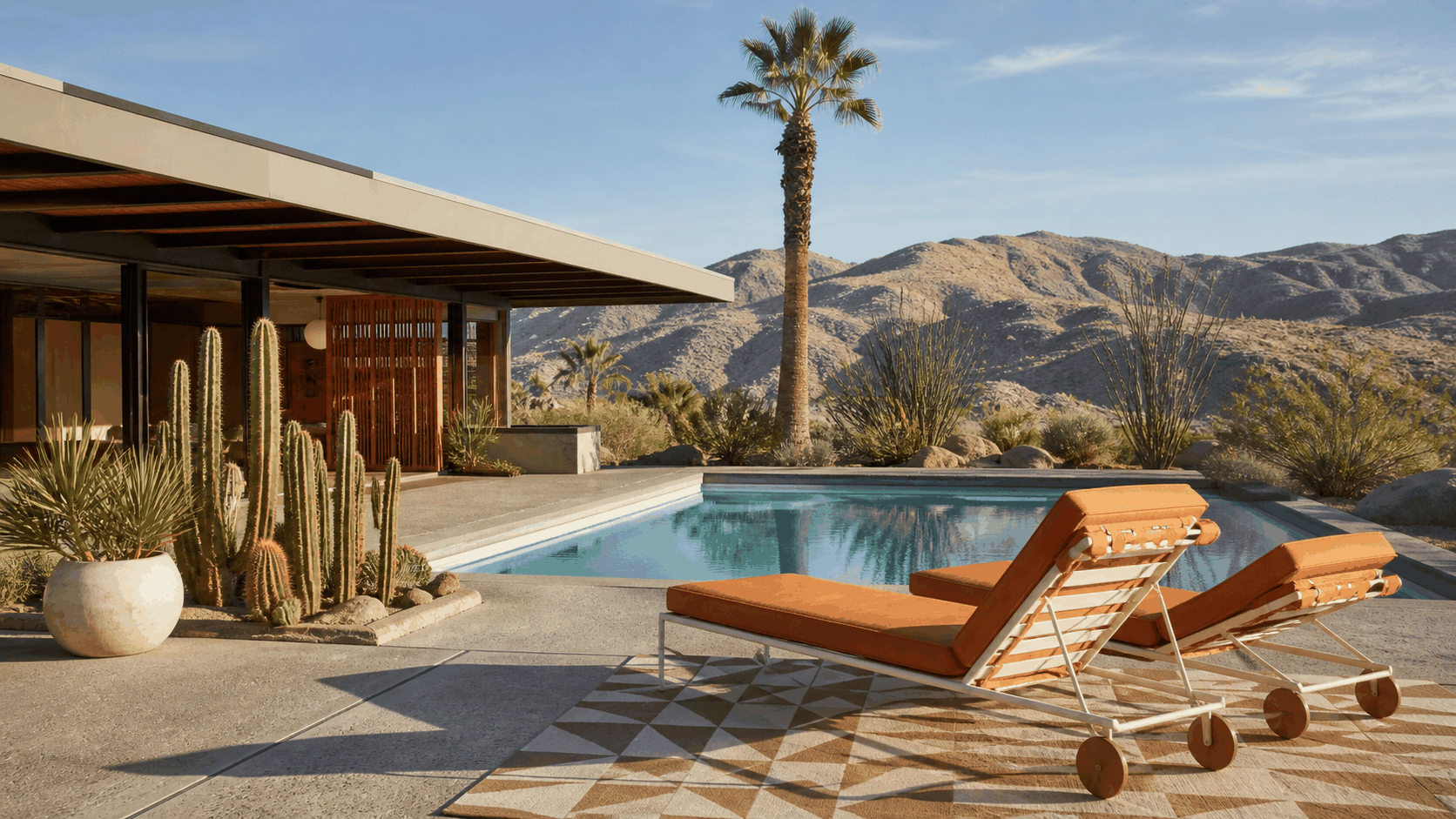
  • Floor-to-ceiling glass walls opening to gardens and pools
  • Post-and-beam ceilings with exposed structural rhythm
  • Indoor-outdoor rooms with sliding glass doors
  • Butterfly, folded-plate, or flat roofs with deep overhangs

Aesthetic profile

8-channel console with the fingerprint on its display. Save the card, or share the page

Aesthetic Profile
Mid-Century Modern
Modern Movement
1945–1969
Attribute console · 020-AM
leans nostalgic, analog, warm
8 CH
FIG. 1
MinimalMaximalAnalogDigitalExpressiveRestrainedWarmCoolNostalgicFuturisticStructuredChaoticLightDarkGeometricOrganic
01Minimal
Maximal30%
02Analog
Digital40%
03Restrained
ExpressiveEVEN
04Cool
Warm40%
05Futuristic
Nostalgic50%
06Structured
Chaotic40%
07Dark
Light40%
08Organic
Geometric10%
NostalgicAnalogWarm4 materials
Omoro · Attribute console · 020-AM
omoro.io/styles/arch-mid-century

Material assembly

The style's primary materials, assembled bottom-up

Tap a stratum for material detail · Full catalog

Place in history

Modern Movement · 1945–1969 - tap any style to travel

Color Palettes, Mid-Century Modern color palettes and hex codes

5 color interpretations of this aesthetic

Mid-Century Modern
#6B3410 · #8B4513 · #A0522D · #A09880 · #B0A890
The good life got a flat roof and a sliding glass door
Walnut & Mustard
#3A2818 · #D4A020 · #F2E6D0 · #C8A070 · #887060
Warm grain and earthy optimism of post-war domesticity
Aqua & Coral
#007888 · #E04830 · #F2EDE4 · #C8A870 · #D4B890
Retro optimism in swimming pool teal and kitchen coral
Desert Modern
#8A3810 · #C46818 · #E4CC90 · #687050 · #C4A070
Sun-bleached arid palette where adobe meets the horizon
Olive & Teak
#282E18 · #687040 · #885838 · #D4C0A0 · #EEE4CC
Organic warmth of aged wood and sunlit greenery
Omoro Palette Pack575 curated palettes across every aesthetic, 5 export formats.
$8Get the palettes →

Adjacent Palettes, styles related to Mid-Century Modern

The colour of the styles sitting closest to this one

Architectural Modernism
Scandinavian Architecture
Organic Architecture
Prairie Style
03
The direction

How to shoot it, how to prompt it, and how to board it.

Photo Direction

How to shoot this aesthetic

"Post-war optimism, made of glass, steel, and an open floor plan"

Shot list

  • Wide shot of floor-to-ceiling glass dissolving the line between indoors and out
  • Detail shot of a signature butterfly roofline against the sky
  • Interior shot showing an open plan flowing directly into a landscaped exterior

Lighting

Warm, low-angle golden-hour light mid-century glass houses were designed around exactly this hour, when interior and exterior light meet at equal warmth

Omoro Director's Briefs151 photo shot-lists like this one, ready to shoot from.
$8Get the briefs →

Generative Prompt

Drop this into Studio to generate in this aesthetic

Mid-Century Modern architecture with post-war optimism, floor-to-ceiling glass, indoor-outdoor living, butterfly roofs, Eames and Neutra influence, Palm Springs warmth, stone and wood

Paste as-is, or append your own subject

Mood Board

The record applied to your project. The record's kit is free; your brand, references and plates come with membership

Mood board
The Mid-Century Modern board
8 frames · 4 selected
FIG. 4
Deep Redwood6B3410Dark Redwood8B4513Mid RedwoodA0522DLight FlagstoneA09880Pale FlagstoneB0A890
Brand and references
IdleBrand and references open with membership
With membership: the brand's own facts and colours in every prompt, references carried into every frame, and the plates generated.
01 · Hero application
02 · Material and finish
03 · Palette in context
04 · Photography direction
05 · Pattern plate
06 · Object
07 · Environment
08 · Digital presence
Demo kit free, the rest with membershipThe record as a demo kit, free. Name a project and it is written for that
Omoro · Mood board · 020-AM
04
The judgement

Whether to use it, what it costs to do properly, and where it stands right now.

Creative verdict, Mid-Century Modern feasibility and strategic recommendation

Two written calls, seven meters, and when to walk away

Creative verdict
Should Mid-Century Modern be the call?
7 meters
FIG. 2
Assessment

The indoor-outdoor connection is the whole idea. Post-and-beam framing exists to remove the wall, so a mid-century look with small punched windows is a contradiction, and the structure has to allow the glazing. Keep the beams exposed and continuous. Flat and low-pitched roofs are the known weak point, so the drainage detail deserves more attention than the elevation.

Verdict

Right when the lesson is a small plan that feels large because it opens correctly to the outside, which the good houses still teach. Understand the gap: these were often modest, experimental houses built cheaply for young families, which is the opposite of what the price of the chairs now implies. The furniture market has largely detached from the architecture.

Production cost
Medium

Plywood, fiberglass, and steel frame. Real material specificity.

Creative difficulty
Medium

A specific postwar optimism, not just mid-century furniture in a room.

Execution difficulty
High

Opening a steel-frame house to the landscape takes real structural precision.

Risk of misuse
Medium

Mid-century furniture in a room isn't the same as the postwar optimism it came from.

Prevalence
Common

A constant reference across residential and hospitality branding.

Longevity
Enduring

Seventy years on and still one of the most reached-for design eras.

Brand investment
Medium

Real plywood, fiberglass, and steel frame material specificity.

Avoid if
The audience is unfamiliar with the postwar optimism it represents
Furniture from this era in a room isn't the same as the ethos behind it.
The materials are generic rather than period-specific
Plywood, fiberglass, and steel frame are specific, not interchangeable.
Omoro · Creative verdict · 020-AM

Editorial Depth

A Pro feature: origins, practitioners, and pitfalls

Editorial depth
The Mid-Century Modern file
14 sections
FIG. 3
Context02Brands02Perception04Use04Index02
01Common MisconceptionThe principle beneath the surface
02Historical ContextOrigins, cultural moment, and reaction
03Brands That Accidentally Use This StyleNatural alignment, not category claims
04Brands That Perfectly Represent This StyleExceptional execution
05Psychological EffectHow visual decisions change perception
06Visual ChecklistInclude and avoid
07Creative FormulaThe visual system reduced to essentials
08Recognition SignalsHow to recognize it in two seconds
09When To Use This StyleContexts where the language performs
10Common Creative MistakesWhere imitation weakens the signal
11Best Brand ApplicationsIndustries with a natural advantage
12Creative Application AnalysisFit, feasibility, and production reality
13Related StylesClose languages and the key distinction
14Visual DNA SummaryThe sentence to remember
The editorial depth, with membershipOpening soon
Omoro · Editorial depth · 020-AM
05
The index

Neighbours, cross-references, blends, and the questions people ask.

Related concepts

Connected across the creative knowledge graph

Cultural relevance, Mid-Century Modern cultural relevance today

Where it stands now, and what it costs you to use it

Mid-century modern is the most commercially exploited architectural period of the last fifty years, and the furniture market has largely detached from the buildings.

The houses were often modest and experimental, built cheaply for young families, which is the opposite of what the price of the chairs now implies.

The good ones still teach the same lesson: a small plan can feel large if it opens correctly to the outside.

Cross-references

Mid-Century Modernthe furniture and graphic design tradition of the same eraArchitectural ModernismMid-Century Modern is Modernism's most livable and domestic expressionScandinavian ArchitectureScandinavian Mid-Century parallel with warmer, more organic interpretation

Compare

Mid-Century Modern vs Googie

Blend

Mix Mid-Century Modern with any style in the library

Mid-Century Modern×
50%50%
77% alike
Mid-Century Modern referenceArchitectural Modernism referenceMid-Century Modern 50%Architectural Modernism 50%

Merged palette

#6B3410

#1A1A1A

#3D5A6B

#A0522D

#B5C4CC

Leads structured, minimal, nostalgic

Typography · from Mid-Century Modern

Space Grotesk over Inter

Materials

  • Redwood and mahogany: #8B4513, #6B3410, #A0522D
  • Flagstone and terrazzo flooring: #B0A890, #A09880
  • White rendered surfaces: #F5F5F0, #EBEBEB, #E0E0DC

The calls this blend forces

These two disagree on one thing, and a blend cannot average them: you pick a side. At this mix:

Warm or Cool? Mid-Century Modern is warm, Architectural Modernism is cool. This mix lands warm.

Use it

Mid-Century Modern architecture with post-war optimism, floor-to-ceiling glass, indoor-outdoor living, butterfly roofs, Eames and Neutra influence, Palm Springs warmth, stone and wood (50%), infused with Modernist architecture with clean geometric volumes, glass curtain walls, steel and concrete, Le Corbusier and Mies van der Rohe influence, pilotis, free plan, ribbon windows, color palette strictly #6B3410 #1A1A1A #3D5A6B #A0522D #B5C4CC, leaning warm over cool, overall character: structured, minimal, nostalgic

One-click generation opens with the studio

About this aesthetic

What is Mid-Century Modern architecture?

Mid-Century Modern architecture (1945-1969) brought Modernist principles to postwar domestic and commercial building. Characterized by open floor plans, large glass walls, post-and-beam construction, flat or low roofs, and integration of indoor and outdoor spaces, it represents the most optimistic and accessible moment of the Modern movement.

What are the Case Study Houses?

The Case Study House Program (1945-1966) was a series of experimental houses commissioned by Arts & Architecture magazine to demonstrate modern, affordable residential design. 36 houses were designed; about half were built. Pierre Koenig's Case Study House #22 and Charles and Ray Eames' Case Study House #8 are the most celebrated.

Why is Mid-Century Modern still popular?

Its core values align with contemporary desires: open plans for informal living, large windows for natural light, indoor-outdoor connections, honest use of materials, and designs scaled to human comfort rather than monumental ambition. The style offers warmth and livability that more austere Modernism sometimes lacks.

Build with the mid-century modern aesthetic

Every style in the library is broken down like this one: the palette, the typography, the materials and the lineage.

Explore the style library →