When to use it
- Digital product launches and web3 campaigns
- Contemporary brand identity for tech-forward brands
- Social media content with tactile digital feel
- Music cover art and album visuals
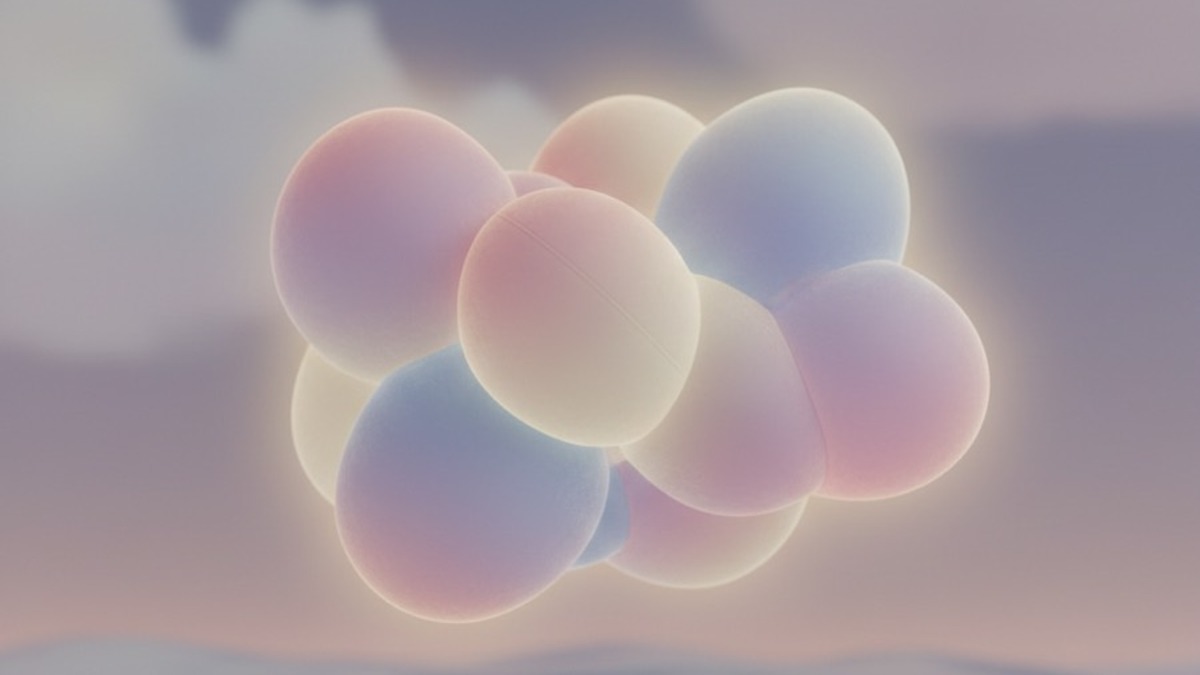
Inflatable digital objects, soft subsurface scattering, and the Blender-community aesthetic of perfectly imperfect synthetic sculpture
What it is, when it works, who it is for, and where it already exists.
Record 033-N3 - when it works, who it is for, what it looks like
Where this aesthetic shows up in the real world · ↗ opens the source site
Where Neo 3D came from, what makes it recognisable, and the fingerprint it leaves.
2019-present · Online 3D communities, Blender ecosystem, global
Neo 3D emerged when free, powerful 3D software met a generation of designers raised on flat illustration. Blender 2.8 (2019) dropped the learning curve dramatically, and suddenly thousands of illustrators, brand designers, and social media creators could produce rendered 3D objects that previously required expensive studio software. The result was a new visual dialect: puffy, inflatable forms with soft lighting, pastel palettes, and subsurface scattering that made everything look edible.
The style filled a gap. Flat illustration had dominated tech branding for a decade, and audiences were fatigued. Neo 3D offered dimensionality without the uncanny valley of photorealism. Companies like Shopify, Stripe, and Notion adopted 3D illustrations that felt approachable: rounded corners, candy colors, soft shadows. Independent creators on Dribbble and Instagram pushed the aesthetic further, creating abstract compositions of floating geometric primitives and impossible physics.
The aesthetic continues to evolve. Early Neo 3D was uniformly smooth and pastel. Current work explores grittier textures, metallic surfaces, and more complex lighting. The democratization of real-time rendering through tools like Blender's EEVEE engine, Spline, and browser-based 3D libraries means the style is moving from static illustration into interactive web experiences and motion graphics.
“When illustration learned to render.
The visual DNA: what makes it recognisable
8-channel console with the fingerprint on its display. Save the card, or share the page
4 color interpretations of this aesthetic
The colour of the styles sitting closest to this one
How to shoot it, how to prompt it, and how to board it.
How to shoot this aesthetic
"Digital softness made touchable like Jell-O rendered by a physics engine"
Shot list
Lighting
Soft, even studio light with a gentle gradient backdrop mimic subsurface scattering with diffusion through a translucent material like frosted acrylic
Drop this into Studio to generate in this aesthetic
Neo 3D aesthetic with contemporary inflatable and extruded three-dimensional objects rendered with soft subsurface scattering, pastel matte and glossy mixed surfaces, floating geometric primitives casting soft diffused shadows, Jell-O and air-dry clay textures, candy-colored gradients on rounded forms
The record applied to your project. The record's kit is free; your brand, references and plates come with membership
01 · Hero applicationWhether to use it, what it costs to do properly, and where it stands right now.
Two written calls, seven meters, and when to walk away
The render quality is the reference. Soft global illumination, subsurface scattering and a clay-like matte surface define this, and a default hard-lit render misses all of it, however good the modelling is. Light with large soft sources only. Rounded edges on every object matter: a perfectly sharp bevel is the tell that separates this from generic 3D.
Everyone can render now, so the differentiation is art direction, not technique. Blender put a generation into 3D without an animation studio, and the consequence is a shared default look: one lighting setup and one material library away from everyone else. Right when you have decided what the render is for. Wrong as a substitute for that decision.
Digital rendering only.
A specific software-community aesthetic. Generic 3D misses the reference.
Subsurface scattering and soft render quality take real 3D skill.
Generic 3D misses the specific software-community reference entirely.
Extremely common in current tech and product illustration.
Tied to the current 3D-illustration wave in digital branding.
Digital rendering only.
A Pro feature: origins, practitioners, and pitfalls
Neighbours, cross-references, blends, and the questions people ask.
Connected across the creative knowledge graph
Where it stands now, and what it costs you to use it
Contemporary 3D became a default because the tools got accessible, Blender in particular, and a whole generation learned rendering without going through an animation studio.
The consequence is a shared default look, since a lot of the work is one lighting setup and one material library away from every other piece.
The differentiation is now in art direction rather than technique. Everyone can render. Almost nobody has decided what the render is for.
Mix Neo 3D with any style in the library
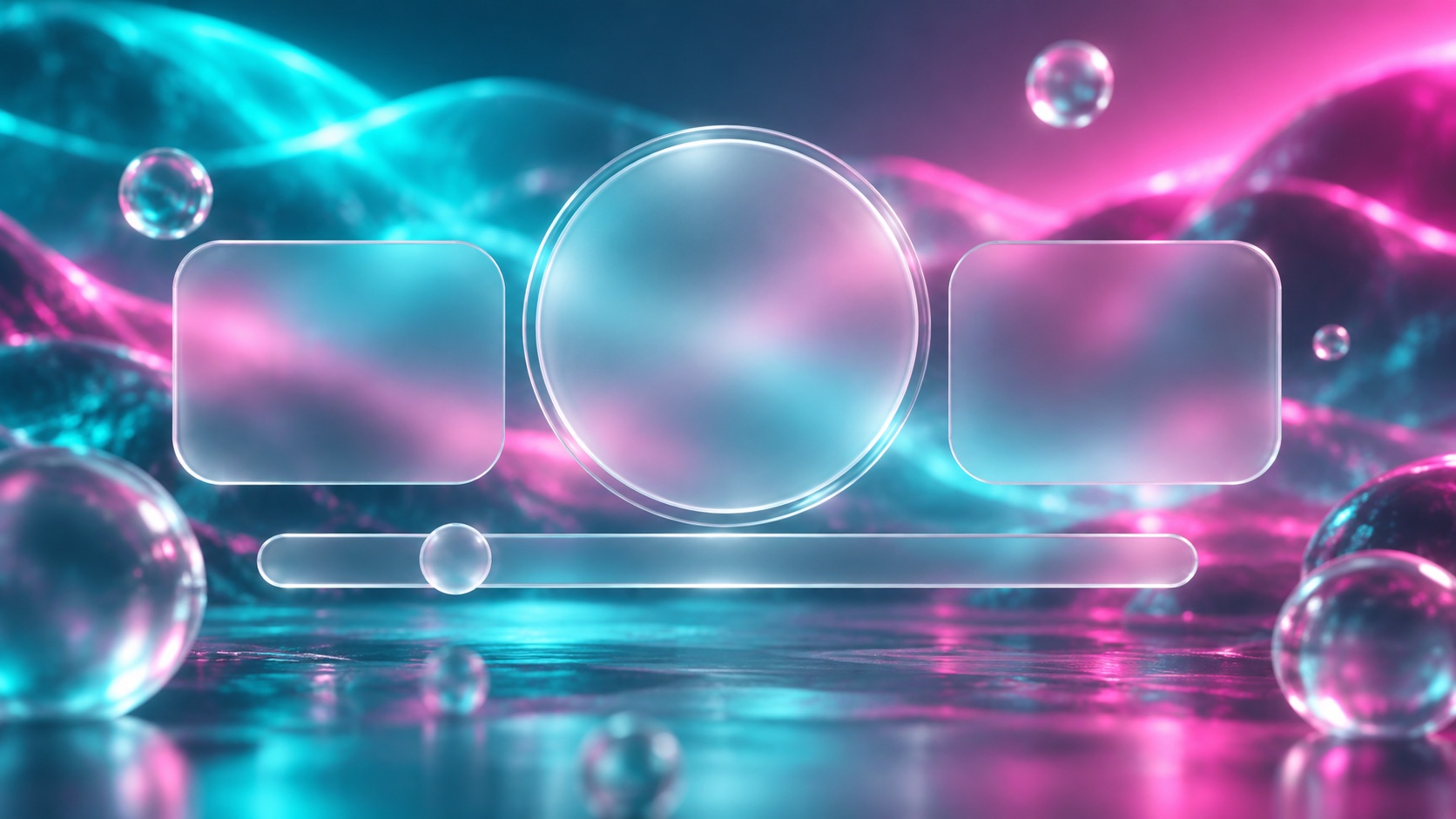 Neo 3D 50%Glassmorphism 50%
Merged palette
#CE93D8
#1A3A4A
#80DEEA
#4A9CBD
#A5D6A7
Leads digital, light, futuristic
Typography · from Neo 3D
Orbitron over Space Grotesk
Materials
The calls this blend forces
These two disagree on 3 things, and a blend cannot average them: you pick a side. At this mix:
Maximal or Minimal? Neo 3D is maximal, Glassmorphism is minimal. This mix lands minimal.
Expressive or Restrained? Neo 3D is expressive, Glassmorphism is restrained. This mix lands restrained.
Organic or Geometric? Neo 3D is organic, Glassmorphism is geometric. This mix lands organic.
Use it
Neo 3D aesthetic with contemporary inflatable and extruded three-dimensional objects rendered with soft subsurface scattering, pastel matte and glossy mixed surfaces, floating geometric primitives casting soft diffused shadows, Jell-O and air-dry clay textures, candy-colored gradients on rounded forms (50%), infused with Glassmorphism aesthetic with frosted glass panels, background blur effects, semi-transparent layers, subtle borders, luminous gradients, depth through transparency, color palette strictly #CE93D8 #1A3A4A #80DEEA #4A9CBD #A5D6A7, leaning maximal over minimal, expressive over restrained, organic over geometric, overall character: digital, light, futuristic
Neo 3D is a design trend built on accessible 3D rendering tools like Blender and Spline. It features soft, inflated forms, pastel color palettes, subsurface scattering, and playful compositions. It replaced flat illustration as the dominant visual language for tech branding and digital products starting around 2019.
Blender (free, open-source) is the primary tool. Spline offers browser-based 3D for interactive web elements. Cinema 4D remains popular in motion graphics studios. The style's accessibility is inseparable from the tools: free software created a generation of 3D-literate designers.
Neo 3D is a specific subset of 3D illustration defined by its soft, approachable aesthetic: rounded forms, pastel colors, gentle lighting. Photorealistic 3D rendering, hard-surface modeling, and character animation are separate disciplines with different visual languages.
Every style in the library is broken down like this one: the palette, the typography, the materials and the lineage.
Explore the style library →