When to use it
- Two-color experimental image systems
- Editorial portraits that must survive a severe visual reduction
- Music graphics and bitmap-based digital artwork
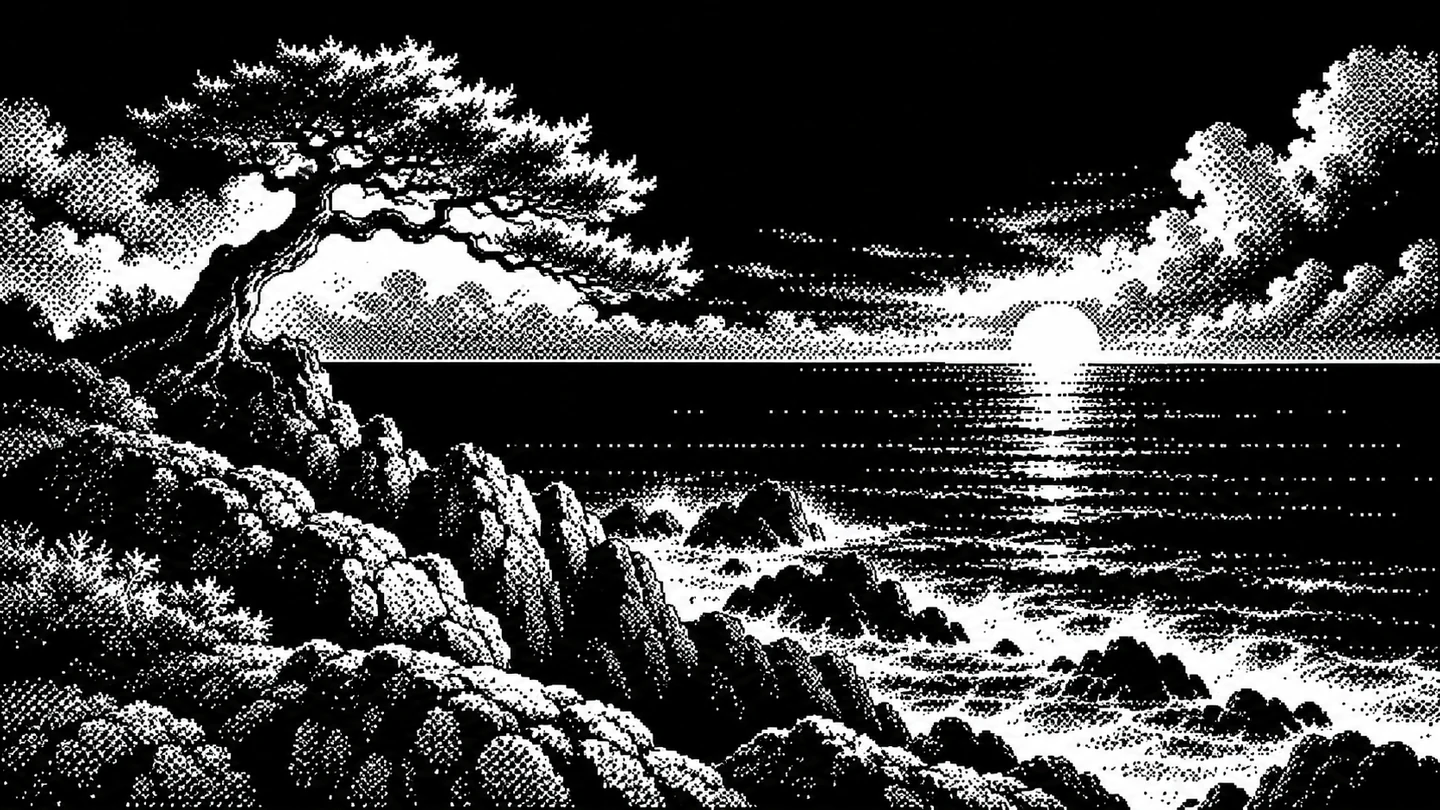
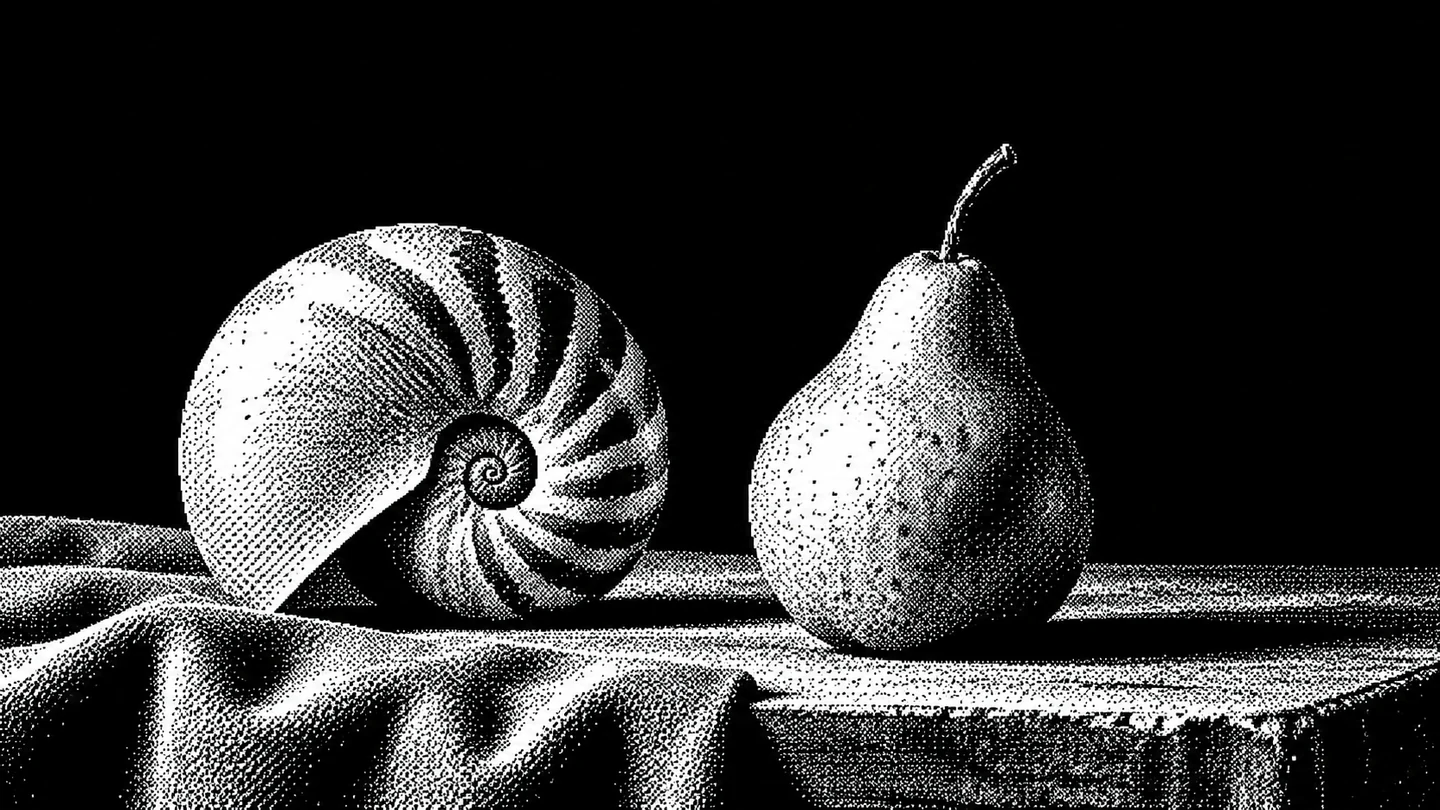
Only black and white pixels: ordered patterns or error diffusion create the impression of gray through the density and arrangement of dots.
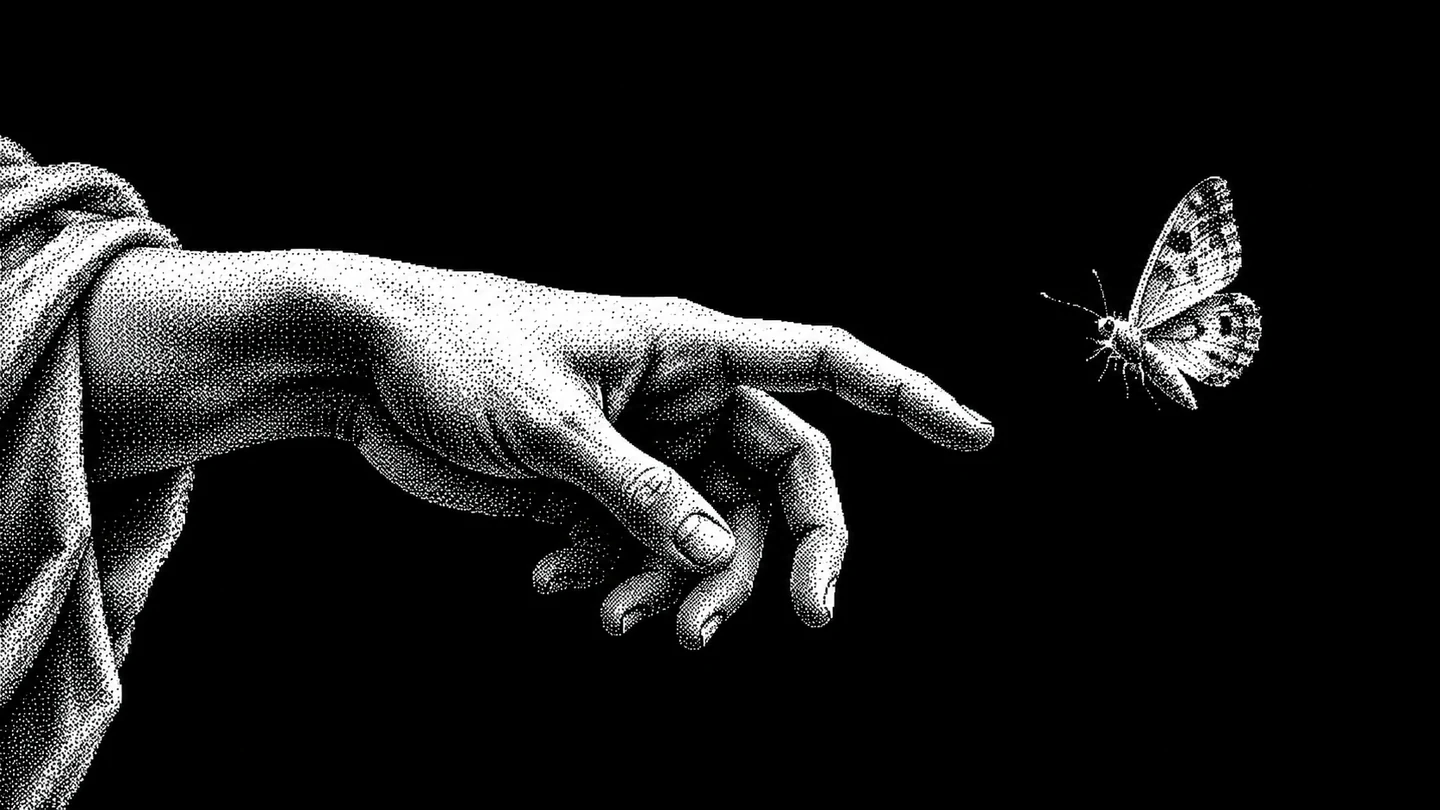
Only black and white pixels: ordered patterns or error diffusion create the impression of gray through the density and arrangement of dots.
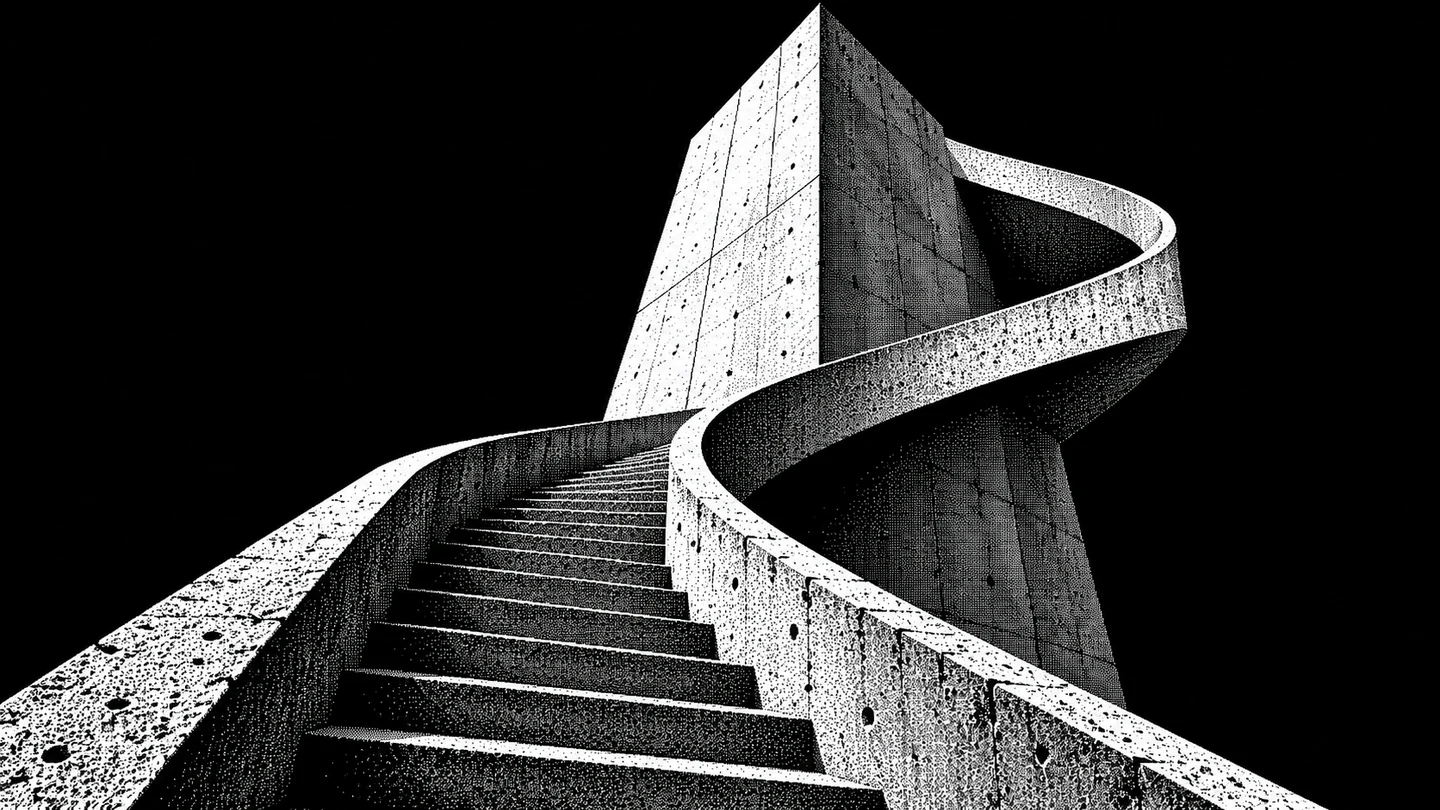
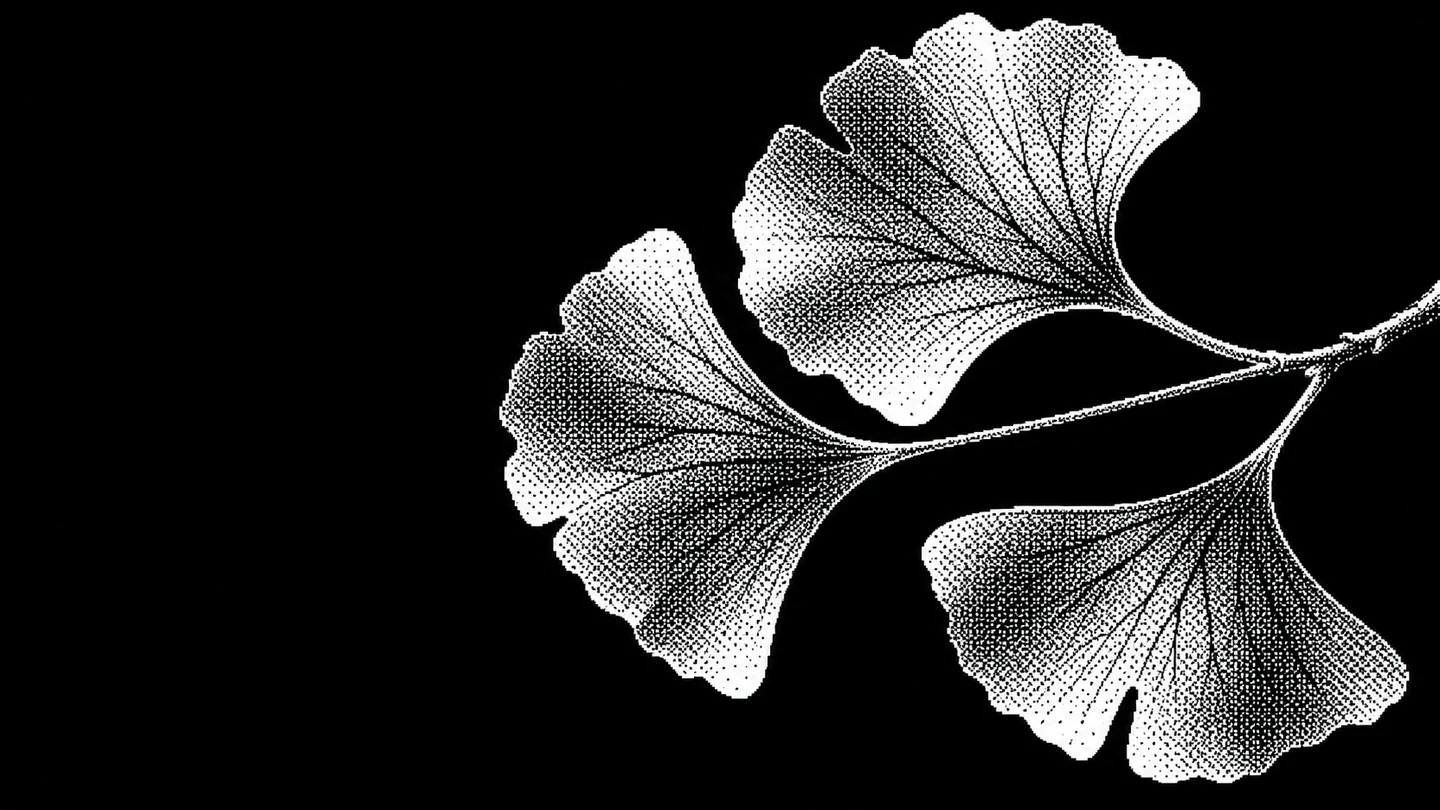
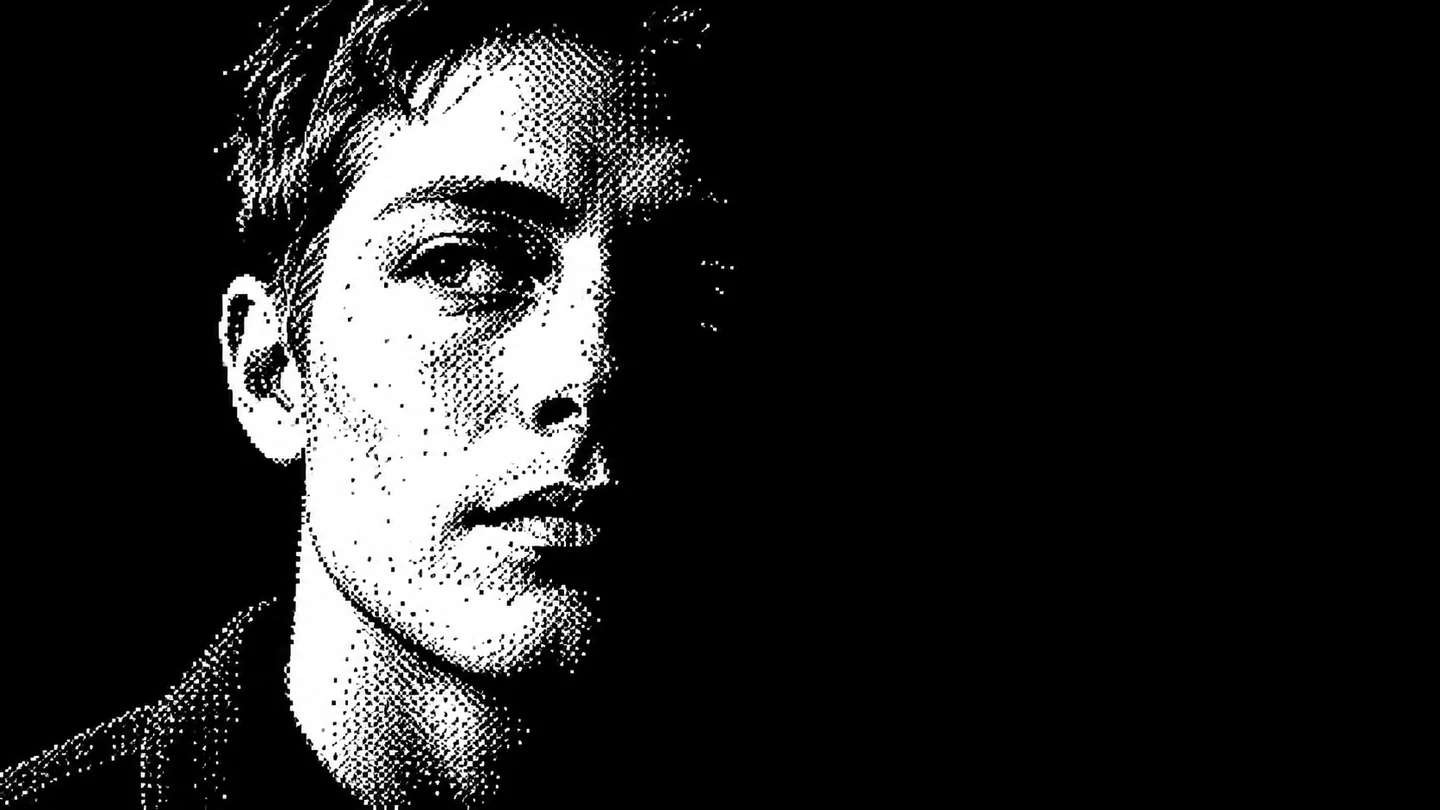
What it is, when it works, who it is for, and where it already exists.
Record 061-1B - when it works, who it is for, what it looks like
Where 1-bit Dither came from, what makes it recognisable, and the fingerprint it leaves.
Digital image quantization; continuing graphic practice · Binary raster graphics and limited-color image reproduction
A one-bit image can assign each pixel one of two values. In this treatment those values are black and white. Dithering arranges those pixels so their local density suggests intermediate tones at a normal viewing distance; the gray is perceived rather than stored as a third color.
Ordered dither uses a repeating threshold structure, while error-diffusion methods distribute quantization error into neighboring pixels. These produce different textures and should be chosen deliberately. ImageMagick documents both approaches. A one-bit dither is not simply a desaturated photograph, and a halftone made from variable-size printed dots is a related but different construction.
Research informing this technique
“Two colors. A full range of perceived tone.
The visual DNA: what makes it recognisable
8-channel console with the fingerprint on its display. Save the card, or share the page

The definitive color scheme for this aesthetic
The colour of the styles sitting closest to this one
How to shoot it, how to prompt it, and how to board it.
How to shoot this aesthetic
"Two colors. A full range of perceived tone."
Shot list
Lighting
Make a clean tonal source with a distinct silhouette. Shape the light before conversion so dithering does not have to rescue muddy midtones.
Click any prompt row to edit. Copy uses your edited text.
Strict 1-bit dither bitmap imagery: only pure black and pure white pixels
Visual cuesno actual gray, deliberate ordered threshold patterns or error-diffusion clusters translate photographic tonal volume; crisp un-antialiased pixel edges, controlled silhouette and negative space; no gradients, soft blur, colored glow or smooth vector shading
Paste as-is, or add your own subject.
Photograph: a hand or object lit to keep clear light and dark regions.
SettingSet in concrete stairwell. Shot wide, the whole scene with room around it, make a clean tonal source with a distinct silhouette.
DetailKeep error-diffusion clusters in the frame.
StyleStyle: Strict 1-bit dither bitmap imagery: only pure black and pure white pixels, no actual gray, deliberate ordered threshold patterns or error-diffusion clusters translate photographic tonal volume; crisp un-antialiased pixel edges, controlled silhouette and negative space; no gradients, soft blur, colored glow or smooth vector shading.
PaletteColour palette #000000 #FFFFFF #000000 #FFFFFF #000000.
WardrobeUse large value shapes and avoid fine fabric patterns that compete with the dither matrix.
FrameComposed for a 16:9 landscape frame.
RulesPhotographic, not an illustration. No text, no logos, no watermark.
The whole record as a portable skill for Claude, ChatGPT, Gemini, image and video models, or a human brief
The whole record, compiled into a skill another system can work inside: lineage, axes, palettes, type, materials, photography, verdicts and a critique checklist. Nothing is generated; it is the dossier, restructured.
The record applied to your project. The record's kit is free; your brand, references and plates come with membership
01 · Hero application02 · Material and finish03 · Palette in context04 · Photography directionWhether to use it, what it costs to do properly, and where it stands right now.
Two written calls, seven meters, and when to walk away
Determine the pixel grid and output size first. Dither is a tone-conversion decision, not a noise overlay. Tune contrast before conversion and use a lossless final image so compression does not invent gray edges.
Use when the restriction gives the image a clear graphic purpose. Black area and white area must both be designed. More scattered pixels do not automatically create more detail.
Can be produced from an existing image source and a controlled digital treatment; an original shoot adds production cost.
The image needs a clear composition before the treatment is applied.
Masking, raster scale and final export need deliberate control.
A strong effect can obscure the subject and replace the creative idea.
Best considered a specialist treatment rather than a default brand language; this is an editorial assessment.
The underlying image process remains useful even when its styling changes.
Can be confined to a campaign image series without rebuilding the full identity.
A Pro feature: origins, practitioners, and pitfalls
Neighbours, cross-references, blends, and the questions people ask.
Connected across the creative knowledge graph
Mix 1-bit Dither with any style in the library, or see the pairs worth trying
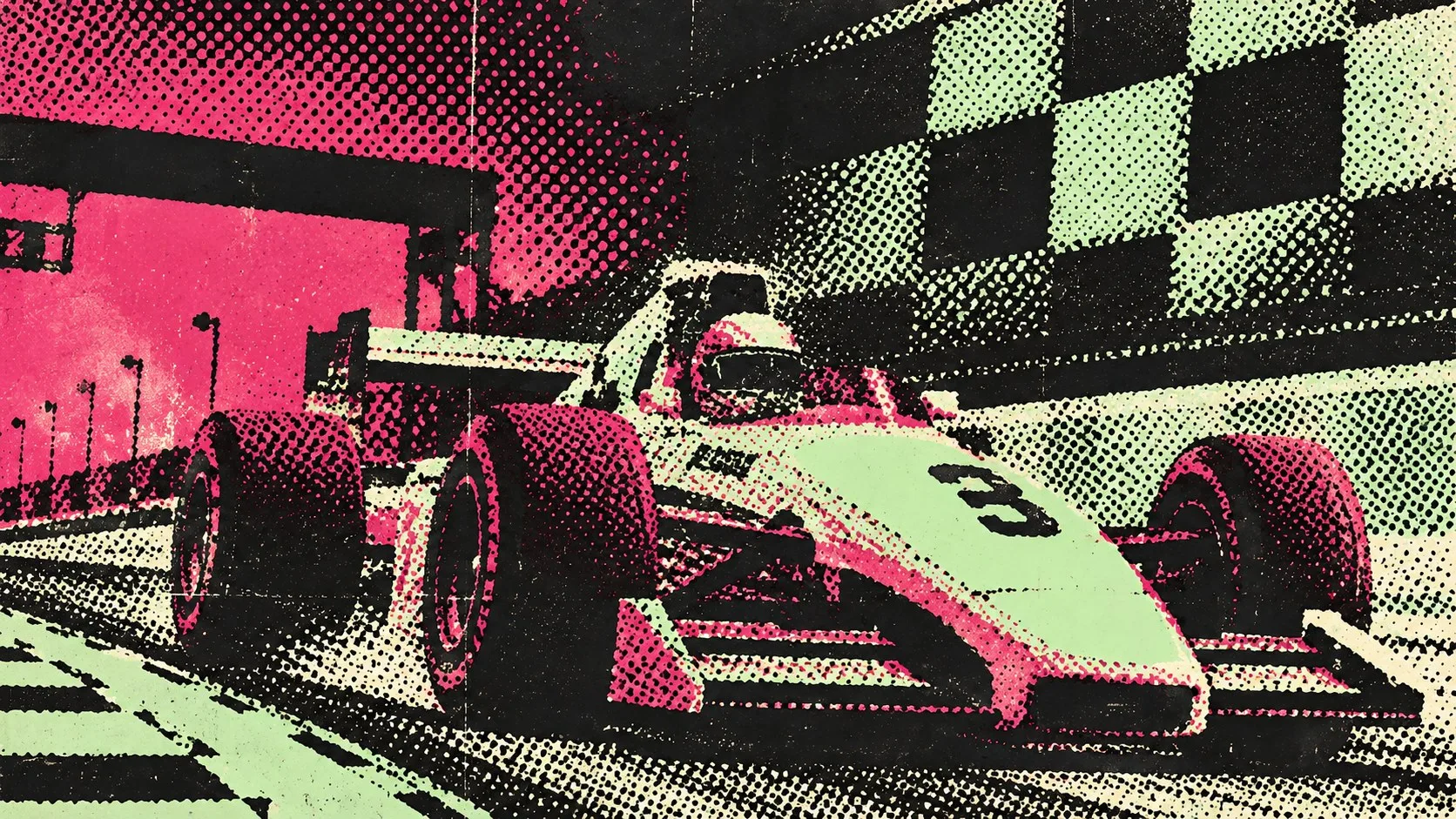 1-bit Dither 50%Halftone 50%
Merged palette
#000000
#EFE9DC
#FFFFFF
#1A1A1A
#00AEEF
Leads geometric, nostalgic, structured
Typography · from 1-bit Dither
IBM Plex Sans over IBM Plex Mono
Materials
The calls this blend forces
These two disagree on one thing, and a blend cannot average them: you pick a side. At this mix:
Digital or Analog? 1-bit Dither is digital, Halftone is analog. This mix lands digital.
Use it
Create one visual direction that synthesizes 1-bit Dither × Halftone. Preserve a clear hierarchy; do not make a contact sheet or a collage of unrelated styles.
Let it read as geometric, nostalgic, structured. Resolve the strongest tensions deliberately: digital / analog.
Use these colors as a controlled system: #000000 (Black Pixel) · #EFE9DC (Newsprint) · #FFFFFF (White Pixel) · #1A1A1A (Press Black) · #00AEEF (Process Cyan).
Use IBM Plex Sans for display type and IBM Plex Mono for supporting text.
Bring in One-bit bitmap: every pixel either fully on or fully off, nothing between, Ordered Bayer dither matrices producing regular crosshatch tone, Uncoated newsprint that drinks the ink and spreads each dot, Offset litho plates and process inks laid down as CMYK rosettes.
Keep one subject or one clear interface state in focus. Use the visual language to guide composition, lighting, spacing and material decisions.
Not as a third pixel value in a black-and-white binary image. Gray can appear perceptually when small black and white pixels are seen together or when a browser scales the preview.
They are related tone-reproduction methods. A halftone commonly varies printed dot size or coverage; one-bit dithering distributes binary pixels through an ordered pattern or an error-diffusion process.
Preserve the binary raster in a lossless format and inspect the actual pixel grid. Resampling, antialiasing and lossy compression can introduce extra tones; scaled browser previews may still appear gray.
Every style in the library is broken down like this one: the palette, the typography, the materials and the lineage.
Explore the style library →