Making one kilo releases about 0.7 kg of CO₂: fired and glazed, though used thinly.
01The building that proves it
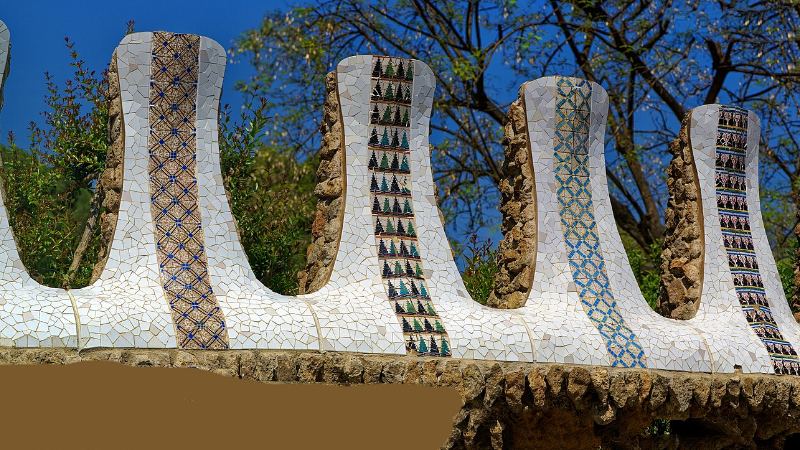
Ceramic Mosaic here: trencadís, broken ceramic set as mosaic over every surface.
About the building ↗02Try it on a board
Pick up to three materials to sit beside ceramic mosaic. The board shows the styles that use all of them, and writes a prompt you can take to an image or video generator.
03The styles built on it
04Up close
- Tesseraesmall square tiles, glazed or unglazed
- Penny round and hexthe bathroom mosaics of the 1900s
- Smaltiopaque glass for pictorial work
- Trencadísbroken tile, Gaudí's method
Small pieces set into adhesive by hand or on mesh sheets, then grouted; the grout lines are half the design.
The tile lasts; grout stains and cracks and is what needs renewing.
A field of small units with a grid of grout, catching light differently on each tiny face.
05Questions
Which design styles use ceramic mosaic?
Mediterranean Architecture, Googie, Socialist Modernism, Tropical Modernism and Art Nouveau.
What goes well with ceramic mosaic?
Ceramic Mosaic pairs well with glazed faïence, leaded art glass and polychrome brick.
What does ceramic mosaic communicate?
Pattern and repetition, Devotional color and Ornamental precision. It suits islamic architecture restoration, public art and ornamental interiors.
What kinds of ceramic mosaic are there?
Tesserae, Penny round and hex, Smalti and Trencadís. Tesserae: small square tiles, glazed or unglazed.
How does ceramic mosaic age?
The tile lasts; grout stains and cracks and is what needs renewing.
How can you tell real ceramic mosaic?
A field of small units with a grid of grout, catching light differently on each tiny face.
What is the carbon footprint of ceramic mosaic?
Making one kilo of ceramic mosaic releases about 0.7 kg of CO₂, cradle to gate: fired and glazed, though used thinly.