Making one kilo releases about 0.25 kg of CO₂: softwood from managed forest; stores carbon.
01The building that proves it
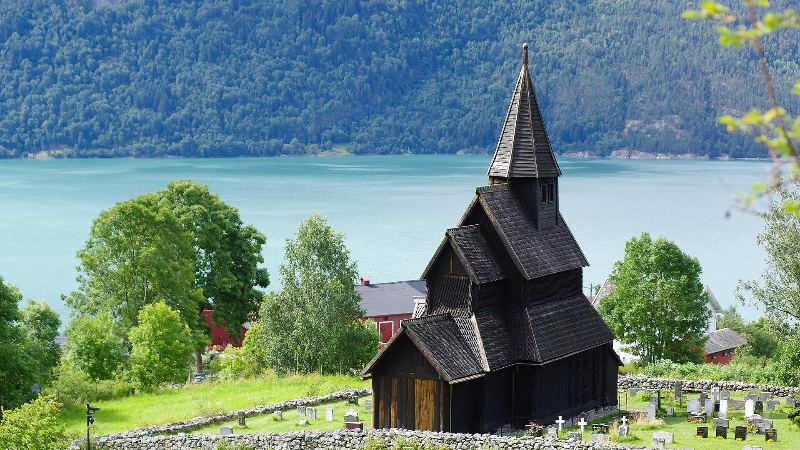
Pine here: pine staves and carved portals, nine centuries old.
About the building ↗02Try it on a board
Pick up to three materials to sit beside pine. The board shows the styles that use all of them, and writes a prompt you can take to an image or video generator.
03The styles built on it
- Cottagecore"Weathered pine, oak and painted wood with worn edges"
- Shaker"Hard maple, pine and cherry, hand-planed and finished in oil or varnish"
04Up close
- Scots pine (redwood)the European joinery softwood
- Southern yellow pinedense, resinous American pine
- Pitch pineold-growth, heavy, in Victorian roofs and floors
- Knotty pinethe panelling of cabins and 1970s kitchens
Fast to saw, plane and nail; knots bleed resin through paint unless sealed.
Yellows to orange under varnish, dents easily, and untreated it rots quickly outdoors.
Prominent knots, a wide stripe of hard and soft grain, resin smell, and a surface a fingernail will mark.
05Questions
Which design styles use pine?
Scandinavian Architecture, Vernacular Architecture, Pueblo Revival, Cottagecore and Shaker.
What goes well with pine?
Pine pairs well with birch plywood, clay plaster and wrought iron.
What does pine communicate?
Nordic simplicity, Affordable warmth and Vernacular ease. It suits scandinavian interiors, budget-conscious builds and rural vernacular.
What kinds of pine are there?
Scots pine (redwood), Southern yellow pine, Pitch pine and Knotty pine. Scots pine (redwood): the European joinery softwood.
How does pine age?
Yellows to orange under varnish, dents easily, and untreated it rots quickly outdoors.
How can you tell real pine?
Prominent knots, a wide stripe of hard and soft grain, resin smell, and a surface a fingernail will mark.
What is the carbon footprint of pine?
Making one kilo of pine releases about 0.25 kg of CO₂, cradle to gate: softwood from managed forest; stores carbon.