It locks away about 0.1 kg of CO₂ for every kilo used: hemp stores more carbon than the lime binder releases.
01The building that proves it
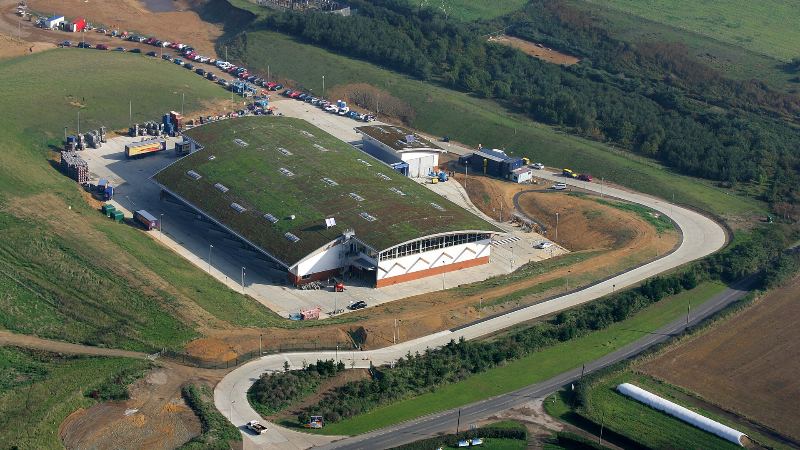
Hempcrete here: hemp-lime block walls under a living roof.
About the building ↗02Try it on a board
Pick up to three materials to sit beside hempcrete. The board shows the styles that use all of them, and writes a prompt you can take to an image or video generator.
03The styles built on it
04Up close
- Cast in situtamped into formwork around a timber frame
- Blocksfactory-made, laid like lightweight masonry
- Sprayedfor retrofit insulation
Hemp shiv (the woody core) mixed with a lime binder and water, packed lightly around a structural frame; it carries no load.
Keeps absorbing carbon as the lime cures, regulates humidity, and does not rot if it can breathe.
A pale, fibrous, straw-flecked wall that is warm to touch and light to knock.
05Questions
Which design styles use hempcrete?
Sustainable Architecture and Vernacular Architecture.
What goes well with hempcrete?
Hempcrete pairs well with clay plaster, reclaimed timber and living roof substrate.
What does hempcrete communicate?
Carbon-negative ambition, Breathable comfort and Bio-material honesty. It suits regenerative architecture, passive builds and sustainable retrofits.
What kinds of hempcrete are there?
Cast in situ, Blocks and Sprayed. Cast in situ: tamped into formwork around a timber frame.
How does hempcrete age?
Keeps absorbing carbon as the lime cures, regulates humidity, and does not rot if it can breathe.
How can you tell real hempcrete?
A pale, fibrous, straw-flecked wall that is warm to touch and light to knock.
What is the carbon footprint of hempcrete?
Hempcrete stores more carbon than making it releases, about 0.1 kg of CO₂ per kilo: hemp stores more carbon than the lime binder releases.