Making one kilo releases about 0.26 kg of CO₂: fired brick in several clays.
01The building that proves it
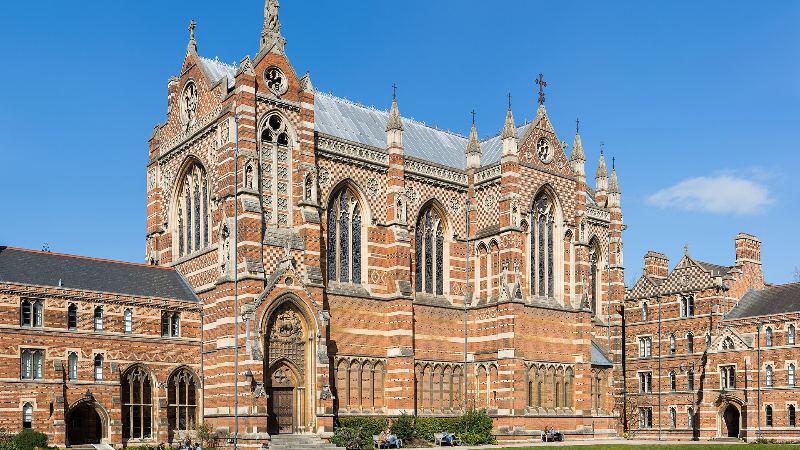
Polychrome Brick here: red, white and blue brick in patterns across the whole college.
About the building ↗02Try it on a board
Pick up to three materials to sit beside polychrome brick. The board shows the styles that use all of them, and writes a prompt you can take to an image or video generator.
03The styles built on it
04Up close
- Red, black and cream diaperingthe Victorian Gothic mix
- Glazed headersshiny bricks turned end-on for pattern
- Contrasting string coursesbands of a second colour
Two or more brick colours laid to a drawn pattern of bands, diamonds and chevrons; the bricklayer works from a setting-out sheet.
Softer coloured bricks weather faster than hard ones, so patterns can erode unevenly.
Pattern made of the bricks themselves rather than applied, in colours that were fired, not painted.
05Questions
Which design styles use polychrome brick?
Architectural Postmodernism.
What goes well with polychrome brick?
Polychrome Brick pairs well with fired brick, ceramic mosaic and cast iron.
What does polychrome brick communicate?
Postmodern irreverence, Victorian revival and Ornamental color. It suits postmodern architecture, victorian restoration and playful facades.
What kinds of polychrome brick are there?
Red, black and cream diapering, Glazed headers and Contrasting string courses. Red, black and cream diapering: the Victorian Gothic mix.
How does polychrome brick age?
Softer coloured bricks weather faster than hard ones, so patterns can erode unevenly.
How can you tell real polychrome brick?
Pattern made of the bricks themselves rather than applied, in colours that were fired, not painted.
What is the carbon footprint of polychrome brick?
Making one kilo of polychrome brick releases about 0.26 kg of CO₂, cradle to gate: fired brick in several clays.