Making one kilo releases about 1.4 kg of CO₂: pigmented structural glass, now only salvaged.
01The building that proves it
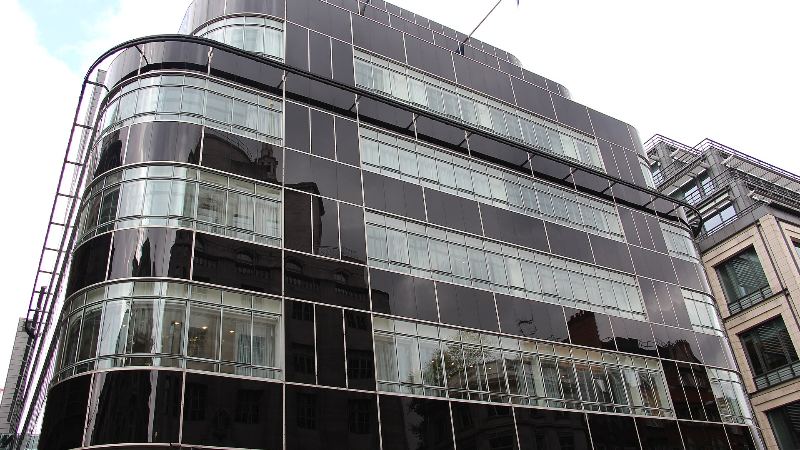
Vitrolite here: black Vitrolite and chromium strips on a curved corner.
About the building ↗02Try it on a board
Pick up to three materials to sit beside vitrolite. The board shows the styles that use all of them, and writes a prompt you can take to an image or video generator.
03The styles built on it
04Up close
- Blackthe Art Deco shopfront standard
- Jade and ivorythe colours of 1930s bathrooms
- Carrara glassthe American trade name
Opaque coloured glass rolled and ground flat, cut like glass and stuck to walls with mastic; no longer made, so panels are salvaged.
The glass is permanent but it cracks with building movement and cannot be replaced like for like.
A glossy, opaque, deep-coloured glass that reflects like a mirror without being one, in 1930s buildings.
05Questions
Which design styles use vitrolite?
Streamline Moderne.
What goes well with vitrolite?
Vitrolite pairs well with chrome, glass block and porcelain enamel panel.
What does vitrolite communicate?
Streamline glamour, Hygienic sheen and Retro storefront polish. It suits streamline moderne restoration, retro retail and storefront facades.
What kinds of vitrolite are there?
Black, Jade and ivory and Carrara glass. Black: the Art Deco shopfront standard.
How does vitrolite age?
The glass is permanent but it cracks with building movement and cannot be replaced like for like.
How can you tell real vitrolite?
A glossy, opaque, deep-coloured glass that reflects like a mirror without being one, in 1930s buildings.
What is the carbon footprint of vitrolite?
Making one kilo of vitrolite releases about 1.4 kg of CO₂, cradle to gate: pigmented structural glass, now only salvaged.