Making one kilo releases about 0.05 kg of CO₂: already made; only transport and milling count.
01The building that proves it
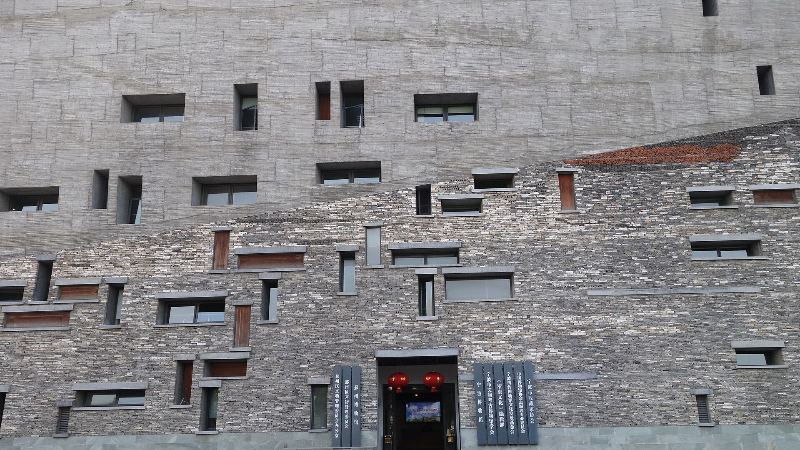
Reclaimed Timber here: walls of tile, brick and timber salvaged from demolished villages.
About the building ↗02Try it on a board
Pick up to three materials to sit beside reclaimed timber. The board shows the styles that use all of them, and writes a prompt you can take to an image or video generator.
03The styles built on it
- Solarpunk"Cross-laminated timber, bamboo and reclaimed wood structures"
- Industrial Loft"Reclaimed timber floorboards and joists with nail holes and saw marks"
04Up close
- Barn and mill beamsoak, pine and Douglas fir, often hand-hewn
- Factory flooringmaple and pitch pine boards
- Scaffold boardsthe cheap end, greyed and stamped
De-nailed, kiln-dried again to kill insects, then sawn or planed; old timber is harder and drier than new.
Already aged: it moves less than new wood and the patina deepens with wax.
Nail holes, saw marks, bolt scars and colour changes where something once sat, in species you cannot buy new.
05Questions
Which design styles use reclaimed timber?
Adaptive Reuse, Industrial Architecture, Vernacular Architecture, Solarpunk and Industrial Loft.
What goes well with reclaimed timber?
Reclaimed Timber pairs well with exposed concrete (béton brut), cor-ten steel and fired brick.
What does reclaimed timber communicate?
Material memory, Salvaged history and Adaptive reuse. It suits adaptive reuse, industrial conversions and heritage-conscious interiors.
What kinds of reclaimed timber are there?
Barn and mill beams, Factory flooring and Scaffold boards. Barn and mill beams: oak, pine and Douglas fir, often hand-hewn.
How does reclaimed timber age?
Already aged: it moves less than new wood and the patina deepens with wax.
How can you tell real reclaimed timber?
Nail holes, saw marks, bolt scars and colour changes where something once sat, in species you cannot buy new.
What is the carbon footprint of reclaimed timber?
Making one kilo of reclaimed timber releases about 0.05 kg of CO₂, cradle to gate: already made; only transport and milling count.