Making one kilo releases about 0.02 kg of CO₂: sun-dried earth; almost nothing.
01The building that proves it
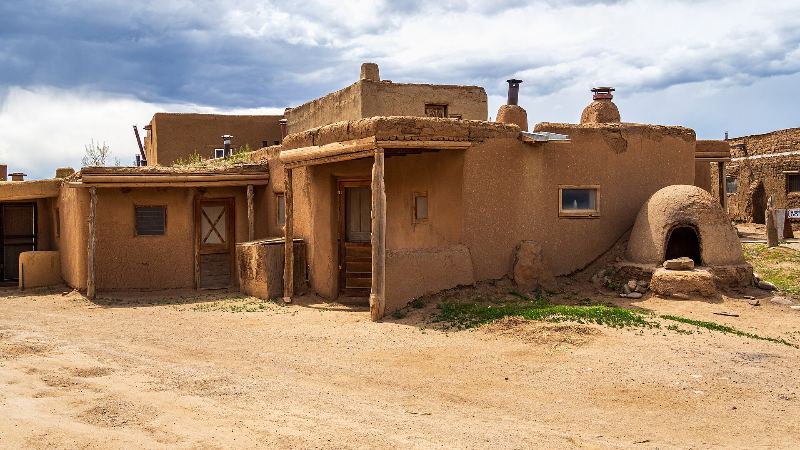
Adobe Brick here: multi-storey adobe continuously inhabited for a thousand years.
About the building ↗02Try it on a board
Pick up to three materials to sit beside adobe brick. The board shows the styles that use all of them, and writes a prompt you can take to an image or video generator.
03The styles built on it
04Up close
- Sun-dried mud brickthe traditional block
- Stabilised adobewith a little cement or asphalt
- Compressed earth blockmachine-pressed, more regular
Mud, sand and straw pressed in wooden moulds and dried in the sun, laid in mud mortar and plastered with the same earth every few years.
Erodes in rain unless re-plastered, which is a yearly ritual; kept dry it lasts centuries.
Thick walls with soft, rounded corners, no sharp edges anywhere, and straw showing in a scratched surface.
05Questions
Which design styles use adobe brick?
Pueblo Revival and Vernacular Architecture.
What goes well with adobe brick?
Adobe Brick pairs well with rammed earth, terracotta tile and reclaimed timber.
What does adobe brick communicate?
Desert resilience, Ancient thermal wisdom and Earthen mass. It suits desert architecture, pueblo revival and low-energy builds.
What kinds of adobe brick are there?
Sun-dried mud brick, Stabilised adobe and Compressed earth block. Sun-dried mud brick: the traditional block.
How does adobe brick age?
Erodes in rain unless re-plastered, which is a yearly ritual; kept dry it lasts centuries.
How can you tell real adobe brick?
Thick walls with soft, rounded corners, no sharp edges anywhere, and straw showing in a scratched surface.
What is the carbon footprint of adobe brick?
Making one kilo of adobe brick releases about 0.02 kg of CO₂, cradle to gate: sun-dried earth; almost nothing.