Making one kilo releases about 0.4 kg of CO₂: plantation teak; old-growth carries a different cost.
01The building that proves it
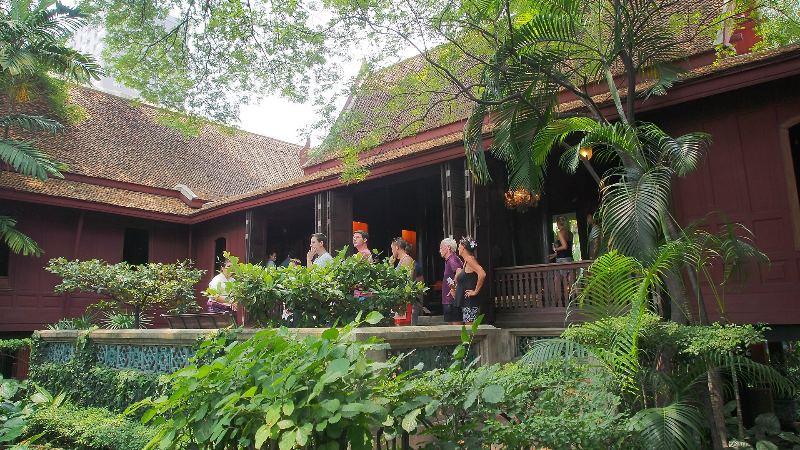
Teak here: traditional teak houses reassembled around a garden.
About the building ↗02Try it on a board
Pick up to three materials to sit beside teak. The board shows the styles that use all of them, and writes a prompt you can take to an image or video generator.
03The styles built on it
- Mid-Century Modern"Solid teak, walnut and rosewood veneer, oiled to a soft satin finish"
- Biomorphic Modernism"Polished walnut, teak and rosewood with continuous flowing grain"
04Up close
- Burmese teakthe benchmark, dense and oily
- Plantation teakfaster-grown, paler, less oil
- Reclaimed teakfrom old buildings and boats, the most prized
Machines cleanly but blunts tools with its silica; joined without glue where possible, since the oil resists it.
Golden brown when fresh, silvers to driftwood grey outdoors and never rots, which is why decks and benches are made of it.
Oily to the touch, a leathery smell when cut, straight grain with a golden-brown tone, and heavy.
05Questions
Which design styles use teak?
Mid-Century Modern, Tropical Modernism, Mid-Century Modern and Biomorphic Modernism.
What goes well with teak?
Teak pairs well with travertine, plate glass and wrought iron.
What does teak communicate?
Mid-century warmth, Weathered elegance and Tropical resilience. It suits mid-century restoration, outdoor decking and coastal architecture.
What kinds of teak are there?
Burmese teak, Plantation teak and Reclaimed teak. Burmese teak: the benchmark, dense and oily.
How does teak age?
Golden brown when fresh, silvers to driftwood grey outdoors and never rots, which is why decks and benches are made of it.
How can you tell real teak?
Oily to the touch, a leathery smell when cut, straight grain with a golden-brown tone, and heavy.
What is the carbon footprint of teak?
Making one kilo of teak releases about 0.4 kg of CO₂, cradle to gate: plantation teak; old-growth carries a different cost.