Making one kilo releases about 0.42 kg of CO₂: adhesives and drying; still stores more than it emits.
01The building that proves it
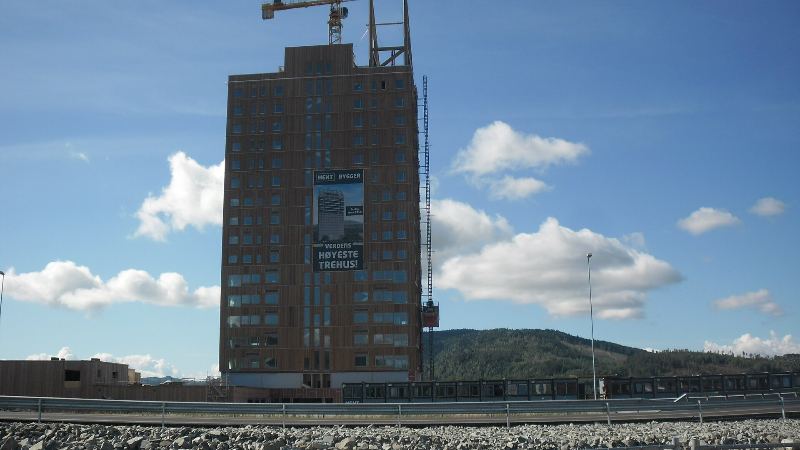
CLT here: an 85-metre tower of cross-laminated timber and glulam.
About the building ↗02Try it on a board
Pick up to three materials to sit beside clt. The board shows the styles that use all of them, and writes a prompt you can take to an image or video generator.
03The styles built on it
- Solarpunk"Cross-laminated timber, bamboo and reclaimed wood structures"
04Up close
- 3-, 5- and 7-layer panelsthickness by number of cross-laid layers
- Visual gradesorted for an exposed face
- Glulamthe beam and column cousin, layers all one way
Boards glued in alternating directions under press, CNC-cut to the drawings with openings already in, and craned up as walls and floors.
Stable indoors; chars predictably in fire, which is its structural case, but must be kept dry during construction.
Wide, flat timber walls with visible finger joints and a faint grid of board edges.
05Questions
Which design styles use clt?
Sustainable Architecture, Neo-Modernism, Contemporary Architecture, Biophilic Design and Solarpunk.
What goes well with clt?
CLT pairs well with structural glass, polished concrete and anodized aluminum.
What does clt communicate?
Structural innovation, Mass-timber ambition and Sustainable engineering. It suits mid-rise housing, sustainable commercial builds and mass-timber towers.
What kinds of clt are there?
3-, 5- and 7-layer panels, Visual grade and Glulam. 3-, 5- and 7-layer panels: thickness by number of cross-laid layers.
How does clt age?
Stable indoors; chars predictably in fire, which is its structural case, but must be kept dry during construction.
How can you tell real clt?
Wide, flat timber walls with visible finger joints and a faint grid of board edges.
What is the carbon footprint of clt?
Making one kilo of clt releases about 0.42 kg of CO₂, cradle to gate: adhesives and drying; still stores more than it emits.