Making one kilo releases about 1.5 kg of CO₂: laminated and heat-treated, and a lot of it per metre.
01The building that proves it
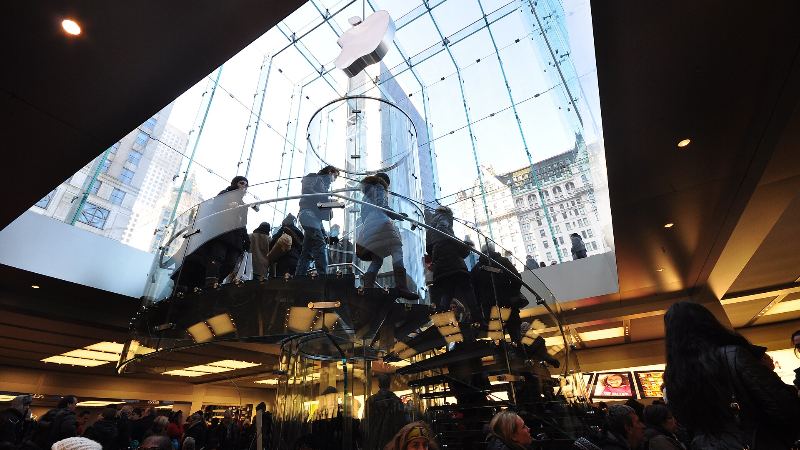
Structural Glass here: a 32-foot cube of fifteen structural glass panels.
About the building ↗02Try it on a board
Pick up to three materials to sit beside structural glass. The board shows the styles that use all of them, and writes a prompt you can take to an image or video generator.
03The styles built on it
04Up close
- Glass finsvertical stiffeners replacing mullions
- Point-fixed (spider) glazingbolted through the corners
- Glass beams and stairslaminated to carry load
Toughened and laminated in many layers, drilled before toughening, and connected with stainless fittings so no two panes touch.
The glass lasts; the interlayers can yellow or delaminate at exposed edges, and fittings need checking.
No frame at all: bolts at the corners, sealant lines between panes, and edges you can see the full thickness of.
05Questions
Which design styles use structural glass?
High-Tech Architecture, Neo-Futurism, Parametric Architecture and Architectural Minimalism.
What goes well with structural glass?
Structural Glass pairs well with titanium, polished concrete and carbon fibre composite.
What does structural glass communicate?
Radical transparency, Structural bravado and Engineering spectacle. It suits flagship retail, signature facades and museum architecture.
What kinds of structural glass are there?
Glass fins, Point-fixed (spider) glazing and Glass beams and stairs. Glass fins: vertical stiffeners replacing mullions.
How does structural glass age?
The glass lasts; the interlayers can yellow or delaminate at exposed edges, and fittings need checking.
How can you tell real structural glass?
No frame at all: bolts at the corners, sealant lines between panes, and edges you can see the full thickness of.
What is the carbon footprint of structural glass?
Making one kilo of structural glass releases about 1.5 kg of CO₂, cradle to gate: laminated and heat-treated, and a lot of it per metre.