Making one kilo releases about 0.03 kg of CO₂: split by hand or machine, almost no processing.
01The building that proves it
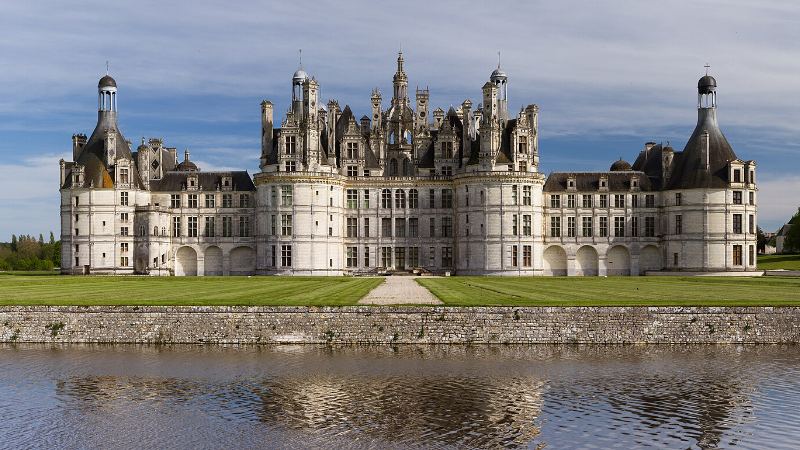
Slate here: slate roofs over a roofscape of lanterns and chimneys.
About the building ↗02Try it on a board
Pick up to three materials to sit beside slate. The board shows the styles that use all of them, and writes a prompt you can take to an image or video generator.
03The styles built on it
04Up close
- Welsh (Penrhyn, Ffestiniog)blue-grey and purple, the finest roofing slate
- Cumbrian greensea green from the Lake District
- Vermontgrey, green, purple and red in one roof
- Brazilianblack, cheap and thicker
Split by hand along its cleavage into thin sheets, then dressed to size; roofing slates are graded by thickness and hung on battens.
Good slate lasts over a century and simply greys; poor slate delaminates and rusts from pyrite spots.
Thin, flat and ringing when tapped, with a fine cleft texture; it sheds water and never looks fully wet.
05Questions
Which design styles use slate?
Vernacular Architecture, Critical Regionalism, Prairie Style and Contextualism.
What goes well with slate?
Slate pairs well with structural steel, oak and zinc cladding.
What does slate communicate?
Northern restraint, Quiet utility and Weathered dignity. It suits roofing, flooring and northern european contexts.
What kinds of slate are there?
Welsh (Penrhyn, Ffestiniog), Cumbrian green, Vermont and Brazilian. Welsh (Penrhyn, Ffestiniog): blue-grey and purple, the finest roofing slate.
How does slate age?
Good slate lasts over a century and simply greys; poor slate delaminates and rusts from pyrite spots.
How can you tell real slate?
Thin, flat and ringing when tapped, with a fine cleft texture; it sheds water and never looks fully wet.
What is the carbon footprint of slate?
Making one kilo of slate releases about 0.03 kg of CO₂, cradle to gate: split by hand or machine, almost no processing.